
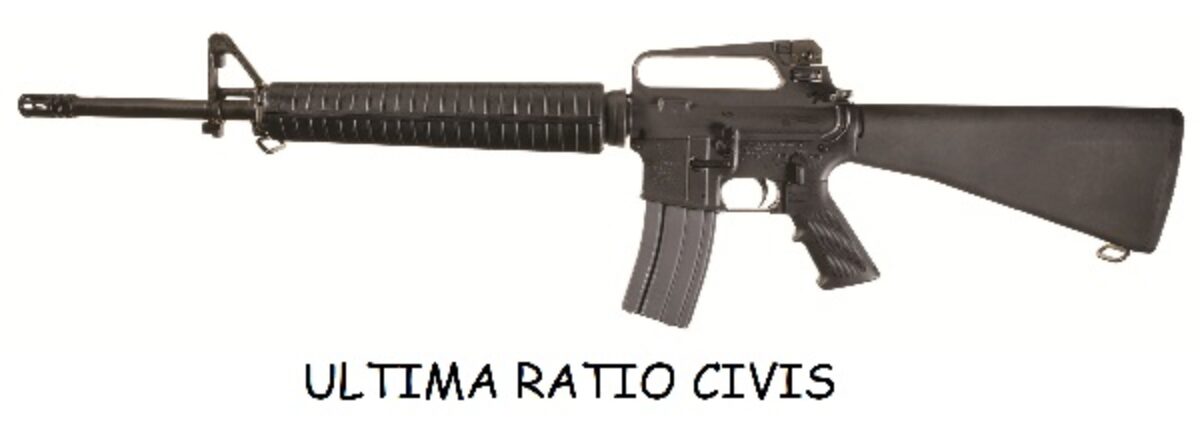


— Walker Zombley (@robbobert4) May 30, 2024
Armed intruder arrested after being shot by homeowner in Taylor
TAYLOR, Texas – An armed intruder is under arrest after being shot during a break-in, police say.
Taylor police say Austin Sumpter was armed with a knife when he broke into a home in the 2300 block of Donna Drive on Monday around 11:35 p.m.
The homeowner called 911, and as officers were on the way, Sumpter made his way inside and the homeowner shot him, police say.
When officers arrived, they found Sumpter lying on the front porch with a gunshot wound to his hip.
Officers collected a large knife with a sheath that was inscribed “Hail Satan” that Sumpter had been carrying, and Sumpter was taken to a hospital.
He was released on Wednesday at 11:30 a.m. and placed under arrest for Burglary of a Habitation with Commission of a Felony, a 2nd degree felony.
May 31, 2024

Jonathan Turley Has a Lot to Say About the Trump Verdict
Legal expert Jonathan Turley reacted with strong words to the guilty verdict of former President Donald Trump, who was convicted on all 34 counts at his New York hush money trial after only two days of jury deliberations spanning over nine hours.
“I obviously disagree with this verdict as do many others,” Turley tweeted, saying that he believes that the case will be reversed “eventually” either at the state or federal level. “However,” the George Washington University Law School professor added, “this was the worst expectation for a trial in Manhattan. I am saddened by the result more for the New York legal system than the former president. I had hoped that the jurors might redeem the integrity of a system that has been used for political purposes.”
In an appearance on Fox News, Turley described the strange circumstances surrounding the conviction’s announcement.
Turley, who was there at the time of the verdict’s reading, called it “one of the most bizarre moments” he ever experienced in the courtroom. Judge Juan Merchan had just said the jury had not yet reached a decision and that they’d be dismissed for the day.
Some reporters actually started to gather their belongings and head out, Turley recounted. Then, upon returning to the bench, Merchan said that he was mistaken, producing a note he received from the jurors announcing: “We the jury have a verdict.””Throughout this time, you can feel the building pressure in that courtroom. The one person that didn’t seem to register it was the former president…” Turley recalled, adding, “[Trump] didn’t show any emotion at all as this mantra of guilty verdicts was read.”
“I think that this is one of those things that really embodies the entire Trump era. There were people who clearly were thrilled by the result, and there were people who were saddened by it. I was saddened by it. I disagree with this verdict,” Turley reiterated.
“I think, as I said before, that this case was legally unfounded. When they were reading those guilty verdicts, the one thing that we didn’t know is really what he was found guilty of. Because if you remember, the judge allowed the jury to find guilt on any one of the three secondary crimes,” Turley said. That meant the jury didn’t have to determine exactly what crime was committed.
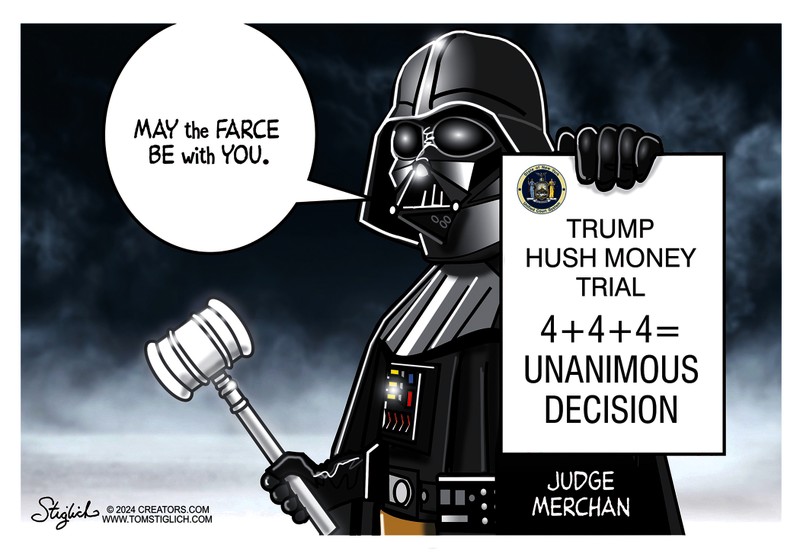
Some of the captions are off, likely due to an AIBot making them, but that doesn’t really matter.
This can never be shared too many times. We are a Constitutional Republic; we are NOT a democracy. pic.twitter.com/xrWETRYwsp
— 🇺🇸 🍑Catherine🍑 🇺🇸 (@cat_barnes30) May 30, 2024
A man was shot by a resident Monday night as he entered a home uninvited.
The Taylor [Texas] Police Department is investigating a shooting that happened in the 2300 block of Donna Drive.
According to police reports, officers responded to a call at 11:35 p.m. for a man with a knife attempting to enter a house on Donna Drive. As officers were in route to the address, the man was in the house and had been shot by the homeowner.
When police arrived, the suspect had exited the home and was lying on the front porch with a gunshot wound to his hip. Officers identified the suspect as Austin Sumpter, 23, of Thrall.
Police found a large knife with a sheath that was inscribed “Hail Satan” that the suspect was carrying. The wounded man was taken to the hospital for non-life-threatening injuries.
Police obtained a warrant charging the suspect with burglary of a habitation with commission of felony, a second-degree felony. The warrant will be served once the suspect is released from medical care.
The Shooting Drill You’re Most Likely To Actually Use In Self Defense.
(Nothing in the lower extremities that gonna take the bad guy out of the fight? *snort*)
Clint Smith:
See for Yourself if Guns Cause Murder
Gun prohibitionists say that gun-control works. They say gun-control laws reduce the number of guns possessed by law-abiding gun owners. They say that is good because guns cause crime. In particular, they say that guns cause extremely violent crimes like murder. I don’t know if that is true, but I do know that we can find out. Countries have different cultures and different rules about owning guns. That leads to different rates of gun ownership. Different countries also have different murder rates. Put them together and we can see if guns cause crime.
The data isn’t as good as we’d like it to be. The last comprehensive international data on gun ownership was from the Small Arms Survey of 2017. People can update their estimates based on trends. That isn’t the same as real survey data taken in the last few years. The other data on murder is from the United Nations Office on Drugs and Crime’s Global Study on Homicide. About half the countries are missing when we look at the data on murder rates. Japan and France are glaring examples. I asked a demographer/sociologist about that missing data. She said that many countries do a poor job of sorting out murder, suicide, and defensive homicide. In a perfect study, we’d have worldwide survey data taken in the same year. We don’t have that. It turns out that those small errors don’t matter in the slightest.
Let’s look at the original claims by gun prohibitionists. They said that guns cause crime. More guns cause more crime and fewer guns cause less crime. A simplified version of that data would look like this. Here is what the murder rate would look like when we plot it against the rate of gun-ownership.
<p “=””>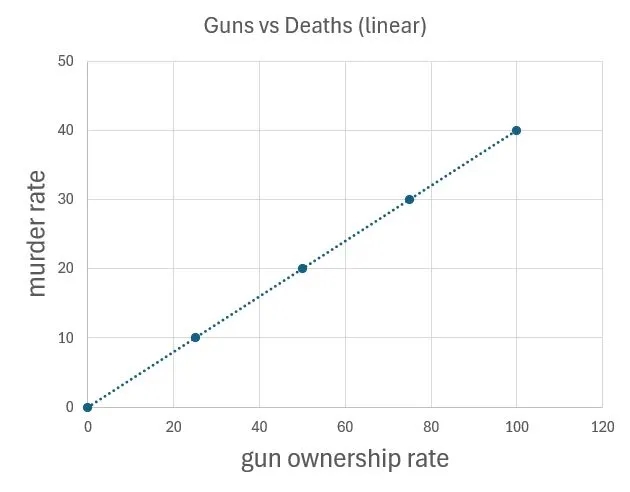
That isn’t what we see when we look at real data. To be fair, we wouldn’t expect real data to look like that. Many factors influence the murder rate. The most obvious is that we’ve been killing each other long before guns were invented. There is a baseline rate of murder even if there were no guns to be found. Sociologists have looked at rates of crime to find that income, upward income mobility, marriage rate, age of family formation, and rule of law are a few of the most significant factors. We find that other factors dominate the effect of gun ownership when we look at the 70 countries for which we have data.
Here is the plot of the gun ownership rate versus the murder rate. (Guns per 100 people versus the number of murders per 100k people)
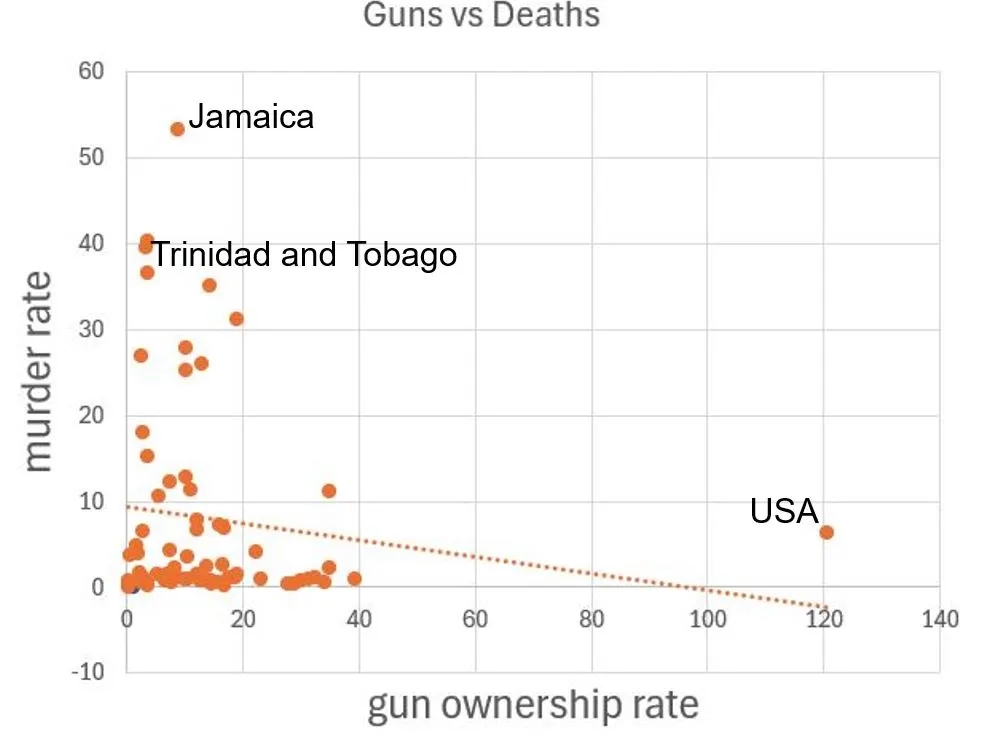
We get a slight negative correlation with gun ownership in fact. That is probably an income effect. You need to be relatively affluent to own lots of guns. That wealth comes with high rates of employment and the rule of law. That doesn’t look significant to me.
Say what you will, the gun-ownership effect on murder isn’t there. We also see countries with very low rates of gun-ownership and frighteningly high murder rates. Violent crime has many causes. More importantly, we see countries with high rates of gun ownership and low murder rates. Those examples show that firearms ownership is not a significant cause of murder. The obvious question is what that means.
I’m a retired engineer rather than a PhD criminologist. I spent an hour putting the data together. If I figured out that guns ownership has an insignificant effect on the murder rate then so did the researchers paid for by anti-gun billionaires. This data means that they knew. It means they lied to please the people who paid them.
Hack through enough datasets and you can find the effect you want. Shame on them. Also, shame on us for giving them any attention and not checking for ourselves.
Please evaluate the data on your own if you think that I’m wrong. Here are the datasets I used. How hard did you need to torture the data to show that guns cause crime?
Sources-
https://worldpopulationreview.com/country-rankings/gun-ownership-by-country
(2022)
https://worldpopulationreview.com/country-rankings/murder-rate-by-country
(2024)

Cynical Publius
I get the sense that a lot of people across the entire political spectrum do not fully understand one of the very most basic reasons why the US federal government is such a tyrannical soup sandwich, so I thought I would write a quick primer.
The US Constitution limits the power of the federal government vis-a-vis the states (or the People). To the extent the federal government has certain enumerated powers, it is up to Congress to make laws, and it is up to the President to enforce them. (Yes, I know that it is a very simplified explanation, but it’s basically true.)
Certain federal agencies housed in the Executive Branch have existed almost from the nation’s founding, but these related solely and directly to the President’s Constitutionally-enumerated powers, thus the War Department (for example) was necessary. However, starting with the establishment of the Interstate Commerce Commission in 1887, we began to see Congress abdicating some of its lawmaking powers to federal agencies.
Through the following decades, with the desire of the so-called “progressives” to establish rule by “experts,” that abdication of Congressional law-making responsibilities went on warp drive, through Woodrow Wilson, through FDR and even through Richard Nixon, as numerous new federal agencies came into being.
Over those decades, more and more law-making authority was delegated to those federal agencies, most of which were housed in the Executive Branch and responsive to the President, thus greatly expanding the President’s powers beyond the original Constitutional intent.
Over time, even the powers of the third branch—the Judicial Branch—were co-opted into the Executive Branch as these administrative agencies were given the power to create their own courts, thus ruling on disputes regarding and enforcement of the very laws they made.
Penultimately, we have reached the point today where the Executive Branch has subsumed many of the Constitutional authorities of the Legislative and Judicial Branches, creating the tyrannical federal government we see today—one run by life-tenured, unelected, unaccountable bureaucrats who rule first and foremost for the growth and protection of their own agencies.
Now Donald Trump wants to undo much of this. He wants to unwind this cabal of extra-Constitutional power, and he wants to do so by taking that power OUT OF THE VERY BRANCH HE WILL RUN and return that power to the Constitutional authorities where it belongs. This effort to unwind the power in the Executive Branch is what worries Fascist Democrats when they talk about Trump “destroying democracy,” and it’s why they call him a “dictator.”
(Which is hilarious, since Trump would be the very first “dictator” in world history whose primary purpose is to reduce his own power, thereby enhancing democracy.)
So hopefully that makes things more clear. I left a lot out and simplified some very complex issues, but I think this covers things at the most basic level. If you want to know more, Google the following:
1. Administrative Procedure Act.
2. “Abolishing the Administrative Procedure Act.”
3. Chevron v. NRDC.
4. INS v. Chadha.
5. Wickard v. Filburn
Have a patriotic day please.
May 30 , 2024


A CBS News Report From Over 40 Years Ago Proves Global Warming Is the Ultimate Hoax.
As loyal Townhall readers, you already know about the media hysterics over global warming. Still, digging up old clips proving how wrong the experts were about this subject is constantly refreshing. Based on their timelines, we’re supposed to be dead. Based on their advice, the only way for us to survive is to be poorer and let more people from third-world nations die from preventable diseases. That’s the nasty undercurrent within the population control folks. If it’s not that, these so-called activists are obsessed with controlling the means of production in the industrialized world to save Mother Earth. It’s backdoor communism when you boil it all down.
The green folks want us to sacrifice trillions in economic activity to save the planet. That’s the byproduct of Alexandria Ocasio-Cortez’s Green New Deal, which aims to ban the internal combustion engine. Anyways, here’s a 1982 CBS News segment on the subject, where the godfather of fake news, Dan Rather, anchors the end times projections from these environmental clowns, who predicted that 25 percent of Florida would be underwater. Also, our agriculture centers would have to relocate to Canada. Look out for an appearance by a young Al Gore:
1982 CBS News report—featuring a 34 year old Al Gore—predicts the “widespread disruption of agriculture”, and 25% of Florida ending up underwater, “due to the burning of coal and oil”. pic.twitter.com/X6FXW7aQyo
— T (@Rifleman4WVU) May 25, 2024
In 1975, Newsweek published an article about global cooling, in which re-glaciation was projected to hit the North American continent. Massive granaries holding seedlings were advised to be built since food shortages could be rampant. This event never happened. The same folks warned that the Arctic Ice Cap could melt by 2013. It didn’t.
So, when the same people warn about how we’re all going to die in 12 years, just replay this 1982 segment. They said that same nonsense over 40 years ago. None of it came true.
We were right! The ONS lied about covid vaccine safety.
IN 2021 when the Office for National Statistics (ONS) started releasing its vaccine by mortality status reports we revealed that there were large spikes in the non-covid death rates in the ‘unvaccinated’. These spikes in mortality coincided with the first main vaccine rollout and did so for each age group (see this report, for example).
Here is the chart for non-covid mortality rates in weeks 1-38 of 2021 for the 60-69 age groups:
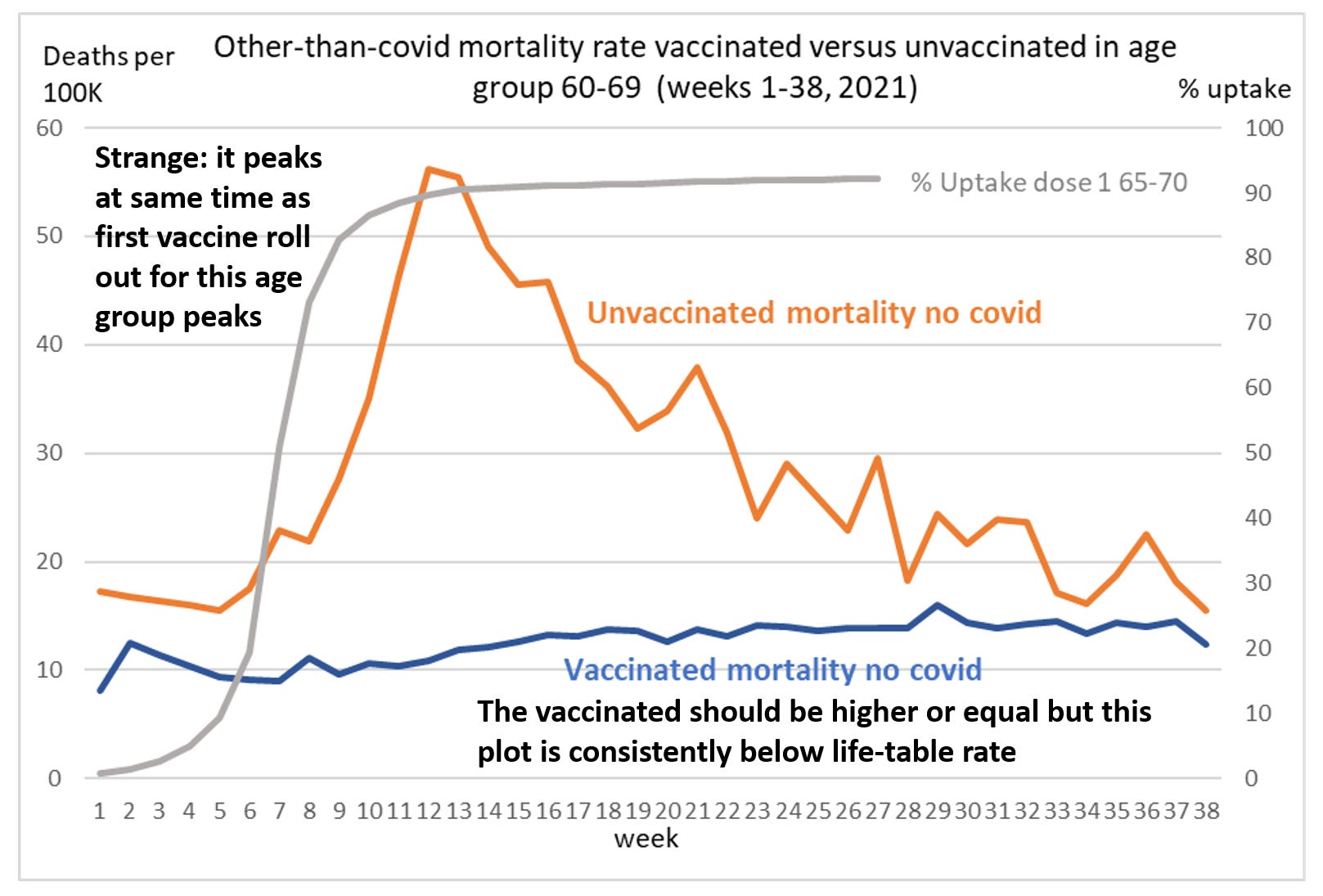
The charts for the other age groups looked much the same.
We asserted that these obvious anomalies were a result of the standard ONS procedure of categorising anyone within 20 days of their first dose as ‘unvaccinated’. However, in our own discussions with the ONS they maintained that, although that method was used for their efficacy calculations, it was not used when it came to mortality. They clearly said that a person dying any time after vaccination was correctly categorised as a vaccinated death in the mortality data they regularly released to the public and which formed the basis of a massive public communication campaign encouraging vaccination.
Louisiana Passes Second Amendment Financial Privacy Act
BATON ROUGE, LA. (May 28, 2024) – Today, the Louisiana Senate gave final approval to the “Second Amendment Financial Privacy Act,” a bill to prohibit financial institutions from using a credit card merchant code that would enable the tracking of firearm and ammunition purchases.
Sen. Blake Miguez filed Senate Bill 301 (SB301) on March 1. The bill would prohibit any financial institution operating in the state from requiring or permitting “the assignment of a firearms code in a way that distinguishes a firearms retailer from other retailers.”
SB301 also prohibits all state and local government entities from keeping any list, record, or registry of privately owned firearms or the owners of such firearms. Financial institutions would be prohibited from denying a transaction based on the code. Those found guilty in a court of violating the law would be subject to a fine not to exceed $1,000 per violation, with the court determining the amount by factors “including the financial resources of the violator and the harm or risk of harm to the rights under the Second Amendment to the United States Constitution and Article I, Section 11 of the Constitution of Louisiana, resulting from the violation.”
On April 16, the Senate passed the bill by a vote of 28-11. Last week, the House approved the measure with some technical amendments by a vote of 74-26. Today, the Senate concurred with a vote of 27-9.
Over the 2023-2024 legislative sessions, at least 13 states have passed similar legislation.