
Latest evidence of need for a big beautiful buyback just dropped.
Behold, the semi-automagic rifle pic.twitter.com/SphxYX7tp5
— AusGovGunFacts (@AusGovGunFacts) September 8, 2026
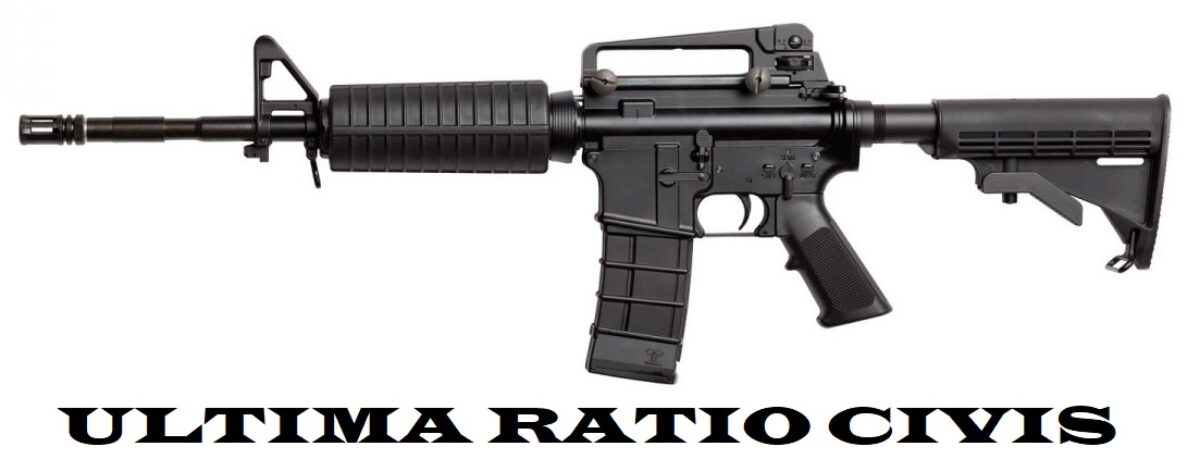
Latest evidence of need for a big beautiful buyback just dropped.
Behold, the semi-automagic rifle pic.twitter.com/SphxYX7tp5
— AusGovGunFacts (@AusGovGunFacts) September 8, 2026
🚨Democrat Rep. Cohen: “ICE is arresting people simply for the offense of being in the country illegally!”
Thoughts? pic.twitter.com/kpN4BAGz77
— David J Harris Jr (@DavidJHarrisJr) June 20, 2026
 Muskets like those from 1776 are mostly exempt from today’s gun laws
HALIFAX, N.C. (AP) — With 165 grains of black powder in the barrel, a .75-caliber Brown Bess flintlock musket like the ones the redcoats carried in 1776 can hurl a lead ball at a velocity of around 1,000 feet (305 meters) per second.
Imagine what that can do to a human body. Now, imagine that it’s almost completely exempt from gun regulations.
How can that be? Well, under federal and most state laws, many antique or replica guns aren’t technically considered firearms. In most places, even convicted felons can own them.
“I suspect the average judge would be surprised to find that out,” says Second Amendment scholar and gun-rights attorney Dave Hardy, himself the proud owner of two Civil War-era long guns.
Remember when Dan Quayle misspelled potato and it ruined his life for the rest of time?
This is infinitely worse. pic.twitter.com/Uzq53sh8Xi
— Eric Matheny 🎙️ (@ericmmatheny) April 27, 2026
The World Economic Forum Just Said…
"Climate Effects Gender & Gender Effects Climate"
What The Hell Are They Talking About? pic.twitter.com/HsqsTHTrux
— illuminatibot (@iluminatibot) March 22, 2026
Tapper on synagogue attack: "To be crystal clear, we do not know the motivations of the attacker." pic.twitter.com/f5fUiRa6qm
— Western Lensman (@WesternLensman) March 13, 2026
Political grandstanding has always been fraught with the danger that the politician and his staff are just stupid enough to make a public fool of the politician. And sometimes this stupidity should hurt.
DOJ Officials Claim Thomas Massie Just Made an Unbelievable Error
Reps. Thomas Massie and Ro Khanna may have gotten themselves into hot water after falsely accusing four men of being tied to the crimes of Jeffrey Epstein in front of Congress.
Ro Khanna read the names of six people on the House floor and described them as “wealthy, powerful men” involved in Epstein’s crimes.
It turns out that 4 of them were just random people selected for an FBI photo lineup and had no connection to Epstein’s crimes. https://t.co/upSpLpYR96 pic.twitter.com/bbANktq9zZ
— Greg Price (@greg_price11) February 13, 2026
The pair claimed that four names, which the Department of Justice redacted in the release of the files, were “powerful men” engaged in connected to Epstein, but those men were simply randomly selected for a police line up and had zero real connection to the case.
Massive and Khanna claim that the fault in the false accusations lies with Department of Justice officials, stating that the DOJ “illegally redacted names without explanation and then refused to give context for the names once they redacted.”
“And you see no reason why those men’s names are redacted in these files?”
“No, unless they were in some random lineup, but this requires the DOJ to respond to it.”
I’m posting this transcript from Monday for the finger pointers at DOJ (and their paid bot swarm) who are trying… pic.twitter.com/nEN4UDomSK
— Thomas Massie (@RepThomasMassie) February 14, 2026
Deputy Attorney General Todd Blanche and Assistant Attorney General Harmeet Dhillon say that the pair jumped onto social media and in front of Congress to wave the men in front of the country rather than reach out to the DOJ for clarification beforehand.
The two have faced calls online to resign for airing the names of innocent men, with some saying that they have no interest in the victims and are only pursuing the matter for attention.
This level of stupid used to be fatal
Bill Maher: “Doug Burgum, he’s the interior secretary. Listen to this… He said, CO2, carbon, was never a pollutant. He said when we breathe, we emit CO2.”
⁰“Okay, Doug, you know what? Let’s try this little experiment. Um, tonight when you get home, go in the garage, close the… pic.twitter.com/DyG8wK4hR7— RedWave Press (@RedWave_Press) February 14, 2026
I don’t understand Lowy’s particular brand of stupid, but I do admire his total commitment to it.
Anti-Gun Attorney Behind Mexico’s Lawsuit Against Gun Makers Brings the Stupid Back to SCOTUS
Jonathan Lowy, the former litigator for Brady who’s now the head of something called Global Action on Gun Violence, was on the receiving end of a 9-0 Supreme Court decision against his client in Smith & Wesson v. Mexico, where SCOTUS unanimously concluded that the Mexican government’s attempt to sue U.S. gunmakers for aiding and abetting cartel violence was not only foreclosed by the Protection of Lawful Commerce in Arms Act, but was based on a number of implausible allegations that Lowy failed to prove.
Lowy gets good money from anti-gun groups like Everytown to tilt at windmills, though, so that embarrassing loss isn’t keeping him away from the Supreme Court. Global Action on Gun Violence recently submitted an amicus brief in Wolford v. Lopez arguing that Hawaii’s “vampire rule” prohibiting concealed carry on all private property unless property owners explicitly allow it should be upheld because SCOTUS was wrong in Heller when it concluded that the Second Amendment protects and individual right to keep and bear arms.
The Second Amendment uniquely states its“well-regulated militia” purpose in its text, and, for over two centuries, courts faithfully and consistently interpreted it in light of that text and purpose. In modern parlance, it was read, logically, as its author, James Madison, intended; essentially, “Because a well-regulated militia is necessary to the security of a free State, the right of the people to keep and bear arms in state militias shall not be infringed.” The history surrounding the Second Amendment’s drafting and ratification make clear that Madison and the other Framers were animated only by anti-federalist concerns that the new federal government could neuter state military forces.
… The Court in District of Columbia v. Heller replaced Madison’s vision with an ahistorical, atextual reading of the Second Amendment that renders its first half an inconvenient irrelevancy and injects a modern purpose of private, armed self defense with handguns that was nowhere mentioned in the Amendment’s text or history. After Heller, the courts have been required to interpret the Second Amendment essentially (and nonsensically) as:
“Because a well-regulated militia is necessary to the security of a free State, the right of the people (including those who have nothing to do with the militia and may even oppose the state) to possess arms for private self-defense (wholly unrelated to militias) shall not be infringed.” That interpretation is wrong.
Lowy’s argument was thoroughly rejected by the majority in Heller, which rightfully noted that the prefatory clause of the Second Amendment doesn’t make the right to keep and bear arms contingent on service in the militia.
So the Islamic terrorists at Bondi weren’t “radicalised”? They were just like this normally then? @AlboMP pic.twitter.com/wANyG17sYh
— Drew Pavlou 🇦🇺🇺🇸🇺🇦🇹🇼 (@DrewPavlou) December 17, 2025
This is not satire:
The Prime Minister of Australia says the true threat is “right-wing extremist groups” after the Islamic terrorist attack yesterday.
Actually absurd.
pic.twitter.com/NvID9xieTJ— Benny Johnson (@bennyjohnson) December 15, 2025

Someone can’t be an expert on CNN unless they agree politically with CNN.
— Elrr (@Elrr18235880) December 14, 2025
This woman turned down a "dream internship" at NASA because of Trump.pic.twitter.com/oSCwx2R5Ew
— Defiant L’s (@DefiantLs) December 7, 2025
In response to a question from Judge Lee, California says it could ban recoil pads on gun stocks because they're neither weapons nor required for the gun to function https://t.co/mGPtI1LlWr
— Firearms Policy Coalition (@gunpolicy) November 18, 2025
It’s one thing to use these systems in K-12 schools, where firearms are generally prohibited, but what happens when these systems are rolled out in places where we can exercise our Second Amendment rights? Even if AI successfully determines someone has a pistol, it can’t know whether or not someone is lawfully carrying. Suspicion of carrying a firearm alone shouldn’t be reason enough to stop and search someone, but that doesn’t mean it doesn’t happen, especially in places where concealed carry licensees are uncommon.
Superintendent Defends Detection System That Misidentified Bag of Chips for a Gun
Superintendent Dr. Myriam Rogers defended Baltimore County’s AI detection system after it misidentified a bag of chips for a gun, resulting in a 16-year-old being ordered to the ground at gunpoint.
WMAR reported 16-year-old Taki Allen was waiting outside his school after football practice. While waiting, he ate a bag of Doritos then stuffed the empty bag into his pocket.
In about 20 minutes police arrived on scene in response to a warning sent by the school’s AI detection system.
Allen said, “Police showed up, like eight cop cars, and then they all came out with guns pointed at me talking about getting on the ground. I was putting my hands up like, ‘what’s going on?’ He told me to get on my knees and arrested me and put me in cuffs.”
The detection system misidentified the empty bag, labeling it a gun instead.
Superintendent Rogers defended the system: “The program is based on human verification and in this case the program did what it was supposed to do which was to signal an alert and for humans to take a look to find out if there was cause for concern in that moment.”
Tech Crunch noted the system alert had actually been canceled upon review, but the principal reported the alert to the school resource officer because she had not learned of the cancellation. The resource officer subsequently called local police.
Hirono: "You are requiring applicants to be able to do a certain kind of pull ups, which a lot of woman cannot because of physiological differences."
Kash: "If you wanna chase down a bad guy and put him in handcuffs, you better be able to do a pull-up."pic.twitter.com/bdh6OdEqDh
— Greg Price (@greg_price11) September 16, 2025
So Red Flag Laws Didn’t Fail in Minneapolis, People Did?
Minnesota passed a red flag law in 2023. It went into effect in 2024.
Despite that, no red flag order was sought for the 23-year-old who decided to seek out a gun-free zone and shoot through the windows, killing two children and injuring so many more.
It’s pretty clear that the red flag law that was sold as a way to stop attacks like this from happening failed.
But it seems that rather than acknowledge this, the media is more interested in spinning this as a failure of people to notice the problem.
Police say that an emergency risk protection order was not sought for the suspect, nor did this person have a criminal record. Shortly before the attack, the shooter posted on social media a diary and a manifesto that indicated hate and the potential for violence.
The chorus of concern after the shooting serves as a reminder not only that Americans aren’t powerless in the face of pervasive gun violence, but also that red flag laws are only effective when people speak up. For many here, there is a sense that there may have been missed clues that could have been used to disarm the person under the new law. The investigation is ongoing.
“A crisis was enough to push them over the edge,” says Chris Carita, a former police officer and a senior trainer at 97Percent, a nonprofit that helps law enforcement use what are commonly referred to as red flag laws. “They didn’t get the help they needed or the intervention that they needed.”
The philosophical core of the laws is that they exhibit not only concern for public safety but also empathy for people in distress who may be leaving clues of potential deadly intent.
“It’s an individual tool that people and families can use, but the bigger and more challenging task is making sure that folks understand it and know how to use it,” says Minnesota state Rep. Emma Greenman.
It’s funny how the red flag law is supposed to be the savior, but when it fails, no one who supported it ever steps back and thinks, “Oh, wait, maybe this law wasn’t quite what I thought it was.”
Oh no, the problem is that the people in the killer’s life completely failed to recognize the problem and take this particular action, which isn’t actually needed since existing laws could do far more.
Of course, despite what the Christian Science Monitor might claim, 97Percent isn’t a nonprofit that helps law enforcement. I mean, they might do some of that, but what they actually are is a gun control group that pushes an anti-gun agenda and pretends they’re really just a centrist organization looking for some common ground on guns. We’ve talked about them before. We’ve talked about them a lot.
That’s important because this is someone who works for an organization with a vested interest in defending this particular law rather than acknowledging that the laws don’t work as advertised.
“But the problem is still the people!” someone might exclaim, which I find funny, because we say the same thing about guns and they reject that out of hand.
The difference is that me having a gun doesn’t impact anyone else except for me and my family.
Their red flag law can impact everyone.
And the fact that they don’t even work just makes it that much worse.
Defending yourself is a human right. Any government which denies you the right to defend yourself is anti-human. https://t.co/eEbS5NObx4
— Possum Reviews (@ReviewsPossum) September 4, 2025
Why Does a Pro-2A Lawmaker Want Tennessee to Appeal Ruling Striking Down Gun Control Laws?
That reasonable cause justifies an officer in stopping, detaining, questioning, charging or arresting the individual for that crime. The statutes do provide certain affirmative defenses, such as the individual had a handgun permit or that they were in their own home, but those defenses do not shield the individual from being stopped, questioned or arrested. Indeed, Tennessee law currently puts the burden on the individual to raise and demonstrate those defenses at trial.
One must wonder whether Rep. Todd was being “coached” perhaps by other Legislators or advocates who actually oppose the ruling since the law is quite clear that if litigation can be resolved on technical issues that completely avoid a constitutional challenge to a statute (e.g., standing, mootness, etc.) that the court is required to dispose of the case whenever possible without striking down a blatantly unconstitutional statute. See, for example, Tennessee Supreme Court ruling Owens v. State, 908 S.W.2d 923, 926 (Tenn. 1995).
Todd is correct that a Chancery Court ruling aren’t generally binding precedent that’s applicable throughout the entire state, but I think Taylor has the stronger argument here. The state mustered no real evidence to support the idea that either statute fits within the national (or state) tradition of keeping and bearing arms, and continuing to defend them in court would be a waste of time and taxpayer money in addition to risking the panel’s decision being reversed on some kind of technical grounds.
The legislature is tasked with making laws, as well as repealing them, and full repeal would be the quickest and easiest way to remove these infringements from the books. I’d like to see both Lee and Skrmetti announce that no appeal will be made and publicly ask lawmakers to address the issue by repealing the statutes in accordance with the court’s decision.
I know nothing about Rep. Todd, so I’ll take his stated support for the Second Amendment at face value. Even if he has the best of intentions with his proposal, though, it still sounds like a bad strategy to me, and he should be working to convince his colleagues to back repeal bills instead of trying to convince the governor and AG to continue defending the indefensible.
Dear @realDonaldTrump … I’ve been carjacked in Chicago with my arm broken. I still don’t want you or your troops here. TIA. BTW there are no red hats here. 🫶 pic.twitter.com/f8NJ3xHL5O
— Jill Ciminillo (@jillciminillo) August 23, 2025