Extreme Ballot Initiative in Oregon Criminalize Hunting, Fishing, and Trapping

I understand the allure of ballot initiatives for many people, especially those who believe their causes are popular enough to win with the public but controversial enough that no politician will touch them. A ballot initiative puts the matter before the people and lets them decide, and that’s had some interesting results in various places over the years.

The problem I have with them is that they also allow moronic people to potentially screw everyone else in the state over.

A prime example of this is a ballot initiative in Oregon that reportedly has enough signatures to go on the ballot. The initiative is…well, it’s something special because it basically bans, among other things, every way possible for a person to get meat besides the grocery store.

A radical initiative to ban hunting, fishing, and trapping in Oregon is now one step closer to making the ballot in November. The animal rights activists who are running a paid campaign to advance the petition say they’ve gathered enough support to surpass the threshold of 117,173 signatures. An online ballot tracker shows that the campaign had submitted 120,735 signatures as of Wednesday.

Those signatures still have to be verified by the Secretary of State’s office. There are certain verification standards for these signatures, and it’s possible (or even likely) that some of them will be thrown out before the official signature deadline on July 2….

Initiative Petition 28, also known as the People for the Elimination of Animal Cruelty Exemptions (PEACE) Act, would dramatically reform Oregon’s existing animal abuse laws by eliminating the legal exceptions that protect lawful activities like fishing and farming from the state’s animal abuse statutes. It would also establish a Humane Transition Fund and a Transitional Oversight Council to help Oregon transition into a “no kill or harm” sanctuary state.

Now, this might not sound so bad, because animal cruelty is a terrible thing that no one approves of.

The problem is when the rubber meets the road. (meats the road?) Like a lot of proposals, this might sound acceptable when you look at the overly broad strokes, but when you get into the nitty-gritty, it’s something far more dystopian.

Continue reading “”

Translated: “My friend has a small farm, but he suffers from a small problem, which is that he is always being chased by wild boars that naturally live around his farm. So he decided to get a dog to help him drive the boars away. The dog’s reaction to the first chase:”

BLUF
Nowhere in Bruen does the Supreme Court suggest that the only purpose of the Second Amendment is to protect the individual right of self-defense. That’s a ludicrous argument, given both the text and history of the amendment and how the right to keep and bear arms has been exercised since 1791.

Gun Control Advocates: About Those Hunting Rifles We Said Were Okay…

Fifty years ago, the gun control lobby’s position was that handguns should (and could) be banned without violating the Second Amendment, but they had no interest in going after “sporting” arms. Even today it’s not uncommon for anti-gun politicians to argue that nobody “needs” a particular firearm to hunt deer or turkey, which insinuates that they believe those guns are okay to possess, at least in limited circumstances.

In court, however, the gun control lobby is making a very different argument.

The brief filed by Baltimore, Maryland; Columbus, Ohio; Harris County, Texas; Everytown for Gun Safety; Brady Center to Prevent Gun Violence; and Giffords Law Center to Prevent Gun Violence in support of the BATFE does indeed claim that the Second Amendment only protects those arms that are in common use for self-defense; essentially reversing decades of public statements and policies promoted by the anti-gunners.

Bruen establishes that the “common use” question under the Second Amendment is whether an arm is lawfully “‘in common use’ today for self-defense.” Applying that standard requires consideration of a weapon’s actual use and objective design and features, which establish the uses for which it is suited. Weapons that are commonly used in and suitable for lawful self-defense fall within the scope of the Second Amendment right, but those that are “most useful in military service,” or “ill-suited and disproportionate to the need for self-defense,” do not. That limitation follows sensibly from the “‘common use for self-defense’ rationale for the private right to bear arms.”

In Heller, the Supreme Court held that “The Second Amendment protects an individual right to possess afirearm unconnected with service in a militia, and to use that arm for traditionally lawful purposes, such as self-defense within the home.” That language clearly indicates that self-defense is not the only lawful purposes for keeping and bearing arms, as the gun control advocates (and several federal courts) have asserted.

In their recent amicus brief, the gun control groups and their allies in local government claim that this is a foregone conclusion, which is why “Bruen itself, in analyzing step one, asked specifically whether handguns were ‘in common use’ today for self-defense.’”

That’s too cute by half. The reason why the Supreme Court noted that handguns were in common use today for self-defense is because the case dealt with the licensing of carrying handguns for self-defense. Two of the individual plaintiffs in the case were actually granted New York permits “that allowed them to carry handguns only for purposes of hunting and target shooting,” but they wanted unrestricted licenses that, in the language of the New York statute, would “allow them to carry concealed handguns ‘for personal protection and all lawful purposes.’”

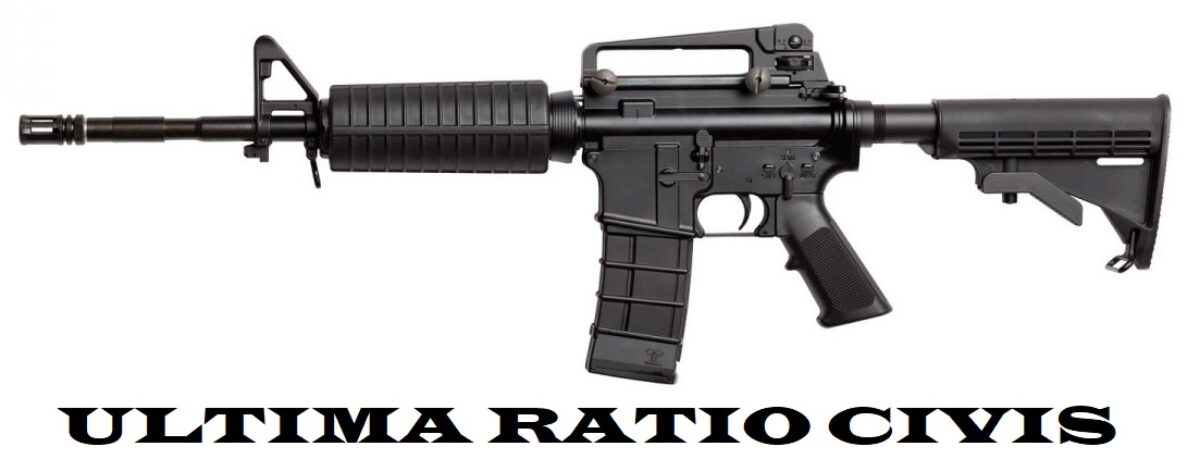
Nowhere in Bruen does the Supreme Court suggest that the only purpose of the Second Amendment is to protect the individual right of self-defense. That’s a ludicrous argument, given both the text and history of the amendment and how the right to keep and bear arms has been exercised since 1791. But the next time an anti-gunner tells you that no one needs an AR-15 for deer hunting, ask them if they really believe that a bolt-action rifle is protected by the Second Amendment. They might tell you yes, but Everytown, Brady, and Giffords would beg to disagree.

String of missing or dead scientists ‘too coincidental’ not to be major concern, congressman says — as 11th mystery emerges

A diagram titled "Links between missing and dead officials" showing a network of deceased and missing scientists and officials from NASA, Los Alamos National Lab, and AFRL, along with their roles and connections.
A group of scientists have either mysteriously died or gone missing in the past three years.


WASHINGTON — The deaths or disappearances of 11 top US scientists and researchers is a matter of urgent national importance, a member of the House Oversight Committee insisted Friday.

Rep. Eric Burlison (R-Mo.) said his office had already been eyeing some of the “too coincidental” disappearances a year before President Trump told reporters Thursday that he had ordered an investigation.

The lawmaker argued the fate of the scientists is almost “certainly” linked to the access some had to classified aerospace, defense and UFO information — and may involve bad actors from China, Russia or Iran.

“This is a rallying call to pay attention to this issue and make sure that our nation’s top scientists are safe and secure,” Burlison told “Fox & Friends.”

“This is too coincidental, and so we have to be investigating this. We need to have our nation’s top investigators, the FBI and every agency looking into this matter.”

Some of the scientists, Burlison noted, “literally just disappeared” without a trace — including Air Force Maj. Gen. William “Neil” McCasland, who vanished in February after Burlison said he tried to contact him twice about his research into Unidentified Anomalous Phenomena (UAPs) — government-speak for UFOs.

Investigators claimed McCasland had experienced “mental fog” before disappearing from his home in Albuquerque, NM.

The retired general had worked in top positions pertaining to space research and acquisition, with his name even appearing in the WikiLeaks dump of Hillary Clinton campaign chairman John Podesta’s emails, with former Blink-182 singer Tom DeLonge claiming to have conversed with him about UAPs.

In many cases, the congressman continued, these scientists “felt some form of threat” and “left all of their devices at home” before they dropped out of sight.

“This is not normal,” Burlison said on Fox. “These are some of the most advanced scientists, researchers in our nation, some of the most important people for national security efforts. And they all just mysteriously disappeared.”

Continue reading “”

Translation translation:
Please don’t shoot me Bro!


Translation:
[President of Iran Masoud] Pezeshkian disavows any responsibilities and says he is “without authority, completely cut off from the leadership structures, and there is no justification for targeting him.”

A political advisor in a Gulf state confirmed that Iranian President Masoud Pezeshkian informed a number of his counterparts in the Arab Gulf and other countries, including Russia and Turkey, that “in light of the collapse of the constitutional leadership structure in the country and his disconnection from communicating with its components, he absolves himself of responsibility and emphasizes that there is no justification for targeting him.”


Virginia’s Democrat Senate Majority Leader on Why Their ‘Assault Weapons’ Ban and Magazine Capcity Limit Really Isn’t a Big Deal

If you have an assault rifle, you can keep it. If you have an assault pistol, if you have one of these pistols with a silencer on it and a pistol grip in the front. A really big, big pistol…you want to have one with a telescope on it or lasers or whatever else you want, that’s okay. You just can’t buy a new one and you can’t sell it to anybody. If you want to have a magazine with more than 15 bullets, you can keep that, too. You just can’t buy a new one.

— Virginia Senate Majority Leader Scott Surovell

“blast radius”


D.C. Claims Chaos Will Ensue if Magazine Ban Disappears

Last week a three-judge panel on the D.C. Court of Appeals (which is the highest local court in the District) ruled the District of Columbia’s ban on ammunition magazines that can hold more than ten rounds violates the Second Amendment. These magazines are “arms”, the court concluded, and they are unquestionably in common use for lawful purposes, which means that they’re protected by the U.S. Constitution.

Now the District of Columbia is hoping to reverse that decision through an en banc review, and is asking the Court of Appeals to keep the ruling from taking affect while it appeals.

In its request, the District claims that the panel’s decision “has created uncertainty and chaos” and that the “blast radius of the decision is potentially massive”, arguing that the opinion also impacts “exceedingly common charges governing unlicensed and unregistered firearms.”

I think D.C.’s licensing and registration requirements are equally unsound from a constitutional perspective, but there’s nothing in the panel’s decision that impacts those statutes. The opinion released by the court deals exclusively with the District’s prohibition on commonly owned magazines, and the only uncertainty resulting from the decision is whether or not the ban is still actively being enforced.

The U.S. Attorney’s office has already declined to pursue charges against any legal gun owner caught with a “large capacity” magazine, though the D.C. Attorney General’s office has continued prosecuting possession cases.

The D.C. Court of Appeals hasn’t granted the District’s request, but the opinion will likely remain on hold while the en banc review is being considered. The court has set an expedited briefing schedule that will conclude next Wednesday, and a decision on granting or denying the en banc request could come by the end of next week.

There’s an easy way to ensure there’s no confusion over the panel’s decision: let it stand and take effect.

Continue reading “”

Arkansas dad on trial for killing daughter’s rapist wins GOP primary for county sheriff

A man who is currently awaiting trial on a murder charge in the death of his daughter’s alleged rapist has now won the Republican primary for county sheriff in Arkansas.

Aaron Spencer bested incumbent John Staley in the Tuesday primary for Lonoke County sheriff. Unofficial results show Spencer received more than 53 percent of the vote, according to the Associated Press.

Spencer is currently awaiting trial in the shooting death of 67-year-old Michael Foster, who had been charged with multiple sexual offenses involving Spencer’s teenage daughter and was out on bond at the time of the killing.

Spencer has pleaded not guilty and is free on bond while awaiting trial. His legal team has not denied that he shot Foster but has argued that Spencer acted within the confines of the law to protect his child. The trial was scheduled for January but was delayed after the presiding judge was removed from the case.

If convicted of the killing, Spencer would be unable to serve as sheriff.

During his campaign, Spencer focused on failures in law enforcement. In a post last month, he said that if elected, he would create a team dedicated to combating sex crimes against children.

In a statement following the primary, Staley said, “Congratulations to Mr. Spencer. Tonight the voters made their decision in the Republican Primary, and I respect the decision.” Staley’s department arrested Spencer in 2024 in connection with the shooting.

Spencer will now face Democratic candidate Brian Mitchell Sr. in the general election. Lonoke County is a heavily Republican county.

In October of 2024, Spencer found his daughter missing from his home and searched for her in his truck, where he found her in the passenger seat of a vehicle that Foster was driving. Spencer allegedly forced Foster off the highway and later called 911 to report he had fired shots.