

July 30, 2026
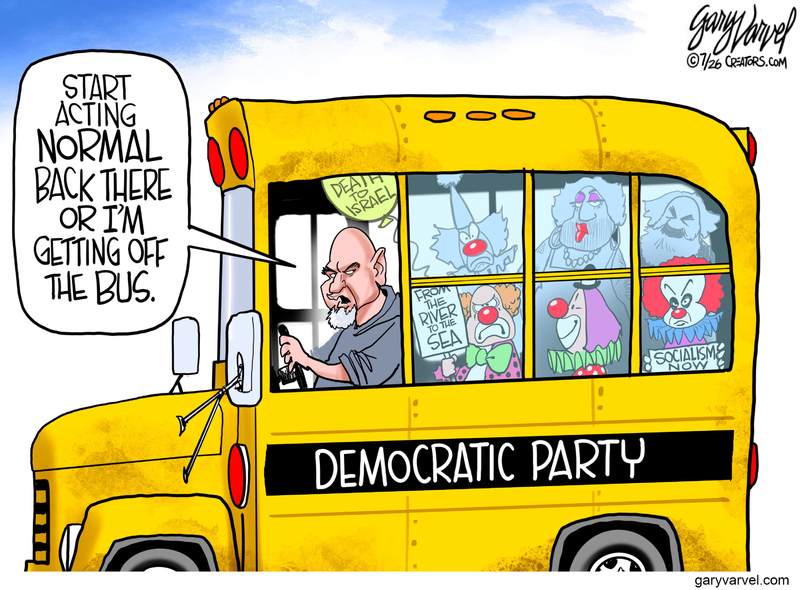
I’ve posted this elsewhere so it’s a recycle(sorry about that). If they admit to themselves that they were wrong, and seriously wrong, then they might start wondering about what else they might be wrong (umm, incorrect?) about.
And where does that lead, Immigration, Climate Change? Were they wrong about Israel\Gaza? Were they wrong about Trump (the horror, the horror). Were they wrong about Socialism, Communism, China, Net Zero. The Population Bomb exploded in their face, ditto Peak Oil, And so on and so forth.
Deep down they can’t admit the people they consider inferiors (intellectually, morally, ethically, spiritually fillintheblankly) might have been correct. Once the Cascade Preference starts you don’t know where it will end. The horror, the horror, indeed.
By the way as the old saying goes With Friends like that who needs enemies. I believe the correct appellation is he was a Fair Weather Friend.
Why Fauci Matters
He’s not just a powerful guy who acted in bad faith. He’s a totem to a whole class of people who don’t care about that.
This is old inside- baseball blogger stuff in part, but there’s a bigger lesson.
Old time (and I mean old-time) blog readers may remember Jeff Jarvis’s fierce post-9/11 warblogging, which pivoted rather suddenly into leftish pro-Democratic blogging in time for the 2004 election. Jeff and I were close before the pivot (he got me my long-ago MSNBC gig), and remained friendly even after. We were Facebook friends from the beginning, though our interactions over the past decade-plus were confined to the occasional like or happy birthday.
Then the other day I posted this:

Jeff’s response was “He saved lives. What have you done?” My reply was “Did he?”
A few of my friends came on to suggest, politely enough, that Fauci’s contribution was mostly negative and Jeff abruptly responded “Good-bye, Glenn,” and unfriended me.
Well, I will survive the shock of that blow, but it struck me — after all those years of disagreeing on politics, this was the straw that broke Jarvis’s back? Anthony Fauci? Especially now, when he’s the butt of self-incrimination jokes? In front of Congress, Fauci wouldn’t even say what color his tie was. (I’m trying to talk one of my distiller friends into putting out a limited run of Fauci whiskey, with the slogan “Take the Fifth!”)
Why Fauci, and why now?
I think the answer is that Fauci, and Faucism, represented the apotheosis of what the managerial/academic/journo class desires: An excuse for sweeping power, based on (alleged) expertise, in which they could ride roughshod over those stupid proles and flyover people while preening about the allegedly superior moral and intellectual qualities that justify their rule.
Then it turned out that they were wrong about nearly everything and — as Fauci’s diaries demonstrate — knew it at the time, at least at the top. And their overreach is one of the things that gave us Trump 47.
That this is out in public now produces cognitive dissonance. The easiest thing to do is to check out of the discussion. And so. Well, goodbye, Jeff, if by chance you’re reading this. I never stopped liking you, but I confess I liked the pre-pivot Jeff better. Enjoy your life as you are now.
Another Win: DOJ Pulls Its Appeal of a Ruling that Carry Bans In Post Offices are Unconstitutional.
Another significant victory has emerged in the ongoing effort to roll back unconstitutional restrictions on the right to bear arms in places that millions of law-abiding Americans visit every day in every state in towns across the nation. This time, the challenge centers on one of the most familiar public institutions across the country: local post offices.
Last week, the U.S. Department of Justice voluntarily withdrew its appeal of a federal court decision that enjoined enforcement of the federal ban on carrying firearms at U.S. Post Office facilities. This withdrawal is yet another meaningful shift in the Trump administration’s approach to defending the Second Amendment by not defending firearm regulations that lack historical support as required by the U.S. Supreme Court decision in New York State Rifle and Pistol Association v. Bruen.
For decades, federal law and Postal Service regulations have broadly prohibited law-abiding citizens from possessing firearms on postal property. Unlike courthouses or other secure government facilities, neighborhood post offices are buildings that millions of Americans visit daily to conduct routine business as they go about their day.
Yet federal regulations treated every post office as a categorical “gun-free” zone regardless of whether an individual possessed a state issued concealed carry permit or otherwise posed any type of threat to public safety. Of course, local post offices are not “gun free zones” in any meaningful way, as they do not screen for unauthorized weapons and count on criminals to follow the same “honor system” as law-abiding citizens.

Marines Just Added AI That Turns M240 Machine Guns Into Drone Killers
The Marine Corps selected Allen Control Systems’ Bullfrog for L-MADIS, adding autonomous firepower and cheap kinetic kills against drones.

The Marine Corps has selected Allen Control Systems’ Bullfrog autonomous weapon station for integration into its Light Marine Air Defense Integrated System (L-MADIS) under the Ground-Based Air Defense (GBAD) program, according to a company announcement this week.
“The Marine Corps requires the most sophisticated and accurate possible capabilities to carry out its critical missions,” said Mike Wior, co-founder and CEO of Allen Control Systems, in a press release provided to Military.com.
We are honored to support Marines with fast, scalable, and cost-effective counter-drone solutions that integrate seamlessly into existing platforms.
How Bullfrog Works
Bullfrog is not a new gun. It is a robotic weapon station that uses artificial intelligence, computer vision and precision robotics to transform legacy or modern firearms into systems capable of autonomous detection, tracking and engagement of aerial threats. The version selected for the Marine Corps is built around the M240 7.62mm machine gun.
Charter Arms® Introduces the New Walker Revolver Series

Charter Arms, manufacturers of affordable, 100% American-made revolvers for more than 60 years, is proud to announce the introduction of the new Walker Series of revolvers.
The Walker is an ultra-compact, rimfire revolver designed for concealed carry. It is available with either a .22 LR or .22 WMR chambering; both have eight-round capacities.
“We couldn’t be happier to offer this .22 caliber revolver series,” said Charter Arms owner, President and CEO Nick Ecker. “Customers have praised its concealability, accuracy, and design. This new series offers the ultimate in dependable performance.”
The new .22 Walker Series from Charter Arms delivers lightweight confidence in a sleek, modern concealed-carry platform built for everyday reliability. Designed for shooters who value simplicity, comfort, and dependable performance, the Walker combines an ultra-compact profile with eight-shot capacity in either .22 LR or .22 WMR.
It’s somewhat difficult to realize that it’s been a year since Pater Familias passed away. After diligent investigation by several members of the extended family, we had earlier concluded he was the first to attain the century mark, and in his strength, 5 weeks short of 101 years, on either side of his family, attained a mark that will likely not equaled, much less surpassed for quite awhile.
Life goes on.

Rebellion to tyrants is obedience to God.
— John Bradshaw
July 29, 2026
THE “CONSPIRACY THEORISTS” KEEP BEING VINDICATED
We were… right.
– Social distancing was a hoax
– Masks were a joke
– Lockdowns were worthless
– mRNA jabs were dangerous
– Case fatality rate was low
– Ivermectin worked
– Hydroxychloroquine also worked
– Remdesivir was a killer
– COVID came from the Wuhan lab
– Fauci funded it…— Liz Wheeler (@Liz_Wheeler) July 27, 2026
Tuesday's thought of the day…
Democrats tell us a baby in the womb isn't a baby but expect us to believe a man wearing a dress is a woman.
Remember this when you vote in November.
— Tom Petit (@tompetit98) July 28, 2026
Imagine Thinking More Gun Control is the Answer to California’s Crime Problem.
Tragically, a murderer opened fire at a Fourth of July weekend block party in Compton, California earlier this month, killing 37-year-old Eric Washington and 19-year-old Meah Bordenave-Jenkins and wounding three others. The victims and their loved ones deserve justice. Police arrested one suspect, 54 year-old Antoine Jones, two weeks later and charged him with murder in Bordenave-Jenkins’ death. He deserves prosecution and punishment to the fullest extent of the law. The suspect in Washington’s death is still at large.
California state Democratic Assemblymember Mike Gipson, however, quickly used this latest tragedy to call for…stronger state and federal gun control laws. He cited background checks, age restrictions and so-called “red flag” laws as “basics” that would reduce criminal violence.
The problem with Assemblyman Gipson’s demands, though, is that California already has all three. The state routes firearm transfers, including private-party transfers, through licensed firearm retailers. Law-abiding purchasers face a background check and mandatory 10-day waiting period. California generally prohibits firearm sales to anyone under 21 and has an expansive “gun violence restraining order” system.
Nothing publicly reported about the Compton attacks establishes that yet another restriction on lawful firearm purchases would have prevented them. Once again, California’s answer to criminals breaking the law is to suggest writing yet another law further burdening the Second Amendment rights of the people who aren’t breaking the laws in the first place.
Criminals Aren’t Waiting for Another Law
A person willing to wantonly fire into a crowd is not waiting for Sacramento to clarify the rules. Alleged murder, attempted murder, illegal firearm trafficking and criminal misuse are already serious crimes. Even in California.
New mandates on lawful firearm purchases only reach people who appear in person at a lawful firearm retailer, present identification, pay government fees, complete paperwork and submit to government background checks. They do not deter criminals who circumvent lawful commerce or unlawfully possess firearms despite being prohibited.
California should focus on prosecuting violent offenders, dismantling illegal trafficking networks and imposing meaningful consequences on those who illegally possess and misuse firearms. Instead, Sacramento wants to further burden lawful gun owners and firearm retailers while criminals remain unimpressed. After all, as NSSF has repeatedly pointed out, the overwhelming majority of criminals who commit their crimes using a firearm obtained that gun in an unlawful way. That includes theft, the black market or other illicit means.
Ban the Lawful Pistol, Ignore the Criminal Reality
One textbook example is Assembly Bill 1127, which took effect July 1. The law prohibits firearm retailers from selling certain popular semiautomatic pistols that California defines as “machinegun-convertible.” It targets pistols with a cruciform trigger bar that criminals can illegally alter by installing an already-illegal “machinegun conversion device,” or MCD.
As stated, those MCDs are already illegal. California law — not to mention federal law — already prohibits the import, manufacture, sale, possession and transportation of machineguns, with violations punishable as felonies. Installing the illegal device creates an illegal machinegun. NSSF reminds all lawful gun purchasers to stay on the “Right Side of Legal.”
California’s response was not limited to pursuing criminals who manufacture, traffic or install the MCDs. It banned retail sales of unaltered, commonly-owned pistols to law-abiding citizens. These firearms have been purchased, owned and relied on for years by numerous Californians, including law enforcement officers as well as law-abiding gun owners. Even former Vice President Kamala Harris admitted to owning this style of handgun.
The U.S. Department of Justice sued California the day AB 1127 took effect, challenging both the pistol prohibition and the state’s restrictive handgun roster, stating the law violated the Second Amendment.
“The Second Amendment is a sacred right belonging to all Americans, even those in California,” Acting Attorney General Todd Blanche stated in a press release. The lawsuit places California’s newest handgun restriction before a federal court, where it belongs.
Rights Buried in Ammunition Red Tape
California’s ammunition system follows the same model. Most buyers must undergo an eligibility check for every transaction. The standard background check costs $5 and depends on the buyer’s identifying information matching an entry in the state’s Automated Firearms System. A mismatch means rejection.
Those without a matching record may need an additional $19 basic check that can take several days. The California Department of Justice retains ammunition sales records and transfer information, and residents who buy ammunition outside of the state generally must route it through a licensed California vendor before taking possession.
California Waterfowl has documented hunters struggling with outdated addresses, mismatched records and delays. Some reportedly missed hunting seasons while attempting to correct state records. The system creates those obstacles for hunters, target shooters and lawful gun owners trying to comply, not criminals obtaining ammunition illegally.
Thankfully, the restrictions remain under constitutional challenge in Rhode v. Bonta. A three-judge panel of the U.S. Court of Appeals for the Ninth Circuit ruled in July of 2025 that the regime violated the Second Amendment. The court later granted an en banc rehearing and vacated that opinion. The full court heard arguments in March of 2026 and California continues enforcing the system while a decision is pending.
Even California Gov. Gavin Newsom has been caught in the web he helped create. A SIG SAUER pistol given to him by podcaster Shawn Ryan remained with a licensed firearm retailer months later. Taking possession would require California’s background checks, paperwork, Firearm Safety Certificate, waiting period and other conditions — a fitting demonstration of the barriers ordinary law-abiding Californians face.
The Second Amendment does not disappear before or after a criminal commits a terrible act. Nor does tragedy give lawmakers a blank check to further burden citizens who had nothing to do with the crime.
The Compton families deserve answers and accountability. They do not deserve to have their loss used to justify another restriction aimed at lawful firearm ownership, which will do nothing to make Californians safe.
The state should stop treating constitutional rights as a problem and start treating violent criminals as the problem. The DOJ’s lawsuit and the pending Rhode decision will test whether federal courts finally force California to recognize that distinction.
‘Gun Violence Prevention’= The New Gun Control Camouflage
It has been called “gun safety legislation,” “gun reform,” and “gun responsibility,” but it all boils down to the same thing: gun control.
And lately, the gun prohibition lobby and its allies in government from town councils to Congress have been using a new bit of grammatical camouflage to make the same old thing sound more reasonable.
The term is “gun violence prevention.” Wipe away all the fluff and you wind up with the same thing, simply repackaged.
In the aftermath of a pair of multiple shootings in Minneapolis, inforum.com ran this headline: “2 mass shootings in Minneapolis over the weekend fuel calls for gun violence prevention.” To its credit, the subhead acknowledged, “Calls for gun control continue in the wake of recent shootings ahead of the November election and on the heels of a failed legislative fight.”
Other news reports about gun control have not been so candid.
The National Urban League recently announced plans for Chicago by declaring, “Local Leaders Call for Designated Gun Violence Prevention Department in Chicago.”
The story explained, “Some community members and faith leaders believe creating a so-called Department of Gun Violence Prevention could help keep people safe in Chicago.” The Urban League asserted this new agency would “support community-based solutions and ensure the department exists regardless of who is in City Hall.”
One familiar name popped up: Father Michael Pfleger. For a man of the cloth, he’s been busy for many years stirring up trouble against local gun stores in Cook County.
Over in Michigan, gubernatorial candidate Jocelyn Benson is saying, according to this video, calling “gun violence prevention (a) top priority in” that state’s race. Benson is currently Michigan’s secretary of state, and according to a profile at Wikipedia, she’s a member of the Democratic Party and is a former law school dean.
In upper New York, Spectrum reported over the weekend that “Law enforcement and community groups in the cities of Buffalo and Niagara Falls are receiving state funding after multiple Fourth of July weekend shootings.”
According to the headline, “Violence prevention funding awarded to Buffalo, Niagara Falls after Fourth of July weekend shootings.” The story explains, “The effort comes as part of the state’s Gun Involved Violence Elimination (GIVE) initiative, SNUG Street Outreach program and Project RISE (Respond, Invest, Sustain, Empower). Funding will be administered by the state Division of Criminal Justice Services.”
Earlier this year, Ohio state Rep. Darnell T. Brewer, a Cleveland Democrat, quickly reacted to an incident in which a toddler suffered a self-inflicted gunshot wound with an unsecured firearm. As a politician, Brewer’s response was to call for another law.
“Rep. Brewer Urges Calls for Immediate Action on Gun Violence Prevention Legislation After Another Ohio Child Shot,” read the headline of his news release.
Whatever anti-gunners prefer to call it, their efforts all amount to gun control. Call it by another name, it’s still the same thing.
Still Think That Interpretation of 2A As Individual Right Is New?
One of the most bizarre talking points among anti-gun zealots is that the Second Amendment preserves a collective right, that “the right of the people” really meant the states, even though the Constitution specifies states and numerous points. For these folks, the idea that the Second Amendment is an individual right was something that sprang up in the 20th Century, fully formed as if from the head of Zeus.
Kostas Moros has a really good thread debunking that claim with 19th-century sources on X.
However, Catherine Salgado, writing at our sister site, PJ Media, has a fantastic bit from the 18th century that is relevant.
America’s Founders firmly believed that the right to keep and bear arms was the right that safeguarded all others, and this belief is one we must recall in this 250th year of our nation’s existence.
On this date, July 23, 1793, Roger Sherman died. While many Americans have forgotten his name, he was the only one of the Founding Fathers to sign all four of the documents considered most key to the birth of the United States: the Continental Association from the First Continental Congress, the Declaration of Independence, the Articles of Confederation, and the U.S. Constitution.
Indeed, Sherman was on the Committee of Five that drafted the Declaration of Independence. Having been present at so many of the most important moments of the Revolution and the establishment of our republic, Sherman understood how vital it was for ordinary citizens to be able to defend themselves.
Like many of his fellow leaders of the Revolutionary generation, Sherman expressed his strong conviction about the importance of what we now call the Second Amendment. In 1790, only a few years before his death, he made the following comment:
[I] conceived it to be the privilege of every citizen, and one of his most essential rights, to bear arms, and to resist every attack upon his liberty or property, by whomsoever made. The particular States, like private citizens, have a right to be armed, and to defend by force of arms, their rights, when invaded.
Notice that while he is discussing the topic of militias, he makes it very clear that every citizen has a right to keep and bear arms separate from the right to serve in a militia. Democrats sometimes try to claim that the Founders meant gun rights to operate only in the context of militias, which is false.
Exactly. While Sherman was talking about militias, he specifies private citizens. He also notes that the states should be defended “by force of arms” when invaded, and I think that’s vitally important, too.
After all, if the right of the people to keep and bear arms means the militia, then why did Sherman—a man who was on the committee that wrote the Second Amendment, mind you—name both states and private citizens? The answer is because the right of the people is the right of private citizens to keep and bear arms, which he should then use to “resist every attack upon his liberty or property, by whomsoever made.”
In other words, he should defend himself from all threats, foreign and domestic, with his own arms, even if the domestic threat comes from his own government.
This is a man who, at the very least, was in the room when the Second Amendment was written. He was intimately involved in the discussions about which rights should be preserved and why. He knew what the thinking went behind the Second Amendment, and he knew damn good and well that it was always intended as an individual right, though one the state could draw from in time of war.
Understand that this concept that it was never an individual right until the 20th century is nothing but revisionist history. It’s an attempt to try and trick originalists into supporting gun control or a tool used to attack originalists for not supporting it. It has little to no basis in history. Sherman’s own words make that ridiculously clear.
In fact, it was the anti-gun “militia only” interpretation that was an artifact of the 20th century, and one that should be relegated to the dustbin of history immediately.
Krzysztof Szczawinski
The gun is the most misunderstood object in Western civilization. Not a weapon. A technology. The technology that made the idea of equality physically real.
1. The longbow democratized warfare – a peasant could kill a knight with a stick and a string, and Agincourt proved it. The gun completed the process. The armored warrior class whose claim to social dominance rested on physical superiority became obsolete. The aristocratic monopoly on violence ended not with a philosophy but with a mechanism. The gun is the physical enforcement of the idea that all men are created equal. Which is why the American founders put it in the second amendment – not as an afterthought, but as the guarantee of everything else.
2. The Roman citizen had the right to bear arms. The Greek citizen had it. The English yeoman had it. The Swiss canton built its entire civilization on it. The disarming of the population has always been, in every civilization, in every century, the first act of the government that intends to stop being answerable to that population. Show me a disarmed population and I will show you a population that lost something else shortly after.
3. The Second Amendment is not about hunting. It is not about sport. It is about the relationship between the armed citizen and the state – the explicit constitutional acknowledgment that the citizen’s right to defend himself, his family, and his civilization against any threat, including the government itself, is not granted by the state and cannot be revoked by it. Power flows upward from the armed citizen, not downward from the armed state.
4. The gun defends the family. The woman alone with her children. The farmer on the edge of civilization. The shopkeeper in the neighborhood the police no longer patrol. The gun is the equalizer – the technology that makes the physical difference between a large man and a small woman irrelevant. Every argument for disarmament is, at its core, an argument that the state will protect you better than you can protect yourself. The evidence for this proposition is not encouraging.
5. In Europe, the disarmament is now nearly complete – and it happened precisely as the state’s ability and willingness to protect its citizens began to decline. The timing is not coincidental. A population that cannot defend itself must trust the state to defend it – which is a population that cannot effectively question whether the state is doing so. The dependency is the design.
6. The gun is a civilizational technology in the deepest sense: it requires responsibility, judgment, and the willingness to accept the consequences of your decisions. You cannot outsource it. You cannot have a committee fire it. It is the most anti-bureaucratic object ever invented – a direct, personal, consequential instrument that puts the full weight of the decision on the individual holding it. Which is precisely why the administrative state finds it intolerable. Not because it is dangerous. Because it is sovereign.
7. The family that can defend itself does not depend on the state for its most fundamental security. The civilization that can defend itself has not yet outsourced its survival to an institution that will negotiate the terms of that survival on its own behalf. The gun determines who controls violence – and therefore who controls everything that violence can threaten. Which is everything. The Sobieski who rode down the hill had a sword and sixty thousand horsemen. The equivalent today is the armed citizen who understands what he is defending and why. Every civilization that forgot this discovered it the hard way. The ones that remembered it are still here
The Perennial Problem With ‘in Common Use’.
In his majority opinion in Heller, the late Justice Antonin Scalia encoded a concept of “in common use.” Basically, guns that are “in common use” for any lawful purpose cannot be banned or restricted to such a point that they’re unusable for those lawful purposes. Self-defense is the most cited lawful use, and some judges seem to think that’s the only one, but it’s not. It’s any lawful use.
And, to be fair, in the here and now, the phrase “in common use” is a useful shield.
However, there’s a perennial problem with the phrase, and that’s because the world of technology isn’t static.
I’ve repeatedly noted that I’m a science fiction nerd. While I also hold tradition important and think things of the past should be preserved, I also think that the world marches ever forward and that’s a very good thing. People tend to focus on communication or transportation as big advances coming down the line, but firearm technology will also continue onward. That includes some things that are, mostly, science fiction now but won’t be forever.
For example, I’m fascinated by rail guns. The idea of firing a projectile at ridiculous speeds using electromagnets is awesome, and the test firing of the Navy’s examples shows a round going so fast it ignited the air around it. While Uncle Sam seems to have abandoned its rail gun project, at least for now, hobbyists are still piddling with them.
Sooner or later, someone is going to come up with something, even if it’s not a rail gun, that will take weapons technology in an exciting new direction. It’ll probably be expensive to start with, and primarily for the military, but consumers will want their own versions, too.
The problem? Because it’s a new technology, it’s not in common use anywhere. It’s too new, too expensive, and too rare for many people to have one, and that’s the problem.
The weapons not “in common use” are, at least theoretically, free to be restricted as “dangerous and unusual” weapons. In fact, because they’re weapons, they’re going to be dangerous, and because the technology is fresh onto the market, they’ll be unusual.
Anti-gun lawmakers will leap onto this little fact and start passing laws banning this new technology. Don’t want to believe me? Well, look at “ghost guns.”
People were building their own firearms for years before anyone ever uttered a word about them. Most criminals got their guns via the black market, theft, or straw buys. The idea of making guns was too much work for them.
But the moment that a lawmaker decided it was a problem, the push to ban them started. 3D printing just sped up the push because now, people were making them, selling them, and using them. Numerous states started banning them…but between 2017 and 2023, despite tens of thousands of homicides by firearm, so-called ghost guns accounted for just 1,700. That’s an average of around 242 per year. It wasn’t a problem, but it was scary, so lawmakers demanded legislation.
Now, let’s think about something new, like, say, personal rail guns or something else that represents a significant leap in firearm technology. Because they’re new but scary, do you think the anti-gunners won’t try to make a thing about them? They’ll blast the airwaves about how these rail guns are too dangerous for civilian hands, and because they’re too new to be “in common use,” they might actually survive legal challenges that they shouldn’t survive.
That’s the problem.
Our Founding Fathers didn’t say anything about “in common use” because, in their minds, that wasn’t the basis for which rights are governed. It wasn’t about how many people had some new bit of technology; if that technology pertained to one of the rights enumerated in and protected by the Bill of Rights, then it shouldn’t be touched.
So yes, “in common use” represents a very real problem, and one that I hope the Supreme Court addresses very soon. I’d hate to see a force of tyranny somewhere down the road have firepower, particularly on an individual soldier basis, that the citizenry cannot match.
All our liberties are due to men who, when their conscience has compelled them, have broken the laws of the land.
—William Clifford