NY vs. NRA: Statement by Former BOD Timothy Knight

The verdict in the NY vs. NRA case is due shortly.

Although I believe the case had some political motivations behind it based on the words of the New York Attorney General when she was running for office, I don’t think NRA members should dismiss the grave concerns revealed in what is now several court cases.

I, along with a few other directors, expressed concerns over the misappropriation of funds both internally and then later publicly in 2019.

We recognized who our boss actually was: our fellow members who were faithfully paying their dues.

We did not believe the NRA Board and management were holding to the mission of the Association, nor were they being transparent about expenses. Every NRA Director has a duty to the members, the law, and the NRA’s mission statement. Several of us were dismissed from our committees and accused of disloyalty towards the NRA for raising our financial concerns. Most Board members were too scared to stand up to Wayne and his cronies, especially Marion Hammer. Other Board members were part of the management cabal themselves and had no intention of changing a thing. So, the Board circled their wagons and remained silent. They were unwilling or unable to speak up or divided on where their loyalties lay.

The current NRA Board has failed in its duty to the NRA members, and I think that every single Board member who hasn’t openly spoken up about reform and responsibility should resign immediately.

Our Association deserves bold, honorable, and honest Board members focused on their legal responsibilities and on the members who elected them. No more should they focus on those who can dole out favors, vacations, car rides, consulting fees, and other grafts. We need to stop electing the silent, the complicit, or those who hope to be “trusted remainders” when this all blows over. Board members who are 2nd Amendment heroes, politicians, or captains of industry might once have been effective for our association. They are no longer effective and need to resign as well.

To fix our association, we need a much smaller board with term limits as well as a significant revision of the structure the board operates under. Strict disclosure rules for Board members and management need to be enforced and shared with NRA members during the annual meeting. This information should be disclosed to everyone during the main members’ business meeting, which is open to the public.

I trust the members who make up the association and in the mission statement that should always keep it focused. We need new leadership and a new board now. If both do not change, the slow degradation of our once great association will do more damage to our civil rights, hunting culture, gun safety education, and competitions that we can ill afford. My fellow members, if the court does not grant you the remedy you think is deserved, please stop supporting the do nothing, ne’er do wells, and the faded heroes.

I look forward to the day when the NRA, once again, through hard work and results, regains the trust of millions of law-abiding gun owners. We are stronger when we stand together as hunters, competitors, enthusiasts, advocates, and educators.

Timothy Knight
NRA Board of Directors 2015-2019

Analysis: Can the NRA Recover?

A jury is currently considering the fate of the charges against the NRA and its top leadership. Whatever they decide, it’s worth asking if the nation’s largest gun-rights group can ever reach its former heights under any outcome.

The NRA, former CEO Wayne LaPierre, and the other defendants offered up their closing arguments while the New York Attorney General’s office tried to counter them on Thursday. Judge Joel Cohen then read out his instructions to the jury on how to decide the dispute on Friday. The six New Yorkers then headed back to deliberate and didn’t return.

They’ll be back at it on Tuesday. It’s possible–perhaps probable–that they will find the NRA and its leadership didn’t properly administer the non-profit’s funds. They may then recommend the judge force LaPierre and the other individual defendants to repay tens of millions to the NRA as well as ban them from working at any non-profit again. After that, the judge could appoint an overseer to scrutinize the NRA’s governing structure and operations.

If that happens, the gun-rights group will undergo what’s likely to be a significant internal makeover. If, instead, the jury sides with the NRA and individual defendants, it will probably continue on with the strategy it has been pursuing since the controversy began.

Either way, it will be a huge challenge for the group to return to where it was before the corruption allegations surfaced. In 2018, before the scandal blew up, the NRA’s Form 990 shows it brought in over $350 million. The group’s revenue has shrunk every year since then and was down to just over $211 million in 2022.

Of course, it’s hard to know exactly what will happen. The NRA has lost millions of members, and it’s not clear how many it has left. Regaining their trust will probably be a taller task for the NRA than other groups who’ve found themselves in at least somewhat similar circumstances.

Most non-profit scandals don’t drag on this long or reach the point of a jury trial. NRA leadership would likely argue that’s because the AG’s political bias has motivated her to take this case further than others, and the AG would probably respond by saying the NRA refused to come into compliance with the law by making necessary reforms.

Whichever view you take, the bottom line is that perfect examples of what might happen to the NRA really don’t exist.

However, some recent high-profile scandals might still be instructive. Two examples provide some particularly interesting insight into the different paths the NRA might take and how that could work out.

In 2012, the Susan G. Komen Foundation became the center of a public relations firestorm after it dropped grants for breast cancer screening exams at Planned Parenthood (before later reversing itself). The decision alienated a substantial portion of the group’s donor base and subjected them to political attacks. It also increased scrutiny of how the organization was run.

The scrutiny led to numerous stories on founder and CEO Nancy Brinker’s lavish spending habits and questionable governing style. Critics questioned her $400,000 salary. They also raised concerns over her expensive travel habits.

Brinker, who had built Komen into a nationally recognized charity, eventually stepped down to make way for new leadership. But that decision took over a year to take effect and came after she received a 64 percent raise that only generated more controversy.

Komen’s Form 990 shows it brought in just under $200 million in 2012. It shrunk fast after that, and it’s never recovered. In 2023, the group brought in just over $100 million.

In January 2016, the Wounded Warrior Project (WWP) came under fire for extravagant parties and luxury accommodations provided to its leadership and staff during retreats paid for by the veterans’ charity. By March, the group decided to fire its top executives. It cleaned the slate and moved forward under entirely new leadership from outside the organization.

The relatively quick action did not prevent tremendous donor backlash. The group’s 2016 990 shows it brought in over $320 million. It fell to about $225 million the next year and stayed under $300 million the next few years. However, the group has been able to recover its revenue. Last year, it brought in over $400 million.

So, what WWP did to respond to its spending controversy seems to have worked in the long term.

The accusations of misappropriation of funds in the NRA’s scandal eclipses the severity and duration of those for either Komen or WWP. Neither of the other groups ended up embroiled in a court case, and both ended up wiping away their leadership in an effort to win back donors.

The gun-rights group has experienced similar declines in membership and revenue to the other embattled charities. And it appears to still be shrinking.

To this point, the NRA has responded in a way closer to Komen than WWP. Given the makeup of current leadership, which includes LaPierre allies who approved the questionable spending that has them in court, it’s unlikely the group will change course if the judge and jury leave them in charge. If they’re ousted, there’s greater potential for the NRA to see a significant–though unpredictable–shift.

Swift and substantial reform appeared to work better for WWP than the slow and plodding path did for Komen.

It has already been five years since allegations that NRA leadership, especially LaPierre, diverted millions upon millions of the group’s funds toward private flights, five-star hotels, and luxury vacations or sweetheart deals with friends or family. The group is still run by largely the same people it was then, with LaPierre remaining in charge until this month and only stepping down of his own accord.

Even under the best-case scenario imaginable for the NRA, it will be challenging to win back the millions that have now abandoned the group. But it’s not an impossible task.

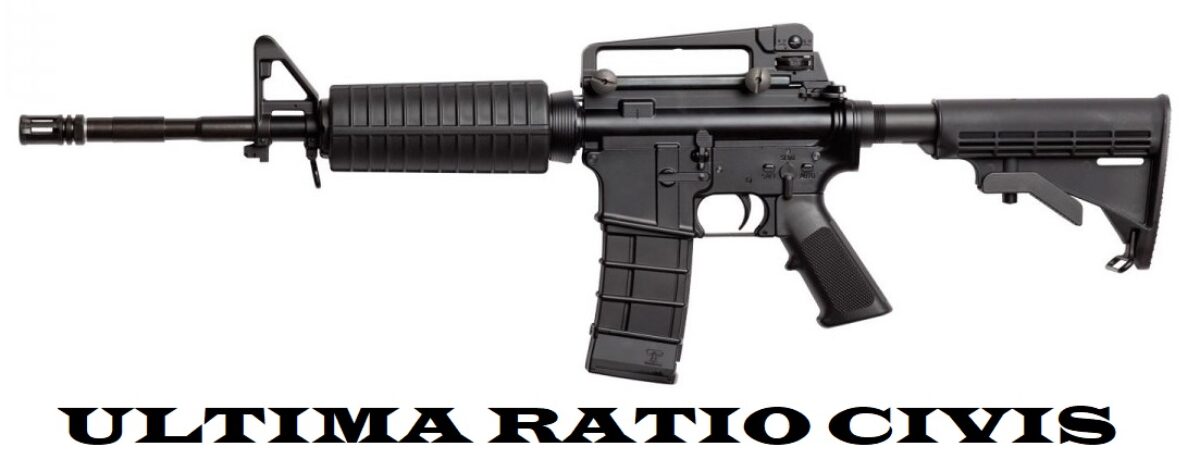
For your consideration.
I too, ‘sorta’ agree with Ms. Hammer.
And I totally agree with Mr. Richarson.


I Actually Agree With Marion On This

As weird as it may seem I find myself somewhat in agreement with Marion Hammer. I was forwarded an email from her to the NRA-EVP Search Committee.

She made the point that the committee needs to look outside the current NRA operations for the person that can be a success as the next CEO and EVP of the NRA.

Here is her email and the members of the committee:

TO: The Members of the NRA-EVP Search Committee:

Congressman Bob Barr – Chairman
Professor David Coy
Carol Frampton, Esq.
Curtis Jenkins, Esq.
Sheriff Jay Printz
Barbara Rumpel
Chief Blaine Wade

Friends,

At the risk of being redundant, I must say that these are tough times for the NRA.  The right leader or leaders is essential for NRA’s future.  I say leaders because I’m not sure that you can find one person who can do the job.

You might need someone to be the public face of NRA. To do the TV and all media coverage and essentially be the person out front representing NRA and the work we do.

You also might need to find someone to be the workhorse.  Someone to make the tough decisions about running the day to day operations who won’t be afraid to “break some eggs to make an omelet”  and who isn’t afraid to terminate people who are only interested in themselves and not the NRA and our cause.

I seriously doubt that anyone currently involved with NRA operations meets either need.  Don’t be afraid to look outside of NRA for fresh new leaders who care about NRA.  Our members are depending on you to find the right person or persons.

When I look at you, I see 2 current NRA Officers, 2 lawyers, 2 law enforcement representatives and one average person.  None of you is what I would consider a high end business person, yet we must look at the business perspective.

Whatever you decide, Is up to you.  I wouldn’t want to be in your position with the world watching me and expecting perfection.  Nonetheless, you must live in a “fishbowl” until the job is done, and then you must live with your decisions.

Please take your time and be thorough. Please be transparent with the NRA Board and don’t be afraid to reach out to Board members for information and advice. Always remember that there are good business people with incredible business knowledge on the Board who are there to serve.  Use them.

I wish you all the very best of luck as you embark on a mission that is essential for the future of NRA and our members.

Marion Hammer

Now as to what bothers me in all of this.

The committee is composed of the same old Board members who allowed Wayne to get away with his grifting, who didn’t object to Brewer’s billing, and who allowed a whole host of things that has led the NRA to be reduced to a shadow of its former self. Unless I am greatly mistaken and we the members get really lucky, anyone chosen by this bunch will not renovate nor reinvigorate the NRA. The organization will continue to muddle along with same old mindset appealing to an ever aging membership.

Interesting that Buz Mills was left off the list. Likewise, it is interesting Charles Cotton is off the list. Could this be so that Cotton could be their pick for the next EVP? God forbid!

NRA Board Elections: Support the Four for Reform Candidates

Four candidates dedicated to reforming the troubled NRA will be on the ballot for election to the NRA Board of Directors this year. Judge Phil Journey, Rocky Marshall, Dennis Fusaro, and me, Jeff Knox, all qualified for the ballot by petition of the members.

We are encouraging people to vote for only these four and no one else. This is called “Bullet Voting” and gives your votes more weight, increasing the odds of us winning seats.

Ballots are supposed to be in the March issue of NRA magazines for those members eligible to vote.

Winning a Board seat without the support of the current regime at the NRA is historically close to impossible.

Since only NRA Life Members, and those Annual Members who have been members for at least 5 consecutive years, without interruption, are eligible to vote, and since those eligible voters are only known to the NRA itself, and that information is not available to us, we have no choice but to use a shotgun approach in our attempts to get our message out. If we had access to the voter list, we’d reach out directly to those voters. If we had tens of thousands of dollars in our campaign coffers, we’d have placed ads in the various NRA magazines. But we don’t have access to the list, and we don’t have unlimited resources, so the best we can do is try to reach as many potential voters as we can through broad channels like AmmoLand News, email blasts, and asking others to help spread the word.

Each year, the NRA sends out around 2.5 million ballots to Voting Members, but only about 5% of those are ever returned, meaning that almost 2 million ballots are left on the shelf, taken to local libraries, relegated to the magazine rack next to the toilet, and eventually thrown away. Finding and activating those un-voted ballots this year could be the key to getting the reform candidates elected, so we need your help and the help of gun media nationwide.

  • He could order them to clean up their act and go forth to sin no more – which would leave the same people in charge who allowed this mess in the first place.
  • Or he could go so far as to dissolve the current board, throw out the current election, and order a new election, taking additional months.
  • He could also appoint a Special Master or overseer to take charge of reorganizing the NRA.

He has a lot of leeway and options, and we can only guess at what he might do, so we’re trying to position ourselves in the best position to participate in the resurrection of the Association, whatever the judge decides.

There’s also a good chance that the NRA will appeal any decision that goes against them, resulting in more delays and more NRA member money being poured into the pockets of lawyers. For the time being, our focus must be on getting our four reform candidates elected.

2024 NRA Board Election Reform Candidates Whos Who
2024 NRA Board Election Reform Candidates

Continue reading “”

Financial Big Brother is Watching You
A brief note on an overlooked nightmare.

A few weeks ago, Ohio congressman and Judiciary Committee chairman Jim Jordan’s office released a letter to Noah Bishoff, the former director of the Financial Crimes Enforcement Network, or FinCEN, an arm of the Treasury Department. Jordan’s team was asking Bishoff for answers about why FinCEN had “distributed slides, prepared by a financial institution,” detailing how other private companies might use MCC transaction codes to “detect customers whose transactions may reflect ‘potential active shooters.’” The slide suggested the “financial company” was sorting for terms like “Trump” and “MAGA,” and watching for purchases of small arms and sporting goods, or purchases in places like pawn shops or Cabela’s, to identify financial threats.

Jordan’s letter to Bishoff went on:

According to this analysis, FinCEN warned financial institutions of “extremism” indicators that include “transportation charges, such as bus tickets, rental cars, or plane tickets, for travel to areas with no apparent purpose,” or “the purchase of books (including religious texts) and subscriptions to other media containing extremist views.”

During the Twitter Files, we searched for snapshots of the company’s denylist algorithms, i.e. whatever rules the platform was using to deamplify or remove users. We knew they had them, because they were alluded to often in documents (a report on the denylist is_Russian, which included Jill Stein and Julian Assange, was one example). However, we never found anything like the snapshot Jordan’s team just published:

The highlighted portion shows how algorithmic analysis works in financial surveillance. First compile a list of naughty behaviors, in the form of MCC codes for guns, sporting goods, and pawn shops. Then, create rules: $2,500 worth of transactions in the forbidden codes, or a number showing that more than 50% of the customer’s transactions are the wrong kind, might trigger a response. The Committee wasn’t able to specify what the responses were in this instance, but from previous experience covering anti-money-laundering (AML) techniques at banks like HSBC, a good guess would be generation of something like Suspcious Activity Reports, which can lead to a customer being debanked.

If Facebook, Twitter, and Google have already shown a tendency toward wide-scale monitoring of speech and the use of subtle levers to apply pressure on attitudes, financial companies can use records of transactions to penetrate individual behaviors far more deeply. Especially if enhanced by AI, a financial history can give almost any institution an immediate, unpleasantly accurate outline of anyone’s life, habits, and secrets. Worse, they can couple that picture with a powerful disciplinary lever, in the form of the threat of closed accounts or reduced access to payment services or credit. Jordan’s slide is a picture of the birth of the political credit score.

There’s more coming on this, and other articles forthcoming (readers who’ve noticed it’s been quiet around here will soon find out why). While the world falls to pieces over Tucker, Putin, and Ukraine, don’t overlook this horror movie. If banks and the Treasury are playing the same domestic spy game that Twitter and Facebook have been playing with the FBI, tales like the frozen finances of protesting Canadian truckers won’t be novelties for long. As is the case with speech, where huge populations have learned to internalize censorship rules almost overnight, we may soon have to learn the hard way that even though some behaviors aren’t illegal, they can still be punished with great effectiveness, in a Terminator-like world where computers won’t miss anything that moves.

What a crazy time we live in! See you from the Nevada caucus, and watch this space for other news soon.