Just how many defensive gun uses are there each year?

Gun control will be a hot topic for a very long time. However, one area that doesn’t get discussed nearly enough is the total number of defensive gun uses.

While the media spends a lot of time talking about how many people die from gunshots each and every year–typically conflating suicides with homicides–in an effort to advance a gun control agenda, they ignore the many times law-abiding citizens use firearms defensively every year.

But just how many defensive gun uses are there?

How often are firearms used defensively in the United States? According to the most-recent study, about 1.6 million times annually. Over a lifetime, about a third of gun owners will use a firearm defensively at least once. This recent data is broadly consistent with decades of social-science research.

The first pollster to ask about defensive gun use (DGU) was the Field Poll in California in 1976. Over the subsequent 18 years, polling companies such as Gallup, Hart and Tarrance, as well as scholars and media, conducted their own surveys of DGU. They reported results as low as 764,000 annually (Tarrance, 1994) and as high as 3.6 million (Los Angeles Times, 1994).

In 1993, Florida State University criminology professor Gary Kleck conducted a survey that was much more methodologically sophisticated than all the above polls. Kleck included safeguards designed to weed out respondents who might misdescribe a DGU story. Kleck and his coauthor Marc Gertz found a midpoint estimate of 2.5 million DGUs annually, with a possible range of 2 to 3 million. Their study is described in the Kleck and Gertz article, “Armed Resistance to Crime: The Prevalence and Nature of Self-Defense with a Gun,” in the Journal of Criminal Law & Criminology (1995), which is available on the web, and is further described in Kleck’s 1997 book Targeting Guns. The book and the article also examine all previous surveys.

Oh, but some claim, Kleck’s work has been debunked.

Has it, though?

The same journal issue that published the Kleck & Gertz study also published a response by Marvin Wolfgang. He had long been the most-influential criminologist in the English-speaking world, and he was past president of the American Society of Criminology. Wolfgang wrote: “I am as strong a gun-control advocate as can be found among the criminologists in this country … . I would eliminate all guns from the civilian population and maybe even from the police. I hate guns … .

Nonetheless, the methodological soundness of the current Kleck and Gertz study is clear … . The Kleck and Gertz study impresses me for the caution the authors exercise and the elaborate nuances they examine methodologically. I do not like their conclusions that having a gun can be useful, but I cannot fault their methodology. They have tried earnestly to meet all objections in advance and have done exceedingly well.”

Wolfgang isn’t exactly an NRA supporter.

Of course, most of us have long known these numbers. We knew how many millions of defensive gun uses there are each year. It well outstrips the number of lives claimed by gunshot wounds, that’s for sure.

However, it’s interesting how even the smallest estimates for defensive gun use outstrip those numbers as well. Literally no credible study shows otherwise. Even the more heavily biased studies that put defensive gun uses at 100,000 each year still argue there are twice as many lives saved by guns than taken.

Why is the media ignoring this reality?

We all know why. They can claim they are simply neutral parties in the debate all they want, but they always seem to miss this. Even if they report the studies themselves, they never seem to make it into later stories about guns and gun control.

But the number of gun deaths always does.

Funny how that shakes out, isn’t it?

Well, Whaddya Know… Stats Validate What Gun Owners Have Been Saying For Years

A common narrative from anti-gun activists asserts that more guns equal more crime. But those of us who own guns have known this storyline to be false all along. It never made sense, and now we have data to prove it.

According to a recent study by the National Bureau of Economic Research, there is a direct correlation between gun ownership and crime, but that correlation doesn’t align with the storyline from the “guns are bad” crowd. In fact, shocker… it shows just the opposite.

The NBER analysis used Tennessee’s database for handgun carry permit holders, and then cross-referenced that data with crime statistics in those zip codes. It was determined that once information from the database was publicized, in areas where gun ownership was highest, burglaries were correspondingly lower. Conversely, in areas with relatively low gun ownership, burglaries were considerably higher:

“Our analysis suggests a post-publicization relative decrease – both in absolute and in percentage terms – in burglaries in zip codes with higher numbers of gun permits, relative to zip codes with median numbers of permits, and a post-publicization relative increase in zip codes with fewer gun permits: our estimates suggest an 18% relative decrease of burglaries in those zip codes with the largest number of gun permits.”

Well, who could have guessed such a sharp contrast? Anyone with half a brain, that’s who.

If a criminal is considering what areas and homes they want to target, there are a few factors they will weigh. Certainly, a burglar is going to want to focus on a residence that will have valuable belongings which they can take, but the first thing they’re going to assess is their own well-being. It’s human nature.

A house or apartment with a big Rottweiler or Dobermann Pincer? That could certainly deter a burglar. The same can be said regarding a residence with a sophisticated security system. Burglars certainly want to avoid getting bitten by a big dog or having police arrive at the scene of a burglary while it’s in progress. But as much as criminals dislike dog bites and jail time, what deters them most is the prospect of getting their heads blown off in an attempted burglary.

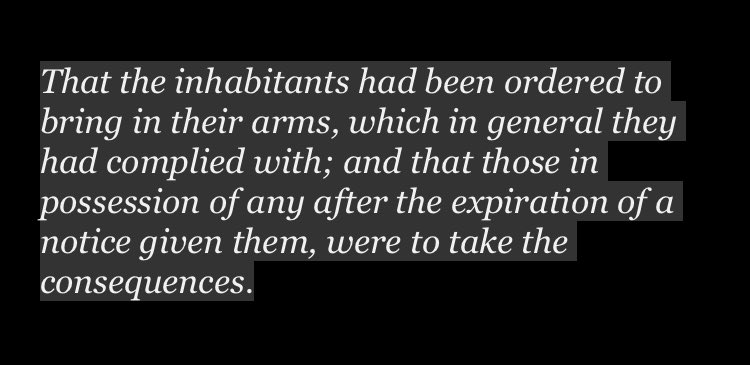
Responsible gun ownership is a good thing. Gun owners give criminals a serious reason to reconsider burglarizing someone’s home. Government officials thinking of becoming overly tyrannical must remember that they have an armed populace; and in some cases, that populace is heavily armed. Even foreign adversaries can be deterred by America’s gun-toting public, as was the case with both the Japanese in World War II and the Soviet Union years later.

It turns out that bad guys avoid messing with good guys who have guns.

By Jordan Case

M&P 15/22s Banned At Appleseed Events After Out Of Battery and “Run Away” Discharges

While I can’t seem to tear myself away from Bearing Arms long enough to head west to the home range at Ramseur as much as I would like, I am still an instructor at Project Appleseed. In my opinion, it offers some of the best positional rifle marksmanship training you can obtain anywhere for the price, and you’re treated to an incredible civics lesson with the cost of admission. I highly recommend it to everyone.

A warning was issued a short time ago on the Appleseed instructor forum that the popular Smith & Wesson 15-22 is banned from Project Appleseed events nationwide after a series of out of battery discharges recorded at several events.

I’m not going to embellish or sugarcoat anything for you; this is the notice, as it was written.

To: All Appleseed Instructors

Subject: TEMPORARY BAN ON SMITH & WESSON M&P 15/22 USE AT APPLESEED

EFFECTIVE IMMEDIATELY, THE USE OF SMITH AND WESSON M&P 15/22’S AT AN APPLESEED IS HEREBY BANNED UNTIL SMITH & WESSON FORMALLY INVESTIGATES THE PROBLEM AND ISSUES AN OFFICIAL CORRECTIVE ACTION. THE AOC WILL NOTIFY THE CADRE WHEN THIS BAN IS LIFTED.

The AOC has received a rash of reports regarding safety issues with the Smith & Wesson M&P 15/22, including a shooter getting injured as a result of an out-of-battery discharge (see reports below).

As responsible Instructors, we have a duty to maintain safety at our events. If we know a rifle to be potentially unsafe, we shouldn’t allow it on the line at all.

At this time the least risk course of action would be to exclude the Smith & Wesson M&P 15/22 from future events until Smith & Wesson formally investigates the problem and issues an official corrective action.

Continue reading “”

There’s an old joke:
Want a 5.56 NATO chamber? Fire 1000 rounds through your .223.
Nowadays, it’s less expensive to just have the throat reamed.


.223 Remington vs. 5.56 NATO: What You Don’t Know Could Hurt You

Is firing a 5.56 NATO cartridge in your .223 Remington chambered AR15 dangerous? Or do Internet forum-ninjas and ammunition companies selling you commercial ammo instead of surplus overstate the dangers?  Believe it or not, a real danger exists, and some gun owners who think they are doing the right thing may not be safe.

The Cartridges

The .223 Remington and 5.56×45 NATO cartridges are very similar, and externally appear the same.  But there are some differences that lie beneath the surface.

The 5.56 case has thicker walls to handle higher pressures, meaning the interior volume of the case is smaller than that of a .223.   This will alter the loading data used when reloading 5.56 brass to .223 specs.

Some 5.56 loads have a slightly longer overall length than commercial .223 loads.

The Chambers

The significant difference between the .223 Rem and 5.56 NATO lies in the rifles, rather than the cartridges themselves.  Both the .223 and 5.56 rounds will chamber in rifles designed for either cartridge, but the critical component, leade, will be different in each rifle.

The leade is the area of the barrel in front of the chamber prior to where the rifling begins.  This is where the loaded bullet is located when a cartridge is chambered.  The leade is frequently called the “throat.”

On a .223 Remington spec rifle, the leade will be 0.085”.  This is the standard described by the Sporting Arms and Ammunition Manufacturers’ Institute, Inc. (SAAMI).  The leade in a 5.56 NATO spec rifle is 0.162”, or almost double the leade of the .223 rifle.

A shorter leade in a SAAMI spec rifle creates a situation where the bullet in a 5.56 NATO round, when chambered, can contact the rifling prior to being fired.  By having contact with the rifling prematurely (at the moment of firing), chamber pressure can be dramatically increased, creating the danger of a ruptured case or other cartridge/gun failure.

The reverse situation, a .223 Rem round in a 5.56 NATO gun, isn’t dangerous.  The leade is longer, so a slight loss in velocity and accuracy may be experienced, but there is not a danger of increased pressures and subsequent catastrophic failure.

How serious is the danger of firing 5.56 ammo in .223 guns?  Dangerous enough that the SAAMI lists 5.56 military ammo as being not for use in .223 firearms in the technical data sheet titled “Unsafe Firearm-Ammunition Combinations.”

ATK, the parent company of ammunition manufacturers Federal Cartridge Company and Speer, published a bulletin entitled “The Difference Between 223 Rem and 5.56 Military Cartridges.”  In this bulletin, ATK stated using 5.56 ammo in a .223 rifle could result in “…primer pocket gas leaks, blown cartridge case heads, and gun functioning issues.”

However, the danger may be lower than SAAMI or ATK suggest.  In Technical Note #74 from ArmaLite, the company states “millions of rounds of NATO ammunition have been fired safely in Eagle Arms and ArmaLite’s® SAAMI chambers over the past 22 years,” and they have not had any catastrophic failures.

According to ArmaLite:

“Occasionally a non-standard round (of generally imported) ammunition will fit too tightly in the leade, and resistance to early bullet movement can cause elevated chamber pressures.  These pressures are revealed by overly flattened primers or by powder stains around the primer that reveal leaking gasses.”

What Do You Have?

So, if you own a rifle chambered for the .223 for 5.56, do you know for which caliber it is really chambered?

Many match rifles are chambered in .223 Remington (SAAMI specs) for tighter tolerances, and theoretically better accuracy.

Many of the AR-15’s currently sold on the market are made for the 5.56 NATO cartridge.  If you own one of these, you should be fine with any .223 or 5.56 ammunition.

However, ATK dropped this bomb in the bulletin on the .223/5.56:

“It is our understanding that commercially available AR15’s and M16’s – although some are stamped 5.56 Rem on the receiver – are manufactured with .223 chambers.”

So, even if your AR is stamped 5.56, is it really?  Check your owner’s manual or call the company directly and make sure you get an answer you feel comfortable with.

As if the confusion regarding the .223 vs 5.56 chambers wasn’t enough, there is a third possibility in the mix, that is being used by at least one major manufacturer.  The .223 Wylde chamber is a modified SAAMI-spec .223 chamber that allows for the safe use of 5.56 NATO rounds, but maintains tighter tolerances for better accuracy.

Yeah, yeah… What’s the bottom line?

Here’s the bottom line.  If you want to follow the safest possible course, always shoot .223 Remington ammunition.  The .223 Rem cartridge will safely shoot in any rifle chambered for the .223 or 5.56.

If you want to shoot 5.56 NATO rounds, make sure you have a rifle designed for the 5.56 military cartridge.  Shooting 5.56 in a normal .223 Rem rifle can result in bad things.

Duh.. Violent crime increasing the most in high crime neighborhoods


Mapping gun violence: A closer look at the intersection between place and gun homicides in four cities

The rise in gun homicides in the United States is having reverberating political ramifications at the federalstate, and local levels, with many elected officials falling back into “tough on crime” policies to curb the violence. This punitive turn can be seen in President Joe Biden’s proposed federal budget, in which he calls for “more police officers on the beat” and allocates an additional $30 billion for state and local governments to support law enforcement. Many local leaders are mirroring this approach, centering their gun violence prevention strategies on increasing funding for police and rolling back criminal justice reforms.  

What these enforcement-based approaches fail to recognize is that the recent rise in homicides is more nuanced than it appears. Rather than a widespread dispersal of gun violence within cities, the increases in gun homicides are largely concentrated in disinvested and structurally disadvantaged neighborhoods that had high rates of gun violence to begin with. This geographic concentration is a persistent challenge, not a new one—and it requires targeted solutions to improve outcomes in disinvested places rather than reverting to the old “tough on crime” playbook. 

This piece takes a deeper look at patterns of gun violence in four cities—Chicago, Nashville, Kansas City, Mo. and Baltimore—and finds that each city’s gun homicide increases were driven predominantly by increases in neighborhoods where gun violence has long been a persistent fixture of daily life, alongside systemic disinvestment, segregation, and economic inequality. These patterns point to the longer-term need to address the place-based factors that influence violence and invest in the critical community infrastructure that has not only been proven to make communities safer, but can also help them thrive.

Continue reading “”

BLUF:
The concept that an openly armed person is a provocation to attack appears to flow from a simple premise on the left: A person doing something a leftist does not like is a provocation to attack them. It is part of the broader philosophical abandonment of the rule of law.

Evidence for this theory exists in the left’s theory of speech from any opponent. Speech from an opponent is considered to be violent, and worthy of attack. Violence, from the left, on the other hand, is considered to be speech………..

Defining open carry of weapons as a legal provocation is Orwellian word manipulation.

Is Carrying a Gun Provocation to be Attacked

In the law of self-defense of almost all states, If a person is attacked, and reasonably fears for their life, they may legally defend themselves with deadly force. A small minority of states require a person to retreat from the situation if they can do so in complete safety.

In all states of which I am aware, a person may not use deadly force in self-defense, if they provoked the attack with the intent of using deadly force.

It is not legal to start a fight so the person who started the fight can kill someone who they provoked.

Mere possession of an openly carried weapon is not a legal provocation to attack.

The Left has been floating the idea that mere possession of a weapon is a provocation. They contend the sight of someone in possession of a weapon is sufficient provocation for a person to attack the person who possesses the weapon.

This creates a bizarre world where mere open possession of a weapon is sufficient to justify a deadly attack on the possessor. Apply this to the police. They almost always carry a deadly weapon, openly.

This concept is contrary to common sense and the experience of thousands of years.

Continue reading “”

As Crime Grows, Biden’s Radical War On Self-Defense Is Alienating Voters

President Joe Biden’s unpopular gun control moves are doing little to appease his gun control donor class. Worse, those same moves are distancing him from voters that clearly see crime as a central issue and gun ownership as a right to be protected.

Among the unpopular policy positions dragging down his presidency is his myopic focus on gun control instead of crime control. The Biden White House has pursued the most far-reaching and radical gun control agenda of any president, previously naming a gun control lobbyist to run the Bureau of Alcohol, Tobacco, Firearms, and Explosives (ATF) whose nomination was defeated when not even all Senate Democrats could support the nominee.

Biden has since nominated Steve Dettelbach, who once campaigned for public office on a gun control platform. President Biden is also circumventing Congress’s authority to write laws by issuing an administrative rule to redefine frames and receivers and ban arm braces on AR-style pistols and instituting a top-down policy of “zero tolerance” inspections that would revoke licenses of firearm retailers instead of working with small business owners to correct minor clerical errors.

On top of that, President Biden is facing two additional factors not working in his favor on gun control and lawful gun ownership. Gun control groups are livid that President Biden hasn’t delivered their goal of disarming the American population. He was rated just a “D+” by gun control groups exasperated that he hasn’t ruled like a dictator to unilaterally ban entire classes of firearms and delivered a laundry list of gun control “must-haves,” including a Cabinet-adjacent position that’s outside of Senate confirmation to push even more gun control policies.

Voters Are Worried About Criminals, Not Legal Gun Owners

Continue reading “”

Are Gun Grabbers or Gun Owners Empathic and Distrustful?

Both sides of the gun debate feel that their position is correct. Both sides agree that horrible people do horrible things. Both sides of the debate want to stop that. That small point of agreement is where progress in the debate usually ends. I think both sides are empathic and distrustful but they are paying attention to very different things. A way to get farther in the debate is to ask a deeper question.

The anti-gun side says that the bad guys would become better guys if they were disarmed, and that the other side loves guns more than they love people. The self-defense side replies that gun-control disarms far more victims than criminals. They note that disarmed bad guys are still bad guys, and the vast majority of violent crimes are committed with fists, clubs, and knives rather than guns.

The pro-gun side of the debate says that the victims of violent crime would be less victimized if they were allowed an armed defense. The anti-gun side of the debate answers that guns are just tools of violence and violence is never an optimal solution.

Neither side changes their opinion because the argument never touches their core beliefs. I want us to join in the debate by asking a more fundamental question; can we be trusted with violence?

Most of us need to do some homework before we can put an answer together. Let’s look at the question piece at a time.

Can you judge when violence is justified? Have you studied enough to make that decision in a short amount of time? Can you recognize when violence is not only justified but a necessary evil that avoids a greater evil? Taken to the obvious limit, can you use a lethal tool to kill another person?

Those are difficult questions, but this isn’t a philosophy course where we have a semester to debate each answer. The hard part about the questions is that we will answer on our own in a very limited amount of time. We have neither the time to ask, nor is there an informed authority who knows our situation in enough detail to give us accurate and useful answers about what to do.

Continue reading “”

The DC Project, Women for Gun Rights, a nationwide grassroots organization of women dedicated to safeguarding the Second Amendment, today released a new video titled, We’re on Offense Now.

Do Right-to-Carry Concealed Weapons Laws Still Reduce Crime?

A review of the literature studying the effect of right-to-carry laws shows that the weight of evidence indicates that such laws reduced violent crime.

However, more recent studies, using more recent data, tend to find that these laws cause increases in various kinds of violent crime, raising the possibility that circumstances have changed since 2000, causing these laws to become detrimental.

We suggest that these recent studies, which do not use all the available data, are seriously compromised because they compare states that only recently have adopted right-to-carry laws with states that have had these laws for many years, instead of comparing against states with more restrictive laws.

Early adopting states experienced relatively large reductions in crime corresponding to large increases in the number of right-to-carry permits. Late adopting states passed rules making it difficult to obtain permits and exercise the right to carry concealed weapons. Ignoring the fact that these late adopting states with stricter rules on obtaining permits issue relatively few permits can produce perverse results where coefficients imply an increase in crime even though the opposite is true.

We demonstrate this effect with a simple statistical test.

SSRN-id3850436

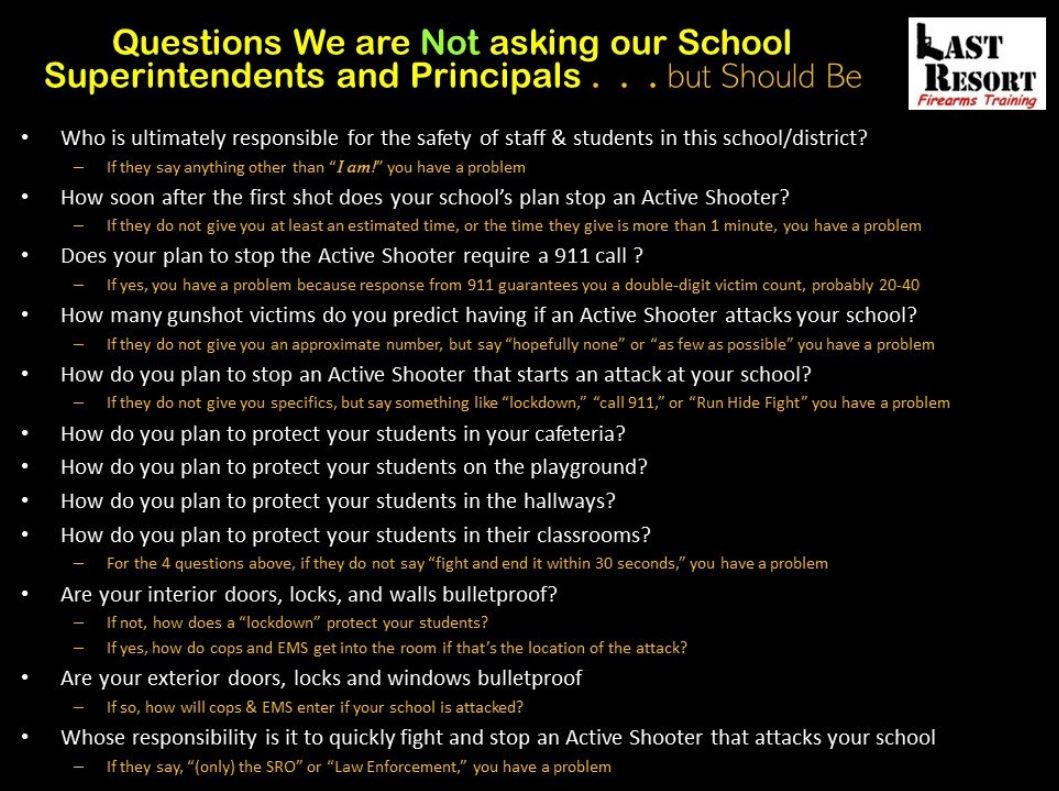
Bill would allow Ohio school staff to carry guns with 20 hours of training

(WJW) – There’s a new push for Ohio lawmakers to approve a bill that would allow educators to carry guns in school.

It’s called House Bill 99 and it would give Ohio schools the authority to put guns in the hands of school staff with only 20 hours of training.

“We have some serious concerns about HB 99 which would essentially gut training requirements for any school employees who are authorized to carry weapons on school property,” said Scott DiMauro, president of the Ohio Education Association.

DiMauro said right now, an Ohio teacher must undergo basic peace officer training at 700 hours in order to carry a gun in school.

“What the bill would do is put a maximum of 20 hours training in that state standard, completely tying the hands of the experts who are tasked with the training regimen,” said DiMauro.

The Buckeye Firearms Association supports the legislation.

“The current requirement has shut down security programs all over the state and there are a lot of schools right now that are wide open and defenseless,” said Dean Rieck, Executive Director.

In addition to teachers, the bill would allow janitors, cafeteria workers and support staff to carry a gun with 20 hours of training.

Rieck said he believes the legislation will give complete control to districts about security in their schools.

“A lot of schools that have security programs with armed personnel are in rural areas where they are far from law enforcement. It could take 15-20 minutes for them to show up,” said Rieck.

Under the proposed legislation, it would still be up to each individual district to decide what they would require.

“There is no state that allows for teachers to be authorized to carry weapons that have a training standard as low as what is being proposed in House Bill 99,” said DiMauro.

The bill has passed in the House. It’s currently in Senate committee but has not been voted on.

Missouri Self-Defense Bill Advances from Senate General Laws [Committee]

….the Senate General Laws Committee voted 4-1 to pass House Bill 1462, to reduce areas where law-abiding citizens are left defenseless. It will now advance to the full Senate for further consideration. Please contact Senate President Dave Schatz and the Senate Majority Floor Leader Caleb Rowden, and ask them to schedule HB 1462 to be heard on the floor.

House Bill 1462 repeals arbitrary “gun-free zones” that do nothing to hinder criminals, while leaving law-abiding citizens defenseless. It removes the prohibition on law-abiding citizens carrying firearms for self-defense on public transit property and in vehicles. This ensures that citizens with varying commutes throughout their day, and of various economic means, are able to exercise their Second Amendment rights and defend themselves.

The bill also repeals the prohibition in state law against carrying firearms for self-defense in places of worship. This empowers private property owners to make such decisions regarding security on their own, rather than the government mandating a one-size-fits-all solution.

SR22® PISTOL PRODUCT SAFETY BULLETIN

SR22 PISTOLS WITH A SERIAL NUMBER OF 369-40079 AND ABOVE ARE NOT AFFECTED BY THIS SAFETY BULLETIN.

Ruger has discovered that a small number of SR22® pistols may have right and left frame inserts that are not properly secured together. In rare circumstances, this condition may render certain internal safety mechanisms ineffective and the pistol has the potential to discharge upon decocking. Pistols that may be exhibiting this condition will intermittently exhibit a “slack” single-action trigger.

NOTE: A “slack” single-action trigger occurs if, while operating the pistol in single-action mode with a magazine inserted, the slide forward, and the manual safety disengaged, a trigger pull does not encounter resistance and the hammer does not fall.

Although only a very small number of pistols appear to be affected, Ruger is committed to safety and would like to examine all SR22 pistols that have ever exhibited a slack single-action trigger or discharged upon decocking.

Potentially affected pistols include any SR22 pistol with a serial number of 369-40078 or lower (including all SR22 pistols with a “SS” prefix). If your SR22 pistol has ever exhibited one of the conditions described above, you should immediately stop using your pistol and sign up for the Safety Retrofit as outlined in the Safety Bulletin. If you have never experienced either condition, your pistol is not affected by this Safety Bulletin.

Details about what to look for and how to sign up for the retrofit also appear on our website at Ruger.com/SR22Retrofit. The website also contains answers to Frequently Asked Questions, a video demonstrating the inspection process, and other information that you may find helpful.

What Gun Restriction Would Biden Pass That Isn’t Already the Law in California?

“We must do more than mourn — we must act,” President Joe Biden said on Sunday’s shoot-out in downtown Sacramento that killed six. Biden called on Congress to ban ghost guns, pass “universal” background checks, ban assault weapons, and repeated the lie that gun manufacturers have special immunity from liability.

California already has “universal” background checks. It has “red flag” laws and domestic-violence gun confiscation (often, without any real due process). It has an assault-weapon and magazine ban, deputizing citizens to enforce them. California has safe-storage laws and a ghost-gun ban. The state has a firearm-sales record and the strictest gun-dealer regulation in the nation. It empowers local authorities to further regulate firearms but not to deregulate. It has raised the allowable age even to buy a shotgun or rifle from 18 to 21. In most municipalities, concealed-carry permits are almost impossible to get.

California is home to 111 laws — not counting the thousands passed in cities and counties — that restrict “the manner and space in which firearms can be used,” according to Boston University School of Public Health. “California has the strongest gun laws in the United States and has been a trailblazer for gun safety for the past 30 years,” says Giffords Law Center. The only thing California hasn’t done is outright ban semi-automatic weapons, which is where all these incremental restrictions are meant to lead.

The Hypocrisy of Gun Control Elitists

In 2020, then-presidential candidate Michael Bloomberg was asked how he could continue to demand gun control while being protected by private guards equipped with the same firearms and magazines that he wanted to ban others from owning. “Does your life matter more than mine or my family’s or these people’s?” Bloomberg’s response, in essence, was that he was not an ordinary person. He was a celebrity and billionaire who received more threats than most people: “That just happens when you are the mayor of New York City or you are very wealthy.”

At the same time, another big-city Democrat politician known for pushing gun control on the lower orders was being shielded by a small army of police officers, presumably at the taxpayers’ expense. The Chicago Sun-Times recently disclosed that a special police security detail, Unit 544, was created two years ago to protect Chicago Mayor Lori Lightfoot, her home and office, and to “oversee her personal bodyguard detail.” The special unit consists of approximately 71 officers, in addition to the mayor’s existing “separate personal bodyguard detail” of 20 officers.

Both cities – ex-Mayor Bloomberg’s New York City and Lightfoot’s Chicago – are experiencing horrific surges in violent crime. The most recent “CompStat” report from the NYPD indicates rapes, robberies, felony assaults, burglaries, grand larceny, and auto thefts have all increased significantly as compared to the same time last year, and the Chicago Police Department’s (CPD) own “CompStat” contains the same dismal message.

While privileged politicians float above this wave of criminality, untroubled by threats to person or property, less exalted individuals are forced to rely on whatever police resources may be available or become their own version of Unit 544.

Last week in Chicago, for instance, a 70-year-old Uber driver, threatened by robbers who then carjacked his vehicle, had to wait 75 minutes before police could respond. Police assigned to serve the area had been drastically reduced to 261 officers, the “lowest monthly staffing level for the district since at least August 2017,” so no one was available to take the assignment until the next shift began. The problem isn’t restricted to that police district: overall, more than 660 CPD officers retired in 2021, almost double the number of retirees in 2018, and recruiting of new officers dropped during the pandemic. Carjacking reports, meanwhile, have set a new monthly record as of February 2022, up 390% from February 2019.

The impact on public safety is what makes Lightfoot’s private defense force of almost 100 officers all the more outrageous. In 2020, residents had already complained that patrol officers in areas close to Lightfoot’s home were redeployed to the mayor’s residence. It’s at odds with the mayor’s oft-used theme of “all hands on deck” to address public safety using a “coordinated and collective effort,” if scores of the deckhands are used for what amounts to private security work. And Lightfoot herself can’t pretend that police resources aren’t affected, because the creation of Unit 544 coincided with her proposal to cut the CPD budget by $80 million as part of addressing a pandemic–related citywide budget shortfall.

According to the Chicago Sun-Times, Lightfoot asserts her special police detail became necessary because in 2020, there was “a significant amount of protests all over the city, and some of them targeted [] my house.” (News reports from 2020 indicate that the protests included, ironically, calls to remove police from schools, for reforms to the CPD, and to defund the police.) A 2020 news report quotes Lightfoot defending, as well, the closing off of residential streets around her home to activists, because of threats to her safety. “[T]he situation can’t be compared to protests at former mayor Rahm Emanuel’s home given the pandemic… This is a different time – like no other.”

John Catanzara, president of Chicago’s Fraternal Order of Police, observes that “[w]hile murders are soaring, while districts are barebones for manpower, all that matters [to Lightfoot] is protecting her castle.”

Of course, it is completely reasonable for Lightfoot to take lawful measures to protect herself and her family, the same as anyone else, but her situation is arguably no more dire nor compelling than the crisis of crime faced by every other Chicago resident today.

The problem is that the mayor, and others like her, are the same anti-gun advocates who see no contradiction between demanding ever more pointless restrictions on the ability of constituents to legally access firearms for self-defense, and ensuring their own safety with assigned police bodyguards and armed security. Ordinary citizens don’t need guns because the police will protect them – even if crime climbs to levels not seen in decades and there’s upward of an hour’s wait on a 911 call.

These people would have you believe that this isn’t gun control elitism in action – it’s just that they aren’t like you and me. After all, if you don’t have bread you can always eat cake.

About that “GOP states have higher murder rates” study

I debated long and hard about giving this “study” from the moderate Democratic group Third Way even a paragraph’s worth of attention because of how shamelessly unscientific it is, but I’ve seen enough chatter about it online that I feel like I can’t ignore the problems I have with it, especially since I’m sure that gun control activists will be pointing to what Third Way has to say as evidence for the need for more gun control laws.

Let’s start with the premise for the “study,” which Third Way calls “The Red State Murder Problem” even though their own summary demonstrates that’s not exactly the issue.

  • The rate of murders in the US has gone up at an alarming rate. But, despite a media narrative to the contrary, this is a problem that afflicts Republican-run cities and states as much or more than the Democratic bastions.

In other words, what Third Way’s research shows is that the increase in violent crime beginning in 2020 was seen across the board. I don’t think there’s any disagreement on that, though it should be noted that there were also areas of the country that saw declines in homicides in 2020, including blue-state Baltimore and red-state Oklahoma City. In fact, here are the cities with the biggest increases and decreases in homicides in 2020, as reported by the anti-gun outfit Everytown for Gun Safety. Let’s start with the cities that saw the biggest murder spikes.

  1. In seven cities, the gun homicide rate at least doubled in 2020 compared to 2019: Lubbock, TX; Des Moines, IA; Fresno, CA; Vallejo, CA; Trenton, NJ; Columbus, OH; Syracuse, NY; and Milwaukee, WI.

By the way, those crack researchers at Everytown say there were seven cities where the gun homicide rate doubled, but I count eight cities up there. Third Way looked at states that voted for Trump vs. states that voted for Biden in 2020 as their “red/blue” metric, which in this case means that cities in three Trump states had double digit increases in the gun homicide rate, compared to five cities in Biden states. This completely cuts against Third Way’s hypothesis about the increase in homicides being a red state problem, but it gets even worse from there.

Continue reading “”

Hmm. seems the answer is: Have a big enough gun, know how to use it, and if you decide a bear needs shooting, SHOOT THE BEAR AND KEEP SHOOTING UNTIL IT STOPS AND GOES AWAY, OR IS DEAD, or you are.

Lessons From Handgun Defense Failures Against Bears

In 2016, this correspondent and others started searching for incidents in which a handgun was fired to defend against a bear or bears, and failed to stop the attack by driving off or killing the bear.

Access to a defensive tool, such as a shotgun, rifle, bear spray,  handgun, hatchet, or knife all present similar problems. Therefore we only considered cases where a handgun was actually fired. If we were looking at the effectiveness of bear spray, we would only look at cases where the bear spray was actually sprayed.

To prevent selection bias, all cases where a handgun was fired defensively against a bear or bears, which could be documented, were included.

People on the Internet claimed handguns were ineffective in defending against bears. Over years, we found 120 cases where handguns were effectively used in defense against bears. We found three failures.

The three failures included failures against the three bear species found in North America, one each of polar, grizzly, and black bears.

Here are the details of the three cases, presented in chronological order, followed by analysis and commentary:

Continue reading “”

Question O’ The Day. I think the answer just might be ‘Reverse Gears!


California has toughest U.S. gun laws. After Sacramento shooting, what else can lawmakers do?

They’ve banned high-capacity magazines and cracked down on assault weapons. They’ve made it so Californians have to pass a background check to purchase a gun and ammunition. They’ve prohibited buyers from having ammo or “ghost” gun parts shipped directly to their homes.
When it comes to gun laws, California’s legislators have passed some of the most stringent regulations in the country, checking off nearly every box on national gun control advocates’ wishlist.
A mass shooting early Sunday that left six dead and 12 wounded just a block from the Capitol — the very building where these laws were enacted — immediately prompted new calls for legislation to curb gun violence, from California elected officials and gun-control advocates across the nation.
“The scourge of gun violence continues to be a crisis in our country, and we must resolve to bring an end to this carnage,” Gov. Gavin Newsom, who’s already signed 15 gun-control laws, said Sunday in a prepared statement.
The call for action on the federal level reached as far as the White House.
“Ban ghost guns,” President Joe Biden said, expressing his sorrow for the Sacramento victims. “Require background checks for all gun sales. Ban assault weapons and high-capacity magazines. Repeal gun manufacturers’ immunity from liability.”
But what else can California’s lawmakers do to restrict guns that they haven’t already done — and have their laws survive the inevitable challenge by Second Amendment advocates?
Even before Sunday’s shooting, Democratic legislators planned to do more. One new bill, introduced by state Senator Bob Hertzberg, D-Van Nuys, would give citizens the “private right of action” to sue gun manufacturers and suppliers. The bill, SB 1327, is modeled after an anti-abortion law enacted in Texas.
State Sen. David Min, D-Irvine, introduced Senate Bill 915, which would prohibit the sale of firearms or ammunition on state property, effectively ending gun shows on 73 state-owned fairgrounds. Previous efforts on a blanket-ban on gun shows at fairgrounds have failed.
“These are all practical actions we can take today to stop gun violence,” Hertzberg said Sunday.
But the fact is, the recent legislation pending in California is relatively modest compared to some of the sweeping reforms that gun-control advocates are demanding in other states and on the federal level — simply because most of the toughest curbs are already part of California law.

Continue reading “”

Armed school staff bill advances in Ohio statehouse

Constitutional Carry may be the biggest Second Amendment-related bill to win approval in Ohio this year, but hopefully it won’t be the last. Nearly four months after the Ohio House approved a measure that would once again allow for school districts across the state to have trained and vetted volunteer staff serve as an armed first line of defense against attacks on school grounds, the state Senate is now taking up the issue.

House Bill 99 received its first Senate hearing Wednesday in the Veterans and Public Safety Committee, with bill sponsor Rep. Thomas Hall, R-Madison Township, saying local schools need to be able to make decisions to protect students.

“At the end of the day, what we are talking about here is empowering our local schools to make the best decision for their students and educators so that our children feel safe and are safe in Ohio schools,” Hall said. “We have worked tirelessly on this bill to do our part in protecting our schools and our communities.”

For several years districts across the state were able to have armed school staff in place with no issue, but after several parents sued the Madison School District (with the help of Everytown for Gun Safety), the Ohio Supreme Court ultimately ruled that under current state law all armed school staff must undergo more than 700 hours of law enforcement training.

Under HB 99, those training standards would be dropped to a much more reasonable 20 hours, with 4 hours of annual training. Those volunteering to protect their school don’t need to waste hours of their time learning about processing evidence, defensive driving, and a host of other activities that police officers regularly perform but armed school staff members would never have cause to do. These staff members aren’t cops, and they’re not supposed to be. They only reason they’re carrying on campus is to stop a deadly attack aimed at students or staff members. Period.

The duty of those volunteers was one of the points raised in opposition to the bill by one police union in Ohio, whose representative warned that teachers may have to abandon their students if there is a threat on campus.

“If a school employee, regardless of her position, is carrying a firearm, they are considered on duty according to [the Ohio Revised Code],” Mike Weinman testified on behalf of the Fraternal Order of Police of Ohio. “When armed, the teacher’s primary responsibility is no longer teaching but an armed first responder. She will be required to abandon her students and respond to whatever threat may be in the building at a moment’s notice.”

Six school districts and two county sheriff’s departments, however, testified in favor of the bill. “Trust the locally elected officials to do their jobs and govern on behalf of the people who elected them and put them in their positions. Trust that they care for the safety and well-being of their students and staff,” Ira Wentworth, superintendent of Indian Valley Local Schools, testified. “The school boards and those staff members who are selected and volunteer to conceal and carry are not the bad guys; they are the good guys wanting to protect others from the bad guys. Put your trust in the good guys.”

There are currently thousands of Ohio educators who have undergone the three-day FASTER training course and who were already carrying on campus before the state Supreme Court decision disarmed them on the job, and as far as I’m aware of there had been no issues reported in any of the districts that had set up an armed school staff policy. Many of these school districts are rural or smaller in size, and simply don’t have the budget to have a school resource officer in every building. In some districts it might take police ten minutes or more to arrive on campus, even in the most dire of circumstances, and that’s far too long to wait for an armed response when there’s someone actively attacking the students inside the school.

HB 99 would restore some sanity to the current law, and would be a huge boost to student safety in those districts that choose to have armed school staff members in place. I’m really glad to see the state Senate start to move on this bill, and I hope that, just like Constitutional Carry, it too will soon be sent to Mike DeWine’s desk for his signature.