MEMORIAL DAY: Remember Those Who Paid The Ultimate Price For Our Freedom.

Monday, May 30th is Memorial Day, formerly called Decoration Day. Remember what it’s all about.

Memorial Day is a holiday of recognition and remembrance. It means so much more than hot dogs,  parades, and the start of the summer. On Memorial Day, all Americans should take time to remember what the day is about. Honoring the people who laid down their lives to save our lives, protecting America and our freedoms. Please remember those who sacrificed, praying that God protects their souls and comforts their bereaved loved ones.

Think about this for a moment. In the past few years, many of our freedoms have been restricted because of a virus. Over-zealous politicians tried to keep those and other freedoms. However, an election can restore what we lostlwhat we lost. If those heroes paid the ultimate sacrifice and did not serve, we would be permanently bowing down to a tyrant w8ty no chance to vote them out; Freedom would never have an opportunity to return.

On Memorial Day, remember their sacrifices, appreciate your freedom, and offer a prayer:

A Memorial Day Prayer 

Lord who grants salvation to kings and dominion to rulers, Whose kingdom is a kingdom spanning all eternities; You place a road in the sea and a path in the mighty waters – may you bless the President, the Vice President, and all the constituted officers of the government of this land. May they execute their responsibilities with intelligence, honor, and compassion, and may the United States continue to be the land of the free and the home of the brave.

May God bless the members of our armed forces who protect us from harm, on the land, in the air, and on the sea. May the Almighty cause the enemies who rise up against us to be struck down before them. May the Holy One, Blessed is He, preserve and rescue our fighters and their families from every trouble and distress and from every plague and illness, and may He send blessing and success in their every endeavor.

On this day of remembrance, may the God of overflowing compassion, who lives in the highest and all worlds, give eternal rest to those who are now under the holy sheltering of his spiritual wings, making them rise ever more purely through the light of your brilliance. May the Lord bless their souls forever, and may he comfort the bereaved. May those of us who remain free never forget their ultimate sacrifice, and may the memories of those who gave their lives to protect America always be for a blessing.

Continue reading “”

Apropos of nothing and no one whatsoever


The Delta Force Explains Why Ukraine’s Special Forces Are So Good

The Russian invasion of Ukraine has seen an abundance of special operations. Both countries, after all, possess competent — for the most part — special operations forces. The Russian military has the famed Spetsnaz, while the Ukrainian special operations forces have been trained and equipped by the U.S. and the West.

However, despite the pre-war expectation of daring raids behind enemy lines, there have been few accounts of special operations in the war. Both sides have managed to keep any under wraps. But there seems to be one notable exception. In early March, Ukrainian special operations forces allegedly rescued the mayor of Melitopol from Russian captivity.

The operation

In early March, Ukrainian special operations forces rescued the mayor of Melitopol Ivan Fedorov from Russian captivity, according to the Ukrainian government. Melitopol is located in southeastern Ukraine and has been in Russian hands since early March.

In the first days of the invasion, the Russian troops were very careful not to alienate the Ukrainian population, even allowing protests in occupied towns and in some cases, famously, allowing civilians to stop or turn Russian tanks back. But after more than a month of fighting, the masks have fallen, and the Russian military has shown the world its true colors by committing war crimes and other atrocities throughout occupied Ukraine.

After the Russian military captured the town, the Russian security services started a campaign of repression, arresting Ukrainian officials and other persons of interest who could prove a nuisance. Fedorov was one such person, and CCTV footage showed Russian troops marching him away.

Before the invasion, Western intelligence services had warned Ukraine and the world of the Kremlin’s plans to abduct Ukrainian politicians, academics, administrators, and other officials that might pose a threat to their plans. Ukrainian officials are claiming that the Russian security services have abducted at least three Ukrainian mayors.

Kirilo Timoshenko, an adviser to Zelensky and the deputy of the Ukrainian presidential office, said that the mayor of Melitopol was freed following a “special operation,” but he didn’t provide any additional details about the operation or what Ukrainian units were involved.

Following the operation, Fedorov spoke with Ukrainian President Volodymyr Zelensky, the video of the correspondence a proof of the successful mission. After the initial pleasantries, the Melitopol mayor thanked the Ukrainian president for not forgetting him, with Zelensky simply saying that Ukraine doesn’t leave its own behind.

“We have finally managed to release the mayor of Melitopol from captivity,” Zelensky said during a national address. “Ivan Fedorov is free. I talked to him today. The Russian military abducted him on March 11, trying to persuade him to collaborate. But our man withstood. He did not give up. Just as we all endure.”

How special operations prisoner rescues work

Prisoner or hostage rescues are one of the toughest special operations mission sets. Surprise, speed, and violence of action are key in rescuing the objective before the enemy moves or kills it.

“A hostage rescue and a kidnapping (snatch operation) are fundamentally the same operation; that is, the principles of action are the same though some smaller details may be different. I have been on more snatches than hostage rescue [operations],” retired Master Sergeant George Hand IV told Sandboxx News.

Hand spent a decade in the elite Delta Force. As the Army’s tier 1 special missions unit, Delta Force specializes in hostage rescue, counterterrorism, and direct action operations, among other mission sets.

Continue reading “”

Under Putin, Russia is transforming itself from a Third World nation with a First World military to a Third World nation with a Third World military.


Syria’s barrel bomb experts in Russia to help with potential Ukraine campaign.

Technicians linked to the Syrian military’s infamous barrel bombs that have wreaked devastation across much of the country have been deployed to Russia to help potentially prepare for a similar campaign in the Ukraine war, European officials believe.

Intelligence officers say more than 50 specialists, all with vast experience in making and delivering the crude explosive, have been in Russia for several weeks working alongside officials from Vladimir Putin’s military.

Their arrival is understood to be one factor behind US and European warnings that the Russian military may have been preparing for the use of chemical weapons in the conflict, which has entered its fourth month with little sign of slowing.

Barrel bombs – crude explosives packed in to a drum and dropped from a helicopter – were used to devastating effect throughout the Syrian war. The regime was also regularly accused of filling canisters with chlorine and dropping them on opposition held towns and cities, causing hundreds of deaths and sparking widespread alarm.

Continue reading “”

The SiG Board of Directors is going to be stacked with Generals in the coming years.
Personally, even in .300 Blackout, without a suppressor on it, I wouldn’t want to be near one of these little fireball makers.


SOCOM finally found its next-generation personal defense weapon

After years of searching, U.S. Special Operations Command (SOCOM) has picked Sig Sauer to provide its next personal defense weapon for U.S. special operations forces.

On Thursday, SOCOM released a notice of intent to award a five-year fixed firm price contract to the firearms manufacturer. The new personal defense weapon of choice for SOF troops? The Sig Sauer MCX “Rattler,” which can be chambered in both .300 Blackout and 5.56mm calibers.

“After years of continuous market research, USSOCOM HQ has concluded that Sig Sauer is the only vendor that can fulfill USSOCOM’s need for the Commercial PDW requirement. USSOCOM HQ has been researching and reviewing different systems since 2017,” the notice of intent said. “We have meticulously reviewed each system for technical acceptance and whether it fits the commercial definition. Except for Sig Sauer, the vendors did not meet the technical requirements and/or the weapons do not meet the commercial definition.”

The size and cost of the order were not disclosed.

SOCOM started its hunt for a new personal defense weapon in 2017, hoping to get a new weapon built around the M4 carbine’s receiver, giving SOCOM operators more firepower while still being compact and portable. The command procured 10 Rattlers in 2018 for testing and evaluation, but kept its search going, issuing another search for weapon system designs in 2019. The goal was to find a new PDW with “a highly concealable .300 Blackout upper receiver group (URG) and buttstock kit solution for the M4A1 platform.”

Turns out that, after all of that searching, it was back to the MCX Rattler. SOCOM noted that requirements meant no prototypes or weapons were in limited development, and Sig Sauer’s new weapon fit the bill for rapid fielding.

“The PDW system will allow Operators to have maximum firepower in a concealable weapon,” SOCOM said in the notice. The order will include the guns themselves plus suppressors, magazines and cleaning gear, plus additional parts and training on the new platforms.

It’s worth noting that .300 Blackout round is designed to be quieter than regular ammunition, while still being powerful, and that personal defense weapons are meant to provide more firepower than a pistol while being much more portable and compact than carbines or rifles, making them ideal in close-quarters scenarios.

Sig Sauer has called the MCX Rattler its most “discreet platform,” and the 5.5-inch barrel certainly makes it short. The MCX Rattler is also designed to quickly switch between the types of ammunition.

The pick by SOCOM was another major contract for Sig Sauer, which previously snatched up high-profile (and lucrative) contracts for the Pentagon-wide Modular Handgun System contract and Army’s Next Generation Squad Weapon rifle and automatic rifle variants.

It’s unclear when the Sig Rattlers will go into the field with SOCOM operators, or if some of the initial orders are already in use.

Russian warship Admiral Makarov ‘on fire after being hit by Ukrainian missile.’

Russia’s massive Admiral Makarov warship has reportedly been hit by Ukrainian missiles causing it to burst into flames.

The Admiral Grigorovich-class frigate was on fire this morning in what would be a fresh blow for warmonger Vladimir Putin, a number of unconfirmed reports suggest.

It was said to be close to Snake Island in the Black Sea, where a rescue operation was underway involving multiple aircrafts and rescue boats.

Ukrainian MP Oleksiy Goncharenko took to his Telegram channel to report the ship had been hit by Ukrainian neptune missiles.

He said that the ship had been hit by Ukrainian attacks and was “badly damaged”, but remained afloat for now.

In his post, he wrote: “Yes, yes, you understood everything correctly! The God of the seas takes revenge on the offenders of Ukraine.

The Russian Navy's frigate Admiral Makarov

The Russian Navy’s frigate Admiral Makarov (  Image: REUTERS)

“The Admiral Makarov frigate was laid down in February 2012 at the Yantar shipyard in Kaliningrad, launched in September 2015. And in 2022- oh, when he took part in the murder of Ukrainians, he went towards the cruiser “Moskva”, where he was supposed to!”

His reports were backed up by Ukrainian official Anton Gerashchenko who said: “Admiral Makarov frigate is on fire off the coast of Snake Island.

“According to preliminary data, the ship was hit by Ukrainian Neptune missiles.

“Now enemy aviation is operating in the ship’s disaster zone, and ships of the Russian Navy have come out of the temporarily occupied Crimea to help the sinking ship.”

Alongside that, a number of unconfirmed reports said the warship was hit by Ukrainian missiles near the Sevastopol naval plant in Crimea, on the Black Sea.

The General Staff of the Armed Forces of Ukraine added a ‘+1’ to their boats column in their daily report on Russian losses this morning, which they tweeted out.

Early reports suggest these images show the burning frigate

Early reports suggest these images show the burning frigate  Image: Twitter)

Continue reading “”

Russian explosions point to Ukraine’s embrace of the British special forces model.

Storage tanks at a major oil depot in the Russian city of Bryansk exploded early on Monday. Was Ukraine responsible?

Russian explosions point to Ukraine's embrace of the British special forces model

Russian explosions point to Ukraine’s embrace of the British special forces model
Before you answer, consider first that this is only the latest disaster to afflict Russian critical infrastructure near the Ukrainian border. Another oil depot on Belgorod was targeted by a Ukrainian helicopter strike in early April. Prior to that, Russian railway lines near the border were sabotaged. A Russian missile research center and a chemical plant also recently suffered explosions.

These incidents all appear to fit well with Ukraine’s military strategy.

Bryansk, 62 miles from the Ukrainian border, is beyond the range of most drone systems in Ukraine’s possession. Unconfirmed video from the Bryansk incident indicates the sound of a missile in the terminal attack phase. Considering this noise and Bryansk’s relative distance from Ukraine, short-range ballistic missiles may have been responsible. Regardless, the explosion will disrupt energy replenishment efforts for Russian military forces in Ukraine.

The explosion also dilutes Putin’s credibility in claiming that his war on Ukraine is not a war, but rather a limited “special military operation.” When stuff keeps blowing up in Russian cities, it’s hard to convince the residents of said cities that Russia isn’t at war.

Continue reading “”

On this day in 1960, President Eisenhower signed the law into effect making Wilson’s Creek a national battlefield monument


The Battle for Wilson’s Creek’s recognition

 In southern Greene County, there is peace.

You can’t hear traffic. The wind howls through the trees, birds chirp, and a creek churns through the hills.

But as soon as you hear the name of this creek, your opinion of this place will change. This is Wilson’s Creek and in 1861 peace was far from here.

“The Battle of Wilson’s Creek is the second major battle of the Civil War,” superintendent of Wilson’s Creek National Battlefield Sarah Cunningham said. “It’s also the first major battle west of the Mississippi.”

Missouri was a key state to hold thanks to the Missouri and Mississippi Rivers. A large Confederate army was camping near Wilson’s Creek with plans of claiming the state for the South. But on August 10, 1861, General Nathaniel Lyon led his Union soldiers from Springfield to surprise the southern encampment on what became known as Bloody Hill.

“It was a five or six-hour bloody battle that took place,” Cunningham said.

A few hours into the fight, General Lyon was killed while positioning his troops. He becomes the first Union general killed in action in the Civil War.

“For years, veterans of this battle would come back to remember,” Cunningham said, “and commemorate the battle that occurred here.”

Those veterans would lay rocks at the spot where their leader, General Lyon died. In 1928, the rocks were replaced with a stone marker made by the University Club of Springfield. But to see it, visitors would have to trespass on the private land.

“Schoolchildren would go to school and they would bring pennies, nickels, anything that they could save,” Cunningham said, “and contribute to the preservation of the Battle of Wilson’s Creek.”

In 1951, the Foundation purchased the 37-acres of land known as Bloody Hill. Over the next few years, the property would grow in size but not in status.

With 16 Civil War sites as National Parks, the government didn’t need another. The Pea Ridge National Military Park in Arkansas was added in 1956. One account mentioned the National Parks thought Pea Ridge was enough to tell the story of the war west of the Mississippi.

After several failed attempts, the Foundation’s persistence paid off.

“On April 22, 1960, President Eisenhower signs into law the establishment of Wilson’s Creek National Battlefield,” Cunningham said.

Over the decades, a tour road was built around the site as well as a horse riding trail and walking trails. Signs were placed telling stories about this battle and taking you to the points of interest.

In 2021, a $3.5 million renovation was made to the Visitor’s Center and Museum.

The Arts in the Park Music Series is back on Saturday nights in May at Wilson’s Creek. It’s also planning a large event over Memorial Day weekend. And, the National Parks just launched a Wellness Challenge you can do while at Wilson’s Creek. Just visit the Wilson’s Creek National Battlefield website for more information.

The U.S. has fielded the launcher as the M320. It’s a much more robust, dependable and easier to maintain weapon than the M203 and has the advantage of being able to be a separate weapon, akin to the old M79, as well as be attached to a rifle. But every one of my guys who had one on his HK had it removed within a very short span of time because it is a hefty beast and the combo, with all the gear added, weighs nearly 15 pounds.


POTD: HK416N with Grenade Launcher in front of Royal Norwegian Air Force F-35A

F35

Photo Of The Day and we have a guard ahead of the F-35A aircraft from the Royal Norwegian Air Force at Evenes Air Base during exercise Falcon Deploy 2021. The F-35A is a single-seat, single-engine, stealth, fifth-generation, multi-role combat aircraft ordered by several NATO allies.  The Heckler & Koch HK416N has a AG-HK416 Grenade Launcher.

Army selects Sig Sauer to produce Next Generation Squad Weapon and ammo
The wait is over. The Army has selected Sig Sauer to build the Next Generation Squad Weapon’s rifle and machine-gun variants that are intended to replace the M4 and M249 Squad Automatic Weapon.

Sig Sauer was awarded a $20.4 million contract to build the XM5 Rifle and the XM250 Automatic Rifle as well as the 6.8 mm ammunition that they chamber, Army officials announced on Tuesday.

“Both weapons provide significant capability improvements in accuracy, range and overall lethality. They are lightweight, fire more lethal ammunition, mitigate recoil, provide improved barrel performance, and include integrated muzzle sound and flash reduction,” an Army news release says. “Both weapons fire common 6.8-millimeter ammunition utilizing government-provided projectiles and vendor-designed cartridges. The new ammunition includes multiple types of tactical and training rounds that increase accuracy and are more lethal against emerging threats than both the 5.56mm and 7.62mm ammunition.”

The XM5 Rifle weighs about 8.3 pounds — slightly heavier than an M4, which typically weighs about 7.3 pounds. Sig Sauer’s design for the machine gun variant weighs 12 pounds, and that is lighter than both the M249 and M240 machine guns, which weigh 18 pounds and 28 pounds respectively.

The Sig Sauer design chambers a 6.8 x 51 mm round with a maximum chamber pressure of 80,000 pounds per square inch that extends the weapon’s range without the need for a longer barrel or heavier ammunition. That is a much higher pressure than the 5.56 x 45 mm NATO round chambered by M4 carbines and M249 machine guns, which has a maximum chamber pressure of 62,000 pounds per square inch.

Ian McCollum, a gun expert and host of the “Forgotten Weapons” YouTube channel, told Task & Purpose during SHOT Show 2022 that he didn’t think an infantry rifle could have a long service life if it fired such a high-pressure round.

But Sig Sauer President and CEO Ron Cohen told Task & Purpose in January that his company’s design for the Next Generation Squad Weapon could fire up to 12,000 rounds before needing to change barrels, whereas soldiers typically need to replace the barrels on their M4 carbines after firing 6,000 rounds.

Sig Sauer’s submission for both Next Generation Squad Weapon variants and ammunition was selected over a design offered by LoneStar Future Weapons, owned by True Velocity. The LoneStar design for the weapon featured a “bullpup” configuration, in which the magazine is behind the trigger control assembly, and a reciprocating barrel that moves backwards with each shot to absorb recoil.

The most innovative feature of LoneStar’s design was the composite 6.8 mm ammunition made by True Velocity, which is an average of 30% lighter than brass cartridges.

Soldiers have been waiting for five years to get their hands on the Next Generation Squad Weapon.

In May 2017, Gen. Mark Milley, then Army Chief of Staff, warned Congress that newer types of body armor sold for just $250 by “adversarial states” could stop the 5.56 mm round chambered by the U.S. military’s M4 carbines, M16 rifles, and M-249 machine guns.

After looking for a commercially available weapon to serve as an interim rifle, the Army decided in October 2017 to find a replacement for the M4 and M249.

The Next Generation Squad Weapon rifle and machine gun variants are expected to be fielded to soldiers in the “Close Combat Force,” a term that encompasses several frontline military occupational specialties including infantry, cavalry scouts, combat medics, forward observers, combat engineers, and special operations forces.

The Army expects to have a better idea this summer about how long it will take to field the Next Generation Squad Weapon to soldiers.

Well, after sinking their Black Sea Fleet Flagship, I’d think talks would collapse too.


UKRAINE INVASION UPDATE 23

April 15

“Negotiations: Ceasefire negotiations have effectively collapsed.”

The Ukraine Invasion Update is a weekly synthetic product covering key political and rhetorical events related to renewed Russian aggression against Ukraine. This update covers events from April 8-14. All of the ISW Russia’s team’s coverage of the war in Ukraine—including daily military assessments and maps, past Conflict Updates, and several supplemental assessments—are available on our Ukraine Crisis Coverage landing page.

Key Takeaways April 8-14

  • Ukraine and Russia are both unlikely to advance ceasefire negotiations until the ongoing Russian campaign in eastern Ukraine develops further. The Kremlin likely seeks to capture at minimum the entirety of Donetsk and Luhansk oblasts, while Kyiv seeks to further degrade the Russian military and potentially conduct major counteroffensives.
  • Russian President Vladimir Putin may be purging elements of his intelligence service and blaming close allies for Russian intelligence and planning failures in the lead-up to the Russian invasion of Ukraine.
  • The Kremlin is likely falsely blaming Ukrainian forces for planning or conducting provocations in areas where Russian forces intend to commit or have already committed atrocities.
  • Independent actors are unlikely to be able to verify Ukraine’s April 11 claim that Russian forces used chemical weapons in Mariupol, but Russian forces retain the capability to use chemical weapons beyond this specific instance.
  • The Kremlin is reframing the Russian invasion of Ukraine as a Western war against Russia in a likely effort to maintain Russian domestic acceptance of the war.
  • Belarus and Russia are increasing economic ties—and likely Kremlin influence over Belarus—as sanctions cut off both states from international markets.
  • Finland and Sweden are increasingly reconsidering their non-aligned status and may move to join NATO in the coming months.
  • Western countries continued to search for alternatives to Russian energy while the Kremlin tried to downplay the effects of Western sanctions on its economy and energy sector.
  • NATO countries continue to secure their eastern borders and provide military assistance (including several high-end capabilities) to Ukraine to counter Russian aggression.

Continue reading “”

RUSSIAN OFFENSIVE CAMPAIGN ASSESSMENT, APRIL 8

Immediate items to watch

  • Russian forces will continue reinforcing the Izyum-Slovyansk axis and attempting to advance to and through Slovyansk to encircle Ukrainian forces.
  • Russia is likely cohering forces in Donbas to attempt a major offensive in the coming days or weeks.
  • The Battle of Mariupol continues, and it is unclear how much longer the Ukrainian defenders can hold out.
  • Russian forces have fully vacated the Sumy axis and are regrouping in Belgorod for likely deployment to the Izyum-Slovyansk axis.
  • Some Russian forces are likely to return to home stations in Russia while others will re-enter the fighting in the east.

Ukrainian forces retain control of defensive positions in eastern and southwestern Mariupol, despite Russian claims to have captured most of the city. ISW was able to confirm the specific locations of ongoing Russian assaults on April 8 for the first time in several days. Russian forces continue to attempt to regroup and redeploy units withdrawn from northeastern Ukraine to support an offensive in eastern Ukraine, but these units are unlikely to enable a Russian breakthrough and face poor morale. Russian forces along the Izyum-Slovyansk axis did not make any territorial gains in the last 24 hours. Ukrainian counterattacks toward Kherson continue to threaten Russian positions around the city.

Key Takeaways

  • Ukrainian forces continued to hold out against Russian assaults in areas of southwestern and eastern Mariupol, notably in the port and the Azovstal Metallurgy plant, respectively.
  • Ukrainian forces continued to repel daily Russian assaults in Donetsk and Luhansk Oblasts.
  • A Russian Tochka-U missile struck a civilian evacuation point at the Kramatorsk rail station in eastern Ukraine, killing at least 50 and wounding around a hundred evacuees.
  • Russian forces continued attacks south of Izyum toward Slovyansk and Barvinkove but did not take any new territory.
  • Ukrainian counterattacks have likely taken further territory west of Kherson, threatening Russian control of the city.

Continue reading “”

Russian Offensive Campaign Assessment, April 3.

Immediate items to watch

  • Russian forces will likely complete their withdrawal from Kyiv along the Sumy axis in the coming days and will probably abandon their remaining positions around Konotop and Sumy thereafter.
  • Russian troops around Kharkiv will likely continue to focus on supporting the shift of the main effort via Izyum toward the southeast and may pull back from the immediate environs of the city.
  • Russian and proxy forces will attempt to increase the scope and scale of offensive operations to complete the linkup between the Kharkiv-Izyum axis and occupied Luhansk.
  • Russian forces will likely secure Mariupol in coming days, and may attempt to launch renewed offensive operations northwest from the city in an effort to seize Donetsk Oblast.

Ukraine has won the Battle of Kyiv. Russian forces are completing their withdrawal, but not in good order. Ukrainian forces are continuing to clear Kyiv Oblast of isolated Russian troops left behind in the retreat, which some Ukrainian officials describe as “lost orcs.” Russian forces had attempted to conduct an orderly retreat from their positions around Kyiv with designated covering forces supported by artillery and mines to allow the main body to withdraw. The main body of Russian troops has withdrawn from the west bank of the Dnipro and is completing its withdrawal from the east bank, but the retrograde has been sufficiently disorderly that some Russian troops were left behind.

The war is far from over and could still turn Russia’s way if the Russian military can launch a successful operation in eastern Ukraine. The current line of Russian occupation in southern and eastern Ukraine is still a significant gain in Russian-controlled territory since the start of the war. If a ceasefire or peace agreement freezes a line like the current front-line trace, Russia will be able to exert much greater pressure on Ukraine than it did before the invasion and may over time reassemble a more effective invasion force. Ukraine’s victory in the Battle of Kyiv is thus significant but not decisive.

The disorder of the Russian withdrawal suggests that at least some of the units now reconcentrating in Belarus and western Russia will remain combat ineffective for a protracted period. Russian troops attempting to refit after pulling back from around Kyiv will likely have to reconsolidate into their units, identify which soldiers are still present, sort out their equipment and assess its combat readiness, and generally reconstitute before they can even begin to receive replacements and new equipment and prepare for further combat operations.

Russian forces are likely abandoning the east bank of the Dnipro fully as well, withdrawing from around Chernihiv to the north and from Brovary to the east. Russian troops will likely seek to hold a salient around Konotop and Sumy long enough to allow their forces to complete their retrograde from near Kyiv but will then likely withdraw back to Russia from almost all their positions west of Kharkiv.

Moscow is attempting to concentrate reserves and some units pulled from the fight around Sumy to reinforce its offensive operations in the east but is encountering serious challenges in that effort. The Ukrainian General Staff reported on April 3 that Russian soldiers are resisting and in some cases refusing orders to enter or re-enter the war effort. The General Staff asserted that the two battalion tactical groups (BTGs) that moved from South Ossetia toward Donbas less than a week ago refused to fight and that plans to move them back to South Ossetia are in train.[1] The General Staff claimed that about 25 soldiers of the Russian 31st Separate Airborne Brigade refused orders to re-enter combat citing excessive losses.[2] The General Staff also asserted that commanders at various echelons in the Russian 3rd Motorized Rifle Division have refused to participate in combat operations.[3] We have no independent verification of these reports, but they are credible in light of the losses Russian forces have suffered and of independent reports of Russian soldiers killing commanders and commanders committing suicide from earlier in the conflict.

Russian efforts to advance its offensive operations in eastern Ukraine made limited progress in the past 24 hours. Fighting continues in Mariupol and on the Izyum-Severodonetsk axis.

Key Takeaways

  • Ukraine has won the Battle of Kyiv, and Russian forces are completing their withdrawals from both the east and the west banks of the Dnipro in disorder.
  • Russian forces retreating from around Kyiv will likely need considerable time before they can return to combat.
  • Incidents of refusals of orders to engage in combat operations among Russian units continue and may lead to the redeployment of two BTGs that had arrived near Donbas within the last few days to their home stations in South Ossetia.
  • The continued existence of an independent Ukrainian state with its capital in Kyiv is no longer in question at this time, although much fighting remains and the war could still turn Russia’s way.

Continue reading “”

Close Combat Force‘ is an Army euphemism for MOSs 11B Infantry Rifleman, 12B Combat Engineer (they go out and find mines) and 19D Cavalry Scout, and there are a whole lot more than 17,052 of them, so it looks like this is – maybe – a preliminary roll out for the Ranger Regiment’s, 82nd and 101st division’s combat troops.


The US Army Program Acquisition Costs FY2023 handout notes that FY2023 sees the start of:

…funding for the procurement and fielding of 1,704 NGSW-AR, which is the planned replacement for the M249 Squad Automatic Weapon (SAW) within the Close Combat Force; Procurement and fielding of 15,348 NGSW-R which is the planned replacement for the M4A1 Carbine within the Close Combat Force.US Army Set To Procure 30,000 Next Generation Squad Weapons in 2023

The whole presentation: Continue reading “”


Apparently Ukraine sent two (2)  – likely captured – Mi-24 helicopter gunships 25 miles inside Russia to blow up an oil tank farm in Belgorod last night.

Remember, in war, the enemy gets a vote

Putin believed his own propaganda. Does our political leadership have the same problem?

What We Can Learn From Russia’s Debacle.

If Putin had followed the advice offered in the Belmont Club just before the Ukraine War, Russia might still be a first-rank power. On Feb 21, 2022, I argued that he had no chance of conquering Ukraine and would be crazy to try. “Fears over Vladimir Putin’s threatened invasion of Ukraine continue to grow despite the fact that the effort would burst both Russia’s military and economy, not to mention ruining its foreign relations. Swallowing a poison pawn makes so little sense that UK Prime Minister Boris Johnson says Russia’s Putin may be ‘irrational,’ unable to act in his own best interests.” Invading only to fail was so absurd that I reasoned his menaces must be a bluff. Since the threat was worth more than the fulfillment, his best option was not to invade but to drag out the suspense.

Perhaps as in so many cases in history the bite is in the bark; and in this case the bark is quite real. Putin has created an “invasion-in-being.” In naval warfare, the analogous concept of a “fleet in being” is a force that projects menace without ever leaving port. Were it to fight it might lose and no longer influence but while it remains in port, one is forced to guard against it. …

Putin has been doing the same thing on land. His armies are essentially “in port” — inside Russia or the Kremlin’s client states. Meanwhile Ukraine and the West are in an uproar, evacuating their citizens, canceling airline flights — never enjoying a moment’s mental security. Yet Putin can keep the invasion-in-being poised and the resulting disruption going indefinitely.

Once Putin showed his hand and it proved a bust, he would lose all power to bluff (just like movie monsters made with cheap special effects become ridiculous when finally shown onscreen), and the myth of the mighty Red Army would be dispelled for decades. I wrote that “if he actually invades in a recognizable way the uncertainty is removed and the West knows what to do about aging overreaching dictators who’ve started something they can’t afford. By preserving ambiguity Putin has Biden spellbound.” I was right about the strategic situation but wrong about Putin. He actually did do the stupid thing and dug himself a hole that he will be a long time getting out of.

In a counterfactual world where the Russian president agreed with this site and continued to feint, where NATO was still in awe of the supposedly unstoppable Russian army and Putin still hitting Biden up for nickels and dimes to keep him from unleashing it, the Kremlin might still be the capital of a great power. But it would be no more substantial than a fleet-in-being that is nine-tenths shadow and one part solid is; a thing powerful only in narrative. For in truth, Russia fell a long time ago with its crashing demography; its uncompetitive, oligarch-ridden industries; its incompetent autocratic leadership. Ukraine was a mirror into which Putin dared look when a man of his mien ought not. But whether he looked or not he was ugly just the same.

If there’s any lesson in this for Washington, it must be to ask: how much of America’s power is a myth, like Russia’s? Dare we collapse the wave function? If too much is spin, then put it not to the test, but keep on bluffing until the reality is restored. You can’t live in the narrative forever.

Books: The Strategy of Denial: American Defense in an Age of Great Power Conflict by Elbridge A. Colby. He was the lead architect of the 2018 National Defense Strategy, the most significant revision of U.S. defense strategy in a generation. Here he lays out how America’s defense must change to address China’s growing power and ambition. Based firmly in the realist tradition but deeply engaged in current policy, this book offers a clear framework for what America’s goals in confronting China must be, how its military strategy must change, and how it must prioritize these goals over its lesser interests. The most informed and in-depth reappraisal of America’s defense strategy in decades, this book outlines a rigorous but practical approach, showing how the United States can prepare to win a war with China that we cannot afford to lose—precisely in order to deter that war from happening.

1 dead, 2 rescued after Navy plane crashes in water in Accomack County

ACCOMACK COUNTY, Va. (WAVY) — One person is dead and two others were rescued after a U.S. Navy E2-D crashed near Chincoteague in Accomack County Wednesday night, according to military officials.

Lt. Cmdr. Rob Myers, a public affairs officer with Naval Air Force Atlantic, said the plane was doing a routine exercise when it went down around 7:30 p.m.

Three people were on board in total. Two injured people were rescued by the U.S. Coast Guard and one was found dead in the aircraft, Myers said.

The plane is based out of Naval Station Norfolk and assigned to an East Coast Airborne Command and Control Squadron.

Naval Air Force Atlantic Public Affairs said the two crewmembers have injuries that aren’t considered life-threatening.

The name of the deceased crew member will be released once next of kin is notified.

The Navy said the incident is under investigation.

Well, until the next one. Because if there’s one thing learned, it’s that the next war will be different than can be imagined, or ‘properly’ prepared for. That’s why you always hear ‘they trained to fight the last war’


Ukraine Changes the Face of War Forever

There’s a powerful David vs. Goliath lesson emerging from Russia’s brazen, unprovoked invasion of Ukraine that should give deep pause to global superpowers who still think they can simply muscle the world into any shape they want.

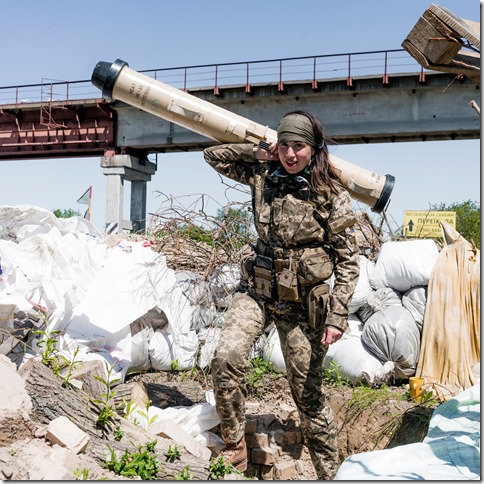
Every Russian tank that gets fried in Ukraine is sending the message that traditional armies can no longer expect to dominate simply because they have more troops, weapons, and money. Russian armored vehicles are falling victim to Next Generation Light Anti-Tank Weapons (NLAWs), which can be carried by individual soldiers, unslung in seconds, and deployed with little training and fatal accuracy. There are credible reports that Russia has already lost $5 billion worth of military equipment in a month of fighting in Ukraine. The human cost for Russia is even more staggering: Nearly 10,000 soldiers have been killed in action, including at least five generals.

That’s the reality of contemporary warfare: Smaller, nimbler groups fighting back effectively against lumbering, dumb relics of the past. Despite being the fifth largest fighting force on the planet and starting the war with five times the number of active military as Ukraine, Russia has been stymied in what virtually all observers expected to be a cakewalk.

This isn’t to say that Russia isn’t also inflicting massive, horrific violence against Ukraine—or that it won’t prevail in this conflict, especially the longer things drag on. But this war underscores what James Dale Davidson and William Rees-Mogg called the changing “logic of violence” and “the diminishing returns to violence” in their prophetic 1997 book The Sovereign Individual.

As weapons have become smaller, cheaper, more effective, and more widely dispersed, it’s harder and harder for old-style militaries and countries to quickly and effectively achieve their objectives through brute force as they meet resistance at every turn. That resistance includes “information warfare”—which includes hacking and cyber attacks—but also the use of social media, which Ukraine’s President Zelenskyy has excelled at to project an aura of invincibility and to cast the conflict in stark terms of good vs. evil.

This lesson shouldn’t be new to Americans, as our failures over the past two decades in Afghanistan and Iraq underscored the new reality that old-school invasion and occupation is more expensive and temporary than it is quick and effective. But Russia’s incompetence drives home in graphic detail to us—and, one hopes, to the Chinese officials supposedly eyeing an invasion of Taiwan—that even if Goliath does take out David, the price is too high and the victory too transient to bother undertaking.

If the collapse of the Soviet Union—that gargoyle incarnation of belief in top-down authority, power, and decision-making—was the beginning of the end of the 20th century’s romance with the nation-state, then Russia’s blundering in Ukraine and the United States’ disasters in central Asia and the Middle East may be its epitaph.

The future belongs not to the ignorant armies of the night who seek to command and control but to those who embrace and empower the decentralization of weapons, technology, information, currency, and individual ingenuity and courage.

Ukraine: The small town which managed to block Russia’s big plans

Voznesensk defenders

It was one of the most decisive battles of the war so far – a ferocious two-day struggle for control of the farming town of Voznesensk and its strategically important bridge.

Victory would have enabled Russian forces to sweep further west along the Black Sea coast towards the huge port of Odesa and a major nuclear power plant.

Instead, Ukrainian troops, supported by an eclectic army of local volunteers, delivered a crushing blow to Russian plans, first by blowing up the bridge and then by driving the invading army back, up to 100km, to the east.

“It’s hard to explain how we did it. It’s thanks to the fighting spirit of our local people and to the Ukrainian army,” said Voznesensk’s 32-year-old mayor, Yevheni Velichko, standing in body armour with his guards outside the town hall.

But almost three weeks after that battle, the mayor warned that another attack by Russian forces was probably imminent and that the town’s defenders lacked the weapons to hold them off a second time.

Continue reading “”

BLUF:
Immediate items to watch

  • Russian forces will likely capture Mariupol or force the city to capitulate within the coming weeks.
  • Russia will expand its air, missile, and artillery bombardments of Ukrainian cities.
  • Ukrainian officials suggest that Ukrainian forces may launch a larger counterattack in western Kyiv Oblast in the coming days.
  • The continued involvement of the Black Sea Fleet in the Battle of Mariupol reduces the likelihood of an amphibious landing near Odesa, Russian naval shelling of Odesa in recent days notwithstanding.

Russian Offensive Campaign Assessment.

Russian forces continued to settle in for a protracted and stalemated conflict over the last 24 hours, with more reports emerging of Russian troops digging in and laying mines—indications that they have gone over to the defensive. Ukrainian forces continued to conduct limited and effective counterattacks to relieve pressure on Kyiv, although the extent of those counterattacks is likely less than what some Ukrainian officials are claiming. Russian efforts to mobilize additional forces to keep their offensive moving continue to be halting and limited. Russian progress in taking Mariupol city remains slow and grinding. Increasing Russian emphasis on using air, artillery, and rocket/missile bombardments of Ukrainian cities to offset forward offensive momentum raises the urgency of providing Ukraine with systems to defend against these attacks.

Key Takeaways

  • Russian forces continue to go over to the defensive, conducting restricted and localized ground attacks that make little progress.
  • Ukrainian forces are conducting limited and successful counterattacks around Kyiv to disrupt Russian operations to encircle the city (which has now become extremely unlikely) and relieve the pressure on the capital.
  • The Battle of Mariupol continues as a block-by-block struggle with fierce Ukrainian resistance and limited Russian gains.
  • Russia is likely struggling to obtain fresh combat power from Syria and elsewhere rapidly.

Click here to expand the map below.

Continue reading “”