
First-time ‘Pandemic Gun Buyers’™ support gun rights just as much, if not more than pre-pandemic gun owners


One in Five American Households Purchased a Gun During the Pandemic

Survey: First-time gun purchasers during the pandemic were more likely to be younger and People of Color, compared to pre-pandemic U.S. gun owners, but they share similar views on gun control.

CHICAGO, March 24, 2022 – Eighteen percent of U.S. households purchased a gun since the start of the pandemic (March 2020–March 2022), according to new survey data from NORC at the University of Chicago, increasing the percentage of U.S. adults living in a household with a gun to 46%. Over this period, one in 20 adults in America (5%) purchased a gun for the first time.

According to the FBI, an average of 13 million guns were sold legally in the U.S. each year between 2010 and 2019, increasing to about 20 million annual gun sales in both 2020 and 2021.

[large images linked]

Pandemic Gun Buyers Compared to Pre-Pandemic Gun Owners by Select Characteristics

“Increasing gun sales during the pandemic were driven in nearly equal parts by people purchasing a gun for the first time and existing gun owners purchasing additional firearms,” said John Roman of NORC at the University of Chicago. “New gun owners during the pandemic were much more likely to be younger and People of Color compared to pre-pandemic gun owners in America.”

Despite demographic differences between first-time and pre-pandemic U.S. gun owners, NORC’s experts found that the two groups have similar views on gun-control policies. Both first-time and pre-pandemic U.S. gun owners support more permissive gun policies than non-gun owners. These included policies such as expanding concealed carry, shortening waiting periods before gun purchases, and allowing teachers and school officials to carry guns in schools.

Support for Permissive Gun Policies

“First-time gun buyers’ attitudes toward gun control look remarkably similar to those of the pre-pandemic U.S. gun owner,” said John Roman. “Whether they bought a gun because of existing beliefs about gun control—or owning a gun changed their policy views—is unknown, but it is notable that the policy positions of new gun owners are so different from non-gun owners.”

Continue reading “”

The lies the media refuses to call out

The media isn’t exactly friendly towards gun ownership. We all know this, so I’m not exactly breaking news here.

However, they will still occasionally take issue with outright lies, even if they ultimately agree with the position.

There are some lies they won’t bother to call out, and this is one of them:

What is known about the links among gun prevalence, gun purchasing trends and gun violence?

We’ve known for a long time that the more access there is to firearms in a society, the more firearm violence there is likely to be. It’s been shown in comparisons of societies and U.S. states with different levels of firearm ownership.

During the pandemic, as purchasing picked up across the country, we learned there was – at least early on – a relationship between an increase in gun purchases above expected levels and a later increase in violence above expected levels.

As 2020 went on, that signal was lost, except for domestic violence, because many other things were contributing to increases in violence.

We’ve known no such thing about access to firearms.

We’ve been told that such a link exists, but when you look at the studies that claim this, you can see serious problems with every single one of them.

For example, when comparing societies or even different states, it’s impossible to truly control for other variables that may somehow impact violent crime. While the prevalence of guns may exist, so do numerous other factors that can easily contribute to the problem.

Issues like jobs, education, population density, and a host of other factors all have been argued to contribute to crime. So why wouldn’t they also be a factor where guns are easily accessible?

That’s a question the media never answers.

Nor do they seem to consider why this knowledge is so unquestionable despite crime skyrocketing someplace like Los Angeles, which doesn’t have easy access to firearms?

It’s because the media simply doesn’t care about the truth.

They’ve pushed the gun control narrative with every fiber of their being. They’ll have a gun-control advocate on the primetime talk shows to calmly discuss their point of view, but gun rights advocates are often paired with another gun-control activist so they can debate the issue, tilting the balance so people are really getting inundated with one side.

Media personalities have to know what they’re doing, just like they have to know that this idea that we know definitively that increased access to guns somehow makes violent crime higher is bogus.

They know and they don’t care.

They like these kinds of lies because they can hold up those flawed studies and say they’re only spitting facts, trusting that most people wouldn’t understand why those studies are complete and utter BS. They’re hoping you’re too stupid to learn how to read a study, learn to find the flaws in a given study, then criticize it for being what it is, an attempt to push a narrative.

Frankly, I’m kind of sick of seeing this nonsense from our media. The thing is, I don’t expect to ever see them do better, either.

No, only the proggies in Oklahoma are ‘tired’.
I think they’re tired of their losing streak.


Propaganda O’ The Day

Advocate: Oklahomans tired of lawmakers catering to gun lobby

Public Radio Tulsa | By Elizabeth Caldwell elizabeth_caldwell.jpg


(Again, nice for the author to provide positive ID for future use )


A bill allowing people to carry guns at state fairs and into government buildings is paused in the state legislature.

Don Spencer of the Oklahoma Second Amendment Association said he “worked” on HB 4138 and he’s very excited about it. He published a video on Saturday boasting to his club that one intent of the proposed law was to let people carry rifles into traditionally quiet places.

“The concern was that when we have this bill passed, the question was, would a person be able to carry an AR-15 rifle into a library? My answer was yes,” said Spencer.

Spencer said as a concession the bill was altered to allow concealed handguns in libraries. But he reassured his club it was just a first step.

“Remember folks, 2012, we couldn’t even see guns in Oklahoma. In ten years we’re going from not just seeing them to no license required.”

Beth Furnish of Moms Demand Action said legislators betray Oklahomans when they pass laws for lobbies instead of citizens.

“Oklahomans started paying attention to what our lawmakers were doing after they passed permitless carry, which was opposed by a strong majority of Oklahomans, even gun owners and Republicans. Oklahomans are getting tired of our lawmakers passing the wish list of the gun lobby,” said Furnish.

HB 4138 was written by Sen. Warren Hamilton of McCurtain and Rep. Sean Roberts of Hominy. A long list of coauthors has also been added.

It was not heard in the House before deadline Thursday. Neither Roberts nor Hamilton responded to requests for comment on their plans for their bill.

Clear Thinking About Taxing Guns

We are strange creatures. We see the world and build mental models of how the world works. Soon, those models become more significant to us than reality itself. That is dangerous when so much of our “experience” is from the news and entertainment media. We think our tiny screens show us what is really happening. We want to be carful about what we put into our heads.

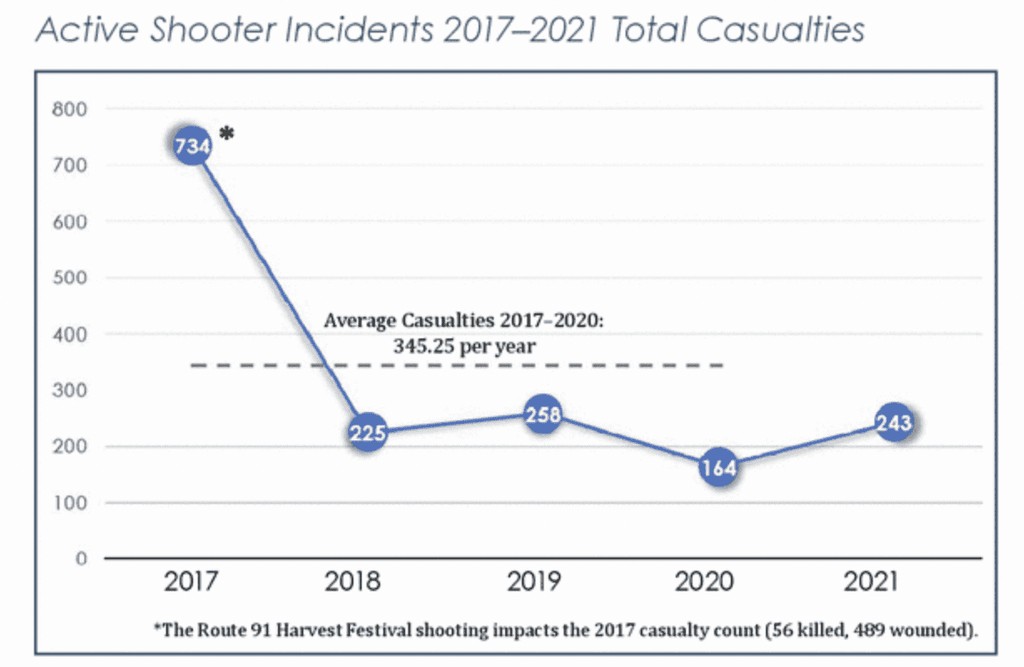
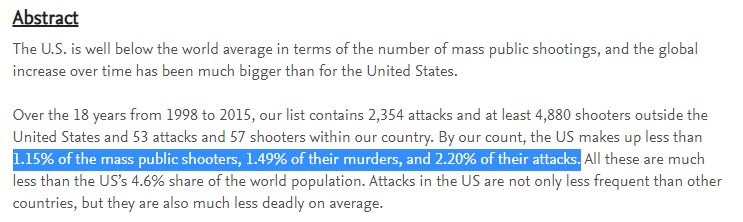
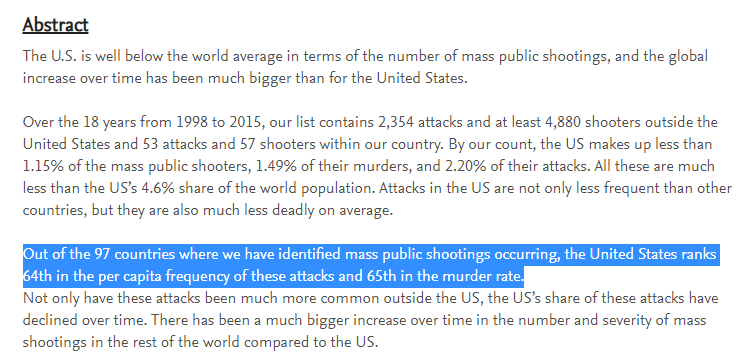
Here in the USA, there are over a million violent crimes a year. The vast majority of them do not involve the criminal using a gun. At the same time, honest citizens like us defend ourselves with a firearm over a million times. Each year criminals also kill a few thousand people with a firearm. Mass murderers kill a few hundred of us. That isn’t what we see on our small screens.

The media inverts those proportions. We might think that mass murder is common and armed defense is rare. That lets special interests with a political agenda play on our distorted view of reality. That distortion is dangerous for all of us.

Three states recently passed constitutional carry legislation. That means that people who legally own a gun are allowed to carry their gun in public without asking for a permit and paying a tax. The new law won’t change how armed criminals behave since criminals who were not allowed to own a gun were already carrying their guns illegally. Breaking the law is what criminals do every day. Our gun laws disarmed the people who obey the law, and now we’ve reduced those infringements on honest people in three more states.

Now that constitutional carry passed, more law-abiding citizens will carry a legally owned firearm in public and at home. That makes life harder for criminals since the thugs don’t know if their intended victims are armed. The criminal’s uncertainty makes all of us safer. We are safer if we choose to carry a personal firearm and if we choose to go unarmed.

I studied the effects of concealed carry licensing across the United States. As you’d expect, fewer of us get our license to carry as that license becomes more expensive and more time consuming. What surprised and pleased me was that more of us take firearms training when the costs of a license go down.

That sounds counter intuitive from one point of view. If we drop the state mandate to take a firearms training class then more of us will take a class? I see why you could be skeptical.

Now consider another perspective. The state not only required a class, but they taxed us if we wanted to have a carry permit. No one would be surprised if more of us got firearms training if the state gave us a few hundred dollars. That is what happens when licensing fees decrease. We were able to spend our safety budget on firearms training rather than on paying state taxes and fees. We’re wealthier because the state isn’t taxing us as much, and now we can afford to take more firearms safety training.

That isn’t what the anti-gun Democrat politicians told us would happen. They said that blood would flow in the streets. They say the same thing each time a state considers removing the taxes and regulations on honest people who want to defend themselves with a personal firearm.

Whether we believe the politicians or not depends on the models of human behavior we carry in our heads.

Ask yourself if these anti-gun politicians were right. Did disarming the law-abiding victims make us safer? We already have over 23 thousand firearms regulations. In contrast, there were 21 states that already allowed ordinary citizens to carry a firearm in public without a permit. When you listen to the news and hear stories of violent crime, are those stories from states where honest citizens are armed or from states where honest citizens have been disarmed? Does the disarmament model actually make us safer?

It is nearly impossible to get a carry permit in parts of California, New York, Massachusetts, New Jersey, and in Maryland. Cities like Los Angeles, New York City, Springfield, Camden, and Baltimore are some of our most violent cities. If disarming honest citizens made us safer then we should see the results on the nightly news. What do you see?

We all want to stop violent criminals. Some people decided that guns were bad so they passed laws that disarmed the people who obey the law. I think that model of human behavior is incomplete. I like it when the good guys can defend themselves. That happens over a million times a year. I think that model of human behavior gives us better results than disarming the victims.

There is a bit of good news that we don’t see reported yet. We are not all the same. Some of us were able to pay the thousand-dollar tax in order to protect our families with a firearm. Many of us couldn’t afford that much. Removing some of the fees and regulations on armed defense means that more of us can now afford a gun and self-defense training. More of us will be armed at home and in public. Fewer of us will be unarmed victims. More poor people can defend themselves from violent criminals.

That helps the people who need help the most. I like that, and so do most of you.

Constitutional Carry in Indiana

Finally, after a dozen years of trying during which it died in House or Senate committees time and time again, constitutional carry legislation was signed into law by Governor Eric Holcomb yesterday. [the 21st]

The permit repeal, called “constitutional carry” by gun-rights supporters in reference to the Second Amendment, was criticized by major law enforcement groups who argued eliminating the permit system would endanger officers by stripping them of a screening tool for quickly identifying dangerous people who shouldn’t have guns.

Twenty-one other states already allow residents to carry handguns without permit — and Ohio’s Republican governor signed a similar bill last week.

Indiana State Police Superintendent Doug Carter joined leaders of the state’s Fraternal Order of Police, police chiefs association and county prosecutors association in speaking out against the change.

Carter, wearing his state police uniform, stood in the back of the Senate chamber as the bill was being debated. He said after the vote that approval of the measure “does not support law enforcement — period.”

That bit of performative BS from Superintendent Carter was just gratuitous. “Bad guys might carry a gun without a permit!” is just an idiotic argument. Bad guys already carry guns without permits, because they’re bad guys. They don’t care about gun carry permits any more than they care about robbery or murder permits. That’s how you know they’re the bad guys. The permit process, no matter how streamlined, is only an impediment to lawful citizens who’d like a chance to shoot back.

With Ohio and Alabama having passed constitutional carry laws this year as well, that brings the total number of states with permitless carry to twenty-four, just one shy of half the country. Remember when it was just “Vermont Carry”? Heck, when this blog was started back in 2005 there was just Vermont and Alaska; Arizona didn’t become the third state until 2010, and that’s when the floodgates really opened.

Soon you’ll be able to drive from Mobile to Coeur d’Alene, Cleveland to Brownsville, Tucson to Bismark, or Harpers Ferry to El Paso, all with no permission slip for your blaster.

Yep. He’s a politician all right. He was against it, until it became law, then realizing which way the wind was blowing, he’s now for it. The only question about politicians is whether or not they’re ‘honest’ which means ‘they stay bought’.


Lee County Sheriff’s Take on Concealed Carry Bill

Alabama Gov. Kay Ivey signed a new measure into law on March 11 that will change the way gun owners carry their guns.

No longer will citizens be required to obtain a concealed carry permit.

House Bill 272, The Constitutional Carry Bill, no longer requires citizens to have a permit but also changed the language regarding penalties for unlawful carry.

“Unlike states who are doing everything in their power to make it harder for law abiding citizens, Alabama is reaffirming our commitment to defending our Second Amendment rights,” Ivey said. “I have always stood up for the rights of law abiding gunowners, and I am proud to do that again today.”

HB 272 trickles down in Alabama to all levels, including Lee County. Sheriff Jay Jones approached the Lee County Commission in November, before Ivey signed the bill, asking commissioners to continue a requirement for purchasing concealed carry pistol permits.

“It’s about pro-community safety,” he said in November. “… The current law that’s in place [requires] a person to obtain, by a fee, a pistol permit, to carry a handgun, concealed on about their person or even more importantly, in their vehicle, as they go about their business. And it’s the business of some that I would like to address.

“The tool allows us when we encounter people, who, are generally up to no good quite frankly, in possession of a weapon because they’re not going to get a permit … Criminals aren’t going to go to the trouble of getting a permit. And we depend on that. Because as a result of that, we can confront them when we encounter them without one in a vehicle and are able, in many cases, to relieve them of those weapons, which many times, are stolen.”

At the time, three citizens spoke against Jones’ request, however, the commission voted in favor of his resolution.

Three commissioners voted in favor, while District 5 Commissioner Richard LaGrand abstained.

“You know, Jay, if this is something that helps you and the three gentlemen back there with you in law enforcement, if it helps y’all do your job, I would encourage the commission to support this,” said District 4 Commissioner Robert Ham. “And I think what I just heard is that it did.”

Now that HB272 has been signed into law, however, Jones said he supports Ivey’s efforts for Second Amendment Rights.

“[I] agree that Alabama should be strong in affirming the rights of law-abiding gun owners,” he said in a statement to The Observer. “Whether the purpose is for protection of self and family or to engage in hunting or sporting activities, the right to acquire and own a firearm is fundamental. As a Sheriff, I support citizens exercising this right and encourage the concept of responsibility by acquiring the knowledge and skills to safely handle and maintain a firearm.”

His concerns, however, are still in place, he said.

“Law enforcement professionals at all levels remain concerned that a tool utilized by our peace officers around Alabama has been removed,” Jones said. “These concerns are based on experience and knowledge gained by those who keep our communities safe every day. We will remain vigilant and our hope is that our concerns do not come to fruition when the law takes effect next year.”

“I WILL NOT COMPLY”
WASHINGTON LAWMAKERS PASS MAG CAPACITY LIMITS AS CLICHES FLY

Nothing makes less sense than politicians who know zip about firearms, to say nothing of personal protection, passing laws that put restrictions on guns used by armed citizens to defend themselves, their families and in an emergency, their neighbors.

Not only does a magazine ban affect rifles, it also will create problems
for people who own pistols such as this Sig Sauer P229 Elite with its greater capacity.

Washington lawmakers recently passed such a law, and to suggest it stinks would be excessively civil. According to the affected gun owners whose remarks I’ve read on social media, the Evergreen State is taking on a shade of brown, and it’s got nothing to do with fall colors.

Long story short, the legislation prohibits the import, sale, trade or manufacture of a “large capacity magazine,” which is defined as an “ammunition-feeding device with the capacity to accept more than 10 rounds of ammunition…” As one might guess, this set off a buying frenzy, because—and here’s the puzzling part—any such magazines owned prior to the July 1 effective date will be “grandfathered in.” That is, the owners can keep them.

I can hear you all wondering, “How are they going to enforce this?” Magazines don’t have serial numbers, and if somebody has a garage full of them, how would anyone prove that individual didn’t have all of those magazines six months ago?

I happen to own a trio of 25-round magazines for my Ruger 10/22, which—believe it or not—falls within the initiative-adopted definition of a “semi-automatic assault rifle.”

It is imperative for you folks in other states to remember Washington is considered something of a “test tube” state by the gun prohibition lobby. It used to be California, but the Pacific Northwest has become the new petri dish for all manner of gun control nonsense to see what can be passed, and what can’t. What is tried in Washington this year might be coming to a state legislature near you next year.

Outbreak of Clichés

As noted earlier, nothing makes less sense … except perhaps for how some people react on social media to a gun restriction anywhere in the United States.

It’s the same all over, whether in New Jersey, Oregon, California, and Massachusetts; pick a state with a new gun control law and I guarantee you will hear or see the following:

“I will not comply!” pops up first, frequently followed by “I had this tragic boating accident.” What may have been amusing a dozen years ago has lost its oomph. Besides, trying to be clever to get around a dumb gun law can end badly, and such claims are juvenile at best.

At this writing, plaintiffs in a federal case challenging California’s “high capacity” magazine ban had filed an appeal to the U.S. Supreme Court for review of their case, known as Duncan v. Bonta. They won twice, at trial and then on appeal to a three-judge panel of the Ninth Circuit Court of Appeals in San Francisco, but then the court held an en banc re-hearing with 11 judges, and they reversed.

So, since Washington is also in the Ninth Circuit, we’ll all probably see authorities in that state pushing hard to prevent the high court from reviewing the Duncan case. It is time for the Supremes to take such a case to further define the parameters of the Second Amendment. Let’s hope they are very broad.

Just for edification, the 10-round limit applies to pistol magazines as well as those for rifles. Suddenly, owners of striker- fired Glocks,  Springfields,  Smith & Wessons, SIG SAUERs and other popular pistol brands and models are paying attention. It’s not just guys with rifles who are being targeted. Handgunners are in the crosshairs as well.

I inquired with a couple of pals at the National Shooting Sports Foundation about the origin of the “magic” 10-round limit. Whose idea was that? Neither of my contacts was certain, but it appears to have originated with someone in the gun control lobby, once again demonstrating a lack of firearms understanding evidently rampant among that bunch.

The authors call the 2nd amendment “dangerous”, a violation of international law, and say right to carry laws cause “assassinations”

Dad calls people like this: ‘overeducated idiots’.

The SCOTUS decisions in the Heller, McDonald & Caetano cases show these ‘academics’ to be precisely that.


Can States Block or Heavily Restrict the Second Amendment Constitutional Right by Following the Design of Texas Bill 8?

Abstract

The second amendment regarding the right to bear arms is regarded as one of the most problematic provisions in the US Constitution. Despite its historical roots, “bearing” arms for personal self-defense might no longer be suitable for the 21st century in light of recent jurisprudence and sociology findings. Freedom and autonomy are the foundation upon which the bill of rights was drafted. The bill of rights offers protection for individuals against state interference by granting them, inter alia, the right to bear arms for self-defense, right against self-incrimination, and due process rights. Nonetheless, the Texas Senate Bill 8 was passed to limit the Roe v. Wade right to abortion only to the first six weeks of pregnancy – essentially obliterating Roe v. Wade. The Texas Senate Bill 8 design allowed it to withstand the initial consideration by the US Supreme Court. In this research we ask three interrelated questions. First, does the Second Amendment right constitute an afront to International Law’s right to life under the Universal Declaration of Human Rights (“UDHR”) and the International Covenant of Civil and Political Rights (“ICCPR”)? If yes, can states adopt a design similar to Texas Bill 8 to ban or extensively regulate the second amendment right? Finally, what are the intrinsic differences between the right to bearing arms and the right to abortion? If they are intrinsically different, this research calls for examining each of them under a different scrutiny standard. In order to answer the last question, we assess two landmark cases regarding abortion and right to bear arms currently pending before the US Supreme Court, in an attempt to predict the future of those rights.

South Dakota: Three Pro-Gun Bills Signed by Governor Noem

Last week, South Dakota Governor Kristi Noem signed a trio of pro-gun measures that strengthen our right to self-defense in the Mount Rushmore State.  These measures will go into effect on July 1, 2022.

Senate Bill 195 clarifies South Dakota’s current Stand your Ground law by establishing that the burden of proof, by clear and convincing evidence, lies on the party seeking to overcome the immunity provided under this law.  This measure clarifies the burden of proof and who bears the burden of proof in Stand your Ground self-defense cases.   

House Bill 1162 updates the definition of “loaded firearm” under South Dakota law to designate that a firearm is considered loaded only if a round is chambered.  This update provides easier methods of storing firearms in an “unloaded” manner, while still maintaining utility in self-defense situations when seconds matter.

Senate Bill 212, as amended on the Senate Floor, reduces the cost of South Dakota carry permits to $0.  SB 212 allows those who wish to use South Dakota’s reciprocity agreements with other states, to do so and not be heavily burdened by what is essentially a tax on their right to self-defense.

What The Next Long-Term Fights Will Be for the Second Amendment

Second Amendment supporters have come a long way over the years. In 1982, California was having a referendum on whether to ban handguns. Now, there is a good chance that its “discretionary” carry permit scheme will be gone. There could also be a chance the Supreme Court could also wipe out semiauto and magazine bans in the near future.

Second Amendment supporters now need to answer some new questions. They are:

“What’s next?”
“How do we accomplish that objective?”
It goes without saying that financial deplatforming is the immediate threat to our Second Amendment rights, along with addressing Silicon Valley’s censorship. But what comes after that? Second Amendment supporters need to figure that out.

There will be good news. Favorable rulings in NYSRPA v. Bruen and the semiauto ban cases will make the courts a good venue to challenge other infringements. The real question will be the pace where court rulings take out anti-Second Amendment laws, and that could very well depend on how John Roberts goes.

As we discussed earlier, given the current makeup of the court, if Roberts is in the majority, he will designate who writes the opinion. But if he doesn’t, then it would be Clarence Thomas who would get to decide who writes the opinion. The retirement of Stephen Breyer will not change the balance, but his nominated replacement, Ketanji Brown-Jackson, may not be as effective an opponent as Breyer was.

The victories, though, will prompt outrage. If you think calls to pack the court are bad now, wait until massive parts of the agenda that anti-Second Amendment extremists have pushed get declared unconstitutional. Second Amendment supporters may need to look to winning general elections in order to defend against court-packing.

Despite the need to defend against efforts to pack the court, there will be changes – and the need – to take the offensive on the legislative front. For instance, it may be time to figure out how to either roll back who is prohibited or to find a way for people to remove themselves from being prohibited.

In one sense, Second Amendment supporters may be on the first steps of the path to do just that with the NICS Denial Notification Act. One thing we will need to do in order to reverse a number of dubious categories of “prohibited persons” is going to be getting the hard data on what exactly, people are denied for.

In fact, many of the battles we will face now will be slow and grueling in many ways. Oftentimes, the biggest wins at the federal level will be about what doesn’t happen. The most important victories will be the ones where Second Amendment supporters defeat anti-Second Amendment extremists via the ballot box at the federal, state, and local levels.


Indiana: Gov. Holcomb Signs Constitutional Carry

Today, Governor Eric Holcomb signed House Bill 1296, constitutional carry, into law. The General Assembly previously passed HB 1296 on March 8th. This makes Indiana the 24th constitutional carry state, and the third to join that group in 2022, following Ohio and Alabama.

Indiana already offers free lifetime carry permits, so constitutional carry ensures that law-abiding citizens who are already eligible to obtain a carry permit can access their right-to-carry without government red tape and delays. Constitutional carry will go into effect on July 1st, 2022.

All those first time gun buyers are now buying rifles because of Ukraine.

War in Ukraine helps boost gun sales in some U.S. cities

TUCSON, Ariz. (KGUN) — Gun shops say sales of guns and ammunition are going up.

At Diamondback Shooting Sports, Ben Anderson says there’s no single explanation for the jump.

He says the war in Ukraine has boosted sales of the ammunition AK-47 rifles use because those rifles and similar models are being used in the war. That makes people who own AK style rifles in the U.S. worried the ammunition they use could become scarce.

High demand and supply chain shortages have led to shortages of some other types of ammunition too.

Anderson says the pandemic prompted some people to buy guns and they may be adding additional weapons now.

“A lot of times now where we had the big rush of first time gun owners during the COVID times, and now what we’re seeing is those individuals that purchased a pistol or a rifle or a shotgun are now coming back in for that alternate firearm,” Anderson said. “So if they purchased a pistol, they’re here for a shotgun, if they purchased a rifle, they’re here for a pistol etc.”

Anderson says gun sales tend to rise when the President’s a Democrat because gun owners worry gun controls will be tightened and gun sales tend to fall when a Republican is in office.

He says Diamondback offers firearms training and self defense training that does not involve guns and demand for that training’s been steady for about three years.

Are Ukraine’s armed citizens making a difference?

One of the go-to arguments of gun control advocates who try to portray our Second Amendment as an outdated anachronism is that armed citizens just wouldn’t stand a chance against the might of a modern military force bristling with tanks, missiles, and even nuclear weapons (looking at you, Eric Swalwell).

The armed citizens of Ukraine, however, are helping to put that argument to rest. So far the nation has defied expectations and has continued to to resist the Russian invasion, repelling many of the attacks against the country’s biggest cities, and the country’s Territorial Defense Force, which includes many individuals who were simply private citizens a couple of weeks ago, is having an impact, according to Ukrainian officials.

“In the city itself, the territorial defense detachments are working quite effectively,” Mykhailo Podolyak, an adviser to the Ukrainian presidential chief of staff, said in a statement Saturday morning. “It turned out that people are coming out, defending their homes. It wasn’t expected by analysts of the Russian General Staff.”

I don’t think it was expected even for some of those who’ve shown up to volunteer, many of whom may never have thought about defending their country with a gun until last week but who are now heading down to their nearest recruitment center.

Men from their 20s to late 50s, from a range of backgrounds, showed up. Igor, 37, an economist for an online retailing company, who didn’t want his last name published for safety reasons, stood in line for his gun. He spoke at barely a whisper and his lips trembled. The dull thud of bombs or artillery could be heard in the distance.

“I never served in the army or with the police or anything,” he said. He said he hoped to be able to figure it out. He was worried, he said. “But people who are really afraid are sitting at home. They aren’t out here now.”

“Everybody in our country needs to defend — women, girls, everybody,” said Denis Matash, 33, the manager of Milk, a Kyiv nightclub, standing in line with about 50 other men at the recruitment center. “I don’t think they understand where they came,” he said of the Russians. “Look at what is happening here.”

Grigory Mamchur, 40, who works as a male strip dancer at the Milk nightclub, part of the now shuttered but once booming nightlife scene in Kyiv, was also in line for a Kalashnikov.

“There wasn’t even anything to think about,” Mr. Mamchur said. “We will defend the country however we can. This could be our last chance.”

The Territorial Defense Force and the private citizens who are taking up arms against their country’s invaders can’t thwart the Russian military on their own, but they can and have made life hell for Russian troops. In addition, the massive mobilization of civilian volunteers serves as a psychological boost for Ukrainians and is helping to obliterate the argument made by Vladimir Putin that the Ukrainian campaign is about “liberating” a grateful populace from their democratically-elected overlords.

Continue reading “”

Activist claims buybacks are about caring, not safety

Gun buybacks are annoying. For one thing, no one is buying anything back. They’re buying guns so they can be destroyed. That’s it.

Then there are the problems with the “no questions asked” policies that make it likely that some criminals will use such events as an opportunity to dispose of weapons that could tie them to various crimes.

Oh, and lest I forget, we have ample evidence that buybacks simply don’t work.

But for one activist, that doesn’t matter.

A member of the Hampton Roads Black Caucus in Virginia said it didn’t matter if gun buybacks were ineffective because they needed to show the community that they “care enough” to have a gun buyback.…

A study from the National Bureau of Economic Research found that gun buyback programs are ineffective for many reasons. Among participants from mostly low-crime areas, gift cards that are being offered aren’t enough of an incentive, and the weapons that are brought “tend to be older and less well-functioning than the average firearm.”

WVEC asked Jones to respond to the findings of the study.

“Regardless of what the statistics say, we want to put some attention and show that we care enough and make time to do the program,” Jones said.

Well, that’s it.

That’s the stupidest BS I’m likely to read today. Well done, Mr. Jones. I’m impressed. That’s a level of stupid I didn’t expect to see so relatively early in the day.

Continue reading “”

Black Firearm Owners: Gun Control Hurts Our Communities

Jessica Luckett got her first gun at the height of the COVID-19 pandemic and it opened her eyes to the various laws and policies governing legal firearms ownership.
She works remotely for a nonprofit and lives alone in a West Pullman townhouse on the southern tip of Chicago. She often visits family and friends in Englewood, a high-crime neighborhood on the South Side where she grew up.

For Illinois residents to own a gun, they must get a firearm owner’s identification card, which is a months-long process.
Then, to carry the gun outside the home for self-defense, a concealed carry license is needed, which Luckett acquired.
Yet, through friends at a women’s gun club, she learned that other states observe very different gun laws. Most don’t ask for a firearm owner’s identification card and some don’t even ask for a concealed carry license.
“Why do we have an amendment that says right to bear arms, yet all states are so different?” she asked. “The amendment is for the entire United States, it is not for one state or another.”

She also questions the push for various gun control measures at the federal, state, and local levels, often by lawmakers from her party, the Democrats.
“It is taking away our Second Amendment right to bear arms, and I believe we should be able to protect ourselves,” she said.

Like Luckett, many first-time black gun owners are on a similar discovery journey, looking more closely at the narratives and policies affecting their newly embraced Second Amendment rights, according to Philip Smith, president of the National African American Gun Association.
During the pandemic-era gun sales boom, 21 million sales-related background checks were conducted in 2020, according to an estimate by Firearm Industry and Trade Association.
African Americans and first-time gun buyers were the groups that registered the biggest jumps.

Continue reading “”

Der Grëtchënführër™ strikes again (as if this wasn’t expected)


Governor vetoes Theis bill protecting Second Amendment rights
Would have guaranteed issue of concealed pistol licenses during emergencies
LANSING, Mich. — Sen. Lana Theis’ legislation that would have ensured the issuance and renewal of concealed pistol licenses during declared emergencies was vetoed by Gov. Gretchen Whitmer on Friday.

“This is a disappointing day for gun owners,” said Theis, R-Brighton. “The Second Amendment is clear that the rights of law-abiding citizens to keep and bear arms shall not be infringed, but that is exactly what Gov. Gretchen Whitmer did today.

“People must be able to defend their life and property even, and especially, in times of emergency. State law is clear that county clerks shall issue concealed pistol licenses to those who are qualified, and my bill would have ensured that this essential service would continue regardless of any declared emergency.

“While I am disappointed with Whitmer’s veto, I cannot say that I am shocked. She has never supported gun owners and she likely never will. I hope responsible gun owners will continue their efforts to protect this right. I certainly will.”

Theis fielded numerous complaints throughout the COVID-19 pandemic that county clerks across the state refused or delayed issuing or renewing concealed pistol licenses, infringing on law-abiding citizens’ Second Amendment rights.

Senate Bill 11 would have required county clerks to continue to issue and renew concealed pistol licenses regardless of any shutdown issued by executive order or public health order. County clerks and law enforcement would have also been required to continue providing the fingerprinting services necessary to obtain a new concealed pistol license.

Additionally, the bill would have enabled the Michigan State Police to provide personal identification numbers to concealed pistol license holders, so they may renew their licenses online during any declared emergency.

Law profs claim lack of gun control fueling “small arms race”

Generally speaking, I really love my job. I get to talk to interesting people, cover an issue that I’m passionate about, and can maybe even make a difference every once in awhile in terms of keeping bad laws off the books and putting good laws in place.

One of the few downsides, however, is having to subject myself to a lot of the dumb arguments made by the gun control lobby and their allies in the media and academia. The latest? A new paper by two law professors at the University of Oklahoma and the University of Houston who claim that a lack of gun control laws is fueling what they call a “small arms race” across the country.

On November 19, 2021, Kyle Rittenhouse was acquitted of homicide charges stemming from his killing of two people—Anthony Huber and Joseph Rosenbaum—at a protest of police violence in Kenosha, Wisconsin. Rittenhouse had armed himself and traveled to the protest, purportedly to defend Kenoshans’ property against looting.

The acquittal sparked substantial public outrage about the state of gun laws and about the legitimacy of the criminal justice system more generally.

In a similar case, Travis McMichael, Gregory McMichael, and William Bryan were charged with murdering Ahmaud Arbery in Brunswick, Georgia. There, the defendants believed that Arbery was engaged in criminal activity and pursued him with a gun.

When Arbery took action to protect himself, Travis McMichael shot and killed him. Here too, many were concerned that an acquittal would lead to greater vigilantism. And while the jury ultimately convicted, Georgia law would have also allowed acquittal in a similar or even identical  case.

Such cases have raised public concern that certain states’ gun-use and self-defense laws effectively invite malicious individuals—including vigilantes and white supremacists—to kill with impunity.

Funny how both the acquittal of Kyle Rittenhouse and the conviction of the McMichaels and William Bryan are both evidence of the need for more gun control laws, according to the professors. I’m particularly amused by the statement that Georgia law could have led to an acquittal, because that’s how the law works in virtually every criminal case that goes to trial. Juries have the option of finding defendants guilty or not guilty, and the fact that they choose between those verdicts based on the evidence presented isn’t in and of itself a sign that we need more or less laws.

Continue reading “”

Beyond Stand Your Ground: Second Amendment Immunity Defense is the Next Legal Frontier

Lee Williams;

Florida’s Stand Your Ground statute and similar laws in other states can offer immunity from prosecution when someone uses deadly force to defend themselves, and affords them quick access to an appellate review if the case doesn’t go their way.

In other words, if a defendant involved in a defensive shooting invokes a Stand Your Ground defense, their case can be dismissed before a trial even begins if it is proven they are entitled to statutory immunity, or appellate judges can be brought in quickly to make sure the case gets handled correctly.

When a defendant files a Stand Your Ground motion, their case is put on hold. Prosecution is halted. The trial court must hold a “Stand Your Ground” hearing – a sort of mini trial – to determine whether the defendant’s use of force meets the standards for Stand Your Ground immunity.

At this point, the burden shifts to the prosecutors, who must then prove by “clear and convincing evidence” why the defendant is not entitled to immunity from prosecution.

After this mini trial, the judge can either dismiss the charges or allow the case to go forward. However, if the charges are not dismissed, the defendant can file a Writ of Prohibition, which quickly bumps the case up to an appellate court for review. This writ can save the time it normally takes to get to the appellate level — usually as much as 18-months to two years — because it allows the defendant to forego a jury trial, sentencing and other delays and present their case directly to the appellate judges, who can affirm or deny their writ.

Stand Your Ground was created to protect people from unjust, malicious or politically motivated prosecutions after they acted in self-defense. By shifting the burden of proof to the state and by making an appeal quick and easy, the law has become a powerful tool, which some believe should be expanded to include other statutes involving Second Amendment rights.

“We need a Second Amendment immunity defense for anything involving the lawful possession of a firearm,” said former Florida prosecutor Lisa Chittaro. “It should mirror Stand Your Ground statutes, but it needs to be broader. It should allow defense attorneys to ask the court to find immunity under the protections of the Second Amendment quickly and efficiently and if they don’t, it should provide a quick route to the appellate level without having to go through the entire court process, which can take years.”

Chittaro pointed to several types of criminal cases that should be covered by Second Amendment immunity. Most involve arrests stemming from gun-free zones, such as schools, sporting events and airports. Many of them lack knowledge – a major factor in a criminal case – much less actual intent to commit a crime.

“If a parent picks up their child from school and they forgot their firearm and someone sees it and complains, they should be covered by Second Amendment immunity,” she said. “The same goes for other gun-free-zone prosecutions where there was no knowledge or intent.”

The problem with most of the prosecutions resulting from arrests in prohibited places, is that police and prosecutors often forget that Americans have a constitutional right to keep and bear arms. A trial judge and/or appellate court should review these cases to determine specifically if it involved this constitutionally protected right, or if the defendant knowingly and with intent committed a crime. Besides, in many states, the list of prohibited places grows every time their legislature meets. This is lawfare – pure and simple.

Every prosecution stemming from an arrest in a prohibited place should begin with an acknowledgement of the defendant’s Second Amendment rights, especially since gun-free zones infringe upon these rights. If a case involves absentmindedness, and not knowledge or the specific intent to commit a crime, judges need to toss them out. It is, after all, what the Framers had in mind when they wrote the Second Amendment.

The Iowa governor says gun control is not the answer.

Reynolds says strict gun control is not the answer after drive-by shooting

Iowa Gov. Kim Reynolds had a message Wednesday on the deadly drive-by shooting outside of East High School last week.

At an event Wednesday, Reynolds called the shooting a heartbreaking tragedy but argued stricter gun laws are not the answer.

“The tragedy is our educational system is letting these kids down. They should have been in school. We should be figuring out resources to help them stay there,” Reynolds said.

Instead, she says the focus should be on keeping kids in the classroom.

“Let’s figure out how we get these kids in school, get them the education they need and set them up to be successful. Not set them up for jail or a life of crime. And so that’s where we’re going to continue to focus. We have gun laws. We have laws on the books right now for guns, and those weren’t accessed legally,” Reynolds said.

Des Moines police haven’t determined how the teens got the guns, but say they were possessed illegally because they were minors.

Fifteen-year-old Jose Lopez was killed in the shooting on March 7.

Two teenage girls were injured and remain hospitalized. Four of the suspects that are charged as adults have their first court appearance on Friday. However, one of them will not physically be in court because he entered a written appearance.

Iowa Democrats criticized Reynolds for placing blame on public schools.

House Minority Leader Jennifer Konfrst released a statement saying, “Iowans know the real tragedy is that a 15-year-old has died and two remain in the hospital. Instead of using our Iowa values to bring us together, Reynolds is using this tragedy to vilify teachers and drive Iowans apart.”

Des Moines Schools Superintendent Tom Ahart said Monday, “It’s unfortunate that our state and our country have become a place where firearms are far too easily accessible. We remain committed to protecting our students and staff, but real change to gun laws and access would go a long way to help us.”