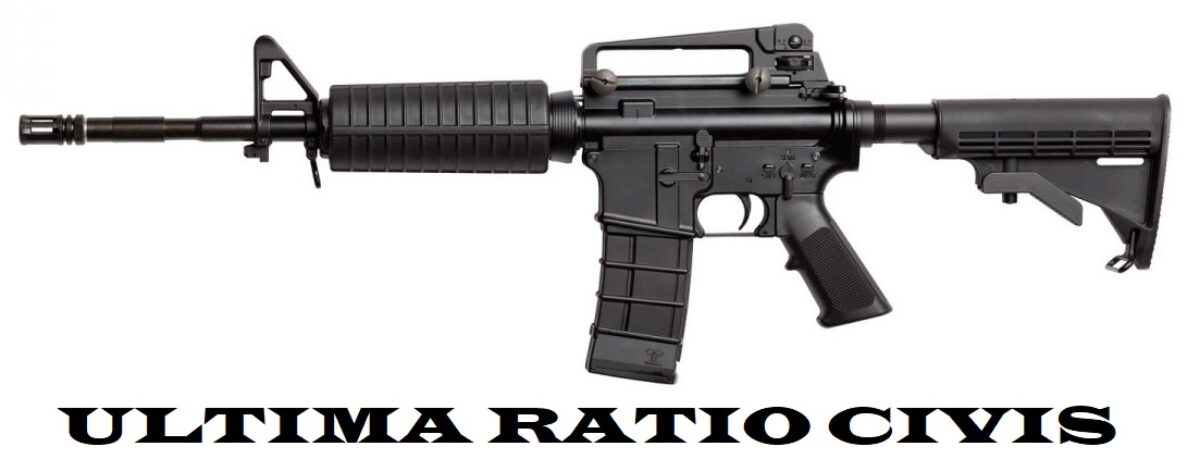
Laws concerning possession are a form of ‘prior restraint’ and as we have seen, are useless. It’s not what you’ve got that should matter, it’s what you do with what you’ve got that should.


MISSOURI HOUSE PASSES AMENDMENT LEGALIZING BRASS KNUCKLES

Lawmakers approved an amendment to a current law that if passed by Senate and signed into law, would legalize knuckles, more commonly known as ‘brass knuckles’.

The amendment that was passed is part of a larger Public Safety bill, that will be voted on by the House Chamber in the future.

It was first introduced in January by Republican Representative Tony Lovasco.

Documents from the House Session on May 5 says if signed into law, people with concealed carry permits, a valid concealed carry endorsement issued before August 28, 2013, or a concealed carry endorsement or permit issues by another state in their name can legally carry knuckles, with similar exceptions to those who are permitted to carry a firearm.

KTTS News reached out to Rep. Lovasco and this was his response.

The measure was added as an amendment during the perfection process of an omnibus “public safety” bill (SB 600). My amendment removes criminal penalties for possession of “knuckles”, and regulates the carry of them in a similar way to concealed firearms.

The amendment was accepted by the House, however SB 600 as a whole has not yet received a final vote from the chamber.

As to why I offered the amendment, I did so because it’s absurd to me that the mere possession of a piece of metal with some holes in it could result in criminal charges. There are plenty of existing statues that properly prohibit the inappropriate use of these products, and banning them entirely is unproductive and outside the proper role of government.

Regarding the timing, I brought it up during a discussion on another amendment dealing with federal gun laws and the place that personal defense has within the “public safety” category the bill was ostensibly about. Unfortunately, the omnibus SB 600 also contains measures contrary to criminal justice reform and limited government principles and that I cannot support. My effort to add decriminalization of knuckles to the bill was an effort to minimally improve a very troubled piece of legislation.”
–Rep. Tony Lovasco, District 64

Two errr Three, yes Three For Texas.


Store clerk opens fire on robbery suspects, killing one
A second suspect ran from the scene while two others drove away in a dark-colored BMW.

HOUSTON — A clerk shot and killed at least one suspect when a group of alleged robbers forced their way into a store along Highway 90 in northeast Houston overnight.

This happened around 1:30 a.m. Wednesday at the Exxon gas station located on Maxey Road.

Houston police are reviewing the incident caught on surveillance video. Investigators said four suspects tried to force their way into the store which was locked.

The clerk was in a plexiglass pod when he was approached by the robbers, police said.

The clerk, fearing for his life, opened fire on the suspects, wounding and killing one of the men, police said. A second suspect ran from the scene while two others drove away in a dark-colored BMW.

Police confirmed that a man was found not far from the scene with a gunshot wound but would not confirm whether or not it was the suspect who ran from the scene. The man was transported to a local hospital.

The clerk was not injured in the incident.


Man shoots, kills suspect in shootout during attempted robbery on Pleasure Island
The suspect attempted to rob a couple several miles from where he was fatally shot in a second robbery attempt.

PORT ARTHUR, Texas — Two attempted robberies several miles apart ended in a shootout with an intended victim that left the suspect dead in the street along a Pleasure Island highway Tuesday evening.

Port Arthur Police officers were sent to report a robbery in progress just after 6:30 p.m. Tuesday at the Island Grocery in the 1900 block of South Highway 82 on Pleasure Island, according to a news release from the Port Arthur Police Department.

As officers headed to the store near the foot of the MLK Bridge, they were told that the suspect had left and was last seen driving east along Highway 82, the release said.

Officers spoke to a man and woman at the Island Grocery who told them a man armed with a rifle had attempted to steal their car, police said.

While speaking to the man and woman officers were informed of a shooting about three to four miles away along South Highway 82.

Officers then headed to the scene of the shooting where they found the suspect dead in the street, according to the release.

The suspect was identified by Port Arthur Police as 25-year-old, Leon Jones III, a resident of Opelousas, Louisiana.

Jones, still armed with the rifle, had attempted to rob a man and woman, who were crabbing, at gunpoint police said.

At some point after Jones demanded money and property from the two, the man was able to get to his car and grab his handgun.

The two men then got into a shootout and Jones was shot several times and died at the scene, police said.

The woman at the scene of the shooting was treated by medics on the scene for minor injuries she received during the shooting, police said.

Jones was driving a car that had been stolen in Louisiana, according to police.

Port Arthur Police are continuing to investigate the shooting.


Man, 24, fatally shot by ex after breaking into her home

SAN ANTONIO – A 33-year-old woman opened fire on her ex-boyfriend moments after he broke into her home Wednesday night, San Antonio police said.

The man, who was 24 years old, died following the shooting at the home in the 10300 block of Lynx Crossing, according to police. He has not been identified.

According to police, the woman was in the bathroom when she heard the man walking up the stairs and went to grab her shotgun. Moments later, she opened fire on her ex as he entered the bathroom.

He was transported to University Hospital, where he later died.

Police said that the woman had changed the locks to her home and that the man had been texting her all day.

Before the shooting, he was waiting for her when she arrived at her home. She told him to leave and he complied, police said.

He allegedly returned, forced a window open and entered the home as the woman was in the bathroom.

No one else was in the home.

The woman is not expected to face charges, police said.

Felon Lives Matter

Cutting violent felons loose while simultaneously disarming law-abiding citizens sounds like an over-the-top BabylonBee parody. It’s actually a fairly standard leftist fantasy, and I can only imagine their frisson at seeing it come true. Leapfrog compassion* for the incarcerated dovetails nicely with the cops’ preference to bust up lemonade stands rather than confront dangerous criminals.

This phenomenon is well-understood as anarcho-tyranny, but we feel like a snappier moniker is needed. This is not quite a Darwin Award, since the murderous toll of such policies is never paid by those enacting them. So yeah, anarcho-tyranny. Oh, and pitchforks.

* As in: leaping right over the gated community walls.

Just to point out the gun control script that leaked a while back.
It’s all about how they should use emotion and manipulate terminology and facts
Again, apply Sun Tzu advice:
“If you know the enemy and know yourself, you need not fear the result of a hundred battles.”

Just a few significant parts of this. Peruse the whole file at your convenience.


PREVENTING GUN VIOLENCE THROUGH EFFECTIVE MESSAGING

POWERFUL FACTS AND IMAGES
1. Alarming facts open the door to action. And powerful stories put feeling and emotional energy behind those facts.

2. It’s not helpful to try to drown your audience in a flurry of facts and statistics. It is far more effective to zero in on a handful of simple facts that are both compelling and memorable.

3. Here are some of the facts that met that test in the research:

There are no background checks or ID requirements in most states for private sales, including private sales at gun shows.

There are virtually no restrictions on the type of weapons available for purchase in America, including assault weapons and ammunition magazines that store up to 100 bullets and can shoot 20 rounds in 10 seconds.

Police and law enforcement officers are more at risk, due to the availability and power of new weapons.
Reinforcing example: Police forces in places like Chicago and Miami are outfitting officers with assault weapons so that they aren’t outgunned by criminals.

4. It’s not just about words. Powerful and emotionally-engaging images are vitally important reinforcers of strong messages. For example, intimidating images of military-style weapons help bring to life the point that we are dealing with a different situation than in earlier times.

OVERALL MESSAGING GUIDANCE
KEY MESSAGING PRINCIPLES

#1: ALWAYS FOCUS ON EMOTIONAL AND VALUE-DRIVEN
ARGUMENTS ABOUT GUN VIOLENCE, NOT THE POLITICAL
FOOD FIGHT IN WASHINGTON OR WONKY STATISTICS.
It’s critical that you ground your messaging around gun violence prevention by making that emotional connection. Don’t skip past emotional arguments and lapse into a passionless public policy voice. And don’t make the gun violence debate seem as if it is a political “food fight” between two interest groups.
There is a reason why the NRA falls silent at times of high-profile gun violence incidents. The last thing they want is an American conversation centered on the terrible toll that gun violence takes on people’s lives.

#2: TELL STORIES WITH IMAGES AND FEELINGS.
Our first task is to draw a vivid portrait and make an emotional connection. We should rely on emotionally powerful language, feelings and images to bring home the terrible impact of gun violence. Compelling facts should be used to back up that emotional narrative, not as a substitute for it.
WARNING: Don’t break the power and undermine the value of emotionally powerful images and feelings by appearing squeamish or apologetic in presenting them

#3: CLAIM MORAL AUTHORITY AND THE MANTLE OF FREEDOM.
We should emphasize that one fundamental freedom every American should have is the freedom to be safe in our homes and neighborhoods – freedom to live our lives without the constant threat of gun violence hanging over our heads.
The NRA likes to talk about its work as the defense of American freedom. Recognize that, depending on the audience, both sides of the debate have the opportunity to claim moral authority. But, don’t yield that ground. Fight for it by emphasizing that a reckless disregard for the gun violence that plagues so many people’s lives is morally bankrupt and doesn’t have anything to do with protecting freedom.

#4: EMPHASIZE THAT EXTRAORDINARILY DANGEROUS, MILITARY-STYLE WEAPONS ARE NOW WITHIN EASY REACH ACROSS AMERICA.
We have to make clear to people that this isn’t a conversation about your grandfather’s hunting rifle. The fact that military-style assault weapons and high-capacity magazines are routinely available to people in most states is alarming – and surprising – news to many Americans.

#5: EMPHASIZE THAT AMERICA HAS WEAK GUN LAWS AND DON’T ASSUME THAT PEOPLE KNOW THAT.
It is important to emphasize that current laws allow easy access to guns for criminals, mentally unstable people, and even terrorists. Generally speaking, the public makes the assumption that our nation’s gun laws are much stronger than is actually the case.
The truth is, it is far worse than most people think. And when they learn what is really true about our gun laws, it raises serious concerns.

#6: CHALLENGE THE NRA ON YOUR TERMS, NOT THEIRS.
We will discuss the NRA in more detail in the next section. But, at the very outset, it is important to emphasize two critical points:

Whether to spend much time talking about the NRA depends upon whether we are talking to our base (where an NRA focus is often worthwhile) or broader audiences (where an NRA focus is far less likely to be helpful).

Even with the base, we need to always connect our comments to the NRA’s role in exposing people to needless violence.
Simply “taking on” the NRA as if “defeating the NRA” is our mission never serves our interests. Pointing out the direct link between laws the NRA promotes or blocks and the tragic human impact of gun violence is almost always more effective.
It’s effective to emphasize that the vast majority of NRA members are law-abiding gun owners who agree with common sense laws to keep dangerous weapons out of the hands of dangerous people—the NRA’s officials and lobbyists are the problem.

A new one by Charles C.W. Cooke, editor of National Review.


Freedom Is An Issue That Stirs Voters

The American gun-control movement has long insisted that public opinion is firmly on its side, and that its aims are thwarted not by their political unpopularity but by the obstinacy of a handful of over-powerful players. What happened in Virginia at the beginning of this year demonstrates once again that this claim of public support is flatly untrue.

By now, we are well-accustomed to hearing that “Republicans!” or “the NRA!” or “extremists!” have hijacked our elections and set about destroying the prospect of meaningful “gun-safety” reforms in the United States. But, if that is true, what should we make of Virginia’s failure to push through the gun ban that the governor and others had so confidently promised?

Certainly, one cannot blame the Republican party, which fared so poorly during the last set of state elections that the Democrats were left in charge of every branch of state government. Nor can one blame the country’s pro-Second Amendment advocacy groups, which, as usual, were outspent in the state. And one cannot claim with a straight face that the Democrats did not care enough about the issue, given that they campaigned on imposing new restrictions, promised after they won that they would impose new restrictions and, at the first opportunity, tried to impose new restrictions. Could it be, perhaps, that when push comes to shove, limiting the right to keep and bear arms is a losing proposition in America?

The scale of the reaction in Virginia suggests the answer is “yes.” Gov. Ralph Northam and the Democratic legislature insisted they were going to prohibit the sale of the most-commonly owned rifle in the United States and ban and confiscate standard-capacity magazines. In return, the people of Virginia insisted they were going to do no such thing. Six cities and 91 out of the state’s 95 counties passed resolutions declaring themselves Second Amendment “sanctuaries.” In Richmond, NRA-ILA organized lobby day, where more than 2000 members met with lawmakers to voice their opposition to new gun laws. A week later a rally against the proposals drew more than 22,000 peaceful protestors. And the letters and phone calls flew in by the day. Eventually, the legislature backed down—first by pretending to water down the proposals in a number of entirely meaningless and wholly unconvincing ways, and then by pulling bills before they got out of committee.

At the heart of the gun-control movement lies a terrible misconception as to who American gun-owners are—a misconception that explains a great deal about our debates over the Second Amendment and helps to explicate what happened in Virginia. In the gun-control activists’ imagination, meaningful support for the right to keep and bear arms is a fringe phenomenon, present only among society’s oddballs and outliers, and gun owners are a small, rural, homogeneous and dangerous minority.

In reality, that support exists across the spectrum. Why? Because gun owners are half of the country. Electricians are gun owners. Bankers are gun owners. Teachers are gun owners. Stay-at-home moms are gun owners. Your neighbors are gun owners. They may be quiet about it most of the time, but, when the government tries to strip them of their elementary rights in the name of protecting them, they will break that silence in an instant and stand up to say “no.” In Virginia, it looked for a while as if all the chips had fallen in the wrong place. For the first time in decades, the Democrat Party not only controlled the entire State government, but it seemed determined to use its power to infringe upon the Second Amendment. The game was up, we were told.

And then, it lost its central attempt at a gun ban and possible confiscation.

What happened? You happened. I happened. “We the People” happened. Not today, Virginia.

Bubble-Wrapped Americans: How the U.S. Became Obsessed With Physical and Emotional Safety

It’s a common refrain: We have bubble-wrapped the world. Americans in particular are obsessed with “safety.” The simplest way to get any law passed in America, be it a zoning law or a sweeping reform of the intelligence community, is to invoke a simple sentence: “A kid might get hurt.”

Almost no one is opposed to reasonable efforts at making the world a safer place. But the operating word here is “reasonable.” Banning lawn darts, for example, rather than just telling people that they can be dangerous when used by unsupervised children, is a perfect example of a craving for safety gone too far.

Beyond the realm of legislation, this has begun to infect our very culture. Think of things like “trigger warnings” and “safe spaces.” These are part of broader cultural trends in search of a kind of “emotional safety” – a purported right to never be disturbed or offended by anything. This is by no means confined to the sphere of academia, but is also in our popular culture, both in “extremely online” and more mainstream variants.

Why are Americans so obsessed with safety? What is the endgame of those who would bubble wrap the world, both physically and emotionally? Perhaps most importantly, what can we do to turn back the tide and reclaim our culture of self-reliancemental toughness, and giving one another the benefit of the doubt so that we don’t “bankrupt ourselves in the vain search for absolute security,” as President Dwight D. Eisenhower warned us about?

Suspected car burglar dies after shootout with homeowner

SAN ANTONIO – A suspected car burglar is dead after getting into a shootout with the car owner early Tuesday morning.

The shooting took place just before 3 a.m. at a home on Deely Place near S. Flores Street on the South Side.

Police said the homeowner saw a man allegedly breaking into his vehicle. After being confronted by the homeowner, the suspect pulled a gun on him. The homeowner pulled out his own gun and shots were exchanged.

The suspect ran off, but his body was found by a police K-9 in nearby Bellaire Park where he bled to death.

Can’t stop the signal.…”

Deterrence Dispensed , the developer of a printed AR-15 and Glock, now have come up with a printed auto-sear for the Glock. As always, the disclaimer that the manufacture of a firearm that can fire more then one shot by the single function of the trigger is highly regulated by U.S law.

April NICS – unsurprisingly – sets a new record
And the Feds supply a more ‘in depth’ report.
Click on the image to see a larger one.

Justice Department Calls Church Service Restrictions Unconstitutional
Officials single out Gov. Northam for criminally charging pastor for holding services.

Attorney General William Barr’s Justice Department has been a consistent advocate of religious freedom throughout the coronavirus lockdown. In its latest move, it is signaling that governors likely never had the authority to restrict church gatherings.

Officials on Sunday filed a statement of interest supporting a Virginia church that sued Gov. Ralph Northam for capping congregations at 10 people. It says that unless Northam can prove that his 10-person limit is applicable to all gatherings, then he is violating the First Amendment freedom of speech and religion clauses.

Here are the facts of the case. On Palm Sunday, pastor Kevin Wilson of Lighthouse Fellowship Church in Chincoteague convened a service with 16 people present in a building that typically seats more than 200. All congregants sanitized their hands upon entering and maintained a six-foot social distance, according to the church’s suit.

To make its point clear, the church included in its filing photos of many people shopping while social distancing at Walmart, Lowe’s, and other big stores.

Midway through the service, several police officers wearing masks entered the church and asked to speak with Wilson. They issued him a citation and told everyone else gathered that if they returned for an Easter Sunday service, they would all receive citations, too.

In Virginia, the punishment for violating Northam’s stay at home order is a $2,500 fine or up to one year in prison. Wilson called off his Easter service.

But because Wilson does not have the capacity to broadcast his service online, forgoing the service meant that Easter at Lighthouse was essentially canceled. And even if he was able to stream the service, many of his congregants don’t have internet and wouldn’t be able to watch anyway.

This situation, the church alleged, was grounds for suit because Northam’s order does not take into consideration the fact that some churches need to meet in person to continue their public practice of faith. Preventing them from meeting, it said, is tantamount to preventing them from a free exercise of religion. Furthermore, it added, the order is weighted unfairly against churches because it allows businesses to remain open in a modified fashion — but still with more than 10 people in a building at once.

To make its point clear, the church included in its filing photos of many people shopping while social distancing at Walmart, Lowe’s, and other stores. It also included a photo of Northam himself, speaking at a press conference and surrounded by many more than 10 people, all of whom were social distancing. Under Northam’s order, these are considered essential gatherings — and Lighthouse argued that church should be included in that category.

The Justice Department found the photos and Lighthouse’s arguments compelling. After all, if people can be trusted to social distance at stores, DOJ officials wrote, then why not at churches, too?

“The orders, by exempting other activities permitting similar opportunities for in-person gatherings of more than 10 individuals, while at the same time prohibiting churches from gathering in groups of more than 10 — even with social distancing measures and other precautions — has impermissibly interfered with the church’s free exercise of religion,” DOJ officials wrote. “Unless the Commonwealth can prove that its disparate treatment of religious gatherings is justified by a compelling reason and is pursued through the least restrictive means, this disparate treatment violates the Free Exercise Clause, and the orders may not be enforced against the church.”

Although the statement does not take a position on whether or not churches such as Lighthouse are wise to meet in person, it asserts that Northam (or any other governor, for that matter) shouldn’t take a position either.

This opinion is consistent with Barr’s last intervention in a coronavirus-related religious freedom lawsuit. In April, Barr himself filed a statement of interest supporting a church in Mississippi that had sued Greenville Mayor Errick Simmons for shutting down its drive-in services.

Barr said that if drive-in fast food restaurants such as Sonic are allowed to remain open, then drive-in churches should be treated the same way. Simmons, he said, was not only violating the First Amendment, but also the Religious Freedom Restoration Act, a federal law that prevents governments from imposing “special restrictions on religious activity that do not also apply to similar nonreligious activity.”

“It is unclear why prohibiting these services is the least restrictive means of protecting public health,” Barr wrote of the drive-in services. “Especially if, as alleged in the complaint, the city allows other conduct that would appear to pose equal — if not greater — risks.”

Barr’s words had an almost immediate impact: Simmons revoked his order the next day at the direction of Gov. Tate Reeves (R). And, in a series of court decisions handed down in the next few weeks, judges ruled in favor of drive-in services in similar lawsuits across the country.

It remains to be seen if the Justice Department’s support for in-person services will have the same practical impact as its support for drive-ins. Many governors, judges, and even church leaders are risk-averse — especially as states move toward reopening — and do not want sudden outbreaks because they flung open the church doors too soon.

Even if Lighthouse’s lawsuit fails, the Justice Department’s argument vindicates frustrated churchgoers. It’s not just unfortunate that so many states are restricting religious services more stringently than other gatherings. It’s unconstitutional.

Hebron homeowner shoots at, collars burglar

The Boone County Sheriff’s Office says a man is behind bars the worse for wear after he tried to burglarize a home and was shot at and collared by the homeowner.

David Whitford, 29, of Hebron, is in the Boone County Detention Center, charged with second-degree burglary and nursing head and facial injuries, the sheriff’s office said in a press release.

The release said deputies were dispatched to the 9200 block of River Road in Hebron about 2 p.m. today for a reported burglary in progress with shots fired.

Deputies arrive to find homeowner subduing suspect
Deputies arrived on scene to find the homeowner subduing Whitford.

After an investigation, the release said, deputies determined that Whitford was attempting to force entry into a home on River Road when he was confronted by the homeowner, who was armed with a handgun.

“As Whitford fled the area on foot towards the riverbank the homeowner fired several warning shots. The homeowner searched for Whitford and located him on his property, bedded down in a wooded area,” the release said.

“The homeowner then fired several more warning shots in close proximity to Whitford, grabbed him and a physical struggle ensued between the two.”

Whitford’s injuries were treated St. Elizabeth Florence Hospital before he was jailed.

The homeowner refused medical treatment.


Armed home invasion in Severn; homeowner fires shot at Columbia burglar

BALTIMORE (WBFF) – The past few days have seen a spate of very violent crimes in Baltimore County, Anne Arundel County and Howard County, according to police reports.

They include armed home invasions in Severn and Laurel, a homeowner who fired a shot at a burglar in Columbia, shots fired at a vehicle in Windsor Mill, a serious stabbing in Woodlawn, and a vehicle shot at near I-95 in Elkridge.

Anne Arundel County police arrested 18-year-old Dashaun Darrell Henson in an armed home invasion in Severn.

Officers responded to Meade Village Road at about 7:50 p.m. April 28. The suspect, who was known to the victims, entered the home, went to the victim’s upstairs bedroom and pointed a gun at a female resident, then physically assaulted her and demanded her purse.

A male resident chased the suspect; the suspect then pointed a gun at the male victim and kept fleeing. No injuries were reported.

Howard County police arrested a Silver Spring man, 28-year-old Jeremiah Jordan McLeod, in an armed home invasion on Canterbury Riding in Laurel at 12:35 a.m. April 24.

Howard County police said McLeod allegedly entered someone’s bedroom and displayed a gun. The victim and other residents were able to disarm him. The suspect was taken to the hospital for minor injuries. The gun was determined to be a BB gun.


TABOR CITY HOMEOWNER NOT CHARGED AFTER INTRUDER SHOT AND KILLED

ABOR CITY, NC (WWAY) — The Columbus County District Attorney’s Office has determined that a homeowner was justified when he shot and killed a man in his home.

Cameron Green was shot and killed in a home on Miller Road on April 21.

“After consultation with our law enforcement partners with the Columbus County Sheriff’s Office and a review of all available evidence, including witness statements, photographs, and video surveillance footage of the home and local businesses, it has been determined that Carlton Fidler was legally justified in using deadly force under the “defense of habitation” doctrine,” the news release from District Attorney Jon David stated.

Just after 2:00 pm on April 21, Carlton Fidler arrived at his home off of Miller Road in Tabor City.

As Fidler pulled into his front yard, he pulled his phone out to disable the camera system and saw a notification that the cameras had recorded a new event.

Fidler watched the recording and saw two men enter his home through a back window. Fidler proceeded to drive around his home and park, as he normally does. Fidler got out of his vehicle and saw an air conditioning unit had been removed from his home, leaving his window open.

Fidler was standing at the window and saw the two males he had seen on his security cameras in his home.

Fidler, who had a legally owned firearm on him, removed the firearm from its holster and ordered the two men in the home to raise their hands.

Fidler stated that the individuals began to move around and toward him in an aggressive manner. Fidler discharged his firearm into his home, through the open window two times.

One of the bullets struck and killed Cameron Green. The other male in the home ran off as Fidler discharged his firearm an additional three times.


Special Operations Community Embraces ‘Wildcat’ Calibers

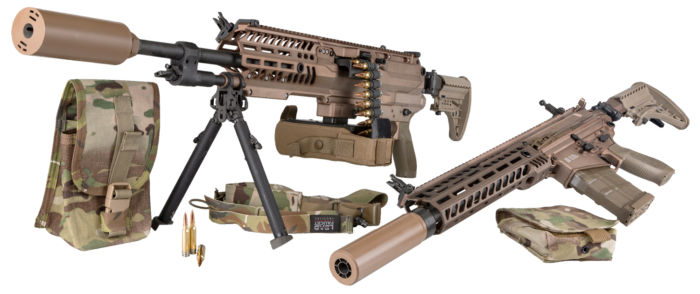
One phenomenon that has emerged from the U.S. special operations community over the last 10 to 12 years involves exploration and acquisition of small arms in new ballistic calibers.

Rather than the better known weapon designs in 5.56 mm, 7.62 mm, .50 caliber, and even the U.S. Army’s emerging 6.8 mm Next Generation Squad Weapon, the community has embraced calibers like the .300 AAC (Advanced Armament Corporation) Blackout (.300 BLK), 6.5 Creedmoor, .300 PRC (Precision Rifle Cartridge), and both .300 and .338 Norma Magnum.

Often created as so-called “wildcat” rounds, prior to their broader acceptance and expanded production availability, these new caliber cartridges each provide a staggering array of design and performance specifics, experts said.

Recent requests for information released by U.S. Special Operations Command have identified specific command interest in a compact personal defense weapon chambered in .300 BLK.

“We’re dealing in whole different types of mission sets,” explained C.J. Dugan, vice president of business development at Maxim Defense, which has developed its own personal defense weapon designs. “The old way was, if you were doing ‘low vis’ close target reconnaissance or protection, you really only had an MP5 [9×19 mm Parabellum], which is hard to deal with these days because of parts. The only other answers you had were a pistol or a Mk18 [M4A1 (5.56×45 mm NATO) with a Close Quarters Battle Receiver variant with 10.3-inch barrel]. So trying to deal with a weapon system that would give you the right combination of distance and accuracy, and then trying to maneuver in a civilian vehicle with either only a pistol or ‘a 10.3,’ which you then had to keep out of sight, and then deal with and try to react to something, you kind of had limited expectations.”

Crediting the early development work done by Advanced Armament Corp., Dugan offered a general description of the .300 BLK design, which included “taking a 5.56 [mm] case and necking it out to a .30 cal projectile, but utilizing pistol powder inside of that, which gives you a lot of muzzle velocities that you were losing in a short barrel with a rifle round.

“In my opinion, that was the genesis of why the 300 Blackout became popular in the SOF community,” he said. “Because now, with the 300 Blackout — a .30 cal projectile loaded in a 5.56 case and burning pistol powder — you’re now getting 2,000 feet per second out of a five-and-a-half-inch gun.”

“Take a PDW for what it is — a personal defense weapon,” he summarized. “If you are pulling that thing out, things have gone really bad. … And if I am going to make a decision to engage a threat, I want to make sure that I have the best possibility for the terminal ballistics to eliminate that threat. So I combined all of that and we sat down and worked through a product deal with Fort Scott [Munitions], and I took their projectile and we put a bunch of it through our weapons and optimized different calibers for our weapons, both in the five-and-a-half-[inch barrel] and eight-and-a-half variants.”

In addition to its own PDW designs, Maxim Defense has also introduced an ammunition line and is one of more than two dozen U.S. manufacturers that currently produce a .300 BLK option.

Dugan noted that the Maxim .300 BLK is based in part on the “tumble upon impact” designs of Fort Scott Munitions, which continue to “tumble” at ballistic speeds down to 500 feet per second.

Many of Dugan’s observations were echoed by Lanse Padgett, chief executive officer of PCP Tactical LLC and Gorilla Ammunition Co.

“Gorilla Ammunition was established in 2013, and basically was founded on .300 Blackout,” he said. “We started making .300 Blackout right out of the gate, when it was just coming on the scene.”

The company has recently worked with Northrop Grumman, current operators of the government-owned Lake City Army Ammunition Plant, to manufacture “some Blackout loads for military testing.”

Describing the .300 BLK as “a phenomenal cartridge for engagements inside of 200 yards,” Padgett offered, “It is excellent for [close quarters battle]- type operations — room clearing/house clearing/building/clearing — where you can take a short barrel rifle and have almost the same ballistics as a long barrel rifle. But it makes it so much more maneuverable. And you have a much bigger projectile going at the intended target.

“For instance, the 5.56 round was designed for an M16 that had a 20-inch barrel. But now everyone wants to shoot it out of a 10-inch barrel or an eight-inch barrel and you have lost so much velocity by shaving all those inches off your barrels. So you’re now shooting a projectile that was designed to be shot at a certain velocity at much, much less velocity and you don’t have the same terminal effects that you had. … But with .300 Blackout, you’re able to shoot shorter barrels with more lethality. That’s really where I think you gain the advantage.”

Recent SOCOM requests for proposals have also identified interest in weapon designs chambered in 6.5 Creedmoor, with one recent announcement identifying a desire for a lightweight assault machine gun in 6.5 Creedmoor as a possible replacement to the current MK48 assault machine gun chambered in 7.62×51 mm NATO.

Introduced by Hornady Manufacturing Co. around 2007, Padgett said that 6.5 Creedmoor is one of five calibers of polymer cased ammunition currently manufactured by PCP Tactical, along with .50 caliber, .338 Norma Magnum, 7.62×51 mm NATO, “and some work with .260 Remington for the SOF guys.”

It was best to compare the 6.5 Creedmoor to the “traditional” 7.62×51 mm NATO round, he said.

“My ballistician would say this much more eloquently, but basically to get a better ‘ballistic coefficient,’ you want a longer, skinnier projectile,” he explained.

“The 6.5 Creedmoor offers just that in a package that is the same overall length as a .308 (7.62×51 mm) cartridge case. But now you’re getting increased velocity and a better ballistic coefficient, which means you’re going to have increased engagement distance. It’s not going to drop as fast. It’s not going to be affected by wind as much as the traditional 7.62. You’re gaining engagement distance and lethality with the extra benefit that it works in existing 7.62 length chambers. So it’s basically a barrel swap to take existing guns and turn them into 6.5 Creedmoor guns.”

Few programs more clearly reflect the embrace of new calibers better than SOCOM’s acquisitions of bolt-action sniper rifles over the past 10 to 12 years.

An example can be found in its 2009 solicitation for the Precision Sniper Rifle. Planners called for a weapon that could be switched between calibers that would include 7.62×51 mm NATO, .300 Winchester Magnum (Win Mag), and .338 Lapua Magnum. By the time that the subsequent Advanced Sniper Rifle solicitation was released in May of 2018, it specified 7.62×51 mm, .300 Norma Magnum and .338 NM — not the same as .338 Lapua.

It is broadly understood that the .338 NM represents the anti-materiel solution, the .300 NM represents the anti-personnel solution, and the 7.62×51 represents a training option that could also be applied to shorter range urban settings.

In March 2019, Barrett Manufacturing announced that its Multi-Role Adaptive Design system had been selected for the Advanced Sniper Rifle, subsequently designated as the MK22 Mod 0.

The MK22 Mod 0 is one of two Barrett sniper rifles currently being provided to special operations customers. A similar weapon, identified as the “DoD” system, is also being provided to a community element chambered in a Hornady-developed caliber identified as .300 PRC.

“Around November 2016 the Department of Defense issued a procurement for a direct and immediate warfighter capability for the .300 PRC,” said Joel Miller, director of global military sales for Barrett. “It was essentially to provide operators some greater capabilities in stand-off distances and to ensure overmatch.”

Asked about ballistic comparisons between the .300 PRC and the .300 Norma Magnum included on the ASR, Miller deferred to Hornady Manufacturing, which developed the .300 PRC.

According to Neal Emery, senior communications manager for Hornady, all of the other “big 30s” have some type of inherent design issues and the development of the .300 PRC reflected an attempt “to have something that will easily handle the long, heavy, high performance style, .30 caliber bullets with the greatest consistency possible for extended long-range shooting.”

Another long-range projectile that has been embraced by SOCOM over the last few years is the .338 Norma Magnum, with the design of both the .300 NM and .338 NM credited to ballistician Jimmie Sloan in the 2006 to 2007 timeframe.

Community acceptance of the rounds not only contributed to the change in evolution in sniper rifle requirements noted above, but has also been reflected in Special Operations Command — and Marine Corps — interest in belt-fed machine gun designs in .338 NM.

In response, General Dynamics Ordnance and Tactical Systems has been exhibiting its .338 NW Lightweight Medium Machine Gun design for the last few years.

And in January, SIG Sauer announced the safety certification and delivery of a number of its own new “338 MG” systems for special operations combat evaluations.

According to Jason St. John, director of government products in SIG Sauer’s defense strategies group, both the .338 NM and .338 Lapua reflect a sniper community desire for a flatter trajectory, larger bullet, more wind-resistant long-range capability to extend the battlefield for the sniper.

“The .308 [7.62×51 mm] was limited at about 800 meters; 1,000 to 1,200 meters for .300 Win Mag; and they wanted to push it a little bit further,” he said. “That grew into an extended range capability to have standoff with your enemy from an anti-personnel perspective.”

Noting that the .338 NM design results in a 300-grain projectile traveling at 2,900 feet per second, he credited the cartridge with “a tremendous anti-materiel capability” delivered from a 20-pound package.

“The M2A1 [.50 caliber] is an 80-pound machine gun,” he asserted. “We’re looking at a system that’s 60 pounds lighter and actually combines an anti-materiel solution and anti-personnel solution in one trim package.”

He acknowledged “some challenges” in direct comparisons with a .50 cal that has different specialized projectiles, adding, “However, when you’re looking at something like steel penetration with a .338 compared to steel penetration with a .50 cal, they are comparable at 1,200-plus meters, and in some aspects the .338 is superior in mild steel penetration at comparable distances.”

As noted earlier, the representative samples cited here are not intended to serve as complete ballistic profiles. Rather they are intended to highlight the unique characteristics of special operations missions and some of the ballistic overmatch solutions available to Special Operations Forces.

As Gun Sales Rise, Education and Training Are Critical

What I am about to say may surprise some people, especially considering that I am the president and founder of the United States Concealed Carry Association (USCCA). Despite the fact that I have been pleasantly surprised by the large swath of Americans who are working to improve their preparedness in the face of the COVID-19 pandemic — indeed, the last two months have seen record firearms sales — I want to emphasize that going out and purchasing a gun is not the sole requirement of actually being prepared. Rather, it’s a small step at the beginning of a lifelong and life-changing journey for millions of Americans who want to keep their loved ones safe.

As the coronavirus pandemic has spread in recent weeks, many Americans have begun truly evaluating their own levels of personal security and preparedness for the first time and are also considering what they would do if they were ever forced to protect themselves or their families.

The result of such evaluations? Record firearms sales in virtually every state and municipality across the country. Gun sales in the states most affected by the virus thus far (California, New York and Washington come to mind) have been particularly high. Images of Americans — many of them first-time gun owners — lined up at gun stores and sporting-goods stores have become commonplace.The National Association of Sporting Goods Wholesalers (NASGW) reported a 168 percent spike in ammunition shipments for the week ending March 14. Figures from the FBI show 3.7 million background checks were done that same month—the most for a single month since the system began in 1998.

Perhaps not surprising in a world where seemingly everything is politicized, particularly when it comes to firearms, anti-gun groups and politicians have predicted that rising gun sales, coupled with schools being closed, will lead to more accidental shootings and deaths. Kris Brown, president of the Brady Campaign to Prevent Gun Violence, recently claimed, for example, that an “unintended consequence of these panic-induced purchases in response to COVID-19 could be a tragic increase of preventable gun deaths.”

Try again, Mr. Brown. The reality is that this type of fearmongering and effort by some to use the pandemic to further erode gun rights is not rooted in fact. Even as gun ownership has consistently risen year after year — with roughly 100 million gun owners in the U.S. today — preventable accidents have steadily decreased; there was a 44 percent decline from 1999 to 2018. A recent report from the National Safety Council, a reference resource for safety statistics, shows that preventable or accidental gun-related deaths totaled only 458 cases in 2018, which was the lowest figure since the organization began keeping record in 1903. This represented just 1 percent of all firearms fatalities in 2018, even as concealed carry permits have soared by more than 215 percent in recent years.

One key reason for this is that responsible gun owners take firearms safety very seriously. Many of these individuals have proven that they are willing to comply with the law by fulfilling all of the requirements associated with obtaining a concealed carry permit. In fact, a recent report by the Crime Prevention Research Center found that concealed carry permit holders are among the most law-abiding demographic of Americans today.

All of this aside, the bottom line is that all of us share the common goal of working to reduce future tragedies. Being a responsibly-armed American does not stop with your constitutional right to bear arms. In fact, making the decision to carry a firearm, or even to simply keep a gun for home defense, is where the real responsibility begins.

In addition to firearms safety, education and training must be top priorities for all gun owners, particularly for the thousands of Americans who have purchased a firearm for the first time in recent weeks. There’s no substitute for live-fire training, and many gun ranges have closed their doors during this pandemic, but gun owners still have the option to access countless online training materials and courses from knowledgeable instructors.

Safe firearms storage is also critical. Every new gun ships with a gun lock. A gun owner should use that lock or another secure storage device any time he or she is not either training at a range or carrying said sidearm. Many police and fire stations offer free gun locks — no questions asked. Again, when not in use, a firearm should be stored in a secured lockbox to which only the lawful owner or another authorized individual has access.

There will continue to be political and policy disagreements about gun ownership in the coming days — and beyond — and that’s OK. But right now, as millions of Americans continue to embrace their right to self-protection and others still are just starting to open their minds to the responsibly-armed lifestyle, we need to remember that education, training and safety must remain the uncompromisable tenets on which we all stand.

Of course they’ve got to get their own partisan jabs in, but an article so accusative of China, from the Washington Post, is sorta startling.


Bill Gates is Wrong: Chinas’s Coronavirus Coverup is not a ‘Distraction.’

Microsoft co-founder Bill Gates was surely speaking for a lot of people when he dismissed criticism of the Chinese government’s handling of the novel coronavirus pandemic as a “distraction” from the important work of fighting the virus here at home.

Yet the Chinese Communist Party is still working full time to cover up information about the outbreak and the Chinese government’s own failures. By so doing, it continues to threaten the health and lives of Americans. That can’t be ignored.

Gates argued Sunday on CNN that examining the Chinese government’s record of hiding information about the coronavirus outbreak, putting out false information, silencing critics and thwarting attempts to investigate its true origin is not useful at this time “because it doesn’t affect how we act today.” He said Beijing “did a lot of things right at the beginning” and has come under unfair criticism, “but it’s not even time for that discussion.”

Various groups — from conservative media outlets to the Chinese Communist Party — immediately seized upon his remarks to further their own agendas. But let’s focus on the bottom line: Gates’s comments are simply wrong, and dangerously so. Beijing’s bad behavior is neither past nor benign. In fact, it continues to put us at increased risk.

Secretary of State Mike Pompeo called for depoliticizing the issue when asked about Gates’s comments Wednesday on Fox News.

It’s not a distraction,” he said. “We’ve had now thousands of Americans that have died as a result of this virus, and we know where that virus started. I hope this doesn’t become partisan. It’s too serious a matter.”

2 Kansas men dead in self-defense homicide

TOPEKA–Law enforcement authorities investigating a fatal shooting that resulted in the death of two Kansas men is being investigated as a possible self-defense homicide.

The investigation into the death of 36-year-old Zennie L. Vasser Jr., whose body was found Wednesday in the 1300 block of SE Locust Street in Topeka, and the shooting death of 37-year-old Mark A Edwards, that occurred late Tuesday in the 1400 block of SE 14th Street in Topeka are connected and stemmed from the same incident, according to police spokesperson Gretchen Koenen.

The preliminary investigation indicates Vasser Jr. fired a weapon, striking Edwards. A witness to that incident is believed to have fired a weapon in self-defense striking Vasser Jr.


Man shot while trying to break into apartment

CHARLESTON, Ill. (WAND) – A man shot early Thursday in Charleston was airlifted to a hospital, police said.

Officers responded to the 2200 block of 9th Street, which is near an area that intersects with Edgar Drive and close to the Eastern Illinois University campus, before 5 a.m. Thursday and found an adult male with a gunshot wound to the torso.

Authorities said a person tried to enter an occupied apartment by force. A resident shot a firearm through the door and hit the intruder as the door started to break open.

Responders took the man who was shot to Carle Clinic in Urbana.


Armed robbery victim suffers life-threatening injuries; 1 suspect dead, 2 others arrested

BATON ROUGE, La. (WAFB) – The intended target of an attempted armed robbery acted in self-defense during a deadly shooting Thursday night on East Smiley Avenue, according to investigators.

The Baton Rouge Police Department reported Tony Falgout, 18, was killed when he and two others tried to rob a 26-year-old man around 9 p.m. in the 2200 block of E. Smiley Ave. The victim of the armed robbery is hospitalized with life-threatening injuries, police said.

Carlos Like, 18, and Kendrick Birks, 17, have been booked into the East Baton Rouge Parish Prison on charges of attempted first-degree murder and principal to first-degree murder.

Sgt. Don Coppola with BRPD said investigators believe Falgout, Like, and Birks planned to rob a 26-year-old man. During the armed robbery, there was a shootout between the intended target and the three suspects, he added.

Coppola said Falgout and the 26-year-old both suffered gunshot wounds and Falgout died at the scene.

Would-Be Robber Killed, Accomplice Wounded in South St. Louis,

Armed thieves were shot, one of them fatally, by a man they tried to rob on Wednesday night in south St. Louis, police say

Officers were called at 10:38 p.m. to the 5300 block of South Compton Avenue for reports of a shooting. When they arrived, they found one man, whom they’re still trying to identify, dead on the ground. They then found his partner nearly two miles away in the 4200 block of Schiller Place, police say. He had been shot in the thigh.

Police say the two men approached a 31-year-old, pulled out a gun and tried to rob him. The would-be robbery victim, however, shot both men.

The scene of the shooting is on the northern border of the Carondelet neighborhood. The wounded accomplice was taken from Schiller in the Bevo neighborhood to the hospital where was treated and released. Police have not publicly identified him or the shooter.


Revisiting RAND’s Gun Law Research Review

As with the initial report, the key takeaway is that there is no solid body of empirical evidence to support the common gun control wish list items such as bans on modern sporting rifles, magazine size limits, minimum age requirements for purchasing a firearmuniversal background checks, licensing and permitting requirements or mandatory sales reporting and registration.

Also, the methodological quality of the existing body of research is low at best. As the report concludes, “the scientific literature we reviewed shows that many of the best recent studies suffer from important methodological limitations that should be addressed in future research,” and, “with a few exceptions, there is a surprisingly limited base of rigorous scientific evidence concerning the effects of many commonly discussed gun policies.” We know this already, of course.