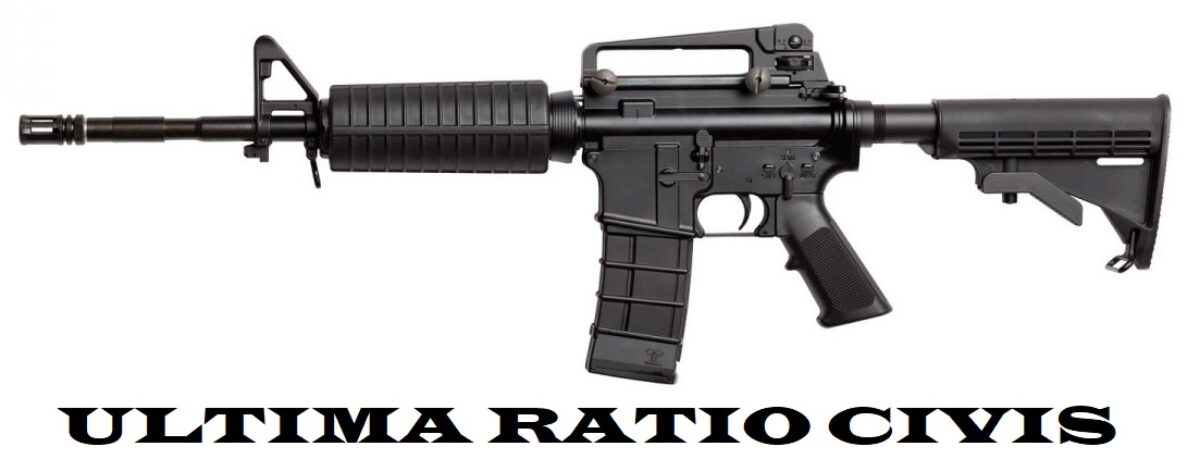
The prohibition is general. No clause in the Constitution could by any rule of construction be conceived to give to Congress a power to disarm the people. Such a flagitious attempt could only be made under some general pretense by a state legislature. But if in any blind pursuit of inordinate power, either should attempt it, this amendment may be appealed to as a restraint on both.
— William Rawle, A View of the Constitution, 1829
November 24, 2025
Constitutional Originalism, the Second Amendment, and the English Bill of Rights of 1689
Modern gun control proponents argue as though we live under the English Constitution, instead of the Second Amendment. Looking at the history of both Bill of Rights repudiates arguments that support gun control.
The English Constitution includes a right to keep and bear arms. However, it is written so that attempting to seize arms from the English Colonists in April, 1775 arguably was not violated.
Many of the delegates to our Constitutional Convention were versed in British law, with over two thirds of them having legal training, even if they did not make their livelihood from being lawyers. That would have been training in British law, because U.S. law was in its infancy, and the U.S. Constitution was not written when they were trained. This is an important fact to keep in mind when looking at the founding of the United States and the drafting of the US Constitution and the Bill of Rights.
The U.S. has a Constitution and amendments as a single document. England and the United Kingdom’s Constitution, on the other hand, is not a single document. Instead it is a variety of documents and precedent going back centuries ( the Magna Carta, for example, was written in 1215). It is not uncommon for the U.K.’s Constitution to contain precedents that contradict each other.
At one point the English threw out the monarchy, though eventually it was restored. When it was restored one of the key documents established that the monarchy had to accept the authority of Parliament and the rights of their subjects. The English Bill of Rights of 1689 (EBR) codified those rights. It was signed by King William III and Queen Mary II as a condition of restoring the monarchy, and it is still considered part of the Constitution of many of the Commonwealth nations.
There are many parallels with the U.S. Bill of Rights, and many of the grievances the colonists had with the Crown were for violating English Bill of Rights. For example it includes freedom of speech, freedom from excessive fines and bail, no taxation without approval of the representatives in Parliament, freedom from cruel and unusual punishments, free elections, a right to keep arms, and other enumerated rights.
However, the right to keep arms is limited in such a way that it has allowed the U.K. to severely limit gun ownership.
The specific clause of the English Bill of Rights of 1689 is:
That the subjects which are Protestants may have arms for their defence suitable to their conditions and as allowed by law;
For reference the text of the Second Amendment is:
A well regulated Militia, being necessary to the security of a free State, the right of the people to keep and bear Arms, shall not be infringed.
Let’s look at each section in comparison:
“A well regulated Militia, being necessary to the security of the free State” – this reminds the government that it was established by the efforts of the armed population, and they continue to be necessary for the security of the nation. Militia at the time meant the able bodied men who could be called on to defend the community, state, and country from bandits, form bucket brigades to fight fires, protect the nation from invaders, etc. Well regulated at the time essentially meant competent; well trained, well organized, well equipped, and well disciplined. Justifications for their rights are covered earlier in the EBR.
The next sections have more direct correlations. The EBR says, “That the subjects which are Protestants” where the Second Amendment says, “the right of the people.”
The colonists included many groups that the Church of England considered to not be Protestants. This includes the Pilgrims who were separatists from the Church of England, Roman Catholics who had fled England, and others. As such the colonists who were not specifically Church of England, did not have a right. The Second Amendment uses the people, extending to all of the colonists who were considered citizens.
The EBR says, “may have arms for their defence suitable to their conditions” while the Second Amendment says, “to keep and bear Arms.”
The words “may” and “might” gives room for limitations, and limits it to arms for their defense. It also does not mention anything about being able to bear or carry them. The limits in the EBR allowed Parliament and King George III to justify the seizure of rifles and other arms the British government determined were not suitable.
The Founders didn’t want to provide our government with that same leeway. Further, many of the Founding Fathers had some experience in reading on history. They knew the massive technological shift that had been made in arms in just a few centuries. Some of them were likely aware of such firearms as the Cookson Repeater that was advertised in the Boston Gazette in 1756. Thomas Jefferson had obtained a Girardoni Air Rifle at some point, and later loaned it to the Lewis & Clark Expedition.
The point is, the Framers did not limit the language of the Second Amendment to firearms used or suited only for defense. We see echoes of this section and this argument in court filings supporting gun control currently when gun control proponents argue in support of “assault weapon” bans. Their argument can be summed up as the Second Amendment only protects arms the government deems suitable for self defense.
The Second Amendment does not only protect having or possessing arms, it includes the right to keep or bear them. It is not prefaced by “may”, which leads to the next section.
The next section illustrates the Founding Fathers really meant it when they wrote, “shall not be infringed.” The EBR says, “as allowed by law.” This leaves potential limits on the right to possess arms if Parliament passes a law. As we have seen in the 336 years since the EBR was signed, the U.K. and Commonwealth countries have severely limited the right by disallowing various arms by law, and adding other requirements. Those infringements include everything from gun registrations, strict licensing laws, storage mandates, and even outright confiscations.
The Founding Fathers had just lived through, and in many cases, directly participated, in a successful revolution where private arms played a significant part, and was essentially sparked by an attempt to seize arms from civilians who had organized themselves for their common defense. Therefore it says, “shall not be infringed” as a direct counter to attempts to limit the right or seize arms from citizens.
Gun controllers, including the various gun control groups, and the anti-gun attorneys general in deep-blue states like my own native California, often argue like we still live under the English Bill of Rights of 1689. While it is part of the common law that U.S. law is based on, the experience of the American Revolution and the text of the Second Amendment repudiate their arguments.
The Heller decision states the interest balancing that gun controllers are trying to use in support of gun control laws was already done by the Second Amendment. In my opinion, it was done by refuting the language of the English Bill of Rights that placed government interests over the right of some of the U.K’s citizens to keep and bear arms.
Source documents:
Yale Law School’s Avalon Project publishes the text of the English Bill of Rights of 1689 as part of their Constitutional documents project – https://avalon.law.yale.edu/17th_century/england.asp
University of Houston provides a summary of the Constitution Delegates – https://www.digitalhistory.uh.edu/active_learning/explorations/constitution/constitution_overview_delegates.cfm
Heller decision comments about Interest Balancing – Heller, 554 U. S., at 635. Pp. 15–17. – https://tile.loc.gov/storage-services/service/ll/usrep/usrep554/usrep554570/usrep554570.pdf
BLUF
Foreign entities are gaming the system to try to diminish American exceptionalism and influence. For now, they find trashing Israel and Jews as a convenient dividing line, but this is really about destroying Western civilization and ushering in Islamization. Don’t be the sucker who falls for it.
WHOA: Major Foreign Propagandists Utterly Exposed After X Glitch Reveals Account Locations.
A temporary glitch on X led to a credibility bloodbath for a variety of foreign propaganda accounts that were either posing as Americans or lying about their locations in other ways.
Days prior, Head of Product Nikita Brier had announced a new feature revealing the origin and current location of users. When it rolled out, though, only account owners could view it. That all changed on Friday night, though. In what is assumed to have been a mistake, everyone’s origins and current locations were made public for about an hour before disappearing.
In one instance, it was revealed that one of Hamas’ biggest simps has been lying about being in Gaza.
The above was posted when it was 65 degrees at night (and 80 during the day), just to give you an idea of the kind of propaganda being spewed. For years, the above account has claimed to be reporting from the ground in Gaza. He’s made hundreds of posts pushing fake claims about genocide, famine, and his own supposed hardships. In reality, his account was created in the United Kingdom, and he’s currently residing in Poland.

U.N. Climate Conference Rejects EU Demands to Commit to Fossil Fuel Phase-Out
(AFP) — Nations clinched a deal at the UN’s COP30 climate summit in the Amazon Saturday without a roadmap for phasing out fossil fuels as demanded by the European Union and other countries.
Nearly 200 countries approved the deal by consensus after two weeks of fraught negotiations in the Brazilian city of Belem, with the notable absence of the United States as President Donald Trump shunned the event.
Applause rang out in the plenary session after COP30 president and Brazilian diplomat Andre Correa do Lago slammed a gavel signalling its approval.
The EU and other nations had pushed for a deal that would call for a “roadmap” to phase out fossil fuels, but the words do not appear in the text.
Instead, the agreement calls on countries to “voluntarily” accelerate their climate action and recalls the consensus reached at COP28 in Dubai. That 2023 deal called for the world to transition away from fossil fuels.
The EU, which had warned that the summit could end without a deal if fossil fuels were not addressed, accepted the watered-down language.
“We’re not going to hide the fact that we would have preferred to have more, to have more ambition on everything,” EU climate commissioner Wopke Hoekstra told reporters.
“Hypocrisy is believing the First Amendment protects flag burning, but the Second Amendment doesn’t protect owning an AR-15.”
November 23, 2025
Grand Prairie resident fatally shoots suspected burglar in self-defense
A Grand Prairie homeowner shot and killed a burglar in self-defense inside his house early Sunday, police said. Officers responded to the 400 block of Santa Margarita Street about 2 a.m. on a suspicious person’s call, Grand Prairie police said in a news release.
The homeowner, who called 911, told police that an unknown person forcefully entered the back door of his home, police said. The homeowner, described as an elderly man, was armed with a hunting rifle and confronted the burglary suspect “who was rummaging through property inside the house,” police said.
The resident, “fearing for his life,” shot the burglar who died at the scene, police said. The shooting is being investigated as self-defense and no charges are expected on the homeowner, police said. The person who died will be identified by Dallas County Medical Examiner’s Officer after next of kin have been notified.

The merit of our Constitution is not that it promotes democracy, but checks it.
—Horatio Seymour
November 22, 2025
COVID vaccine under new scrutiny after studies reveal possible health risks
Two large studies have put a spotlight on potential health risks of the COVID vaccine — but some experts urge caution when interpreting the findings.
Recent research has linked the vaccine to a higher risk of kidney injury, as well as certain respiratory infections.
A Korean study published in the International Journal of Infectious Diseases looked at how infectious diseases changed during and after the COVID-19
“While influenza-like illness dropped sharply during the early pandemic, upper respiratory infections and the common cold surged in 2023 and 2024, far above expected levels,” lead study author Jihun Song, Ph.D., from the Department of Biomedical Informatics at the Korea University College of Medicine, told Fox News Digital.
“Most strikingly, pertussis increased more than 40-fold compared to historical trends.”
“The key message is that respiratory infections in Korea dramatically shifted after the COVID-19 pandemic, and the patterns differ by disease.”
When the researchers looked at the impact of the COVID vaccine, they found that people who received four or more doses were less likely to get flu-like illnesses and whooping cough, but more likely to get common colds and other mild respiratory infections.
Texas’s CAIR Ban and the Overlooked Truth Behind That EPIC Muslim City.
New York City residents should keep Bernie Goetz’s travails in mind if they’re going to go armed in public.
A Queens senior citizen who shot dead a man who tried to rob him will spend four years in prison after admitting to toting an unlicensed revolver — as his lawyer ripped the city’s “draconian” gun laws.
Charles Foehner, 67, pleaded guilty to one count of criminal weapons possession Thursday in a deal to end his case more than two years after he fatally shot would-be thief Cody Gonzalez, who charged at him near his Kew Gardens home.
The Queens District Attorney’s Office chose not to prosecute Foehner, a retired doorman, for Gonzalez’s killing after he told cops that he’d defended himself from a mugger who lunged at him late at night holding what looked like a knife — but which turned out to be a pen.
Foehner was not charged with manslaughter after claiming self-defense, but pleaded guilty to a lesser gun charge.Brigitte Stelzer
But prosecutors slapped Foehner with a slew of weapons raps for the unlicensed handgun and for an arsenal of illicit handguns, revolvers and rifles inside his home in the quiet neighborhood.
Foehner took the plea deal to avoid a trial, where he faced 25 years in prison on gun charges that are not hard to prove, said his attorney Thomas Kenniff after Thursday’s hearing in Queens Supreme Court.
DOJ Arrests U.S. Citizens and Chinese Nationals for Exporting AI Tech to China.
Are you ready for some good news?
The U.S. Department of Justice (DOJ) announced in a statement that it has arrested two U.S. citizens and two Chinese nationals and charged them with conspiracy to illegally export to China advanced NVIDIA microchips called Graphics Processing Units (GPUs). GPUs are used in a wide range of critical artificial intelligence (AI) applications.
The two American citizens who were arrested are Hon Ning Ho, also known as “Mathew Ho,” a Tampa resident who was born in Hong Kong, and Brian Curtis Raymond from Huntsville, Alabama. The two Chinese nationals arrested by the DOJ are Cham Li, also known as “Tony Li,” a resident of San Leandro, California, and Jing Chen, also known as “Harry Chen,” a 45-year-old who was living in Tampa under an F-1 nonimmigrant student visa.
All four were arrested and appeared in courtrooms in their respective jurisdictions on Nov. 19.

California Suppressor Ban Faces Constitutional Challenge in Pivotal Sanchez v. Bonta Hearing
Gun rights advocates are reacting to a pivotal hearing that took place yesterday, as the Ninth Circuit weighed whether suppressors qualify as protected “arms” under the Second Amendment. The outcome could either bring California in line with 42 other states or set a troubling precedent for banning common firearm accessories.
The Ninth Circuit Court of Appeals heard oral arguments on November 18, 2025, in the case of Sanchez v. Bonta, which challenges California’s sweeping ban on firearm suppressors. These devices reduce, but do not eliminate, the sound produced when a firearm is discharged.
Gary R. Sanchez, a California resident, initiated the lawsuit in April 2024 after the Bureau of Alcohol, Tobacco, Firearms, and Explosives denied his application to fabricate and register a suppressor, citing California Penal Code § 33410, which imposes a blanket prohibition on suppressor possession. Sanchez filed a complaint in the Southern District of California seeking declaratory and injunctive relief, arguing that California’s ban violates the Second Amendment.
The district court dismissed his complaint, ruling that suppressors are not protected by the Second Amendment because they are “only” accessories, not “arms.” Sanchez appealed the decision on September 6, 2024. Recognizing the case’s significance, the California Rifle and Pistol Association enlisted Michel & Associates and Cooper & Kirk to assist Sanchez, and the Ninth Circuit agreed to accept both firms as counsel.
District attorney says Eugene Walmart shooting was self-defense
On Sept. 5, just before 5:30 p.m., Elijah Lais shot and killed 21-year-old Javier Lagarda-Govea in the parking lot of a Walmart Supercenter near the intersection of West 11th Avenue and Commercial Street.
Lagarda-Govea was reaching for a loaded handgun tucked into his waistband while he pursued Lais and his stepson as they ran to their truck in the parking lot. Lais got his gun from his truck and pulled the trigger first.
That’s the conclusion of Lane County District Attorney Christopher Parosa’s investigation into the shooting, which involved reviewing surveillance and cell phone videos and witness accounts, which Parosa said confirmed Lais and his stepson’s recollection of what happened that day.
Parosa announced Nov. 20 the shooting was self-defense.
A few days before the shooting, on the afternoon of Sept. 2, Lais, his stepson, and his stepson’s attorney were at the Lane County Courthouse for a court date. While they were standing outside on the south side of the courthouse, two men approached in a black SUV. One of them got out and verbally accosted them, stating something along the lines of “I’m gonna blow your head off,” Parosa said in a written statement.
The day of the shooting, Lais and his stepson were inside the Walmart Supercenter when they again encountered the three men, who began to cuss at the pair and call them racial slurs.
Parosa said as Lais and his stepson were leaving the store, Lais realized the three men were following them and told his stepson to run ahead to their truck parked outside. The stepson confirmed to investigators he ran to the truck and locked himself inside. Lagarda-Govea began to run after the stepson but Lais pushed Lagarda-Govea to the ground.
Lais ran to the driver’s side of his truck and noticed Lagarda-Govea get up and reach for his waistband, pulling a loaded firearm. Lais grabbed his own firearm from the driver’s side door and shot Lagarda-Govea. After he was shot, Lagarda-Govea’s firearm fell out of his hands onto the ground. Lais kicked it away.
“Mr. Lais’ stepson also stated that Mr. Lagarda-Govea was grabbing for his firearm as he chased him toward his stepfather’s truck, and that Lais would ultimately shoot Mr. Lagarda-Govea when as close as an arm’s length apart from Mr. Lais,” Parosa said.
Lais called 911, remained on scene and was cooperative with police throughout the investigation.
The other two men who accompanied Lagarda-Govea immediately fled the scene but were later identified. Police found another loaded firearm belonging to one of the individuals in a field near the Walmart after the shooting.
In making his final decision, Parosa cited ORS 161.205, which states the use of physical force on another person that would otherwise constitute an offense is justifiable and not criminal in self-defense or in defending a third person, in defending property, in making an arrest, or in preventing an escape. He also cited ORS 161.219, which states a person is not justified in using deadly physical force unless the person reasonably believes the other person is committing or attempting to commit a felony involving the use of physical force, a burglary in a dwelling, or about to use unlawful deadly physical force against a person.