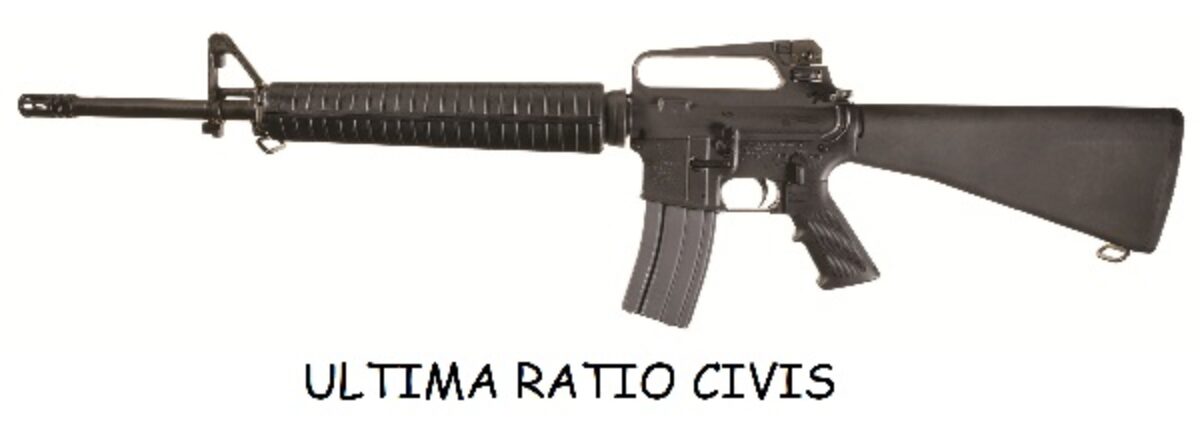
Analysis: The Murder Rate Appears to Be Dropping. How Will That Impact Gun Politics?

After a multi-year spike following the onset of the COVID pandemic, the U.S. homicide rate looks to be falling. If that continues, it could usher in a reshuffling of the country’s current gun politics.

The murder rate is down roughly 11 percent in 100 major U.S. cities through the first half of the year, according to crime analyst Jeff Asher. Though the overall murder rate is still about 12 percent above pre-pandemic levels, according to the AH Datalytics dashboard, the numbers are on track to land about 10 percent lower than last year.

That drop would “be among the largest declines in murder ever formally recorded,” according to Asher.

He found that the U.S. homicide rate declined slightly in 2022 from 2021 levels as well, though not to the same degree as in the first half of 2023. That means that the decline in murder has been more sustained than just a simple six-month window of good fortune. If Asher’s analysis is anything close to accurate, and the reduction in homicide continues to be as substantial as it appears, the American people will eventually take notice.

As it stands now, they don’t seem to know quite yet. A series of recent polls have identified violent crime and gun violence as a significant focus for voters, so much so that the public has even begun to sour on the need to defend gun rights.

A May NPR/PBS NewsHour/Marist poll found the highest number of Americans in over a decade who say the need to defend gun rights is less important than reducing gun violence. It found 60 percent of Americans now think controlling gun violence is more important, including 55 percent of self-described political independents, while just 38 percent say the opposite. That’s up significantly from a decade ago when the public was evenly split on the question.

Additionally, a June poll from Pew Research found 60 percent of Americans now say violent crime and gun violence are “a very big problem.” The number of respondents who rated gun violence as a “very big problem” increased 12 percent since 2016 and was up nine percent since May of last year.

That same poll found that 58 percent of Americans want gun laws to be stricter, up five points from 2021. There was also an 11-point increase since 2018 in the number of Americans who say overall gun ownership does more to “reduce safety by giving too many people access to firearms and increasing the chances for misuse.”

In other words, as broader concerns over gun violence and violent crime began to increase alongside real-world increases in homicide, so too did support for gun control and negative feelings toward guns. As the reverse starts to happen with homicides, support for gun rights may begin to rise again.

However, some important caveats could complicate that. While murder appears to be declining, mass shootings do not appear to be abating. According to the Gun Violence Archive, which takes an expansive definition covering any incident in which four or more people are shot, the U.S. is currently on a record pace for mass shootings in 2023.

Even under a more traditional definition like the one used by the Violence Project—which tracks events where four or more people are killed in public shootings, except those attributable to underlying criminal activity, such as robberies or gang fights—2023 is shaping up to be a particularly grim year. The site tracked seven such incidents in all of 2022, while there have already been five recorded this year.

Though such events only represent a small fraction of the country’s homicides every year, they tend to disproportionately capture the psyche of the American public, shape political narratives around guns, and have the largest impact on public opinion over gun control. That means that whatever boost gun-rights supporters might otherwise receive from an overall decline in homicide could ultimately hinge on the frequency of mass shootings moving forward.

Ultimately, it remains to be seen what happens over the next six months. If current trends hold and there is a substantial reduction in homicides, historical polling dynamics would suggest that could be a boon for political support for gun rights. But the ongoing scourge of mass shootings could thwart any potential polling boost unless those also start to decline.

Grandstanding for the morons who were stupid enough to elect him.

Chuck Schumer to Undertake Gun Control Push After Shootings Rock Democrat-Run Cities

Senate Majority Leader Chuck Schumer (D-NY) is pursuing more gun control after shootings rocked Democrat-run cities over the Fourth of July weekend.

The Hill reported weekend shootings in Philadelphia, Pennsylvania; Baltimore, Maryland; Lansing, Michigan; and Wichita, Kansas. All four cities are Democrat-run.

Breitbart News also noted at least 32 people were shot Friday into Monday morning in Democrat Mayor Brandon Johnson’s Chicago. Three of the shooting victims succumbed to their wounds.

President Joe Biden responded to the gun control by calling for his normal litany of gun control laws: an “assault weapons” ban, a “high capacity” magazine ban, universal background checks, the ability to sue gun makers over gun crime, and more.

The Hill pointed out that Schumer wants more gun control as well.

Schumer’s spokesperson, Allison Biasotti, spoke on Schumer’s gun control push, saying:

Leader Schumer was proud to have passed a significant bipartisan gun safety bill through the Senate last summer but more must be done. Schumer continues to work with his caucus to find a path forward that can garner enough Republican support and combat the scourge of gun violence, save lives and bring meaningful change.

Schumer will have to get 60 votes to pass gun control, and the prospects are not high.

Moreover, any gun control that may pass the Senate is likely defeated once it reaches the Republican-controlled House.

One Republican-led city, Fort Worth, also witnessed a shooting over the holiday weekend. Multiple gunmen opened fire in a crowd on Fourth of July eve, killing three people.

Colorado offers a stark Second Amendment warning to the six fast-growing states in the South

It’s no secret that pro-freedom policies unleash human potential and lead to the creation of wealth and prosperity. The migration of people inevitably follows freedom. The world saw that last century: East Germans risked getting machine-gunned to escape communism to the West. Cubans built make-shift rafts to sail through shark-infested waters to freedom. Even in a generally free country like the United States, the same pattern holds true with domestic migration to freer states.

Bloomberg recently reported on the sheer magnitude of domestic migration of people and capital:

A $100 Billion Wealth Migration Tilts US Economy’s Center of Gravity South

Some 2.2 million people moved to the Southeast in just over two years. That’s roughly the population of Houston.

Drive along the 240-mile stretch of the Atlantic coast from Charleston, South Carolina, through the grassy marsh land of southern Georgia and down into northern Florida, and you’ll see one of the most profound economic shifts in the US today.[…]

More broadly, the entire South from here, north to Kentucky and west to Texas is where businesses are moving to, jobs are being created and homes are being bought. […]

The numbers tell the story. For the first time, six fast-growing states in the South — Florida, Texas, Georgia, the Carolinas and Tennessee — are contributing more to the national GDP than the Northeast, with its Washington-New York-Boston corridor, in government figures going back to the 1990s. […]

A flood of transplants helped steer about $100 billion in new income to the Southeast in 2020 and 2021 alone, while the Northeast bled out about $60 billion, based on an analysis of recently published Internal Revenue Service data.

The Southeast accounted for more than two-thirds of all job growth across the US since early 2020, almost doubling its pre-pandemic share. And it was home to 10 of the 15 fastest-growing American large cities.[…]

“You could throw a dart anywhere at a map of the South and hit somewhere booming,” said Mark Vitner, a retired longtime economist for Wells Fargo who now heads his own economic consultancy, Piedmont Crescent Capital, in Charlotte, North Carolina.[…]

“We now have more employees in Texas than New York state. It shouldn’t have been that way,” JPMorgan Chase & Co. CEO Jamie Dimon said to Bloomberg TV on a swing through the South earlier this year.

As Walter Wriston, former CEO of Citicorp said, “Capital goes where it is welcome and stays where it is well treated.” A combination of good economic policies and the lack of reflexive hatred of businesses and their owners brought them to the South, and the results are there for everyone to see. Setting aside Bloomberg’s concern trolling about “inequality,” which is just as prevalent in the Northeast, the takeaway is that the people like living in the South. As Charleston County Republican Maurice Washington said:

“They don’t want to raise their kids in places like New York and California. You get a lot of that,” Washington said.

This growth pattern is great, but migration comes with its own risk.

Continue reading “”

This special session is truly nefarious. A special session in Tennessee is a separate single-topic debate. It’s a sneaky way to bring Red Flag law legislation to the floor of the full body of representatives, wherein a regular session, it would die in committee as has happened in the past. If this were the regular Tennessee session, a Red Flag law would be a non-starter.

There will be intense pressure and truckloads of outside money from national-level organizations and governments. This is a terrible and underhanded sneak attack by a governor to undermine the rights of the people of Tennessee. He’s always been a squish on gun rights and can never be trusted. Expect to see wailing mothers and crying children saying everybody must compromise and shred the Constitution because of one deranged sodomite pervert who should have been locked away in a mental facility.
– Herschel Smith


Local GOP pushes legislators to support 2nd Amendment during upcoming special session

Gov. Bill Lee has called for a special legislative session this August “to pursue thoughtful, practical measures that strengthen the safety of Tennesseans, preserve Second Amendment rights, prioritize due process protections, support law enforcement, and address mental health.”

The Montgomery County Tennessee Republican Party (MCTNGOP) stands with our Republican elected officials in maintaining their duty to uphold, preserve and protect the Tennessee State Constitution and the US Constitution with all the rights contained therein, and uphold the Republican Party values contained within the Republican Party platform.

With a primary focus of this session on possible gun control measures, and even discussions entertaining versions of a red flag law, the MCTNGOP unequivocally opposes any legislation
or Republican member of the state Legislature who would seek to defy the duties and responsibilities to their constituents and constitutions, especially regarding our inalienable Second Amendment right.

The MCTNGOP continues its recruitment and elections of candidates that support the US and Tennessee State constitutions, and the citizen’s right to keep and bear arms that expressly “shall not be infringed” that truly is a foundational pillar of American liberty. Those officials or candidates not in alignment with our shared Republican values will not obtain the support of the MCTNGOP. We look forward to watching our committed civil servants in the Legislature stand on their conservative values to support, protect and safeguard the liberty and freedoms we enjoy as Tennesseans.

We would also like to remind our community that the GOP wholeheartedly supports and endorses the constitutional right of peaceful protest but in no way endorses violence. We look forward to watching our community express their thoughts and feelings on the matters to be considered during this upcoming special session, and encourage all to contact our office, their elected representatives, and have conversations with other community members throughout this process.

Pritzker compares AR-15s to “missile launchers” while calling for a federal ban

Illinois Gov. J.B. Pritzker seems to be channeling his inner Joe Biden in his defense of the state’s ban on so-called assault weapons and “large capacity” magazines. Biden has famously (and erroneously) proclaimed that while the Second Amendment may protect muskets, it never allowed citizens to own cannons; a statement that’s been thoroughly debunked on multiple occasions yet still emerges from Biden’s mouth on a regular basis.

The thrust of Biden’s argument, factually deficient though it may be, is that the Second Amendment doesn’t protect the right to keep and bear any and all arms, and Pritzker is now piggybacking on the president’s pontifications with a ludicrous comparison of his own.

 “We’ve banned assault weapons. We’ve banned high capacity magazines. We’ve banned switches that turn regular guns into automatic weapons and here in Illinois those are things that will keep people safe and alive, but we need a national ban,” Pritzker said.

The White House Wednesday highlighted Illinois’ law as what the Biden administration would like to see nationwide.…

To the consolidated lawsuit challenging the state’s gun and magazine ban, Pritzker said he’s “heartened” after last week’s hearing in the Seventh Circuit U.S. Court of Appeals. The governor cited some of the judges’ questions focused on whether the issue is a “popularity contest which guns we’re going to allow.”

“Because the people who were advocating for semi-automatic weapons were saying ‘well gee, everybodies got one now, so you can’t ban them.’ Well that’s ridiculous,” Pritzker said. “If everyone had a missile launcher, we shouldn’t ban missile launchers?”

I confess that I’m not up to speed on the legality of owning missile launchers, but it’s perfectly legal to own a grenade launcher… as long as you’re willing to register it under the NFA and pay a $200 tax stamp. But as long as missile launchers cost millions of dollars, I don’t think Pritzker has to worry about a Patriot missile system being erected by a private citizen in Chicago or Joliet. We’re not talking about exotic weapon systems that will never be in common use for self-defense, we’re talking about commonly-owned rifles lawfully possessed by tens of millions of Americans for hunting, recreation, self-defense, and other lawful activities.

Todd Vandermyde, who’s consulting plaintiffs in the challenge to Illinois’ ban, said more gun control won’t make the streets safer. He said the governor’s other policies are “an abject failure.”

“They don’t go after the criminals. ‘Oh no, we’re going to give them electric home monitoring. Oh no, we’re going to let them go out for 48 hours. Oh no, we’re not going to require cash bail,’” Vandermyde told The Center Square, referring to the state’s latest changes to the criminal justice system.…

Vandermyde said the case isn’t about missile launchers.

“They just keep jumping to the absurd that if you allow rifles, shotguns and pistols then you have to allow all this other stuff. And nobody is arguing [that], that’s not even before the court in any way,” Vandermyde said.

Vandermyde’s correct in noting that this argument is more useful to politicians than to the attorneys defending the state’s ban, but Attorney General Kwame Raoul is deploying a similar argument that’s equally absurd. As the Chicago Sun-Times reported back in March:

Illinois Attorney General Kwame Raoul on Thursday filed a brief defending Illinois’ assault weapon ban, arguing the weapons restricted by the newly enacted law aren’t commonly used for self-defense and that large capacity magazines are accessories — not “arms.”

It also argues the country’s founding fathers owned guns that could only fire a single shot before reloading — proving assault weapons and large capacity magazines weren’t in “common use” when the Constitution was ratified.

“The assault weapons restricted by the Act are not commonly used for self-defense; by design and in practice, they exist for offensive infliction of mass casualties,” the brief states.

It also argues the term “arms” refers to weapons and not “accessories,” and that large capacity magazines are therefore not protected under the Second Amendment’s right to bear arms.

The Supreme Court has already stated that arms that are in common use today are protected by the Second Amendment, not just those arms that were around at the time the Bill of Rights was ratified. In Caetano v. Massachusetts , a unanimous Supreme Court ruled that stun guns and other electronic weapons fall under the scope of the Second Amendment, pointing out that in Heller the justices determined that “the Second Amendment extends, prima facie, to all instruments that constitute bearable arms, even those that were not in existence at the time of the founding.”

Note that the Supreme Court specifically referred to “bearable arms”, which negates Pritzker’s hamhanded comparison of missile launchers to AR-15s. But if the courts were to accept Raoul’s argument, then what’s stopping them from concluding that all semi-automatic firearms, including handguns, fall outside the Second Amendment’s protections? We may soon find out, because based on the makeup of the Seventh Circuit panel that recently heard oral arguments in the Illinois gun ban cases I’m not all that optimistic that the appeals court will follow Supreme Court precedent and the Bruen test to their logical conclusions; modern sporting rifles are indeed in common use for a variety of lawful purposes, and are therefore covered by the Second Amendment’s guarantee of our right to keep and bear arms.

The Ranks of Gun Owners Grow, and So Does Their Resistance to Scrutiny
Researchers report that many gun owners, especially newer ones, falsely deny owning guns.

Believe it or not, people are reluctant to tell total strangers about their potentially controversial activities. In particular, Rutgers University researchers say, gun ownership is something many Americans decline to reveal when questioned by people they don’t know. That’s especially true of women and minorities newly among the ranks of gun owners amidst the chaos of recent years. Academics are unhappy that privacy-minded respondents impair their understanding of the world we live in, but such evasion is an inevitable consequence of decades of fiery debate and punitive gun policies.

Fibbing to Nosy Strangers

“Some individuals are falsely denying firearm ownership, resulting in research not accurately capturing the experiences of all firearm owners in the U.S.,” says Allison Bond, a doctoral student with Rutgers University’s New Jersey Gun Violence Research Center and lead author of “Predicting Potential Underreporting of Firearm Ownership in a Nationally Representative Sample,” published last month in Social Psychiatry and Psychiatric Epidemiology. “More concerningly, these individuals are not being reached with secure firearm storage messaging and firearm safety resources, which may result in them storing their firearms in an unsecure manner, which in turn increases the risk for firearm injury and death.”

Bond frames the problem of dishonesty among survey respondents as posing a danger to those surveyed since they don’t receive proper firearm safety information. But her deeper concern is with the validity of research into firearms culture and policy in a country where experts don’t have anywhere near as good a handle on the prevalence of gun ownership as they had believed.

“The implications of false denials of firearms ownership are substantial,” claim the authors. “First, such practices would result in an underestimation of firearms ownership rates and diminish our capacity to test the association between firearm access and various firearm violence-related outcomes. Furthermore, such practices would skew our understanding of the demographics of firearm ownership, such that we would overemphasize the characteristics of those more apt to disclose. Third, the mere existence of a large group of individuals who falsely deny firearm ownership highlights that intervention aimed at promoting firearm safety (e.g., secure firearm storage) may fail to reach communities in need.”

It should be emphasized that the report authors didn’t conclusively identify anybody who denied gun ownership as a gun owner. Instead, the report dealt in probabilities, with the researchers building profiles of confirmed gun owners. They then applied the profiles across their sample of 3,500 respondents to estimate who was likely fibbing about not owning guns. The results depend on the probability threshold applied, but they came up with 1,206 confirmed owners, between 1,243 and 2,059 non-owners, and between 220 and 1,036 potential but secretive owners lying about their status.

“It may be that a percentage of firearm owners are concerned that their information will be leaked and the government will take their firearms or that researchers who are from universities that are typically seen as liberal and anti-firearm access will paint firearm owners in a bad light,” the authors allowed. They also speculated that many respondents falsely denying owning guns may come from communities that are traditionally unfriendly to gun ownership. That’s an interesting possibility considering that nearly half of all those designated as potential gun owners are unmarried urban women of color. In fact, as the study points out, many new gun owners are women and minorities.

Gun Owners Look Like Everybody

“An estimated 2.9% of U.S. adults (7.5 million) became new gun owners from 1 January 2019 to 26 April 2021. Most (5.4 million) had lived in homes without guns,” according to a separate study published last year in the Annals of Internal Medicine. “Approximately half of all new gun owners were female (50% in 2019 and 47% in 2020 to 2021), 20% were Black (21% in 2019 and in 2020–2021), and 20% were Hispanic (20% in 2019 and 19% in 2020–2021).”

With gun ownership becoming increasingly common beyond the traditional ranks of white suburban-to-rural men, there are big implications for politics and policy. New gun owners will certainly resist proposals to strip them of self-defense tools they acquired out of necessity. They’re also likely to resent restrictive policies that urban, left-of-center politicians promote to torment gun owners once assumed to be safe targets, but which apply to anybody who owns firearms no matter where they live and vote. Basically, the gun-ownership landscape is growing and changing, but new owners are even more reticent than established ones about revealing their existence to researchers and government officials.

After decades of debatearbitrary crackdowns, and draconian enforcement actions, who can blame them?

Until recently, many gun opponents tried to paint firearm ownership as a fading fetish among a disappearing class of Americans.

Old Firearm Assumptions Look Shaky

Firearms “are owned by roughly one in five U.S. adults and can be found in approximately one of three U.S. households,” wrote the authors of a 2015 analysis of results from the National Firearms Survey, published in 2015 in the Russell Sage Foundation Journal of the Social Sciences. “Between 2004 and today, we know that the proportion of adults who personally own firearms (and the proportion who live in households with guns) has continued to decline, modestly but steadily, largely because of a decline in personal gun ownership by men.” They estimated 265 million firearms in private American hands.

But in 2021, Pew Research reported: “Four-in-ten U.S. adults say they live in a household with a gun, including 30% who say they personally own one.” And Gallup reported in 2020 that “thirty-two percent of U.S. adults say they personally own a gun, while a larger percentage, 44%, report living in a gun household.” Switzerland’s well-respected Small Arms Survey put the number of guns in private American hands at over 393 million in 2018.

Recent years have seen a surge in gun sales, spurred by rioting, social disorder, and political turmoil. Given that many of these gun buyers are first-time owners, it’s apparent that firearm ownership is becoming more widespread and being enjoyed by Americans who might have resisted the idea in the past. These new owners are even more suspicious of scrutiny than their predecessors in the already privacy-minded gun-owning community.

“Our results highlight the potential that several groups, particularly women and individuals living in urban environments, may be prone to falsely denying firearm ownership,” adds the Rutgers report.

Academic researchers and policymakers who draw from their work clearly regret such opacity. But they should cast the blame not on gun owners, but on the activists and politicians who vilified the exercise of self-defense rights and who drove growing numbers of Americans to evade scrutiny.

FPC Files Opening Brief in Lawsuits Challenging Delaware “Assault Weapon,” Magazine Bans

PHILADELPHIA, PA (July 5, 2023) – Today, Firearms Policy Coalition (FPC) announced the filing of an opening brief with the Third Circuit Court of Appeals in its Gray v. Jennings and Graham v. Jennings lawsuits, which challenge Delaware’s “assault weapon” and standard capacity magazine bans, respectively. The brief can be viewed at FPCLegal.org.

“The district court wrongly held that Delaware’s bans, which affect some of the most popular firearms and magazines in the country, could be justified by reference to a pattern of historical regulation targeting a variety of arms, from ‘slung shots’ to machine guns,” argues the brief. “But the State has not put forward, and the district court did not cite, a single law that banned possession or carriage of an arm that was in common use at the time like the Delaware bans do.”

“No matter what the State of Delaware thinks, the guns and magazines it banned are protected by the Second Amendment and thus cannot be prohibited,” said FPC Vice President of Communications Richard Thomson. “We look forward to the Third Circuit getting right what the district court got wrong when it declined to preliminarily enjoin Delaware’s bans.”

FPC is joined in these lawsuits by the Second Amendment Foundation……

The sun may be out, but guns are not. Lawsuit challenges a new gun ban on Hawaii beaches


Sun’s out, guns out? Not on Hawaii’s world-famous beaches.

Beginning Saturday, a new law prohibits carrying a firearm on the sand — and in other places, including banks, bars and restaurants that serve alcohol.

Three Maui residents are suing to block the measure, arguing that Hawaii — which has long had some of the strictest gun laws in the nation and some of the lowest rates of gun violence — is going too far with its wide-ranging ban.

Residents carrying guns in public is new to Hawaii. Before a U.S. Supreme Court ruling last year expanded gun rights nationwide, Hawaii’s county police chiefs made it virtually impossible to carry a gun by rarely issuing permits to do so — either for open carry or concealed carry. Gun owners were only allowed to keep firearms in their homes or to transport them — unloaded and locked up — to shooting ranges, hunting areas and places such as repair shops.

The high court’s ruling found that people in the U.S. have a right to carry firearms for self-defense. It prompted the state to retool its gun laws, with Democratic Gov. Josh Green signing legislation in early June to allow more people to carry concealed firearms.

At the same time, however, the new law prohibits people from taking guns to a wide range of places, including beaches, hospitals, stadiums, bars and movie theaters. Private businesses allowing guns must post a sign to that effect.

The lawsuit, which the three residents and the Hawaii Firearms Coalition filed in U.S. District Court in Honolulu last week, doesn’t challenge all the prohibited locations. But bans on carrying at beaches and parks, in family restaurants or in bank parking lots where people might be getting cash from ATMs are “egregious restrictions on their 2nd Amendment right to bear arms,” the lawsuit says.

“There’s a lot of crime at some of the parks and beaches,” said Todd Yukutake, a director of the coalition. “And it can be very scary at some of these beach parks.”

Alan Beck, an attorney for the plaintiffs, said his clients especially want to protect themselves at isolated beaches, where they might be fishing or going for a walk rather than sunbathing or swimming.

“The truth is it’s probably safer at Waikiki Beach during the day when there’s, you know, thousands of people around,” he said of Honolulu’s tourist mecca. “But a lot of these beaches in Hawaii aren’t the beaches people think of when, you know, they see movies or TV.”

Guns at beaches is not the image that tourism-dependent Hawaii wants to project, said Democratic state Sen. Karl Rhoads.

“A sensitive place is a place where you would not expect there to be guns,” he said. “Where you expect to have a good time and not have to worry about violence and being shot.”

Hawaii’s beaches are “the livelihood of our state in many ways,” said Chris Marvin, a Hawaii resident with the gun-violence prevention group Everytown for Gun Safety.

“And they are safe today. By allowing people to carry guns on them, they will become less safe.”

He recalled the “pandemonium” that ensued last year when a man brandished a gun on Waikiki Beach, causing tourists “to run for their lives.”

The lawsuit doesn’t challenge restrictions on carrying guns at bars, but the plaintiffs don’t see why family restaurants that serve alcohol should be included, Beck said. As for banks: Going to an ATM at night is “prime time for someone to try and mug you,” he said.

Legal challenges to similar laws adopted in New York and New Jersey last year are making their way through federal courts.

A federal appeals court temporarily agreed to keep in effect part of New Jersey’s handgun carry law, which also includes public beaches, as court proceedings play out.

In January, the high court ruled that New York can continue to enforce its sweeping law that bans guns from places including schools, playgrounds and Times Square.

Hawaii’s law reflects a “vast reach that goes beyond any other jurisdiction to date,” said Kevin O’Grady, another lawyer representing the plaintiffs.

The restrictions render concealed carry permits virtually useless, he said.

The Hawaii attorney general’s office said in a statement that the law is constitutional and vowed to defend it.

U.S. District Judge Leslie Kobayashi is scheduled to hear a motion for a temporary restraining order blocking the law on July 31.

The whole point of the 2nd amendment is that the people most certainly have the right to keep and bear arms that are most useful for military purposes, i.e. WAR. It always amazes me that people don’t get, or have lost, the spirit the patriot founders possessed to stand up to a tyrant government.

A conversation about gun ownership

Tennessee Republican Fudd Explains:

The basics

Many are familiar with basic weapons handguns, rifles, shotguns, and machine guns.

Gill (Bo Gill, chair of the Bedford County [TN] Republican Party and a self-described “amateur gunsmith,”) said firearms are broadly categorized into two main types: automatic and semi-automatic. The difference lies in their firing mechanisms, which significantly impact their functionality and practical applications.

Semi-automatic firearms are designed to fire one round with each pull of the trigger. After firing, the expended cartridge is ejected, and a fresh round is automatically loaded into the firing chamber for the next shot. Unlike automatic firearms, the trigger must be released and pulled again to fire subsequent rounds.

For reference, the transgender shooter at The Covenant School used a semi-automatic, which is the most common type used for recent mass shootings.

“Any semi-automatic firearm cannot be readily converted into an automatic firearm,” though bump stocks, which the 2016 Las Vegas shooter used, can mimic an automatic.

Automatic firearms, commonly known as machine guns, are capable of firing rounds continuously as long as the trigger remains depressed. These firearms use the energy from each fired round to automatically load and fire subsequent rounds without the need for additional manual manipulation.

Often automatic weapons are $10,000 and up and not readily available in gun stores but are available online.

You know it’s coming, or it wouldn’t be a “news” article. Ah, yes, the, however!

However, like some gun owners, Gill agrees, “I don’t think automatic firearms have a place anywhere but war. They’re not practical and they’re a waste of ammo.”

It’s a Bill of Limited Ammo Use. What he’s saying is that the government should have a sole monopoly on force. He’s for self-defense and “sporting,” which is a totally made-up word. But he misses the purpose of the Second Amendment if he thinks the government is the only acceptable entity to make war. That’s scary to the modern weak, prissy Western man of which America has an epidemic.

There is also much discussion around “military-style” weapons.

Gill explains, “Visual resemblances do not necessarily indicate an increase in functionality or lethality beyond that of other semi-automatic firearms.”

Military-style firearms, also referred to as “assault weapons,” feature certain cosmetic characteristics that resemble firearms used by military or law enforcement agencies. These features can include folding or collapsible stocks, pistol grips, flash suppressors, and detachable magazines, among others.

The article indicates those are not “genuine” firearms. Only Fudd purposes are genuine.

Then there are genuine firearms that come in a multitude of designs and models, serving various purposes such as self-defense, sport shooting, hunting, and collecting.

Gill explained, in an opinion letter he wrote in 2020, that, “It is important to evaluate the firearm’s functional characteristics rather than solely relying on its appearance to determine its intended purpose or danger level.

He said, “The main thing is the guns are not the issue. It’s the intent, the person that does it.”

The intent of a person, in Western Jurisprudence, is determined solely by courts of law in a trial by jury. Red Flag laws are a usurpation of the right to a fair trial. You can’t possibly know the intent of somebody or their mental condition. You could, however, stop giving psychotropic mind and mood-altering chemicals falsely labeled as medicine (which they are not) to people.

“Now the ease of mentally ill getting a gun, it could be tightened.” Gill added, “I think private sales is something that could be done more responsibility.”

Who get’s to define mentally ill? What is the definition?

He explained those purchasing firearms in private sales are asked for the receipt, name, and number. This information is then run through the sheriff’s office.

If you’re in Tennessee you should check to make sure, but I don’t think that’s the law. You need to verify TN state residency with a Driver’s License.

“That is what a law-abiding citizen should do,” said Gill. “But, see, that’s not going to happen with ‘no guns allowed.’ All the responsible gun owners are going to put their guns back and that’s going to create soft targets.”

Often, places that do not allow for guns on the premises, such as schools, some churches, and movie theatres, are the targets of mass shootings.

“I don’t think the solution is taking away guns. It’s a societal issue that independent families have to fix,” said Gill.

Disarmed men create soft targets. There’s more at the link. Anyway, what’s the rule? Never talk to the press! The guy probably feels bad. I’m certain they mischaracterized some of what he said, but some are quoted. He’s a Fudd.

Another Financial Attack on Gun Owners

As Americans frequently utilize credit to purchase a wide array of things for everyday living, it should come as no surprise that one anti-Second Amendment congressman has decided that firearms purchases using one form of credit should be illegal. Specifically, it should be illegal for semi-automatic rifles that might fall under the political definition of “assault weapons.”

Rep. John B. Larson (D-Conn.) is attempting to do just this with H.R. 4289, the “Assault Weapons Financing Accountability Act.”

According to the bill’s text, an importer, manufacturer, or retailer selling a firearm under a “Buy Now, Pay Later” (BNPL) financing agreement would be subject to a $100,000 civil fine. Likewise, the purchaser of a firearm bought using BNPL would be subject to the $100,000 civil fine.

In a press release touting this proposed legislation, Larson says, “Banning use of instant financing like BNPL options for assault weapons and the ghost gun kits [to make such rifles] is a step toward reducing the instant accessibility of these weapons and preventing the tragedies of gun violence before they occur.”

The elitism of it all is rather staggering, as Larson is effectively telling Americans they can’t use credit to purchase lawfully made and lawfully sold products. This legislation is certainly in line with other recent attempts by gun-control proponents to attack the right of citizens’ to purchase firearms some people simply do not like by impeding their access to the financial marketplace.

The anti-Second Amendment founder of Mom’s Demand Action, Shannon Watts, for example, is on record proposing that credit-card companies should be able to block their cards from being used to purchase firearm parts.

Closely related to this idea is the announcement by the International Organization for Standardization (ISO) that it would create a new Merchant Category Code (MCC) specific to firearm and ammunition retailers—and, in the process, likely create a gun registry.

The ISO announcement followed a petition by Amalgamated Bank to create such a code just for gun stores. That petition was supported by some of the top anti-Second Amendment politicians, including Sen. Elizabeth Warren (D-Mass.) and New York Mayor Eric Adams (D), as well as the anti-gun groups Giffords and Guns Down America.

BNPL financing for firearms is offered by the company Credova. A prospective buyer applies for the BNPL financing as part of their firearm purchase. If the BNPL request is approved, the sale goes through.

Larson falsely stated in the press release that the BNPL financing provides “instant access” to firearms. Even if the BNPL purchase is approved, the buyer of the firearm still must successfully pass the required federal firearms background check, as well as any state-applicable checks and requirements, before a firearm can be transferred.

Like so many of the attempts to strangle Second Amendment rights, Larson and his allies claim that the “Assault Weapons Financing Accountability Act” is needed to reduce “mass shootings,” which they insist are being financed by BNPL even though they haven’t produced any data to support this claim.

Given the current political make-up of the U.S. House of Representatives, this bill is unlikely to gain traction. If both chambers of Congress were in line with the Biden administration’s view of our rights, however, then this could certainly become law.

Senator: Gun-free school zone law is attack on 2nd amendment

A law that would place restrictions on guns in schools was tabled in the Senate Friday after Republican legislators claimed it was unconstitutional and unfair to law-abiding citizens.

House Bill 201, sponsored by Speaker of the House Rep. Pete Schwartzkopf, D-Rehoboth Beach, aims to enable a police officer to act immediately when they see or suspect a person with a gun in a safe school and recreation zone.

“I don’t understand how this bill keeps the bad guys out,” said Sen. Bryant Richardson, R-Seaford. “Ones that have nefarious objectives are going to enter the schools anyway, so how does this do anything?”

The bill cites that as of April 4, 74 people have been killed or injured by guns in schools in 13 separate school shootings across the country this year.

School shootings hit a record high in 2022 with 46 shootings, the bill states, surpassing 2021’s record of 42 shootings. In 2022, 43,450 children experienced a school shooting.

Sen. Dave Lawson, R-Marydel, said the bill was yet another attack on the second amendment.

“Law enforcement has a right to stop anyone if they believe there’s about to be a crime committed; they do not have to wait,” he said. “They can intercede and violence does not have to happen for them to take action, so this bill really has a false premise.”

Under the bill, the crime of possession of a firearm in a safe school and recreation zone is a class E felony, which means the culprit could face up to five years in prison.

Only police officers, constables or active-duty military personnel who are acting in an official capacity are allowed to have a gun in the school zone, per the bill.

However, it allows holders of a valid license to carry concealed weapons only if the firearm is in a vehicle.

Lawson said the bill puts out the idea that a bad actor has free run at a school.

“There’s no one there to stop them and they’ll have free rein to get to our kids and our teachers with free rein as we advertise this is a gun free zone,” Lawson said. “Look at Sandy Hook. The man drove by the schools that had SROs and went to one where there were no guns, it was a free zone. This is not a good idea.”

There have been several incidents of guns found in Delaware schools in the 2022-2023 school year, which led to many districts re-evaluating their safety policies and even one investing in metal detectors for entryways.

The bill also would require a student who possesses a firearm in a Safe School and Recreation Zone to be expelled for at least 90 day. However, it also would give a local school board or charter school board of directors may, on a case-by-case basis, modify the terms of the expulsion.

Schwarzkopf’s bill would include exemptions to the rule. They include if a gun-holder is on private property not part of school grounds; if the firearm is in a locked container or locked firearms rack that is on or in a motor vehicle; or if a gun-holder is engaged in lawful hunting, firearms instruction or firearm-related sports on public lands not belonging to a school.

The bill was laid on the table.

Later, though, it appeared in the house with an amendment from Sen. Brian Pettyjohn, R-Georgetown, to create the offense of possession of a firearm in a Safe Recreation Zone while not changing changing the violation of possession of a firearm as established under the Act.

When it came up in the House, Valerie Longhurst, who knew she was about to be elected speaker of house replacing Schwartzkopf, joked, “This is the last bill of yours I’m running.”

The fate of the bill was the object of curiosity in the House of Representatives, where Schwartzkopf was about to announce he was stepping down from the speaker’s role to spend more time with family.

The Senate also sent bills aiming to prevent child abuse to Gov. John Carney’s desk for his signature.

SCOTUS accepts case dealing with gun ban for those subject to domestic violence restraining order

In its last conference before heading out for summer recess, the Supreme Court granted cert to U.S. v. Rahimi on Friday; setting up a fight over the scope of the Court’s history, text, and tradition test spelled out in last year’s Bruen decision.

As we’ve written about here previously, the case involves the federal prosecution of Zachey Rahimi, who’s accused of illegally possessing a firearm in violation of a domestic violence restraining order. Rahimi (or rather, his public defenders) challenged those charges after the Supreme Court issued its decision in Bruen last year, arguing that the modern day prohibition on firearms possession for those subject to the civil restraining order falls outside the historical scope of gun control laws and earlier this year the Fifth Circuit Court of Appeals agreed with that proposition. Continue reading “”

Looking Forward to the U.S. Supreme Court Standing Behind Its Bruen Ruling

“A year ago today, the Supreme Court ruled to strip away the rights of a governor to protect her people from concealed carry weapons. We refused to go backwards,” tweeted New York Gov. Kathy Hochul (D) on June 23.

This tweet—and other statements from Gov. Hochul—is an admission she is obstructing a U.S. Supreme Court ruling.

In New York State Rifle & Pistol Association, Inc. v. Bruen, an NRA-backed case, the U.S. Supreme Court affirmed that the Second Amendment protects the right of law-abiding citizens to carry a firearm for personal protection when it struck the “proper cause” requirement in New York’s Sullivan Law.

In doing so, the Supreme Court clearly declared that the government cannot trample on our Second Amendment rights through “abusive” permitting schemes.

Nevertheless, people barely had time to read the Bruen decision before Gov. Hochul and the New York state legislature blatantly stepped all over the ruling with the inappropriately named Concealed Carry Improvement Act.

Although the Concealed Carry Improvement Act doesn’t require citizens demonstrate they have a proper cause to carry firearms, it banned carry almost everywhere with unconstitutional “sensitive-place” restrictions. Also, citizens applying to the state for their constitutional right to bear arms must first take a 16-hour training class, including a two-hour live-fire session. Then they must have an in-person interview with a licensing officer where they must disclose several types of personal information, including all of their social-media accounts. The officer then reviews that information to determine if the applicant has “good moral character,” which is even more subjective than the unconstitutional “proper cause” standard. The licensing officer then has up to six months—unless they want more time, which they will be granted indefinitely—to pore through the applicant’s information to determine if that individual is “eligible” for a license.

When Gov. Hochul was asked where people could carry under the gun-control law, she said “probably some streets.”

As a result, the NRA sued.

The state’s Concealed Carry Improvement Act “replaces one unconstitutional, discretionary law with another unconstitutional, discretionary law,” the NRA lawsuit says. “The [law] contains a slew of burdensome and discriminatory requirements for obtaining a Handgun Carry License—violating the First, Second, Fourth, and Fourteenth Amendments—and an additional slew of restrictions on where and how Handgun Carry License holders may exercise their right to carry arms outside the home.”

Gov. Hochul’s tweet also admits something else. By saying that, in Bruen, the “Supreme Court ruled to strip away the rights of a governor to protect her people from concealed carry weapons,” Gov. Hochul is blaming guns for crimes. She can’t really believe that guns are acting on their own to commit crimes. She likely knows that people (in this case, criminals) commit crimes. So her job is then to protect law-abiding people from violent criminals, not to disarm good citizens who merely want to protect themselves. Given that simple logic, she should next realize that a lot of criminal law (state and federal) gives law enforcement and prosecutors a lot of tools to arrest and put away felons and other prohibited persons who are carrying firearms. It then seems logical that she should focus state resources on the actual problem.

After all, it seems fair to assume that Gov. Hochul is capable of understanding the basic idea that criminals commit crimes and therefore, to prevent more crimes, the state needs to find and prosecute criminals.

The fact that Gov. Hochul has decided to disingenuously virtue signal about crime—by literally blaming good citizens for the actions of criminals—should be clearly said in New York state’s newspapers and on its local news broadcasts. But it isn’t. Too many in the media are also playing this “blame-freedom, not criminals” political game. And this is a shame, as good policy can only come from open and honest debate.

For this reason, the NRA’s court challenge to this unconstitutional law is doubly important.

Illinois assault weapons ban goes to 7th Circuit Court of Appeals

CHICAGO (WLS) — Gun control was on the docket in a federal courtroom in Chicago Thursday.

Illinois assault weapons ban went before the Seventh Circuit Court of Appeals. The popularity of the weapons the law proposes to ban could play a crucial role in the decision.

Assault-style rifles like the popular AR-15 remain hanging on gun store walls while the fate of the state ban hangs in the balance.

Thursday a three-member panel hear arguments from attorneys involved in six consolidated lawsuits challenging the ban. Deputy Solicitor General Sarah Hunger argued for the state and said of the AR-15, “These are not in common use for self-defense.” They are instead, she said, “offensive and militaristic.”

Supporters of the state’s assault weapons ban, including a survivor of the Highland Park parade shooting, rallied outside the courthouse.

“Gun violence and mass shootings affect entire communities,” said Ashbey Beasley, Highland Park shooting survivor.

Erin murphy, representing many gun groups, argued, “Our history and tradition is one of protecting weapons that are in common use today.”

Americans own an estimated 24 million AR-15s.

In response, Judge Diane Wood noted, “It’s unusual to have a popularity contest determine what is constitutional.”

“It ought not to be just a popularity contest in time, right,” said Illinois Attorney General Kwame Raoul.

But plaintiffs, including the owner of Naperville’s Law Weapons and Supply store, said the ban was about penalizing many law abiding gun owners for the heinous crimes of a few, and this fight is far from over.

“It’s illegal, and it’s hurting us, you know, and I’m tired and we’re gonna fight ’til the end,” said Robert Bevis, owner of Law Weapons and Supply. “Right now, we believe, we’re confident we’re gonna win here at the appellate court, and if we don’t we’re gonna take it to the Supreme Court.”

What is unclear at this point is how soon the Court of Appeals will issue a ruling. Judge Easterbook said this is an extremely difficult problem and the court was going to take it under advisement.

COURT’S IN SESSION
WE’RE LEARNING THERE IS JUSTICE FOR THE 2A

Attorneys specializing in Second Amendment cases are a busy bunch these days, sometimes filing lawsuits challenging new gun laws even before the ink is dry.

For those who have been waiting for the right to keep and bear arms to get a fair shake, it appears that time is finally arriving. As this column was being written, various gun rights organizations were in court all over the place, including Illinois, New Jersey, Maryland, New York, Texas and California. The bulk of these cases are in federal court since they all have Second Amendment components.

For example, the Second Amendment Foundation, which has become something of a spear point over the past few years, now has more than 50 active cases, with more on the way.

While anti-gun lawmakers have been scrambling to push through as many restrictive gun laws as possible this year, SAF, the National Rifle Association, National Shooting Sports Foundation, Firearms Policy Coalition and Gun Owners of America have been moving just as fast to block implementation of those laws in the courts.

Oregon is a prime example, where four federal lawsuits were filed following last November’s passage of a very restrictive gun control initiative — Measure 114 — by a razor thin margin.

In neighboring California, there are several legal actions in progress, including one filed recently by SAF, the Firearms Policy Coalition, North County Shooting Center, San Diego County Gun Owners PAC, California Gun Rights Foundation, PWGG LLP, and private citizens John Phillips, Alisha Curtin, Dakota Adelphia, Michael Schwartz, Darin Prince and Claire Richards.

This legal action is known as Richards v. Bonta, and it strikes right at the heart of the textbook example of arbitrary gun control, California’s 10-day waiting period on firearm purchases.

What’s With The Number 10?
I’ll guess with you on this one: Why is 10 the right number for anything? It’s typically the maximum number of cartridges the gun control crowd thinks belong in a pistol or rifle magazine. It’s also the number of days they think people should wait in order to exercise a constitutionally-protected, fundamental right.

SAF Executive Director Adam Kraut had an interesting observation about this. In a prepared statement, he offered, “Where this really gets silly is when the waiting period restriction even applies to a gun buyer who already owns other firearms. Not to mention, those who are looking to acquire a firearm for protection immediately do not have the luxury of waiting ten days. Long story short, the state’s ten-day waiting period must be declared unconstitutional and enjoined, which is the purpose of our lawsuit. We’re asking the court for injunctive and declaratory relief.”

Nobody can explain why the number 10 is popular with gun control
zealots who want to limit magazine capacity to 10 cartridges. Dave’s
Ruger MKIV magazines hold that number, but he didn’t have to wait
10 days to take it home from the retailer!

A practicing attorney, Kraut’s got a point. Someone who already owns firearms doesn’t need a new one to cause trouble if that’s his or her intent. And looking back at history, one sees plenty of examples where waiting 10 days didn’t prevent anything. Elliot Rodger, for example, spent months preparing for his rampage in Isla Vista. He bought three different handguns, enduring three separate California waiting periods, and when he finally did erupt in May 2014, he used only California compliant 10-round magazines.

Washington Gov. Jay Inslee signed legislation some weeks ago also establishing a 10-day waiting period. Nobody knows why “10” is the magic number.

Continue reading “”

New Jersey Attorney General Platkin whines like a baby about gun owners

Platty-kins, Platty-kins, unconstitutional man.
Execute me a law as fast as you can.
Lie about it, double down on it, and mark it with a “D.”
Keep it on the books for Danielsen and me!

Well there you have it; the Attorney General of New Jersey’s official nursery rhyme. Just when the patriots thought that Matt “Stuart” Platkin couldn’t get any more swampy or whiney, he sends out this whiny little tweet over all his social media channels!

Okay Plattykins, we’re rest assured. Rest assured you and the rest of the swamp creatures are in over their heads. The awful law, allegedly written by Assemblyman Joe Danielsen (I highly doubt Danielsen has the mental capacity to write something like the “carry-killer” bill by himself) has hit a minor speed bump on its journey to be overruled. The AG should be well aware that this is just a procedural thing, and that the stay on the injunction of New Jersey’s law is likely going to be reversed. This really only has to do with the fact the state asked for an emergency stay.

The state’s case is meritless. Attorney Daniel Schmutter mapped out everything that needs to be known about sensitive locations during the preliminary injunction hearing for the consolidated cases challenging this garbage law:

As Your Honor is aware, we so far have only seen one thing that gets you a sensitive place. That’s “governance.” And it’s actually narrower than government functions, because as Your Honor knows, the State claims that libraries and museums and all that stuff is government functions. It’s the function of governance. Legislatures, courthouses, polling places, those are the three Bruen sensitive places.

The policies that Platkin, Murphy, et.al. pushed for have no historical analogues. The insurance mandate, the ban on carry in the car, the fee hikes – all of it baseless and only enacted to make it more difficult on the law-abiding. Platkin is tired of defending himself because his position is indefensible. Why is he whining so much about this all of a sudden? Because he probably realizes he’s losing and has over caffeinated crazed Karens crawling up his two-hole. The guy screaming “I’m not crazy,” as he’s being whisked out of the room, usually is…well you know.

Continue reading “”

NY Gov. Kathy Hochul packs incredible gun control lies and claims into a 58-second video

I live in New York, which is one of the worst states to be a lawful gun owner and a taxpaying citizen. The proof is in the pudding; people vote with their feet when life becomes intolerable due to poor governance, and New York’s allegedly wonderful governance resulted in the loss of yet another congressional seat after the 2020 redistricting cycle.

It is grating to see Gov. Kathy Hochul still bragging about New York as some sort of bastion of freedom and opportunity in the face of the evidence of outmigration. Part of her braggadocio was a video her office posted on Twitter, discussing all the “good” she has done to keep the people of New York “safe from concealed carry weapons.”

First, you don’t have “rights” as a governor; you have powers to govern, and those powers are limited so they don’t violate the rights of the people.

Second, your job is to protect the people’s rights and liberties, and your matriarchal view on “protecting her people” is condescending bunk. Lastly, concealed carry weapons in and of themselves don’t do anything. It depends on who is carrying them. Criminals were carrying concealed weapons prior to NYSRPA v. Bruen and continue to carry after NYSRPA v. Bruen. However, ordinary people’s rights to carry guns in public were infringed by New York State’s discretionary permitting scheme.

Continue reading “”

Maine House narrowly pass bill to require background checks on private gun sales

AUGUSTA, Maine (WABI) – A bill that would require background checks on private gun sales narrowly passed in the Maine House today.

The vote was 69 to 68.

While the state currently requires a background check for commercial gun purchases from licensed dealers, supporters of this bill say it would close a loophole that allows those who are prohibited from having a gun to buy one through a private sale or at a gun show.

Opponents of the bill argue it would impose more restrictions on law abiding citizens while having no impact on public safety, violent crimes, or gun deaths.

“Our failure to do background checks contributes to gun related tragedies around this state, domestic violence deaths as well as a robust guns for drug trade exists where narcotics, opioids, fentanyl, and other illegal substances are trafficked into the state and traded for guns,” Rep. Victoria Doudera of Camden said in support of the bill.

“Madam Speaker, the people of Maine do not want universal background checks, and they definitely would not want them when coupled with universal registration. How can we be sure of this Madam Speaker? It’s because they told us in a people’s referendum when they soundly defeated universal background checks. The people told us this even when the papers and the polls at the time told us that over 80% of Maine voters wanted it,” Rep. Chad Perkins of Dover-Foxcroft said in opposition of the bill.

That citizen referendum to expand background checks was defeated by Maine voters in 2016, 52 to 48 percent.

The bill now head to the Senate.

New laws in Vermont that start July 1: Gun purchases,….

Vermonters will soon see new laws that affect their wallets or their legal choices — and even possibly cut down on the theft of car parts.

Every year, July 1 is the date that many new laws take effect. Some of these laws were recently passed by the Legislature; others were approved a while ago and are just now rolling out.

Here are 11 of the changes you should know about this summer.

Waiting period for gun purchases

Young people in Vermont are less likely than their peers in other states to report feelings of sadness, hopelessness or suicidal thoughts — and yet their rate of suicide deaths is higher than the national average.

Lawmakers have decided that easy access to guns is a significant factor in those deaths. And legislation that goes into effect July 1 will institute a 72-hour waiting period for gun purchases. Lawmakers hope that preventing someone in crisis from gaining immediate access to a gun will allow time for suicidal impulses to pass. The vast majority of people who survive a suicide attempt never make an attempt again.

A new law in Vermont creates a criminal penalty for unsafe storage of firearms if those guns are used in a crime.

The law will allow family members to petition courts for an extreme risk protection order, and creates a new criminal penalty for negligent storage of firearms, if that negligence results in commission of a crime.

The 72-hour waiting period provision is almost certain to invite a legal challenge. In a landmark ruling last year, the U.S. Supreme Court established a new precedent for the manner in which courts should assess the constitutionality of restrictions on gun ownership.

Though Gov. Phil Scott allowed the bill to become law, he said he doesn’t think the 72-hour waiting period will survive a constitutional challenge.

[It makes one wonder why the goobernor let it become law then, but scratch a lib, find a tyrant applies]