Second Amendment matters in a time of crisis
The importance of good guys with guns
Hamas attacked as Israelis were wrapping up the seven-day Jewish festival of Sukkot on Oct. 7. As many as 1,200 Israelis and some Americans were murdered, thousands wounded, and hundreds more taken hostage. Hamas terrorists went into civilian areas and attacked defenseless people who were walking down the street or shopping in stores.
A Sept. 20 Jerusalem Post headline prophetically warned: “Israelis should carry guns on Yom Kippur, police say.” But as of 2022, only 148,000 Israelis carried permitted guns in public for protection — just 3% of the adult Jewish population. Twenty years earlier, more than 10% of adult Jews in Israel had permits.
Israeli opposition leader Yair Lapid called the recent police statement dangerous. He echoed sentiments common among Democrats in the United States: “Calling the citizens of Israel to come with weapons to the synagogue on Yom Kippur is not a security policy. It is dangerous populism.”
Concealed carry is much more widespread in the United States than in Israel. In 2022, 8.5% of American adults had permits. Outside of the restrictive states of California and New York, about 10.2% of adults had permits. And these numbers don’t even account for the fact that there are now 27 constitutional carry states where it isn’t necessary to have a permit to carry.
California, with one of the lowest concealed handgun permit rates and the strictest gun control laws in the country, shouldn’t hold itself out as a model for the rest of the country to follow. The periods after 2000, 2010 and 2020 show a consistent pattern: California’s per capita rate of public shootings is always much greater than in the rest of the country.
On Sunday Oct. 8, the day after the attack, Israel radically changed its policy on who could carry guns publicly. “Today, I directed the Firearms Licensing Division to go on an emergency operation in order to allow as many citizens as possible to arm themselves. The plan will take effect within 24 hours,” Israeli Minister of National Security Itamar Ben-Gvir posted on X.
In response to terrorist attacks for decades, Israel put more police and military to protect people, but they found that no matter how much money they spent, they couldn’t cover all the possible targets.
Before Israel began letting civilians carry handguns in the 1970s, terrorists committed attacks in Israel almost entirely with machine guns. Afterward, terrorists usually used bombs.
The reason was simple: Armed citizens can quickly immobilize a gun-wielding attacker, but no one can respond to a bomber once the bomb explodes. Still, armed citizens have occasionally succeeded in preventing bombings.
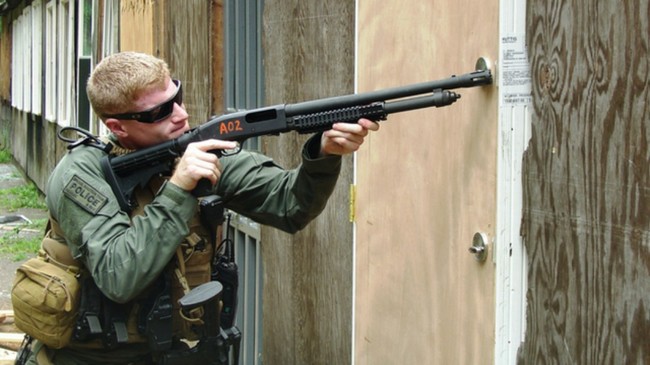
Like their Israeli counterparts, American police recognize their own limitations.
“A deputy in uniform has an extremely difficult job in stopping these attacks,” said Sarasota County, Florida, Sheriff Kurt Hoffman. “These terrorists have huge strategic advantages in determining the time and place of attacks. They can wait for a deputy to leave the area or pick an undefended location. Even when police or deputies are in the right place at the right time, those in uniform who can readily identify as guards may as well be holding up neon signs saying, ‘Shoot me first.’ My deputies know that we cannot be everywhere.”
Police1, the largest private organization for law enforcement officers, surveyed its 749,000 members and found that 86% of them believed that casualties from mass public school shootings could be reduced or “avoided altogether” if citizens had carried permitted concealed handguns in public places. An incredible 94% of mass public shootings occur in places where civilians are banned from having guns.
And 77% of Police1 members supported “arming teachers and/or school administrators who volunteer to carry at their school.” No other policy to protect children and school staff received such widespread support.
When a life-threatening crisis strikes, there might not be time for police to arrive. Amid such a massive assault by Hamas, it was simply impossible for the Israeli police and military to protect all civilians.
Unfortunately, some lessons are learned the hard way. If only more Israelis had been armed at the time of the attack, more of them would be alive today.