
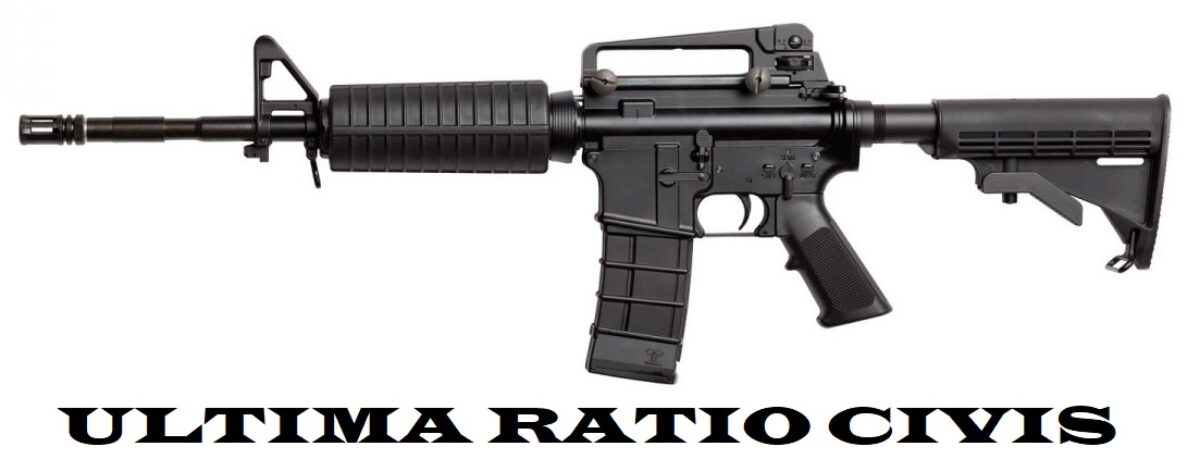
Bunker Hill and the Right to Bear Arms

250 years ago today the last major action fought between the British Army and an army comprised of militia members took place just north of Boston. The Battle of Bunker Hill technically took place on Breed’s Hill, but the location matters less than the outcome. While the British technically won the battle by forcing the citizen army from the field, they paid an enormous price; suffering twice the number of casualties than the colonists fighting in defense of their liberties, including 19 officers killed and another 62 wounded.

Though the Continental Army had been created by an act of the Continental Congress just a few days earlier, the men who fought against the Redcoats on that steamy June afternoon were serving as militia members; part of the Army of Occupation created by the Provincial Congress in the days after the fighting at Lexington and Concord. George Washington wouldn’t arrive until July, 1775, and it was Artemus Ward who was the commander-in-chief of the militia forces during the fighting at Bunker Hill (though Israel Putnam and William Prescott were the ones in command on the battlefield itself).

Some of the citizen-soldiers who fought at Bunker Hill had seen the heat of battle before, but many were untested before they faced the might of the British Empire.

The first assault was begun by the column of light infantry on the far beach, the American left flank, and was followed by the cannonading of Charlestown on the right flank, which set the town in flames; then came the slow forward movement of the main battle line: two ranks of scarlet-clad grenadiers and light infantrymen, almost 2,000 in all, marching in full kit pounds of knapsacks, blankets, food, and ammunition—across irregular fields of knee-deep grass broken by fences and low stone walls.

The American troops—no more than 1, 500 men at any time, at the end only half that—held their fire until the first British line was within 150 feet of the barricades; when they fired it was almost at point-blank range, and the result was slaughter. The British front line collapsed in heaps of dead and wounded—”as thick as sheep in a field.” General Howe’s entire staff was wiped out in the main attack against the rail fence. Great gaps appeared in the once parade-perfect ranks, and the survivors spun back.

The British regrouped and once again made their way up the hill, only to be rebuffed by another wave of fire. On their third attempt, however, the Redcoats gained the upper hand.

Again the advancing line was thrown back by the defenders’ fire, and again great gaps were torn in the marching ranks. But this time the fire was less intense and it could not be sustained. The 700 exhausted defenders had been sent no reinforcements; they had no supplies except what they had carried with them the night before.

As the third charge neared the line of fortification their powder ran out, and though they fought desperately with everything they could lay hands on, they could no longer force the British back. Grenadiers and light infantrymen poured over the parapets and through the thin barricades, and dove into groups of defenders. The Americans turned and fled up over and around Bunker Hill to the roads that led to safety. So the battle came to an end.

The British had taken Bunker Hill, but they were still pinned down in Boston, and their position in Charleston offered them no tactical advantage against the tens of thousands of militia members in the surrounding fields and towns.

The colonists fighting for their rights as Englishmen, still more than a year away from declaring independence, saw the tactical loss as a moral and spiritual victory. Farmers, mechanics, and fishermen, along with lawyers, doctors, and merchants, stood their ground and held their own against a larger, better equipped, and far better trained army.

“ Up until the Battle of Bunker Hill, and really even following the events of Lexington and Concord, there was this pervasive opinion among the British military establishment that militiamen and colonials were not a serious threat.

In fact, one British officer in the runup to revolution remarked that he could march across the entire continent unscathed with just 5,000 men,” [American Rifleman Executive Editor Evan] Brune said.

“And those kinds of suppositions were quickly put to rest following the really true bloodbath that was the assault on Bunker Hill by British infantry. The British suffered more than 900 casualties trying to take these defensive fortifications over three assaults.”

The memories of Bunker Hill (as well as Lexington and Concord) were still fresh on the minds of many Americans when the Second Amendment was enshrined in the Constitution sixteen years later. They knew the value of the militia, but more importantly, they recognized the inherent right of the people to keep and bear arms in defense of themselves and their free states.

I’m guessing that most of the politicians on hand for today’s anniversary events won’t acknowledge that right in their remarks. Heck, most of the local politicians who’ll show up consider the Second Amendment a dead letter; an artifact of history that has no relevance today. The right of the people to keep and bear arms, however, is just as important and valuable today as it was in 1791; both as a safeguard for individual security and protection against tyranny.

The important thing to note is that there are armed antifa thugs embedded in these protests.
And they’re STUPID.
So follow the ‘Stupid Rules™’:

Don’t go Stupid places, with Stupid people, at Stupid times, and do Stupid things.


Innocent bystander mistakenly shot dead at Utah ‘No Kings’ protest was ‘Project Runway’ designer
Police chief confirms victim was ‘not the intended target’ when peacekeepers fired at suspect carrying rifle

An innocent bystander who was a fashion designer that appeared on “Project Runway” died over the weekend after he was shot during a “No Kings” protest in Utah, police said Sunday.

The victim was identified as Arthur Folasa Ah Loo, a Samoan designer who appeared on the hit Bravo show and a married father of two.

He was shot during the Saturday protest, which attracted around 10,000 people, and died later that night, Salt Lake City Police Chief Brian Redd said.

“Our victim was not the intended target,” said Redd, who added that Ah Loo, 39, was just participating in the march.

Redd said Ah Loo was mistakenly shot by one of two event peacekeepers in neon vests who opened fire after a suspect, identified as Arturo Gamboa, 24, ran toward the crowd with a rifle.

They saw Gamboa pull out a rifle before raising it in a firing position before moving toward a crowd of protesters, Redd said. One of the men in the vests fired three times, striking Gamboa and the victim, who later died.

Gamboa was wounded and was allegedly found with a rifle and a gas mask in his backpack. Paramedics took Gamboa to the hospital. Detectives later booked Gamboa into the Salt Lake County Metro Jail on a charge of murder.

Two SWAT medics performed life-saving care on the victim before he was taken to a hospital, where he later died, police said. The shooter was cooperating with investigators, police said.

Gamboa, who did not fire a shot, doesn’t have any criminal history, the chief said.

Ah Loo appeared in Season 17 of “Project Runway” in 2019 and returned for “Project Runway Redemption.” He also created couture for cast members of “The Real Housewives of Salt Lake City” and was invited by the late Queen Elizabeth II to present his collection at Buckingham Palace during London Fashion Week, the New York Post reported.

Utah state Rep. Verona Mauga told KSL-TV that she was with Ah Loo hours before he was killed.

“Afa is a person who believed in equity and equality for all people and all communities. He believed that everyone was deserving of basic human rights,” Mauga said. “And that’s why he was there. He was with his community and he was with people he cared about, marching and rallying for all of those things that make our community, like, really great.”

An online fundraiser to pay for Ah Loo’s funeral has raised more than $200,000.

“Global Warming” fraudulent pseudoscience debunked.


Good News (If You Like Freezing)! Antarctica Sees More Snowfall, Record Low Temps!

The Germany-base European Institute For Climate And Energy (EIKE) has issued its latest video featuring Antarctica. Good news! The alleged catastrophic warming remains a myth there.

It’s as cold as it ever was. 

Lots of other publications showing Antarctic cooling. See my side bar for all posts about Antarctica. 

Antarctica experienced record low temperatures in late 2023, particularly during late winter (July-August). These extreme cold events were observed across a wide area, impacting both East and West Antarctica, including the Ross Ice Shelf and the Antarctic Peninsula, according to The Watchers here.

The irony just couldn’t be greater, as all we hear in the fake media are stories about big icebergs breaking off somewhere, and everyone being (mis)led to believe the South Pole is melting when clearly as a whole it is not.

The Watchers’ story cites a peer reviewed study “Extreme Antarctic Cold of Late Winter 2023” by Tomanek et al published in Springer Nature.

Natural chaotic climate and weather change

According to The Watchers: “These atmospheric patterns caused severe and persistent cold, influencing weather systems and temperature variations across the continent. The study also found that southerly flows from the continent and calm air conditions contributed to these cold spells.”

Supply of stations disrupted by cold

The study’s  abstract states that the cold temperatures were measured across a broad area and hindered aircraft operations into McMurdo Station and Phoenix Airfield. When temperatures fall below −50°C, flight operations become risky because of hydraulic fluids and fuel can turn into gel onboard aircraft.

How cold was it? “Antarctica as a whole experienced dramatic drops in temperature,” reports The Watchers. “This extreme cold coincided with record-breaking high temperatures in South America, particularly in Chile where temperatures reached -40 ℃.”

JAMA? What else is new?


JAMA Pediatrics Publishes Extremely Flawed Studied Titled: “Firearm Laws and Pediatric Mortality in the US”

A new study in JAMA Pediatrics asserts that states with “permissive” gun control laws experienced higher pediatric firearm mortality rates following the 2010 Supreme Court decision in McDonald v. Chicago. The study analyzed data from 49 states spanning 1999 to 2023. This has to be one of the dumbest studies done in a long time. After Public Health officials fumbled the COVID response, you’d expect some hesitation before trusting their research on crime, a field far outside their expertise. The fact that they don’t even mention policing and law enforcement in discussing crime rates should provide some warning to the media.

We have previously written extensively on the false claim made in the first sentence of this study: “Firearm deaths are now the leading cause of death among US children and adolescents” (see here and here).

Unlike typical research, which compares crime or suicide rates before and after states change their laws and contrasts those changes with states that didn’t alter their laws, this study ignores how laws change over time. It takes what could be panel data which allows one to account for average differences across states and years (so-called fixed effects). The paper limits there discussion to a purely cross-sectional comparison. The purely cross sectional comparison cannot be used for any discussion of causation. They don’t even try to account for basic factors like law enforcement practices—such as arrest and conviction rates, imprisonment rates, or the death penalty—that influence crime. Nor do they account for any factors that might explain changes in suicides or accidental gun deaths in the 2011 to 2023 period.

The study categorizes the level of gun control laws in each state into one of three broad categories and assumes that there laws remain constant over time, and lumps many different laws together in an arbitrary manner. Are these additive? Do we simply add a concealed-carry law to a safe-storage law to universal background checks? For these gun control advocates, is a red flag law twice as important as having lots of gun-free zones? There is so much arbitrariness in how a measure that combines these different laws and even what laws to include. How did they decide to have eight strict gun-control law states, eleven permissive states, and 30 most permissive states? Why not 1/3rd in each of these different categories?

The methodology falters in several ways. It relies on the epidemiological concept of “excess deaths,” commonly used to gauge the impact of diseases like Covid-19. The authors applied Poisson regression, using only a time trend as a control variable, to estimate expected deaths for three state groups. They labeled the gap between predicted and actual deaths as “excess deaths,” attributing these to permissive state laws. This gap, however, could simply reflect error or residuals, encompassing random error, omitted variables, heteroskedasticity, serial correlation, measurement errors, and other statistical challenges inherent in such analyses.

Continue reading “”

If every illegal alien was deported from California, how many congressional seats and electoral votes would the state lose?

Answer O’ The Day
California’s congressional representation and electoral votes are determined by the U.S. Census, which counts all residents, including undocumented immigrants. Experts estimate that California has two to four more seats in the U.S. House than it would if illegal aliens were excluded from census counts. Since the number of electoral votes is directly tied to congressional representation, this means California could also lose two to four electoral votes.

Now you know

The Senate did it the easy way. They deleted everything but Machineguns and Destructive Devices from the list of definitions of what a NFA “Firearm” is.

“Watermelon”  = ‘Green’ on the outside, Red on the inside.


Green group with ties to Chinese Communist Party part of network influencing U.S. policy.

A national-security watchdog group is asking members of Congress to take a closer look at an energy transition advocacy nonprofit that has ties to the Chinese Communist Party (CCP). According to State Armor, the watchdog group, nonprofits are coordinating with U.S. climate groups to influence climate policy, advance the interests of the CCP and undermine U.S. national security.

new report by State Armor argues that the CCP is co-opting the American progressive climate change lobby to advance a transition away from fossil fuels. The alternative technologies being pushed by this lobby, according to the report, create significant economic and geopolitical advantages by undermining U.S. energy dominance and leaving it dependent on Chinese supply chains for its energy production.

“It creates a dependence on our side and deprives us of a natural strength, which is our energy independence that comes from other resources,” Michael Lucci, CEO of State Armor, told Just the News. State Armor is a non-profit organization dedicated to advocating for state solutions to global security threats.

Continue reading “”

New Iberia store clerk shoots would-be armed robber

NEW IBERIA, La. (KLFY) — A New Iberia store clerk shot a person who was trying to rob the store Thursday night, authorities said.

New Iberia Police received a call at about 10:30 p.m. Thursday about a shooting at a convenience store located in the 200 block of Center Street.

Investigators said a person entered the store armed with a “cutting instrument,” walked around the counter and attempted to rob the store clerk. A struggle ensued and the robbery suspect was shot by the store clerk, authorities said.

The shooting victim was taken to a local hospital and later airlifted to a hospital in Lafayette, where he remains listed in critical condition.

The names of the individuals involved were not released.

The investigation remains ongoing, officials said.

Louisiana Lawmakers Make Major Improvements to State’s Carry Laws

Louisiana’s annual legislative session has officially drawn to a close, and lawmakers have sent a number of good bills to Gov. Jeff Landry for his approval, including several measures that will bolster the state’s carry laws.

HB 407, for instance, allows non-residents to apply for a Louisiana carry license, including a lifetime permit that won’t expire unless the licensee loses their right to keep and bear arms. While non-residents 18 and older who can lawfully possess a gun can carry without a permit in most places in Louisiana, the federal Gun-Free School Zone Act contains a provision that prohibits carrying within 1,000 feet of a school unless the individual possessing the firearm is “licensed to do so by the State in which the school zone is located or a political subdivision of the State”. In other words, permitless carry doesn’t apply in that location, and even if someone possesses a permit from a state that has reciprocity with Louisiana, that still doesn’t allow them to legally carry within that particular “gun-free zone.”

SB 101 also addresses this issue by specifying that, at least under state law, any person who has a valid concealed handgun permit issued pursuant to Louisiana statute, by a state that has reciprocity with Louisiana, or a person carrying a handgun pursuant to Louisiana’s permitless carry statute, can carry within 1,000 feet of a school without committing a crime.

Given that more than half the country no longer requires a permit to carry, that language desperately needs to be revised by Congress, but until then Louisiana lawmakers have at least provided visitors with a workaround.

The bill also declares that privately-owned vo-tech schools are not considered “schools” under Louisiana state law and are not subject to the provisions of the Gun-Free School Zones Act. As we’ve previously reported, this bill seems designed to finally put an end to attempts by the city of New Orleans to carve out the French Quarter from the state’s permitless carry law by declaring a police substation in the tourist-friendly neighborhood an educational facility by hosting one or two vo-tech classes.

HB 393, meanwhile, clarifies existing state law regarding carrying at or near parades or demonstrations. While those participating in these events are still prohibited from lawfully carrying a firearm, bystanders and spectators are free to exercise their Second Amendment rights.

Louisiana Gov. Jeff Landry is expected to embrace all of these pro-Second Amendment reforms, but Louisiana gun owners should still reach out to his office and encourage him to sign the bills into law. While they’re at it, it wouldn’t be a bad idea to contact the lawmakers who backed these measures to thank them for their efforts.

Congratulations to the Louisiana Shooting Association are also in order. President Dan Zelenka, the board, and individual members have done an outstanding job of bolstering the right to keep and bear arms in the Pelican State, for both residents and non-residents alike. This session shows the power that grassroots organizations can have, and the state’s gun laws will hopefully soon be even better than they already are.

June 16, 1775

Having been informed by the President of the Continental Congress that yesterday he had been unanimously chosen to be General & Commander in Chief of the American Forces, he accepted the appointment and addressed its members

Mr. President; Though I am truly sensible of the high honor done me in this appointment, yet I feel great distress, from a consciousness that my abilities and military experience may not be equal to the extensive & important trust:
However, as the Congress desire it, I will enter upon the momentous duty, and exert every power I possess in their service and for the support of the glorious cause: I beg they will accept my most cordial thanks for this distinguished testimony of their approbation.

But lest some unlucky event should happen unfavorable to my reputation, I beg it may be remembered by every gentleman in the room, that I this day declare with the utmost sincerity, I do not think myself equal to the command I am honored with.

As to pay, Sir, I beg leave to assure the Congress that as no pecuniary consideration could have tempted me to have accepted this arduous employment at the expense of my domestic ease & happiness. I do not wish to make any profit from it: I will keep an exact account of my expenses; those I doubt not they will discharge and that is all I desire.