
Hunt’s Hardware & Guns celebrates 30 years
Hunt’s Hardware & Guns, in Miller marked their 30th anniversary on Saturday, April 18, celebrating the achievement with a customer appreciation event.
The business, run by David and Carrie Hunt, has served the citizens of Miller and beyond since 1996.
Located at 102 E. Main St., the store was originally established in the early 1980s, but after changing hands for the first time in 1994, the Hunts took the opportunity to purchase the establishment in 1996. The business was struggling at the time, and the Hunts decided that they could make it work.
Evolution with family
Over time, the store evolved, incorporating family into the business. Carrie Hunt’s father, Dennis Cooper, was brought into the fold, bringing with him his gun store that he had built into his home. What was once a modest selection of firearms has grown to cover more than half of the store. Cooper came to work full-time in the store in 1998; he has since retired.
The Hunts brought their children into the fold as well, saying that their three kids grew up in the hardware store.
In 2026, the business is still going strong with people coming from all over the state to shop for firearms, and locals coming to purchase a variety of hardware needs.
To celebrate these customers who have kept them in business for 30 years, the Hunts hosted a customer appreciation event where hot dogs were served and contestants entered to win a variety of prizes.
“It flew. It’s gone by so fast,” said Carrie Hunt. “It doesn’t seem like it’s been 30 years. You do it every day, and before you know it, you wake up one day and it’s been 30 years.”
Actor Dylan Sprouse reportedly tackled an intruder and held him at gunpoint after the man allegedly broke into the $2 million Hollywood Hills property the “Suite Life” star shares with wife Barbara Palvin.
Law enforcement officials received a call from “Victoria’s Secret” model Palvin, 32, at around 12:30 a.m. on April 17, according to the Los Angeles Times, which reports that the fashion star told authorities she had seen a “creepy guy” outside of their Los Angeles home.
Palvin is understood to have reported the incident as a potential robbery.
Although the police have released little information about the circumstances of the arrest, unnamed sources told TMZ that Sprouse, 33, had tackled the trespasser and then held him at gunpoint until the police arrived and took him into custody.
The unnamed suspect is not thought to have entered the couple’s home.
Police told the outlet that the suspect was taken into custody and there were no injuries.
Neither Sprouse nor Palvin has publicly commented on the invasion, which, according to TMZ, is not the first time someone has tried to gain access to the couple’s home.
Law enforcement sources told the outlet that “the situation was more like trespassing than a full-blown attempted burglary.” However, no further details about any potential charges have been shared.
"You're alleging that the Southern Poverty Law Center was paying the leaders of the KKK and other groups?"
Acting AG Todd Blanche: "I'm not alleging it. The grand jury returned an indictment that says that." pic.twitter.com/AIqDnzr10L
— Defiant L’s (@DefiantLs) April 22, 2026
— Acting Secretary of the Navy Hung Cao (@SECNAV) April 24, 2026


April 24, 2026
Soldiers should know better. You’re only allowed to do this if you’re a member of congress. https://t.co/JA8QrSj2gL
— Dale Stark (@DaleStarkA10) April 23, 2026
NSSF®, The Firearm Industry Trade Association, commends Indiana Gov. Mike Braun for signing a law prohibiting local governments from weaponizing zoning regulations to prevent firearm retailers and ranges from operating in areas already approved for commercial use. The NSSF-priority bill, Indiana’s Senate Enrolled Act (SEA) 176, was signed by Gov. Braun earlier this year and a ceremonial signing is scheduled for late April. The bill was led by State Sen. Jim Tomes and State Rep. Ben Smaltz.
“The passage of Senate Enrolled Act 176 into law is a vital step to ensuring that law-abiding gun owners have access to safe and state-of-the-art shooting ranges and firearm retail locations,” explained Chris Lee, NSSF’s Director of Government Relations – State Affairs. “This law will safeguard ranges and retailers from antigun agenda-driven weaponization of local zoning authorities. These establishments, which are necessary to the exercise of Second Amendment rights, are too often relegated to back corners of industrial parks and country roads that are inconvenient to access for most consumers, including hunters and law enforcement. NSSF is grateful to the Indiana legislature and Governor Braun for ensuring these ranges and retailers are protected so Hoosiers can safely and lawfully exercise their Second Amendment rights.”
🔥 RFK Jr. just showed America that Sen. Warnock (D-GA) is an absolute DOPE 🤣
WARNOCK: You made cuts to the rabies office!
RFK JR: “There’s 1-3 rabies cases PER YEAR in the US! I think ONE PERSON manning that office can handle that traffic!” 😂🔥 pic.twitter.com/hPxbRgEBIs
— Nick Sortor (@nicksortor) April 22, 2026
BLUF
The fact that self-defense matters less to some so-called Republicans than people’s rights is an extreme problem, and if it’s like that in Wyoming, where else do you think it’ll be like that?
What Wyoming’s Failure Says About Second Amendment Nationally
If you tell an anti-gunner that they see the Second Amendment as a second-class right, they’ll likely scoff at you. They’ll say that no right is absolute and that wanting a few restrictions isn’t the same thing as thinking it’s a second-class right.
Never mind that they would never tolerate the level of intrusions we see in the Second Amendment exist in the First. Want to require special licenses before starting a blog or Substack? You’re a monster! Want to require a permit before buying a gun? GENIUS!
So yeah, they see it that way, even if they won’t admit it.
But the truth is that Wyoming, a pro-gun state, actually sees it the same way to some degree, and that’s clear with their refusal to pass a recent bill that would be good for gun owners and all those who are forced to act in self-defense.
Pirro turned out to be a two faced liar
After Pirro’s Urging, D.C. Court of Appeals Grants Review of Decision Striking Down Magazine Ban
The D.C. Court of Appeals will re-litigate the District’s ban on magazines that can hold more than ten rounds, after a three-judge panel on the court ruled the ban unconstitutional.
A number of anti-gun attorneys general around the country submitted amicus briefs in support of the D.C. government’s request for a re-hearing, but the U.S. Attorney for D.C. raised some eyebrows when she too asked the court to grant the en banc request, even though her office hasn’t prosecuted violations of the magazine ban for more than six months.
U.S. Attorney Jeanine Pirro’s motion suggested that some capacity on magazine size might be constitutional, but Pirro was more concerned about the panel’s decision and its impact on D.C.’s gun registration law and ammunition restrictions. The panel threw out Tyree Benson’s charges for possessing a “large capacity” magazine, but also held that Benson could not have legally registered his handgun with the District because it was equipped with an illegal magazine, and tossed those charges as well.
The judge, however, gave D.C. a roadmap on how to enforce those statutes while keeping the magazine ban on ice, and the Metropolitan Police Department has taken those steps in order to keep enforcing the registration requirements. Pirro’s concerns were essentially moot by the time she asked the appellate court for an en banc review, but many Second Amendment advocates (including myself) were also critical of Pirro’s support for the gun registration and ammo restrictions to begin with.
Technically, the D.C Court of Appeals decision didn’t create a circuit court split because its a court of local jurisdiction, with the D.C. Circuit Court of Appeals serving as the federal appellate court for D.C. Still, the Benson case generated nationwide interest, and if the court had allowed the matter to rest with the panel’s decision intact, Benson would be cited in virtually every magazine ban case going forward.
The decision to take Benson en banc doesn’t guarantee that the full Court of Appeals will reverse the panel’s decision, but the odds are overwhelmingly in favor of reversal. Presumably, the court wouldn’t have granted the request unless the votes to reverse were already there.
As Moros says, now we’ll have to wait for the Third Circuit’s decision in ANJRPC v. Platkin to be released. That opinion, which could come out at any time, is expected to say New Jersey’s ban on “assault weapons” and “large capacity” magazines violates the Second Amendment, which would create a legitimate circuit court split.
To be fair to Pirro, the D.C. Court of Appeals was probably already leaning towards granting the District’s en banc request even before she asked them to do so. Once she made it clear that she supported the District’s request, though, an en banc review was virtually guaranteed. At the very least it was an unforced error on the part of the U.S. Attorney, but given Pirro’s past statements and support for gun control laws (including bans on so-called assault weapons), it’s easy to understand why so many 2A supporters see her request as an outright betrayal of the DOJ’s professed support for and defense of the Second Amendment.
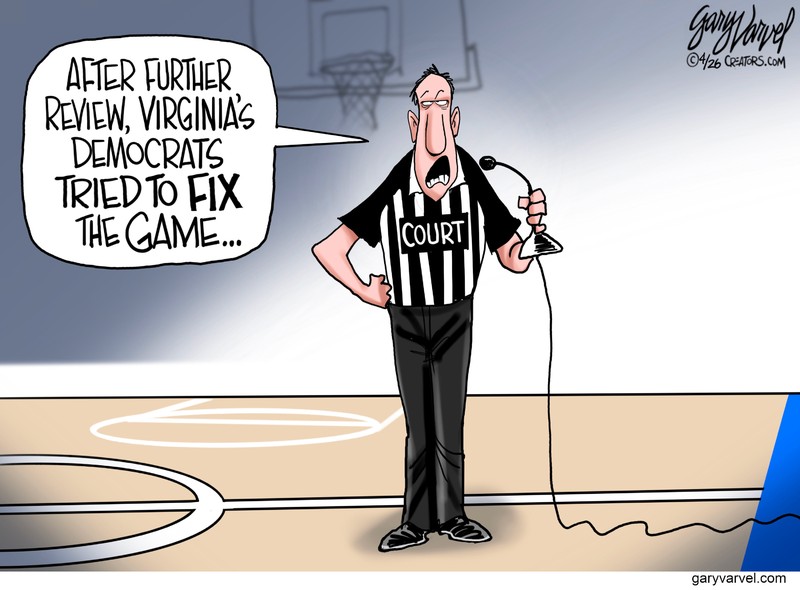
Virginia’s gerrymandering was called “fairness”.
Chris Murphy was being “sarcastic”.
Joe Biden has a “stutter”.
Gavin Newsom is suddenly “dyslexic”.
Ilhan Omar made an “accounting error”.
Eric Swalwell was “flirty”.
SPLC was paying “informants”.
All they do is lie.
Trump orders Navy to destroy any boats laying mines in Strait of Hormuz
President Trump on Thursday said he ordered the U.S. military to “shoot and kill” any boat caught putting mines in the Strait of Hormuz, as his administration ramps up mine-clearing efforts in the critical waterway.
“I have ordered the United States Navy to shoot and kill any boat, small boats though they may be (Their naval ships are ALL, 159 of them, at the bottom of the sea!), that is putting mines in the waters of the Strait of Hormuz. There is to be no hesitation,” Trump wrote in a post on Truth Social.
“Additionally, our mine ‘sweepers’ are clearing the Strait right now. I am hereby ordering that activity to continue, but at a tripled up level!” he added.
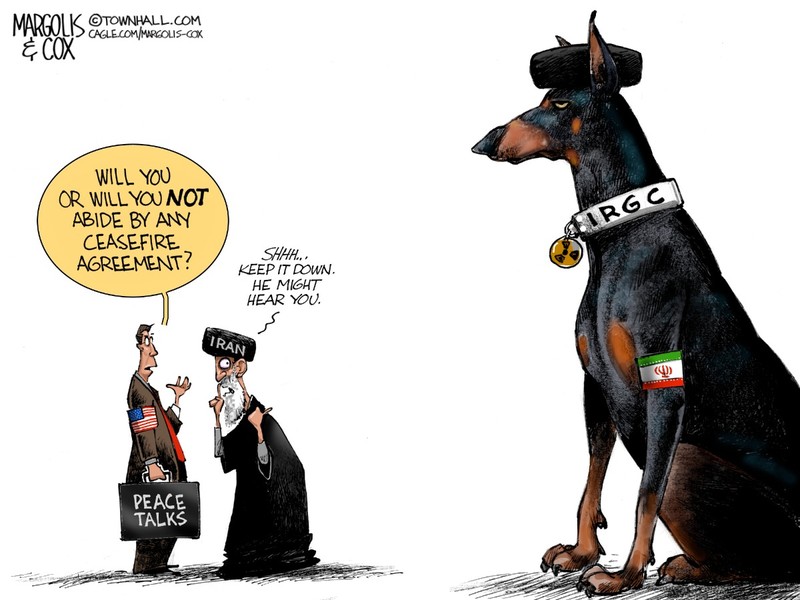
Trump’s post comes amid uncertainty over how long the strait will be unusable as Trump on Tuesday extended the ceasefire with Iran indefinitely and has kept the blockade in place.
The Washington Post reported Wednesday that the Pentagon told Congress that clearing the mines out of the strait could take six months.
The vital waterway typically sees the passage of about a fifth of the world’s oil and gas, but oil-tanker traffic has been less than normal since the start of the war, leaving oil prices high.
U.S. Central Command posted on X overnight that U.S. forces 31 directed vessels to “turn around or return to port as part of the U.S. blockade against Iran.”
In a subsequent post on Thursday, the president said Iran was having a “very hard time figuring out who their leader is.”
“They just don’t know! The infighting is between the ‘Hardliners,’ who have been losing BADLY on the battlefield, and the ‘Moderates,’ who are not very moderate at all (but gaining respect!), is CRAZY!” he wrote. “We have total control over the Strait of Hormuz. No ship can enter or leave without the approval of the United States Navy. It is ‘Sealed up Tight,’ until such time as Iran is able to make a DEAL!!!”
The White House has said the president is not putting a deadline on when Iran has to provide a new peace proposal to the U.S.

Every politician brings in a wide range of context, promises and characters to bring his mission of you to listen to his words and vote for him, and later he won’t listen to you at any range. — Auliq Ice