Intruder killed, homeowner injured in East Fort Worth shooting

A shootout inside an East Fort Worth home Saturday afternoon left one man dead, and a resident hospitalized with gunshot wounds, police said.

What we know:

The shooting happened at 3:30 p.m. on Misty Glenn Court, located near Interstate 30 and East Loop 820.

According to Fort Worth police, a resident returned home to find an intruder inside the house. A physical fight broke out between the two men, and both drew firearms and shot at each other. Both men were struck during the gunfire.

The intruder died at the scene. The Tarrant County Medical Examiner’s Office has identified him as 29-year-old Darius Levy.

The resident who lives in the home was taken to a local hospital for treatment. Information on his condition was not immediately available. His identity has not been released.

Investigators said Levy had an active protective order filed against him connected to another resident of the home, but not the resident involved in the fatal shooting.

Neighbors reported hearing an altercation coming from the home shortly before the gunshots rang out.

What’s next:

Detectives are continuing to investigate the incident. No formal charges have been announced.

Man killed after entering Riverton gas station with shotgun identified

RIVERTON — One man who entered a Riverton Chevron Holiday gas station with a shotgun is dead after officials said an armed, unaffiliated person engaged with him.

Riverton public information officer Nate Slack said the man, Ofa’tangikivaha Angilau, 23, was shot and killed by the other individual who had a weapon.

He said no police were involved and no others at the gas station were injured.

In a statement on Monday with the name of the deceased man, Slack said initial reports that the man had fired the shotgun were incorrect.

“We want to reiterate that the investigation has determined initial reports of the man firing shots inside the Holiday Oil were incorrect,” Slack said.

The incident occurred on Friday at the gas station at 12600 S. 4185 West.

According to Slack, the man had entered the gas station to purchase alcohol, but did not have ID, so the clerk refused to sell him alcohol and he became “belligerent” and “argumentative.” At that point, another person tried to de-escalate the situation, and the man left and got into his car.

Slack said the man drove around, but soon came back with a shotgun, and an individual inside the gas station chose to fire and killed Angilau. After being shot, Angilau exited the store and collapsed outside, where he died from his injuries.

He said the person who shot the man has been very cooperative with officers.

“I think this is why a lot of people do conceal carry just to protect themselves in situations like this. Obviously a very unfortunate situation, but they do occur; they are rare, however, especially here in Riverton,” Slack said.

Comment O’ The Day:
I have to remind people about this far too often:
“I can chamber a round faster than you can draw your gun.”
Yeah, try doing it with one of your hands or arms disabled.


Paul provides a link to a more in-depth look at the In-N-Out shooting that provides just such experience. The actual video of the shooting starts at 19 minutes.

Teen arrested in Miami Gardens food delivery robbery that left 1 man dead, police say

A teenager was arrested in Miami Gardens after a food delivery driver shot and killed a man who police say tried to rob him on Thursday afternoon.

According to Miami Gardens police, when officers responded to the shooting in the 20300 block of Northwest 34th Court, they found an adult man on the ground with multiple gunshot wounds.

He was airlifted to Aventura Hospital, where he was pronounced dead.

Police said the shooter, only identified as a 28-year-old black male delivery driver, stayed at the scene and told officers he had come to deliver food when he was robbed at gunpoint by two men.  According to police, the driver said he shot one of the suspects in self-defense.

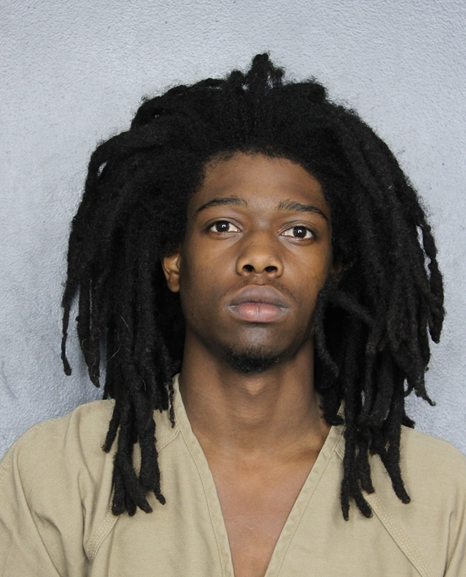
Witnesses told police they saw a second suspect, described as a tall, slim man with dreads and orange slides, running west from the scene toward a white vehicle with front-end damage. Investigators issued a be-on-the-lookout for the vehicle, and a license plate reader picked up a matching car nearby soon after.

screenshot-2026-08-07-at-6-32-44-pm.png
Jabari Joshua Thomas-Broward Corrections

Detectives said they recovered surveillance video that supported the accounts from witnesses and the driver. The second suspect was identified as Jabari Joshua Thomas, 18, and found in Miramar with help from Miramar police officers.

The identity of the suspect who was killed had not been revealed, but Thomas faces charges of second-degree felony murder and armed robbery.

He is being held without bond at the Broward County Sheriff’s Office jail, pending extradition to Miami-Dade County.

also tactically inept (and from my experience, not uncommon in the Police) :

Armed Defense is Simple, Hard, and Necessary

We go along and then something happens to us that changes our perspective. I was talking to a young man not long after I wrote about armed defense. Each of the ordinary stories I covered included an advanced self-defense skill. The young man said he wanted to make his family safer. We talked about it for a minute. I think that is where emotion raised its head, where truth and fantasy parted company. Let me state the obvious. Protecting your family takes work. Knowing what to do is the first layer of defense. Armed defense is also a skill that takes practice.

We often think that we can buy skill. I’ve felt that way myself. It is true that some firearms will fit your hands better than others. That said, is the problem that your hands are not doing what you want them to do, or is the problem that your brain doesn’t know what your hands and feet should be doing? Hardware won’t replace study and practice. Sometimes we have to climb over our ego and admit we have some homework to do. Let me give you a window into armed defense by looking at the examples from my recent podcast.

In the first story, male and female intruders entered an apartment and attacked the occupants. This happened on a Sunday morning. What could be more ordinary.

On a Sunday morning, it is easy to imagine that our children would be home and that they would open the door if someone knocked and shouted. When you read through this story, there were also children in the apartment but they didn’t open the door.

Right there is our first dose of reality. We need a safety plan at home. We have to talk with our family about what all of us will do. We have to talk with our roommates or frequent guests. We also have to walk through that plan. The walk-through does several essential things. It changes words into habits. It also uncovers the errors that seemed good at first but didn’t work well in practice.

Who is going to call 911? Who is armed or going to be armed, and where will they be positioned to defend the rest of the occupants? It sounds simple, but I’m sure your third attempt will be vastly better than your first rehearsal. It is easier to learn in the daylight than to discover problems at night when a stranger is hitting you.

Staying with this first story, a female roommate shot the attackers while they were hitting the male roommate who opened the door. Shooting at moving targets is beyond what we learned in basic marksmanship. In this case, the attackers and the victim were both moving. Speed, distance, and motion work together to determine how accurate we will be with our shots. Even though a gun works at a distance, we might have to get closer so we are sure to shoot the attackers and not shoot our roommate. Do you know what you can do and how much time you need?

Your safety plan should also include calling your lawyer and getting help as you fill out the final police report. That also includes your roommates knowing what to say, and what not say, to the police. That information is only lightly covered in most concealed carry classes.

In the second story, the defender had to move out of the way to avoid being shot. The defender then had to present his concealed firearm on the move. He had to shoot at his attackers who were likely moving as well. Firearms instructors teach classes where the students move and shoot. Some competition includes moving targets and multiple attackers. Have you practiced moving from one target to another? Have you practiced shooting while most of your body was hidden behind a wall or a car?

In the third story, the defender was being robbed at work. The robber tried to push the victim into a back bathroom. That is horribly dangerous for the victim, and he decided to fight. The defender had to turn so that the attacker couldn’t reach the defender’s gun. The defender then had to create enough distance between himself and his attacker so he could rotate his firearm and point it at his attacker. That means the defenders support arm was in front of his muzzle and between him and the the bad guy. You want to see how that works before you have to perform it on your own. At first, you want to practice with an instructor making sure you’re safe.

In the fourth and last story, an elderly woman was trying to stop a strange dog from biting her dog. In that case, it is best practice to grab your attacker and hold on tight so you both move together. That keeps you from shooting your dog or shooting yourself as the attacker moves.

I said that armed defense was both simple and hard. The contrast is complex and easy. Fortunately, we can decompose a new lesson into small incremental steps so that each new skill is relatively straightforward. The hard part is admitting we won’t suddenly become John Wick when we hear glass break at night.

Many of us have taken some form of firearms class. Please review those skills so they remain available when you need them.


Escalating Use of Deadly Force in Self-Defense

An armed attacker entered a restaurant in Cerritos, California. A good guy with a gun stopped a bad guy with a knife. That simple description covers an interesting story.

What we know- The crazy guy with a knife stole a truck from a young woman. He damaged the truck and dumped the vehicle in a shopping center. The crazy guy then ran into a nearby restaurant. He ran into the kitchen and food-preparation area. The attacker was already bleeding from a self-inflicted knife wound to his neck. The attacker threatened the restaurant staff. The staff ran out the back door of the kitchen and also ran out of the kitchen and into the dining area.

One of the customers sitting in the dining area was a gun owner. He had his California permit to legally carry his personal firearm concealed in public. He was armed that day. He was armed in the restaurant. He defended himself and other innocent parties.

The defender stood up and presented his firearms. He shouted “Stop! Drop the knife!” The attacker turned toward the defender and advanced with the knife in his hands. The defender shot the attacker. The attacker stopped advancing and fell to the ground. The defender stopped shooting. The defender remained at the scene and gave a statement to the police.

Let’s take a closer at what happened.

  • This was the middle of the afternoon on a weekday.
  • The defender stood up rather than retreating to a position of concealment and cover. That was the first rung on the use-of-force ladder. He said ‘I’m here and I see you.’
  • The defender presented his firearm. Now, both the attacker and the defender had weapons in their hands.
  • The defender issued a verbal challenge. He yelled “Stop!”
  • The attacker initiated the conflict by closing the distance to the defender.
  • The defender recognized an immediate, lethal, and unavoidable threat. Read those three terms carefully. All three must be present to justify the use of lethal force in self-defense. The defender did not have time to think and evaluate. He did have time to recognize a situation he had already considered and classified.
  • The defender used lethal force to stop the threat. The armed defender stopped using lethal force when it was no longer justified to do so. That could happen before the first shot, or after he fired every shot in the gun’s magazine.
  • The defender wore the mantle of innocence. He stayed at the scene. He holstered his firearm. He called the police or asked someone else to do so. He gave a statement to the police and cooperated in collecting evidence of what happened.

There is a lot more we want the good guy to do. Unfortunately, those sort of details aren’t covered in most news sources. Let’s speculate about what we might want to do.

Most attackers who use a weapon against innocent people are high or drunk. Don’t expect sane behavior from a crazy person.
Ask people to stay down. You don’t know if the attacker is a crazy person acting alone, or part of a robbery team. It might not be safe to stand and move around.
Can you take the knife or gun away from the wounded attacker without exposing yourself to danger? There are entire class segments devoted to how to secure a weapon that was used in a crime. When in doubt, leave that to the police.
Ask if anyone else is hurt and needs assistance. Is there a cook who was cut and is lying on the floor of the kitchen? Was one of the restaurant customers hurt when they dove for the floor? Was anyone else hurt by the shot you fired? The emergency response system might need to roll several teams if there are a number of injured victims.
Ask everyone to call 911. That gives the 911 system a list of cell phone numbers that were in the restaurant when the attack happened. Also, ask a particular staff member in the restaurant to call 911 and then stand next to you when they are on the line with the dispatcher. Since someone was shot, you want to ask for both police and emergency medical services.
If at all possible, you want to put your gun away before the police come through the door.
Do what the police tell you to do. It is there scene and they are responsible for what happens after they arrive.
Have a lawyer to call. Your lawyer will write out your official statement. His job is to be accurate and complete. He will explain why the use of lethal force was the safest course of action. At the scene, the most you can do is make sure the police don’t overlook obvious evidence. Once that is done, then be quiet and let your lawyer tell your story.

Despite its anti-gun politics, there are many millions of gun owners in California. California citizens in the Democrat-controlled costal counties might have a difficult time securing a carry permit. Citizens who live in inland counties have a much easier time.. and their permits are good in every county. Armed defense like this happens thousands of times every day.

Hancock Co. Prosecutor says deadly shooting of unarmed man falls under self-defense; no charges filed in road rage encounter

HANCOCK COUNTY, Ind. — Criminal charges will not be filed against a man who shot and killed an allegedly unarmed aggressor during a road rage confrontation in Hancock County.

The Hancock County Prosecutor’s Office says the road rage shooting falls under self-defense.

Previous reports detail the shooting, which took place on the afternoon of July 21. Police said the shooting was the result of a road rage confrontation and ended in the death of 37-year-old Kevin Powell of Indianapolis.

After the shooting, the gunman, who the prosecutor said was driving to work, stayed on scene and called 911.

“You know this is a tragic situation. There are no winners here,” said Hancock County Prosecutor Brent Eaton. “It’s really a terrible situation. We hate to see things like this happen.”

According to investigators, two vehicles — a Volkswagen Jetta and a Dodge Journey — had been traveling along the same path from Marion County into Hancock County. Witnesses claim the Dodge began following the Volkswagen at an extremely close distance, less than a foot off the other car’s bumper.

When the two vehicles stopped in a construction zone, Powell reportedly exited the Dodge Journey and “aggressively approached the Volkswagen,” according to the prosecutor’s findings.

One witness allegedly heard Powell tell the Volkswagen driver, “You shouldn’t be driving on my road that fast, motherf*****.”

A witness described Powell’s demeanor as “very hostile.”

After berating the Volkswagen driver, Powell reportedly started back toward his Dodge, but then turned around and headed back toward the Volkswagen. The Volkswagen driver stepped out of his vehicle armed with a handgun.

The prosecutor makes no mention of Powell ever being armed.

“I wouldn’t do that. Don’t do that. Get back in your car,” the Volkswagen driver allegedly told Powell. But Powell reportedly kept advancing.

The Volkswagen driver then fired several shots, striking Powell more than once.

Powell retreated to his vehicle and succumbed to his injuries, investigators said.

Witnesses later told police that at one point, Powell allegedly was heard saying to the Volkswagen driver, “Oh, you gonna get your gun? You afraid? You gonna get your gun? Well, come on, get out.”

“At every point the driver of the second vehicle (Powell) was the aggressor and was intent on escalating the situation,” said Eaton.

Prosecutor Eaton claims one independent witness said, “If I was put in that predicament, if I was the guy in the Volkswagen, I would have been scared for my life.”

“Objective observers, without any connection to either party, said it was their opinion the driver of the Volkswagen would have been in fear for his life from the manner he was approached,” said Eaton.

Because Powell allegedly threatened bodily harm to the driver, and the driver reportedly never approached Powell and only stood his ground at his own vehicle, the Hancock County Prosecutor’s Office determined the shooting to fall under Indiana’s self-defense law.

“The evidence in this case establishes that the Dodge driver followed the Volkswagen at an extraordinarily close distance; exited his vehicle and initiated the confrontation; aggressively approached the occupied Volkswagen; threatened bodily harm; challenged the Volkswagen driver to retrieve a firearm and exit the vehicle; briefly turned toward his own vehicle; and then renewed his approach despite repeated verbal warnings to stop and return to his vehicle,” the prosecutor’s office said.

In reviewing this evidence and consulting with Indiana’s Code on self-defense, Eaton said his office would not be filing criminal charges against the Volkswagen driver.

Before the deadly encounter, the shooter and Powell were total strangers.

“You know it’s tragic, because it’s avoidable. The driver of the second vehicle, there was no reason for him to get out of his car,” said Eaton. “The law in Indiana is clear. If you are in fear for your life, you do not have a duty to retreat and you are able to use deadly force and that’s what happened here.”

 Crossing a State Line Shouldn’t Cost You Your Right to Self-Defense

Imagine a woman driving across state lines alone at night, fearful that her car might break down and leave her vulnerable. Or picture a truck driver hauling valuable cargo across the country. In states such as California, Illinois, New York, New Jersey, and Oregon – five of the ten states that refuse to recognize concealed handgun permits from other states – these travelers can find themselves defenseless. Nine states also either deny non-residents permits altogether or make them extremely difficult to obtain.

Last week, President Trump again called for passage of national concealed carry reciprocity. The legislation would allow anyone legally permitted to carry a concealed handgun in their home state to carry across state lines, much as Americans use their driver’s licenses nationwide. The legislation would affect millions of law-abiding Americans.

Much of the gun-control debate centers on hypothetical risks. With reciprocity, however, we don’t have to speculate. With 21.5 million concealed handgun permit holders in the United States, we already know how they behave. In addition, most Americans already benefit from reciprocity. The average state recognizes permits from 30 other states, allowing permit holders to travel legally with their firearms.

Last year, when House Judiciary Committee passed national reciprocity along party lines, Democrats also opposed legislation that would allow current and retired law enforcement officers with at least ten years of service to carry firearms in facilities open to the public – including schools – while traveling across the country. Given their fear that allowing experienced current or retired law enforcement officers to carry would endanger public safety, it comes as no surprise that they also oppose allowing civilians to carry across state lines.

Congressional opponents of reciprocity warned that permit holders would commit crimes but cited no evidence to support that claim. The facts point in the opposite direction. Concealed handgun permit holders are extraordinarily law-abiding. States revoke their permits for firearm-related violations at rates measured in thousandths – or even ten-thousandths – of one percent. Police officers rarely commit firearm crimes, yet permit holders lose their permits for firearm offenses at only about one-twelfth the rate that police are convicted of firearm related crimes.

“This legislation is a dramatic infringement on states’ rights,” claimed Emma Brown, executive director of the gun-control group Giffords, echoing a common criticism. Yet those same organizations routinely advocate federal gun-control laws that override state policy choices.

Opponents also claimed that national reciprocity would confuse travelers about which gun laws apply in each state and lead to more arrests. But reciprocity already exists across much of the country, and no evidence shows that out-of-state permit holders create such problems. Indeed, the same situation exists for drivers when they cross state lines: They are required to follow the driving regulations for the state they are in.

Critics also argue that permit standards vary from state to state. Yet no evidence shows that states with less restrictive permitting systems experience higher permit revocation rates.

Despite these fears, more than 86% of police chiefs and sheriffs support national reciprocity, and over 90% of rank-and-file officers support concealed carry laws. These officers see firsthand how concealed carry works in practice. They understand that police deter crime, but they also know they usually arrive after the crime has begun. Victims often must defend themselves first. Consistent with that experience, the overwhelming weight of academic research finds that allowing law-abiding citizens to carry concealed handguns reduces crime.

With tens of millions of Americans legally carrying concealed handguns over many decades, if opponents could identify even dozens of cases in which out-of-state permit holders created serious problems, their concerns would deserve careful consideration. They cannot. Such cases remain exceedingly rare. Americans do not need to guess whether gun-control advocates’ concerns are justified.

Carrying a firearm provides the greatest benefit to those who face the largest physical disadvantages – women and the elderly – and to those who face the highest risk of violent crime, including many poor black residents of high-crime neighborhoods. Not surprisingly, these groups have accounted for the largest percentage growth in permit ownership over the past decade. Between 2015 and 2024, permits held by women grew 112% faster than those held by men, while permits held by black Americans grew 284% faster than those held by whites.

Real life is not the movies. Most women cannot overpower several larger, stronger men, no matter how well trained they are. Men also generally possess greater upper-body strength and speed.

A firearm changes that equation. It gives women a far more effective means of self-defense. If an attacker has already closed the distance enough to seize a woman’s firearm, she is already in grave danger regardless.

Peer-reviewed research finds that allowing concealed carry reduces murder rates for both men and women. The reduction for women, however, is roughly three to four times larger than the reduction for men.

The House will likely pass national reciprocity, but it faces a steeper challenge in the Senate. Breaking the expected Democratic filibuster will require 60 votes, meaning at least seven Democratic senators must cross party lines. Those senators need only examine their own states’ experience. Six states represented by 12 Democratic senators – Arizona, Georgia, Maine, New Hampshire, Vermont, and Virginia – already recognize concealed handgun permits from every other state. None has seen a problem with reciprocity.

Police play an indispensable role in public safety. But around 700,000 officers cannot protect over 340 million Americans everywhere at once. Congress should ensure that law-abiding Americans do not lose their ability to defend themselves simply by crossing a state line.

John R. Lott Jr. is president of the Crime Prevention Research Center. 


Once again, we read the shocked reactions of those people who can’t seem to realize that ‘bad things’ can happen anywhere, anytime.


Man armed with knife shot and killed by customer at Cerritos restaurant, sheriff’s department says

CERRITOS, Calif. (KABC) — A man armed with a knife was shot and killed at a restaurant inside a busy shopping center in Cerritos on Sunday afternoon, authorities say.

According to the Los Angeles County Sheriff’s Department, deputies responded to a report of a person armed with a knife at Lucille’s Smokehouse Bar-B-Que in the 11300 block of South Street at approximately 2:12 p.m.

At the scene, deputies found an adult male with an apparent gunshot wound and lacerations. Deputies initiated life-saving measures, but the man was pronounced dead at the scene.

Deputies said a preliminary investigation found that the armed man entered the restaurant and ran through the kitchen/service areas, “frightening customers and staff.”

A customer who was “lawfully armed and possessed a valid concealed carry permit” confronted the man and ordered him to drop the knife, according to deputies. That’s when the man reportedly charged toward the customer with the knife, and the customer shot him.

A Los Angeles County Sheriff’s Department source said an off-duty officer was present and witnessed the shooting, but did not fire their weapon. The man with the knife reportedly stabbed himself before walking into the restaurant, according to the source.

Eyewitness News spoke to an employee who described a graphic scene, saying that what he saw was straight out of a horror film.

“I just saw a guy run in the restaurant with his throat slit, and he had a knife. Once he went to the main dining area with all the guests, I guess there was another guest that was sitting down. He pointed a gun at him, told him to put the knife down, the guy kept walking toward him like Michael Myers. He shot him,” the employee recalled.

Investigators believe the incident began before the man reached the restaurant. The sheriff’s department source told Eyewitness News the man had been driving a stolen truck before abandoning it and stabbing himself at a nearby Starbucks on South Street.

Magaly Zacarias said she noticed the driver before he ran toward Lucille’s.

“I noticed a driver driving recklessly into the plaza. He just left the car there, ran off to Lucille’s, and it seemed like he had a knife in his hand, and he was also wounded,” Zacarias said. “I got a closer look at the car, and it seems like there was already blood all over the steering wheel and inside of the car.”

AIR7 video from above the scene showed a large police presence. The restaurant is inside a large shopping center right off the 605 Freeway.

Zacarias, who works nearby, said the violence was shocking for people who work in the area.

“We were really anxious, especially because this plaza is safe, so it was a little shocking for us to hear what was happening,” she said.

Frequent shoppers in the area also said they were shaken by the shooting.

“It’s just crazy to think about, because what if we were, well, knock on wood, but what if we were nearby and something like this happened? And now it’s like, OK, we have to be careful with our surroundings,” said Daniela Reyes of Cerritos.

Javier Reyes said he hopes security is increased.

“Hopefully there’s more security, because this is kind of unacceptable that this happened, and it makes me worried to go out for a nice Sunday dinner,” he said.

Homicide investigators and the sheriff’s department deputies had the restaurant blocked off as the investigation continued. Witnesses and employees were being questioned.

Investigators have not released the name of the man who was shot and killed. They also have not released a possible motive for why he hurt himself and then went to the restaurant.

Deputies said the customer who shot the armed man remained at the scene and is fully cooperating with investigators.

Anyone with information about this incident is encouraged to contact the Los Angeles County Sheriff’s Department’s Homicide Bureau at (323) 890-5500.

Sheriff: Oklahoma homeowner hit attempted thief with baseball bat, shot him

one man is now in custody after being shot by a homeowner in Tulsa County.

On Wednesday night, deputies with the Tulsa County Sheriff’s Office responded to a reported shooting in the 5900 block of South 59th W. Ave.

When deputies arrived, they spoke to a homeowner who said a man came onto their property, threatened to steal his truck and told him he would kill him if he resisted.

The homeowner said he turned to go back inside his house, but the man followed him into the home.

At that point, the homeowner said he grabbed a baseball bat and hit the suspect.

The struggled continued outside where the homeowner said the man charged at him. That’s when the homeowner pulled out a gun and shot the suspect in the leg.

The suspect, who was identified as 37-year-old Joshua Arenas, was taken to the hospital for treatment.

After being released from the hospital, Arenas was arrested on complaints of attempted first-degree robbery by force, first-degree burglary, and assault and battery.

The Urgent Case for Better Church Safety.

Sunday morning, July 5, 2026. St. John’s Lutheran Church in Effingham, Illinois, sat peaceful under a quiet sky. Volunteers had just begun to arrive to prepare for services. Just the ordinary rhythm of a house of worship going about its day. Then a man driving a stolen car slipped inside, asking for the pastor.

Church security didn’t blink. They noticed the out-of-state plates and saw the man approach. Safety team members made contact as he entered. The man asked for the pastor, but the safety volunteers sensed something was wrong. They called 911.

Police rolled in. There was a struggle. A gun was produced. One shot was fired. From the details it sounds like it might have been an attempted suicide. Either way, the intruder went down with life-threatening wounds. A few days later, he died of his injuries.

Thankfully no innocents were hit. No blood on the pews. No parents clawing through wreckage crying out for their kids. The pastor lived. Tragedy was averted, prevented by extraordinary vigilance.

Breathe easy? Not quite. Close your eyes and run the other reel.

Unlocked side doors. Nobody watching the parking lot or the doors. No radios calling out warnings.  Chaos explodes where hymns should rise. Gunfire shatters stained glass and the pastor and others go down. Children scream from the daycare area. Paramedics arrive to heartbreak. A community is gutted, forever asking, “Why didn’t we see it coming?”

That nightmare is one lazy policy choice away. Churches aren’t fortresses, they’re sanctuaries. Open doors, welcoming smiles, coffee and cookies. But evil doesn’t check the welcome sign. It walks right in.

FBI patterns show Sundays hosted the most active shooter incidents than any other day in 2022.  It shouldn’t surprise that Sundays reliably top the day for the most violent religious activity incidents pretty much every year. Barely half of Protestant churches have a real plan for such horrors.

Researching this, I initially found the number of churches with “church safety” as higher, but that’s because researchers counted the 21% of houses of worship with “No Firearms” policies as among those with safety programs. “Gun-Free Zone” signs have no preventative or survival value.

The rest? Hoping and praying. Winging it. That’s not faith. That’s playing Russian roulette with your flock.

Continue reading “”

Westwood Square shooter was acting in self-defense, HPD says

HATTIESBURG, Miss. (WDAM) – No charges are being filed at this time following an overnight shooting that left one injured. The incident occurred in the Westwood Square shopping complex, near the Walk-On’s Sports Bistreaux parking lot.

Hattiesburg police responded to a report of shots fired around 9:56 p.m. on Tuesday. Officers confirmed the shooting using on-site evidence.

According to HPD, a person suffering from a non-life-threatening gunshot wound arrived at a local hospital shortly after the shooting.

Officers spoke with an individual who remained at the scene, who admitted to firing the shots after being assaulted during an altercation.

HPD said the person stayed on the scene and cooperated with investigators.

At this stage of the investigation, detectives believe that the shooter was acting in self-defense. No charges have been filed, but the investigation remains ongoing.

Man shot after arguing with, shooting at another man, police say

ATLANTA — A man is recovering in a hospital before being taken to jail for a shooting incident in northwest Atlanta on Friday.

Officers responded to 859 Oak St. NW around 11:20 a.m. after receiving calls about a person shot. When they arrived, they found a 38-year-old Brandon Harper suffering from a gunshot wound and another man at the scene.

The person who shot Harper was quickly detained, according to police, and Harper was taken to a local hospital.

Investigations later determined that there was a verbal dispute between Harper and the man. Police said Harper was the aggressor and fired multiple shots at the detained man.

The uninjured man returned fire in self-defense, striking Harper twice.

Police also determined that Harper is a convicted felon and was wanted on multiple outstanding charges. He was charged in connection with this incident and will be transported to the Fulton County Jail after being discharged from the hospital.

The other man involved, whose identity was not released, will not face any charges.

Hey Tech Bros, the Model for Surviving on the AI Frontier is Guns

Technology being the biggest, most society-altering industry means that questions of technological freedom have high stakes. If what Anthropic and OpenAI are allowing the government to do to their models becomes the norm, it will be more destructive to freedom than any gun control law.

These companies have raised $125 billion and $190 billion in funding, respectively. Companies committed to freedom would spend a few basis points of their funding to sue the government and preserve the technological freedom that the internet has forged. Instead, the current incumbents are willingly buffalo jumping away the freedom that is their birthright, trading it for a pat on the head from the US government.

The steelman of their position is that if they don’t go along, they won’t have companies left to defend. The rebuttal is that if they do go along, they won’t have companies worth defending.

People often think of tech freedom through a First Amendment lens, because that’s the only mainstream framework to articulate a technical legal argument for “The government is required to leave me alone.” But as tech becomes more dangerous — AI! drones! humanoid robots! biochemical research! — the Second Amendment is the better fit.

The Second Amendment embraces the idea that dangerous technology should be decentralized, and that the bad things about that will be solved by the good things about it. Gun rights are winning because they’ve leaned into that. AI is every bit as pivotal for individual freedom, so we should think about the rights to create, sell, buy, and possess it through the same lens.

— Open Source Defense in AI is the frontier of the Second Amendment

Ohio: 116 School Districts Now Allow Armed Employees

Four years after Gov. Mike DeWine (R) signed legislation allowing school boards to choose to allow teachers and other employees to be armed, 116 school districts have chosen to allow armed employees for classroom defense.

WOWO reported that the figure of “116 school districts” is derived from state data “as of June 17.”

The Ohio Capital Journal noted that the 116 districts include “more than 70 Ohio school districts and 15 Christian schools…[with] staff members who are authorized to carry weapons on school grounds.”

Ohio Federation of Teachers President Melissa Cropper criticized the training requirements for the growing number of armed school employees, saying, “It’s not a sufficient amount of training. We’re talking about highly intense situations that require a lot of not only tactical training on how to use weapons, but how to deal with making split-second decisions.”

She did not provide an instance where an armed teacher or employee has harmed someone since the law was signed by DeWine.

Antwerp district superintendent Marty Miller explained that his district chose to arm teachers and employees because they are in a rural setting with a longer police response time.

He said, “It’s just letting the public know that your children are protected.”