The Final Judgement
Final-JudgmentCategory: Courts
Discussion Of Final Judgment Item By Item
Judge Joel Cohen’s Final Judgment has been released. Realistically, I think both sides can claim victory as it grants measures to both the New York Attorney General’s Office and to the NRA. On my initial reading of the document, I wish Judge Cohen had gone a bit further. It does emphasize just how important the 2025 Board of Directors election will be for the future of the NRA.
The Final Judgment does follow much of what was said in court in the last hearing. For example, Judge Cohen was critical of the petition process calling it “antiquated” and thought it could be done electronically. That is in the Final Judgment. Another example is that Judge Cohen was leery of having the recommendations from the Committee on Organization on board size die “a quiet death in committee”. The Final Judgment mandates the committee have its proposals ready for the April 2025 board meeting.
The Final Judgment itself covers seven pages and the remainder of the 25 page document is composed of exhibits. The Final Judgment starts with the Stipulations agreed to by defendants Joshua Powell and Wilson “Woody” Phillips. It then goes on to dismiss the 5th, 6th, 7th, 8th, 9th, 10th, and 11th causes of action in the NYAG’s Second Amendment Complaint. These dealt primarily with permanent bars on the named defendants along with items covered in the stipulations. The Final Judgment then moves to the remedial actions that the NRA shall implement.
Now, they need to relocate the corporation from New York before James fonds something else to sue them for .
NRA Successfully Resolves Longstanding Legal Battle with New York Attorney General
The Supremes have never been all that big on taking ‘interlocutory’ appeals, that is, the case hasn’t been heard and ruled on all the way through the lower courts.
Justice Thomas’s Statement Reaffirms Sword-Shield Dichotomy
“A defendant can always raise unconstitutionality as a defense ‘where a statute is invalid upon its face and an attempt is made to enforce its penalties in violation of constitutional right.'”
Today [the 9th] the Supreme Court denied cert in Wilson v. Hawaii, which I wrote about here. Justice Thomas wrote a statement respecting the denial of cert, joined by Justice Alito. The posture of the case is a bit unusual. The defendant was convicted of carrying a firearm without a license. At the time, Hawaii imposed a “may issue” conceal carry law. It turns out that Wilson had never applied for a carry permit. To challenge his conviction, the defendant argued that Hawaii’s carry law runs afoul of Bruen. However, the Hawaii Supreme Court held that he could not raise the Second Amendment as a defense against the carry regime. Justice Thomas explains:
There, the [state] court invoked state standing law to avoid any meaningful Second Amendment analysis. It held that, because Wilson had not applied for a license and had not been charged with violating the licensing statute itself (which was not a criminal statute), he lacked standing to challenge the particulars of the licensing regime. Id., at 12–13, 543 P. 3d, at 444–445. Instead, he could argue only that the Second Amendment categorically forbids state licensing regimes. Because that is not the case, the court held, Hawaii’s prohibitions on unlicensed carry “do not graze Wilson’s Second Amendment right.”
Justice Thomas explained why this approach is mistaken:
A defendant can always raise unconstitutionality as a defense “where a statute is invalid upon its face and an attempt is made to enforce its penalties in violation of constitutional right.” Smith v. Cahoon, 283 U. S. 553, 562 (1931). A “long line of precedent” confirms this point. See, e.g., City of Lakewood v. Plain Dealer Publishing Co., 486 U. S. 750, 755–757 (1988) (collecting cases).
Even though Wilson was not being prosecuted for violating the civil registration law, the defendant could still challenge the government’s enforcement action based on the unconstitutionality of the gun control law.
Here, the Defendant does not need any sort of cause of action to raise the unconstitutionality of the statute. The Constitution is being used as a “shield.”
However, Justice Thomas does not say that “A defendant can always raise unconstitutionality,” full stop. It can always be raised as a “defense” or a “shield.” But for the Constitution to be raised as a “sword” to seek affirmative relief, a cause of action is needed. Justice Thomas recognized this principle in last term in DeVillier v. Texas:
Constitutional rights do not typically come with a built-in cause of action to allow for private enforcement in courts. See Egbert v. Boule, 596 U. S. 482, 490–491 (2022). Instead, constitutional rights are generally invoked defensively in cases arising under other sources of law, or asserted offensively pursuant to an independent cause of action designed for that purpose, see, e.g., 42 U. S. C. §1983. (slip op. at 5.)
Wilson should have been able to invoke the Second Amendment defensively, but could only assert it offensively with a cause of action.
Justice Thomas continues to bring clarity to an area of that is often misunderstood.
For those interested in reading further, Seth Barrett Tillman and I discuss the sword-shield dichotomy in Sweeping and Forcing (pp. 389–404); see also Anderson v. Griswold, Colo., 543 P.3d 283, 348, 351 & n.7, 356 (Colo. Dec. 19, 2023) (Samour, J., dissenting) (citing Sweeping and Forcing, supra) (adopting the sword-shield dichotomy as basis for dismissing plaintiffs’ purported Section 3 action).
Good News and Bad News From Supreme Court on Monday
While there are a lot of good things gun rights advocates can celebrate, including at least four years of knowing that gun control won’t pass at the federal level unless something very strange happens, but that doesn’t mean everything is good news.
There are way too many anti-gun states still for that to be the case.
So, as a result of that, we need to use the courts to overturn some of these insane laws. Eventually, at least some of them need to go to the Supreme Court where, hopefully, the justices will slap the laws down and down hard.
And on that front, there’s some good news and some not-so-good news.
Let’s start with the good news.
The United States Supreme Court has set an official conference date of December 13 to decide if the High Court will hear Snope v. Brown, a case directly challenging Maryland’s assault weapon ban, addressing whether states can legally ban semi-automatic rifles such as the AR-15, commonly owned and used by law-abiding citizens. While some say this case has the potential to redefine the future of firearm legislation across the nation, the fact that arguments are so deeply rooted in precedent set by earlier landmark Second Amendment decisions such as District of Columbia v. Heller (2008) and New York State Rifle & Pistol Association v. Bruen (2022) makes one wonder, haven’t we been here before?
It has been over a decade and a half since Heller affirmed that firearms “in common use” for lawful purposes cannot be banned, a principle further solidified just over two years ago when Bruen held that firearm laws must be consistent with the nation’s historical tradition of firearm regulation, rejecting the use of “means-end” tests by future courts when evaluating firearm restrictions. These precedents are central, and one could say redundant, to the arguments outlined in Snope v. Brown, however, that has not stopped states like Maryland from enacting laws that fly in the face of previous SCOTUS rulings.
The truth is that Maryland and every other state with an assault weapon ban on the books needs to get over it. The mean-end testing that used to be applicable to gun control laws no longer applies, which is good because I don’t see how that wasn’t subjective as Hades.
Of course, this is really just the next step in a process that was already in motion and doesn’t necessarily mean all that much except that we’ll get a feel for where the justices will come down on this one. I’d like to say Bruen tells us exactly what happened, but then Rahimi suggested otherwise. In a few days, we’ll have some more to go on.
Hopefully, it’ll be clear that assault weapon bans’ days are numbered.
That’s the goodish news.
Now, the not-so-good.
The Supreme Court declined to intervene or overturn a Hawaii State Supreme Court decision that allowed the state to prosecute a man carrying a loaded pistol without a license.
Justices Clarence Thomas and Justice Samuel Alito criticized the Hawaii court’s ruling, but supported the U.S. Supreme Court’s move on technical grounds. Thomas wrote that the court should hear an “appropriate” case to “make clear that Americans are always free to invoke the Second Amendment as a defense against unconstitutional firearms-licensing schemes.”…
Thomas, writing Monday, said: “Had the Hawaii Supreme Court followed its duty to consider the merits of Wilson’s defense, the licensing scheme’s unconstitutionality should have been apparent.”
He noted that Wilson could ask the Supreme Court to review the case again — a view echoed by Justice Neil Gorsuch.
This is, of course, the “Aloha Spirit” case that stirred up so much hate and discontent.
The truth is that Hawaii’s licensing scheme is incredibly problematic, and rather than make the case that no, it really wasn’t, the judges there simply pretended that it doesn’t matter because their state’s history is somehow completely different from the rest of the nation’s. Granted, Hawaii wasn’t exactly one of the original 13 colonies or anything, but neither were most other states. Our nation’s founding predated and supersedes state history on matters of constitutional law and, frankly, I wish the justices had opted to hear it.
Cam should have more on this case later today.
In the meantime, though, the good news here–the reason I didn’t call it “bad news”–is that Wilson can kick off the process again, and at least two justices seem to want him to do just that. I hope he does and I hope gun rights groups through the nation help with that, because if Hawaii can get away with what’s on the books there, someone else is going to do it and argue it’s justified.
Just may be me, but I think the jury, after receiving an instruction from the judge to consider that lesser charge, that completely contradicted his first instructions, may have decided to flip the court the finger.
Not guilty verdict in Daniel Penny trial
NEW YORK CITY – Daniel Penny, a Marine veteran who used a deadly chokehold on homeless man Jordan Neely on the New York City subway last year, was found not guilty in a verdict delivered after days of jury deliberations and courtroom back-and-forth.
Penny was cleared of criminally negligent homicide in Neely’s death. A more serious manslaughter charge was dismissed earlier in deliberations because the jury deadlocked on that count.

Ketanji Brown Jackson Vs. Sonia Sotomayor: Who’s Dumber?
On Wednesday, the Supreme Court heard arguments in U.S. v. Skrmetti, a pivotal case addressing state restrictions on controversial medical interventions, including puberty blockers and hormone treatments for minors with gender confusion. At the heart of the case is a Tennessee law banning these procedures for children, with the court’s decision likely to have far-reaching consequences. Will our country protect children from these barbaric and irreversible procedures or not?
As I previously reported, Justice Ketanji Brown Jackson humiliated herself when she bizarrely tried to equate banning transgender procedures for minors with prohibiting interracial marriage. She began with a convoluted statement: “Being drawn by the statute that was sort of like the starting point, the question was whether it was discriminatory because it applied to both races and it wasn’t necessarily invidious or whatever.”
It got worse from there.
“But you know, as I read … the case here, the court starts off by saying that Virginia is now one of 16 states which prohibit and punish marriages on the basis of racial classifications.” While it was clear that she intended to invoke historical racial discrimination, the connection to the case at hand was tenuous at best.
The real stretch came when she concluded, “And when you look at the structure of that law, it looks in terms of you can’t do something that is inconsistent with your own characteristics. It’s sort of the same thing.”
The suggestion that anyone could somehow liken laws protecting minors from irreversible and harmful gender procedures to bans on interracial marriage is downright absurd. Jackson’s argument hinged on a confusing assertion that both types of laws were based on “inconsistency” with one’s “characteristics,” a comparison that is frankly laughable and dumb.
JUST IN: Justice Kentaji Jackson says laws banning s*x changes for young children are “sort of the same thing” as banning interracial marriage.
“You can’t do something that is ‘inconsistent with your own characteristics?’ It’s sort of the same thing.”
h/t @greg_price11 pic.twitter.com/L1JF6qmJvv
— Eric Daugherty (@EricLDaugh) December 4, 2024
But she wasn’t the only left-wing justice on the court to make a dumb argument.
While speaking before the court, Tennessee’s Solicitor General asked, “How many minors have to have their bodies irreparably harmed for unproven benefits?”
And that’s when Justice Sonia Sotomayor promptly jumped in.
“I’m sorry, Counselor,” she said, interrupting him. “Every medical treatment has a risk, even taking aspirin, there is always going to be a percentage of the population under any medical treatment that’s going to suffer a harm.”
“How many minors have to have their bodies irreparably harmed for unproven benefits?”
Justice Sotomayor: Taking aspirin has risks too.
Unreal pic.twitter.com/Jav7uexplc
— Libs of TikTok (@libsoftiktok) December 4, 2024
That’s right. Sotomayor, the so-called “wise Latina,” compared cutting off the healthy breasts and genitals of minors to taking aspirin.
Which justice made the dumber argument? Jackson bizarrely compared Tennessee’s ban on gender procedures for minors to bans on interracial marriage, claiming that both involve “inconsistency” with inherent characteristics. The analogy was a spectacular failure as protecting minors from irreversible harm has nothing to do with racial discrimination.
Meanwhile, Sotomayor trivialized the issue by likening the risks of permanent, life-altering surgeries on minors to those of taking aspirin. This flippant dismissal of the severe, irreversible consequences of such procedures demonstrates a shocking lack of seriousness.
Both arguments are embarrassingly absurd, making it difficult to determine which is more moronic. One thing is for sure: both are an embarrassment to the court.
What an embarrassing idiot. https://t.co/gloNPeBm1B
— Catturd ™ (@catturd2) December 4, 2024
California Judge Dismisses Lawsuit Against Smith & Wesson Over Synagogue Shooting
On the last day of Passover in 2019 a 19-year-old man walked into the Chabad of Poway synagogue in Poway, California and opened fire, killing a 60-year-old woman and injuring three others, including the synagogue’s rabbi. The shooter, who fled the synagogue after his gun jammed and was taken into custody by police a short time later, was ultimately sentenced to life without the possibility of parole for his shooting spree.
The gun control group Brady, working with some of the victims of the Poway shooting, filed suit against gunmaker Smith & Wesson, as well as San Diego Guns, the store that sold the rifle to the shooter. In 2021 a judge on Superior Court of California for San Diego County allowed the lawsuit to proceed despite the arguments from the gunmaker that the Protection of Lawful Commerce in Arms Act precluded lawsuits seeking to hold gunmakers responsible for the acts of criminals, but this week Superior Court Judge Wendy Behan granted Smith & Wesson’s motion to dismiss after determining that the Protection of Lawful Commerce in Arms Act does apply to the case.
In her decision, Behan noted that while the PLCAA generally preempts civil actions for damages and injunctive relief against gun makers and sellers arising from the criminal misuse of firearms, there is a “predicate exception” that allows litigation when “where a manufacturer or seller knowingly violated a State or Federal Statute applicable to the sale or marketing of the product, where violation proximately caused the harm” that led to the lawsuit.
In this case, Brady and the plaintiffs contended that Smith & Wesson knowingly violated California’s prohibition on the possession of “assault weapons”, the federal prohibition on the sale of full-auto “machineguns”, and California’s prohibition on “deceptive, untrue or misleading advertising”. This was one of the first cases where a gun control group tried to argue that legally, there’s no functional difference between a semi-automatic rifle and a full-auto machine gun, but Behan shot down that claim in her decision.
Plaintiffs allege that the rifle used in the shooting was a fully automatic “machinegun” because it could allegedly be modified, thereby violating 18 U.S.C. § 922(b)(4). However, the evidence shows the rifle used, the M&P 15, is a California-compliant semi-automatic rifle not designed to function as a machinegun.
The US Supreme Court recently held in Garland v. Cargill (2024) 602 U.S.406, 410: “[s]emi-automatic firearms, which require shooters to reengage the trigger for every shot, are not machineguns” as defined in 26 U.S.C. § 5845(b).
While plaintiffs argue that modifications could make the rifle illegal, there is no evidence that the shooter intended to or did modify the firearm. Forty-year-old ATF agency interpretations relied upon by plaintiffs are not binding on this court and ultimately lack relevance due to the lack of ambiguity in the statutory definition of a machinegun, which excludes firearms not originally designed for automatic fire.
The evidence remains undisputed that that Smith & Wesson “S&W” manufactured the rifle as a semiautomatic firearm, and the shooter used the rifle as a semi-automatic firearm.
Gun control advocates, including officials for the city of Chicago, are making essentially the same argument in their lawsuit against Glock; that the semi-automatic pistols should be treated like they’re full-auto machine guns because they can be illegally converted to full-auto fire. While Behan’s ruling won’t have a direct impact on that litigation, her reasoning can and should be applied to Chicago’s lawsuit.
BREAKING: the federal court of appeals just ruled that Texas has the right to build the razor wire border wall that we have constructed to deny illegal entry into our state.and that Biden was wrong to cut our razor wire.
We continue adding more razor wire border barrier. pic.twitter.com/a1jLPvceLf
— Greg Abbott (@GregAbbott_TX) November 27, 2024
Well, Circuits (besides, of course the Supreme Court) are where actual binding ‘case law’ s made, so …….
Senate Dems and GOP strike a deal on judicial appointments for Trump and Biden
A deal struck earlier this week between Republicans and Democrats in the Senate will enable President Joe Biden to possibly outperform President-elect Donald Trump in terms of the number of federal judges appointed in each of their term in office.
“It looks like the Biden administration is going to best the first Trump administration in terms of the amount of judges that are seated on the federal courts by the end of his term,” Devon Westhill, president and general counsel at the Center for Equal Opportunity said, according to the Washington Examiner.
Senate Democrats have confirmed 220 of Biden’s federal judicial nominees, while Trump had 234 in his first term, according to the outlet.
So far Biden has confirmed 173 district court judges and 45 appeals court judges. Meanwhile, Trump confirmed 174 district judges and 54 appellate judges during his first term.
Regarding the Supreme Court, Trump appointed three justices and Biden one. Senate Judiciary Committee Chairman Dick Durbin, D-Ill., said Thursday that he wasn’t sure if Biden appointing more judges would top the number of Trump’s appointments.
Federal Appeals Court Upholds Most of Restrictive New York Concealed Carry Gun Law; Next Stop SCOTUS
Federal Second Circuit Court of Appeals upholds “good moral character” requirement of New York’s concealed carry gun law, setting up expected showdown at the U.S. Supreme Court
We have been following the twists and turns of litigation battles associated with New York’s most recent concealed carry gun law. This is important, not only because it affects the constitutional rights of millions of law-abiding New York State citizens, but also because this case could be a bellwether for the country, should the U.S. Supreme Court decide to review the case and provide further guidance on the gun rights of citizens nationwide.
You may recall that it all started, as we reported, when SCOTUS struck down New York’s previous concealed carry gun law, which required citizens to make a showing of “special need” when applying for a carry permit, as violative of the U.S. Constitution’s Second Amendment, in the seminal New York State Rifle & Pistol Association, Inc. v. Bruen case:
We…now hold, consistent with Heller and McDonald, that the Second and Fourteenth Amendments protect an individual’s right to carry a handgun for self-defense outside the home.
The parties nevertheless dispute whether New York’s licensing regime respects the constitutional right to carry handguns publicly for self-defense. In 43 States, the government issues licenses to carry based on objective criteria.
But in six States, including New York, the government further conditions issuance of a license to carry on a citizen’s showing of some additional special need. Because the State of New York issues public-carry licenses only when an applicant demonstrates a special need for self-defense, we conclude that the State’s licensing regime violates the Constitution.
So after Bruen, as the case is typically called, New York could not require citizens to show a special need to get a concealed carry permit. And boy was Kathy Hochul, the far-left governor of New York, pissed: NY Gov. Hochul Loses Her Mind Over SCOTUS Ruling Striking Down Conceal Carry Law.
So pissed, in fact, that she rapidly called a special session of the New York legislature, and immediately passed a new concealed carry gun law even more restrictive than the previous one: New York Democrats Undermine Supreme Court 2nd Amendment Ruling In New Legislation.
In the Seventh Circuit, Procedural Red Herrings Threaten the Second Amendment
The Seventh Circuit heard oral argument on November 12 in Viramontes v. County of Cook, Illinois, a challenge to Cook County’s ban on semiautomatic rifles like the AR-15, inaccurately labeled as assault weapons. These bans are flatly unconstitutional under Heller, which establishes that the law-abiding citizens of this Nation have a right to possess firearms that are in common use. Semiautomatic rifles undoubtedly are in common use – indeed, the AR-15 has been the best-selling rifle in the Nation for years. Unfortunately, the Seventh Circuit departed from Heller in a case called Bevis to hold that arms that are predominantly useful for military purposes can be banned. But even under that reasoning, semiautomatic rifles cannot be banned. They are common civilian firearms, not military firearms, because they lack the capacity for automatic and burst fire.
The questioning at the Seventh Circuit, however, did not focus much on the merits of the case. Rather, the panel (consisting of Judges Sykes, Brennan, and St. Eve) took a surprise detour through a series of procedural objections put forward in Cook County’s briefs. (Take a listen here). Judges Sykes and St. Eve appeared to think that Viramontes’ challenge should fail because he didn’t put forward critical evidence about semiautomatic rifles in the district court. Viramontes’ lawyer challenged that notion, including by citing to specific pages in the record containing key pieces of evidence. I decided to dig deeper into the history of the case to see who has the better of the argument. The short answer is that Viramontes does. Indeed, he has built one of the most robust records I have seen by a plaintiff in a case challenging a semiautomatic rifle ban.
Before turning to the record, it is helpful to take a step back to see how we got to this point. When Viramontes filed his case, the constitutionality of a ban on semiautomatic rifles was controlled by two Seventh Circuit precedents, Wilson and Friedman. Viramontes did not initially seek to build a record in the district court because his sole path to victory was to have the Seventh Circuit or U.S. Supreme Court declare that Wilson and Friedman were wrongly decided.
Cook County, however, requested the opportunity to build a record, and the district court obliged. Then, while the case was proceeding in the district court, the U.S. Supreme Court decided Bruen, arguably wiping out Wilson and Friedman as precedent. It was in this context that the parties put forward their evidence and engaged in summary judgment briefing. It was not until summary judgment was fully briefed that the Seventh Circuit decided Bevis, and the parties addressed that decision in short filings.
The Illinois ‘assault weapon’ ban fails
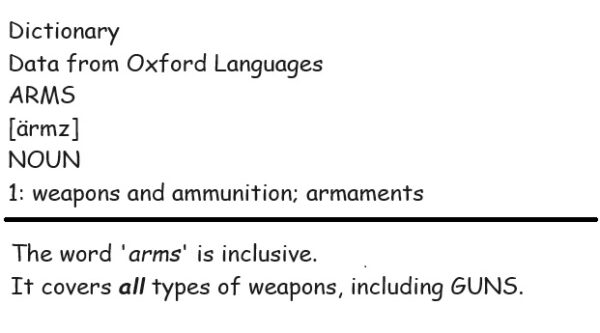
The Heller, McDonald and Bruen decisions made clear the Second Amendment acknowledges– does not grant–an individual right to keep and bear arms, a right that does not end at one’s property line, and encompasses weapons—not just firearms–in common use for lawful purposes such as self-defense. Government may not erect arbitrary barriers to the exercise of the right, but because the Supreme Court hasn’t absolutely delineated what weapons in “common use” might be, blue states like Illinois remain determined to disarm Americans, the better to crush them when it’s time for the glorious revolution.

Graphic: X Screenshot
Among the most common contemporary targets of anti-liberty/gun cracktivists are “assault weapons” and “high capacity” magazines. That there is no such thing as an “assault weapon” deters them not. Neither does the fact magazine capacity restrictions produce no public safety benefit, and most contemporary handguns and rifles feature magazines of greater than their commonly imposed 10 round capacity. Cracktivists have hit on the most common and popular sporting rifle, the AR-15 family, which since the Vietnam War has featured a standard 30 round magazine, as a particular object of hate. Upholding the narrative, Illinois banned “assault weapons” and high-capacity magazines.
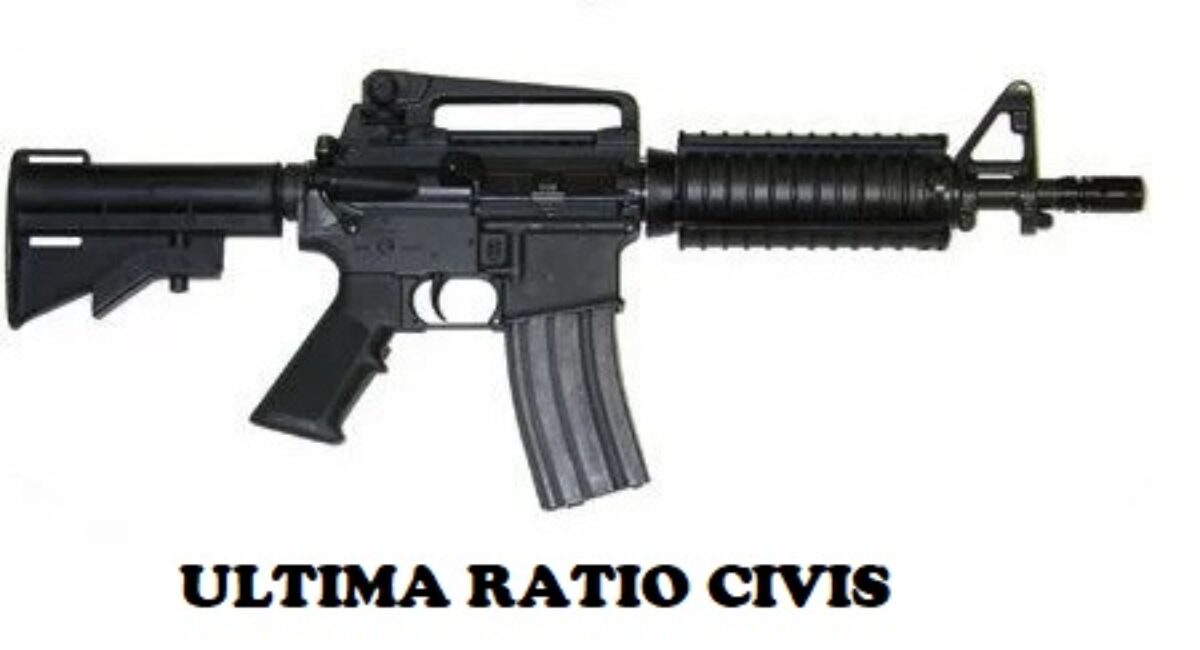
An ”assault weapon” is best understood as any scary looking gun cracktivists want to ban. True assault rifles are fully automatic military arms. AR-15s outwardly resemble the military M4 but are like all other semiautomatic arms: they fire one round for each function of the trigger.
Don’t anti-liberty/gun crackvisits know this? Of course they do, but they also know they have unlimited taxpayer funds for lawsuits which normally take years to wend their way to the Supreme Court and in the meantime, they get to deprive Americans of their rights and even jail and ruin some of their political enemies.
Fortunately, U.S. District Court Judge Stephen McGlynn has sided with the Constitution, and overturned the Illinois ban:
Analysis: How a Federal Judge Reinterpreted the ‘Military Arms’ Argument to Protect AR-15s
After a federal appeals court wrote AR-15s and the magazines that typically come with them out of the Second Amendment, a federal judge has written them back in.
Last November, a Seventh Circuit Court of Appeals panel declined to enjoin Illinois’ ban on so-called assault weapons and large capacity magazines after ruling that each was too akin to military hardware to be counted as “arms” protected by the Second Amendment. Yet just last week, a US District Court judge under the Seventh Circuit’s jurisdiction struck down the exact same ban as unconstitutional.
In fact, he did so by relying on the circuit’s own words.
When the Seventh Circuit panel upheld Illinois’ ban, it set a new standard to determine whether a proposed gun law implicates the plain text of the Second Amendment–a key component of the Supreme Court’s Bruen test.
“In order to show a likelihood of success on the merits, the plaintiffs in each of the cases before us thus have the burden of showing that the weapons addressed in the pertinent legislation are Arms that ordinary people would keep at home for purposes of self-defense, not weapons that are exclusively or predominantly useful in military service, or weapons that are not possessed for lawful purposes,” Judge Diane Wood wrote in Bevis v. Naperville.
Wood drew specific attention to the “military use” prong. Relying on dicta from the Supreme Court’s Heller decision assuring other courts that the ruling did not prohibit regulation of machineguns used by the military (specifically the M16), she posited that civilian AR-15s are nearly indistinguishable from M16s. She concluded, therefore, that they are also “predominantly useful in military service” and may be banned.
Judge Stephen McGlynn came to a different conclusion regarding the “military use” of AR-15s and similar rifles when reviewing the case. While following the analytical structure handed down by the Seventh Circuit, he conducted his own inquiry into what makes a weapon “predominantly useful in military service.” Where the Seventh Circuit panel hand-waved away rate-of-fire differences between AR-15s and military service rifles, McGlynn found cause for highlighting the distinction.
“The commercially available AR-15’s external similarity to the M16 rifle and M4 carbine belies its nature, as its lack of burst or fully automatic fire fundamentally renders it a different weapon,” he wrote.
He also argued that rifles acquired for the military are subject to unique standards of “military specificity and rigorous quality-insurance inspections,” whereas civilian-market AR-15s have no such standards. Ultimately, he concluded, these differences render the AR-15 outside the scope of the Seventh Circuit’s military use standard.
“The Court holds that ‘military use’ refers to weapons that are selected, procured, tested, and issued to military members for use in combat,” McGlynn wrote. “With this in mind, none of the weapons, magazines, or attachments prohibited by PICA can be called ‘military-grade’ since they were not issued to the military for use in combat.”
Furthermore, he noted that the Seventh Circuit previously recognized a “dual use” standard for categories of weapons that have both lawful civilian and military applications in Bevis and its pre-Bruen assault weapons ban rulings.
“Obviously, many weapons are ‘dual use’: private parties have a constitutionally protected right to ‘keep and bear’ them and the military provides them to its forces,” Judge Wood wrote. “In this sense, there is a thumb on the scale in favor of Second Amendment protection. When we refer to ‘military’ weapons here, we mean weapons that may be essentially reserved to the military.”
Though Judge Wood specifically had shotguns and semi-automatic handguns in mind, Judge McGlynn found that AR-15s and similar rifles could just as easily fit the bill.
“Even if arguendo there are no material differences between the M16/M4 and AR-15, so-called ‘dual use’ has clearly been established here,” he wrote. “Clearly, even though handguns are useful and are used in military service, they are clearly protected by the Second Amendment. However, as noted above, AR-15s are distinct from their military counterparts.”
Ultimately, Judge McGlynn’s analysis represents a response to an argument that has become increasingly common among federal appeals courts looking for rationales to uphold state assault weapon bans despite Bruen’s demanding standards. It could serve as a blueprint for gun-rights advocates as they continue challenging similar bans in courts that are primed to rule against their position.
At the same time, it may not be an argument that is necessary for very long. The Supreme Court has an opportunity to take up an assault weapon ban case very soon, one that many gun-rights advocates believe is their best opportunity yet to have the justices weigh in. Should they do so, Justice Clarence Thomas, a member of the likely majority in any hardware ban case, has already tipped his cap regarding his views on the Seventh Circuit’s “military use” analysis.
In a statement accompanying the High Court’s denial of cert after the Seventh Circuit upheld Illinois’ ban, Thomas accused the panel of “contorting” the justices’ past Second Amendment guidance to reach a “nonsensical” conclusion that the Second Amendment does not protect “militaristic” weapons like the AR-15.
“The Seventh Circuit’s contrived ‘non-militaristic’ limitation on the Arms protected by the Second Amendment seems unmoored from both text and history,” he wrote. “It is difficult to see how the Seventh Circuit could have concluded that the most widely owned semiautomatic rifles are not ‘Arms’ protected by the Second Amendment.”
It may not matter much to gun-rights advocates in the end whether they’ve found an analytical avenue through the Seventh Circuit’s novel reading of the Bruen test for hardware bans. However, the Court has not been eager to take up an “assault weapons” ban case to this point. So, these lower court battles may continue to take on an outsized importance.
Court Vaporizes 50 Years of Environmental Law Leaving Trump’s EPA to Build on the Ashes
The decision was written by Karen LeCraft Henderson (George H. W. Bush) and A. Raymond Randolph (George H. W. Bush) with Chief Judge Sri Srinivasan (Joe Biden) dissenting, and it found:
As the parties argue the case, it centers on whether the Agencies complied with regulations of the Council on Environmental Quality, an entity within the Executive Office of the President. We will not address these arguments. The CEQ regulations, which purport to govern how all federal agencies must comply with the National Environmental Policy Act, are ultra vires.
Ultra vires means the CEQ was acting “beyond the legal scope of it authority.”
The court goes on to detail the shenanigans by which an advisory body with no regulatory authority was able to write environmental regulations for the entire United States for nearly a half-century just because it decided it could.
Making the case even more awesome is that it was set off by enviro-wackos suing the FAA for allowing sightseeing flights near some national parks. The enviros claimed the FAA used the wrong standard established by the CEQ to permit the flight. They ended up being right in a backhanded kind of way.
This decision throws the entire environmental regulation scheme governing the federal government into chaos. I suspect that many of the CEQs regulations will be reissued by other agencies, but after Loper Bright Enterprises v. Raimondo (see The Supreme Court Firebombs the Administrative State and Tells Congress to Get Off Its Butt and Work) that slew the medusa called “Chevron deference,” the survival of those replacement regulations is not assured.
The silver lining is that Trump’s EPA, under Lee Zeldin (see We Have Another Trump Cabinet Pick: Lee Zeldin Gets the Nod), will get the first crack at reworking useless and expensive regulations.
Complete Decision
Marin Audobon Society vs. FAA by streiff on Scribd
Seventh Circuit Hears Oral Arguments in ‘Assault Weapon’ Ban Challenge
No, not the challenge to the gun and magazine ban that U.S. District Court Judge Stephen McGlynn found unconstitutional last Friday. The almost half-dozen lawsuits taking on the Protect Illinois Communities Act will be heard by the Seventh Circuit as well, but not for several months. Instead, today’s oral argument is in a case called Viramontes v. Cook County, which is seeking to undo the “assault weapons” ban first put in place by Cook County lawmakers in the early 1990s.
The ordinance, which was revised in 2006 and again in 2013, makes it “unlawful for any person to manufacture, sell, offer or display for sale, give, lend, transfer ownership of, acquire, carry or possess any assault weapon or large capacity magazine in Cook County.” Earlier this year U.S. District Judge Rebecca Pallmeyer, a Clinton appointee, ruled in favor of Cook County and dismissed the claims brought by the plaintiffs.
Pallmeyer’s decision was based almost entirely on the Seventh Circuit’s denial of an injunction in yet another challenge to a semi-auto ban in Illinois. In Bevis v. Naperville, the appellate court ruled that both local and statewide bans on so-called assault weapons and large-capacity magazines are likely to withstand constitutional scrutiny because the arms in question are “more like military weapons than those useful for self-defense.”
That decision was authored by Judge Frank Easterbrook; a Reagan appointee with a long history of upholding Illinois gun laws. In 2009, Easterbrook ruled that Chicago’s ban on handguns didn’t violate the Second Amendment because the Second Amendment’s protections didn’t extend to state and local laws. In 2015 Easterbrook ruled in favor of Highland Park, Illinois and its ban on “assault weapons”, arguing that even if arms that were in common use were prohibited, gun owners had other options available to them if they wanted a firearm for self-defense.
But Easterbrook is not a part of the three-judge panel that’s considering the constitutionality of Cook County’s gun and magazine ban today. Instead, Judge Diane Sykes (who’s authored a good ruling for gun owners), Judge Michael Brennan, and Judge Amy St. Eve will determine whether the county’s prohibition on modern sporting rifles and ammunition magazines that can hold more than ten rounds violate the Second Amendment.
NSSF Celebrates Major Legal Victory as District Court Strikes Down Illinois’ MSR Ban
WASHINGTON, D.C.— NSSF®, The Firearm Industry Trade Association, celebrated today the decision by U.S. District Court Judge Stephen P. McGlynn of the U.S. District Court for the Southern District of Illinois striking down as unconstitutional the Illinois law that bans most semiautomatic firearms including Modern Sporting Rifles (MSRs), certain models of semiautomatic handguns and standard capacity magazines. The decision is a significant victory for the millions of law-abiding gun owners and the firearm industry in Illinois.
Illinois Gov. J.B. Pritzker signed into law HB 5471, the “Protect Illinois Communities Act (PICA),” in January 2023. HB 5741 is among the nation’s most expansive gun control laws and banned the sale of hundreds of models of rifles including commonly-owned MSRs, certain semiautomatic handguns and rifle magazines with a capacity greater than 10 cartridges and pistol magazines with a capacity greater than 15 cartridges.
NSSF, along with several co-plaintiffs, filed a legal challenge seeking to strike down this unconstitutional law and prevailed. Notably, in his decision Judge McGlynn wrote, “PICA is an unconstitutional affront to the Second Amendment and must be enjoined. The Government may not deprive law-abiding citizens of their guaranteed right to self-defense as a means of offense.” More specifically, the court held that MSRs and standard capacity magazines are in common use and have legitimate self-defense purposes.
“This decision handed down by Judge McGlynn is welcomed and what we in the firearm industry have known all along: commonly-owned firearms and standard capacity magazines are protected by law-abiding Americans under the Second Amendment,” stated Lawrence G. Keane, NSSF Senior Vice President and General Counsel. “The U.S. Supreme Court has already recognized that semiautomatic rifles ‘traditionally have been widely accepted as lawful,’ and with over 28 million of these rifles in circulation today, they are clearly commonly-owned for lawful purposes, meeting the threshold set by the Supreme Court in its Heller decision.
Semiautomatic handguns are overwhelmingly the choice of firearm for personal self-defense. This law was clearly unconstitutional and did nothing to punish criminals who choose to break the law. It only deprives law-abiding Americans from being able to exercise their full spectrum of Second Amendment rights.”
While the court struck down the law, it did stay its permanent injunction for 30 days to give the State the opportunity to appeal and seek an emergency stay from the Seventh Circuit, which means that the law temporarily stays in effect.
NSSF will continue to monitor.