FED. COURT DENIES REHEARING IN CASE AGAINST MINN. YOUNG ADULT CARRY BAN

BELLEVUE, WA – The Eighth U.S. Circuit Court of Appeals has denied a petition for a rehearing in a Second Amendment Foundation (SAF) case which found Minnesota’s ban on carry permits for young adults ages 18-20 is unconstitutional.

The case is known as Worth v. Harrington, and it was filed in June 2021. Joining SAF in this case are the Minnesota Gun Owners Caucus, Firearms Policy Coalition and three private citizens, Austin Dye, Axel
Anderson and Kristin Worth, for whom the case is known. They are represented by attorneys Blair W. Nelson of Bemidji, Minn., and David H. Thompson, Peter A. Patterson and William V. Bergstrom at Cooper & Kirk in Washington, D.C.

In its order, the Eighth Circuit also denied a request for an en banc panel hearing. U.S. District Court Judge Katherine Menendez, a 2021 Joe Biden appointee, ruled in March 2023 that Minnesota’s permitting age restriction is unconstitutional. The case was appealed to the Eighth Circuit, which upheld Judge Menendez decision.

“Clearly, Judge Menendez made the right call in the first place,” said SAF Executive Director Adam Kraut. “As we contended all along, the right of the people mentioned in the Second Amendment was not limited to those over a certain age. Certainly young adults fall within the definition of ‘the people’ ever since they’ve been allowed to vote, and generations before that when they were considered part of the militia, and have been accepted into the military.”

“We expected to prevail at trial and again at the appeals court level,” said SAF founder and Executive Vice President Alan M. Gottlieb. “We are gratified by the Eight Circuit’s decision, and now we will see whether Minnesota submits a petition for certiorari to the Supreme Court. For the time being, we have notched another victory in our ongoing effort to win firearms freedom one lawsuit at a time.”

SAF PETITIONS SUPREME COURT FOR CERTIORARI IN MARYLAND RIFLE BAN

BELLEVUE, WA – The Second Amendment Foundation (SAF) has filed a petition for certiorari to the U.S. Supreme Court in its continuing challenge of a ban on modern semiautomatic rifles in the state of Maryland, arguing that high court review is necessary to ensure the Second Amendment is “not truncated into a limited right.”

SAF is joined by the Citizens Committee for the Right to Keep and Bear Arms and the Firearms Policy
Coalition, and a private citizen, David Snope. They are represented by attorneys David H. Thompson, Peter A. Patterson, Nicole J. Moss and John D. Ohlendorf at Cooper & Kirk in Washington, D.C.; Raymond M. DiGuiseppe at DiGuiseppe Law Firm in Southport, N.C. The case is known as Bianchi v. Frosh.

The petition was filed after the Fourth U.S. Circuit Court of Appeals ruled that modern semiautomatic
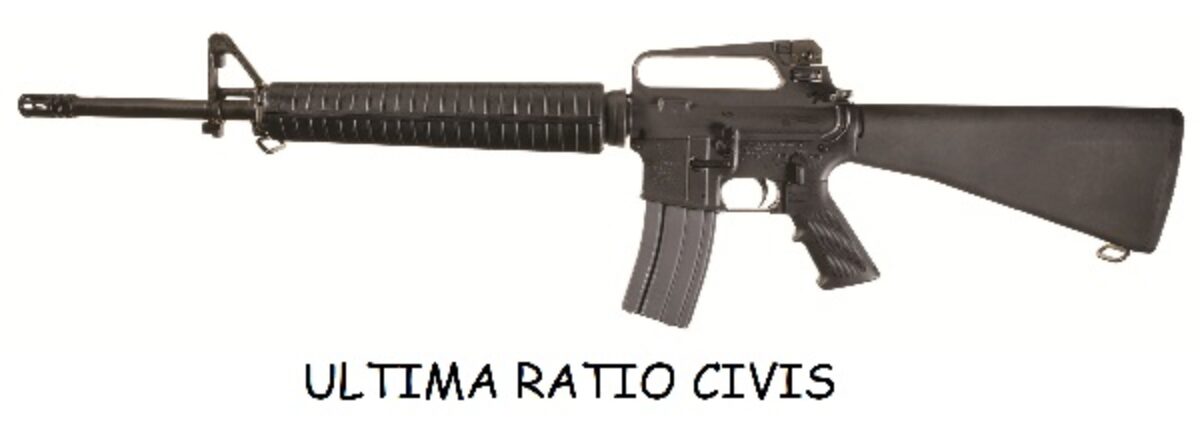
rifles — commonly misidentified as “assault weapons” — are not protected by the Second Amendment because they are “too similar” to a fully-automatic military rifle known as the M16. SAF and its partners contend this reasoning “is becoming a commonplace misapplication” of Supreme Court precedents established by the 2008 Heller ruling, 2010 McDonald decision and 2022 Bruen ruling.

“The Fourth Circuit, as well as other federal courts, are attempting to flip the Supreme Court’s Heller ruling on its head,” said SAF founder and Executive Vice President Alan M. Gottlieb. “They are essentially arguing the arms protected by the Second Amendment are limited only to certain state-approved firearms, which would make it no right at all, but a government-regulated privilege. This is the third time we have petitioned the high court in this case.”

“Certiorari is required in this case,” said SAF Executive Director Adam Kraut, “to correct an increasingly
widespread misunderstanding of the Supreme Court precedent, and the Second Amendment, itself. The specific type of firearm in question is commonly owned across the country, placing it well within the scope of the Second Amendment.”

ATF Requested Stay Denied in Force Reset Trigger Case

Federal District Court Judge Reed O’Connor for the Northern District of Texas denied the Bureau of Alcohol, Tobacco, Firearms and Explosives (ATF) request for a stay on his ruling that blocked the ATF from taking enforcement actions over force reset triggers (FRT).

Earlier, Judge Reed O’Connor ruled that the ATF exceeded its authority when it determined that FRTs were machine guns in the National Association for Gun Rights v. Garland. FRTs use the bolt carrier group (BCG) of an AR-15-style firearm to reset the trigger of the gun. This reset allows the shooter to increase the rate of fire of a firearm. The ATF claimed that since the rate of fire approaches that of a machine gun, it made the device a machine gun conversion device. Under federal law, any device that converts a semi-automatic firearm to a machine gun is itself a machine gun.

Machine guns are defined under the National Firearms Act of 1934 (NFA). The actual law doesn’t reference a fire rate when determining a machine gun. According to the law, a machine gun fires multiple rounds with a single function of the trigger. An FRT doesn’t work that way. A firearm equipped with an FRT expels one round per trigger function. The ATF made the same argument about bump stocks in the Cargill case, but the Supreme Court ruled against the government and stated that bump stocks were not machine guns.

The statute reads: “For the purposes of the National Firearms Act the term Machinegun means: Any weapon which shoots, is designed to shoot, or can be readily restored to shoot, automatically more than one shot without manual reloading, by a single function of the trigger.”

The plaintiffs claim that since an FRT requires that the user pull the trigger between each round, it could not be considered a machine gun. In the past, the ATF tried to use Chevron deference to change the meaning of a law, but because of the recent Supreme Court opinion in the Loper Bright Enterprises case, Chevron deference is dead. Chevron deference says when a law is unclear or ambiguous, the agency of authority has the final say as to the law’s meaning. This decision stripped the ATF of using Chevron deference in this case, even though it probably would not have been successful.

The ATF tried to use Chevron deference in the Cargill case, but SCOTUS rejected that tactic, stating that the definition of a machine gun is not unclear or ambiguous. Chances are high that the court would come to the same conclusion in this case. The ATF claimed that not issuing a stay would cause irreparable harm to public safety. The judge rejected the argument, saying that the only people charged with having an FRT were also charged with other crimes, so possessing an FRT was only an “add-on” crime. He also stated he did not believe that the defense was likely to succeed on the merits of the case.

The judge extended the time frame the ATF has to return the approximately 11,884 Rare Breed Triggers FRT-15s and Wide Open Triggers (WOT) it had confiscated from owners. Initially, Judge O’Connor gave the ATF 30 days to return all the triggers it confiscated from gun owners. The ATF went door to door to seize the triggers from owners but stated it could not return them in 30 days. The judge increased the time of the deadline by five months. The ATF now has six months to return all the triggers to their owners.

“For the foregoing reasons, the Court DENIES Defendants’ Motion to Stay Judgment Pending Appeal (ECF No. 104),” the order reads. “The Court grants Defendants an additional SIX (6) MONTHS to comply with the affirmative obligation, which SHALL be completed by February 22, 2025. This extension does NOT apply to the Individual Plaintiffs or members of the Organizational Plaintiffs who specifically request the return of their FRT devices and provide sufficient documentation to the ATF. ATF shall return those as soon as is practicable following the specific request.”

The ATF is appealing the judge’s decision to the Fifth Circuit Court of Appeals, although since this is the same court that ruled against the ATF in Cargill, it seems like a long shot that they will side with the ATF. The arguments in both cases are almost identical.

NRA, SAF File Brief In Case Concerning Carry Across State Lines

Massachusetts restrictive gun laws continue to come under well-deserved fire because of their failure to respect the Second Amendment.

We reported over the past week how gun owners have started an initiative petition to put a repeal of the new sweeping gun law on the statewide ballot and about the National Shooting Sports Foundation (NSSF) donating $100,000 to the Gun Owners’ Action League (GOAL) to help fund that group’s lawsuit challenging the constitutionality of the law. Now two gun-rights groups have filed an amicus brief in another Massachusetts case challenging the state’s permit law that restricts lawful gun owners from carrying a firearm in the state.

The case involves New Hampshire resident Dean F. Donnell, Jr., who was stopped by police in Massachusetts and charged for carrying a firearm without a license. In the case named Commonwealth of Massachusetts v. Donnell, the National Rifle Association (NRA) and Second Amendment Foundation (SAF) filed their 38-page brief explaining their interest as that of their members’ ability to travel with firearms legally across state lines, to use them for lawful purposes.

“There is no historical tradition that justifies the non-resident licensing scheme now in place in the Commonwealth of Massachusetts,” said SAF founder and Executive Vice President Alan M. Gottlieb. “Looking back, a government license has not been required to exercise the right to carry arms. Such licenses came into existence only in the late 19th Century, and they applied only to the concealed carry of firearms. Open carry was unrestricted.”

In the brief, NRA and SAF argue that the law doesn’t meet the second Bruen standard of proving a historic precedent exists for such a restriction.

“When the Second Amendment’s plain text covers an individual’s conduct, the government must justify its regulation by demonstrating that it is consistent with the nation’s historical tradition of firearm regulation,” the brief states. “Because the Supreme Court has already held that the Second Amendment’s plain text protects carrying handguns publicly for self-defense, the Commonwealth bears the burden of justifying its regulation with historical tradition. It has not and cannot do so.”

The brief further argues that no historical tradition exists that justifies the Commonwealth’s nonresident licensing scheme.

“Historically, nonresidents traveling in a state were treated no worse than residents with regard to firearm carry,” the brief states. “If they were treated differently under the law, it was generally to exempt travelers from carry restrictions—not to subject them to more onerous burdens than residents. Moreover, a government license was not historically required to exercise the right to carry arms; carry licenses that applied to free citizens were not enacted until the late-19th-century and applied only to concealed carry, leaving open carry unrestricted.”

Adam Kraut, SAF executive director and one of the attorneys in the case, said the act of just getting  permit puts a huge burden on non-resident gun owners.

“New nonresident license applications require an in-person appointment in Massachusetts, necessitating an extra (unarmed) trip to the Commonwealth—which, especially for residents of distant states, becomes a barrier to entry that may be financially untenable,” Kraut said.

The NRA and SAF conclude in the brief that since the law violates the Second Amendment, the district court’s order of dismissal should be confirmed.

BLUF:
While it is true that the Court has shown a willingness to take an increased number of gun-related cases in short succession of late, it is also noticeably taking fewer cases overall each term. As more criminal justice system controversies arise, the justices may have little room on their plates for additional Second Amendment work.

It’s not obvious which factors will weigh heavier on the minds of the Justices. It almost never is when it comes to reading the tea leaves on potential Supreme Court cert grants. What is for certain is that gun-rights advocates currently have their best vehicle to date for getting the Court to weigh in on an assault weapon ban. That is by no means guaranteed to be enough, though.

Analysis: Will This Be the Year SCOTUS Takes an ‘Assault Weapons’ Ban Case?

In a recent ruling upholding Maryland’s ban on so-called assault weapons, a federal appeals court gave gun-rights advocates their best opportunity yet to entice the Supreme Court to strike down those bans nationwide. Whether the Justices are prepared to oblige them is another matter entirely.

In a divided opinion last week, the en banc Fourth Circuit Court of Appeals delivered its long-awaited judgment of Maryland’s ban on AR-15s and other semi-automatic weapons. By a ten-to-five margin, the court’s majority upheld the ban.

“The assault weapons at issue fall outside the ambit of protection offered by the Second Amendment because, in essence, they are military-style weapons designed for sustained combat operations that are ill-suited and disproportionate to the need for self-defense,” Judge Harvie Wilkinson wrote in Bianchi v. Brown.

Rather than greet the preservation of one of the movement’s longest-standing targets with dejection, some gun-rights advocates celebrated the outcome. Pro-gun attorney and legal commentator Mark Smith called the ruling “100% expected” and “excellent news for [the Second Amendment]” in a social media post.

“It should be a clear glide path to SCOTUS for them to hear an ‘assault weapon’ ban case next term (2024-25),” he reasoned.

Indeed, such optimism is not entirely unwarranted. Continue reading “”

2 Contradictory Decisions on AR15 Rifle Bans Reflect Clashing Views of Supreme Court Precedents

Last month, a federal judge ruled that New Jersey’s ban on AR-15 rifles is unconstitutional. A week later, a federal appeals court deemed a similar ban in Maryland perfectly consistent with the Second Amendment.

These dueling decisions reflect a basic disagreement about whether the Second Amendment allows the government to ban guns that are commonly used for lawful purposes, as opposed to “dangerous and unusual weapons.” The answer seems clear based on the Supreme Court’s precedents.

The court’s landmark 2008 decision in District of Columbia v. Heller, which overturned a local handgun ban, noted “the historical tradition of prohibiting the carrying of ‘dangerous and unusual weapons,’” which it said did not encompass firearms “in common use” for “lawful purposes like self-defense.” Since handguns are “the quintessential self-defense weapon,” it said, the fact that they are also commonly used by criminals could not justify prohibiting law-abiding Americans from owning them.

The court’s 2022 decision in New York State Rifle & Pistol Association v. Bruen reiterated that point. “Whatever the likelihood that handguns were considered ‘dangerous and unusual’ during the colonial period, they are indisputably in ‘common use’ for self-defense today,” it said. Colonial laws that “prohibited the carrying of handguns,” the court concluded, “provide no justification for laws restricting the public carry of weapons that are unquestionably in common use today.”

AR-15s likewise are “unquestionably in common use today.”

Since 1990, more than 28 million “modern sporting rifles” have been sold in the United States, and as many as 24 million Americans have owned AR-15s or similar rifles for lawful purposes such as self-defense, hunting and recreational target shooting.

Like the law at issue in Heller, U.S. District Judge Peter Sheridan noted last month, New Jersey’s AR-15 ban amounts to “the total prohibition (of) a commonly used firearm for self-defense … within the home.” And under Heller, “a categorical ban on a class of weapons commonly used for self-defense is unlawful.”

Sheridan highlighted testimony showing that “AR-15s are well-adapted for self-defense.” When it upheld Maryland’s AR-15 ban last week, by contrast, the U.S. Court of Appeals for the 4th Circuit declared that such rifles are “ill-suited and disproportionate to the need for self-defense.”

Where Richardson sees self-defense advantages, the majority sees features that make AR-15s especially deadly in mass shootings.

These clashing perspectives illustrate the folly of trying to draw a legal distinction between guns that are suitable for legitimate purposes and guns that supposedly are good for nothing but killing innocent people. [spoiler alert: there are only guns; no guns are “more legitimate or “more lethal”]

Continue reading “”

Second Circuit Rules Legal Gun Ownership Not Probable Cause for Warrantless Search

The Second Circuit Court of Appeals hasn’t traditionally been a welcoming place for gun owners. This is the same appellate court that originally upheld New York’s “may issue” carry regime before the Supreme Court overturned their decision in Bruen, and since then the court has upheld many of New York’s post-Bruen restrictions on lawful gun owners.

Today, however, a three-judge panel on the court got it absolutely right when it ruled that a Connecticut police officer isn’t entitled to qualified immunity after handcuffing, detaining, and conducting a warrantless search on a resident after he produced a valid handgun permit.

Defendant-Appellant Nicholas Andrzejewski, an officer of the Waterbury,Connecticut police department, appeals from the judgment of the United States District Court for the District of Connecticut (Arterton, J.) denying in part his motion for summary judgment on the grounds that his purported conduct was not shielded by qualified immunity.

That conduct, as alleged by Plaintiff-Appellee Basel Soukaneh, is that in the course of a routine traffic stop, Andrzejewski unlawfully and violently handcuffed and detained Soukaneh in the back of a police vehicle for over half an hour and conducted a warrantless search of Soukaneh’s vehicle after Soukaneh presented a facially valid firearms permit and disclosed that he possessed a firearm pursuant to the permit.

On appeal, Andrzejewski argues we should reverse the district court’s denial of qualified immunity because the presence of the lawfully owned firearm in the vehicle gave him the requisite probable cause to detain Soukaneh, search the interior of his car, and search his trunk.

Andrzejewski’s argument is essentially that, by exercising our Second Amendment rights, we give up our Fourth Amendment right to be secure against unreasonable searches and seizures. In fact, he basically maintained that possessing a valid pistol permit gave him reasonable suspicion to search Soukaneh’s vehicle for some evidence of wrongdoing.

After the district court ruled that the officer wasn’t entitled to qualified immunity for his actions, Andrzejewski introduced a new argument in his appeal to the Second Circuit; it wasn’t solely Soukaneh’s gun permit that led him to handcuff the gun owner and search his car, it was the fact that Soukaneh had stopped his vehicle in a “high crime area known for drug transactions”.

As the panel noted, however, “a location’s reputation as a high crime area alone is typically not enough to suggest reasonable suspicion [of a crime], let alone probable cause.” And the court found that Andrzejewski offered no evidence whatsoever that Soukaneh was illegally possessing a gun when he was confronted by the officer. To the contrary, as a matter of fact. Andrzejewski was able to conclusively determine that Soukaneh had a valid pistol permit and lawfully possessed the firearm that he informed the officer he was carrying.

The desire to confirm the legitimacy of the facially valid firearms permit that Soukaneh presented did not—with nothing more—provide Andrzejewski with probable cause for the half-hour or longer handcuffed detention that occurred.

It is uncontested that Soukaneh presented Andrzejewski with a gun license, the legitimacy of which Andrzejewski himself admits he had no reason to question. Moreover, Andrzejewski concedes that he was informed of the facially valid license before Soukaneh told him that he had a gun and specified its location.

Andrzejewski does not allege that the permit appeared abnormal in any fashion or that Soukaneh engaged in any suspicious or threatening behavior. On the facts before us, Andrzejewski does not provide an articulable reason why he, or any other reasonable officer, could conclude that there was probable cause to believe that Soukaneh possessed his firearm unlawfully in violation of Section 29-38(a).

 To find otherwise would consign those validly carrying firearms pursuant to a license to automatic detention because it would effectively presume that gun permits are invalid until proven valid, or that lawfully owned guns are per se contraband until proven otherwise. Such a finding would effectively render armed individuals’ Fourth Amendment rights meaningless when they are lawfully carrying firearms.

As common sense as that position is, it’s still somewhat surprising to see the Second Circuit panel unanimously reach that conclusion… especially since the panel was comprised of two Biden appointees and one judge appointed by Barack Obama.

Andrzejewski could still appeal to an en banc panel of the Second Circuit or take his case directly to the Supreme Court, but I doubt he’s going to find a more receptive audience for his arguments at SCOTUS. The Supreme Court has already declared that the Second Amendment isn’t a second-class right, so I doubt a majority would go along with the officer’s contention that exercising your right to keep and bear arms negates your Fourth Amendment rights altogether.

U.S. Government Appeals Pistol Brace Decision to 5th Circuit

After nearly three months of silence, the U.S. Government has now appealed the June 13, 2024, pistol brace decision to the U.S Court of Appeals for the Fifth Circuit.

The appeal was announced on August 12, 2024. The case is Mock v. Garland, and it was brought by the Firearms Policy Coalition.

The ATF pistol brace rule targets stabilizer braces attached to AR pistols, claiming the braces turn AR pistols into short barrel rifles (SBRs). And since SBRs are regulated under the National Firearms Act (1934), the ATF issued its rule on AR-pistol braces to stop what it saw as a way around SBR regulations.

Breitbart News reported that U.S. District Judge Matthew J. Kacsmaryk issued a preliminary injunction against the AR pistol brace rule on November 8, 2023.

Kacsmaryk observed that the “court is not insensitive to the ATF’s concerns over gun industry gamesmanship and attempts to circumvent the rules on SBRs.” But he followed that acknowledgement by quoting Bruen (2022), noting that the government may not justify the passage and/or existence of a regulation by “simply [positing] that the regulation promotes an important interest.”

In a decision dated June 13, 2024, U.S. District Judge Reed O’Connor vacated the ATF’s AR pistol brace rule, saying it violated the Administrative Procedure Act (APA).

The U.S. Government has now appealed the pistol brace decision to the Fifth Circuit.

Breitbart News pointed out the Fifth Circuit decided against another ATF rule–a ban on bump stocks–on January 6, 2023. The court did so in light of the ATF’s arbitrary recategorization of bump stocks as “machine guns.”

Maryland, AR-15s and the Fourth Circuit

Should you be so unfortunate as to live in Maryland, and more unfortunate as to own an AR-15, you’re a criminal, as the Fourth Circuit Court recently affirmed. This despite the Supreme Court’s Heller, McDonald and Bruen decisions having made clear the Second Amendment acknowledges the individual right to self-defense in one’s home and elsewhere, and common and usual weapons are presumptively constitutional. Unfortunately none of those decisions specifically mention the AR-15, the most popular—common and usual–rifle of its type in America. This opened the gun ban door a crack, which the 4th Circuit majority used to push the door wide open:

We have described the AR-15’s capacities in abundant detail to demonstrate just how far outside the animating purposes of the Second Amendment this weapon lies. While we know that the AR-15 thrives in combat, mass murder, and overpowering police, appellants have failed to demonstrate that the weapon is suitable for self-defense. This is likely because such a showing would be difficult to make. Indeed, many of the weapon’s combat-functional features make it ill-suited for the vast majority of self-defense situations in which civilians find themselves.

It would be hard to imagine a more deceptive and less informed recitation of legal mush. The majority decision goes on to claim the “heightened firepower” of the AR-15 is a terrible risk of overpenetration, and the 30-round magazine, standard since the Vietnam era, is also useful for mass murder, because self-defense shootings commonly only involve a few shots. The majority would also have us believe the AR-15 is particularly useless for home defense. They conclude their specious arguments with this:

In sum, the AR-15—with its military origination, combat-functional features, and extraordinary lethality—has “the same basic characteristics, functionality, capabilities, and potential for injury as the M-16.” And its all too frequent use in terrorism, mass killing, and police murder shows that the AR-15 offers firepower ill-suited and disproportionate to fulfilling the Second Amendment’s purpose of armed self-defense. Therefore, just like the M16, the AR-15 is “most useful in military service” and “may be banned” consistent with the Second Amendment.

Where to begin? The AR-15 has been on the civilian market since the 1960s, and while Armalite—“Armalite Rifle,” not “Assault Rifle” certainly wanted military contracts, only the Air Force initially adopted the rifle for base defense. The Army eventually adopted it, and after decades of development, the select-fire M4, not available to civilians, is the current issued rifle.

Both the M4 and AR-15, the M4’s semiautomatic only, look-alike cousin, fire the .223/5.56 NATO cartridge, which is of only intermediate power, and has long been known as an unreliable penetrator and man stopper. The Military is currently developing a higher-powered cartridge, and rifle.

Is the AR-15 a “common and usual” arm?  Best estimates place more than 23 million in citizen’s hands. However, Americans have purchased more than a million guns a month for 60 straight months, so that figure is surely low.

“Firepower” is a military concept inappropriately applied to individual arms. The majority’s argument is emotion-laden and obviously taken directly from the writings of anti-liberty/gun cracktivists, while the dissent is well-reasoned, relying on the law, the Founder’s intent and accurate history.

Obviously, the AR-15 is not “most useful in military service,” which is why the automatic-fire capable M4 is the issue military rifle. Gun banners hope to be able to ban any class of firearms, in this case, a semiautomatic rifle of intermediate power. That precedent, if upheld, would allow the banning of all semiautomatic firearms, which, like the AR-15, are useful for self-defense.

They also hope to ban “large capacity” magazines for the same reasons by using the same tactics. While it’s true most armed encounters involve relatively few rounds fired, attacks by multiple armed thugs are becoming more common, in and out of the home. In such encounters, a 30-round magazine can be the difference between life and death.

Certainly, we carry handguns because it’s difficult to carry long guns of any type as we go about our daily business, but because handguns are more convenient does not make rifles unconstitutional. Anyone knowingly entering an armed encounter with less than a rifle is looking to die. The police are increasingly abandoning shotguns and adopting AR-15s for patrol carry. Are the police now the military? Should citizens be less well armed, less able to defend themselves?

The 4th Circuit has now clearly established a split among the lower courts, which will allow the Supreme Court to grant cert and further define the limitations of the state in banning popular, common and usual guns. In our uncertain times, a decision in line with their Heller, McDonald and Bruen jurisprudence would be welcome, and conducive to the preservation of our representative republic.

Federal Appellate Court Rules in Favor of Takings Lawsuit Against the CDC’s Covid-Era Eviction Moratorium.

The 2-1 decision overrules a trial court decision that went the other way, and could set an important property rights precedent.

On Wednesday, in Darby Development Co. v. United States, the US Court of Appeals for the Federal Circuit (which reviews takings claims against the federal government ruled that a takings lawsuit against the 2020-21 federal eviction moratorium can proceed. In so doing, it overruled a trial court decision by the Court of Claims, which I criticized here. The decision could well end up setting an important takings precedent.

In September 2020, during the Covid pandemic, the Trump Administration Centers for Disease Control (CDC) imposed a nationwide eviction moratorium, claiming that it would reduce the spread of the disease. The Biden Administration extended the moratorium multiple times.

In August 2021, the eviction moratorium was invalidated by the Supreme Court because the CDC lacked proper statutory authority to institute it. But, in the meantime, numerous landlords suffered financial losses, because they could not evict tenants who weren’t paying rent.

Some of the property owners filed a lawsuit arguing that the eviction moratorium violated the Takings Clause of the Fifth Amendment, which requires the government to pay “just compensation” whenever it takes private property. As I explained at the time, their position was backed by the Supreme Court’s 2021 ruling in Cedar Point Nursery v. Hassid, which held that even temporary physical occupations of property qualify as “per se” (automatic) takings requiring compensation.

In May 2022, the US Court of Claims dismissed the takings lawsuit against the CDC moratorium on the perverse ground that there was no taking because the CDC’s eviction moratorium was never properly “authorized.” In other words, the government could escape takings liability because its actions were illegal! The recent Federal Circuit decision reversed that ruling.

Continue reading “”

Second court crushes Biden’s assault on AR-style pistols.

Today [the 9th]  another federal court rejected President Joe Biden’s war on guns, ruling against his effort to require 3 million to 7 million owners of AR-style pistols to register and pay a $200 tax on their firearms or face prison.

In the latest blow to liberal gun control politicians and the Bureau of Alcohol, Tobacco, Firearms and Explosives, the St. Louis-based 8th U.S. Circuit Court of Appeals rejected the government’s plan, claiming it was likely to get tossed by the Supreme Court.

For now, the millions of users of guns equipped with “pistol braces” can keep them without fear of being fined or jailed.

The court said the ATF rule was poorly written and vague and gave the agency too much leeway to go after owners of the popular firearms.

Continue reading “”

Federal Judge Tosses Majority of Mexico’s Lawsuit Against Gun Makers

For the second time, a federal judge in Massachusetts has dismissed the vast majority of Mexico’s lawsuit against multiple U.S. gun makers that accuses the companies of knowingly and willfully facilitating cartel violence south of the border. U.S. District Judge F. Dennis Saylor first threw out Mexico’s complaint in 2022, opining that the Protection of Lawful Commerce in Arms Act precluded Mexico’s lawsuit, but the litigation was reinstated by the First Circuit Court of Appeals a short time later.

Now Saylor has once again dismissed the case against six of the seven gun makers sued by the Mexican government, ruling that the plaintiff has been “unable to muster sufficient proof to establish a sufficient relationship between the claimed injuries and the business transactions of any of the six defendants in Massachusetts.”

The core question for jurisdictional purposes is whether Mexico’s claims against the six moving defendants “arise” from their business transactions in Massachusetts. See Mass. Gen. Laws ch. 223A, § 3(a).

As to those defendants, the connection of this matter to Massachusetts is gossamer-thin at best. The government of Mexico is obviously not a citizen of Massachusetts. None of the six moving defendants is incorporated in Massachusetts, and none has a principal place of business in Massachusetts.

There is no evidence that any of them have a manufacturing facility, or even a sales office, in Massachusetts. None of the alleged injuries occurred in Massachusetts. No Massachusetts citizen is alleged to have suffered any injury. And plaintiff has not identified any specific firearm, or set of firearms, that was sold in Massachusetts and caused injury in Mexico.

Furthermore—and despite the generous use of the word “defendants” throughout—the complaint does not actually allege the existence of a joint enterprise, joint venture, or civil conspiracy among the various defendants. There is no question, therefore, that personal jurisdiction must be proved separately as to each of the six moving defendants.

At its core, plaintiff’s jurisdictional theory is based on statistical probabilities.

Its reasoning may be characterized as follows:
(1) each of the six moving defendants sold firearms to distributors and retailers in each of the 50 states;
(2) each of the six defendants sold some (undetermined) number of firearms to Massachusetts-based distributors or retailers;
(3) some (undetermined) number of the firearms that were sold by each of the six defendants nationwide were illegally trafficked to Mexico;
(4) some (undetermined) number of the firearms that were trafficked to Mexico caused injury there; and therefore
(5) at least some of the firearms sold by each of the six defendants to Massachusetts entities must have caused injuries in Mexico.

Mexico’s legal team, which includes former Brady Campaign attorney Jonathan Lowy (who now heads up an outfit called Global Action on Gun Violence), brought in an economist to try to estimate the number of guns that were originally purchased in Massachusetts but were trafficked to Mexico. The judge, however, wasn’t persuaded by what she found.

To do so, she relied upon two principal datasets: a set that recorded the manufacturer of certain firearms recovered in Mexico between 2010 and 2021, and a “trace and recovery” dataset created by the Bureau of Alcohol, Tobacco and Firearms (“ATF”) concerning firearms recovered in Mexico between 1989 and 2001.

She then used that data to estimate the number of firearms that she believes were likely trafficked into Mexico after a Massachusetts sale over the last ten years. 

As explained below, however, that report is problematic in multiple respects—beginning with the fact that Congress has prohibited the use of the ATF data in any civil action, and thus a critical foundation of her opinion must be disregarded.

Furthermore, her opinion stops short of estimating the number of firearms manufactured by each defendant that actually caused an injury in Mexico—a critical link to connect defendants’ business in Massachusetts to plaintiff’s claims. Under the circumstances, her opinion is not sufficient to prove the necessary jurisdictional nexus.

That’s embarrassing for the gun control activists, or at least it would be if it didn’t give them a new talking point about Congress tying the hands of “gun safety advocates” when it comes to using ATF data. As far as the Mexican government is concerned, however, Saylor’s ruling is a total loss. The only remaining defendants are Smith & Wesson, which was headquartered in Massachusetts during the time period in question, as well as a wholesaler who wasn’t a part of this particular request to dismiss the case.

While Mexico’s lawsuit, which seeks $10 billion in damages from gun makers, isn’t completely dead, Saylor’s ruling is a big step in that direction. The final blow to the litigation could come from the Supreme Court, which is set to consider the gun companies’ appeal of the First Circuit ruling that reinstated the lawsuit in its September 30th conference. As the gun makers argued in their cert petition:

To be clear, Mexico’s complaint does not include any groundbreaking factual revelations, nor does it uncover any secret dealings between the cartels and America’s firearms companies.

Instead, Mexico’s suit challenges how the American firearms industry has openly operated in broad daylight for years. It faults the defendants for producing common firearms like the AR-15; for allowing their products to hold more than ten rounds; for failing to restrict the purchase of firearms by regular citizens; and for refusing to go beyond what American law already requires for the safe production and sale of firearms.

In Mexico’s eyes, continuing these lawful practices amounts to aiding and abetting the cartels. According to Mexico, American firearms companies are liable because they have refused to adopt policies to curtail the supply of firearms smuggled south—such as making only “sporting rifles,” or combining sales to those with a “legitimate need” for a firearm (as defined by Mexico).

This lawsuit is basically an attempt to allow the Mexican government to impose its own preferred gun control policies on the U.S. firearms industry by blaming gun makers for cartel violence.

SCOTUS should grant cert and dismiss the case altogether, but we won’t know if the Court will grant cert for another few months.

SAF Vows to Take Maryland’s Semi-Auto Ban to the Supreme Court

The Second Amendment Foundation (SAF) has announced they will seek Supreme Court review in Bianchi v. Wilkinson, SAF’s challenge to Maryland’s assault weapons ban, after the Fourth Circuit Court of Appeals upheld the law.

“Today’s decision from the 4th Circuit is unsurprising given their prior decision in Kolbe,” said SAF Executive Director Adam Kraut.
“We believe, much like in Kolbe, the court’s analysis is flawed and that the challenged law is unconstitutional. We will be filing a petition for certiorari at the Supreme Court, as this case presents an excellent vehicle for the Court to settle this debate once and for all.”

In the 65-page opinion, judges for the majority wrote: “The assault weapons at issue fall outside the ambit of protection offered by the Second Amendment because, in essence, they are military-style weapons designed for sustained combat operations that are ill-suited and disproportionate to the need for self-defense.”

Chief Judge Diaz drafted a concurring opinion, with five other judges joining. Judge Richardson drafted a dissenting opinion, with four other judges joining stating: “The Second Amendment is not a second-class right subject to the whimsical discretion of federal judges. Its mandate is absolute and, applied here, unequivocal…In holding otherwise, the majority grants states historically unprecedented leeway to trammel the constitutional liberties of their citizens.”

Joining SAF in the case are the Citizens Committee for the Right to Keep and Bear Arms, Field Traders, LLC., the Firearms Policy Coalition, and three private citizens, David Snope, Micah Schaefer and Dominic Bianchi, for whom the case is named. “The court relied heavily on the distinction between ‘military style’ arms and those appropriate for self-defense use,” said SAF founder and Executive Vice President Alan M. Gottlieb. “This distinction runs completely contrary to the mandates of Heller and Bruen, and now sets the stage for another petition for SCOTUS review of the case.”

Federal Appeals Court Again Upholds Maryland AR-15 Ban

The Fourth Circuit Court of Appeals has once again found Maryland’s so-called assault weapons ban is constitutional.

In a ten-to-five ruling on Tuesday, a full panel of the appeals court determined the Old Line state’s ban on AR-15s and similar firearms does not violate the Second Amendment. It found the banned guns fall outside the protections guaranteed by the Constitution. Using similar reasoning to the last time the panel ruled on the same law in 2021, the majority decided semi-automatic assault weapons are too similar to military weapons to fall under the Second Amendment.

“The assault weapons at issue fall outside the ambit of protection offered by the Second Amendment because, in essence, they are military-style weapons designed for sustained combat operations that are ill-suited and disproportionate to the need for self-defense,” Judge Harvie Wilkinson wrote for the majority in Bianchi v. Brown. “Moreover, the Maryland law fits comfortably within our nation’s tradition of firearms regulation.”

A lot has changed in Second Amendment jurisprudence since the appeals court ruled on the ban in 2021. The most significant was the Supreme Court’s 2022 decision in New York State Rifle and Pistol Association v. Bruen, which established a new test for Second Amendment cases. The Court then vacated the Fourth Circuit’s ruling in Bianchi and sent it back down for reconsideration in light of the new test. The Fourth Circuit delivering the same result once again could provide reason for The Court to take up the case, especially since it has now reached a final conclusion on the merits.

The Supreme Court has been reluctant to take up Second Amendment cases in recent months and declined to grant certiorari in all of its pending gun cases last month. That included denying a request to take up a collection of cases challenging the Illinois assault weapons ban. However, Justice Clarence Thomas suggested that reluctance was based on the fact those cases were at the preliminary injunction stage rather than final judgment.

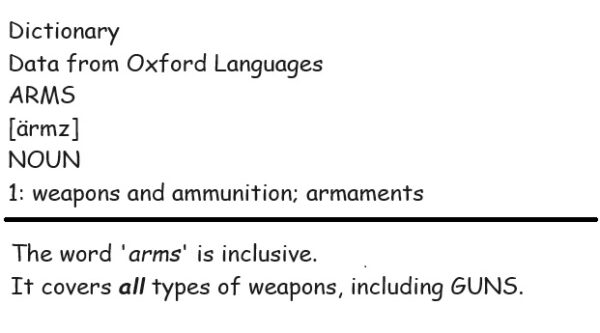
“This Court is rightly wary of taking cases in an interlocutory posture,” Justice Thomas wrote. “But, I hope we will consider the important issues presented by these petitions after the cases reach final judgment. We have never squarely addressed what types of weapons are ‘Arms’ protected by the Second Amendment.”

The Fourth Circuit did address what types of arms are protected or, at least, which ones aren’t. The majority looked primarily at the Supreme Court’s holding in 2008’s DC v. Heller decision, which recognized an individual right to keep and bear arms while striking down the city’s handgun ban, as well as dicta in the case.

“As recognized in Heller, ‘the Second Amendment right … extends only to certain types of weapons’; it is ‘not a right to keep and carry any weapon whatsoever in any manner whatsoever and for whatever purpose,’” Judge Wilkinson, a Ronald Reagan appointee, wrote for the majority. “Arms typically used by average citizens for self-defense are generally within the ambit of the Second Amendment, presumably because these arms had proven over time to effectively amplify an individual’s power to protect himself without empowering him to singlehandedly reign terror upon a community.”

Judge Wilkinson pointed to Heller‘s description of short-barrel shotguns and “M-16 rifles and the like” as weapons the government can ban. He said there was a common thread that connected those firearms, which also extends to semi-automatic AR-15s and the other guns Maryland bans.

“What brings all the weapons beyond the scope of the Second Amendment together, and what separates them from the handgun, is their ability to inflict damage on a scale or in a manner disproportionate to the end of personal protection,” he wrote. “As such, they are weapons most suitable for criminal or military use.”

The majority then turned its attention to the Bruen test, which requires modern gun laws to be rooted in the history and tradition of firearms regulation dating back to the Founding Era in order to withstand scrutiny. In what has become the post-Bruen go-to legal reasoning to uphold modern gun bans, the majority asserted it could take a broader view of historical analogues because it argued assault weapons are a modern invention that has fueled the modern problem of mass shootings. It then pointed to early regulations on gunpowder storage and the carrying of Bowie knives as substantially similar to Maryland’s ban on the sale of modern semi-automatic rifles like the AR-15.

“In sum, then, 18th and 19th century legislatures’ passed laws in a number of states that restricted the use or ownership of certain types of weapons,’ once it ‘became obvious that those weapons … were being used in crime by people who carried them concealed on their persons and were thus contributing to rising crime rates,’” Judge Wilkinson wrote. “These legislatures—in balancing individual rights and public peacekeeping—permitted individuals to defend themselves with firearms, while ridding the public sphere of excessively dangerous and easily concealable weapons that were primarily to blame for an increase in violent deaths.”

Ultimately, as they did before the Supreme Court handed down its Bruen decision and remanded the case, the majority concluded Maryland’s assault weapons ban is constitutional.

“The Supreme Court has made clear that the Second Amendment is an integral component of the Bill of Rights. But as our nation’s history has shown, it is ‘neither a regulatory straightjacket nor a regulatory blank check.’ The Amendment has not disabled the ability of representative democracy to respond to an urgent public safety crisis,” Judge Wilkinson wrote. “To disregard this tradition today—when mass slaughters multiply and the innovation of weaponry proceeds apace—could imperil both the perception and reality of well-being in our nation. We therefore hold that Maryland’s regulation of assault weapons is fully consistent with our nation’s long and dynamic tradition of regulating excessively dangerous weapons whose demonstrable threat to public safety led legislatures to heed their constituents’ calls for help.”

The dissenting judges disagreed with that conclusion and slammed the majority for treating the Second Amendment as lesser than other protections offered in the Bill of Rights.

“The Second Amendment is not a second-class right subject to the whimsical discretion of federal judges. Its mandate is absolute and, applied here, unequivocal,” Judge Julius N. Richardson, a Donald Trump appointee, wrote for the dissent. “Appellants seek to own weapons that are indisputably ‘Arms’ within the plain text of the Second Amendment. While history and tradition support the banning of weapons that are both dangerous and unusual, Maryland’s ban cannot pass constitutional muster as it prohibits the possession of arms commonly possessed by law-abiding citizens for lawful purposes. In holding otherwise, the majority grants states historically unprecedented leeway to trammel the constitutional liberties of their citizens.”

ATF Moves to Halt Forced Reset Trigger Ruling, Appeals Decision

The U.S. Bureau of Alcohol, Tobacco, Firearms, and Explosives (ATF) is arguing in a new filing that it cannot meet a federal court’s order to return the forced reset triggers (FRTs) they collected when they effectively banned the devices last year.

Last month, U.S. Federal Judge Reed O’Connor ordered the vacatur of an ATF rule classifying FRTs—a rapid-fire trigger device—as regulated machinegun parts. O’Connor further ordered the ATF to return, within 30 days, any FRTs it seized from manufacturers, resellers, or individual owners while its rule was in effect.

The ATF has since filed motions challenging O’Connor’s ruling, including appealing the ruling up to the U.S. Fifth Circuit of Appeals and requesting a stay of the lower court’s decision.

Arguing their motion to stay O’Connor’s ruling, the ATF said it would be difficult to meet the requirement to turn over any seized FRTs within 30 days.

“ATF does not know the identities of the Organizational Plaintiffs’ claimed members,” the federal agency wrote in its Aug. 1 filing, referring to the National Association for Gun Rights (NAGR) and Texas Gun Rights.

“Thus, ATF has no ability to determine who must be returned devices under the Order,” the ATF’s legal filing continues. “And even if an individual approaches ATF and self-identifies as an Organizational-Plaintiff member, ATF does not have the means to verify the accuracy of that representation, or whether they were, in fact, a member at the time the complaint was filed, as is necessary to receive relief.”

O’Connor’s order for the ATF to return seized FRT’s didn’t stipulate that the agency should only return the devices to the organizational plaintiffs. Rather, his ordered simply directed all of the seized devices be returned.

“The Court ORDERS Defendants to return to all parties, including manufacturers, distributors, resellers, and individuals, all FRTs and FRT components confiscated or seized pursuant to their unlawful classification within thirty (30) days of this decision,” O’Connor’s July 23 instruction states. Continue reading “”

Courts Attacking Second Amendment Right to Legally Acquire Firearms

There’s an interesting – if not devious – trend emerging in some Second Amendment cases. The first step of the U.S. Supreme Court’s Bruen test is to ask whether the conduct at issue is covered by the text of the Second Amendment which protects a pre-existing “right to keep and bear arms.”  Some lower courts in purporting to apply the Bruen test are upholding gun control laws by holding that you do not have a Second Amendment right to buy a firearm.

That’s intellectually dishonest, to say the least. The ability to freely approach the gun counter to legally purchase a firearm is paramount to exercising the Second Amendment rights to keep and bear arms. There is no “keeping” of firearms if there is no legal right to lawfully acquire those same firearms. The ramifications of this flawed legal reasoning are self-evident. The government could simply ban the buying (and selling) of firearms and therefore eviscerate the Second Amendment all without infringing upon the right.

Right to Buy

The most recent example comes from New Mexico, where a federal district court judge refused to preliminarily enjoin the state’s seven-day waiting period for purchasing a firearm. There were several serious concerns with this decision, including the judge’s determination that the lengthy waiting period doesn’t constrain the rights to keep and bear arms. The judge contended that the waiting period only minimally burdens the “ancillary right to acquire firearms.”

That might come as news to an individual facing imminent threat to their safety or even their life. A woman who is the victim of domestic violence who considers purchasing a firearm to protect herself and her family could argue that the state’s seven-day waiting period is a seven-day ban on her ability to lawfully keep and bear arms when she knows there’s a threat to her life.

Continue reading “”

Court Hands SAF, FPC Another 2A Victory for Maryland Citizens

A federal court in Maryland has handed a victory to the Second Amendment Foundation (SAF) and its partners in a challenge of the state law restricting carry in certain locations. The court declared three provisions in the statute to be unconstitutional. The case is known as Novotny v. Moore.

Chief U.S. District Judge George L. Russell III for the District of Maryland, a Barack Obama appointee, issued the 13-page ruling and a separate order granting summary judgment enjoining the state from enforcing provisions in the law which restrict the carrying of firearms in: (1) locations selling alcohol for onsite-consumption, (2) private buildings or property without the owner’s consent, and (3) within 1,000 feet of a public demonstration.

“We are pleased that the court found Maryland’s draconian ‘anti-carry’ rule to be unconstitutional,” says SAF Executive Director Adam Kraut. “Such a provision flies in the face of this nation’s history and tradition. Of course, we will examine the court’s opinion and weigh our options for appeal to continue to challenge other provisions we believe are unconstitutional.”

SAF is joined by Maryland Shall Issue, the Firearms Policy Coalition and three private citizens, all of whom possess “wear and carry permits,” including Susan Burke of Reisterstown, Esther Rossberg of Baltimore and Katherine Novotny of Aberdeen, for whom the lawsuit is named. They are represented by attorneys David H. Thompson and Peter A. Patterson at Cooper & Kirk in Washington, D.C., Mark W. Pennak at Maryland Shall Issue in Baltimore and Matthew Larosiere from Lake Worth, Fla. The case was consolidated with a similar case known as Kipke v. Moore.

“We’re delighted by the court’s decision,” said SAF founder and Executive Vice President Alan M. Gottlieb. “This is just one more step in SAF’s ongoing effort to win firearms freedom, one lawsuit at a time.”

Courts Attacking Second Amendment Right to Legally Acquire Firearms

There’s an interesting – if not devious – trend emerging in some Second Amendment cases. The first step of the U.S. Supreme Court’s Bruen test is to ask whether the conduct at issue is covered by the text of the Second Amendment which protects a pre-existing “right to keep and bear arms.”  Some lower courts in purporting to apply the Bruen test are upholding gun control laws by holding that you do not have a Second Amendment right to buy a firearm.

That’s intellectually dishonest, to say the least. The ability to freely approach the gun counter to legally purchase a firearm is paramount to exercising the Second Amendment rights to keep and bear arms. There is no “keeping” of firearms if there is no legal right to lawfully acquire those same firearms. The ramifications of this flawed legal reasoning are self-evident. The government could simply ban the buying (and selling) of firearms and therefore eviscerate the Second Amendment all without infringing upon the right.

Continue reading “”

N.J.’s ban on AR-15 ‘assault’ rifles is unconstitutional, federal court rules

A federal court judge on Tuesday ruled New Jersey’s ban on AR-15 rifles is unconstitutional, a decision that could force the state to lift its decades-old prohibition on certain semi-automatic weapons.

The judge’s ruling was limited in scope — it applies only to one type of firearm, the Colt AR-15, and allows “for use of self-defense within the home.”

It marks the latest clawback of New Jersey’s famously strict gun laws following several recent pro-Second Amendment decisions from the U.S. Supreme Court.

The decision was hailed as a partial victory by gun rights advocates who challenged New Jersey’s ban, arguing in court papers the law “blatantly violates the fundamental rights of the state’s law-abiding citizens to keep and bear arms in common use for self-defense and other lawful purposes.”

State Attorney General Matthew Platkin said Tuesday his office would appeal the ruling, arguing it “weaponizes the Second Amendment to undermine public safety.”

“The AR-15 is an instrument designed for warfare that inflicts catastrophic mass injuries, and is the weapon of choice for the epidemic of mass shootings that have ravaged so many communities across this nation,” Platkin said.

In a 69-page decision, U.S. District Court Judge Peter Sheridan, a George W. Bush appointee, criticized “the Supreme Court’s pronouncements that certain firearms policy choices are ‘off the table’ when frequently, radical individuals possess and use these same firearms for evil purposes.”

However, Sheridan wrote, he was bound by the higher court’s rulings in two cases, known as Bruen and Heller.

“This principle — combined with the reckless inaction of our governmental leaders to address the mass shooting tragedy afflicting our Nation — necessitates the Court’s decision,” the judge wrote.

The judge’s ruling concerned dual challenges to New Jersey’s Assault Firearms Law, enacted in 1990, and a 2018 law signed by Gov. Phil Murphy that limited magazine sizes to 10 rounds.

While Sheridan ruled the AR-15 ban unconstitutional under the new Supreme Court rulings, he upheld the state’s large-capacity magazine ban under the same framework.

The Supreme Court’s ruling “forbade a complete prohibition on a class of gun ownership,” he wrote, noting that AR-15 rifles are commonplace in gun-friendly states.

But the judge’s ruling only applies to the Colt model because of the “variety of firearms regulated in the Assault Firearms Law and the nuances that each individual firearm presents” and because the evidence in this case concerned the AR-15.

The gun rights groups, including the New Jersey Association of Rifle and Pistol Clubs and the national Firearms Policy Coalition, filed notice appealing the judge’s ruling upholding the magazine ban, court records show.

“Bans on so-called ‘assault weapons’ are immoral and unconstitutional,” FPC President Brandon Combs said in a statement Tuesday.

“FPC will continue to fight forward until all of these bans are eliminated throughout the United States.”