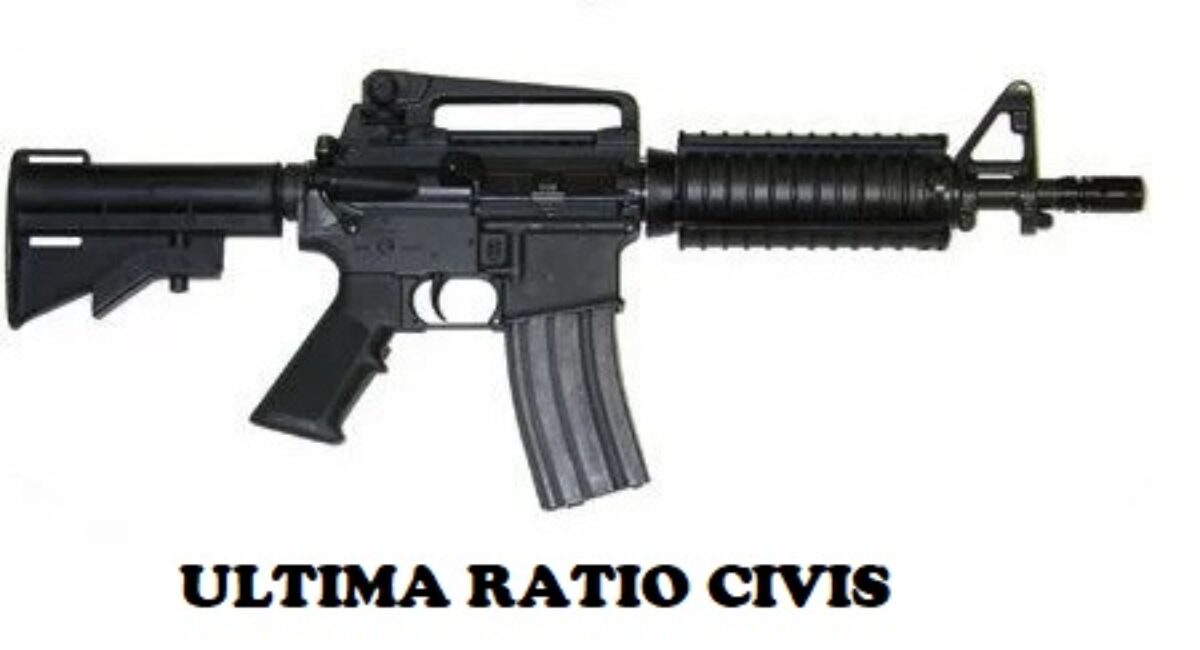
While driving to an open shooting position on a recent range trip, I saw AR-15 type firearms in every bay as I looked around. Some bays had as many as 10 different varieties of the AR-15 platform rifle. I saw another local gunsmith test firing the fruits of his labors.
I watched a group of 20-somethings challenge each other on a timed course of fire. I observed a dad helping his daughter to hold the gun up while she shot ground-mounted clay pigeons. I even saw a married man in what appeared to be his 60’s trying to tell his wife how to pull the charging handle back.
The common theme in what I saw was this — all of these people had different reasons for purchasing their version of America’s most popular rifle. And none of them appeared to have had any standardized training in their use, care, accessories, or capabilities.
While looking for some common ground, I made a list of seven skills that every AR owner should know.
A lot of active killers are stopped by armed citizens despite what the mainstream media hides from you.The Crime Prevention Research Center estimates that 34% of active killer attacks are stopped by armed citizens, a much different number than what is declared by the FBI crime statistics.Even the FBI, however, points out that most such attacks happen in gun free zones.The truth is, many such attacks have even been stopped through unarmed resistance, but the success rate of armed interdiction is much higher, at over 90% success rate for the citizen.
The fact is that we now have a fairly extensive list of incidents in which rampaging killers, armed with long guns, have been stopped by armed citizens on the scene who are armed with handguns.Many question the ability to stop a bad guy with superior weaponry if you are armed with only your carry pistol at the time, but this is not a hypothetical question of “can it be done.”Rather, it has been done, many times, and the armed citizen prevails the vast majority of the time.While the perpetrator may be armed with a rifle, and may be wearing body armor, the lesser-armed citizen still has the ultimate advantage of surprise, and typically prevails.So, the debate over whether or not it can be done can be put to rest.Rather, we should focus on the lessons learned and the trends apparent in such incidents.
he AR-15 is one of the most common rifles in the world and has a large, diverse user base. Its success is due to many things, such as its adaptability, modular design, and reliability. They have subjected the AR platform to a great deal of abuse in a variety of environments, and it continues to perform exceedingly well.
How Many AR-15s Are in The United States
The National Shooting Sports Foundation (NSSF) estimated that there are over 24 million Modern Sporting Rifles (MSR) in the United States, which include AR and AK-style rifles. Some estimates have the overall number of firearms in the US, including handguns, at over 400 million.
Why is an AR-15 a Popular Gun?
The AR-15 is a popular choice among everyday gun owners for various purposes, including sporting events, home defense, and recreational shooting.
The AR-15 is a modular design, and because of that, you can customize and upgrade parts easily. The flexibility to personalize the rifle to suit the needs of each shooter is a big reason for its widespread popularity. You can use the same base gun for sports shooting, competitions, and personal protection.
How Common is an AR-15?
The Washington Post did a survey at the end of 2022 and estimated that 31% of adults own a firearm; out of that, 20% owned an AR-15-style rifle. That’s 6% of the adult population.
“The data suggests that, with a US population of 260.8 million adults, about 16 million Americans own an AR-15.”
The AR-15 accounted for only 1.2% of all sales in 1990 but jumped to 23.4% in 2020.
In Common Use
Recently, the term “in common use has come up.” The Supreme Court determined that the Second Amendment protects firearms “in common use” by “law-abiding citizens for lawful purposes” in its historic DC v. Heller ruling. The court ruled that if the gun is “in common use,” it is covered under the Second Amendment.
In March, the president of Everytown for Gun Safety, John Feinblatt, tweeted, “1 in 4 guns sold in America is an AR-15. 1 in 20 Americans owns an AR-15.” His organization is anti-gun, and you would think his numbers would support the claim that AR’s are not in common use, but they appear to do just the opposite.
If one out of every four guns made is an AR and one in twenty people owns one, it seems common. Its widespread popularity makes it one of the most recognizable and commonly owned rifles worldwide. The AR-15 is arguably the most popular rifle in America.
As many of you know, I am a life-long student of the history of the American West, especially the lawmen and outlaws. Just yesterday, I read a piece about a frontier lawman, in this case Wyatt Earp, pulling his handgun and hitting a troublemaker over the head. In fact, this “buffaloing”, as they called it was quite common and considered a proper response to certain threats and conduct.
Of course, back in those days the old single actions that most folks carried were robust enough to take such abuse. The more modern double-action revolvers and semi-automatics could be more easily damaged and possibly cause a negligent discharge. The only time I saw someone hit with a gun was when a fellow officer hit a thug over the head with his DA revolver, causing the gun to discharge and wound two bystanders.
In time, courts and juries began to take a dim view of using the handgun as a club. And our good, modern training, with an emphasis on safety, along with modern less-lethal options like OC spray and tasers, has pretty much caused the practice to be a thing of the past.
Another thing that a western historian will notice is the old-time practice of leaning on the butt of a rifle or shotgun with the muzzle resting in the dirt, possibly allowing foreign objects to get into the bore of the gun. Even worse are the photos of individuals resting the gun muzzle on the toe of their boot. Sadly, in more recent times, it has been the practice of some shotgun competitors; something that I hope is currently being discouraged. Years ago, I had a friend who had a horribly mangled right hand from resting it on the muzzle of his loaded .410 shotgun; it’s a wonder that he had a hand at all.
In my own case, as a young officer, I attended numerous law enforcement firearm classes. One thing that they had in common was the fact that no one said anything about keeping your finger off the trigger, much less keeping it out of the trigger guard entirely. To my knowledge, the first that this was emphasized was in conjunction with Jeff Cooper’s Modern Technique of the Pistol in the late 1970s. We now call it Gunsite’s Rule #3, the Golden Rule, and there is no telling how many negligent discharges and injuries this training has prevented.
Sadly, the old-time handgun men had to learn the hard way what worked and what didn’t work, what was safe and what wasn’t. In the interim, the National Rifle Association began to put gun safety into the forefront of all firearms training and individual firearms instructors have followed suit. Nowadays, just about any firearms class you attend begins with a safety lecture and that is exactly as it should be.
We certainly can, and should, enjoy the history, stories, and photos of our frontier days. But we should also take time to be thankful and mindful of the great advances that have been made in terms of gun safety. A lot of the old-time gunmen might have lived a lot longer if they had had the same training that is available to the modern shooter.
New York State declared war on citizens making their own firearms. To crack down on privately manufactured firearms (PMF), the New York State Police (NYSP) are showing up in force at people’s doors. The reason for the informal visit seems to be an inquiry related to purchased pistol parts from the website eBay. Ammoland News has learned from Law Enforcement Sources that the New York Police Department released a “ghost gun” handbook explaining PMFs and how to identify them.
Two weeks ago, NYSP “Ghost Gun” Team members began visiting citizens in the New York City area requesting information about parts purchased from eBay. The parts were purchased from multiple sellers across the auction platform.
Most disturbing, the officers had printouts of everything purchased by the individuals from the website, leading to the question of how the State Police came into possesion the item list.
When the officers show up at New York residents’ doors, they show up in force with between nine and twelve officers. Only two to three officers will speak to the person while the others stand far back in the yard looking bored. The police will ask about the parts and ask to see any firearms that the resident owns. The New York Police are knocking on doors requesting to see the individual’s firearms.
AmmoLand News spoke to several of the residents that the State Police visited. None of the individuals allowed the police to inspect their firearms. The officers would state, “We know what you have.” When the residents still refused to hand over any information, the State Police let them know they could turn in anything violating New York law to the State Police. None of the residents we spoke to were threatened with legal action, and the interactions were between five and fifteen minutes.
Could eBay be handing over private transaction information to the police?
Since the task force had a complete list of the items purchased on eBay, eBay is the most likely source for the information. AmmoLand News reached out to both the New York State Police and eBay, but neither would confirm or deny what information was shared. All interactions AmmoLand News was able to track down are from the greater New York City area. We also have not identified any visits within the city’s five boroughs.
At the same time the New York State Police are going door to door, the New York Police Department (NYPD) released a handbook to identify “ghost guns.”
This guide was leaked to AmmoLand News but is now being widely circulated across the internet.
Ghost Guns: Past, Present, and Future NYPD Intelligence Division Major Case Field Intelligence Team
The guide comes from the NYPD Intelligence Division and aims to help officers identify PMFs. Although the intention is to help police identify PMFs, it reads like a “how-to guide” to firearms building. It lists all the parts needed, where to get them, and examples of homemade guns.
The guide lists a gun’s parts and gives an example of a lower receiver. According to the guide, “all lower receivers need to be serialized” because the federal government considers them firearms. Next to this statement is a picture of an 80% AR-15 receiver. The Bureau of Alcohol, Tobacco, Firearms and Explosives (ATF) Final Rule on frame and receiver is very clear on this topic.
The ATF has never and still does not consider 80% AR-15 receivers to be firearms.
The document also incorrectly states that all lower receivers must be serialized under federal law. Once again, the document is incorrect. The ATF says a frame or receiver must only be serialized when transferred. According to federal law, it is legal to have an unserialized firearm unless it previously had a serial number. Many are concerned that these inconsistencies between the law and the guide could lead to false arrests. AmmoLand News contacted the individual contacts listed in the document to see if the misinformation would be corrected, but none responded.
In addition to those retailers, the guide also covers the Ghost Gunner. The Ghost Gunner is a tabletop CNC machine that allows users to mill a firearm. It also lists the sites that sell the device and shows a picture of the founder of Ghost Gunner and Defense Distributed, Cody Wilson. The document references Defcad, which is another Defense Distributed project.
AmmoLand News spoke to Cody Wilson, who found the New York Police Department handbook to identify “ghost guns” document hilarious. He believes it is an excellent advertisement for his company.
“New York has produced the best getting started guide on the market,” Wilson said. “We will be emailing it to all of our customers.”
The document also explains how to 3D print a gun. It breaks down the printers needed, including the Creality Ender 3, and lists the filament types. It also gives an overview of the most popular slicing software. A current bill in the New York Legislature would require background checks to purchase a 3D printer.
The document also lists the most popular sites for downloading “gun CAD” files. Even if someone were to download the files, they would be unable to turn that 3D-printed model into a working firearm without certain parts. Fortunately for the building community, the NYPD documentation lists the parts and links to sites selling everything a person could use to finish the homemade firearm.
Oh No! Crypto!
The documentation touches on Glock switches purchased off of Chinese sites. These are auto sears and turn a regular Glock into a machine gun. In addition to auto sears, the document also worries about importing solvent traps to make suppressors.
The handbook also states they will attempt to get postal data to track shipments. The NYPD will also try to get Micro Center and Amazon data to track 3D printers and supply purchases. The police attend gun shows in other states to follow the selling of firearms parts.
The document also states that many who print guns are involved in cryptocurrency. The NYPD points to several gun-part retailers that accept BitCoin as a payment option. Many non-gun sites accept cryptocurrency as payment.
It also lists items to look for when executing a search warrant. These include packages, pre-paid credit cards, invoices, gun parts, storage locker keys, 3D printers, flash drives, cell phones, and micro SD cards.
The NYPD will offer a one-hour class to officers to help them identify PMFs. The content of the class has yet to be released, but when made available by the department, AmmoLand News will publish it.
Neither the NYPD, NYSP, nor eBay responded to requests for comment for this story.
LEAKED: Ghost Guns: Past, Present, and Future NYPD Intelligence Division Major Case Field Intelligence
Congress and President Joe Biden have undone a mess of their own making.
On Friday, Biden signed the Protecting Hunting Heritage and Education Act into law. Congress passed the law nearly unanimously. The legislation restores funding for school hunting and archery training courses.
“The benefits of hunter education and archery programs should be fully recognized as these classes teach future generations the important skills of public safety, confidence, and comradery,” Representative Richard Hudson (R., N.C.), who sponsored the bill, said in a statement.
The law amends 2022’s Bipartisan Safer Communities Act (BSCA) to clarify that grants from the 1965 Elementary and Secondary Education Act can be spent on hunting and archery programs. The overwhelming bipartisan support for funding firearms and archery training in schools demonstrates, at least, that the floor of support for hunting remains pretty high in American politics.
The law stems from a dispute in the BSCA’s language about whether federal funds can be spent on weapons training. In April, the Department of Education published an official guide that said it couldn’t spend money on programs that provide “to any person a dangerous weapon or training in the use of a dangerous weapon.” Federal law specifically labels any object capable of “causing death or serious bodily injury, except that such term does not include a pocket knife with a blade of less than 2½ inches in length” as a dangerous weapon.
In August, the Education Departmenttold Fox21 it considered hunting, archery, and sports shooting programs ineligible for funding under the statutory language.
The Department’s interpretation of the BSCA was condemned by a bipartisan group of lawmakers, including many who’d voted for the bill. 18 Senators, including eight Democrats and an Independent, sent a letter to the Department in September arguing they never intended the funding language to be interpreted that way. They demanded funding for school hunting and archery programs be reinstated.
“The intent of section 13401 of BSCA was to preclude these funds from being used to purchase dangerous weapons for school staff or to train school staff in the use of dangerous weapons, with the recognition that ESEA funds should support student achievement, educational enrichment programs, and student well-being,” they wrote. “Other federal funds appropriated in the BSCA were intended to support evidence-based school safety and protective measures.”
Another bipartisan group of Senators sent a letter to the leaders of the Senate Appropriations Committee asking them to create a legislative fix if the Department didn’t change its mind. Between the two letters, the effort garnered support from a dozen Democrats, nine Republicans, and an Independent.
Representative Hudson, who called the Department’s interpretation of the language an “attempt to push their radical agenda on our children,” introduced his legislative fix in the House. That bill quickly gained bipartisan support and passed by a vote of 424 to 1. The Senate agreed to it unanimously. Now, President Biden has signed it into law.
“[T]he President supports a legislative solution to ensure ESEA funding can be used for valuable school enrichment programs, such as hunter safety and archery,” Stefanie Feldman, Director of the White House Office of Gun Violence Prevention, tweeted after the House took up the bill.
California Magazine Ban…..
9th Circuit, as expected, grants the stay in Duncan.
Karn v. U.S. State Department found that computer code is protected speech. But this judge decided that, because cad files can communicate with the machines directly, they are not protected…really.
Ahhhh. So does that mean ASCII files are no longer free speech after some judge realizes they can be sent directly to an inkjet printer?
These old, activist judges will learn quickly that you can’t stop the signal.
A federal judge in New Jersey ruled that computer code that lets someone produce firearms is not protected speech under the First Amendment.
In the case, Defense Distributed v. Platkin, Federal District Court Judge Michael A. Shipp dismissed the lawsuit that Defense Distributed and the Second Amendment Foundation ( SAF) brought against New Jersey’s law banning the sharing of gun computer-aided design files (CAD). Even before the law was passed, New Jersey issued a cease-and-desist letter to the company in early 2018, demanding it stop publishing firearms information that New Jersey residents could access. Defense Distributed has been posting CAD files on its Def Cad website that allow users to print firearms using 3D printers. New Jersey claimed publishing these files broke the state’s public nuisance and negligence laws.
State officials could have a new weapon in their arsenal as they try to lure gun and ammunition manufacturers to Oklahoma.
Murray State College leaders say the school’s gunsmithing program could become a huge economic development driver thanks to a $10 million legislative investment that will allow the college to offer the nation’s first bachelor’s degree in gunsmithing.
With backing from the Oklahoma State Regents for Higher Education, campus officials approached lawmakers in the spring with a pitch that expanding the school’s gunsmithing program to offer four-year degrees could turn Oklahoma into a hub for gun businesses and manufacturing.
“The idea was this is an investment in an industry that can locate in our state, and regionally, we have the ability distribution-wise to become a powerhouse in this,” Murray State College President Tim Faltyn said in an interview.
Although the funding measure passed overwhelmingly, some lawmakers questioned the new investment in a college that’s located in the district of House Speaker Charles McCall, R-Atoka.
‘Major shift toward embracing modern technology’
Murray State College has offered a gunsmithing program since 1979. Annually, the school admits 30 students to its two-year degree program at its Tishomingo campus.
WHITEFISH, Mont. — Two men from Whitefish killed a grizzly bear in self-defense in the Whitefish Range.
One of the men was injured in an accidental shooting during the encounter with the grizzly bear, he was taken to the hospital for a gunshot wound to the shoulder.
“The two men were scouting for hunting season near Smokey Range Trailhead off Canyon Creek Road on the Flathead National Forest on the afternoon of Aug. 26 when they encountered a female grizzly bear with a cub. The men were walking through a thick section of forest when they surprised the bears inside of 15 feet. The adult bear charged the individuals, and both men shot and killed the bear. One of the men was shot in the back shoulder during the incident,” according to Montana FWP.
The following was sent out by Montana Fish, Wildlife and Parks:
A pair of Whitefish men killed a grizzly bear in self-defense last weekend in the Whitefish Range north of Whitefish.
One of the individuals was injured in an accidental shooting during the encounter. The man was taken to the hospital and treated for a gunshot wound to the shoulder.
The two men were scouting for hunting season near Smokey Range Trailhead off Canyon Creek Road on the Flathead National Forest on the afternoon of Aug. 26 when they encountered a female grizzly bear with a cub. The men were walking through a thick section of forest when they surprised the bears inside of 15 feet. The adult bear charged the individuals, and both men shot and killed the bear. One of the men was shot in the back shoulder during the incident.
Montana Fish, Wildlife & Parks game wardens and members of the Wildlife Human Attack Response Team responded and investigated the incident. The bear’s behavior appeared to be defensive in the surprise, close encounter with the two men. FWP shared the initial findings with U.S. Fish and Wildlife Service law enforcement, and the USFWS concurred it was a self-defense situation. The grizzly bear did not have a history of conflict and was previously tagged for population monitoring work in 2009. The bear was approximately 25 years old. FWP continues to monitor the site for the cub.
Be bear aware
Montana is bear country. Avoiding conflicts with bears is easier than dealing with conflicts. Here are some precautions to help residents, recreationists and people who work outdoors avoid negative bear encounters:
Carry bear spray and be prepared to use it immediately.
Travel in groups whenever possible and make casual noise, which can help alert bears to your presence.
Stay away from animal carcasses, which often attract bears.
Follow food storage orders from the applicable land management agency.
If you encounter a bear, never approach it. Leave the area when it is safe to do so.
Keep garbage, bird feeders, pet food and other attractants put away in a secure building. Keep garbage in a secure building until the day it is collected. Certified bear-resistant garbage containers are available in many areas.
Never feed wildlife. Bears that become food conditioned lose their natural foraging behavior and pose threats to human safety. It is illegal to feed bears in Montana.
Hunting in places that have or may have grizzly bears — which includes northwest Montana — requires special precautions:
Carry bear spray and be prepared to use it immediately.
Look for bear sign and be cautious around creeks and areas with limited visibility and where any noises you might make do not carry well.
Hunt with a group of people. Making localized noise can alert bears to your presence.
Be aware that elk calls and cover scents can attract bears.
Bring the equipment and people needed to help field dress game and remove the meat from the kill site as soon as possible.
If you need to leave part of the meat in the field during processing, hang it at least 10 feet off the ground and at least 150 yards from the gut pile. Leave it where it can be observed from a distance of at least 200 yards.
Upon your return, observe the meat with binoculars. If it has been disturbed or if a bear is in the area, leave and call FWP.
This is correct, but what doesn’t help is when the fumble butter-fingered idjits of FedEx drop the car rifle safe – that took 7 weeks to make and deliver as apparently they construct each order from scratch – off the back of the truck and bend a flange so much the safe is now useless and everyone involved is slow walking taking care of the problem.
A little reminder courtesy of the Columbus, Ohio Police Department . . .
“We are absolutely alarmed by the number of guns that are taken from cars that are parked and unoccupied,” said Sergeant James Fuqua of the Columbus Division of Police.
“If you leave your gun in a car whether it’s locked or not and your car is broken into, you have contributed to the possibility of a criminal going out to commit a heinous act against someone else in the City of Columbus,” Fuqua said.
The lesson here: don’t make thieves’ job easier . . .
Buckeye Firearms, a pro-gun lobby said, “Criminals don’t try to break into every car. They profile vehicles just like they profile potential victims on the street. They’re looking for an obvious and easy target. NRA decals on the window or gun-related bumper stickers are a clue that guns may be in the vehicle. Firearm accessories or hunting gear visible through the windows are also a tipoff. Where you park also matters. Don’t park on the street if you can, park in a garage or a secure lot. If you must park outside, park in a well-lit area. If you’re parking overnight, take all your valuables with you,” said Dean Rieck, Executive Director of Buckeye Firearms. Let me break it down for you: your car is not a gun safe. And as the holiday season ramps up, cases of car windows being smashed and valuables being stolen are just going to keep rising. It’s easy to to break a window in your car, truck or SUV and take whatever a thief wants. And if you’ve left your gun in there, congratulations, you just armed a criminal.
Yeah, you’re also out a chunk of money for the gun itself, but personally I’d be more concerned about the firearm that’s now in the hands of someone who thinks crime is the way to fund their lifestyle.
If you’re in a situation where leaving your handgun in your vehicle is the only option, get a real safe. Hornady’s RAPiD Vehicle Safe is a legit option (I own a couple myself). The RAPiD has a 14-gauge steel housing, internal hardened locking lugs, and a steel cable that can be attached to a seat frame. It can be opened using a four-to-six digit programmable security code, one of the RFID wristbands or key fobs it ships with, or one of a pair of barrel keys. Power comes from either four AAA batteries or a 12-volt car adapter.
Is this the perfect solution? No. There is no perfect solution, but it’s unlikely you’re going to run into a criminal doing a smash-and-grab while also carrying heavy-duty bolt cutters or some other tool that will give them access to the safe (assuming it’s properly installed).
That doesn’t mean you should leave a handgun in a gun safe in your car 24/7, either. The best place for your gun is in on your hip in a proper holster on your gun belt…so carry your gun. When it’s not being carried or when you have to go into a non-permissive area, store it securely.
If you’re at home, that’s going to be in your gun safe, not parked in your driveway in your car. Your car’s gun safe won’t do you much good if the entire car is stolen, will it?
Thus ends this friendly Your Car is Not a Gun Safe PSA.
To make it to this level of competition, you have to be really good.
Twelve Soldiers from the U.S. Army Marksmanship Unit will compete in the 2023 International Shooting Sports Federation World Championship in Baku, Azerbaijan August 14 – September 1 as part of USA Shooting’s 40 athlete-team.
The ISSF World Championships includes a number of rifle, pistol and shotgun events where more than 1200 athletes from 101 nations will vie for the title of World Champion in their shooting discipline. It is also an opportunity for shooting sports athletes to earn U.S. Olympic Quotas for the 2024 Paris Games.
Olympic Quotas are essentially tickets, or slots, for a country to compete at the Olympics in a specific event. Each country is eligible for two athletes to compete in each event at the Games.
Currently, USA Shooting athletes have earned 15 Paris quotas. Seven of those quotes were earned at prior international competitions by the USAMU Soldiers stationed at Fort Moore, Georgia.
Let’s require the Secret Service and FBI to switch to this technology exclusively for a 4-year test period. After that we can talk. Of course, they won’t.
– Tom Gresham
Sasha Wiesen sleeps with a .40-caliber handgun in a safe by his bed. The commercial real-estate broker from Florida recently preordered a new type of firearm he hopes will make the safe unnecessary.
The new weapon is the Colorado startup Biofire’s 9mm Smart Gun, which can only be fired if it recognizes an authorized user with a fingerprint reader on the grip or a facial recognition camera on the back.
“I’m usually an early adapter,” said Wiesen, 46 years old. “It might be the gadget part of me that made me buy it, but it’s also the safety aspect.”
Guns that use technology to ensure that they can only be fired by their owners, called smart guns, have been developed and debated since the 1990s. The Biofire Smart Gun will be the first widely available for sale if it ships in December as planned.
Proponents tout smart guns as a way to reduce accidental shootings and firearm thefts. Gun-rights supporters have been wary, in part over concern that governments could outlaw sales of weapons that don’t have smart-gun technology.
Earlier efforts to bring smart guns to market have failed, largely because of pressure from gun-rights activists or because they didn’t work as promised.
As with other technologies such as electric cars that changed long-established products, the question for smart guns is whether they can work at least as well as the traditional versions they replace and find customers behind affluent early adopters.
The Biofire Smart Gun costs $1,499. Similar handguns without high-tech features typically cost between $400 and $800.
Not as long as I’ve got the ammo I’ve got on hand, it ain’t. While I’m not advising people that don’t have one to go out and buy one, for us that have them, they’ll do just fine.
I remember a time when folks routinely bragged that their go-to concealed carry gun was chambered in .40 S&W, and I’ve met plenty of law enforcement officers who were issued pistols in the same caliber over the years. But it seems like the chatter about .40 S&W is all but gone these days.
In fact, over the last year, I have met only one shooter who routinely carries a Glock 22, specifically for the hard-hitting .40 S&W round it’s designed to shoot.
So, what gives? Is .40 S&W dead, dying, or still relevant?
To get started on answering that question, I pulled a gently used – and very budget-friendly – law enforcement trade-in Glock 22 from the Guns.com Vault. After all, it’s kind of hard to judge a round if you don’t spend some time using it.
One of the reasons that the shotgun is often overlooked as a defensive tool is recoil. Folks who have spent a lot of time shooting the .22 LR, .223 Rem. or even the lighter-caliber deer rifles either don’t know how to manage recoil or have gotten sloppy about it. When folks tell me about how a 12 gauge kicks, I like to tell them about a 110-pound lady I know who has hunted all over the world with a .375 H&H Magnum.
To manage the kick of a 12 gauge, it is important to first tuck the buttstock firmly into the shoulder pocket. The strong hand, the one on the pistol grip, needs to continually pull the gun solidly into that shoulder pocket. Some even suggest that the support hand, at the same time, should push forward on the gun, creating an isometric hold.
One additional problem for the defensive shotgun is that the standard 14-inch buttstock is too long for most people. It probably works fine for the bladed stance that most bird hunters use, but the bladed stance is a mistake for the defensive shooter.
The defensive shooter should address the target with a shotgun in the same way one does with the handgun. That is, the shooter should be squared away with the target, facing it. Knees should be slightly bent and one’s weight should be on the balls of the feet. In addition, elbows should be tucked down, not stuck out there like chicken wings. This type of stance not only allows the shooter to move quickly but it also helps manage recoil.
When shooting the shotgun in this preferred manner, the 14-inch buttstock is just too long. I have a 33-inch shirt sleeve and do my best work with a 12-inch buttstock. Another advantage of the shorter stock is that other, smaller members of the family will also be able to manage it more effectively. It is a simple fact that we can all manage a shorter stock more effectively than we can one that is too long.
As I said in the previous column, the defensive shotgun is quite a bit different than the typical bird gun. Once a person learns the difference and how to deal with it, the fighting shotgun will have another fan.