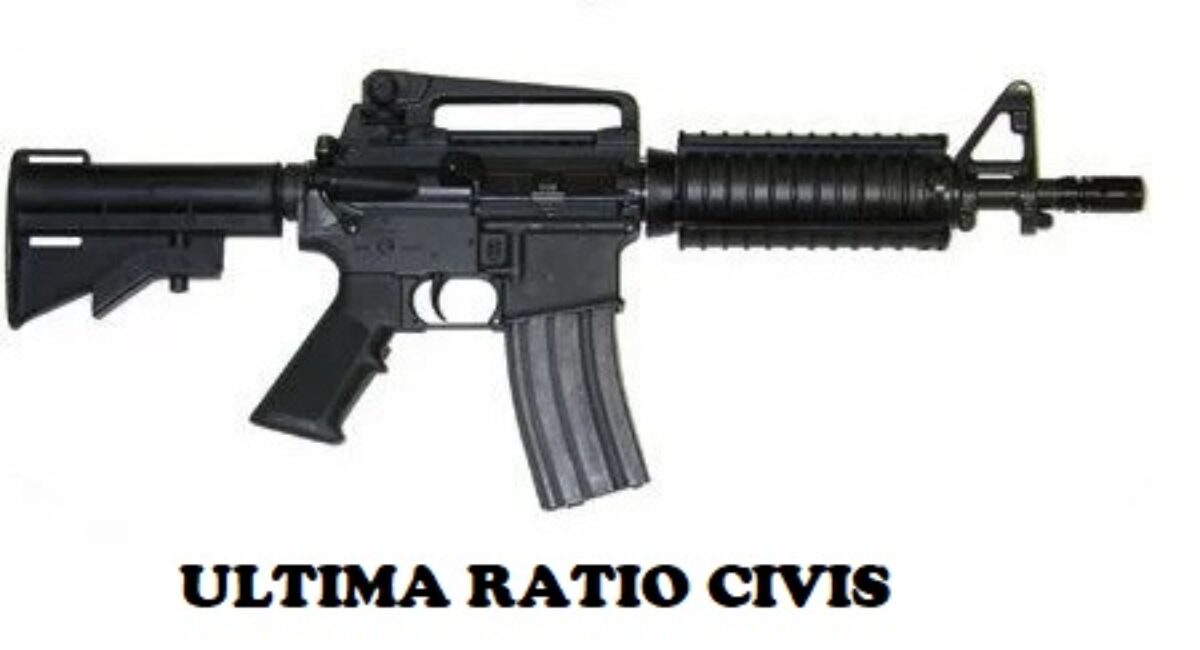
What exactly are the laws for minors possessing guns in North Carolina?

When it comes to minors purchasing firearms in North Carolina, the rules are clear: No one under the age of 21 may buy handguns, and no one younger than 18 can buy long guns, such as shotguns or rifles.

The state actually adheres to federal standards when it comes to such age restrictions.

But the rules are different in North Carolina when it comes to the possession of firearms. And it can get a little confusing.

  • North Carolina law makes it a misdemeanor for someone under the age of 18 to possess a handgun.
  • But there is no similar NC statute specifically addressing the possession of “long guns” — rifles, shotguns and carbines (except for a statute that allows children younger than 12 to handle firearms with permission from or under supervision of adults.).

So what exactly are the rules for minors possessing or using guns? There are a few.

▪ Under the age of 12. A child under the age of 12 must have permission from their parent or guardian to possess or use a firearm, whether loaded or unloaded, or be under the supervision of an adult, says NC statute 14-316. Violation is a misdemeanor.

▪ Keeping guns away from minors. According to North Carolina statute 14-315.1., people who possess firearms and live with minors have a responsibility to store firearms in a way that unsupervised minors cannot access them.

The penalty for not doing this is a Class 1 misdemeanor — but only under certain circumstances: if that firearm is obtained without permission and the minor exhibits the weapon in a public place or in a threatening manner, carries it onto an “educational property,” causes injury or death (not in self-defense) or uses it in the commission of a crime.

The statute is long, but specifies that the adult may be responsible if the firearm is stored “in a condition that the firearm can be discharged and in a manner that the person knew or should have known that an unsupervised minor would be able to gain access to the firearm.”

▪ No guns on school grounds. It is a Class 1 felony for anyone of any age to possess or carry (openly or concealed) any kind of firearm on “educational property” or to an extracurricular activity sponsored by a school. If that weapon is discharged, it’s a Class F felony. (Note: does not apply to BB guns, stun guns, air rifles or air pistols.).

It is also a Class 1 felony to encourage or aid a minor (less than 18 years old) to carry a firearm onto an educational property.

▪ No permit needed for “long guns.” You do not need any kind of permit to own a “long gun,” which includes a rifle or shotgun, but you do need a North Carolina ID and the buyer must pass a background check. (You do need need a permit to purchase a handgun.)

Why is it a crime to improperly store a firearm, but not illegal for a minor to own a rifle?

In North Carolina, it is not illegal for a minor to possess a long gun, such as a shotgun or rifle. And yet, it can be a crime for a minor to access a firearm if a parent or guardian has not properly secured it.

It all depends on what the minor does with the gun they access.

From the state statute (G.S. 14-315.1), here are all the elements that must be present for improper storage of a firearm to be a crime:

Another look at that serial number court ruling

Ban on guns with serial numbers removed is unconstitutional -U.S. judge

Oct 13 (Reuters) – A federal judge in West Virginia has ruled that a federal ban on possessing a gun with its serial number removed is unconstitutional, the first such ruling since the U.S. Supreme Court dramatically expanded gun rights in June.

U.S. District Judge Joseph Goodwin in Charleston on Wednesday found that the law was not consistent with the United States’ “historical tradition of firearm regulation,” the new standard laid out by the Supreme Court in its landmark ruling.

The decision came in a criminal case charging a man, Randy Price, with illegally possessing a gun with the serial number removed that was found in his car. The judge dismissed that charge, though Price is still charged with illegally possessing the gun after being convicted of previous felonies.

Price’s lawyer, Lex Coleman, called the decision “thoughtful, measured and accurate.” A spokesperson for the office of U.S. Attorney William Thompson in Charleston, which is prosecuting the case, said the office was “reviewing the ruling and assessing options.”

The federal law in question prohibits anyone from transporting a gun with the serial number removed across state lines, or from possessing such a gun if it has ever been transported across state lines.

Serial numbers, first required by the federal Gun Control Act of 1968, are intended to prevent illegal gun sales and make it easier to solve crimes by allowing individual guns to be traced.

Price argued that the law is unconstitutional in light of the Supreme Court’s June 24 ruling in New York State Rifle & Pistol Association Inc v. Bruen. That ruling held that under the Second Amendment of the U.S. Constitution, the government cannot restrict the right to possess firearms unless the restriction is consistent with historical tradition.

Bruen said serial numbers were not required when the Second Amendment was adopted in 1791, and were not widely used until 1968, putting them outside that tradition.

New study contradicts “More Guns = More Crime” theory

Do increased gun sales lead to increased crime rates? According to gun control activists, the answer is “yes,” but a new study published in the Journal of Surgical Research finds no connection between firearm purchases and the number of crimes. I’m very pleased that Dr. Mark Hamill, a trauma surgeon and associate professor at the University of Nebraska Medical Center who was a primary author and researcher for the new study, could join me on today’s Cam & Co to discuss his findings and the current state of “gun violence” research in the medical community.

For this particular study, Hamill and his associates used both national and state-level data on crime rates between 1999 and 2015 as well as NICS reporting data over the same time period as a reasonable proxy for gun sales. Hamill hypothesized beforehand that there would be no correlation between gun sales and crime rates, and as it turns out, that’s exactly what researchers found.

Nationally, all crime rates except the Centers for Disease Control and Prevention–designated firearm homicides decreased as firearm sales increased over the study period.

Using a naïve national model, increases in firearm sales were associated with significant decreases in multiple crime categories. However, a more robust analysis using generalized estimating equation estimates on state-level data demonstrated increases in firearms sales were not associated with changes in any crime variables examined.

Robust analysis does not identify an association between increased lawful firearm sales and rates of crime or homicide. Based on this, it is unclear if efforts to limit lawful firearm sales would have any effect on rates of crime, homicide, or injuries from violence committed with firearms.

This study follows on previous research released by Hamill and others back in 2019 that examined concealed carry laws and crime rates; looking to see if changes to a state’s concealed carry laws resulted in more crime overall. Just as in this most recent study, the data found no significant association between “shifts from restrictive to nonrestrictive carry legislation on violent crime and public health indicators.”

As Hamill says, the results make sense. Most people who legally purchase and lawfully carry firearms are never going to commit a violent crime, so increasing the number of those who are legally exercising their Second Amendment rights shouldn’t result in more violent crime. As for gun sales and crime rates, while the number of firearms sold might vary from year to year, the number of privately-owned firearms in the United States continues to increase. If more guns equated to more crime, then we’d expect to see a steady rise in criminal offenses year after year. Instead, a graph of violent crime rates going back to 1900 shows that crime tends to ebb and flow in waves that can last for decades.

Note, by the way, what happened to the homicide rate in the years after the passage of the Gun Control Act of 1968. While homicide rates had been fairly flat throughout most of the 1960s, there was a sharp increase starting around the time the GCA became law, and a steady decline didn’t begin until more than two decades later in the early 1990s.

That crime decline generally continued until 2020, when shootings and homicides soared in the midst of the COVID-19 shutdowns, disruptions to the criminal justice system, riots, and a pullback from proactive policing strategies. Gun sales also exploded in 2020, but despite the assertions of some gun control activists that the increase in gun purchases must have played a role in the increased violence, there isn’t much evidence that was the case, as even some anti-gun researchers have acknowledged.

Dr. Garen Wintemute of the Violence Prevention Research Program at UC Davis investigated a possible relationship between 2020’s gun sales and the increase in crime and found none.

“Instead, [researchers] concluded that unemployment, economic disparity and physical distancing exacerbated by the pandemic were far more potent predictors of increased violence,” the FiveThirtyEight article notes.

Hamill’s study comes at a time of heightened interest in the gun control debate within the medical community, including a special issue of the Journal of the American Medical Association dedicated to examining “gun violence” and advocating for a host of new gun control laws. Hamill says that unfortunately there does seem to be a bias towards gun control among many researchers, and described how this most recent study was actually rejected by another journal; not because of any issues with the researcher’s methodology, but because the journal’s editor didn’t like the results.

Thankfully this new paper found a home at the Journal of Surgical Research, and I would encourage you to not only read the paper but share its findings far and wide. More guns does not equal more crime, and we’ve got the data to prove it.

New World Record Set for Farthest Long-Range Rifle Shot: 4.4 Miles
A team of shooters hit a steel target at 7,744 yards in the Wyoming desert, besting the previous record by several hundred yards

The long-range shooting world record was broken yet again when a team of spotters and a shooter hit a target at 4.4 miles (7,744 yards) in the Wyoming desert earlier this month. The marksmanship feat was orchestrated by Scott Austin and Shepard Humphries, who run Nomad Rifleman, a long-range shooting school out of Jackson Hole, Wyoming.

Together with a group of friends they spent several hours launching bullets downrange before connecting on their 69th shot, according to a release on Nomad Rifleman’s website.

Continue reading “”

Georgetown professor: AR-15 ‘commonly owned’ and ‘incredibly popular’

In the national debate over banning AR-15-style rifles, there has been a noted lack of information other than anecdotal and heavily biased reports.

On the gun ban side, led by President Joe Biden, the rifle is an “assault weapon” used to kill people. On the gun fan side, led by the National Rifle Association, it’s a tool for hunting and plinking just like every other rifle.

But the truth is, there has been little scholarly study of it and other firearms since 1994, the year the so-called “assault weapon” ban was put into place by President Bill Clinton, which lapsed 10 years later.

Enter political economist and assistant professor William English of Georgetown University’s McDonough School of Business. Long interested in issues surrounding guns, he just headed a massive survey of nearly 17,000 firearms users to come up with the most detailed portrait of today’s owners, users, and their firearms.

The bottom line from his “National Firearms Survey” is that gun-owning is common, the AR-15 really is the most popular firearm in America, and its club of owners is incredibly diverse.

When he initially proposed a book on guns in America, English found that there was little factual information out there.

“It kind of dawned on me that, yeah, there’s a real opportunity here just as a scholar to contribute to this literature, where I think there’s some gaps and some important questions. It’s certainly not my main focus, but I kind of got sucked into it,” English said.

The survey he headed reached out to over 54,000 and was narrowed down to 16,708 gun owners who coughed up a wealth of information about what they own and what they do with their guns.

For example, English confirmed that 81.4 million own guns, a third of them have used a weapon to defend themselves or their property in 1.6 million incidents per year, and 52% of those who own a gun carry one for self-defense at times.

He found that some 24 million have owned a total of 44 million AR-style rifles and 39 million own extended magazines that hold 10 rounds or more, potentially influential in the political debate over Biden’s call for an AR ban. His survey estimated that there are 542 million extended magazines in the United States, ending any debate that the AR and other semi-automatic firearms are rare and just used by mass killers.

What’s more, English said that ownership of AR-15s is spread out fairly evenly, with a third of white people having one, as well as about a third of black people, Hispanic people, and Asian people.

“These are just incredibly popular firearms,” he said, adding that “they are commonly owned, commonly used.”

Once a pricey weapon, English said there is an interesting sociological, manufacturing, and economic story to be told about the AR-15 and how it started to become popular around 2010, especially with troops returning from the Gulf wars.

“At the end of the day, it is a rifle that I think is very easy to shoot, it’s very easy to control, not a lot of recoil. I could see it also kind of being like an updated .22 for, in terms of plinking, a firearm you can kind of do a little bit of everything with: lightweight, intuitive, but high-performance, accurate, and easy for defense. It certainly has advantages there. So it’s a good gun, and to see it become widely owned, I suppose, makes sense in that context,” said English.

“I Surprised Myself with My Openness and Enjoyment of the Activity” (Fall 2022 Student Range Visit Reflection #2)

This is the second of several student gun range field trip reflection essays from my fall 2022 Sociology of Guns seminar (see reflection #1). The assignment to which students are responding can be found here. I am grateful to these students for their willingness to have their thoughts shared publicly.

Sociology of Guns student at the range, Fall 2022. Photo by Sandra Stroud Yamane

By Audrey Dorfman

Prior to the field trip to Veterans Range, I would classify my view of guns in the US as predominantly negative. As I had previously never directly interacted with a gun before, I only associated the use of guns with the violence seen in the media in horrific crimes like mass shootings. I did not understand the need or desire to be a gun owner. However, the experience at the range definitely altered my prior understanding of guns in the US as I surprised myself with my openness and enjoyment of the activity.

When I first arrived at the gun range and gathered with the other students in my group to wait outside the fenced area, I was initially startled by the sound of the AR-15 being fired nearby. Hearing just how loud the gun was made me realize the true power of the weapon I was about to be interacting with. While I was a little bit nervous to handle the guns, I felt mostly excited; I seemed to be the most eager in my group to volunteer to shoot first. I wanted to approach the experience with an open mind, and I think this attitude allowed me to relax and appreciate my time at the range much more.

The part of the field trip that surprised me the most was how much I truly enjoyed it. I walked away feeling a sense of exhilaration and as if I had been relieved of the day’s tension and stress. I immediately contacted my family to tell them how great of a time I had with the different types of guns – however, this unexpected enjoyment also confused me. I was wrestling with the idea of how I could have so much fun with these different guns when they are the same objects I know are used to kill people every single day.

Continue reading “”

Tactical gear for women to carry arms

Vicky Johnston, the owner and designer of Her Tactical, joined the show today to talk about her business.

Johnston encourages women to be prepared, be aware, and be ready for anything they may encounter. She shares her self defense skills with others through her company, offering a workshop to help build confidence.

Johnston tells of her story finding items to conceal a gun that work well for women. In her experience, every store she went to only had products for men, so she started her own company specifically tailored for women.

Her Tactical is putting on a workshop in February, and is offering a 15% discount on any concealed carry product purchased using the coupon code “ABC4” on her website.

Concealed Carry Products: https://hertactical.com/

Workshop Registration: https://hertactical.com/workshop/

CIMARRON CARTRIDGE CONVERSIONS
REPLICAS OF OUR FIRST CARTRIDGE GUNS
ARE BETTER THAN THE ORIGINALS.
WRITTEN BY JOHN TAFFIN

Cimarron’s .45 Colt Remington Cartridge Conversion (bottom) is similar to one of the first ever big-bore cartridge conversions. A replica 1858 percussion .44 revolver is above it.

An original Richards Conversion in .44 Colt (top) compared to the .45 Colt Cimarron Richards II.
The Cimarron version has a lightly larger cylinder to accommodate the .45 Colt cartridge.

One of the great passions of my life, handguns, go back more than 500 years. Even though the idea of the cartridge is nearly 200-years old, powder, ball and cap were state-of-the-art for most of the 19th century. A Frenchman patented the idea in 1812. Another Frenchman came up with the pinfire cartridge in 1846 and Flobert exhibited a rimfire cartridge at the London Exhibition in 1851. Meanwhile, on this side of the Atlantic, Smith & Wesson received a patent for a centerfire metallic cartridge in 1854 and then around 1856 developed the first true rimfire cartridge as it is known today.

Continue reading “”

Smith & Wesson Rolls Out the New Aluminum-Framed M&P9 M2.0

The performance that began with our polymer construction is now forging forward. The lightweight and rigid metal frame of the Smith & Wesson M&P9 M2.0 Metal provides an extraordinary foundation for higher performance. Built on the M&P platform, it is compatible with all M2.0 magazines, slides holsters and palmswells.

  • Optimal 18-degree grip angle for natural point of aim
  • Four interchangeable palmswell grip inserts for optimal hand fit and trigger reach – S, M, ML, L
  • Textured polymer front strap
  • Wide slide stop
  • Reversible magazine release
  • Slide cut for optics
  • M2.0 flat face trigger for consistent finger placement that allows for more accurate and repeatable shooting
  • Picatinny-style rail
  • Forward slide serrations
  • Low barrel bore axis makes the M&P pistol comfortable to shoot, reducing muzzle rise and allowing for faster aim recovery
  • Enhanced sear for lighter, crisper trigger let-off
  • Accurate 1 in 10 ̋ twist barrel
  • M&P’s patented take-down lever and sear deactivation systems allow for disassembly without pulling the trigger
  • Accepts any 17 round M2.0™ magazine
  • Comes with two 17-round magazines
  • Fits standard M&P9 holster
 13194
 M&P®9 M2.0™ METAL
 9mm Luger
 17+1
 Yes
 Two-Tone
 No Thumb Safety
 7.4
 Steel White Dot
 Steel White 2-Dot
 Striker Fire
 Interchangeable Palmswell Inserts (4)
 Stainless Steel with Armornite® Finish
 Stainless Steel
 T6 Aluminum
 Tungsten Gray Cerakote®
 Tungsten Gray Cerakote®
 1:10˝ RH
 4.25″ (10.8 cm)
 30.0 oz.

The Deep Concealment Gun: Possibly Your Most Important Personal Weapon

The Deep Concealment Gun: Possibly Your Most Important Personal Weapon

We preach carrying as much gun as possible, but for people who live in the real world in which professional and social obligations do not lend well to dressing around a full-size gun, a deep concealment pistol is needed. When out and about in casual clothing, I carry a double-stack 9mm pistol, but when I need to dress formally for certain social obligations, I usually carry a small revolver. However, this is not the only circumstances in which I use the small gun; when exercising in gym shorts, when working outside in the yard, and when simply lounging around the home, the small gun is either in the waistband or in a pocket. I suspect that many concealed carriers out there are similar in this regard; the small gun gets carried often.

With this in mind, I would submit that for many concealed carriers, the deep concealment option, which is often considered secondary, is likely the most important defensive weapon due to the amount of time it is actually used. Many concealed carriers may feel that they wear their “full-size” gun most of the time, but in fact, they don’t. If one is honest in their self-assessment, they will likely realize that the small gun is getting carried for the occasions that require something small, but likely, far more often than just that.

Is there anything wrong with carrying a small gun more often? The argument to carry “as much gun as you can” is well-intentioned and well-reasoned. With the increase in criminal activity involving multiple aggressors and with the increase in mass killer events, carrying a capable fighting pistol makes good sense. A larger handgun with more ammunition capacity is typically more shootable, and more capacity is a good thing. However, most would agree that a small pocket pistol or small-frame revolver that gets carried all the time is far more valuable than a more capable gun that is carried only part-time. It is human nature to go with the easier solution, so small guns get carried a lot. Thus, for most, it is the most important gun.

Staying Consistent with Deep Concealment

Know the Limitations
Unfortunately, the majority of concealed carriers that use a small gun rarely practice with it. Even if the small gun gets carried ninety percent of the time, the big gun that only gets carried occasionally tends to get all the training time. Again, human nature, big guns are easier to shoot. However, if you are carrying your deep concealment gun most of the time, then it warrants significant training effort.

The first benefit gained through training with your small gun is understanding the limitations. How much do you give up in performance compared to your full-size carry gun? Three constructive elements will emerge from knowing this: first, you will understand the limits of your range, accuracy, and speed with the small gun. Second, you will better determine how often you should be carrying the small gun compared to the more capable pistol. Third, you may well realize that much of the limitation can be overcome through more practice with the limited platform.

Determine the Role of the Small Gun
If you utilize a small revolver or a pocket pistol chambered in 380ACP or the like, then you should acknowledge that you are, indeed, giving up significant capability compared to carrying a full-size or compact autoloader. The new breed of micro guns that are chambered in 9mm, yet have a substantial capacity of ten plus rounds may be a solution that can be carried anywhere, and these guns, indeed, greatly close the gap between service pistols and pocket-sized guns. If one of these tiny but higher-capacity guns works for carrying all of the time, in all circumstances, I would propose not losing sleep over it. Simply maximize your training with it.

But, If you must use something that is even smaller for deep concealment like the aforementioned small revolver or tiny pocket auto, then having an honest assessment of when you can carry more is warranted. Again, if you only carry such a diminutive option, but you carry it all the time, you are ahead of the curve compared to the general public. However, there is probably a great deal of time when you can carry more. While carrying any gun is far better than carrying no gun, I am always inclined to suggest carrying “as much gun as you can” in light of the current state of the world.

When out in public during times that you can be dressed casually, which is probably quite often, there is no reason not to carry a larger, more capable gun. With modern holster options, most people can conceal compact, or even full-size, pistols under an untucked or open-front shirt. Consider the escalation in active killer events, the prevalence of multiple assailants in armed robbery, or the increase in gang activity; an auto loader with duty capacity is in order.

Still, we return to the reality that determines the course of most concealed carriers’ choices, and even for those committed to carrying enough gun, there are many circumstances that limit this choice. The small, deep concealment pistol is likely the one that will get carried most often when combining the need to accommodate non-permissive environment carry, gym or jogging carry, and home carry. Therefore, do not neglect training with your deep concealment gun, which might be your most important defensive tool.

Ruger Launches LC Carbine in 5.7

IDEAL FOR THE RANGE, BACKPACKING, SMALL GAME, OR ANYWHERE A VERSATILE AND RELIABLE CARBINE IS APPRECIATED.

  • Weighing under 6 lbs., the lightweight and compact Ruger® LC Carbine™ utilizes the same steel magazines and familiar ergonomic controls as the Ruger-5.7™ pistol.
  • Unique bolt-over-barrel design with the magazine in the grip allows for excellent balance and pointability.
  •  Folding stock and collapsible sights are ideal for compact storage (on models so equipped).
  • The reversible folding stock, with adjustable length of pull, is compatible with both AR-pattern and Picatinny rail-mounted aftermarket accessory stocks (on models so equipped).
  • Features a 16.25″ fluted, nitride-treated steel barrel for strength, accuracy, and longevity.
  • 1/2″-28 TPI threaded barrel with thread protector allows for the attachment of popular muzzle accessories including muzzle brakes, flash hiders and caliber-appropriate suppressors (on models so equipped).
  • Impressive ergonomics with ambidextrous manual safety, reversible charging handle, ergonomic bolt release and extended magazine release latch.
  • Utilizes Ruger’s safe, reliable and proven Secure Action™ fire-control system that combines a protected internal hammer with a bladed-safety trigger. The trigger has a short, smooth pull, clean break and positive reset.
  • CNC-milled handguard that is Type III hard-coat anodized aluminum for maximum durability, with M-LOK® accessory attachment slots. Multiple QD sling sockets allow for maximum versatility.
  • Ruger® Rapid Deploy folding sights are adjustable for windage and elevation and the full length Picatinny rail allows for optic mounting.
  • Safety features include: 1911-style ambidextrous manual safety; an integrated trigger safety; lightweight firing pin; neutrally balanced sear with significant engagement and strong spring tension; and hammer catch to help prevent the hammer from contacting the firing pin unless the trigger is pulled.
  • Also includes: one Ruger-5.7™ steel pistol magazine, ambidextrous magazine button, M-LOK® QD sling socket and hex wrenches for disassembly.

Features listed above are available on all standard models, but may not appear on Distributor Exclusive models. See individual spec sheets for model specific features.

I’d rather have Sheriff Jim, and/or Clint Smith along for the ride, and us all armed with Colt’s Single Action Army revolvers (and I’ve seen how well both can use one) than the entire Uvalde police department armed with whatever.

Is Mindset or Gear More Important?
Keeping your head in the game is better for your safety than buying the latest gear.

As a group, defensive shooters seem to be extremely gear-oriented. Listening to gun shop talk and reading posts on the internet, one gets the impression that a lot of folks fear they won’t survive unless they have just the right gun, the proper ammo and the latest in accessories. Well, here are a few things that I think are more important than your choice of guns and gear when it comes to personal defense.

Awareness is a critical personal defense skill. We can educate ourselves by studying news reports of criminal activity in our area and obtain a better understanding of what and who the local crooks are targeting. Also, don’t forget the Armed Citizen page in your NRA magazine for case studies of actual criminal encounters.

In addition, we continually strive to be more alert to what is going on around us. The earlier that we alert to possible criminal activity, the more options we have for dealing with it. By honing our awareness, we minimize the chances that we will be surprised by a criminal attack.

Another important defensive skill is perfecting our ability to function under stress. Stress is compounded when we are surprised or faced with a threat that is totally unexpected. The more that we can understand what could happen, the more we can reduce the pressure that stress puts on our bodies and our ability to function. Once we understand what could happen, then we also need to develop plans to deal with the criminal attack. Prior understanding and prior planning will reduce stress and allow us to function more effectively.

Finally, we need to understand and set a goal to master the basic skills of marksmanship. Sight picture, proper grip, trigger press, and other functions are critical parts of marksmanship regardless of whether we are shooting at paper or shooting to live. And, truly mastering those skills allow us to do well with just about whatever defensive firearm may be available to us. How many of us have been in classes where a student is just not shooting well and, of course, blames it on the particular firearm that he is using? Then, along comes the range master, who takes the student’s gun and shoots a perfect score.

So I suppose we’ll all continue to drool over the latest guns and gear as they become available because that’s just what gun enthusiasts do. But you should just realize and remember that the most important defensive tool available to us is the one between our ears.

Biden spooked by ghost guns
Protecting you against the president’s war on the Second Amendment

OPINION:

Never mind gas prices doubling since former President Donald Trump left office, or inflation higher than under any elected president since record-keeping began, or the one-year anniversary of President Biden’s botched surrender in Afghanistan, in which 13 American patriots died unnecessarily and which sacrificed the gains another 2,312 Americans died for as well. No, Mr. Biden wants you to be spooked by fictional “ghost guns.”

On Wednesday, Mr. Biden’s Bureau of Alcohol, Tobacco, Firearms and Explosives’ “Ghost Gun” and Gun Registry Final Rule went into effect. The rule cracks down on guns made in American homes, something we’ve been doing since before the Republic was founded.

Mr. Biden’s White House says these “ghost guns” are “the weapon of choice for many violent criminals.” What they don’t tell you is that “many” equals about 115 homicides per year out of a total of about 16,000. In fact, violent criminals use knives, hammers and their own hands and feet more than a homemade firearm. (Don’t tell Mr. Biden, or he’ll want a regulation on your feet.)

Newsom bankrolls Crist campaign to stop Florida Gov. Ron DeSantis
Now, Gun Owners of America doesn’t condone any criminal misuse of a firearm, but let’s get serious for a second. The Biden administration isn’t coming for knives, hammers or your hands and feet — yet. They’re coming for your guns, and they are attacking your Second Amendment right to bear arms, whether that firearm is made by a gun manufacturer or in your own home.

GOA has been on the other side, your side, in Mr. Biden’s War on Guns. We’ve been defending your Second Amendment rights in this war, and in this latest salvo from the administration, we’ve held the line.

Specifically, GOA, with the help of a total of 60,000 of its supporters and other Americans, were able to successfully win three main victories in the battle over “ghost guns:”

First, Americans will not have to serialize (read: register) every new magazine, barrel or trigger used to upgrade their existing firearms, as Mr. Biden’s ATF originally wanted.

Second, Americans will not have to register a firearm when they simply “Cerakote,” or color their firearms to protect them, as Mr. Biden’s ATF also demanded.

Third, GOA forced ATF to walk back a requirement that gun dealers immediately register privately made firearms taken into inventory, allowing homemade firearms enthusiasts a window to avoid registration when going to a gunsmith for same-day service.

In fact, the ATF explicitly conceded that their initial draconian regulations were modified because of the “numerous comments” made by GOA members and gun owners across the country regarding the rule. That’s a win against Mr. Biden and his gun-grabbing minions, and we couldn’t be more proud. But — and this is important — even though we were able to defend you against this attack, it is still an attack on all our rights. Mr. Biden doesn’t want you to be able to defend yourself. Don’t forget that.

There is much more work to do in order to push back against Mr. Biden’s War on Guns, and the GOA, together with the Gun Owners Foundation, are in that fight, on your side, defending your rights.

In fact, GOA and GOF have filed a lawsuit challenging the constitutionality of this newest rule, and we are excited that 17 state attorneys general has joined us in that lawsuit. AGs from Arizona, West Virginia, Alaska, Arkansas, Idaho, Indiana, Kansas, Kentucky, Louisiana, Missouri, Montana, Nebraska, Oklahoma, South Carolina, Texas, Utah and Wyoming answered the call and are defending your rights with us.

In fact, according to Arizona Attorney General Mark Brnovich, “The ATF is attempting to overshoot the authority granted to it by Congress.” In his view, this “ghost gun” rule is “unconstitutional, impractical, and would likely put a large number of parts manufacturers out of business.”

We’re going to defend you until this rule is completely gutted, and we will stand vigilant against any further attacks on your Second Amendment rights. We’re not spooked by Mr. Biden’s ghost guns — or his unceasing war on derisively defined “assault weapons.”

In the true interest of public safety, Mr. Biden should stop trying to criminalize law-abiding American gun owners who simply want to protect themselves — thereby freeing precious law-enforcement resources to go after violent, dangerous criminals.