
Comparison of guns per population….
Comparison of gun ownership per capita by country.
These are rookie numbers America. pic.twitter.com/rPk0rsmoS2
— Steve 🇺🇸 (@SteveLovesAmmo) August 8, 2025
Comparison of guns per population….
Comparison of gun ownership per capita by country.
These are rookie numbers America. pic.twitter.com/rPk0rsmoS2
— Steve 🇺🇸 (@SteveLovesAmmo) August 8, 2025
Fiocchi America Moved into TKG’s Brands, Hevi Shifting from Oregon to Missouri
News came this week that Fiocchi’s U.S. arm will be moving under the same umbrella of ammo brands maintained by the Kinetic Group.
Formerly part of Vista Outdoor, last year’s purchase of several classic American ammunition brands, including CCI, Federal, Hevi, Remington, and Speer by the Czechoslovak Group, became TKG. As the Czechoslovak Group – which has held a majority stake in Fiocchi since 2022 and quietly became the 100-percent owner of that ammo company in April – the writing was on the wall that its U.S. operations would be consolidated with TKG.
“We’re excited to have Fiocchi of America officially join of our group of world-leading ammunition brands,” said Jason Vanderbrink, Chairman and CEO of TKG.
As part of the shift, Fiocchi America’s Ozark, Missouri, shotshell plant will become “a center of excellence for shotshell products,” and Hevi will move its operations from Oregon to Missouri. Fiocchi is also building a $42 million lead-free primer plant in Arkansas.
“Ozark is just outside of Springfield, Missouri, a fantastic location for ammunition manufacturing, the outdoors, conservation, and support of the Second Amendment. HEVI-Shot will have a great new home here and will continue its 25-year legacy of loading the best steel, tungsten, and bismuth shot for waterfowl and upland hunters,” said Vanderbrink.
Hevi was formed in Oregon in 2000 by a group of hunters frustrated by the performance of steel shot and eager to create better non-toxic loads.
ATF Pistol Brace Rule Tossed After DOJ Drops Appeal
The Biden-era ATF rule restricting pistol braces was vacated Thursday after President Donald Trump’s Department of Justice agreed to drop its appeal in a federal lawsuit, delivering a major victory to gun-rights advocates, Breitbart reported.
The move marks a significant reversal in federal firearms regulation and concludes a lengthy legal battle over the Bureau of Alcohol, Tobacco, Firearms, and Explosives’ 2023 rule that reclassified AR-pistols with braces as short-barreled rifles under the National Firearms Act.
“This afternoon, Firearms Policy Coalition (FPC) and the federal government agreed to a joint dismissal of the government’s appeal in our Mock v. Bondi lawsuit, a case that successfully challenged the Biden ATF’s ‘pistol brace’ ban and secured injunctive relief for gun owners while the case was being litigated to final judgment, which completely vacated the rule,” the Firearms Policy Coalition said in a statement.
The pistol brace rule was published in the Federal Register on Jan. 31, 2023, and was met with immediate legal opposition. It sought to bring AR-style pistols equipped with stabilizing braces under the purview of the National Firearms Act, subjecting owners to the same requirements as those purchasing fully automatic firearms. That included mandatory registration and additional federal scrutiny.
Gun-rights groups hailed the dismissal as a pivotal legal win. The company Daniel Defense, a prominent manufacturer of AR-15 rifles, also praised the outcome on social media, proclaiming the ban “terminated.”
Firearms Policy Coalition CEO Brandon Combs emphasized that the regulation contradicted Second Amendment protections.
“As we explained in the case filings, braced pistols are not short-barreled rifles. But either way, they are unquestionably arms protected under the Second Amendment,” he said. “We are thrilled to have secured this important win for liberty and excited to take on even more unconstitutional laws so you can exercise your rights when, where, and how you choose.”
The legal resolution comes as broader gun policy debates continue to unfold nationwide.
In June, the Supreme Court declined to hear a challenge to Maryland’s ban on assault-style rifles and high-capacity magazines, letting a lower court’s decision stand.
That state law, enacted in 2013 following the Sandy Hook Elementary School shooting in Connecticut, specifically bans the AR-15 and similar firearms. The 4th Circuit Court of Appeals upheld the law, ruling that Maryland may constitutionally prohibit the sale and possession of such weapons. The Supreme Court’s decision not to take the case was seen as a significant victory for gun-control advocates.
Although the AR-15 is banned in Maryland and eight other states, it remains legal in 41 states. The rifle is estimated to be in circulation in numbers ranging from 20 million to 30 million units, making it the most popular gun in America.
The Evolution of Law Enforcement Revolver Training: It all began with Theodore Roosevelt.
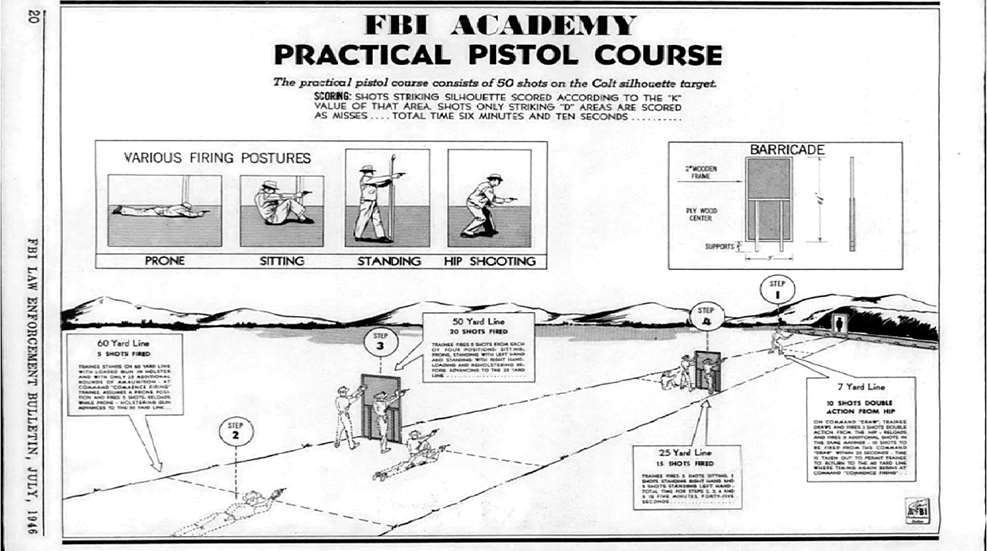
Police revolver training goes back to the 19th century and President Theodore Roosevelt. Before he was the President of the United States, he was President of the New York City Police Commission from 1895 to 1897. When he began that position, New York policemen furnished their own revolvers for duty. Roosevelt was impressed by the .32 Colt New Police revolver and ordered 4,500 to be issued to the New York police. Being dismayed by the lack of proficiency of the officers, Roosevelt instituted a school of pistol practice. He required officers, or “roundsmen,” as they were called, to practice and qualify with their issued revolvers.
Formal police revolver training began to become more common in the 1920s and 1930s, at least for large organizations. The Los Angeles Police Department began marksmanship training for its officers in 1925. Its range facility was comprehensive enough to be the venue for the shooting events of the 1932 Summer Olympics. The LAPD Pistol Team and Los Angeles Sheriff Department Team were well known in the 1930s for their prowess at exhibition shooting.
FPC WIN: Order Vacating Biden “Pistol Brace” Rule Stands, Government Dismisses Appeal
NEW ORLEANS (July 17, 2025) – This afternoon, Firearms Policy Coalition (FPC) and the federal government agreed to a joint dismissal of the government’s appeal in our Mock v. Bondi lawsuit, a case that successfully challenged the Biden ATF’s “pistol brace” ban rule and secured injunctive relief for gun owners while the case was being litigated to final judgment, which completely vacated the rule.
“Today is a great day for freedom and the American people,” said Firearms Policy Coalition President Brandon Combs. “The dismissal of this appeal should be the final nail in the coffin of this unconstitutional Biden ATF assault on gun owners. As we explained in the case filings, braced pistols are not ‘short-barreled rifles’. But either way, they are unquestionably arms protected under the Second Amendment. We are thrilled to have secured this important win for liberty and excited to take on even more unconstitutional laws so you can exercise your rights when, where, and how you choose.”
“The government is finally retreating from the Biden Administration’s patently unlawful effort to turn millions of peaceable people into felons by decree,” said FPC Action Foundation President Cody J. Wisniewski, an attorney for the challengers. “This horrible rule was a perversion of our system of limited government, so we’re glad to see this case resolved in favor of liberty and the rule of law.”
“This is a clear-cut victory and monumental step in preserving gun rights for future generations and safeguarding the firearms ecosystem from regulatory overreach,” said David Farrell, a Maxim Defense vice president. “This important achievement is the result of tireless dedication from the entire litigation team, not to mention the many supporters who have stood with us every single day. When we fight boldly and stand united, freedom prevails.”
If you want to support this important pro-Second Amendment win and FPC’s dozens of cases working to strike down unconstitutional gun control laws, join the FPC Grassroots Army at JoinFPC.org.
Today’s filing in Mock can be viewed at firearmspolicy.org/mock. The Mock case is part of FPC’s high-impact strategic litigation program, FPC Law, aimed at eliminating immoral laws and creating a world of maximal liberty. FPC is joined in this case by two individual FPC members as well as Maxim Defense. FPC Action Foundation is counsel of record for the Plaintiffs, alongside Benbrook Law Group, P.C. and Cooper & Scully, P.C. Schaerr | Jaffe LLP represented the plaintiffs during the preliminary injunction appeal. FPC thanks FPC Action Foundation for its strategic support of this case.
For over 90 years, the NFA has required that anyone interested in buying or building one of these weapons first submit an application to the ATF along with their fingerprints, a passport-style photo, and a $200 tax stamp before undergoing an enhanced background check. As the ATF notes, the $200 tax was “considered quite severe” in 1934 “to carry out Congress’ purpose to discourage or eliminate transactions in these firearms,” though it was never raised or adjusted to account for inflation. In today’s dollars, the figure would be well over $4,700.
But after January 1, 2026, those taxes will no longer be required for silencers, short-barreled firearms, or AOWs, making them significantly easier to obtain — jeopardizing public safety and resulting in an estimated $1.7 billion loss in tax revenue over the next decade.
The move is the latest attempt by the gun industry to chip away at the NFA. While NFA applicants previously had to be approved by the ATF and the chief law enforcement officers (CLEOs) in their areas, in 2016 — after lobbying from the National Shooting Sports Foundation (NSSF), the gun industry’s trade association — the ATF ruled that applicants only had to provide copies of their forms to CLEOs. The NSSF also lobbied for the ATF’s revamped “eForms” application system, which has led to dramatically faster approval times. …
— Greg Lickenbrock in Congress Cuts Taxes on Silencers and Short-Barreled Firearms
Gun Business: Indicators of Industry Unease Moving Toward Full-Blown
Earlier this week, I wrote that there was a climate of unease through the industry. Since then, that unease has become full-blown concern. That concern is reflected in Ruger’s quiet announcement of a reduction in headcount sent to employees last week from recently-appointed CEO and President Todd Seyfert (it was also disclosed in a filing with the SEC which is how we learned of it). Seyfert’s letter indicated a coming “organizational realignment” that would come with “severance and separation-related costs.”
Those costs were estimated at about three million dollars this year, but would produce “about $4 million in annual savings when fully implemented.” Translation: more to come.
“In support of our new structure— which is designed to improve alignment, efficiency and effectiveness — we made difficult but necessary personnel changes,” Seyfert wrote, “These moves were necessary for us to move forward with clarity and momentum.”
Included in the changes: “a leadership transition,” “inventory rationalization,” and “product repositioning.” Writing about the leadership changes, Seyfert referred to “right-sizing” Ruger’s Connecticut operations. In any business climate, especially today’s slowing one, “right-sizing” is generally considered a corporate euphemism for either layoffs of workers or termination of managers…or both.
You can’t stop the signal………..
First Nutty9 recovered in Australia — a wild FGC-9 derivative featuring the iconic printed bolt carrier held together with nuts and bolts. pic.twitter.com/WAvKLkzEZc
— White Worm Labs (@whitewormlabs) June 19, 2025
The Senate did it the easy way. They deleted everything but Machineguns and Destructive Devices from the list of definitions of what a NFA “Firearm” is.
🚨BREAKING🚨
The @SenFinance Cmte. has improved the One Big Beautiful Bill to FULLY REPEAL the National Firearms Act excise taxes on:
✅Suppressors
✅Short-Barreled Rifles
✅Short-Barreled Shotguns
✅Any other WeaponsThis is a massive victory for the Second Amendment!
— Gun Owners of America (@GunOwners) June 16, 2025
Ammo Under Pressure: Why America Must Reinforce Domestic Ammunition Production Now!
The U.S. ammo industry is facing a perfect storm. From new tariffs to hostile foreign suppliers, and explosive global demand, one thing is clear: America needs to make more of its own ammunition—and fast.
According to a recent NYTimes.com article, Bosnia’s ammo manufacturers, like Ginex in Gorazde, are on edge. The small Balkan town that once supplied ignition primers for countless U.S. cartridges is now paralyzed by uncertainty, thanks to new tariffs announced by President Trump. Rates have fluctuated wildly—35 % one week, then revised to 10%—but even the lower number is enough to make American customers think twice.
These much-needed and well-deserved tariffs, aimed at protecting American industry, may ironically cut off supplies that many U.S. ammo makers rely on, at least in the short term, to keep production rolling. Without primers, bullets don’t go bang. Period.
According to a detailed report from SAAMI (Sporting Arms and Ammunition Manufacturers’ Institute), U.S. commercial producers already carry the bulk of the load when it comes to total output—eclipsing even the federal government’s own Lake City Army Ammunition Plant. However, unlike the military, which produces only a handful of calibers, America’s commercial plants crank out over 130 different rifle rounds and 40 handgun types. They’re running at full tilt.
That’s why any disruption—be it government-mandated tracking rules*, foreign material shortages, or international tariffs—hits hard. Ammunition facilities in the U.S. move millions of components daily, and trying to micromanage every bullet is like asking UPS to track each peanut in a 40-pound bag. *CHALLENGES TO MARKING: SAAMI Report Page 3
In late 2024, China slammed the door on exports of two critical ingredients: nitrocellulose and antimony. Without these, there’s no smokeless powder, no primer compound, no ammo. China supplies over 63% of U.S. antimony—a key hardening element in bullets. American mines for these materials were shut down decades ago. Now, we’re scrambling to reopen sites like Idaho’s Stibnite Gold Mine, but that’ll take years.
The U.S. Army just broke ground on a massive new 6.8mm ammo plant in Missouri to support its Next Generation Squad Weapon program. That’s great news for defense readiness—but make no mistake, that plant won’t be making your 9mm range ammo or .308 hunting loads. Most handgun, shotgun, and rimfire ammo still comes from private companies, not Uncle Sam.
Dan Wolgin, CEO of Ammunition Depot, reminds shooters not to panic: “Most of our ammo is made right here in the USA.” But that doesn’t mean the risks aren’t real. Supply disruptions, material shortages, and panic buying can drive up prices or empty shelves faster than a Black Friday stampede. It’s not fearmongering—it’s math.
If COVID, Ukraine, and China taught us anything, it’s this: critical industries can’t be outsourced. America needs to:
Tariffs, foreign restrictions, and global conflicts are squeezing the ammo industry from all sides. While big factories like Lake City are building new military stockpiles, everyday shooters could face shortages if commercial production doesn’t keep pace.
We can’t shoot our way to freedom if we don’t make our own ammo. It’s time to reinvest in American manufacturing and end our reliance on foreign powder, primers, and politics. The Second Amendment means nothing without the brass, powder, and lead to back it up.
Pro tip: Stock up now. Not because the world is ending—but because it’s smart to stay ready when everything else isn’t.
ATF Seeks to Criminalize ‘Pinned and Welded’ Muzzle Devices
Are we honestly dealing with rogue agents or a duplicitous administration?
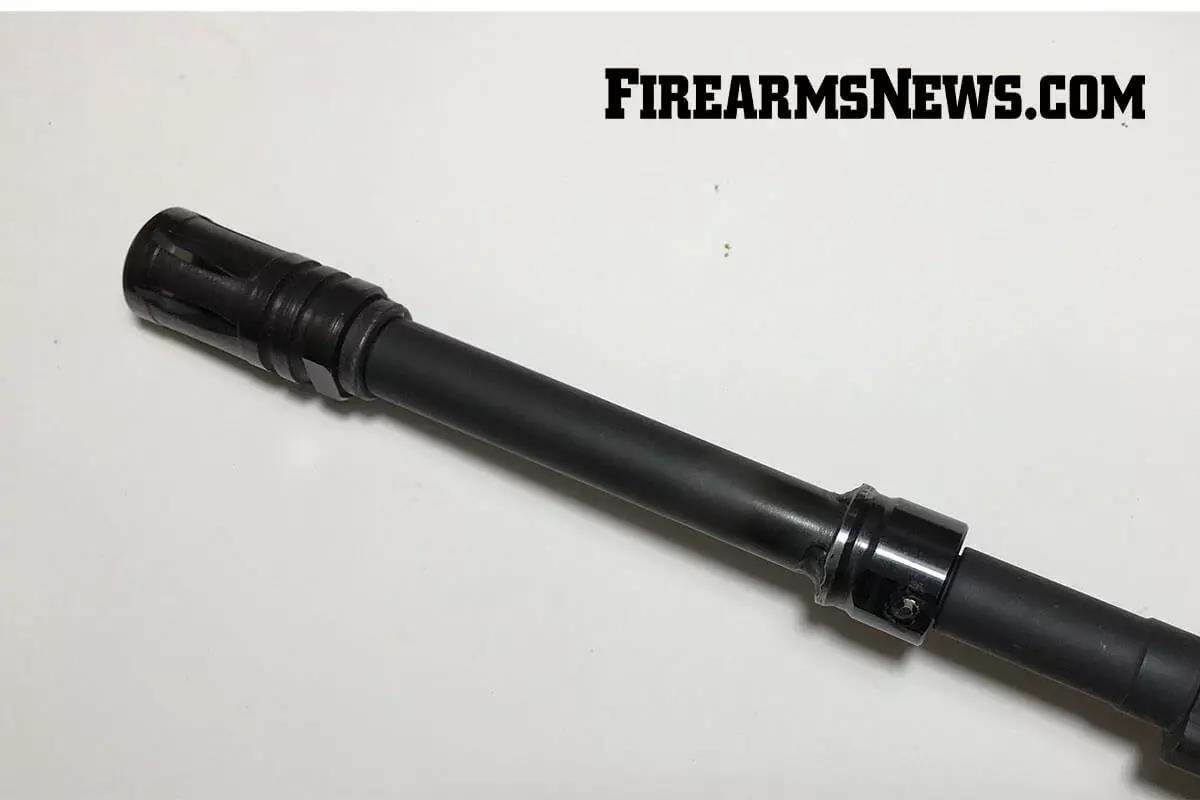
Pinned and welded muzzle device. (Photo Provided by Firearms News)
If you’ve been keeping score on gun rights for as long as I have, chances are you were thrilled to show Kamala the door last November, but your expectations for a pro-Second Amendment Trump administration were tempered at best, and increasingly dismal the deeper you looked into it. If that’s how you felt, I’d say you have a realistic perspective. Believe me, I wish I could survive on words and promises, but years spent on this earth have taught me that the most reliable model for predicting future behavior is past behavior.
Another relevant life lesson is to avoid getting sidetracked by distractions, positive or negative, while maintaining focus on the bigger picture. That’s why it comes as no surprise that the Bureau of Alcohol, Tobacco, Firearms and Explosives (ATF) is once again targeting gun owners with its “now it’s legal, now it’s not” routine, an all too familiar infringement dance for the firearms community.
We’ve been through this together with bump stocks, pistol braces, FRT triggers, and countless others, but it’s once more into the breach, dear friends, once more, this time concerning the long-since approved practice of pining and welding a muzzle device to a barrel to achieve a “permanent” legal length of at least sixteen inches. (Muzzle devices used in pin-and-weld custom gunsmithing include flash hiders, muzzle brakes, barrel extensions, fake suppressors, etc.) Plans for this new wave of attacks on our Constitutionally protected liberties were uncovered recently due to a Freedom of Information Act (FOIA) request from the Second Amendment advocacy group, Gun Owners of America (GOA).
What GOA has uncovered may seem like yet another rogue agent working against the promises of United States Attorney General Pam Bondi and her big, beautiful boss, the President, but as a subordinate who can easily be fired, something the Trump administration is known for being quite good at, can we really call these actions rogue if the agent still has a job? Ahhh, therein lies the conflict. Suppose our anti-American, anti-Constitution agent still wears an ATF badge. In that case, this person is acting at the behest of superiors, who start to seem either apathetic or straight-up two-faced at some point.
Well, surprise, surprise, she does continue to report for duty at the ATF, and the treasonous little snake is no stranger when it comes to attacking gun rights or being a complete imbecile. So, don’t bother getting up, and please, give a not-so-warm welcome to Eve E. Eisenbice, the subversive reptile behind such hits as claiming a water bottle could be considered a firearm, classifying a cheek rest as a stock in order to charge a gun owner under the National Firearms Act of 1934 (NFA), and testifying in court that possession of pillows and potatoes can potentially count as suppressors. I know my sarcasm and abrasive disposition towards these traitors might make you wonder if I’m simply attributing ridiculous hyperbole to Eisenbice’s “career,” but I’m not. She did those things, and really is that stupid and dishonest.
So, how did her latest mastery of the perfidious arts come about? Great question! The ATF’s Firearms Technology Industry Services Branch (FTISB) was involved in a case concerning a Beretta pistol imported by Amchar Wholesale. The firearm in question used the standard blind pin method to pin and weld the muzzle device to the barrel. This involves installing the device, drilling a small hole in it that penetrates slightly into the barrel’s threads, inserting a steel pin to prevent the device from being unscrewed, and then welding over the pin to secure it in place.
What the ATF did in this case was place the pistol in a bench vise, attach a breaker bar, and apply an obscene amount of torque. What this accomplishes causes permanent damage that will require the firearm to be rebarreled to function once again as it was meant to. That is precisely what the agency did. They broke the gun in order to say that the muzzle device did not meet the permanent requirement.
Unfortunately, this is the best and safest method to permanently affix a muzzle device, as welding its circumference directly to the barrel can damage the heat treatment, raising safety concerns due to the likelihood of a catastrophic failure. And let’s be clear, any monkey with a breaker bar can destroy a firearm the way the ATF did. It’s simple physics. But the fact remains that a pinned and welded muzzle device cannot be removed without modification or destruction of the barrel’s integrity.
You may be reading this, wondering if we haven’t yet found the right loophole to avoid having a barrel slightly shorter than sixteen inches not count as a short-barreled rifle (SBR) under the NFA, requiring an onerous paperwork and approval process along with an illegal tax stamp on a Constitutional right to the tune of $200. The problem is that this pin-and-weld method isn’t a loophole. It is a lawfully approved and widely used practice, as confirmed by a 2006 letter from the ATF.
If the ATF continues to be allowed to run roughshod over law-abiding gun owners like they have ad nauseam, the results could be quite terrifying. Legally compliant rifles could become illegally possessed NFA items overnight, a charge that carries a hefty prison sentence. This is a horrifying manner of destroying the lives of Americans and their families at the treacherous impulse of dishonest government employees and agencies, and it’s all happening under the noses of senior officials like Pam Bondi, Daniel P. Driscoll, acting director of the ATF, and President Trump himself.
What’s worse is that the solution is so simple. It involves little more than a flick of the pen and less than a minute of conversation. What is that solution? Fire this loser. And I mean 100% out on her ass. Do not pass go. Do not collect $200. A fortuitous tax stamp reference, perhaps? No benefits, no pension, just a straight march to the unemployment line and a good riddance salute. So why the crickets from our supposed Second Amendment crusading leaders? That can only be answered one way if they don’t take swift action. They are complicit, by order or by turning a blind eye. It doesn’t matter which one, because either scenario is a death knell for any more fake talk from the administration and the Department of Justice (DOJ).
My final thoughts on the subject concern the fact that this conversation should never have reached the ears of any American. First of all, the Second Amendment is neither long, convoluted, nor complex. It requires no interpretation from the literate. Second, for a barrel to meet the arbitrary sixteen-inch legal rifle length with a pinned and welded muzzle device, it typically needs to be between 13.9 inches and 14.5 inches. Is 2.1 inches or any such measurement really what we’re spending millions to litigate and destroying lives over? The NFA itself is a significant stain on the integrity of the American government and the oaths taken by politicians and judges to preserve and defend the Constitution. As long as it exists, alongside all other gun laws on the books, including the Gun Control Act of 1968 (GCA) and the Hughes Amendment in 1986, these charlatans will continue to soil the sacrifices of so many brave Americans who paid the ultimate price for our freedom and liberty.
The ‘Million Guns Sold A Month’ continues for the 63rd month.
Background Check Numbers Say Over 1 Million Guns Sold Last Month
As the country shifts gears heading into summer, gun sales remained historically strong, with over a million sold at FFLs in May.
At least 1,998,440 federal background checks were processed through the Federal Bureau of Investigation’s National Instant Criminal Background Check System in May 2025, a number that is statistically flat when compared to the May 2024 figure of 2,000,505.
The firearms industry trade group, the National Shooting Sports Foundation, adjusts the raw NICS numbers to remove gun permit checks and rechecks and leave the base number of checks done for over-the-counter sales. The adjusted figure for May 2025 stands at 1,071,685. This is a slight 1.6 percent decrease compared to the May 2024 NSSF-adjusted NICS figure of 1,089,117.
A key metric, according to NSSF, is that the sales continue to cruise north of 1 million per month, something the industry has maintained every month since July 2019.
“Background checks for retail sale of a firearm continue to remain over 1 million each month, showing that the right to keep and bear arms is of critical importance to Americans across this country,” Mark Oliva, public affairs officer with the NSSF, told Guns.com via email. “Despite economic uncertainty, these law-abiding citizens are investing in their personal safety and security – even in states where elected officials are pulling out all stops to limit the ability to legally purchase a firearm.”
The data crunched by the trade group is just a baseline. It does not cover privately made firearms in most cases, nor does it cover face-to-face personal sales in most states. Also, the ATF allows gun license holders in at least 28 states to show their credentials instead of a Brady check, and those transfers are not captured statistically in the NICS process.
“Firearm purchases are not an insignificant matter, and these background checks, while not a one-for-one comparison to a firearm sale, demonstrate the priority Americans place on their ability to exercise their Second Amendment rights,” said Oliva.
The Federal Government has taken the position that suppressors are arms under the Second Amendment, and cannot be banned!
This is from a filing a little bit ago in US v. Peterson. https://t.co/ESwnNnYTZm pic.twitter.com/exbclNPRGT
— Kostas Moros (@MorosKostas) May 23, 2025
Now, the next question when this passes is whether or not they’ll still be treated as ‘firearms’, requiring a NICS check & 4473 when purchasing at a dealer (but not regulating individual manufacture for personal use) or not.
House passes ‘One Big Beautiful Bill,’ completely removes suppressors from NFA
In a historic vote early Thursday morning, May 22, the U.S. House of Representatives passed H.R.1, known as the “One Big Beautiful Bill Act,” effectively eliminating suppressors from the National Firearms Act (NFA) of 1934.
On May 14, the House Committee on Ways and Means completed a markup of the reconciliation bill, reducing the tax on suppressors from $200 to $0. However, even in that form, suppressors would still have been subject to other NFA regulations.
In response, Buckeye Firearms Association joined a coalition of organizations nationwide in signing an open letter to two House committees, urging Congress to eliminate unjust restrictions imposed by the NFA. The letter pushed for broader reforms, including the removal of firearm suppressors, short-barreled rifles, and short-barreled shotguns from the NFA’s regulatory framework.
After an intense 20-hour markup hearing in the Republican-controlled House Rules Committee late Wednesday night, the House this morning narrowly approved the bill in a 215-214 vote. The legislation now moves to the Senate, with Section 2 of the Hearing Protection Act securing the complete removal of suppressors from the NFA.
Dean Rieck, executive director of Buckeye Firearms Association, expressed enthusiasm about the vote.
“This is a great day for the Second Amendment,” Rieck said. “For too long, the government has treated the right to bear arms as a second class right. We thank the House for its effort and now urge the Senate to add back the language stripped from the bill concerning short-barreled rifles and short-barreled shotguns.”
With the bill advancing to the Senate, supporters urge lawmakers to keep up the momentum in protecting Second Amendment rights.
Criticisms of the Military’s XM7 Rifle Spill Into the Open
When it comes to those of us who choose our own rifles, it’s possible to get the “perfect” gun. We each have our own wants, needs, and and preferences we can accommodate. Only the thickness of our wallets limit how satisfied we can ultimately be. Hunters, target shooters, people defending their families, and many law enforcement officers can pick the platform, choose the caliber, and select the accessories that will ride on it.
But the United States Army doesn’t get to do that. No matter how many wants and needs the military may specify in its procurement process, they still need to come up with a “one size fits most” solution. Sure, every soldier could theoretically build their own rifle that fits their tastes and the needs of their particular job, but that would make things far too expensive and complicated logistically. Worse, the military has to be prepared to go up against the mass manufacturing power of China, so volume has to be an important consideration, too.
The military’s answer in its search for a next generation rifle has been the XM7. Unlike the intermediate cartridge M16 and M4 rifles, the plan this time was to pack in a lot more pep, even at the cost of how much ammunition a given soldier can carry into the fight. That decision has, of course, led to inevitable comparisons with the M14 rifle, and virtual barrels of digital ink have been spilled criticizing the philosophy of battle rifles versus the intermediate-cartridge rifles virtually every military has shifted to since World War II.
But, despite widespread criticism, the Army has gone all-in on defending the brass’s choice of the XM7. The first soldiers to experiment with the weapon, we’ve been told, gave it glowing reviews. Then, subsequent units that picked it up had nothing but good to say about it. This led public opinion to waver a bit. Maybe the brass was right if all of the grunts love it…right?
It turns out that (as is often the case) we may not have been told the whole story. This video by Cappy Army goes into great detail on what the public and lawmakers were told about the XM7 versus what was actually said when soldiers were handed a copy of the rifle.
In short, the soldiers weren’t big fans. The rifle certainly has some upsides, and legitimate praise for it was passed on to the public. But, when anyone had something negative to say about the gun, that part got left out of press releases, reports, and other materials the public was given. As happens these days, many soldiers then took their unedited and uncensored feedback online, while a few more stubborn and brave officers decided to push against the chain of command to look at both the good and the bad.
The video itself is worth watching, but in a nutshell, it’s a mix of “the M14 haters were right,” technical problems with the gun (sloppy accuracy, jams, cases coming apart), and problems with overheating cans and faulty “smart” optics. Worst of all, feature bloat has led to the weapon weighing several pounds more than the old M14 ever did. There’s more recoil and reduced barrel life. And then there’s the fact that soldiers can only carry about two-thirds as many rounds into combat as they can for an M16/M4.
When faced with a captain’s report detailing these criticisms and calling the rifle “unfit” for its intended use, SIG SAUER said that he wasn’t close enough to the program and its goals to understand it. The company also made it clear that the rifle’s development isn’t yet fully complete, and that problems will still be resolved.
Again, it’s very much worth reading about the issues and responses to them in depth and watching the video above. I’m just scratching the surface here.
Unfortunately, House Republicans essentially gutted the effort to remove them from the NFA list and the best we’re looking at getting is the $200 tax stamp being dropped to zero.
But just on suppressors.
However, a rumor has been going around. The allegation is that a suppressor company is actively working to keep suppressors on the NFA list.
Jared Yanis over at Gun & Gadgets hit the high points in a video on Thursday.
Now, he doesn’t say anything definitive, only reporting what he’s hearing, as to whether Silencer Central is lobbying Congress to keep suppressors on the NFA list.
The argument makes some sense. Their business model is heavily influenced by the fact that they’re NFA items and thus tightly controlled. It’s entirely possible that they’ll lose a lot of market share if suppressors are largely deregulated.
Yanis also goes into the lobbying efforts made by Silencer Central that are strangely timed, considering all that’s gone on.
Over at Ammoland, John Crump reported on these allegations, naming the company specifically, including some mention of the lobbying efforts.
They responded to Crump, however, and said this:
Official Response from Silencer Central:
“Silencer Central is closely monitoring the ongoing congressional hearings surrounding the Hearing Protection Act (HPA). We have always been vocal supporters of the HPA, as well as the current proposed provision of a $0 tax stamp. Our priority has always been, and will continue to be, advocating for deregulation and 2nd amendment rights, while supporting any win we can get for our customers regarding their firearm and accessory ownership rights along the way. Regardless of the ever-changing regulatory landscape, we remain focused on delivering exceptional service and standing by the community we’re proud to be part of.” — Brandon Maddox, CEO, Silencer Central.
This statement marks the company’s first formal public response to questions about its lobbying strategy and its position on removing suppressors from the NFA.
Maddox’s statement is pretty definitive.
Crump also notes that Maddox has favored a different approach to the HPA, calling for what he described as a “crawl, walk, run” approach. However, that was also while Joe Biden was president, and his argument then was simply that Biden would never sign the HPA, which is fair.
It also doesn’t mean that because he favored that approach, then that he’d sabotage an effort to achieve more here and now when the odds are far better than they were then.
For what it’s worth, I reached out to Silencer Central on Thursday for comment–this was before I saw Crump’s story–and I haven’t heard back as of this writing. If I do, I intend to ask them follow-up questions about the lobbying efforts Yanis outlined in his video.
Now, I don’t know anyone mentioned in this post personally except for Yanis, whom I count as a friend. I can’t say anything about how trustworthy Maddox is because I don’t know him, so I’m going to err on the side of trust until or unless something new comes out.
If any company is working to undermine pro-gun legislation from within the firearm industry, we need to know who it is so they can get the Bud Light treatment, but we need more than rumors before we take that step.
oday, in accordance with President Trump’s Executive Order Protecting Second Amendment Rights, as well as the Attorney General’s Second Amendment Enforcement Task Force, the Department of Justice announced the settlement of litigation between the federal government and Rare Breed Triggers.
“This Department of Justice believes that the 2nd Amendment is not a second-class right,” said Attorney General Pamela Bondi. “And we are glad to end a needless cycle of litigation with a settlement that will enhance public safety.”
In June 2024, in Cargill v. Garland, the Supreme Court held that the Bureau of Alcohol, Tobacco, Firearms and Explosives (ATF) exceeded its statutory authority by issuing a rule classifying a bump stock as a “machinegun.” In July 2024, the Northern District of Texas applied Cargill v. Garland to a device called a “forced-reset trigger” (FRT) and concluded that FRTs also cannot be classified as a “machinegun.”
The Department’s agreement with Rare Breed Triggers avoids the need for continued appeals in United States v. Rare Breed Triggers and continued litigation in other, related cases concerning the same issue. The settlement includes agreed-upon conditions that significantly advance public safety with respect to FRTs, including that Rare Breed will not develop or design FRTs for use in any pistol and will enforce its patents to prevent infringement that could threaten public safety. Rare Breed also agrees to promote the safe and responsible use of its products.
The cases that will be resolved under the settlement agreement are:
Gun owners secure historic settlement with DOJ, ATF over Forced Reset Triggers
The Trump administration will also return all FRT devices that were seized by the Biden administration, if individual owners request the returns by September 30, 2025. Instructions for filing the requests will be posted on the ATF’s website.
Two gun rights groups on Friday signed a historic settlement with the Justice Department (DOJ) and the Bureau of Alcohol, Tobacco, Firearms and Explosives (ATF), over a series of lawsuits regarding Forced Reset Trigger (FRT) devices.
The settlement comes under a new presidential administration, which agreed to drop three pending lawsuits filed under the Biden administration and not prosecute owners of FRTs if the devices meet a legal definition upheld in a summary judgment last year.
The Trump administration will also return all FRT devices that were seized by the Biden administration, if individual owners request the returns by September 30, 2025. Instructions for filing the requests will be posted on the ATF’s website.
The agreement was made by the ATF, DOJ, National Association for Gun Rights (NAGR) and Texas Gun Rights (TXGR).
“This is one of the most stunning victories in the history of the gun rights movement. We didn’t just beat the ATF — we put them in a submission hold, and they tapped out,” NAGR President Dudley Brown said in a news release. “This decision marks a new era of holding the DOJ and ATF accountable when they trample the rights of law-abiding gun owners. We made them give back what they took, and that’s a precedent they’ll never forget.”
