
As soon as the demoncrap conventions ends, Trump upstages Harris.
WATCH 🔥
RFK Jr’s EPIC entrance to President Trump’s rally in Arizona after endorsing Trump pic.twitter.com/iL4RMlKK4D
— Benny Johnson (@bennyjohnson) August 23, 2024

As soon as the demoncrap conventions ends, Trump upstages Harris.
WATCH 🔥
RFK Jr’s EPIC entrance to President Trump’s rally in Arizona after endorsing Trump pic.twitter.com/iL4RMlKK4D
— Benny Johnson (@bennyjohnson) August 23, 2024
Kamala Harris And Tim Walz Really Don’t Like The Second Amendment
The first ten amendments to our Constitution are known as the “Bill of Rights” for a reason — within it are denoted numerous “rights” that belong to individuals and which are guaranteed as such against government limitation. Any American elected official who fails to grasp this foundational principle, or who understands it but refuses to accept it, is undeserving of holding public office. Take, for example, Kamala Harris.
Our current vice president, the Democrat Party nominee for president, is on record positing that one of those fundamental individual liberties expressly guaranteed against government intrusion, does not actually protect an individual right after all. So much for the clear language and history underpinning the Bill of Rights.
Not surprising, the context in which Harris has taken such a posture openly antithetical to the very principle on which the Bill of Rights was ratified in 1791 is the Second Amendment guaranteeing the right to keep and bear arms. She proudly lent her name as the then-district attorney for San Francisco, to a legal brief opposing what turned out to be the seminal 2008 Heller decision that declared expressly that the Second Amendment does in fact protect an individual right to possess a firearm.
Harris’ stance set forth in that legal brief tells us all we need to know about her disdain for the Second Amendment.
In the years since Heller, Harris has continued to support all manner of government restrictions on possession of firearms by law-abiding citizens, including among other measures, confiscatory bans on the country’s most popular rifle the AR-15, lauding Australia’s draconian gun confiscation program and most recently, criticizing the Supreme Court’s Cargill decision in June that stopped the ATF from arbitrarily declaring “bump stocks” to be “machine guns” under federal law.
The choice of Minnesota Gov. Tim Walz as her running mate is further hard evidence of where the current vice president stands with regard to the rights supposed to be guaranteed under the Second Amendment.
As governor of the North Star State, Walz has supported and signed legislation expanding so-called “red flag” laws and background checks for gun purchases that go beyond those already mandated under federal law. It was a quite different story during Walz’s tenure in the U. S. House of Representatives from 2007 to 2019, however, when he needed and avidly sought the support of the NRA.
In the language du jure for what previously was known quite accurately as “flip-flopping,” Walz now declares his views have “evolved” such that he criticizes the NRA by name, and declares he is proud to be the recipient of an “F” rating from the Association that supported him previously. He has made a show of donating to charity a sum of money equal to that which he happily received from the NRA while a congressman.
And oh, how his positions have “evolved.” For example, that most popular rifle in the country among law-abiding citizens – the AR-15 — now is considered by Walz a “weapon of war” that must be banned.
As with many latecomers to the gun control movement, Walz considers his anti-Second Amendment views appropriately constitutional because, well, they help “keep our kids safe.” Lost in his probably cursory study of the historical underpinnings of the Second Amendment, and even as reflected in recent Supreme Court decisions (most notably the 2022 Bruen decision), is the fact that “keeping kids safe” is nowhere to be found even impliedly in any writings by our Founders justifying the Second Amendment (or elsewhere in the Bill of Rights for that matter).
To Walz, as to his gun control colleagues in Washington, including Kamala Harris, “common sense” equates seamlessly to “constitutional.”
It will be interesting to see how Harris’ and Walz’s extreme anti-Second Amendment views will resonate nationally with voters who do not live in the states they have represented in public office (California and Minnesota), particularly considering that private ownership of handguns for self-defense continues to rise across the country, especially among women and Black Americans. Hopefully a majority of votes tallied after the polls close Nov. 5th will reject the views of the Democrat Party’s national ticket that the Bill of Rights can be casually discarded based on their vague notion of “common sense.”
Bob Barr currently is President of the NRA.
Note to NRA: This Isn’t How You Get That ‘Homecoming’ You Want
A couple of weeks ago, the NRA’s Doug Hamlin called for a “homecoming.” He wanted gun rights advocates to return to the new and improved NRA. Wayne LaPierre is out and things are returning to normal there.
I get where he’s coming from and while I believe that if the NRA disappeared tomorrow, someone would step in to fill the void, the truth of the matter is that it’ll take longer for that to happen than I’d like and during that time, our right to keep and bear arms could be severely damaged. So we need something that void now and rebuilding the NRA is probably much faster than hoping someone else steps in quickly.
I want Hamlin to get that homecoming.
However, if that’s the goal, this isn’t exactly a winning strategy.
We love our guns here in the Great Land. Alaska is in the top five states with the highest per-capita gun ownership; as I’m fond of pointing out, up here in the valley, even the hippies have guns, and know how to use them. Most of us aren’t overly concerned about human predators, although that can happen; most Alaskans keep guns to put food on the table and to occasionally fend off a big hairy beast.
But we also know that the Second Amendment has nothing to do with hunting or fending off big toothy critters. Therefore it comes as something of a surprise to see the National Rifle Association endorsing Alaska’s Democrat at-large Representative Mary Peltola for reelection. (Full disclosure: My wife and I are both Life Members of the NRA and have been since the mid-90s.)
Peltola is Alaska’s sole representative and an advocate for the Second Amendment. On her campaign website, she said she owns 176 long guns and dares “someone to tread on Alaskan freedoms.”
In a statement to The Hill, she said she campaigned in 2022 on a “pro-freedom platform” and continues that to this day.
“Guns are an integral part of Alaska’s culture and our subsistence lifestyles,” Peltola said. “Alaskan gun [owners] are the strongest proponents for responsible gun ownership. We pass down our knowledge and skills to our children.”
Peltola argued that the endorsement may help the country understand Alaskan culture and see “the importance of the Second Amendment in communities.”
Except, that’s not what Mary said only a couple of years ago. From the Great Land, Must Read Alaska’s Suzanne Downing had this to say:
Just two years ago, the NRA rated Peltola with a “D.” Now, an endorsement? What has changed? Even the Gun Owners of America has rated Peltola with an “F.”
Peltola wants gun control measures, such as universal background checks, waiting periods, and gun storage laws.According to The Washington Post in 2022, “During her campaign, Peltola said she wants a national law protecting abortion rights and favors some gun-control measures, such as universal background checks.” (Azi Paybarah, “Who Is Mary Peltola, The First Alaska Native In Congress?”)
On a questionnaire for the Anchorage Daily News, Peltola supported universal background checks and waiting periods for gun purchases.
Well, this is awkward.
Had the NRA not graded her a “D” just a couple of years earlier, it would be easy to say they were unaware of her anti-gun tendencies. Instead, they clearly knew she wasn’t exactly a champion of the right to keep and bear arms. Someone at the organization did, and one would assume that if nothing else, records were kept.
And yet, here we are.
There’s One Lesson We’d Do Well to Learn from Gun Grabbers
The gun control crowd isn’t exactly filled with my favorite people.
And on so many things, they’re completely and totally wrong.
But there’s a saying about blind squirrels and nuts. It’s not that different from the one about the accuracy of dysfunctioning wall-mounted timepieces, really. The gist is that even the most unlikely people do something right. At least, for values of “right.”
So to have the gun control crowd done something we’d do well to emulate.
Propelled by and fed up with what they see as a lack of progress when it comes to addressing America’s epidemic of gun violence, many activists like Brooks, who have felt the effects of gun violence first hand, are embracing a new tactic: running for elected office. For political organizers, this group represents a promising new cohort, whose members, if elected, may finally move the needle on gun reform.
“There is a new wave of activists-turned-candidates, particularly among women and mothers, who are no longer willing to stand by,” Brooks said. “How can we not think about our kids?”
Pinpointing the moments that led them to run for office comes easily to these candidates.
For Emily Busch, who is running for a US congressional seat in Michigan, it was the November 2021 mass shooting at Oxford high school, where her son was a freshman, that propelled her to action. The event left four dead and seven injured. “My son ran for his life with 1,700 other kids,” Busch said. “It’s something that you never ever want to experience, which is why I’m running.” …
“I think we’re going to be more passionate because we’ve experienced it,” she said, emphasizing the growing need for “leaders who understand this issue on a personal level and who can bring authentic, passionate advocacy to the legislative process”.
That same vision is driving progressive groups to find more candidates who are willing to run for office on gun violence platforms. Last February, nearly 50 new candidates gathered in Las Vegas with Demand a Seat, an initiative to train gun safety advocates to run for office and work on campaigns offered by advocacy organization Everytown for Gun Safety.
At the four-day boot camp, participants received mentorship from veteran politicians, training in the fundamentals of campaign building and guidance in how to effectively elevate a gun safety platform.
The program capitalizes on a trend that gun safety advocates have been witnessing for several years. “Gun safety is actually good politics now, it’s not just good policy,” said Moms Demand Action’s executive director, Angela Ferrell-Zabala. “Folks [are] choosing to run and win on gun safety.”
Here’s the thing. These aren’t just people who favor gun control. We can beat those folks easily.
What’s working for them is that these are people who have personal stories about violence committed with a firearm. It’s about how they or their families have been touched by this violence. That’s a lot harder to counter. People love stories and they respond to them. They respond to emotion, too, and these people’s stories are disturbing to think about happening to your family.
Yet there’s a counter to this and it’s not that difficult to understand.
We need people who have used guns to defend themselves to run as gun rights supporters. We need those who have been touched by violence and who remain supportive of gun rights because of how things went with their experiences. In short, we need to be able to counter with stories and emotions of our own.
Yes, the mothers of kids who were present at mass shootings is powerful, but so is the mother who defended her kids with a loaded Glock 19.
It’s easy to say we shouldn’t be basing this sort of thing on emotion. It’s not even wrong to say it. It’s just irrelevant because most people aren’t really interested in listening. They’ve been taught that their feelings are what matters, so that’s what they “think” with.
We can and should try to change that, but in the meantime, why not recruit those who have their own pro-gun stories to tell to run for office so we can put this whole thing in check?
We can learn something from the gun grabbers. We can learn how to beat them.
“JD Vance is weird” pic.twitter.com/IdZQlX0OLj
— Libs of TikTok (@libsoftiktok) July 29, 2024
New Hampshire: Critical Pro-Gun Privacy Bill Signed Into Law
On Friday, July 12th, Governor Chris Sununu (R-New Hampshire) signed HB 1186, “an act relative to firearm purchaser’s privacy,” into law. Thanks to the tireless work of leading New Hampshire gun rights advocate Rep. Jason Janvrin (R-Rockingham District 40) and the strong support of NRA members, New Hampshire becomes the seventeenth state to protect the privacy of law-abiding gun buyers by prohibiting financial institutions from collecting and misusing their personal information.
The NRA and its members thank Governor Chris Sununu, Rep. Jason Janvrin, and pro-gun New Hampshire lawmakers for supporting Granite Staters’ Second Amendment rights.
In the Fall of 2022, the International Organization for Standardization (ISO) approved a Merchant Category Code (MCC) for firearm retailers. MCCs are used by payment processors (like Visa and Mastercard) and other financial services companies to categorize transactions. MCCs enable payment processors and banks to identify, monitor, and collect data on certain types of transactions. Before the ISO decision, firearm retailers fell under the MCC for sporting goods stores or miscellaneous retail.
Collecting firearm retailer financial transaction data amounts to surveillance and registration of law-abiding gun owners. Those promoting this scheme are in favor of firearm and gun owner registrations. Therefore, it should be assumed that the goal of this program is to share all collected firearm retailer MCC data with government authorities and potentially private third parties that may include gun control organizations and anti-gun researchers.
HB 1186 prohibits the assigning of a specific merchant category code to the sale of firearms, ammunition, or firearm accessories and provides a civil penalty for violations.
This critical legislation protects gun-owners privacy and ensures that bad actors cannot use credit and debit card transactions to create a gun-registry or block cardholders from making gun-related purchases.
Republicans at RNC Don’t Budge In Face of Latest Anti-Gun Onslaught
We’ve spilled a lot of digital ink on all the people pushing for gun control in the wake of the attempted assassination of former President Donald Trump. We’ve seen it from celebrities and athletes, to say nothing of politicians, even Biden who only calls for assault weapon bans on days that end in the letter “y.”
A lot of people are shocked that Republicans aren’t tripping over themselves to back gun control.
And let’s be real, if that was going to happen, it would happen at the Republican National Convention. Kicking off just a couple of days after the attempt on Trump’s life, you’d imagine emotions would be high and if they were ever going to do it, it would be here and now.
Only, as the Washington Times notes, it ain’t happening.
Republicans at their party convention said their commitment to gun rights and expanding concealed carry wasn’t diminished by the assassination attempt on former President Donald Trump.
The party, according to delegates and lawmakers at the Republican National Convention, remained steadfastly opposed to sweeping gun control laws such as a ban on so-called assault weapons such as the AR-15-style rifle used by Mr. Trump’s would-be assassin.
Addressing a gathering of Second Amendment activists at the convention, Rep. Wesley Hunt of Texas said the attack Saturday on Mr. Trump only proves that firearms in the hands of law-abiding individuals are necessary.
“There are 400 million guns currently in circulation. Guns aren’t going anywhere,” Mr. Hunt said. “The only way to stop a bad guy with a gun is a good guy with a gun, and that guy is now dead because a good guy with a gun shot him.”
He added, “Imagine how many moral lives were spared because that sniper acted and took him out immediately.”
I just want to jump in here and point something out for all those anti-gun voices that laugh at the “good guy with a gun” thing: Law enforcement are good guys, too.
Many times, the good guy with a gun is a cop of some stripe, but the issue with counting on that is that cops aren’t always present and able to protect you. Trump had an entire detail charged with protecting him and we see how that went.
Moving on…
Rep. Kat Cammack of Florida assured gun-rights activists at the gathering, which was sponsored by U.S. Concealed Carry, that the platform’s drive-by treatment of the Second Amendment did not mean Republicans were less concerned about the issue.
“Everyone has always and will forever associate the conservative movement as right in line with the principle of 2A — ’shall not be infringed,’” she said. “Just because we don’t explicitly talk about it in a political platform for a single cycle doesn’t mean that we are not absolutely adherent to the belief that Americans have the right to defend themselves.”
Ms. Cammack said Republicans in Congress are working on passing national reciprocity legislation that would enable legal gun owners to carry concealed firearms across state lines, similar to how a driver’s license works.
That’s great.
Of course, it should have passed nearly eight years ago when Republicans controlled every branch of government, but better late than never, I suppose.
Regardless, it seems Republicans at the RNC aren’t remotely interested in buckling to the anti-gun agenda, especially in the wake of the attempt on Trump’s life. No one is taking it lightly or think it’s not a big deal, either. We just all seem to understand that nothing we said before Saturday’s attack has fundamentally changed. Gun control wouldn’t have prevented that attack and claiming otherwise is ridiculous.
That hasn’t stopped the usual suspects, mind you, but they’re so fanatical about pushing an anti-gun agenda, rationality isn’t really in their wheelhouse.
I’m just heartened to see gun rights remain respected at the RNC under the current circumstances.
Trump Dodges Another Bullet: Jack Smith
Everything really is going Donald Trump’s way in the six weeks since his conviction on May 30. Trump pulled in a vast fundraising haul after the conviction, jumping ahead for the first time in the campaign cash race while his conviction barely dented his standing in the polls. The intermediate appeals court in Georgia issued a stay order halting Fani Willis’s prosecution of Trump.
\The Supreme Court took two big bites out of Jack Smith’s indictment of Trump in D.C., with an immunity ruling and a decision on the obstruction-of-a-proceeding statute that will both require further, time-consuming litigation to see how they have narrowed the case. Acting Justice Juan Merchan delayed Trump’s state-court sentencing in New York from mid July to mid September in order to consider whether Trump’s conviction violated his immunity from having evidence of official acts introduced at his trial. His opponent melted down so badly in their first debate that Joe Biden is still fending off calls to drop out of the race, and has reportedly seen his fundraising dry to a trickle with big donors.
Then, Trump survived an assassination attempt and emerged looking vigorous and defiant. He will probably raise another mountain of cash after the shooting in Butler, Pa., which left a flustered Biden scrambling to pause his attack ads and reconsider the vitriol of his attacks on Trump. MSNBC even sidelined Morning Joe for the day out of fear of going overboard against Trump. And now, rolling into today’s curtain-opening of the Republican convention and announcement of Trump’s running mate, Judge Aileen Cannon has thrown out what once seemed the strongest of the cases against the former president: the retention of boxes of classified and sensitive documents at Mar-a-Lago after Trump left office.
Donald Trump Just Won
The shooter wasn’t just evil, but stupid
Regular readers of this newsletter, and people who hate my guts, don’t need to be told my opinion of Donald Trump. And speaking as someone who has managed to stay off the Trump Train for the past eight years:
This kicks ass.

The guy almost gets his brains blown out on live TV, and he stands up with blood on his face and pumps his fist in defiance. I think he said, “Fight!” Or maybe some other F-word. Whatever it was, it was awesome.
It may be the most American thing I’ve ever seen with my own eyes.
Whatever you may think of him as a person, or a past and probably future president, Trump showed us who he is in a moment of crisis.
And not a “crisis” like global warming or a Supreme Court ruling or the price of almond milk at Starbucks, but the crisis of actually getting hit in the head by a would-be assassin’s bullet.
Remarkable. My non-MAGA hat is off to him.
I’m glad the assassin missed his target, I’m angry that he killed a bystander, and I look forward to finding out how the hell the Secret Service allowed it to happen.
The shooter wasn’t just evil, but stupid. He just handed the election to the guy he wanted to kill.
How does Trump lose after this?
WASHINGTON – Federal regulations prohibit any licensed importer, manufacturer, dealer, or collector to sell or deliver any firearm to an individual who does not reside in the state in which the licensee’s place of business is located.
U.S. Senator Kevin Cramer (R-ND) led his colleagues in introducing the bicameral Firearms Interstate Commerce Reform Act (FICRA) to modernize and streamline the legal framework governing interstate firearms transactions. House Majority Leader Steve Scalise (R-LA-01) introduced a companion measure in May.
“The Second Amendment rights of law-abiding citizens should not dissipate at state lines,” said Cramer. “For decades, outdated regulations have placed unnecessary burdens on our nation’s federal firearm purchasing laws. The Firearms Interstate Commerce Reform Act fortifies Second Amendment liberties by ensuring citizens can purchase and bear arms nationwide. It also enhances lawful commerce and supports our military members and their families, all while respecting states’ laws and regulations.”
“Our federal firearm purchasing process is unnecessarily complicated and is unfair for law-abiding citizens, small businesses, and our service members willing to put their lives on the line for our country. The need to modernize and simplify our federal firearm purchasing laws is long overdue and I’m pleased this bill will finally right this wrong,” said House Majority Leader Scalise.
Additional cosponsors include U.S. Senators John Barrasso (R-WY), Marsha Blackburn (R-TN), Ted Budd (R-NC), Bill Cassidy, M.D. (R-LA), John Cornyn (R-TX), Tom Cotton (R-AR), Mike Crapo (R-ID), Steve Daines (R-MT), John Hoeven (R-ND), Cindy Hyde-Smith (R-MS), Cynthia Lummis (R-WY), Roger Marshall, M.D. (R-KS), Markwayne Mullin (R-OK), Jim Risch (R-ID), Rick Scott (R-FL), Tim Scott (R-SC), and John Thune (R-SD). The legislation has been endorsed by the National Rifle Association (NRA) and the National Shooting Sports Foundation (NSSF).
“This legislation would modernize the way firearms are sold under federal law and remove arbitrary barriers for law-abiding gun buyers and sellers,” said Randy Kozuch, Executive Director of NRA-ILA. “On behalf of the NRA’s millions of freedom-loving members, we applaud Senator Cramer for championing this legislation to benefit gun owners nationwide.
“This is common-sense legislation that would allow law-abiding Americans to purchase firearms of their choosing while ensuring state and federal laws are enforced,” said Lawrence G. Keane, NSSF Senior Vice President and General Counsel. “Americans are allowed to purchase long guns across state lines. This bill would extend that right to handguns. Your Second Amendment right to acquire and keep a handgun for self-protection does not end at your state’s border. This bill would remove an arbitrary and unconstitutional infringement on Americans’ Second Amendment rights.”
2024 Republican Platform Drops Gun-Rights Promises
In its first official platform since 2016, the Grand Old Party (GOP) slashed all mention of its gun policy positions.
The Republican National Committee (RNC) Platform Committee voted 84-to-18 on Monday to adopt the new 2024 platform language after skipping the process entirely in 2020. The finalized document leans into former President Donald Trump’s “America First” outlook and parrots many of his stances on issues ranging from immigration to trade. However, it also minimized the party’s emphasis on gun policy compared to its previous platform.
The entire platform discusses gun rights just once, in a preamble statement about the party’s dedication to defending “our fundamental freedoms, including freedom of speech, freedom of religion, and the right to keep and bear arms.” The final product omits any discussion of tangible gun policy ideas.
The Republican Party platform’s downplaying of Second Amendment issues comes as the gun-rights movement finds itself in a precarious position politically. As guns have become increasingly polarized along party lines, gun-rights supporters have found themselves reliant on Republicans for political support. President Joe Biden has made gun control a fixture of his tenure in office and is already campaigning on even more sweeping proposals, including a ban on sales of the popular AR-15, in a potential second term. At the same time, while the GOP’s current standard-bearer has continued to seek the support of the National Rifle Association and make promises in speeches to the group, he has been fickle on gun policy at times. His felony convictions also mean he can no longer legally own or possess firearms.
Aren’t Gun Rights a Valid Presidential Debate Topic?
While Thursday night’s presidential debate was agonizing for many Americans to watch, President Joe Biden and former President Donald Trump did address some important issues ranging from our porous southern border to abortion to the downward spiraling economy.
What was glaringly absent, however, was any discussion of gun control and the Second Amendment-protected right to keep and bear arms.
Call me cynical, but I believe that was by design. CNN, which hosted the debate, is a media standard bearer for all things gun control. In fact, the network hasn’t seen a restrictive gun proposal that it hasn’t embraced. And both Biden and Trump have spoken out often on the matter, just like they have on other issues, leaving little doubt where they stand on the right to bear arms.
Perhaps they thought he might spout off one of the standard soundbites he has used multiple times in the past. Phrases like, “Deer don’t wear Kevlar vests,” (duh!) and, “Nobody could own a cannon during the Civil War period,” (an outright lie) don’t engender a lot of trust in a leader. And such answers would likely have drawn a quick—and probably humorous—response from Trump.
Perhaps CNN was worried he would say something about “military-grade assault weapons” when talking about common semi-automatic rifles, or even that the firearm industry is the “only industry in America that has immunity”—both well-debunked falsehoods. Or maybe they thought he’d revert to the old chestnuts that you don’t need: “20, 30, 40, 50 clips in a weapon”, “magazines that can hold multiple bullets in them” or a “magazine with 100 clips in it.”
Fact is, Biden is quite possibly the most anti-gun president in history, as well as arguably the worst. Of course, we’ve chronicled his anti-gun schemes many, many times here at TTAG.
He wants to ban common guns and magazines, let gun companies be sued into oblivion for criminal use of their legally made and marketed products and make a background check mandatory even for private gun sales between family and friends. His ATF has made things so difficult for gun dealers that many have left the business to avoid persecution, and he even created a so-called White House Office for Gun Violence Prevention to help enable anti-gun state legislators to push his gun-ban schemes at the state level.
While I can’t say Trump was the most pro-gun president in history, except for the ill-conceived bump stock ban, he was a pretty good friend to gun owners. And his federal judicial nominations at the circuit court level and to the U.S. Supreme Court have enabled many Second Amendment victories that we wouldn’t have won with a Democrat in the White House instead of Trump.
His recent speech at the NRA Annual Meetings and Exhibits in Dallas gives us some food for thought.
“Let there be no doubt, the survival of our Second Amendment is very much on the ballot,” Trump told the crowd gathered there. “We need the [Second Amendment] for safety. Because you know the bad guys are not giving up their guns…
“The NRA has stood with me from the very beginning. And with your vote I will stand strong for your rights and liberties.”
In the end, questions about gun control, like questions about nearly anything else, would have been losing questions for the sitting president. And while the debate was a pretty fair one, CNN chose to avoid asking Biden about his gun policies because it likely would have made him look even worse.
That omission is a true tragedy in a day and time when advocates of freedom constantly battle at all levels of government to retain our right to keep and bear arms as protected by the Second Amendment. Many people I know are one-issue voters. And that issue—a very important one to many people—wasn’t even discussed Thursday night.
Take a minute to get through the accent. I wouldn’t say ‘education’ per se is the problem. An indoctrination of a partisan agenda feeding the normal fallen human condition is.
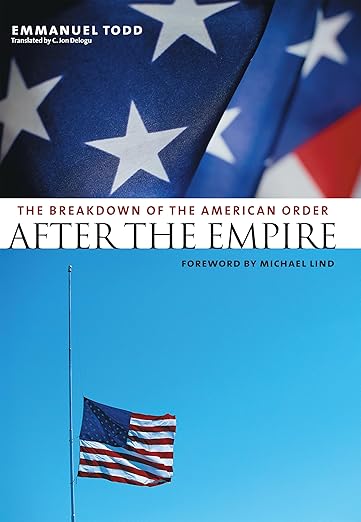
What if democracy is merely the politic or superstructure of a particular cultural stage? Simple mass literacy in that case, continuing advances in teaching and learning in secondary and post-secondary levels will necessarily upset democracy in the places where it first appeared. Secondary education and especially higher education will introduce the notion of inequality into the mental and ideological organization of developed societies. After a brief period of hesitation and scruples the more highly educated end up believing they are truly superior.
In developed countries, a new class is emerging that comprises roughly 20% of the population in terms of sheer numbers, but controls about half of each nation’s wealth. This new class has more and more trouble putting up with the constraints of universal suffrage. It is a surprising return to the world of Aristotle, in which oligarchy may replace democracy at the very moment when democracy is beginning to take hold in Eurasia, it is weakening in those places where it was born.
These are indeed curious democracies, in which the political system pits elitism against populism and vice-versa. And although universal suffrage persists in theory, the elites of right and left close ranks to block any reorientation of economic policies that would lead to greater equality.
The common understanding among the elite, reflection of a common superior language among them prevents any correcting of the political system facade when universal suffrage would suggest the possibility of crisis.
Emmanuel Todd, After the Empire: The Breakdown of the American Order, (2001)
ANTI-GUN POLITICIANS DISPARAGE SCOTUS AS SECOND AMENDMENT CASES, ELECTION LOOMS
There’s a troubling trend by certain politicians to salt the ground at the U.S. Supreme Court before more significant firearm-related cases can be argued and decided. Politicians are disparaging the justices in an attempt to politicize the Court and delegitimize decisions even before arguments are heard. It’s unfolding in the cruelest ways, and it threatens the separation of powers between the three co-equal branches of government – the Executive, Legislative and Judicial Branches.
It is also a reminder that November’s presidential election carries with it added significance for the future of the Judiciary.
Just last week, Chief Justice John Roberts rejected a request by U.S. Senate Democrats to meet to talk about Supreme Court ethics and a ginned-up controversy over Justice Samuel Alito flying flags outside his homes in Alexandria, Va., and Long Island Beach, N.J. The first incident stemmed from a 2021 dispute with a neighbor who personally targeted Justice Alito’s wife, Martha-Ann, seemingly as a form of protesting the violence of Jan. 6. Mrs. Alito made the sole decision to fly an inverted flag at their Virginia residence in response to a neighbor’s pointed attacks. More manufactured controversy stemmed from Mrs. Alito flying an “Appeal to Heaven” flag at their New Jersey residence in 2023, despite San Francisco’s City Hall flying a similar flag, only to quietly take it down last month after the media uproar.
Justice Alito responded to Senate Democrats’ demands that he recuse from cases involving Jan. 6 based on these contrived controversies. He explained, in part, that a “reasonable person who is not motivated by political or ideological considerations or a desire to affect the outcome of Supreme Court cases” would not conclude that he needed to recuse. But the harassment campaign against the Supreme Court will certainly continue. This latest attempt is a reminder that the Court will be a factor in the upcoming election and the future of Second Amendment rights for law-abiding citizens.
Former President Donald Trump campaigned in 2016 with a promise to nominate justices “first and foremost, based on constitutional principles, with input from highly respected conservatives and Republican Party leadership.”
From that came Justice Neil Gorsuch, who President Trump described as “very much in the mold of” the late Justice Antonin Scalia. Justice Brett Kavanaugh’s nomination followed, and was marked by a tumultuous confirmation hearing that included uncorroborated, decades-old allegations. Justice Amy Coney Barrett’s nomination and confirmation followed in 2020, giving President Trump three additional originalist justices on the bench to serve alongside Chief Justice Roberts and Associate Justices Clarence Thomas and Alito.
Since President Joe Biden took office, he nominated Justice Ketanji Brown Jackson who was confirmed in 2022. With the 2024 election looming, President Biden is making promises to nominate his own brand of jurist to the Supreme Court.

I am hoping there are still a few rational Democrats in existence, so I am writing this post in hopes reason will pull them back from the abyss they are about to throw the United States into.
The following statements are indisputable, verifiable facts:
1. The criminal prosecution of the leading Presidential candidate of the opposition party is a wholly unprecedented event that violates all American political norms.
2. In recorded world history, literally every time a nation’s ruling political party acts against prevailing political norms and imprisons or kills the leadership of its major political opponent, the history books record such action as tyrannical despotism.
Think about it, just as examples—Ancient Greece and Socrates; Ancient Rome and Julius Caesar; the French Reign of Terror; Russia, Lenin and the Romanovs; Stalin and his purges; every other Soviet premier and the Gulag; Nazi Germany (enough said); the British Raj and Gandhi; Mao’s Cultural Revolution; Lech Walesa, Vaclav Havel and the Warsaw Pact versions of Poland and the Czech Republic; South Africa and Nelson Mandela; Vladimir Putin and everyone who ever opposes him; the list goes on and on and on. History records EVERY SINGLE EXAMPLE of this phenomenon as the embodiment of abject evil and tyranny.
3. When tyrants imprison their opponents, they always justify the action as being necessary and lawful. Always. Without exception. Additionally, when that happens, there are MILLIONS of citizens who believe in good faith that their leaders’ actions are justified. Average Germans in 1933, average Russians in 1917 and average Chinese in 1970 all GENUINELY BELIEVED that they were the good guys and the actions of their leaders were entirely justified.
These are facts.
Indisputable.
Undeniable.
Here’s another set of facts: in the USA in 2024, the ruling party is seeking to imprison the leader of the opposition party, acting against historical political norms; the leadership doing this believes its actions are necessary and lawful; and average American Democrats believe fervently that the actions of their leaders are entirely justified. The parallels to historic tyranny are powerful, precise and alarming.
Democrats, please consider these facts. I implore you to reconsider your actions. You are not the good guys. Instead, you are the average German of 1933 or the average Chinese citizen of 1970. I warn you now:
History is about to mark you as yet another despicable entry in the pantheon of evil tyranny.
Step back from the abyss. There is still time.
Jury is chosen in Hunter Biden’s federal firearms case and opening statements are set for Tuesday
WILMINGTON, Del. (AP) — A jury was seated Monday in the federal gun case against President Joe Biden’s son Hunter, after prospective panelists were questioned about their thoughts on gun rights and drug addiction while the first lady watched from the front row of the courtroom.
Opening statements were set to begin Tuesday after the jurors — six men and six women plus four women serving as alternates — were instructed by Judge Maryellen Noreika not to talk or read about the case.
Hunter Biden has been charged in Delaware with three felonies stemming from a 2018 firearm purchase when he was, according to his memoir, in the throes of a crack addiction. He has been accused of lying to a federally licensed gun dealer, making a false claim on the application by saying he was not a drug user and illegally having the gun for 11 days.
The case is going to trial following the collapse of a plea deal that would have avoided the spectacle of a trial so close to the 2024 election. Hunter Biden has pleaded not guilty and has argued he’s being unfairly targeted by the Justice Department, after Republicans decried the now-defunct plea deal as special treatment for the Democratic president’s son.
Trump campaign already out with an ad on Biden’s Creepy Smirk
🔥🔥🔥
— Benny Johnson (@bennyjohnson) May 31, 2024
A picture is worth a thousand words: pic.twitter.com/psAXZcJ0t9
— ZNO 🇺🇸 (@therealZNO) May 31, 2024
