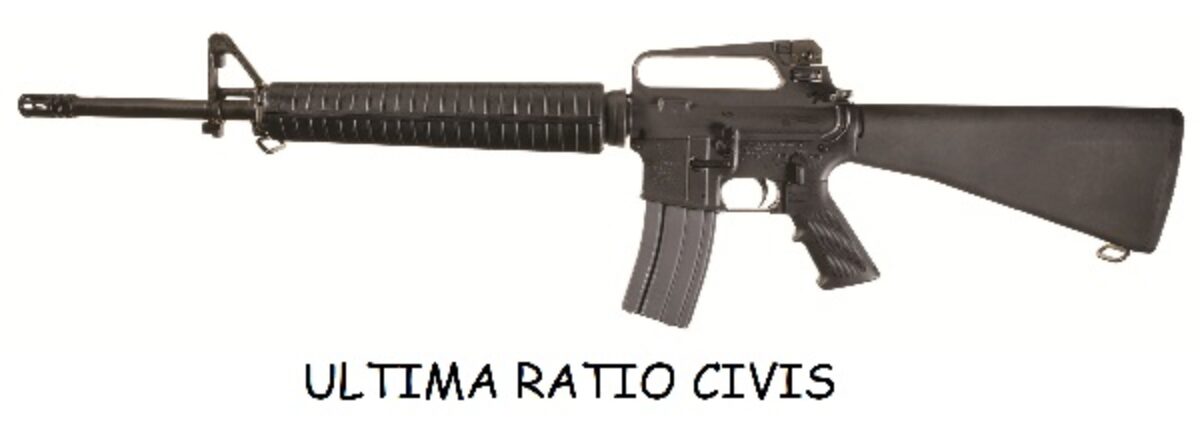
Nashville shooting: White House presses GOP on assault-style weapons ban

President Joe Biden is seeking to put pressure on congressional Republicans to pass an assault weapons ban after three children and three adults were killed during a school shooting in Nashville, Tennessee.

“He wants Congress to act because enough is enough,” White House press secretary Karine Jean-Pierre told reporters Monday. “How many more children have to be murdered before Republicans in Congress will step up and act to pass the assault weapons ban?”

Schools should be “safe spaces for our kids to grow and learn and for our educators to teach,” Jean-Pierre said, adding Biden had been briefed on the situation and that the White House is coordinating with the Justice Department and local officials. She defended Biden’s gun-related executive orders and the Bipartisan Safer Communities Act, which incentivized states to introduce so-called red flag laws.

“I don’t have the data” on the effectiveness of Biden’s unilateral action, the press secretary said.

Biden will address the shooting at a small-business event Monday afternoon, she added.

Six people are dead, as well as the shooter, after a 28-year-old woman opened fire with two assault-type rifles and a handgun Monday morning at the Covenant School, a private Christian school in Nashville.

Permitless carry passes Florida House, Nebraska Senate could vote on similar measure Monday

Next week could be a very big week for gun owners and Second Amendment advocates. There’s a very good chance we’ll see one more more favorable rulings coming out of U.S. District Judge Roger Benitez’s southern California courtroom, while Colorado and Michigan lawmakers could send gun control bills to Democratic governors for their signature.

The biggest news of all is likely to come from Florida and Nebraska, which are poised to give final approval for permitless carry bills early next week. On Friday afternoon, the Florida House of Representatives signed off on HB 543 by a vote of 76-32, with several lawmakers absent. The Florida Senate has its own permitless carry bill on the floor, and lawmakers are expected to start moving it towards a final vote as early as Monday.

On Tuesday Nebraska lawmakers are set for another round of debate and votes on LB 77. The permitless carry legislation passed its first reading in early March, but had been absent from the legislative calendar ever since. As of Friday afternoon, however, LB 77 was on the legislative agenda when lawmakers return from their four-day weekend break.

I’d say that Florida’s in a better position to become the 26th permitless carry state at this point, primarily because the GOP’s majorities in Tallahassee are so large Democrats can’t put up a lengthy fight. In Nebraska the Democratic minority has been filibustering virtually every bill introduced in the unicameral legislature, led by Sen. Machaela Cavanaugh. Legislative progress has almost ground to a halt as Cavanaugh and others have delayed votes by offering up numerous amendments and subjecting as many provisions as possible to as long a debate as the rules allow. As the Daily Mail reported a couple of weeks ago:

Clerk of the Legislature Brandon Metzler said a delay like this has happened only a couple of times in the past 10 years.

‘But what is really uncommon is the lack of bills that have advanced,’ Metzler said. ‘Usually, we’re a lot further along the line than we’re seeing now.’

Only 26 bills have advanced from the first of three rounds of debate required to pass a bill in Nebraska. There would normally be two to three times that number by mid-March, Metzler said.

‘I have nothing, nothing but time,’ she declared at one point. ‘And I am going to use all of it.

‘If people think that they are going to wear me down, if yesterday didn’t show you that you cannot wear me down – you cannot wear me down.

‘I literally left the floor yesterday, went up to my office, and laid down on the floor.

‘I laid down on the floor, a hard floor, and took a 20 minute nap before going to committee hearings. You cannot stop me. I will not be stopped.’

Cavanaugh’s stated reason for the filibuster is SB 574, a bill that, as amended, would ban sex-reassignment surgery from being performed in the state on anyone under the age of 19. After weeks of filibustering, the legislation finally received its first vote on Thursday, but Democrats are likely going to keep the slowdown in place throughout the remainder of the session.

That doesn’t mean that constitutional carry is done for this year. Far from it, as a matter of fact. If LB 77 clears second reading next Tuesday, as expected, only one more vote will need to happen before the bill goes to Gov. Jim Pillen for his signature. Ron DeSantis is probably going to get to put pen to paper first, but I think Pillen is still going to get the opportunity to enshrine constitutional carry into law before this year’s session is over.

Dianna Muller And The D.C. Project
Women of the D.C. Project meet with lawmakers to bring Second Amendment message.

Last September, the all-women D.C. Project had another successful trip to Washington, D.C., bringing its Second Amendment message that resonated with legislators on Capitol Hill. On a mission to share its credo that gun rights are human rights, the D.C. Project’s visit culminated in a successful rally at the Supreme Court Building.

The D.C. Project is a nationwide organization of women committed to safeguarding the Second Amendment. Started in 2016 by pro shooter and former NRA World Shooting Lady Champion, Dianna Muller, she had one goal—bringing this rapidly-growing demographic of gun owners in direct connection with legislators. Women can provide another perspective on the Second Amendment to lawmakers, including their involvement in competitive shooting.

Dianna Muller

Dianna Muller started the D.C. Project in 2016 to bring women firearm owners in connection with lawmakers. She is pictured on the right testifying last month before the Florida House Constitutional Rights, Rule of Law and Government Operations subcommittee about the Permitless Carry Bill.

Continue reading “”

Legislators considering Constitution before passing laws? THE HORROR

When laws are challenged, they’re challenged on constitutional grounds. Is this law in keeping with the Constitution or is this a case of legislative overreach?

In fact, lawmakers are supposed to at least consider such things before passing laws. After all, they swear to support and defend the Constitution, which one would imagine requires them to consider it at a minimum before passing some bill.

But it seems that the folks at the Huffington Post are upset that lawmakers are considering court rulings before passing gun control. They made this pretty clear recently.

In fact, they’re so upset, they said it all over again.

Left In The Legislative Lurch

Eight more states have laws similar to California’s assault weapons ban that could be affected if the Supreme Court ultimately weighs in.

The expectation that these laws may be doomed is already complicating the politics of passing new ones like them.

In New Mexico, Democratic Gov. Michelle Luján Grisham has repeatedly urged the legislature to send her an assault weapons ban to sign this session, but lawmakers tabled the effort — partly over concerns that it wouldn’t withstand scrutiny in federal court.

“There’s absolutely no point to passing new laws which federal courts will strike down and which are clearly going to be deemed unconstitutional,” state Sen. Joseph Cervantes, a Democrat, tweeted last month.

With those lawsuits still playing out, the future of gun policy remains in flux. But that legal panorama makes it hard to imagine clear lanes for reform in the near future.

“We’re in a very difficult spot with that Bruen ruling,” said Miranda Viscoli, co-president of New Mexicans to Prevent Gun Violence. “Even though it was only about concealed carry, it’s just made everybody afraid who wants to pass common sense gun violence prevention legislation.”

Now, in fairness, this is only one part of a much longer piece lamenting the rulings and the impact they’re having on gun control.

Still, it’s interesting that they’re still complaining about states not passing gun control because they figure it’ll be tossed by the courts.

I’m sorry, that’s not a bug. It’s a feature.

Huffington Post can be big mad all they want, but the truth of the matter is that gun control isn’t constitutional. The author tries to get hung up on the militia clause at one point–a matter that has been thoroughly and completely debunked–and then laments the text and history test laid down in Bruen, but at no point can they actually make a legitimate case that gun control is within keeping behind the text or spirit of the Second Amendment.

That’s unsurprising, of course.

I’m glad to see legislatures hold up a bit before infringing on people’s rights. I’m upset that they’re only starting to do it just now, but this is a case of better late than never.

If they’re holding up, that’s great, but as the piece also notes, a lot of places aren’t. In truth, that is the real problem, not those exercising a bit of caution and, dare I say, common sense.

Then again, it’s Huffington Post. What can you really expect?

Republicans threaten to defund Biden gun rule that aims to reclassify pistols with braces as rifles

ORLANDO, Fla. — Republican lawmakers vowed Tuesday to defund any attempt by the Biden administration to enforce a new gun control rule that would reclassify pistols with stabilizing braces as short-barreled rifles.

Under a new Bureau of Alcohol, Tobacco, Firearms and Explosives rule — “Factoring Criteria for Firearms with Attached Stabilizing Braces” — gun owners who have a stabilizing brace attachment on their firearm must register the device by May 31 or face up to 10 years in prison and thousands of dollars in fines.

But Republican House lawmakers, gathered in Orlando this week for their annual GOP retreat, are lining up behind an effort to block the administration — and one said there will be no money in the budget produced by the Republican-controlled House to enforce the rule, which took effect Jan. 31.

Rep. Andrew Clyde is pushing a resolution checking the administration, introduced almost a week ago, and already has 182 Republican cosponsors. He told The Washington Times that federal agencies are engaged in a power grab.

Continue reading “”

Biden Wants To Emulate California’s (Failed) Gun Laws

By John R. Lott Jr. for RealClearPolitics

President Biden traveled to Monterey Park, California, the site of a mass public shooting that left 11 dead in January, to announce new executive actions on gun control. He touts the proposals as necessary “to reduce gun violence and make our communities safer.” But California already has all the gun control laws that Biden put forward, and yet it has a higher per capita rate of mass public shootings than the rest of the country.

Measures already in place include background checks on all transfers of firearms, “red flag” gun confiscation laws, and an assault weapon ban. Even if Biden’s ideal background check law had been in effect and perfectly enforced, it wouldn’t have stopped one mass public shooting this century.

Biden exaggerated the support for his background check proposals. The surveys he cites compress long, complicated proposals into one-sentence summaries. But when people are told that these laws would turn someone into a felon just for temporarily lending a handgun to a woman who is being threatened by a stalker, survey respondents answer that they oppose the regulation. 

One proposal would force people who sell or transfer only a few guns to obtain a federal firearms license. But even licensed dealers face an uphill regulatory battle. Biden’s zero-tolerance (zero tolerance for what?) policy drives licensed dealers out of business. The end effect is to stop gun sales.

But Biden has another goal. Despite federal law explicitly forbidding a national gun registry, the President has begun putting together a national database on gun ownership. By the beginning of last year, there were almost a billion entries.

Forcing gun transfers to go through licensed dealers will help create a more complete registry. And that’s about all it will do, since gun licensing and registration doesn’t solve any crime. The bottom line is to drive up the price of guns for law-abiding citizens and therefore stop gun sales altogether. In other countries, and even in parts of the United States, registration is consistently used to eventually take away people’s guns, and given Biden’s constant call to ban all semi-automatic weapons, which make up about 85% of all guns sold in the U.S., that is a real concern here.

Biden wants to “improve public awareness and increase” use of red flag laws (Extreme Risk Protection Orders). But this diverts focus from better laws already on the books in all 50 states. Involuntary commitment laws provide for evaluations by mental health experts, an emergency court hearing, and a lawyer. These laws give judges more options, such as mandatory outpatient mental health care, driver’s license suspensions, or taking away their guns.

By contrast, red flag laws only take away a person’s guns. If a person is truly suicidal – almost all the red flag cases involve concerns over suicide – there are so many other methods that are just as likely to be successful (hanging oneself, walking in front of a train, jumping from a height). Simply taking away someone’s legally owned guns isn’t a serious solution.

Gun control advocates claim that California’s 1990 assault weapon ban is responsible for its 55% drop in firearm mortality from 1993 to 2017. But California’s murder rate peaked in 1993 at 13.1 per 100,000 people, rising from 10.9 in 1989, the year before the state enacted its assault weapons ban. So why did the murder rate fall by 10%  in 1994 and not in 1990, and continue falling by 53% by 2000? California’s tough three-strikes criminal punishment law started on March 7, 1994.

Biden says we need national gun control laws to protect states like California, but that ignores the fact that the guns used in California’s mass public shootings were from California. Indeed, the firearms in all but two mass public shootings over the last 25 years were from the state where the attack occurred.

Gun control measures aren’t just ineffective against mass public shootings – they actually encourage attacks. The shootings keep occurring in places where people can’t have concealed handguns. In Los Angeles County, where two mass public shootings occurred in January, there is only one permit for every 5,660 adults. In San Mateo County, where another attack occurred, there is one permit per 24,630 adults. By comparison, there is one permit holder for every nine people in the 43 right-to-carry states.

Concealed handgun permit holders make a difference in those 43 states. Indeed, people legally carrying guns stopped at least 37 mass public shootings since 2020. And when Americans are allowed to legally carry concealed handguns, they stop about half of the active shooting attacks in the U.S.

Mass public shooters purposefully pick targets where they know their victims cannot protect themselves. The perpetrator of a mass shooting in Buffalo, N.Y., last year wrote in his manifesto: “Areas where CCW [carrying a concealed weapon] are outlawed or prohibited may be good areas of attack ... Areas with strict gun laws are also great places of attack. Other mass murderers have made similar statements.

These killers may be crazy, but most aren’t stupid. Yet, states like California, New York, and New Jersey are moving to create more gun-free zones, where mass murderers won’t have to worry about victims protecting themselves.

Unfortunately, the gun control Biden pushes won’t stop mass public shootings and will only make problems worse. Gun control failures are used to call for more gun control laws. The solutions that would actually work aren’t being discussed.

Poll claims younger Republicans support gun control

There is a serious effort to try and paint gun control as having broad support. The idea here is to make it appear as if pro-gun lawmakers are out of touch with the public in hopes that they’ll bow to pressure and pass restrictions.

Remember that everyone loves a legislator who holds firm to their principles right up until those principles are something the individual voter disagrees with. Then they should totally change and that’s not a violation of principles at all.

Funny, that.

Anyway, with this effort, there tend to be a ton of polls saying gun control has all this support. Kind of like this one that argues Gen Z, Millennial Republicans support it.

Despite widespread overall support for gun control and majority belief in gun rights among Republicans, 59% of Americans report that they’ve engaged in no political activities in the past 30 days in support or opposition to gun access. However, younger generations may be the catalyst for change regarding policy on guns.

The opinions of young Republicans, in particular, differ from those of their older counterparts. Gen Z and Millennial Republicans — adults born in 1982 or more recently — are more likely than older Republicans to believe that gun laws should be more restrictive (39% vs. 22%). Support for more restrictive gun laws has continued to trend upwards among young Republicans – to 47% in February 2023 from 41% in August 2022 – while members of the older generation of Republicans are more likely to believe gun laws are sufficient as they are today. Similarly, 32% of young Republicans think the Constitution protects access to guns only for militias – more than double the share of older Republicans (13%) who think so.

Except that’s only part of the story.

Yes, 39 percent favor gun control but another 39 percent think the laws are just fine and another 22 percent think the current laws are too restrictive.

Conversely, there is 32 percent of Gen Z and Millennial Democrats who think gun laws are either good where they are or too restrictive.

But it’s funny how that’s not the story here, only that 39 percent of younger Republican voters want more gun control. It’s almost as if they’re trying to push a particular narrative and somehow pressure GOP lawmakers into passing some particular bit of legislation.

Nah, I’m sure it’s just a coincidence that they framed it that way and pretty much glossed over the fact that 32 percent of Democrats don’t want more gun control.

And the poll doesn’t get into specifics, either, with regard to those younger Republicans. Arguably, support for a red flag law and literally nothing else constitutes wanting more restrictions than the status quo, but is well short of “ban ’em all.” That doesn’t show up on polls like this.

Then there’s the question of just how significant that support is–another subject they didn’t get into, I should note.

There are people who have some vague notions of supporting a given policy but aren’t supportive enough to actually do much of anything about it. They might think a gun control law is a good idea, but they won’t base who they vote for on it.

Republicans, regardless of their age, aren’t about to jump ship and vote Democrat just because of gun control. That doesn’t show up in polls, either.

TEXIT: Bill to put Texas independence referendum on ballot referred to state House committee
“Independence has always been a part of our DNA since our founding,” said Daniel Miller, president of the 440,000-member Texas Nationalist Movement.

The Texas Independence Referendum Act, also known as “TEXIT,” was assigned to committee earlier this week, and the leader of the Texas independence movement is looking forward to public testimony as a platform for the voice of the people to make itself heard.

HB 3596 is “headed to the State Affairs Committee in the Texas House,” noted Daniel Miller, president of the 440,000-member Texas Nationalist Movement, “and we’re looking forward to having it scheduled for testimony and letting the public speak and say with one loud voice that at a minimum, whether you agree with TEXIT or disagree, Texans should have a vote on the issue.”

Introduced by Republican state Rep. Bryan Slaton on the anniversary of the fall of the Alamo March 6, the bill would, if passed, “place a referendum on the ballot during the next general election, allowing the people of Texas to vote on whether or not the State should investigate the possibility of Texas independence, and present potential plans to the Legislature,” Slaton wrote on Twitter.

“The Texas Constitution is clear that all political power resides in the people,” he continued. “After decades of continuous abuse of our rights and liberties by the federal government, it is time to let the people of Texas make their voices heard.”

Texas has attempted to secede from the U.S. on multiple occasions, but the Supreme Court ruled in the 1868 case Texas v. White that states could not unilaterally secede from the union.

“The TEXIT issue has been in the minds of Texans for probably generations, it just wasn’t necessarily known as TEXIT,” Miller said in an interview Thursday on the “Just the News, No Noise” TV show. “Independence has always been a part of our DNA since our founding.”

Miller cited a litany of grievances fueling the Texas independence movement, including runaway federal spending, onerous debt, regulatory overreach, and the breakdown of border security.

“You look at something like the federal debt that continues to ratchet up, that burdens all of us, that is essentially fiscal child abuse because it’ll be our children and grandchildren that are going to be on the hook for it when the United States continues [to incur more debt] to the point of insolvency,” Miller said. “The people of Texas, much like every other state, we groan under 180,000 pages of federal laws, rules and regulations administered by two and a half million unelected bureaucrats. Every day when we wake up, we have to wonder which one of our rights is going to be under assault by the federal government today. The federal government doesn’t shrink, it only gets bigger. It really trashes everything that it touches. All you have to do is look down to our southern border to see an example of how not just mismanagement but malfeasance can lead to severe crises.”

Miller sees a growing disconnect between the United States as a formal political entity and the spirit of the American people. “[W]e all have to ask ourselves,” he said, “is America the same as the United States right now? The United States is a political and economic entity, an institution, that no longer reflects America, those values that we consider America.”

His organization, he said, crystallizes the issue for Texans by asking them whether today’s United States is a union they would opt into anew if given the choice.

“[W]e go out to Texas voters,” he said, “and we say, ‘Look, imagine that Texas was already a self-governing independent nation, and we had control over our own border and immigration policy and our own monetary and taxation policies — everything that 200 other countries around the world have — and instead of talking about Texas, we were talking about whether or not today we would vote to give up all of that control and join the union, knowing everything we know about the federal government today, would you vote to join? And if you wouldn’t vote to join, why would you stay one moment longer than you had to?'”

Governor says she’s going to keep pushing on crime, gun bills

As Gov. Michelle Lujan Grisham started her post-session news conference Saturday, she already knew the score.

Of the roughly 40 public safety bills introduced this year, the governor said she championed 10.

“We have about a handful up, and out of 40, it’s 10 [that passed], and not all of those would really constitute what I think are strong public safety measures,” she said.

“I know that is an area that you want me to say I’m disappointed,” Lujan Grisham added. “I’m motivated. I am very motivated to find additional ways to make sure that we really do everything in our power that makes our communities and cities in our state safe.”

The Legislature passed a gun storage law named after a 13-year-old Albuquerque boy authorities say was shot and killed by a fellow student who took his father’s gun to an Albuquerque middle school. Lawmakers also passed a bill that cracks down on organized retail crime and made it a fourth-degree felony to buy a gun for another person who is prohibited from owning a firearm.

But some of the governor’s biggest priorities went nowhere, including a ban on assault weapons; a bill to raise the age to 21 to buy or possess semi-automatic firearms, including assault weapons; and a 14-day waiting period to buy guns.

Other gun-related legislation — prohibiting firearms within 100 feet of polling places and updating the Unfair Trade Practices Act to lift restrictions on the filing of lawsuits against manufacturers or distributors — passed the Senate but didn’t get a hearing in the House, where they were likely to meet stiff opposition.

The governor also pushed for establishing a “rebuttable presumption” to keep repeat violent offenders awaiting trial off the streets instead of letting them be released pretrial. The bill was tabled in committee amid concerns it was unconstitutional.

Miranda Viscoli, co-president of New Mexicans to Prevent Gun Violence, said she was “extremely disappointed” the bill to impose a 14-day waiting period on gun sales didn’t get a hearing in either chamber. Of all the violence prevention bills proposed this year, that was the bill that would’ve made the biggest difference, she added.

“The studies we looked at say it’s a game-changer in terms of suicide and crimes of passion,” she said.

But Viscoli said she was grateful the Legislature passed House Bill 9, intended to keep guns out of the hands of children and teens. The governor signed it into law Tuesday.

“We’ve been working on getting that passed since 2017,” she said.

Rep. Pamelya Herndon, D-Albuquerque, who sponsored the legislation known as the Bennie Hargrove Act, called some of the other gun bills considered by the Legislature controversial, noting some are “going to take some time.”

Lujan Grisham, who was hammered over a crime wave plaguing New Mexico as she campaigned for a second term last year, vowed to keep “pushing the Legislature” to enact more measures, including funding to put an additional 1,000 police officers on the ground.

“The Legislature should expect me to look at that again because I know we need 1,000 officers,” she said.

Asked about her strategy to get her public safety priorities across the finish line, Lujan Grisham said she has to think about “creative solutions.”

“I’m going to keep trying,” she said.

“Just look at the stats. We’ve released some folks that should never have been released and have already reoffended in Albuquerque while we’ve all been in the legislative session,” she said, referring to efforts to pass a pretrial detention bill. “I find that to be intolerable. There are states who do it better, and I don’t know why we don’t just do exactly what those states are doing. I don’t need to recreate the wheel.”

The governor said she would continue to battle for modified pretrial detention, noting “everyone here knows I’m introducing that again. And again and again, and I might just try to change the Constitution so I can run again.”

Lujan Grisham said she was kidding but added she would continue to battle on crime legislation. And she made no apologies for her battle against guns, brushing off criticism she’s infringing on law-abiding citizens’ Second Amendment rights.

“I have not talked to a single policymaker, not one legislator, who’s interested in preventing responsible gun owners from accessing firearms,” she said.

“What we’re trying to address is that we have a gun violence issue and that guns … get into the hands of people who should not have them,” she said. “That … takes a scalpel, like figuring out where we got a problem and taking care of that particular problem.”

The Biden administration leaked the military records for Republicans who were running for elective office to try to hurt their election chances.

House weaponization panel probes release of Air Force records to political operatives

The House Select Subcommittee on the Weaponization of the Federal Government is probing the Air Force over the improper release of military service records to a political opposition research group.

In a letter to Air Force Secretary Frank Kendall on Thursday, Committee Chairman Jim Jordan, Ohio Republican, demanded that the service branch hand over all documents and communication related to the release of Official Military Personnel Files to Due Diligence Group, LLC, a research firm that obtained the records of multiple GOP candidates in the lead up to the midterm elections in 2022.

Rep. Chis Stewart, Utah Republican, co-signed the letter.

An internal Air Force investigation revealed last month that the service improperly released the military duty information for 11 individuals. The investigation was launched after the disclosure of Indiana House Republican candidate Jennifer-Ruth Green’s military records ahead of the midterms.

Several other GOP candidates have since come forward to report that their military records were improperly released.

Two sitting members of congress, Republican Reps. Don Bacon of Nebraska and Zach Nunn of Iowa, were also among those whose records were improperly released.

In a letter to Mr. Bacon last month, the Air Force said a Due Diligence Group employee posing as a background investigator requested his records.

“Department of the Air Force employees did not follow proper procedures requiring the member’s authorizing signature consenting to the release of information,” Air Force spokeswoman Ann Stefanek told CNN last month. “There was no evidence of political motivation or malicious intent on the part of any employee.”

She said the Air Force is “committed to preventing any such unauthorized disclosure of private information from occurring again” and will perform monthly audits.

Ms. Stefanek told Politico that “virtually all” of the 11 unauthorized requests for the records came from Due Diligence Group.

Mr. Jordan said on Thursday that the improper releases “may have violated Department of Defense policies and federal law.”

“While the Air Force has rightfully taken responsibility for these inappropriate OMPF disclosures, questions remain unanswered about the U.S. Air Force’s collection, maintenance, and dissemination of this sensitive information,” Mr. Jordan wrote.

To the Governor: Kentucky Passes Bill to Ban Enforcement of Some Federal Gun Control, Including Pistol Brace Rule

FRANKFORT, Ky. (March 16, 2023) – Yesterday, the Kentucky Senate gave final approval to a bill that would ban state and local enforcement of any federal gun control enacted or implemented after Jan. 1, 2021. This includes the new ATF rule on pistol braces. Passage into law would take a step toward ending some federal acts that infringe on the right to keep and bear arms within the state.

Rep. Josh Bray (R) and Rep. Derek Lewis (R) introduced House Bill 153 (HB153) on Feb. 7. The legislation would prohibit Kentucky law enforcement agencies, local governments, and public agencies from adopting a rule, order, ordinance, or policy under which the entity enforces, assists in the enforcement of, or otherwise cooperates in a “federal ban” on firearms, ammunition, or firearm accessory. It would also prohibit the expenditure of public funds for the same.

HB153 defines a “federal ban” as “a federal law, executive order, rule, or regulation that is enacted, adopted, or becomes effective on or after January 1, 2021, or a new and more restrictive interpretation of a law that existed on January 21, 2021, that infringes upon, calls into question, prohibits, restricts, or requires individual licensure for or registration of the purchase, ownership, possession, transfer, or use of any firearm, ammunition, or firearm accessories.”

The legislation is modeled after a law passed by Montana in 2021 and already taking effect against two ATF regulations from executive orders issued by Joe Biden – including the most recent pistol brace rule.

On Feb. 22, the House passed HB153 by a vote of 78-19. On March 15, the Senate approved the measure by a 27-9 vote.

HB153 now goes to Gov. Beshear’s desk for his consideration. Although he is expected to veto HB153, the legislature can override the governor with a simple constitutional majority.

Continue reading “”

Pistol purchase permit repeal headed to North Carolina governor

When SB 41 is delivered to Gov. Roy Cooper, he’s probably going to send it right back to the legislature, but the chances of a veto override appear to be pretty strong at the moment, at least if the bipartisan coalition that approved the bill sticks together.

SB 41 doesn’t just scrap the state’s pistol purchase permit system, which was put in place back in 1919. It also changes state law to allow licensed concealed carry holders to lawfully bear arms in churches and other religious services held in private or charter school settings. Cooper has vetoed similar bills in the past, but thanks to legislative victories last November Second Amendment supporters should have the votes to turn the bills into law over his objections.

The proposal would make it so sheriffs no longer have to perform evaluations of an applicant’s character and mental wellness before they can purchase a handgun. Supporters of the bill say the permit requirement has become duplicative in light of digitized mental health records and thorough updates to the national background check system. Rep. Jeff McNeely, an Iredell County Republican, said it would streamline the process for law-abiding gun buyers.

“It just allows everybody, every citizen in the state of North Carolina, to have their constitutional right granted to them so that they can protect their self,” McNeely said.

While people who buy from a gun store or a licensed dealer would still be subject to a national background check, Democrats raised alarms again Wednesday that background checks are not required for private exchanges between two individuals. Private sales only require buyers to obtain a sheriff-issued permit, or face a misdemeanor charge.

Rep. Pricey Harrison of Guilford County said the repeal would create a loophole that could enable dangerous individuals and those with mental health issues to more easily obtain weapons.

“The sheriffs know best back home who should and should not be carrying a pistol,” Harrison said during floor debate. “There’s so much more we could be doing about keeping our communities safe. But unleashing and letting access to guns to individuals who absolutely pose a danger to themselves and others is a real problem.”

Violent actors are not strolling in to their local sheriff’s office to apply for permission to purchase a handgun. They’re getting their guns through theft and the illicit market, or perhaps through a straw purchase involving someone who has obtained a permit-to-purchase.

At the same time, folks who want to stay inside the law are forced to satisfy the arbitrary and subjective concerns of their county sheriff before they can exercise a fundamental right. This law has been abused throughout its time on the books, and as Grassroots NC’s Paul Valone has pointed out, while the law may not have been explicitly racist in its language, in practice it has been used to deny many black North Carolinians access to their right to armed self-defense.

Following race riots in East St. Louis in 1917, both Missouri and North Carolina quickly passed handgun “permit to purchase” (P2P) laws. (3) Although North Carolina’s version has changed since passage in 1919, permits were originally issued by Clerks of Superior Court, who were required to satisfy themselves of the “good moral character” of the applicant – a measure which scholar Clayton Cramer suggests may have been “a euphemism to hide something that even in 1919 would have been an embarrassment…”

Cramer goes on to say, “…race has often been at the heart of gun control laws, and while there are no ‘smoking gun’ quotes with respect to P2P, there are some pieces of circumstantial evidence that suggest that the law was intended to be enforced in a racially discriminatory manner.”

Indeed, newspaper clippings from the era suggest about how the P2P law was enforced. Said a December 31, 1930 Durham Sun headline: “Pistol Permits Issued to Many: 450 Citizens Received Permission Since 1919; Mostly Whites” [emphasis added]. It goes on to explain, “A total of 450 permits to purchase pistols have been issued to Durham citizens since 1919, according to records kept in the office of clerk of superior court. Few permits were issued to Negroes, the records show, the issuance being restricted almost entirely to white persons [emphasis added].

An April 1, 1920 piece in the Rockingham Post-Dispatch – just months after the P2P law took effect – published the name and race of people who got permits, such as this one: “July 19 – Alex Wall, colored, age 46” [emphasis added]. Cramer found two clippings from Winston-Salem – one in which 14 of 15 defendants charged with carrying concealed weapons were described as “colored” and another in which 19 of 20 defendants are described as “colored.”

Supporters of the pistol purchase permit have alternately tried to argue that the law was never really a part of Jim Crow, or that if it was racially discriminatory in practice in the past that’s no longer the case today, but research has shown that in Wake County black applicants are still almost three times as likely to be denied a permit than white applicants. That might not be proof of racial discrimination, but it’s definitely cause for concern.

On paper, the votes to override Gov. Cooper’s expected veto are there, but there’ll be enormous pressure on the handful of Democratic lawmakers who supported SB 41 to reverse course and back Cooper’s veto during an override session. North Carolina’s gun owners have done a fantastic job of communicating with legislators and keeping up the pressure to support SB 41 so far, but there’s a little more work to be done before they can be assured of victory.

New Mexico governor signs gun storage bill, but fate of other gun control bills still in doubt

The first gun control bill of the legislative session to get to New Mexico Gov. Michelle Lujan Grisham has now been signed into law. The big question now is how many others will show up on her desk before the session wraps up this Saturday.

HB 9 creates the new crimes of “negligently making a firearm accessible to a minor” and “negligently making a firearm accessible to a minor resulting in great bodily harm or death”; misdemeanor and fourth-degree felonies, respectively. In practice, gun owners in the state are now expected to store their firearms locked up unless they’re being carried, at least if there are minors in the home, but the law is utterly unenforceable from a proactive standpoint. Even when the law is applied after a tragedy occurs the legal consequences are usually nothing, especially compared to the loss of a child. Take this recent case from North Carolina, for example.

A Gaston County assistant district attorney said that two parents and an uncle charged in the shooting death of a 4-year-old reached sentencing agreements on Monday.

Assistant district attorney Zach Holeve confirmed that Savannah Leigh Brehm and Hector Manuel Mendoza-Saucedo got 36-month probation sentences, while gun owner Keith Deshawn Sturghill received 24 months of probation.

Brehm, 22, Mendoza-Saucedo, 22, and Sturghill, 21, faced several charges, including felony involuntary manslaughter, felony child abuse, and the misdemeanor charge of storing a firearm in a manner accessible to a minor.

During a court hearing, prosecutors said the adults knew a loaded gun was on the home’s coffee table with the safety off. The gun belonged to Strughill.

Mendoza and Strughill left for work when the 5-year-old child and 4-year-old child found the weapon. A 5-year-old sibling shot the 4-year-old, according to investigators.

These three were charged with multiple felonies but only received probation for their negligence; presumably when their charges were reduced to a misdemeanor. Given the overwhelming number of felony cases that result in plea bargains, I doubt that New Mexico’s gun storage law is going to have much teeth to it. Encouraging responsible gun storage, either through incentivizing the use of gun safes and locks or through public safety campaigns aimed at gun-owning parents, seems like a much better approach than creating a new crime, but this is still probably the least offensive gun control bill introduced by New Mexico Democrats this session.

There are still a number of other measures that could still get to Grisham’s desk before Friday, including SB 428, which would amend the state’s Unfair Practices Act to include firearms with an eye towards encouraging lawsuits against gun makers for allegedly fueling violence through their marketing. The measure passed out of the Senate last week, but so far has not received a committee hearing in the House.

Meanwhile, a bill banning the sale and possession of unregistered “assault weapons” is sitting in the House Judiciary Committee, and Grisham has run into some behind-the-scenes opposition that could derail the measure completely, Other legislation raising the age to purchase a firearm to 21 and establish a 14-day waiting period on gun sales are also still kicking around, but haven’t seen any committee action in recent weeks.

Any bills that aren’t approved by both Houses by noon on March 18th are theoretically done for the year, though Grisham has suggested she could call lawmakers back for a special session on gun control if they don’t enact her anti-2A wishlist. Given the lack of movement on many of the governor’s demands, it may be that Democrats have just decided to kick some of these cans down the road a couple of months, but I suspect that gun owners and groups like the New Mexico State Shooting Association are also having an impact on at least some of the legislators that Grisham hoped would be reliable votes for her gun control agenda.

Thomas Massie: Biden Pushing Gun Controls That Have Already Failed

Rep. Thomas Massie (R-KY) responded to President Biden’s Tuesday executive order on background checks by noting the president is pushing gun controls that have already failed.

Breitbart News reported Biden bypassed Congress with his executive actions, directing Attorney General Merrick Garland to move the country as close to a universal background check system as possible.

Congress has not passed universal background checks, and one of the reasons for that is because a gun registry is necessary in order for universal background checks to work.  On April 28, 2021, the National Shooting Sports Foundation noted, “The glaring problem with universal background checks is they are unenforceable without a mandatory national firearm registry.”

Biden’s executive order also focused on red flag laws, gun storage, and investigating the marketing methods used by gun manufacturers.

The Associated Press noted that Biden’s order also “[mandates] better reporting of ballistics data from federal law enforcement for a clearinghouse that allows federal, state and local law enforcement to match shell casings to guns.”

FOX News pointed out that Rep. Massie indicated Biden’s focus on the ballistic fingerprinting of guns was more or less a focus on “science fiction.”

Massie outlined Maryland had ballistic fingerprinting requirements for time, then dropped them because the state was spending millions on the idea but not solving any crimes. (On November 8, 2015, Breitbart News explained that Maryland dropped its ballistic fingerprinting requirement after spending five million dollars without zero results.)

Massie also noted Biden’s other gun controls–universal background checks, red flag laws, gun storage requirements, etc.–already exist in California, where they are failing miserably.

He said, “[California has] got a higher-than-average mass public shooting per capita and they’ve got some of the strictest gun laws.”

Massie added, “In fact, [Biden] went to Los Angeles County. Unless you’re White and well-connected, you probably can’t get a permit to carry a concealed firearm there. Fewer than 1-in-5,000 have a concealed carry permit in Los Angeles County.”

Washington Democrats Pass Rifle Ban Bill, 10-Day Gun Buy Wait

Washington State House Democrats have used the cover of two successive night votes to pass legislation banning the future sale of so-called “assault weapons” and a requirement that all gun buyers show proof of firearms safety training within the past five years, and endure a 10-day waiting period.

Evergreen State gun owners are furious and will focus their attention on the state Senate, where they hope to stop both measures.

If the gun ban passes, it may be short-lived depending upon federal court action in California and Maryland, where such bans are being challenged by the Second Amendment Foundation (SAF) and Firearms Policy Coalition and, specifically in Maryland, the Citizens Committee for the Right to Keep and Bear Arms (CCRKBA).

According to the Seattle Times, Democrat Gov. Jay Inslee was in the House chamber, watching the vote on House Bill 1240, which turned out 55-42, with some Democrats crossing the aisle to vote with Republicans against the measure. The vote occurred “shortly before 8:30 p.m.,” the Times report noted. Times readers are reacting predictably, with many opposed to the ban and others supporting it.

Inslee, an anti-gunner since his time in Congress, reportedly shook hands with members of the Seattle-based Alliance for Gun Responsibility, a billionaire-backed gun prohibition lobbying group that has been pressing for the ban for several years.

“This is a very important vote. It is something that I’ve believed in since 1994 when I voted to make this federal law,” Inslee said.

Continue reading “”

HORRIBLE MEMES image memes at relatably.com

Opponents, Anti-Gunners Horrified as Constitutional Carry Looks Inevitable in Florida.

Whether it’s called constitutional carry, permitless carry or unlicensed concealed carry — which is probably the most accurate — the fact that soon millions of Floridians will no longer need a permission slip from the government to defend themselves has critics frothing at the mouth.

It’s going to happen, and there’s nothing they can do about it – that’s the bottom line.

They’re powerless to stop the massive restoration of our civil rights, regardless of how hard they whine or how absurd their prognostications of impending doom become. Florida Gov. Ron DeSantis has promised to sign the bill, and leaders in the House and Senate – where Republicans enjoy super-majorities – have promised to put a bill on his desk.

No one is taking the news harder than Frank Cerabino, a columnist for The Palm Beach Post who has enjoyed ridiculing guns, gun owners and civil rights for more than 30 years. As the bill progressed through the legislature, this angry little toad of a man has become positively deranged.

He’s lost what little sanity he once had, and that was never much. Cerabino’s March 7 column, which was titled “The ‘constitutional carry’ lie and why gun advocates don’t love the latest Florida bill,” shows just how toxic his pent-up why-won’t-they-listen-to-me! anger has become.

In his column, Cerabino describes constitutional carry as “political fiction,” and then he completely loses his damn mind.

“‘Constitutional carry’ is like ‘legitimate rape.’ It doesn’t exist,” he actually wrote.

No, Frank, nothing is like rape – nothing – and you should know that. To compare rape to anything is repugnant, morally wrong and massively offensive. It trivializes the horrors sexual assault survivors struggle to live with every single day. It defies belief that this disrespectful and hurtful comparison was actually published by a daily newspaper.

In another tangled line, Cerabino showcases his ignorance of the law, rifles and ballistics.

“Open carry would also allow them to walk around in public with weapons too big to conceal, such as military-style mass casualty weapons like the AR-15, which fires projectiles capable of liquifying body organs and passing through metal,” he wrote.

First, neither the House bill nor the Senate bill allows for the open carry of arms. That’s the problem many of us have with this legislation, and the reason it’s not accurate to call it constitutional carry. Therefore, no one will be walking around with a “military-style mass casualty weapon like the AR-15” in Florida unless they’re hunting, fishing or camping.

As to the AR-15’s magic liquifying abilities – nope. Sorry, Frank, but that’s pure bunk. The 5.56x45mm round was nothing more than a mediocre varmint cartridge until Eugene Stoner put it in his AR. In fact, many states prohibit hunters from using the round to harvest deer because it is too small. Compare the 5.56x45mm round to the two previous military calibers – 7.62x51mm and .30-06 – and you’ll learn the error of your ways, Frank.

Cerabino claims that after Gov. DeSantis signs an unlicensed concealed carry bill, we will want another – and we most certainly will. But his final comparison insults everyone who holds their right to keep and bear arms dear.

“This is what happens when you negotiate with terrorists. You give them one imaginary constitutional right and they’ll demand another,” Cerabino wrote.

Terrorists? Really?

I know more than a few heroes who left chunks of their bodies in foreign countries while fighting actual terrorists, Frank. They’re strong Second Amendment supporters who wouldn’t appreciate being your terrorist label. Also, they never raised their hand and swore to protect and defend any “imaginary” constitutional rights. The only terrorists involved in this fight are those using the First Amendment to encourage further infringements upon the Second.

Friendly fire

Nearly every state that successfully passed constitutional carry experienced some pushback from a small minority of firearms instructors during the legislative process. Unfortunately, Florida isn’t immune from this nonsense. One gun shop here was passing out leaflets titled: “Constitutional Carry (Maybe not such a good idea?)”

“Constitutional Carry (if passed) will allow any Florida resident of legal age, the ability to carry a firearm without any license or training,” the leaflet states. “Unfortunately, a lot of people will look at it as not having to pay for a Florida Concealed Carry class and save money. This is NOT what is good for the public, nor a responsible person.”

It was written by the gun shop’s training division, and signed “because we care.” I’m not naming the shop nor the owner. To his credit, he didn’t post his opinion online, nor did he run to the local media. Though misguided and wrong, his position is not difficult to understand. He’s worried that the end of the state’s mandatory training requirement will lead to a loss of revenue for him and his trainers. However, history shows us this is not always the case.

Many of the 25 states that passed constitutional carry experienced an increased demand for professional firearms training. Florida trainers will likely see the same uptick.

It’s about to become much easier to carry a defensive firearm in the Gunshine State. Gun owners will no longer need to beg permission from the state, pay a $97 fee, submit to background checks, mugshots and fingerprints like a common criminal in order to exercise a basic constitutional right. Most Floridians understand that carrying a defensive firearm is a heady responsibility, so of course they will seek out professional training, if they haven’t done so already.

Constitutional carry, unlicensed concealed carry or whatever else you want to call it will restore the constitutional rights of millions of Floridians. At the end of the day, that’s far more important than anyone’s financial concerns.

Oklahoma House Republicans vote to expand a person’s right to self-defense with a firearm

House Republicans advanced a bill Thursday to extend the area where a person can defend themselves with a firearm, an expansion of the so-called “castle doctrine” that has been a top priority for pro-gun groups for years.

House Bill 2049 changed the definition of “dwelling” from a building or house to the edge of the property line, possibly justifying a person’s use of deadly force to protect themselves as long as they are on land they own or rent.

Also referred to as “stand your ground laws,” Oklahoma law does not require a person to leave a situation if they feel threatened. Instead, current law states someone has a right to stay and shoot a person who is threatening their safety, as long as they are in their home.

Rep. David Hardin, R-Stilwell, the bill’s author, said that the expectation of self-defense should include the entire property.

“This is a simple bill … on your property if you feel that your life is threatened you have a right to protect yourself,” Hardin said. “This bill was never intended where you could just walk out and shoot anybody on your property. But if that person confronts you with deadly force, then you would be allowed to use deadly force.”

The bill now heads to the state Senate for consideration.

Democrats, who voted against the bill, expressed concern that innocent encounters, possibly with trick-or-treaters or hikers mistakenly coming onto private property, could end in a shooting death.

Rep. Monroe Nichols, and other state House Democrats, gathered for a news conference on June 2, 2022, to call for gun control measures.
“Maybe I’ve been watching too much ‘Yellowstone,'” said Rep. Forrest Bennett, D-Oklahoma City, referring to the violent television show that centers on property rights disputes in Montana. “But can you understand that there is some concern that this definition really opens this up to the possibility of unsafe actions?”

Hardin disputed those claims, saying any shooting would still be investigated by law enforcement and a person would be held accountable if it were determined their life or safety was not at risk.

Pro-gun groups have lobbied for the bill, including the Oklahoma Second Amendment Association.

Useless law that won’t stop anything.

Bill to help stop minors from accessing firearms heads to NM governor
The bill was named after Bennie Hargove, a middle school student whose classmate fatally shot him in 2021 using his father’s gun

Gun safety legislation is on its way to the governor’s desk for a signature.

Bennie’s Bill, which would make it a crime for allowing a firearm to be accessible to a minor, passed with concurrence through the House by a vote of 34-28 on Wednesday evening.

The bill was named after Bennie Hargove, a middle school student whose classmate fatally shot him in 2021 using his father’s gun.

This bill would make it a misdemeanor for anyone to negligently have a firearm be accessible to a minor, and a fourth-degree felony if the minor who uses the gun significantly harms another person or themself.

There’s a list of exceptions, including if the gun was kept in a locked container, securely stored or in an inaccessible location; if a firearm was used in self-defense; or in the case of an illegal entry on someone’s property.

A Senate amendment included in the bill that passed from Sen. Steven Neville (R-Aztec) last week added an exception that would allow a minor to use a firearm for hunting, recreationally or any other lawful purpose.

Rep. Stefani Lord (R-Sandia Park) asked repeated questions about the extent and technicalities of this clause.

Rep. Pamelya Herndon (D-Albuquerque), the bill’s sponsor, went back and forth with her colleague about the amendment before she said Neville could better explain the proposal.

However, Sen. Neville wasn’t present at the House floor meeting.

“I’m actually trying to get honest answers so when I go home and explain this, I want to make sure that none of our parents are committing a crime,” Lord said. “I don’t want that to happen.”

Lord asked if she should just wait for Neville to come to the House floor. In response, House Speaker Javier Martinez (D-Albuquerque) told someone to call Neville.

Martinez recommended that Lord continue with her questions and reminded the representatives that the bill still has to be signed by the governor and will take several months to even become law.

“We’ve got plenty of time to get a one-pager from the senator as to the technical aspects of this amendment,” Martinez said.