Anti-Critical Race Theory Bill Signed Into Law by Mississippi Governor

Mississippi Gov. Tate Reeves signed a law Monday banning “critical race theory” and limiting education on race in schools.

Senate Bill 2113, “Critical Race Theory; Prohibit,” does not mention critical race theory by name except for in its title.

Critical race theory is a discipline taught in higher education that analyzes how racism has shaped U.S. laws and how those laws continue to impact the lives of non-white people.

In a video announcing the signing of the bill, Reeves said that students are being taught progressive ideals that are against “the principles of America’s founding.”

Continue reading “”

Took him long enough. He likely had his finger in the air and it took him this long to figure it out which way the wind was blowing.


Buckeye Firearms Association (BFA) summarized the new law in layman’s terms:

  • Obtaining a concealed handgun license will become optional, so if you are able to legally carry a concealed handgun with a license, you will also be able to carry without a license. The same rights and responsibilities apply in either case.
  • You will no longer have the duty to “promptly” notify every law enforcement officer during an official stop. Instead, you must disclose that you are carrying a concealed handgun only when an officer asks, unless you have already notified another officer.
  • If you choose to obtain a concealed handgun license, you will no longer be required to carry the license on your person.

DeWine signs bill allowing ‘constitutional carry’ in Ohio.

Ohioans will be able to carry concealed handguns without a permit, known as “constitutional carry.”

Gov. Mike DeWine on Monday signed into law Senate Bill 215, which passed the General Assembly on March 2 and was hailed by supporters as a historic Second Amendment victory.

The bill allows anyone at least 21 who is legally allowed to have a gun be able to carry a concealed handgun without a permit. It also removes the requirement for eight hours of gun safety training and potentially without a pre-purchase background check.

Also, if a driver is stopped by police, that person would not longer be required to inform officers of the concealed weapon unless specifically asked.

Continue reading “”

Why do laws that restore rights take so long to come into effect, but laws that restrict rights, quite often go into effect immediately?


Virginia Switchblade Ban Repeal Bill Signed!

Knife Rights’ Virginia Switchblade Ban Repeal Bill, SB 758, that passed with broad bipartisan support, has been signed into law by Governor Glenn Youngkin. We sincerely appreciate Gov. Youngkin signing this bill after nearly 5 years of effort to repeal the ban.

NOTE: Repeal does not become effective until July 1st. Until that date, possession of automatic knives remains illegal in Virginia.

NOTE: The concealed carry knife bans in Virginia, including of switchblade (automatic) knives, will still remain in effect: “If any person carries about his person, hidden from common observation, (i) any dirk, bowie knife, switchblade knife, ballistic knife, machete, razor, … or (v) any weapon of like kind as those enumerated in this subsection…”

Knife Rights will never stop until all archaic knife restrictions in Virginia are repealed.

Our sincere thanks and congratulations to sponsor Senator Todd Pillion for his efforts that have resulted in the repeal of Virginia’s longstanding irrational switchblade ban.

With the repeal in Virginia, only five states remain with a complete ban on civilian possession of switchblade (automatic) knives. Knife Rights has led the effort to repeal switchblade bans or restrictions in 19 states, starting with New Hampshire in 2010. Repeals have since been enacted in Alaska, Colorado, Illinois, Indiana, Kansas, Louisiana, Maine, Michigan, Missouri, Montana, Nevada, Ohio, Oklahoma, Tennessee, Texas, Washington, Wisconsin and now in Virginia.

Altogether, Knife Rights’ efforts have resulted in 36 bills enacted repealing knife bans in 25 states and over 150 cities and towns since 2010.

January ’23? Why wait so dadgum long?


Alabama Goes Permitless

Allowing concealed gun-carry without a permit is now the most common policy in the country.

A joint conference committee of Alabama state Senators and Representatives came to an agreement on a version of a permitless carry bill on Thursday. The bill was then sent to Governor Kay Ivey (R.), who immediately signed it into law.

“Unlike states who are doing everything in their power to make it harder for law abiding citizens, Alabama is reaffirming our commitment to defending our Second Amendment rights,” Governor Ivey said in a statement. “I have always stood up for the rights of law-abiding gunowners, and I am proud to do that again today.”

The move makes Alabama the 22nd state in the country to enact a permitless gun carry regime, officially making the practice more common than both “shall-issue” and “may-issue” permitting policies. Following Ohio and Indiana, Alabama is the third state to pass a permitless carry bill in 2022. It’s the first to sign it into law.

Alabama state representative Shane Stringer (R.), the bill’s primary sponsor, applauded the law’s passage.

“I am deeply thankful to my colleagues in the Legislature for passing this constitutional carry measure, which allows Alabamians to exercise their fundamental rights without first having to pay a gun tax in the form of permit fees,” Stringer said in a statement. “Those who still wish to purchase a permit for reciprocity with other states or other reasons continue to retain that option under this law.”

The law was signed over vocal opposition from certain law enforcement groups, including the Alabama Sheriff’s Association, who said permitless carry would jeopardize public safety. Individual sheriffs in Alabama also voiced concern that doing away with permitting would remove a major source of revenue.

The final version of the law provides a $5 million fund to replace lost revenue.

National gun-control advocacy groups decried the bill after it cleared the state legislature.

“One thing has been made crystal clear — Alabama lawmakers will stop at nothing to appease the gun lobby,” Paula Wilson, a volunteer with the Alabama chapter of Moms Demand Action, said in a statement. “They’re willing to do the bidding of extremists, even if it means jeopardizing the lives of our families and first responders. They have chosen violence over public safety.”

The NRA, which backed the bill, called it “the most significant pro-Second Amendment measure in Alabama history.”

“As law enforcement is being defunded and criminals aren’t being prosecuted, it is more important than ever that law-abiding Americans’ right to protect themselves, their loved ones, and their homes is fully recognized,” NRA-ILA Executive Director Jason Ouimet said in a statement. “NRA will continue to champion this God-given right until every state in the nation is a constitutional carry state.”

The law will go into effect in January of 2023.

The law requires school districts to adopt procedures that “reinforce the fundamental right of parents to make decisions regarding the upbringing and control of their children.” It prohibits classroom instruction – not casual discussion – on “sexual orientation” and “gender identity” with children in third grade or younger, “or in a manner that is not age-appropriate or developmentally appropriate for students in accordance with state standards.”

It prohibits classroom instruction – not casual discussion – on “sexual orientation” and “gender identity” with children in third grade or younger (that’s 5 to 8 year old kids) 

You know what that means, right? Florida parents found out that schools proggie indoctrination centers had teachers pedophile groomers teaching kindergarten through third grade students about ‘transgenderism’, homosexuality, pornography, and sexual degeneracy in the classroom, and telling the kids not to tell their parents.

and what does Peppermint Psaki have to say about it?


Florida’s parental rights bill is not a ‘Don’t Say Gay’ bill. It is a full-throated defense of moms and dads against the state-sponsored progressive brainwashing of their kids.

On March 8, Florida’s Republican-controlled state legislature passed the Parental Rights in Education bill.

But you may know it better by the media’s smear name, ‘The Don’t Say Gay Bill.’

It’s a measure that gives parents more control over what their children are taught in public schools.

But that’s not how the White House, Democrats, Hollywood and the media portrayed it.

In fact, they completely mischaracterized it.

President Joe Biden called an early version of the bill ‘hateful.’

Transportation Secretary Pete Buttigieg claimed it will increase suicides among LGBTQ+ youth.

On Tuesday’s episode of ‘Watch What Happens Live’ Bravo host Andy Cohen called the bill’s passage ‘personally disturbing,’ and told Florida Republicans that they’re pretending to solve a problem that doesn’t exist.

‘This is one big dog whistle. You’re scaring people into spewing hate and discrimination at the LGBTQ community,’ he said.

On Wednesday, the White House doubled down again.  Press Secretary Jen Psaki called the bill ‘discriminatory,’ ‘horrific,’ and ‘a form of bullying’ against LGBTQ children and families.

On the eve of the bill’s passage, Florida Governor Ron DeSantis (who is now expected to sign the bill into law) confronted a local reporter, who framed the legislation as anti-gay.

‘I want to ask about the Parental Rights in Education, what critics call the ‘Don’t Say Gay’ bill,’ said Evan Donovan.

DeSantis was having none of it, and snapped, ‘Does it say that in the bill? You are pushing false narratives…’

So does the bill prohibit teachers’ from saying the word ‘gay’?

In a word – no!

Continue reading “”

Indiana lawmakers pass bill to eliminate permits to carry handguns for Hoosiers 18 and older

Amid a multistate push from pro-gun groups, Indiana lawmakers approved a bill on Tuesday that would eliminate the license requirement to carry a handgun.

The legislation split Senate Republicans as it moved through the legislative process. It now heads to Gov. Eric Holcomb, a Republican, who finds himself in an interesting situation.

If he vetoes the legislation, he risks being the sole politician to stand of the way of so-called “constitutional carry,” potentially angering the conservative wing of his party. If he signs the bill, he’ll be going against the wishes of the head of the state police, Douglas Carter, who accused lawmakers of pandering to lobbyists and political posturing.

Either outcome could have political ramifications for his future. So far, he hasn’t indicated which way he’ll swing.

Under House Bill 1296, anyone who legally can carry a handgun now could do so without a permit moving forward. That includes Hoosiers 18 years and older. The bill would also elevate the theft of a firearm to a Level 5 felony, meaning someone convicted would be imprisoned between one and six years, and may be fined as much as $10,000.

Already, lawmakers had made the permit free during the 2021 legislative session.

Continue reading “”

Constitutional Carry Bill Headed to [Ohio] Governor’s Desk

On Wednesday, March 2, 2022, the Ohio House voted 57-35 to pass Senate Bill 215, sponsored by Sen. Terry Johnson.

About an hour later, the Senate concurred with a vote of 24-8. This means the bill now moves to the Governor’s desk!

The bill seeks to make a concealed handgun license optional in Ohio. It also clarifies how and when a person must notify law enforcement about carrying a firearm, so that an officer simply asks.

We are at a historic moment in Ohio legislative history. This is the closest we’ve ever been to passing a bill to make the licensing process optional for concealed carry of a firearm. Bills have been presented in former legislative sessions, but have not advanced.

If the Governor signs this bill, we’ll have Constitutional Carry in Ohio law in about 90 days!

Buckeye Firearms Association declared this our #1 legislative priority for the 134th General Assembly and have been working on an almost daily basis to make Constitutional Carry a reality in Ohio.

As of the publication of this article, 21 other states have some form of Permitless Carry, and Ohio is poised to become number 22. Stay tuned.

Arizona House Approves Measure That Would Amend [State] Constitution to Ban Critical Race Theory

PHOENIX (AP) — Republicans in the Arizona House approved a measure Thursday that would ask voters to amend the state constitution to ban the teaching of so-called “critical race theory” in schools and bar any preferential treatment based on race.

A ban on teaching critical race theory has become a major political talking point for Republicans nationwide. It is not taught in Arizona’s schools, but that did not stop lawmakers from enacting a ban last year. The state Supreme Court struck that law down because it was unconstitutionally included in the budget………….

Texas Now Requires New Charter Schools to Ensure They Won’t Teach Critical Race Theory

The Texas Education Agency confirmed this week it now requires new charter schools to submit a “statement of assurance” that the school will follow so-called “critical race theory” laws before opening its doors to the public.

Last year, Texas lawmakers passed two laws designed to limit how teachers could discuss issues of race in the classroom. The state’s current law, Senate Bill 3, replaced an earlier measure, House Bill 3979. Both have been labeled by conservatives as anti-critical race theory laws although the term is not included in either law.

Continue reading “”

This ‘trans’ thing is a bunch of mentally ill people, the ‘athletes’ of which couldn’t make the cut with whatever sport they want to compete in on the male side, and found a way to cover up their lack of ability.


South Dakota governor signs 2022’s first trans athlete ban into law
Gov. Kristi Noem had previously issued executive orders banning trans girls and women from competing on female sports teams in the state.

South Dakota Gov. Kristi Noem signed a bill Thursday that bans transgender girls and women from playing on female sports teams, making the state the first this year — and the 10th nationwide — to enact such a bill into law.

“This bill has been an important priority for a lot of the people behind me,” Noem said as she signed the bill at a news conference, “and I appreciate all of their hard work in making sure that girls will always have the opportunity to play in girls sports in South Dakota and have an opportunity for a level playing field, for fairness, that gives them the chance to experience success.”

Noem vetoed a similar bill in March because she said the legislation wouldn’t survive legal challenges. Later that month, she issued two executive orders that restricted participation on female sports teams to those assigned female at birth.

Continue reading “”

1,The new law imposes unnecessary burdens on lawful gun owners and are unlikely to save taxpayers a single dollar, much less save a single life.

2,The law’s burdens on San Jose gun owners aren’t justified by the rare times when insurance might cover an incident of gun violence.

3,If San Jose officials are serious about reducing gun violence and lowering associated financial costs, there are plenty of better solutions.


8 Problems With San Jose’s Gun Insurance Mandate and Gun Ownership Tax

Lawful gun ownership in San Jose, California, is about to become more expensive and onerous after the City Council passed a measure imposing two unprecedented burdens on the possession of firearms inside city limits.

Beginning later this year, San Jose’s lawful gun owners will be required to maintain “a homeowner’s, renter’s, or gun liability insurance policy … specifically covering losses or damages resulting from any negligent or accidental use” of their firearms.

Gun owners also must pay an annual “Gun Harm Reduction Fee”—an as-yet undetermined amount that officials suggest will be roughly $25 a year.

City officials claim these are necessary steps that will save lives by incentivizing responsible gun ownership practices while making gun owners foot the bill for the financial costs of gun violence.

Want to keep up with the 24/7 news cycle? Want to know the most important stories of the day for conservatives? Need news you can trust? Subscribe to The Daily Signal’s email newsletter. Learn more >>

In reality, the new law imposes unnecessary burdens on lawful gun owners and are unlikely to save taxpayers a single dollar, much less save a single life.

Here are eight major problems with San Jose’s latest gun control push:

1. Enforcement Nearly Impossible

The new ordinance doesn’t require gun owners to certify that they’ve obtained coverage or paid the annual fee.

Unless the city plans on conducting door-to-door compliance checks, it will face a nearly impossible task of ensuring widespread compliance with what is essentially an honor system.

2. Insurance Policies Don’t Exist

Currently, the only independent liability insurance for gun owners is self-defense insurance, which covers the costs for any criminal or civil proceedings resulting from a gun owner’s intentional defensive use of a firearm.

These plans don’t cover civil liability for cases of negligence or accidental shootings, as required by the San Jose ordinance.

This means gun owners will have to rely exclusively on personal liability provisions in their homeowner’s or renter’s insurance plans, or pay hundreds of dollars for a personal liability umbrella plan. Even then, such plans rarely include specific provisions covering liability for gun-related injuries.

3. Insignificant Coverage

Even in a best-case scenario where gun liability insurance is widely available and the requirement is widely enforced, these insurance plans will cover only a miniscule fraction of gun deaths and injuries occurring inside San Jose.

Most acts of gun violence involve criminal or intentionally wrongful acts, which California law prohibits insurance companies from covering. Importantly, this would exclude coverage not just for homicide and assault, but also for gun suicides, which comprise 60% of all gun deaths.

Additionally, while the new law purports to make gun owners responsible for any harm inflicted by lost or stolen firearms unless the guns were first reported as lost or stolen, homeowner’s and renter’s insurance policies cover acts committed only by the insured person while on the insured property.

So regardless of who San Jose deems responsible, if the gun owner has a typical homeowner’s or renter’s insurance policy, that policy simply wouldn’t cover, for example, harm inflicted by a thief who stole the gun or by the gun owner during an off-property hunting accident.

Nor do these policies cover harm inflicted on an insured party, as when a gunowner accidentally shoots himself or a household member while cleaning his gun.

This leaves coverage limited to the narrow circumstances in which an insured gun owner, while on his or her own property, accidentally or negligently harms a third party with a firearm.

This type of gun violence is relatively rare.

According to a report that the city itself relied on to support the mandate, San Jose averages only two “unintentional/undetermined” gun deaths a year, amounting to only 3.4% of all annual gun deaths.

At the same time, the city with a population over 1 million averages 25 annual nonfatal hospital inpatient admissions and 59 annual emergency room visits without hospitalization due to “unintentional/undetermined” gun injuries.

Even if most of these deaths and injuries are truly “unintentional,” as opposed to merely “undetermined,” it’s impossible to know how many were committed with lawfully possessed guns in circumstances that would be covered with traditional homeowner’s or renter’s liability policies.

And, of course, no insurance policy would cover situations involving unlawfully possessed guns.

The law’s burdens on San Jose gun owners aren’t justified by the rare times when insurance might cover an incident of gun violence.

4.  Payouts Don’t Reduce Taxpayer Burden

San Jose officials repeatedly defended their gun insurance mandate by lamenting the financial cost of gun violence on the city’s emergency response services and insisting that gun owners should pick up the tab for gun violence.

And yet, mandating gun liability insurance does nothing to alleviate the cost to taxpayers. In the rare instances where insurance policies might cover gun injuries, the payouts wouldn’t go to the city or to its emergency responders.

Instead, the payments would be directed toward the victim’s medical bills (a cost only sometimes and indirectly borne by taxpayers if the victim is uninsured or on state-subsidized insurance) and any potential civil damages for lost wages or pain and suffering (a cost never borne by taxpayers).

5.  Mandate Won’t Save Lives

Just as the insurance mandate is unlikely to save taxpayer money, it’s equally unlikely to save lives by deterring future acts of gun violence.

California has the most stringent gun laws in the nation. If gun owners aren’t deterred from negligent, reckless, or unsafe conduct by the state’s existing criminal sanctions or impositions of civil liability, why would they be deterred by the risk of increased insurance premiums?

Perhaps worse, gun liability insurance for negligence may create perverse disincentives for gun owners, who no longer risk financial ruin for careless conduct that harms others.

6. Unconstitutional Tax

San Jose refers to the new fee imposed on gun owners as a “Gun Harm Reduction Fee,” but it’s nothing less than an unconstitutional tax on the exercise of an enumerated right.

The Supreme Court has struck down similar laws, reasoning that “a state may not impose a charge for the enjoyment of a right granted by the federal Constitution.”

This is precisely what San Jose’s fee does—require gun owners to pay an annual sum of money to exercise their Second Amendment rights inside the city.

7. Misplaced Blame

Lawful gun owners aren’t the driving force behind gun violence, and yet San Jose has singled them out to pay for gun violence.

Law-abiding citizens shouldn’t be saddled with the blame (or the bill) for criminal actions they didn’t commit, encourage, or facilitate.

8.  Legitimate Solutions Ignored

If San Jose officials are serious about reducing gun violence and lowering associated financial costs, there are plenty of better solutions.

The city could focus its energy on enforcing existing gun laws—perhaps, for example, by disarming its share of the 23,000 Californians who state authorities know possess guns despite being prohibited persons.

It could make these unlawful gun owners and others who commit gun crimes pay by imposing fees and restitution to the state as part of criminal sentencing.

The city also could increase the size of its police force to deal with chronic understaffing and workload problems that inhibit officers’ ability to enforce the law.

Instead of opting for these rational and straightforward steps, however, the city apparently has defaulted to what’s become an all-too-common tactic in gun control politics—passing unserious laws that burden lawful gun ownership without addressing any of the real problems.

 

West Virginia: House Passes Keep, Bear, and Drive with Arms Act

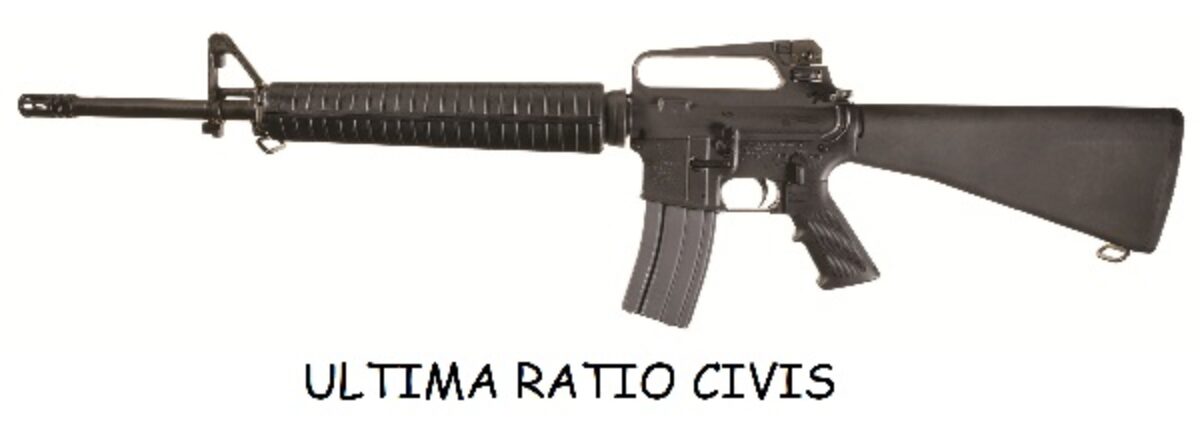
U.S.A. -(AmmoLand.com)- Yesterday, the House of Delegates passed House Bill 4048, the WV Keep, Bear, and Drive with Arms Act. It now goes to the Senate for further consideration.

House Bill 2048 affirms that it is lawful to possess loaded and/or uncased rifles and shotguns in vehicles “unless rebutted by the totality of circumstances” that unlawful hunting is occurring. This ensures that law-abiding citizens may carry the firearms of their choice, in the manner of their choice, with them in vehicles.

Gov. Noem announces legislation to cut fees on business incorporations, concealed carry permits

PIERRE, S.D. – On Thursday Governor Kristi Noem announced a single legislation intended to eliminate taxes and fees associated with business incorporations and concealed carry permits in South Dakota.

The bill would eliminate all fees associated with starting or renewing a domestic business with the Secretary of State in South Dakota. It would also eliminates all fees for concealed carry permits in the state…….

Glenn Youngkin Defends Ban on ‘Racially Divisive’ Critical Race Theory in Virginia

Virginia Gov. Glenn Youngkin defended his decision to outlaw critical race theory in public schools — slamming the controversial philosophy as “racially divisive.”

Youngkin made the remarks following a decision to issue an executive order banning school lessons that define racism as an institutional problem deeply embedded in American society.

“There’s not a course called critical race theory,” Youngkin said on “Fox News Sunday.”………………….

Trust but verify‘ works for me.


BLUF:
“One thing I’ve learned is the Second Amendment is one of the most important amendments and you look at all my voting record. Listen, you watch this Congress itself—we believe in the Constitution,” McCarthy said.

Exclusive — Kevin McCarthy Pledges as Speaker He Will Not Consider Amnesty or Gun Control Legislation

House GOP Leader Kevin McCarthy told Breitbart News in an exclusive interview taped in December that the House would not consider any legislation that grants amnesty to illegal aliens if he becomes the speaker next year.

“We know first and foremost one of our greatest strengths is the rule of law, so you have to have an immigration system based upon the rule of law. You have to secure the border. The immigration system is broken and we’re going to fix it. Yes,” McCarthy replied when asked if he could pledge no amnesty would be considered under his leadership.

“Yes,” he reaffirmed when pressed again.

Continue reading “”

It appears that West -By God- Virginia has a Second Amendment Protection Act law not unlike Missouri and a few other states.


AG offers guidance on handling gun law conflicts

CHARLESTON — A state law passed early in 2021 regarding federal gun laws now has related policy guidelines.

House Bill 2694 stipulates that state gun laws will trump federal gun laws and no West Virginia law enforcement agency on any level “shall participate in enforcement efforts focused on federal gun control measures when those laws conflict with state laws regarding firearms.”

“The right to keep and bear arms is enshrined in the Constitution,” Attorney General Morrisey said Thursday when announcing the guidelines. “Yet, there is a deep concern on the part of many Americans that the federal government will try to encroach on our Constitutional rights through presidential executive orders or through acts of Congress. The publication of this guidance will help our state’s law enforcement understand what they can and cannot do in this respect under West Virginia statute.”

Morrisey said enforcement of federal firearms laws is a federal responsibility, not the responsibility of West Virginia law enforcement agencies when federal gun laws are in conflict with state Code.

For example, he said, a West Virginia state or local law enforcement agency, department or officer “may not assist federal authorities in executing an arrest warrant just for violation of federal gun laws when the person to be arrested may lawfully possess such firearms, firearms accessories or ammunition under state law.”

The new law also provides that no member of state or local law enforcement may be required to act in a law enforcement capacity to enforce a federal statute, executive order, agency order, rule or regulation determined by the West Virginia Attorney General to infringe upon citizens’ Second Amendment rights, Morrisey said.

Law enforcement officers are also protected and cannot be terminated or decertified for refusing to enforce a “federal statute, executive order, agency order, rule or regulation determined by the West Virginia Attorney General to infringe upon citizens’ Second Amendment rights.”

“This guidance from the Attorney General on HB 2694 will help protect West Virginia from new federal gun control schemes, and ensure our law enforcement officers are immune from retaliation for defending the Second Amendment rights of all West Virginians,” Kevin Patrick, vice president of the West Virginia Citizens Defense League, said in the announcement.

West Virginia Sheriffs Association Executive Director Rodney Miller said the move is fully supported.

“Law enforcement across West Virginia wholeheartedly supports the Second Amendment and lawful possession of firearms by our citizens and are happy to have joined the Legislature, the Attorney General and concerned gun groups in this effort to ensure that responsible firearm ownership is defended without question,” he said. “We, as citizens of this state, are concerned with overreach that could deny all of us the ability to lawfully possess firearms and utilize them as proud Mountaineers have always done responsibly.”

The policy guidance is posted on the Attorney General’s website (https://bit.ly/3zagUlE) and is being sent to state and local law enforcement agencies.

GO TIDE

Several gun rights bills filed before 2022 legislative session

MONTGOMERY, Ala. (WAFF) – Alabama lawmakers will be back in Montgomery in less than a month for the 2022 legislative session and there are already several bills pre-filed by lawmakers with many dealing with gun rights.

Conceal carry without a permit

A third of the pre-filed bills deal with needing a concealed carry permit to carry. Senate Bill 1, sponsored by Senator Gerald Allen, would allow Alabamians to carry or possess a firearm in certain areas. Some of these areas are wildlife management areas and private property.

You would still not be able to carry a firearm in police and other law enforcement buildings, as well as, inside a prison or other detention centers. However, it is not a violation if someone has a firearm locked in their vehicle at a sheriff’s office that issues permits.

Another bill, House Bill 44, covers the same thing as Senate Bill 1 and is sponsored by 39 republican state representatives, including Speaker of the House Representative Mac McCutcheon.

House Bill 6 and Senate Bill 12 would allow people to carry, or have in their vehicle, a pistol or other concealed firearms without a permit. The bill would also remove the presumption of intent to commit a violent crime if someone has a firearm without a permit. This means if a person is just carrying a pistol, holstered or secured, in a public place, it is not illegal under these bills.

These bills are sponsored by Senator Tim Melson of Florence and representatives Shane Stringer and Proncey Robertson.

Bills on federal regulation

Not only are politicians looking inward at state laws but they are also looking out to the federal government.

Senate Bill 2 and House Bill 7 would both create the Alabama Second Amendment Preservation Act. This act would prohibit state law enforcement from enforcing any federal law, or other legislation, regarding the regulation of firearms, firearm accessories or ammo.

The bills would also set up penalties for whatever agency violates the proposed bill. The penalty for a first offense is a class C misdemeanor with a fine no less than $500 or more than $5,000. For all other offenses, it is a class B misdemeanor with a fine no less than $1,000 or more than $7,000.

Under Senate Bill 2, a state political subdivision will also not receive grant funds if it adopts a rule or other policy which violates this act. They would be denied those funds the following fiscal year of the conviction.

The bills are sponsored by Senator Gerald Allen and representatives James Hanes and Arnold Mooney.

A different bill, House Bill 13, would prohibit state law enforcement from enforcing any federal bill or other legislation pertaining to the regulation of firearms, firearm accessories or ammo, just like Senate Bill 2. However, this only pertains to those made and sold in Alabama.

Under existing constitution law, Congress is given the authority to regulate interstate commerce. This bill would provide that firearms, ammo and firearm accessories that are made in the state and are only traded within the state are not subject to federal law or regulation.

The 2022 Alabama Legislation Session begins on January 11, 2022.

And on the local front:

Violations of Missouri ‘Sunshine Law’ can result in some pretty heft fines. For the people who continually say ‘We don’t teach CRT!” they sure do a lot of complaining about people wanting proof.


Missouri Attorney General Sues Springfield School District Over Refusal To Turn Over Critical Race Training Records.

Attorney General Eric Schmitt filed suit against Springfield Public Schools for violating the state’s sunshine laws, saying SPS failed to provide documents his office requested after parents complained of lessons and curriculum based on Critical Race Theory (CRT).

On November 16, 2021, Missouri Attorney General Eric Schmitt filed suit against Springfield Public Schools for violating the state’s sunshine laws. Schmitt says Springfield failed to provide documents his office requested after parents complained of lessons and curriculum based on Critical Race Theory (CRT).

In a press release announcing the action, the AG’s office said, in part:

Upon questioning by the Attorney General’s Office, Springfield Public Schools admitted that they’ve provided equity training to students in the GO CAPS program for the past three school years. In May of 2021, Springfield Public Schools reported that it had formed a “Culturally Relevant Curriculum Review” and adopted a Culturally Responsible Scorecard to implement a social justice evaluation of core curriculum, including math.

After the Springfield Public Schools School Board limited public comments and Springfield Public Schools announced that they would not release training materials to the public, the Attorney General’s Office filed a Sunshine Law request on behalf of concerned parents to find out exactly how frequently critical race theory and antiracism materials and teachings were supplied or taught to students.

In response, Springfield Public Schools provided a fee estimate that demanded an initial deposit of $37,000. The lawsuit alleges, “Springfield Public Schools violated § 610.026.2 [the Sunshine Law] by demanding a deposit for items or services other than copies as a precondition to making public records available to the Attorney General’s Office.”

Schmitt also put together a lengthy thread on twitter sharing details his office had learned about the teacher trainings.

Continue reading “”