SAF ‘Journalism Project’ Hits Biden White House with FOIA Request RE: Gun Control

The Second Amendment Foundation’s Investigative Journalism Project has filed a Freedom of Information Act request with the Biden White House in an effort to see how deeply imbedded the gun prohibition movement is within Joe Biden’s administration.

Biden stepped into the presidency with an acknowledged gun prohibition agenda. He wants to ban semi-automatic modern sport/utility rifles, and even acknowledged in 2021 he would like to ban 9mm pistols. While there have been published reports of his administration’s interactions with the gun control crowd, there is no indication he has reached out to any gun rights organizations.

The FOIA request was made by IJP editor Lee Williams, whose coverage of gun-related news appears in TheGunMag.com, a SAF-owned publication, as well as several other online news sites. Williams’ reports have occasionally at Liberty Park Press.

Via email, Williams told Liberty Park, “The Biden-Harris administration runs the least transparent White House in recent history. Everything is conducted in secret, behind closed doors. Through this Freedom of Information Act request, we will start holding the shot-callers accountable for their constant infringements on our Second Amendment rights. At the very least, we will find out who’s actually orchestrating their war on our guns.”

In a prepared statement to the media, SAF founder and Executive Vice President Alan M. Gottlieb said the FOIA request was necessary in order to learn just how closely and under-the-radar the Biden White House is working with the gun prohibition lobby on legislation and other efforts that may impair Second Amendment rights.

However, this looks purely like a First Amendment issue.

“Joe Biden is a perennial anti-gun-rights politician and he has spent his entire career pushing various gun control schemes that would turn the right to keep and bear arms into a heavily-regulated privilege,” Gottlieb observed. “Thanks to the Freedom of Information Act, we might be able to learn just how deeply entrenched the gun ban movement has become in his administration.”

The FOIA request seeks copies of all documents, including emails and visitor logs, between the White House and gun control and gun safety groups including, but not limited to, Everytown for Gun Safety, Moms Demand Action for Gun Sense in America, Giffords Law Center to Prevent Gun Violence, Brady Campaign to Prevent Gun Violence, The Trace, Coalition to Stop Gun Violence, Mayors Against Illegal Guns, Third Way, Newtown Action Alliance, Gun Control Giving Fund, Coalition to Stop Gun Violence, Violence Policy Center, Gun Violence Archive, Sandy Hook Promise, March for Our Lives, Johns Hopkins Center for Gun Violence Solutions, Alliance for Gun Responsibility and Guns Down America.

“If the Biden White House declines to produce the requested materials, we’re going to wonder why,” Gottlieb said, “and we will not be satisfied until we get some answers, even if it means a court fight.”

Murphy Blocking Cruz School Security Bill Says It All

United States Senate – -(AmmoLand.com)- The next time some anti-Second Amendment extremist claims that those of us who object to gun control aren’t trying to prevent school shootings, the objection of Senator Chris Murphy to Ted Cruz’s School Security Enhancement Act should be thrown in their face.

Second Amendment supporters are all too aware of how anti-Second Amendment extremists weaponize mass shootings in general and mass shootings at schools in particular against our rights. Cruz’s legislation would allow current Student Support and Academic Enrichment grant programs to be used to improve the security at schools.

This sort of thing is – or should be – a no-brainer all around. Who doesn’t want safe schools? Chris Murphy, for one, it seems. What could he find so objectionable about Cruz’s legislation, which doesn’t even permit the use of the grants to arm teachers or train them?

We can quibble whether or not Cruz should have allowed the grants to be used to arm teachers. On the one hand, arming teachers does generate controversy (a voluntary program really shouldn’t, but we’re not in an ideal world). On the other hand, if Murphy won’t even support measures to improve school security that don’t involve guns… what do we have to gain by taking armed teachers off the table? That can be discussed later.

The topic for now, must be Murphy’s decision to object to even bringing such a measure up for debate. This is a no-lose proposition for Second Amendment supporters, especially if we make a lot of noise about it now. If we are seen working on efforts to deter, prevent, or mitigate mass shootings – including efforts that don’t involve guns – we have a chance to head off attacks.

As has been discussed on these pages earlier, Murphy has pushed legislation that would prohibit any sort of federal funding for law enforcement in schools. In other words, what he is proposing would actually make repeats of Sandy Hook, Parkland, and Uvalde not only much more likely to happen but also to rack up the kind of body counts that force us into a major action in defense of our rights.

Why would he remove something that could deter or mitigate attacks? That is a question we’d see him asked if the vast majority of media outlets were honest. We don’t have that world today, so much of it could end up needing to be done by Second Amendment supporters at town meetings. Those in Connecticut should press Murphy on this and demand an explanation.

Remember the time it took for cops to arrive at Sandy Hook? It was ten minutes – 600 seconds. The long periods of inaction by law enforcement at Parkland and Uvalde also should be kept in mind. Murphy’s past track record of smearing Second Amendment supporters means he has forfeited any claim to receiving the benefit of the doubt from Second Amendment supporters on this matter as well.

One final thing: Working to prevent school shootings with legislative proposals like what Senator Cruz proposed is not being a “Fudd.” The fact is, we should be trying to head off these shootings – it’s in our interest to do so, just look at the aftermath of Parkland.

Second Amendment supporters have a chance to immunize themselves to some degree from attacks in the wake of the next school shooting. If they can seize this chance, it will help efforts to defeat anti-Second Amendment extremists at the federal, state, and local levels via the ballot box.

NYT Poll Finds More Voters Agree with GOP on Gun Policy

A New York Times/Siena College poll conducted September 6 to 14, 2022, finds more voters agree with the Republican Party on gun policy.

The poll questioned nearly Nearly 1,400 registered voters.

When asked, “Who do you agree with more on gun policy?” voters responded 47 percent to 43 percent, in favor of Republicans over Democrats

Voters were also asked, “Who do you agree with more on crime and policing?” They responded 47 percent to 37 percent in favor of Republicans over Democrats.

The NYT/Siena College poll also asked voters whether they support “A ban on semiautomatic weapons and high-capacity magazines.” Forty-nine percent of voters said they do not support such a ban, while 46 percent said they did.

When responses were broken down among voting patterns, 74 percent of Biden voters supported banning semiautomatic weapons and “high capacity” magazines. An identical percentage of Trump voters opposed banning semiautomatic weapons and “high capacity” magazines.

When ages were taken into account, 54 percent of the youngest voters–ages 18-29–opposed a ban on semiautomatic weapons and “high capacity” magazines, while 41 percent of the youngest voters supported it.

BLUF
While this reference guide is by no means a comprehensive list of the administration’s entire gun control agenda, there is one thing that is not missing.

Nowhere in any of the Biden-Harris administration’s plans is there a single mention of how they intend to disarm criminals. Only law-abiding citizens are targeted for disarmament, not the bad guys.

That, friends, is all you need to know of their true intent.

A reference guide to Joe Biden’s war on guns
Documenting the administration’s anti-gun agenda.

The Biden-Harris administration’s war on guns is the most comprehensive and multi-faceted gun control scheme ever created.

Former Obama national security advisor Susan Rice, who has admitted meeting with gun control groups regularly at the White House, likely drafted most of the plan.

Under Rice, the administration nimbly exploits any anti-gun gain, while quickly pivoting away from pushback from the media, the public or Congress.

By design, most of their gun control agenda skirts any oversight — legislative or constitutional — and is immune from other normal checks and balances.

With their weaponized foot soldiers in the Bureau of Alcohol, Tobacco, Firearms and Explosives willing to carry out any order regardless of its constitutionality, the Biden-Harris administration has become one of the biggest threats to the Second Amendment since the Bill of Rights was first written.

Because it is so vast and comprehensive, simply tracking all of the administration’s gun control initiatives has been difficult, which is why this reference guide was drafted.

What follows is a partial list of the Biden-Harris administration’s gun control agenda. It will be updated as needed.

Continue reading “”

Analysis: How 50 Million Defensive Gun Uses Played Out According to a Massive Survey

The largest-ever scientific survey of gun owners found Americans used a gun in self-defense at least 1.67 million times per year. But the poll did a lot more than just count defensive uses; it also detailed how, when, and where they happened.

The National Firearms Survey, conducted by Georgetown University Professor William English, presented a ton of information on key questions surrounding guns in America. It found gun ownership is diversifying and gun carry is broadly popular. It found about a third of gun owners have owned an AR-15 or similar rifle and 50 percent have owned magazines holding more than ten rounds–key information for the legal battles over whether they can be banned.

And, of course, it also found a large number of American gun owners report using their guns to protect themselves. 31.1 percent of gun owners said they’d used a gun in self-defense. That equates to about 25.3 million Americans, according to English.

While a plurality of respondents said they’d only been involved in a single defensive gun use, the majority said they’d used a gun for self-defense more than once. That’s how English determined there were about 50 million reported defensive uses. He found the yearly rate of 1.67 million by dividing that total by the number of adult years the respondents had lived.

English said he did it that way to address one of the critiques of previous survey-based estimates of defense gun uses, which relied on people recounting not only that they used a gun in self-defense but that it happened in the last year.

However, that doesn’t mean it perfectly captures defensive gun uses. Critics have long questioned the validity of survey-based estimates altogether. Often they argue people who self-report using a gun to defend themselves are often misrepresenting what happened and may have even broken the law during the incident. Another common critique is the number of defensive gun uses doesn’t square with the number of justifiable homicides or criminals treated for gunshots.

Similarly, surveys of self-identified crime victims show a lower rate of self-reported gun defensive uses.

English said his estimates square with reported rates of hospital visits for gunshot wounds if you take the most common form of reported defensive gun use into account: incidents where no shots are fired. The more limited estimates, which put self-defense incidents in the tens of thousands rather than millions, do not account for defensive gun uses where nobody is injured. That’s a subset of events that English’s survey found was massive.

“[I]n the vast majority of defensive gun uses (81.9%), the gun was not fired,” he wrote in the preprint paper on the survey. “Rather, displaying a firearm or threatening to use a firearm (through, for example, a verbal threat) was sufficient. This suggests that firearms have a powerful deterrent effect on crime, which, in most cases, does not depend on a gun actually being fired or an aggressor being injured.”

The survey includes stories from a number of respondents who recount their self-defense encounters, including many who did not fire a shot.

Continue reading “”

How Hochul’s gun laws will make churches less safe

New York Gov. Kathy Hochul has been on an anti-gun tirade pretty much since she took office. Any hopes she’d be a smidge better than her predecessor on the Second Amendment have been well and truly dashed. The only thing she may be better on is not sexually harassing her female subordinates.

Following New York’s epic smackdown by the Supreme Court, Hochul and the legislature rushed through a measure seeking to try and adhere to the letter of the Bruen decision only as much as they felt they had to.

Yet that law includes a prohibition of guns at any place of worship.

As noted at our sister site PJ Media, that’s going to make those places of worship a lot less safe.

For your consideration:

  • On June 17, 2015, a man walked into the Emanuel African Methodist Episcopal Church in Charleston, S.C., where a prayer meeting was being held. He shot and killed nine people, including the pastor, State Senator Clementa Pinckney. The shooter was charged with a hate crime.
  • November 5, 2017 — a man entered the Sutherland Springs First Baptist Church in Texas. He was dressed in black and wearing tactical gear. By the time he finished shooting, 26 were dead and 20 were wounded.
  • On a Sunday morning in December 2019, a man walked through the door of the West Freeway Church of Christ in White Settlement, Texas, and opened fire during services. Two victims died in the attack. The gunman was killed by two parishioners, one of whom was the security guard.
  • October 27, 2018 — a man came into the Tree of Life Synagogue in Pittsburgh. After shouting “All Jews must die!” he shot and killed 11 people. Six others were wounded. He was known for posting anti-Semitic rants on Gab.
  • One person was killed and three were injured when a man entered Chabad of Poway in California and opened fire with a semiautomatic rifle in April 2019.
  • In January of this year, a man held four people, including the rabbi, hostage at Congregation Beth Israel in Colleyville, Texas, for 10 hours before being killed by police. The suspect said that he had hidden bombs in undisclosed locations.
  • In May 2022, the New York Post reported a rise in anti-Semitic activity in the city. This included vandalization of synagogues and attacks on individual people.

It should be noted that if you want to go further back, you can find still more places of worship being targeted.

What’s more, many churches and synagogues can’t afford to hire professional armed security, yet there’s no provision in state law for volunteers to step in if the church so desires.

Look, one area where I tend to infuriate my fellow Second Amendment supporters is that I think a property owner has the right to ban guns on their property. I’m fine with laws that give signs the force of law, even. I want to know where I’m not welcome, after all.

But the flip side of that is that I cannot tolerate laws that tell property owners that they can’t make that determination for themselves. That’s precisely what Hochul’s law does since the churches and synagogues are, in fact, property owners in most cases.

Looking at this list, it’s easy to see that places of worship get targeted by maniacs looking to kill as many people as possible.

Hochul and folks like her probably think this law will stop that, but it won’t. I mean, if a law would stop such a thing, then wouldn’t the laws against murder do the trick on their own?

They don’t, though.

Instead, these places of worship cannot allow their congregations to be lawfully armed as a defensive measure. That means these very places become better targets for the deranged.

And when it happens in New York, remember that it was Hochul and her buddies who made that target so attractive.

Inclusive advertising for AR-15s

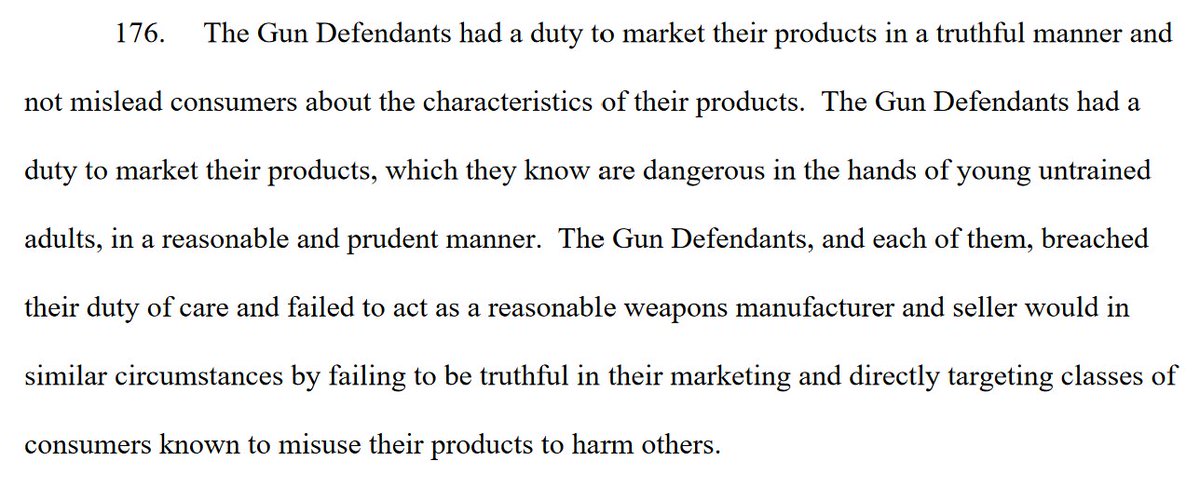
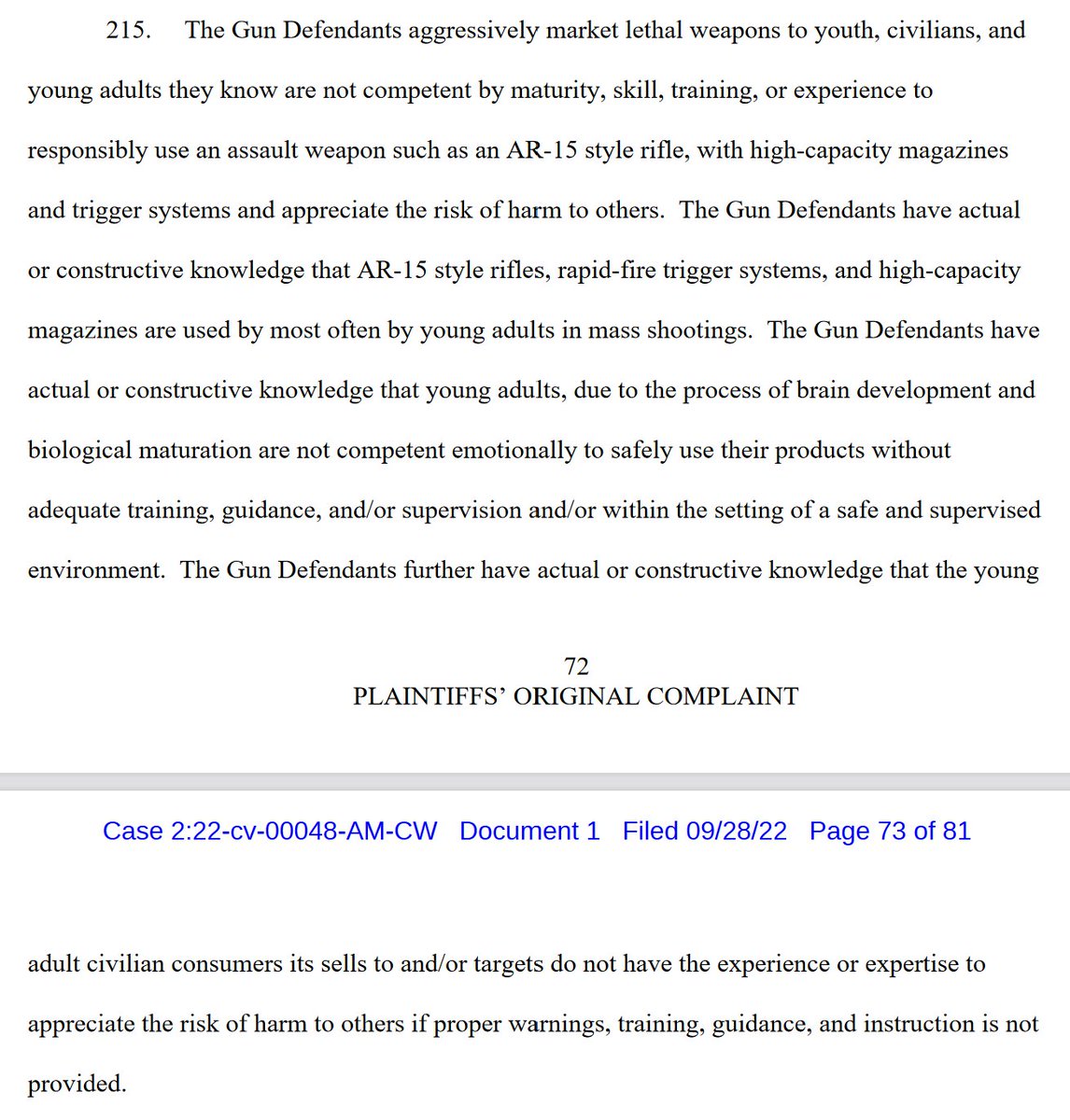
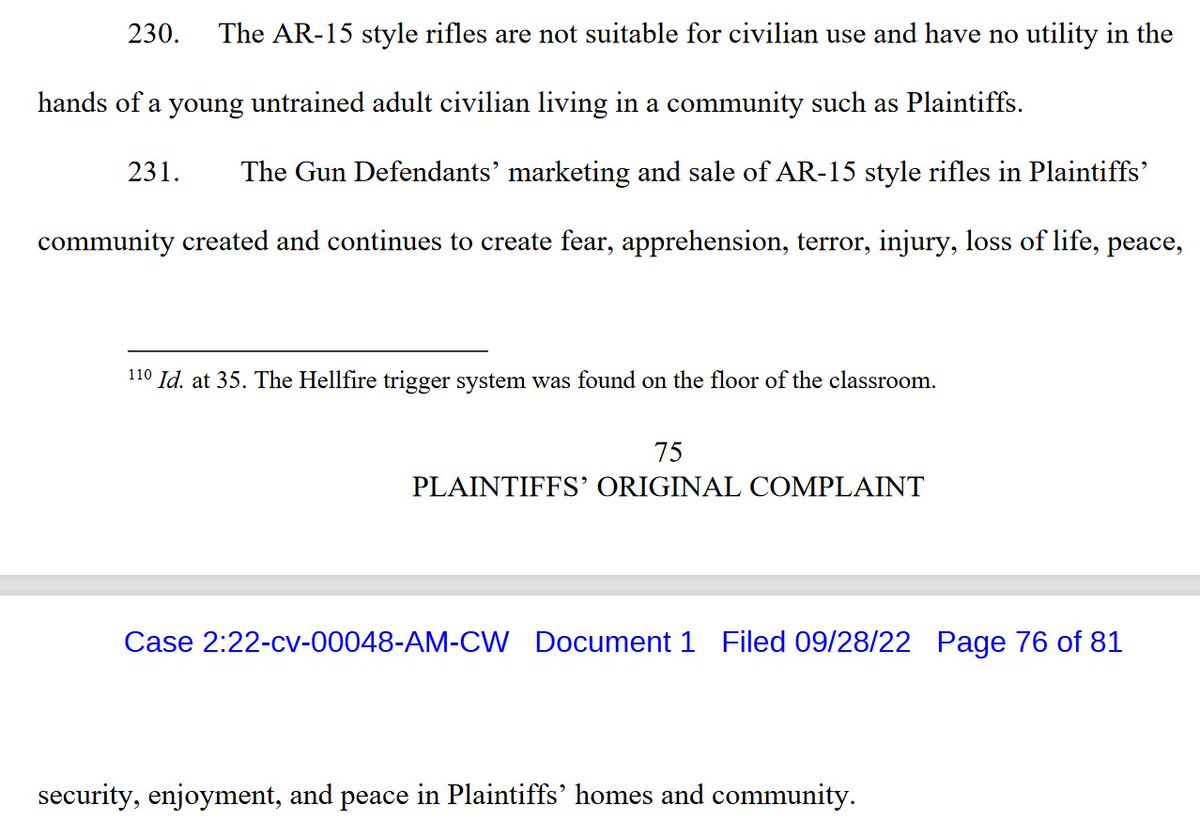
Lawyers are seeking to circumvent the Protection of Lawful Commerce in Arms Act with what I view as junk lawsuits against gun manufacturers whose products are sold lawfully but later misused by violent criminals.

Attorneys were however successful in circumventing the PLCAA with a lawsuit against Remington for Adam Lanza’s use of a stolen AR-15 to commit a mass shooting at Sandy Hook.

The lawsuit relied on advertisements for the AR-15 that said, “Consider your man card reissued.” While I do not care for the gender-specific nature of this ad, I also doubt that any reasonable juror who was not in the pocket of the anti-Second Amendment camp would be receptive to the idea that a “man card” is a license to use a weapon for purposes other than lawful self-defense or on inanimate objects in a safe environment.

If we go back a couple of generations to the time when men but not women were expected to put themselves at risk to stop unlawful violence, your “man card” is your right and even possibly your moral duty to use your firearm to stop individuals like Adam Lanza, Luke Woodham, Dylann Roof, Nikolas Cruz, Matthew MurrayJacob RobertsKeith Thomas Kinnunen, and Salvador Ramos before they can complete their crimes. The hyperlinked individuals were in fact stopped in this manner and there was nothing wrong with Lanza, Roof, Cruz, Ramos and (allegedly unless and until proven guilty) Tree of Life synagogue shooter Robert Bowers that would not have been fixed by well-aimed bullets.

Jurors Must Reject Junk Lawsuits

If you are called for jury duty in a junk liability case against a gun manufacturer, remember that there are lawyers who have tried to use repressed memories as evidence in other forms of litigation and even criminal cases.

From where I sit, “repressed memory” is simply a designer label for “perjury” or “subornation of perjury,” whether initiated by the witness or somebody coaching or even brainwashing the witness respectively, because one is then free to “suddenly remember” anything he, she, or an ambitious prosecutor or personal injury lawyer finds convenient. These kinds of attorneys would, if given the chance, initiate litigation for harm incurred during past lives if they could get away with it. “Bad karma? Have you been harmed in a past life? The law firm of Dewey Cheatham & Howe will assign a team of memory regression experts to find the current incarnation of the person who wronged you long ago, and ensure that he or she has very deep pockets from which you can rake in cash and give us our cut.

We are sure we can find six people who are too stupid to get out of jury duty to buy this argument.” While this proposition does not appear on the web site of this fictitious law firm, equally humorous material does but you may have to add .html to some of the links to get them to load.

Let’s Make Gun Ads Inclusive of Women

Let’s return however to the gender-specific “Consider your man card reissued.” It’s the twenty-first century, folks, and not the nineteenth. Women as well as men now protect our society as police officers and members of our Armed Forces. Women often use lawfully-owned firearms to protect their families as well. Here’s audio of a 911 call in which a woman in Georgia shot a home invader who followed her and her children into a hiding place. A Chinese immigrant shot at three home invaders, and was lauded by the communist Chinese media which is ironic, because communist China does not allow its subjects to own firearms.

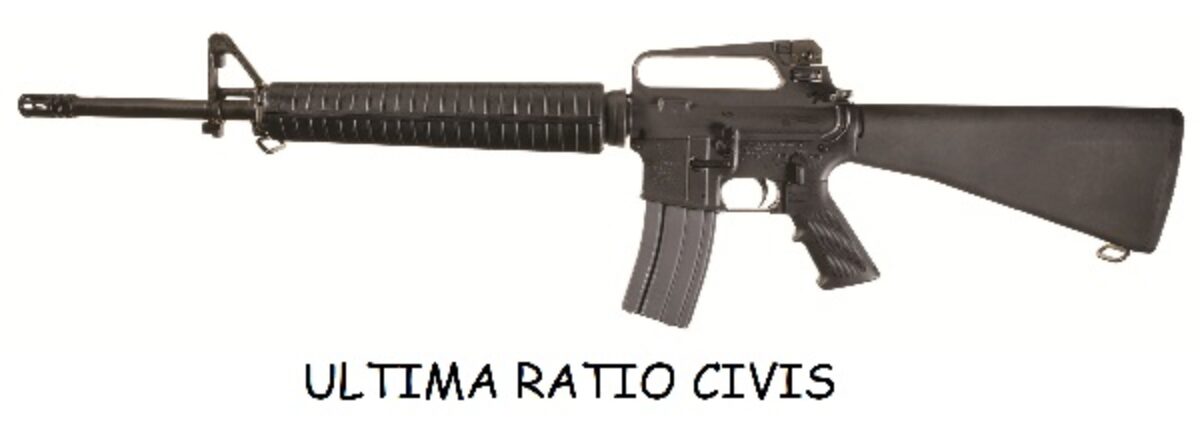
The AR-15 is in fact an ideal self-defense firearm for women due to its relatively light weight, ease of handling, and low recoil.

I have accordingly composed an ad that combines material from Quentin Tarantino’s Jackie Brown (warning, profanity), Edge of Tomorrow, and Colonel Jeff Cooper’s depiction of violent criminals as goblins. (Cooper referred to soldiers of repressive regimes as “orcs,” which people now apply to Vladimir Putin’s minions, and East Germany as “Mordor.”) Here we go: “AR-15, the very best there is. When you absolutely, positively, have to go full metal bitch on every goblin who has invaded your home and put your family at risk, accept no substitute.” Note that, while the B word is normally a socially unacceptable pejorative for a woman, it was the nom de guerre of Rita Vrataski, also known as the Angel of Verdun, in Edge of Tomorrow where she was defending the human species from alien invaders, and this is the intended context here.

If we return to reality, the likelihood is well upward of 99.99% that you will never, regardless of your gender, have to menace anything other than a paper target with your AR-15. It’s better to have it and not need it, though, rather than to need it and not have it.

Tactical gear for women to carry arms

Vicky Johnston, the owner and designer of Her Tactical, joined the show today to talk about her business.

Johnston encourages women to be prepared, be aware, and be ready for anything they may encounter. She shares her self defense skills with others through her company, offering a workshop to help build confidence.

Johnston tells of her story finding items to conceal a gun that work well for women. In her experience, every store she went to only had products for men, so she started her own company specifically tailored for women.

Her Tactical is putting on a workshop in February, and is offering a 15% discount on any concealed carry product purchased using the coupon code “ABC4” on her website.

Concealed Carry Products: https://hertactical.com/

Workshop Registration: https://hertactical.com/workshop/

Full-auto switches popping up in gun-controlled Connecticut

Full-auto switches take a regular Glock semi-automatic pistol and converts them into a machine gun. I don’t mean that in the sense that bump stocks supposedly do, where they really just allow you to pull the trigger stupidly fast. No, they actually turn the pistols into full-auto weapons.

As a result, they’re illegal in the US. There’s no state in which they’re OK because they fall under federal law. They shouldn’t, but they do.

Anyway, they’ve been turning up more and more in different places. It seems gun-controlled Connecticut is having an issue with them.

A tiny device capable of transforming a handgun into a mini machine gun is showing up in Connecticut, according to police reports.

The device, known colloquially as Glock “switches” or “chips,” can be quickly attached to a handgun, converting the weapon from shooting just one bullet each time the trigger is squeezed to having the capability of firing until the trigger is lifted.

A handful of the devices have been recovered by police in Connecticut in recent years, according to police reports, though it’s unclear how many of the devices are present in the state. Advocates say they pose a danger to the public because they increase the risk of bystanders being shot, and because of the apparent ease criminals are able to obtain them.

Ease criminals are able to obtain these things? Seriously?

Nah, can’t be. Gun control works, we’re told, and these things are seriously illegal. Due to the date of manufacture on these, no one can legally have one except for a handful of exceptions. How can gun-controlled Connecticut have an issue with easy access to one of the most controlled devices out there?

The report goes on to discuss the ease with which these can be obtained, such as from China or via a 3D printer.

Now, there are only a few that have been recovered, but that’s all it takes to create a panic. However, in this case, there are lessons that can be learned despite the limited numbers recovered.

You see, you can’t keep bad guys from doing bad things. If they want full-auto switches, they’ll get them, especially in this day and age.

Thankfully, there’s no mention of Connecticut lawmakers trying to pass laws banning things that are already illegal. Yeah, I know, will wonders never cease and all that, but it’s still worth mentioning.

However, there was this bit I wanted to talk about:

“I’ve heard law enforcement officers in other parts of the country refer to this as … ‘the scariest thing that has hit the streets in a long time,’” said Jeremy Stein, executive director of Connecticut Against Gun Violence, a group that supports stronger gun laws.

Stein said the device works by essentially “bypassing” the firearms trigger mechanism, similar to a bump-stock, a device designed to make a semi-automatic weapon mimic a fully automatic rate of fire.

“There’s no legitimate civilian purpose — there is no good reason to have one of these things,” he added.

Well, yeah, there is.

You see, when the bad guys can throw down a whole lot of fire, it might be warranted for law-abiding citizens to have the means to lay down a similar amount of fire.

As it stands, we’re on an unequal footing with our adversaries should we find ourselves up against a criminal armed with a gun possessing a full-auto switch. We simply don’t have the firepower to meet that kind of force.

So having a similar full-auto switch would be a “legitimate civilian purpose.”

Now, with that said, no law-abiding citizen is likely to have one of these. I mean, by definition, if you have one you’re not likely to be law-abiding, now are you?

However, this also shows that what we need isn’t more gun control laws. This is as tightly controlled as they come under the law, and yet for less than the price of a tank of gas–OK, bad example in this day and age, but bear with me–you can get something that will turn your standard Glock into a machine pistol.

Or, you can find the files and make them yourself with a 3D printer.

Look, while I know that Connecticut hasn’t gotten the memo, gun control is dead. It doesn’t work, is unconstitutional, and is just a general waste of time.

If you can’t keep a full-auto switch out of criminal hands, how are you going to keep guns out of them?

Lies, Damn Lies and President Joe Biden

If the old chestnut concerning “lies, damn lies and statistics” was referring to a U.S. president, it would almost certainly be current President Joe Biden (D).

That fact was proven, once again, during the president’s late-August campaign-style appearance in Pennsylvania. Speaking to an audience at Wilkes University, Biden made another one of his preposterous statements about the AR-15—a type of semi-automatic rifle that he loves to hate and wants to ban.

“Do you realize the bullet out of an AR-15 travels five times as rapidly as a bullet shot out of any other gun?” the president asked those in attendance. Apparently, he received no answer to that somewhat rhetorical question, and the White House press corps hasn’t followed up on the outright lie.

In truth, there are many rifle calibers that fire projectiles at a higher velocity than the roughly 3,000 feet per second (fps) of the .223 or 5.56 mm rounds that an AR-15 is typically chambered in, including the .220 Swift, .257 Weatherby Magnum and the .30/378 Weatherby. In fact, the average bullet out of an AR-15 moves less than three-times faster than a typical 115-grain 9 mm pistol bullet commonly used for home and self-defense. Recall, however, that the president once lied about that round, too, saying, “A 9 mm bullet blows the lung out of the body.”

Apparently not believing the president would simply lie about the easily researched speed of a rifle bullet, the dubious “fact-checking” website, Snopes, looked into the matter. In the end, however, the “fact checkers” treated the asinine statement by the president with kid gloves: “The president’s claim is incorrect, and generalizes the varying speeds of bullets fired from different kinds of guns,” Snopes reported. Rather than sticking to “fact-checking,” Snopes went on to editorialize, “However, the AR-15 is still an especially lethal weapon and has been used to murder hundreds of people in mass shootings in the United States.”

Biden also used the occasion to take yet another shot at those Americans who rightly believe that the Second Amendment was written to ensure citizens could defend themselves against a tyrannical government.

“If you want to fight against a country, you need an F-15,” Biden said sarcastically. “You need something a little more than a gun. No, I’m not joking.”

Having a leader threaten law-abiding gun owners with hi-tech jet fighters seems like something you’d be more likely to hear in an authoritarian state. Hearing Biden make the statement didn’t sit well with freedom-loving citizens.

“While we’re here, let’s also acknowledge that ‘your AR-15 is useless because the government could just carpet bomb you into submission’ isn’t an argument in favor of gun control,” said Amy Swearer, a legal fellow with the Edwin Meese III Center for Legal and Judicial Studies. “It’s actually an argument for a better armed citizenry and against trusting whoever said that.”

Additionally, in the same speech the president once again made his tired, oft-repeated statement about deer and bulletproof vests—a statement so ignorant that it’s hard to believe the so-called “most powerful man in the world” would continue to repeat it.

“And by the way, how many—my dad used to love to hunt in the Poconos when we lived in Scranton,” Biden said. “How many deer or bear are wearing Kevlar vests, huh? Not a joke.”

We’ve said it before and we’ll say it again: The Second Amendment isn’t about hunting. Somebody should tell Biden that—or at least tell whoever keeps adding that dopey line to his speeches.

Lastly, Biden encouraged attendees to vote based on a candidate’s willingness to curtail Second Amendment rights for all Americans.

“It’s time to hold every elected official’s feet to the fire and ask them: ‘Are you for banning assault weapons? Yes or no?’ Ask them. If the answer is no, vote against them.”

Biden is correct about one thing: It is time to hold every elected official’s feet to the fire and ask them if they are for banning common AR-15-style rifles. If the answer is yes, it’s time to vote them out and replace them with someone who respects the Second Amendment.

Get the Word Out About Kyle’s Law

A prosecutor who uses his or her authority to virtue signal to the public to advance his or her political career is more dangerous to society than all but the most violent criminals.

Insurance will cover many forms of property crimes, and you can legally use deadly force against somebody who menaces you with death or serious bodily injury.

A prosecutor, though, can bankrupt most people by filing unfounded criminal charges against them, ruin their lives with prison time and criminal records. Unless the case is particularly egregious like that of Mike Nifong (D-NC), or with crooked judges like Mark Ciavarella (D-PA, a.k.a., federal inmate #15008-067) or Mike Conahan (D-PA, home arrest), there is little or no recourse against these “jurists.”

To put this in perspective, Pennsylvania attorney Frank Fina was suspended from the practice of law for his role in convicting Penn State President Graham Spanier of putting children at risk. Pennsylvania’s current Attorney General, and gubernatorial candidate Josh Shapiro (D-PA), worked hard to reinstate Spanier’s conviction while tweeting that Spanier had been told that Jerry Sandusky was sexually assaulting children on the Penn State campus. The witness, Mike McQueary, testified, however, under oath, that he did not see Sandusky do anything he deemed reportable to police while his father and a family friend, both of whom are mandated by law to report abuse, did not encourage him to report to child protective authorities whatever he thought he might have possibly heard.

I believe that Shapiro, like Scott Harshbarger (D-MA) and Martha Coakley (D-MA) who ruined the lives of the Amiraults, used his position to “virtue signal” his concern for the children prior to the election. The latter is my perception of Shapiro, Harshbarger, and Coakley rather than a statement of fact because I cannot read their minds.

Kyle’s Law

Attorney Andrew Branca, whose opinions often appear on William Jacobson’s blog Legal Insurrection, has proposed what he calls Kyle’s Law due to what he and I both regard as a politically motivated prosecution of Kyle Rittenhouse for what was obviously self-defense.

“Too often, rogue prosecutors bring felony criminal charges against people who were clearly doing nothing more than defending themselves, their families, or others from violent criminal attack. …The only motivation of the prosecutor is personal aggrandizement and political capital.” Kyle’s Law would sanction not only the jurisdiction but also the prosecutor who brings a junk case, to be defined as one in which the prosecutor lacks even preponderance of evidence rather than beyond a reasonable doubt that the defendant did anything wrong.

The American Bar Association’s Rules of Professional Conduct state meanwhile, “A lawyer shall not bring or defend a proceeding, or assert or controvert an issue therein, unless there is a basis in law and fact for doing so that is not frivolous…” and also “The prosecutor in a criminal case shall: (a) refrain from prosecuting a charge that the prosecutor knows is not supported by probable cause…” and probable cause requires a “reasonable belief” that the defendant has committed a crime.

If, for example, a video of a self-defense shooting shows clearly that the person who was shot initiated a deadly confrontation, perpetuated it by not allowing the subject of their attack to retreat in complete safety, and menaced the shooter with immediate deadly force, as did all three of Rittenhouse’s assailants, that’s proof beyond a reasonable doubt in favor of the shooter that the shooting was justified. If we look within the four corners of the charges against Rittenhouse, the prosecutors did not contest this version of the events.  Joseph Rosenbaum initiated a confrontation in which he attempted to strong-arm rob Rittenhouse (a violent felony by itself) of a firearm he could have turned against Rittenhouse on the spot and also one which, as a convicted felon, it was unlawful for Rosenbaum to handle. Anthony Huber the domestic abuser was a member of a mob (which constitutes disparity of force and therefore deadly force) that pursued Rittenhouse while yelling violent threats, thus putting Rittenhouse in reasonable fear for his life and denying him the opportunity to retreat in complete safety. He then menaced and struck Rittenhouse with a deadly contact weapon when Rittenhouse was on the ground. The third man, Gaige Grosskreutz, pursued Rittenhouse with a drawn handgun, which again constituted an implied threat, along with the immediate means of carrying it out.

Another example would be, for example, if a politically ambitious prosecutor had tried to show his “woke” credentials by charging the officer who shot Hakim Littleton even though the latter was on bodycam video firing a handgun at the head of another officer at roughly three paces. It was fortunate that Littleton was a bad shot or it would have been “end of watch” for that officer or, as Black Lives Matter and Antifa would put it, he would have “oinked his last.” This did not, however, happen because the local prosecutors saw the open and shut case of self-defense.

Poster Children for Kyle’s Law

  • The Amiraults were convicted on the basis of “evidence” that included, among other things, accusations that one of them sexually assaulted a boy with a butcher knife that somehow left no injuries, along with a “secret room” and a “magic room” that were never found.
  • Police officer Grant Snowden was railroaded to prison on the watch of Janet Reno (D-FL).
  • Police officer Garrett Rolfe was charged with murder for shooting Rayshard Brooks after Brooks took an officer’s Taser, which the prosecutor stipulated is a deadly weapon under Georgia law, and discharged it at the officers. The charges were finally dropped but should have never been filed.
  • Nikolas Fernandez was charged with felony assault for shooting Daniel Gregory, who reached through the window of Fernandez’s car to punch him. Gregory even admitted openly, “I catch him, I punch him in the face.” He claims that he was trying to stop Fernandez from running over “demonstrators” but the video shows clearly that Fernandez had come to almost a complete stop by the time Gregory reached into his car. Note also the barrier that another “demonstrator” shoves in front of the car which a reasonable person would construe as a prelude to a carjacking or Reginald Denny-style beating.
  • Here is a long list of wrongful convictions in the United States, some of which involved willful prosecutorial misconduct and/or misconduct by rogue police officers eager to get convictions no matter what.
  • Prosecutors should not be afraid to do their jobs just as police officers should not be afraid to do their jobs. Kneeling on a helpless suspect’s neck as Derek Chauvin was convicted of doing is not, however, a police officer’s job, and Chauvin is now in prison as a result. Junk prosecutions whose sole identifiable purpose, at least from the perspective of a reasonable person, noting that nobody can read the prosecutor’s mind, is to advance a prosecutor’s legal and/or political career, should similarly bring the consequences recommended in Kyle’s Law and maybe professional disciplinary action as well.

Largest-Ever Survey of Gun Owners Finds Diversity Increasing, Carrying Common, and More Than 1.6 Million Defensive Uses Per Year

A survey of 16,708 gun owners provides updated answers to some of the most pressing questions surrounding guns in America.

The National Firearms Survey, conducted in 2021 and updated earlier this year, examines the breadth of gun ownership and the use of guns throughout the country. It found more minorities and women own guns than previous surveys indicated, half of gun owners report carrying a handgun for self-defense, and nearly a third report having used a firearm to defend themselves–a number that translates to over 1.6 million defensive uses per year. William English, the Georgetown University professor who created the survey, told The Reload it is the most comprehensive look at American gun ownership yet produced.

“The biggest difference between the results of this survey and many earlier ones is that this survey goes into greater depth regarding types of firearms owned, the details of defensive gun uses, and frequency of defensive carry of handguns,” Professor English said. “This survey is also the largest survey of gun owners ever conducted, providing more statistical power than earlier surveys and much more information about the demographics of gun ownership and use. Its results are largely consistent with other recent survey work when it comes to general ownership estimates, which increases the confidence in its accuracy, but it goes into greater depth with regard to many details of interest.”

The sweeping survey will likely influence both the political and legal landscape surrounding firearms. The debate over guns has primarily centered on how common the ownership of guns is and how often they are really used to protect people rather than endanger them. Much of the evidence cited in that debate is decades old. So, the introduction of not just more thorough but more recent evidence may disrupt the decades-old conversation on guns. Its effect may be particularly stark in federal courts where the Supreme Court has placed significant weight on protecting guns in “common use for lawful purposes.”

The survey could also shake up how academics study guns in America. Up to this point, most gun ownership surveys have not been much larger than traditional public opinion polls. That means their samples can not be generalized down from their nationwide scope to more specific areas, such as the state level, without introducing further uncertainty. Most studies have attempted to control for that uncertainty by relying on indicators of gun ownership, including local suicide rates, rather than direct measurements.

However, Professor English’s survey established a representative sample of gun owners in all 50 states. He said the estimates in his survey are similar to the Rand Corporation’s widely-cited estimates on some of the more populous states but vary significantly in smaller states. The new data has the potential to upend the results of many studies that have relied on less straightforward ways of estimating gun ownership in the area they’re studying.

The survey also advances the understanding of defensive gun use. It shows many American gun owners report actually using their firearms to defend themselves.

“Given that 31.1% of firearms owners have used a firearm in self-defense, this implies that approximately 25.3 million adult Americans have defended themselves with a firearm,” English wrote in a preprint report on the study published on the Social Science Research Network (SSRN). “Answers to the frequency question suggest that these gun owners have been involved in a total of approximately 50 million defensive incidents. Assuming that defensive uses of firearms are distributed roughly equally across years, this suggests at least 1.67 million defensive uses of firearms per year in which firearms owners have defended themselves or their property through the discharge, display, or mention of a firearm (excluding military service, police work, or work as a security guard).”

However, English noted it also paints a more realistic picture of defensive gun use than what’s often shown in movies or TV. Instead of an altercation with many shots fired and the assailant ending up shot, the vast majority of defensive gun uses did not involve the defender firing any shot at all. Brandishing a gun was enough to end the threat to the gun owner in 81.9 percent of cases.

In cases where defenders did fire, a single shot was enough to end the confrontation in nearly half of the cases. Taking two shots was the next most common outcome, with each additional shot becoming less common.

Gun-control advocates and researchers have critiqued survey-based defensive gun use estimates, including the oft-cited work of criminologists Gary Kleck and Marc Gertz, as overestimates and elevated estimates in the tens-of-thousands range, calling into question the primary practical benefit of gun ownership. English said the paradoxically non-violent nature of most self-defensive use of firearms is why survey-based estimates like his differ significantly from those that use more restrictive metrics, such as the number of justifiable homicides or emergency room visits for gunshot wounds. He said his survey’s estimate aligns well with estimates for the number of emergency room visits once you factor in how few shots defenders say they fire and factor in the likely hit rate of those shots.

“The key to the puzzle is the fact that shots fired in self-defense rarely hit their target,” English told The Reload, citing studies from 2008 and 2018. “Studies of police have found that something like 65-85% of shots fired by officers miss. Note that these are trained professionals, and if they are engaged in a shooting incident, this will typically be pursued at close range until the perpetrator has been apprehended or incapacitated, meaning it’s not sufficient to simply fire a shot to scare an aggressor away. I wouldn’t be surprised if more than 90% of shots fired in self-defense by ordinary people didn’t hit anyone. Ordinary people should be less accurate, on average, than professional police officers. And, in most cases, the spectacle of gunfire is likely enough to get an aggressor to flee, which is sufficient for protecting a victim.”

English said his survey addressed another common critique of previous work in the field. He said previous studies that tried to estimate yearly defensive gun uses relied on respondents not only remembering that they used a gun in self-defense but also that it happened within the previous year. English designed his questions to avoid that pitfall, betting people are more likely to remember if they experienced a traumatic defensive encounter rather than the exact timeframe it happened in.

“My survey took a different approach, asking about defensive use at any time, not simply the last year,” he told The Reload. “The results show that this is not a rare event at all, with something like a third of gun owners reporting having used a gun in self-defense. Because of how the question was asked, I don’t have to engage in the exercise of extrapolating out estimates from measures of rare events in a restricted window of time.”

There are other potential weaknesses of English’s approach, though. He noted the survey only asked questions about defensive gun use to those over 18 years old and those who self-identified as gun owners. He said that might explain why his yearly estimate is on the lower end of Kleck’s previous estimates, which topped out at 2.5 million per year.

“There are also reasons to think that the [defensive gun use] estimates of this survey are conservative,” English said. “Kleck had found that a large proportion of those who had used guns in self-defense did not personally own a gun.”

English also looked at areas beyond what other researchers had attempted to survey at scale before. The survey found that AR-15s and similar rifles are in the hands of a wide swath of American gun owners, as are magazines that hold more than ten rounds of ammunition. What’s more, it found carrying pistols for protection is commonplace as well.

“In sum, about 31.9% of U.S. adults, or 81.4 million Americans, own over 415 million firearms, consisting of approximately 171 million handguns, 146 million rifles, and 98 million shotguns,” English said in his report. “About 24.6 million individuals have owned a up to 44 million AR-15 and similarly styled rifles, and 39 million individuals have owned up to 542 million magazines that hold over ten rounds. Approximately a third of gun owners (31.1%) have used a firearm to defend themselves or their property, often on more than one occasion, and guns are used defensively by firearms owners in approximately 1.67 million incidents per year. A majority of gun owners (56.2%) indicate that they carry a handgun for self-defense in at least some circumstances, and about 35% of gun owners report carrying a handgun with some frequency.”

The survey of over 44,000 Americans, from which 16,708 gun owners were identified for further questioning, was conducted through the internet between February 17th and March 23rd 2021 by the polling firm Centiment. It is part of a larger research project by English on guns in America. He said he plans to publish several more academic papers on it in the coming months, ultimately culminating in a book on the topic.

5 questions about New York’s new social media requirements for gun applicants

New gun laws in New York for those seeking a concealed carry license, including a review of social media accounts by law enforcement, was cleared to go into effect by a federal judge last week, but questions about how the state will enforce it and future legal challenges remain.

The new rules, part of the state’s Concealed Carry Improvement Act, followed a Supreme Court ruling in June that prohibits states from requiring residents seeking a gun license to prove a special need to carry a handgun outside the home.

The case, New York State Rifle & Pistol Association, Inc. v. Bruen, challenged a provision of New York’s 109-year-old concealed carry law that required applicants to have “proper cause” for the permit — a special need for self-defense. Five other states had similar laws.

New York responded with a number of changes, including requiring concealed carry applicants to share “a list of former and current social media accounts” from the past three years to assess the applicant’s “character and conduct.” The rule comes in the aftermath of mass shootings in Buffalo, New York and Uvalde, Texas, where the gunmen reportedly posted warnings about their violence online.

The new state laws, which also require more classroom and in-person training for concealed carry licenses and the creation of “sensitive places” where guns are not permitted, have already been met with lawsuits. Judge Glenn Suddaby declined to put the law on hold a day before it took effect, saying the New York resident and three gun rights organizations who filed lawsuits didn’t have standing to bring the legal action. But he indicated he believed some parts of the laws were unconstitutional, and legal experts expect other challenges in the future.

While written testimonies are common for gun permits across the country, requiring social media records is an added layer that has not been implemented in other places for the purposes of gun permitting.

“I refuse to surrender my right as Governor to protect New Yorkers from gun violence or any other form of harm. In New York State, we will continue leading the way forward and implementing common sense gun safety legislation,” Gov. Kathy Hochul said of the conceal carry changes in a statement last week.

The social media requirement has raised questions about privacy and what states can request in the permitting process.

Max Markham, vice president of policy and community engagement at the Center for Policing Equity, said he believes the laws as a whole are a “strong legislative package” when it comes to curbing gun violence. But he said the social media requirement is unclear in its scope and implementation, and will need to be better defined in the near future. He added that he expects conservative groups, in particular, will fight the law on constitutional grounds.

Markham said the law includes a process to appeal if a person’s application for a concealed carry permit is rejected, which he believes can help increase accountability and provide space “for individuals who may feel like they’ve been judged incorrectly.”

“I think seeing how it is enforced and ensuring that there is some degree of equity will be really key,” he said.

What is the scope of the law?

The wording of the requirement suggests applicants only need to share their public content with officials, and that the purpose of the search is to corroborate written testimony from character witnesses, according to David Greene, civil liberties director of the Electronic Frontier Foundation.

Greene believes the social media rules are intended to look for stated intent to commit crimes with a gun. But Greene said there’s a host of information unrelated to a search for criminality that can be gleaned from accessing someone’s social media history.

“[It] can say a lot about someone’s political affiliations, about the community organizations they belong to, about religious groups they’re active in … and their familial relationships,” he said.

Greene said that context – which is hard to gather from a quick social media scan – is relevant to what people share on the platforms, and it can be difficult to get that from a profile alone .

While New York’s new gun law includes welcome changes, such as requiring more firearm training, the social media requirements are a “poor” part and have “serious” privacy concerns, said Adam Scott Wandt, an associate professor at the John Jay College of Criminal Justice.

“I question whether or not that part of the law will subject the state to lawsuits that will eventually find the law unconstitutional. And I also have serious privacy concerns with the state requiring somebody to submit social media accounts for review based upon unclear criteria as to what constitutes ‘good character’ and moral and what doesn’t. It’s messy,” Wandt said.

The New York City Bar Association Committee on Technology, Privacy and Cyber, which Wandt co-chairs, did not have time to offer input or feedback on the laws, either, he said..

Hochul’s office did not answer a question from the PBS NewsHour about outside expert review on the new set of laws.

Is social media monitoring for licenses used elsewhere in government?

Social media monitoring to get an official government license is a rare official policy but at least one other agency has adopted the practice.

Greene said visa applicants have been required to share their social media accounts since 2019. The requirements, originally created under the Trump administration, have been continued by Joe Biden. Users are required to provide social media accounts used in the last five years from a list of 20 platforms. Applicants do have the option to select “none” if they have not used any of the social media sites.

According to the State Department, the collection and review of social media information is intended to “enhance the screening and vetting of applications for visas and other immigraiton benefits, so as to increase the safety and security of the American people.”

Wandt said that he is also concerned about social media reporting requirements being expanded to other professional licensing administered by the government, potentially forcing some people seeking these licenses to sacrifice privacy for their work, he said.

Wandt said there were also questions about how he social media information gleaned from firearm applications will be used or stored by law enforcement.

“Do these things go into a database when the NYPD pulls me over? Is there a database now that they’ll be able to look at and see my social media because I applied for a handgun? I think there are more questions than answers at this point,” he said.

Hochul’s office did not respond to a question from the NewsHour about what happens to the records of an applicant’s social media account after a permit is processed.

Which law enforcement agencies will conduct these searches?

Who will grant gun licenses in New York under the new law is dependent on the jurisdiction. In New York City, the NY Police Department issues gun licenses and will check social media accounts. Across the state, there may be some sheriff’s departments who conduct the checks, but in many cases, a county authority, such as a judge, issues the license. However, in those cases, responsibility for ensuring requirements for a gun license are met will still fall to the sheriffs.

“Troopers remain committed to this mission, and we are dedicated to stopping the criminals who traffic illegal guns and endanger our communities,” State Police Superintendent Kevin P. Bruen said in a statement.

NY Sheriff’s Association Executive Director Peter Kehoe said there is worry by sheriffs that the task of searching through social media accounts would be too difficult. He said there is a risk that law enforcement will miss something in the social media account of someone issued with a gun license who then goes on to commit a crime, putting that responsibility and accountability on the sheriffs.

READ MORE: Gun applicants in NY will have to hand over social media accounts

“It falls on the sheriff because he missed something when he was given an impossible task,” he said.

Kehoe adds that the definition of “character and conduct” under the new statute is too vague.

“The statute says that they have to give us social media accounts and we have to use those to determine whether or not the individual has the right temperament and judgment to be entrusted with a weapon,” Kehoe said.

“What we think shows good judgment might not be the next guy’s estimate of good judgment and it’s all gonna be based on the eyes and ears of the person who’s reviewing it,” Kehoe said.

However, Kehoe denied that political biases would play a role in vetting.

“They’re going to be looking at these accounts. And if they see something concerning, they’re gonna put that in their background report to the judge then it’s gonna be up to the judge to decide, I guess, whether or not that particular concern is disqualifying for the person to have a license.”

In a statement to the NewsHour, Hochul’s office said the law doesn’t change the nature of licensing, it simply adds a new requirement for applicants.

“Local law enforcement and licensing officials have always been responsible for evaluating information provided by prospective applicants to determine whether a permit should be issued. The law doesn’t change that,” the statement said.

“It simply requires them to consider social media activity and other new information as part of their review process for concealed carry applications.”

Is there any training being provided for those doing this vetting?

The section of the law that requires applicants to disclose their social media accounts does not detail what training is required for those doing the vetting. Kehoe said law enforcement has not been given additional funding to do training for law enforcement, or to conduct checks of social media accounts. Kehoe expects “millions” of applicants under New York’s new gun licensing rules, many of whom will have more than one social media account.

“Just on a very practical level, we don’t think we can do this.”

Applicants will only be required to provide social media accounts used in the past three years, however, Kehoe said law enforcement may be required to look farther back into those accounts.

“The statute didn’t provide any resources for us to do this and it’s just not going to be possible to get it done without additional manpower,” Kehoe said.

Markham hopes the state will provide bias training for officials combing through social media, reflecting a wider push for law enforcement agencies to minimize possible unequal treatment of minority communities.

Hochul’s office did not respond to a question about whether additional training or resources would be provided to law enforcement in support of the new requirements.

Can monitoring social media work?

The social media search may catch some people who shouldn’t have access to firearms but many more, including those who might be most dangerous and inhabit the darkest parts of the internet, will slip through the cracks, Wandt said.

“Putting all the constitutional and moral issues aside, I stand by my experience and research that shows me that the truly dangerous, disturbed people have multiple social media accounts, usually not under their real name, and I highly doubt that they will be reported on a application for a carry permit,” Wandt said.

Greene said asking whether it will work is the wrong question, since he believes such policies can be inherently harmful, especially if other government institutions, such as general law enforcement, adopt similar policies.

“I do think there’s something dangerous about institutionalizing and normalizing having people provide their social media accounts to the government,” he said.