Category: RKBA
Gun grabbers have a peculiar tendency to invoke guns’ use as sporting devices as a rationale for gun control.
Take actor Matthew McConaughey, who just last week seems to have charmed the pants off of some Americans, and even some gun rights proponents when he argued in favor of gun control intervention to stop gun violence, such as raising the minimum age requirement to purchase an AR-15 to 21.
A few years back, however, he wasn’t so measured and likable in his approach to gun control, calling for an outright ban on “assault weapons for civilians,” saying that doing so is “a no-brainer.” “And to my friends out there,” he continued, “that are responsible owners of these recreational assault weapons that they use for recreation, please let’s just take one for the team and set it down.” He immediately went on to tackle magazine capacity, claiming that “Texas has a three-shell limit to hunt migratory birds. Do the math. You get my point.”
What, exactly, is a “recreational assault weapon?” It’s the silliest description imaginable from someone that, somehow, the public seems to take so seriously on this issue. It’s at once both oxymoronic and incoherent. If it’s an “assault weapon,” after all, its purpose is to inflict violence upon other people. If it’s a “recreational weapon,” its purpose is for recreation, and not to inflict violence upon other people.
What he means to achieve with this deceptive language, as all gun control activists do, is to obscure the purpose of the Second Amendment and to establish a distinction between types of gun owners. The Second Amendment exists, of course, solely for the purpose of Americans having weapons that can kill other people in defense of life and liberty, and has precisely nothing to do with recreation. But this narrative framework suggests that those who wish to use guns as recreational devices are good, while those who believe the primary purpose of their gun is to kill other people are bad.
Guns, like any tool, have myriad uses, based on the user’s desire. A hammer, for example, is equally useful in driving nails into wood as it is in fatally cracking a person’s skull. The distinction is that a hammer’s primary purpose is to drive nails into other objects. A gun’s primary purpose, for most people, is not to kill migratory birds, but to kill people who might do them harm.
According to a Gallup survey in October 2021, a full 88-percent of gun owners say that “protection against crime” is a reason for their owning a gun. That is to say, nine-out-of-ten gun owners keep their guns so that they can potentially kill other people if the need arises.
The latest data on mass shootings from the National Institute of Justice of the US Department of Justice and the Rand Corporation.
There are no standard definitions of mass shootings. There are no easy answers.
Source
National Institute Of Justice-Rand
Article
I was interviewed on a national television show about research-based answers to mass shootings. Beyond condemning those involved, I stumbled. I knew that there were few (if any) firm answers or guidance.
That’s not the case for some doing similar interviews. Many are quick to promote firearm controls or red flag laws or suggest that there are effective answers. That’s simply not the case. The complexities and price tags for the proposals are immense.
For example, we within the justice system acknowledge our inability to keep track of convicted-fingerprinted
It will be a logistical and financial nightmare with probable ACLU challenges. It’s not going to work beyond those committed to institutions and even then, conditions change.
As of this writing, the latest Congressional proposals are available via CNN.
It’s time to examine the best available data on the subject. Note that varied definitions of mass shootings and whether they were public (inferring unknown victims) or private (inferring known victims) will be difficult to follow. Previous research suggests that most victims of mass shootings were known to the shooter.
There are few firm conclusions based on research. Policy issues are elusive. The emphasis is on assault weapons when the overwhelming majority of mass shootings involve handguns (while noting that many mass shooters carry a variety of weapons).
You’re going to get different policy perspectives from different groups, see Politico.
Policy Solutions to Address Mass Shootings was offered by the National Institute of Justice and Rockefeller Institute of Government in August of 2021.
The Best Available Data
What “is” useful is a 2021 document from the National Institute of Justice of the US Department of Justice and the Rand Corporation (one of the best crime-related research organizations in the nation) summarizing what we know and don’t know about mass shootings. What’s below is from that document. It’s a tool kit for understanding “and” responding to mass shootings.
Most will be a bit frustrated by the lack of clarity as to what constitutes a mass shooting, who commits them, their mental health issues, and what can be done.
Those in law enforcement are exasperated by the national call for cops to be guardians, not warriors which seem wildly misplaced because law enforcement is expected to enter a mass shooting and stop the shooter, which requires endless tactical training and equipment.
In an earlier article, I point out that the great majority of what we call gun violence is street-level violent crime, not mass shooters. I suggest that the explosion of media coverage of mass shootings is somewhat misplaced; the vast majority of victims of gun violence are people of color and society has become immune to that violence.
Cornyn Proves Senate Republicans Didn’t Negotiate, They’re Giving Our Rights Away For Nothing
Following the weekend announcement of a compromise framework for a gun control deal in the Senate, Texas Senator John Cornyn apparently felt the need to address angry constituents who aren’t nearly as enthusiastic as he is about expanding “red flag” laws, enhancing background checks for those under 21 among other points in the deal.
Cornyn partnered with Democrat Chris Murphy of Connecticut to negotiate and broker the deal that got nine other Republicans to sign on, greatly increasing the chances of the final bill clearing the Senate once the legislation is actually written.
There’s only one big problem with Cornyn’s much-heralded achievement: his tweet proves that he wasn’t even trying to actually negotiate anything.
It’s pretty clear what his staffers (it’s doubtful he has the graphics skills or computer literacy to do that) were trying to do with yesterday’s tweet — damage control. By showing us all how the deal he struck with Democrats could have been so much worse, he’s trying to frame the agreement as a grand compromise that saved firearm owners from some of the worst that gun-grabbers had in mind.
The way Cornyn portrays it, if he and his fellow collaborators hadn’t rushed in to give some ground, we’d be facing magazine bans, “assault weapons” sales restrictions, waiting periods, safe storage mandates, and more if Democrats went ahead and scuttled the filibuster to force the House gun control bills through the Senate.
Then they could also pack the Supreme Court and we’d really be stuck, right?
I know the comments section is already filling up with “come and take it” and “shall not be infringed” declarations, but I want readers to notice something else — the things that aren’t on Cornyn’s list of rejected proposals that didn’t make it into the Senate deal.
Why doesn’t that list include anything from the Republican side? Why is there no plan for a federal law to allow armed teachers nationwide? Why wasn’t 50-state concealed carry reciprocity considered? How about deregulating suppressors or removing short-barreled rifles and shotguns from the NFA?
Surely if the Democrats really wanted “common sense gun control” as badly as they claim, they’d have stepped up and paid for it with some sort of compromise. Right?
Instead, what we’ve really learned from Cornyn’s sorry excuse at tamping down the blowback he’s undoubtedly getting is that he never really negotiated with Senate Democrats at all.
Cornyn and the other GOP collaborators who agreed to the framework showed up with no demands at all of their own. They were only prepared to haggle with Democrats over how much the rest of us will give up so he can become GOP leader in the Senate some day.
Senators like Cornyn and Romney didn’t give anything up in the Senate deal. They have security details, large houses in gated communities with armed patrols, and plenty of other measures to keep them and their families safe while the rest of us rubes have to fend for ourselves like nearly everyone else who has ever walked the earth.
Just as it’s awfully easy to spend other people’s money, Cornyn had no qualms about giving our rights away for his own political benefit. He never had any plan to actually negotiate for us, to get something in return in an actual compromise with Democrats. Instead, he got rolled and he couldn’t be happier about it.
Cornyn’s just another elitist who wants to see how we can better serve him. He won’t have to face Texas voters again for four more years, by which time he’s betting the folks back home will have mostly forgotten about this. Sadly, he’s probably right.
Analysis: The Era of ‘Assault Weapon’ Bans is Over
There will not be a new federal “assault weapons” ban this year. Or any year in the near future.
It’s not simply because of Senate Republican opposition either. The Democrat-controlled House of Representatives won’t pass one. It hasn’t even tried to since the party took control in 2018.
In fact, there hasn’t been a new assault weapons ban in 25 years. Only seven states and the District of Columbia have a ban in place at all. Some of those states, including New York and California, have tightened their prohibitions in recent years. But no state has passed a new ban in recent history.
Gun-control advocates haven’t given up on pushing the policy, though. And some top Democrats, including Texas gubernatorial candidate Beto O’Rourke and Vice President Kamala Harris, have even advocated coupling a sales ban with a mandatory buyback.
But the hill to climb for successfully passing a new ban has just gotten steeper.
In the first major poll since the shootings in Uvalde and Buffalo, Quinnipiac University found support for an assault weapons ban actually dropped. It’s now at just 50 percent, which is the lowest level it has ever been since Quinnipiac started asking about a ban in 2013.
The newest finding puts support for banning assault weapons 17 points lower than its peak just a few years ago. It’s just one poll, of course, but others show a substantial drop in support since the national ban passed back in 1994. One of the oldest polls on a ban found support was up at 80 percent.
The Quinnipiac poll is telling beyond just the raw numbers too. In the wake of horrific shootings, such as the recent attacks in Buffalo and Uvalde, support for gun-control measures tends to increase significantly. For nearly every other policy Quinnipiac polled, that was the case. But not for an assault weapons ban.
And, again, it wasn’t just Republicans driving opposition to a ban. Independents also opposed the ban by a three-point margin.
It’s too early to say for sure this trend will continue. More polling will be needed to have confidence that’s the case. However, America has experienced a similar policy transformation in recent history.
Handguns were once the main focus of gun-control efforts. Brady United Against Gun Violence was initially called Handgun Control Inc. and once partnered with the Coalition to Stop Gun Violence which was initially called the National Coalition to Ban Handguns.
In 1959, Gallup found 60 percent of Americans favored a total ban on handguns. But, as time went by, that number began to fall. By 2021, the same poll found just 19 percent support. That’s even though handguns are by far the most common weapon used in homicides and other serious crimes.
That attitude shift likely had a lot to do with the increasing popularity of handguns among the general public. Multiple polls over the past decade or more indicate people buy guns primarily for self-defense. At the same time, handguns have surpassed rifles and shotguns as the best-selling category of firearms in the United States.
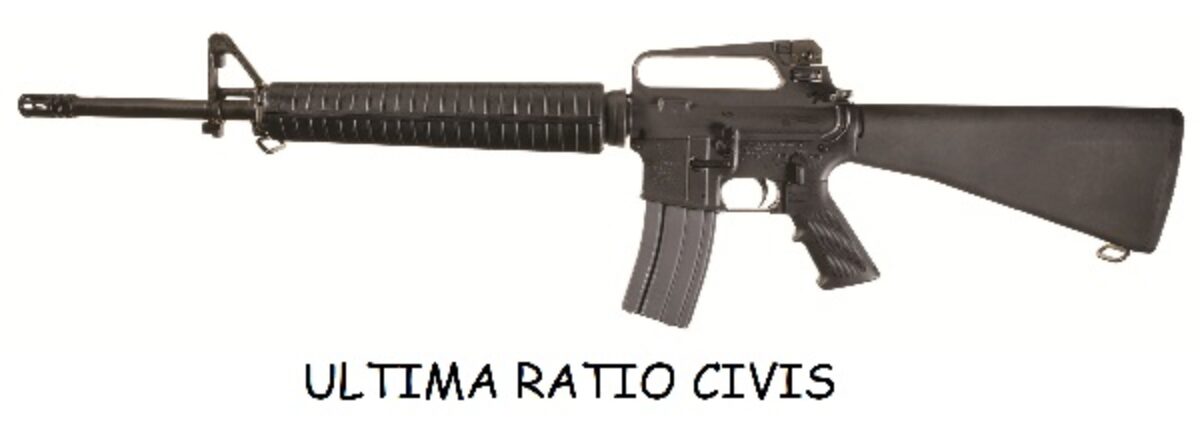
Assault weapons may be enjoying a similar effect. While “assault weapon” is a fairly nebulous term with a definition that varies from state to state, it’s usually crafted in a way to target guns like the AR-15 and Ak-47. The National Shooting Sports Foundation calls these guns “modern sporting rifles.”
In 2020, they estimated there were nearly 20 million AR-15s and similar firearms. They are the most popular rifles in the country, and the NRA has even dubbed the AR “America’s rifle.” More Americans own ARs than ever before and likely associate them more with home defense, hunting, and sport shooting than with crime, despite their presence in some of the highest-profile mass shootings.
That doesn’t mean further regulation of assault weapons is impossible. After all, handguns are more highly regulated than rifles or shotguns despite the minuscule support for a total ban on their sales. Similarly, support for age restrictions on purchasing assault weapons has polled very well in the wake of the recent shootings, and New York just implemented that change.
Perhaps that’s where the debate over AR-15s and other “assault weapons” will now focus. Because a total ban on sales is not in the cards anytime soon.
The RINOs are out in force on the ‘framework’ for new gun laws
It was news that sent shudders through every person who supports the Second Amendment: ten Republican senators have signed on to a “framework” that will allegedly improve gun safety in America. You can guess who these RINOs are — it’s the same bunch who will always agree to limit American rights to keep up with their friends on the Democrat side of the aisle. And while there are a couple of good ideas in the framework, the rest of it is useless, harmful, and/or unconstitutional.
According to a statement from the bipartisan group of senators, they have an agreement in principle for legislation that includes “needed mental health resources, improves school safety and support for students, and helps ensure dangerous criminals and those who are adjudicated as mentally ill can’t purchase weapons[.]” More specifically, the senators have agreed on the following concepts, which I’ve listed along with my comments:
Where Second Amendment Supporters Must Take The Offensive
While the best strategy in the short and medium-term for Second Amendment supporters may be fighting “not to lose,” that does not mean that Second Amendment supporters should not take the offensive when it is the right time to do so.
The question is what should the offensive focus on? There are two fronts Second Amendment supporters should think about: Legislative and Legal, the former with two fronts of its own – federal and state. Each will require different strategies.
The Legislative Front At The Federal Level
At the federal level, many of the same things that protect the Second Amendment will make passing legislation harder. This includes the filibuster in the Senate. So, what can be done?
First of all, if Chuck Schumer is no longer Senate Majority Leader, one of the best options will be riders on appropriations bills. This must-pass legislation can be used to prohibit funding some of the worst excesses. That could work for the short term.
Should Second Amendment supporters succeed in retaking the White House, they can them move to address financial deplatforming, take steps to deal with Silicon Valley censorship, and to tighten up the Protection of Lawful Commerce in Arms Act. For the short and medium-term, these will be necessary.
The Legislative Front At The State Level
In one sense, all pro-Second Amendment groups have blundered by NOT making financial deplatforming a major issue. State laws prohibiting banks and credit cards from blacklisting gun companies that make legal products should be passed as soon as possible. The best way to prevent corporate gun control is to make such efforts very painful to corporations’ bottom lines.
A similar step could also be to pass their own versions of legislation to harden schools. Not just the buildings themselves, although that is important, but also a program to allow for teachers (or other volunteers) to serve as armed security the same way the armed pilots program worked.
The Legal Front
This is the front where Second Amendment supporters should take the offensive more. After gun bans, the best target would be the licensing schemes like the FOID in Illinois or the system in New Jersey. After NYSRPA v. Bruen, those systems are ripe for going after with litigation.
The courts will also be useful in curbing the excesses of “reg flag” laws, especially at the federal level. Heller, McDonald, and Bruen will help, and even the threat of litigation may deter some anti-Second Amendment legislation or force settlements.
Knowing when to take the offensive will be crucial for Second Amendment supporters in the wake of the likely ruling in NYSRPA v. Bruen. But the real importance is being able to act after defeating anti-Second Amendment extremists via the ballot box at the federal, state, and local levels.
Guns Kill People, and Tyrants with Gun Monopolies Kill the Most
In the long term, disarmament often leads to mass murder by government.
My forthcoming article in the Gonzaga Journal of International Law examines the comparative risks of too little gun control and too much gun control. Here’s the abstract:
What are the relative risks of a nation having too many guns compared to the risks of the nation having too few guns? Comparing and contrasting Europe and the United States during the twentieth century, the article finds that the United States might have suffered up to three-quarters of million excess firearms homicide over the course of the century—based on certain assumptions made to maximize the highest possible figure.
In contrast, during the twentieth century Europe suffered 87 million excess homicides against civilians by mass-murdering tyrannical governments. The article suggests that Americans should not be complacent that they have some perpetual immunity to being subjected to tyranny.
The historical record shows that governments planning mass murder work assiduously to disarm their intended victims. While victim resistance cannot necessarily overthrow a tyrannical regime, resistance does save many lives.
Part I describes tensions in some treaties, declarations, and other legal documents from the United Nations and the European Union. On the one hand, they recognize the legitimacy of resistance to tyranny and genocide; on the other hand, the UN and EU gun control programs seem to make armed resistance nearly impossible.
Part II contrasts homicide data for the United States and Europe during the twentieth century. First, data about homicides from ordinary crimes are examined. Based on certain (incorrect) assumptions that bias the figure upward, if the U.S. had the same gun homicide rate as Europe’s, there might have been 745,000 fewer deaths in America during the twentieth century.
Next, Part II looks more broadly at homicide, to include homicides perpetrated by governments, such as communist or fascist regimes. In Europe in the twentieth century, states murdered about 87.1 million people. Globally, governments murdered well over 200 million people. The figure does not include combat deaths from wars.
As Part III explains, totalitarian governments are the most likely to perpetrate mass murder. The Part argues against the complacent belief that any nation, including the United States, is immune from the dangers of being taken over by a murderous government. The historical record indicates that risks are very broad. Globally, only eight nations maintained democratic self-government for the entire twentieth century. The refusal of many Republicans in 2020 and many Democrats in 2016 to accept the presidential election results is one of many signs that American democracy is presently in peril.
Part IV shows that governments intent on mass murder prioritize victim disarmament because they consider it to be a serious impediment to mass murder and tyrannical rule.
Finally, Part V examines the efficacy of citizen arms against mass murdering governments. Citizen arms are most effective as deterrents. However, even without changing the regime, armed resistance can accomplish much and save many lives, as the twentieth century shows. Examples include Jewish resistance to the Nazis, Armenian and Assyrian resistance to the Ottoman Empire, Tibetan resistance to Chinese Communist invasion, and the Nuban resistance to the Sudanese regime.
The Conclusion suggests that the UN and EU should adopt a more balanced gun control policy, recognizing the value of citizen arms in protecting the public from tyranny and mass murder.
The article does not argue for or against particular gun control laws, other than gun registration; as the article shows, gun registration often facilitates gun confiscation.
The original training requirement – just 37 hours less than the Basic Police Officer course in an Ohio police academy – was a ‘poison pill’ the gun grabbers had stuck in, hoping the bill would never get passed.
Well, live by the politics, die by the politics
Ohio governor signs bill making it easier for teachers to have guns in schools
Ohio Gov. Mike DeWine said Monday that he has signed a bill into law that makes it much easier for teachers to legally carry guns in schools.
The measure drastically reduces the amount of training teachers and other staff are required to undergo before they can possess a firearm on school grounds. Instead of 700 hours of training, teachers will be able to finish in less than 24 hours.
“Our goal is to continue to help our public and private schools get the tools they need to protect our children,” DeWine said. “We have an obligation to do everything we can every single day to try and protect our kids.”
DeWine, a Republican, said in a statement on June 1 that the bill would allow “local school districts, if they so chose, to designate armed staff for school security and safety,” adding that it was more practical than the state’s previous standard.
Sure as the gods made little green apples, Red Flag laws are back in the headlines.
For the people who think these are a great idea, I have one simple question:
How many people have been convicted of misusing a Red Flag law?
Whatever you want to call it — “Misusing”, “False filing”, “Obtaining under perjury”, whatever — a fraudulently-obtained Red Flag law denies the person it was obtained against a civil right. Civil rights that the Government should be bending over backwards to protect.
The first Red Flag law was passed in 1999. 23 years ago. People are people, and someone has blatantly lied to obtain a Red Flag order against someone.
Someone in the last 23 years has misused a Red Flag law to harass someone else. So. Show me their conviction for doing so.
I know about the time someone tried to get a Red Flag order against the cops, and that doesn’t count — some animals being more equal to other animals, and all that.
I’m talking about Joe Average having his civil rights taken away for a year with a misused Red Flag order. It has happened — we all know that it has happened — and I want to see the criminal record of the person who fraudulently deprived someone else of their Second Amendment right for a year.
Any claim of “Well, they’re so well checked that it’s never been abused” it complete and utter horse-puckey — I was in law enforcement for 26 years, that isn’t going to fly.
Absent a conviction, I will accept the name of a judge who rubber-stamped every Red Flag request to cross his desk, never turned one down, and was removed from office because of it.
If you don’t have that information, then your opinion on Red Flag laws means nothing; and you should be ignored.
LawDog
Washington, D.C. – So-called “fact checkers” and Big Tech inadvertently validated Gun Owners of America’s concerns while targeting a tweet as disinformation for censorship.
Immediately following passage of the “Untraceable Firearms” section of H.R. 7910, Gun Owners of America tweeted that the bill would “criminalize disassembling, cleaning, and re-assembling your gun without a firearm manufacturer’s license.”
Despite labeling the tweet “false,” the Associated Press’ source presumes Gun Owners of America’s interpretation might be valid, acknowledges that the bill’s language is “confusing and ambiguous,” and instead claims that no one is likely to “ever be charged under this statute.”
The Supreme Court usually declares such laws “void for vagueness” under the 5th Amendment, but that hardly makes policy analyses of unconstitutionally vague legislation untrue!
In fact, GOA was merely pointing out that the definition of a “ghost gun” was so vague that it included many unserialized parts on guns in circulation today, like a slide on a handgun or an upper receiver on a rifle or shotgun.
With “assembling” a “ghost gun” criminalized by H.R. 7910, gun owners would no longer be able to disassemble their firearms, clean them, and “assembl[e]” them back into “a functional firearm” if even one unserialized part meets the new definition of a “ghost gun.” The fact-checkers claim that this only applies to manufacturers, but the bill states “it shall be unlawful for any person to manufacture…a ghost gun.”
That is why all of the Associated Press’ sources lean heavily on the qualifier “serialized.”
For example, the “AP’S ASSESSMENT” emphasized that the ban didn’t apply to “firearms [with] serial numbers” and a Giffords gun control activist emphasized that the law wouldn’t affect “a firearm that is serialized.” Again, they must have intentionally skipped over the other portion of the same bill that changes the current definition of parts that would be subject to serialization or otherwise be classified as “ghost guns.” Our research indicates that several parts of most modern firearms would meet this new definition (see examples mentioned above).
Therefore, if most guns today are made up of multiple unserialized “ghost gun” parts, as the bill proposes, then you won’t be able to clean your gun without violating the law unless you have a firearm manufacturer’s license.
Big picture: these anti-gun Democrats didn’t even do their own research, because when ATF tried the same definition change last year, GOA and our activists fought back, and ATF later acknowledged and backtracked [Page 24727] this change.
-GOA-
Anti-gun activists react to Senate gun control deal
For the first time since 1994, it looks like we’re going to get gun control. In the wake of Buffalo, Uvalde, Tulsa, and Smithsburg, it was probably too much to hope that there wouldn’t be anything at all.
On Sunday, as Cam noted, a bipartisan committee announced they had reached a deal.
Of course, some folks have feelings about it.
US campaigners have welcomed a potential cross-party deal on gun safety reforms but stressed the proposals do not go far enough.
“This is progress even if small,” said David Hogg, a survivor of the 2018 Parkland school shooting in Florida.
Ex-lawmaker Gabrielle Giffords, injured in a 2011 shooting in Arizona, said it was an “important step forward”.
The plans include tougher checks for buyers under the age of 21 and cracking down on illegal gun purchases.
They were announced by a cross-party group of US senators on Sunday. Crucially, the proposals are supported by 10 Republicans, meaning they have the numbers to be voted into law.
President Joe Biden also said the plans were “steps in the right direction” but they fell far short of what he and many Democrats have been calling for.…
“It’s a great first step but that’s just what it is,” Mr Hogg told the BBC. “No single policy is going to stop every shooting but this policy could stop the next Parkland and that’s a good step.”
Except, the measures reported that are most likely to prevent the next Parkland have absolutely nothing to do with gun control.
Increased effort to address mental health and school security will do far, far more than including more information in the background check process would.
Now, to be fair, this could be a whole lot worse.
For most of us, this isn’t likely to create any kind of an issue and we’ll keep going about our lives like we always have. Part of the deal apparently calls for encouraging states to pass red flag laws, but since they can’t actually make them, I think it’s unlikely we’ll see too many take advantage of such “encouragement.”
However, it’s also clear that Democrats won’t be satisfied by this, either.
Sure, they reached a deal here, but it’s far from what they want and they don’t know how to accept that. When these measures fail to stop the next shooting, the 10 Republicans who backed this can expect to hear all about how they didn’t go far enough and it’s still all their fault.
I say this because much of this fails to actually address the root of mass shootings. In fact, it fails to even look for the root of mass shootings. It’s not guns, for crying out loud.
Yet something to think about is that now the pressure to accept more gun control will be greatest since these Republicans have signaled they’re willing to budge. They’re the ones who are going to be targeted to budge yet again.
This is far from over.
Democrats won’t be satisfied with what they’ve gotten and they will begin pressing for all these new regulations they want in the very near future. What just happened won’t even be acknowledged or, if it is, it’ll be labeled too little to make a difference.
Just like every other bit of gun control ever passed.
Some Republicans still have a spine
"Governor Tom Wolf today condemned Republicans in the House Judiciary Committee for refusing to move forward a package of commonsense bills that would help address the gun violence crisis facing Pennsylvania." https://t.co/elhtIcdFj8
— Firearms Policy Coalition (@gunpolicy) June 13, 2022
Ohio’s new permitless carry law goes into effect Monday
With a new state gun law going into effect Monday, allowing people to carry concealed firearms without a license, some might think people are out buying guns.
Not so, says Daryl Upole, owner of Ohio Guns in Ashtabula, a federally licensed firearms dealer.
“Mostly people are concerned about gun control after the Texas shootings,” he said. “As far as the concealed handgun license (CHL), I’ve had no one buy a firearm because of that.”
Ohio joined its neighbors as a “permitless carry” state on March 14 when Gov. Mike DeWine signed into law Senate Bill 215. Under the new law, set to take effect Monday, adults who can lawfully own a firearm will be able to conceal carry a handgun without a permit or background checks.
Here’s some updated material
Today’s Senate ‘Bipartisan Gun Safety’ Proposal Is Just as Bad as You Feared It Would Be
Sunday, a bipartisan group of Senators agreed to an expanded package of ‘common sense’ gun control measures. The Vichy Republican contingent consisted of Pat Toomey (PA), Susan Collins (ME), Lindsey Graham (SC), Thom Tillis (NC) and Bill Cassidy (LA) under the leadership, if I may be so bold as to use such a word, of John Cornyn (TX). My colleague Bonchie covered the deal in Republicans Prepare to Play the Sucker After ‘Gun Safety’ Bill Is Revealed. This is how he sums it up:
Here’s the thing. There is going to be another mass shooting. No matter how many laws we pass, evil people will get their hands on the tools necessary to commit evil acts. When that mass shooting occurs, Democrats are going to scream about how the last “gun safety” bill wasn’t enough and how we must “do something.” That “do something” will include confiscation and outright bans on common weaponry. By compromising now without laying a marker down they are willing to stand by, they are simply handing Democrats the leverage to take the whole pie the next time around.
The left-wing push to ban semiautomatic weapons is not going to end here. Republicans that don’t recognize that are being suckers.
Now Connecticut Senator Chris Murphy has released more detail on what is included in the deal, and “suckers” hardly does the Republican participants credit for their duplicity.
NEWS: We have a deal. Today a bipartisan group of 20 Senators (10 D and 10 R) is announcing a breakthrough agreement on gun violence – the first in 30 years – that will save lives.
2/ Major funding to help states pass and implement crisis intervention orders (red flag laws) that will allow law enforcement to temporarily take dangerous weapons away from people who pose a danger to others or themselves.
3/ Billions in new funding for mental health and school safety, including money for the national build out of community mental health clinics.
4/ Close the “boyfriend loophole”, so that no domestic abuser – a spouse OR a serious dating partner – can buy a gun if they are convicted of abuse against their partner.
5/ First ever federal law against gun trafficking and straw purchasing. This will be a difference making tool to stop the flow of illegal guns into cities.
6/ Enhanced background check for under 21 gun buyers and a short pause to conduct the check. Young buyers can get the gun only after the enhanced check is completed.
7/ Clarification of the laws regarding who needs to register as a licensed gun dealer, to make sure all truly commercial sellers are doing background checks.
8/ Will this bill do everything we need to end our nation’s gun violence epidemic? No. But it’s real, meaningful progress. And it breaks a 30 year log jam, demonstrating that Democrats and Republicans can work together in a way that truly saves lives.
9/ So grateful to @JohnCornyn @kyrstensinema @SenThomTillis @SenToomey @Sen_JoeManchin @SenBlumenthal @SenatorCollins @LindseyGrahamSC @ChrisCoons @TeamHeinrich @BillCassidy and others for their amazing work to get us this far.
10/ Drafting this law and passing it through both chambers will not be easy. We have a long way before this gets to the President’s desk. But with your help and activism, we can get this done. This time, failure cannot be an option.
I’ve already expressed my opinion about the cravenness of Republican officeholders who crawl over broken glass to appease Democrats; see Don’t Bother Me With Your ‘Common Sense’ Gun-Grabbing Ideas, I’m Not Playing the Game, and Matthew McConaughey Sold the White House’s Gun-Grabbing Agenda Today Just Like He Has for Years. In my opinion, the problem is less a case of needing more laws and more one of chickensh** prosecutors with a political agenda refusing to enforce the laws already on the books. If we passed a law making prosecutors criminally liable for future gun crimes of anyone not prosecuted for a gun offense, I’d go along with that plan.
Let’s look at the items on the list.
2/ Red Flag laws are a civil rights non-starter as far as I’m concerned. Giving a disgruntled neighbor, a deranged leftist relative, or a vindictive current or former “partner” the ability to have your weapons confiscated while you bear the burden of proving you are not dangerous is antithetical to our system of justice. Above and beyond the Kafkaesque process, the procedure is a sham. A judge will not deny a “Red Flag” order and risk that person killing someone with a firearm. They are never giving your firearms back for the same reason. This is simply a backdoor for anti-gun activists to harass and intimidate gun owners. Any Republican who votes for this is not worthy of our support.
3/ I’m not convinced “community mental health clinics” do very much other than provide a sinecure purple-haired transgenders with an MSW degree. Be that as it may, linking these clinics to a bill ostensibly designed to prevent school shootings means that schools will be pressured to refer students to the clinics for evaluation and treatment. If they don’t, their reason for existence will be revealed as a fraud (SPOILER ALERT: it is). Those mental health referrals will be made by the same people who teach Critical Race Theory, make your elementary school student experiment with “pronouns,” and groom them towards transgenderism and the remainder of the alphabet soup of perversions. If we want more “community mental health clinics,” then authorize them independent of any gun control law. By the way, mental health people are pretty adamant that mental health is not a factor in the overwhelming majority of shootings. The problem is Evil, not crazy.
4/ If you want to understand what “closing the boyfriend loophole” opens the door to, check out what goes on in Title IX sexual harassment/assault hearings in colleges. Without a cohabitation requirement, you are fair game for any woman you went out with one time who wants revenge. If you feel in danger, get a restraining order and stay the hell away from the person. If you can’t qualify for a restraining order, then maybe vindictiveness, not personal safety, is your goal.
5/ Straw purchases are already illegal. Gun trafficking, unless you have a Federal Firearms License, is illegal. Without seeing an actual proposal, my best guess is that this will end the private sale of weapons, the so-called “gun show loophole” that the anti-gunners have been after for years.
6/ Other than the National Instant Criminal Background Check System (NICS), I don’t know of any other systems available for background checks that do not involve field investigators. I suspect there is no such system, and this law will try to create any additional level of surveillance of American citizens. The problem with NICS continues to be incomplete and inaccurate information entered into the system. I am at a loss of what an “enhanced” background check would include that isn’t a restraining order, a felony conviction, or a civil commitment order. Just joking, those “community mental health centers” will feature prominently here. I also don’t know how you make a juvenile record available for “young” buyers without making it available to nearly everyone and why only “young” buyers would be subject to such an “enhanced” background check
7/ What constitutes a “licensed gun dealer” is damned clear. This is aimed at shutting down the private sale or gifting of firearms.
10/ Dude, you are in Congress. Failure is always an option.
This is all eyewash. Besides funds for hardening schools, the whole plan is an exercise in “doing something.” Literally, nothing in this proposed bill would have done any good in any major shooting. It wouldn’t even have an impact on Saturday night in Chicago or LA, which is where the focus should be for anyone serious about ending firearms deaths. I’d done playing this game. As Bonchie and I have pointed out, this is not an end state but a waypoint. This is just the anti-gun left getting Republicans to buy into the concept of silly measures that can’t work so that at some point in the future, the left can say we’ve tried everything, and they know there will be quisling Republicans to help them ban firearms.
Looks like standard operational unspecific jabberjawing to me
Here’s What Senators Came Up With for a Deal on New Gun Laws
After days of negotiations that worried Second Amendment advocates and law-abiding firearm owners due to talk of sweeping new restrictions, it seems like — for now at least — the Republican members of the bipartisan working group held the line on the strictest proposals, though they didn’t stop Democrats on all fronts in the talks that made many conservatives scratch their heads.
The bipartisan group of Senators — led by Chris Murphy (D-CT) and John Cornyn (R-TX) — announced their proposal for legislation they seem to think has a chance of making it through their evenly-divided chamber.
In a joint statement, the senators said their plan will “protect America’s children, keep our schools safe, and reduce the threat of violence across our country” while citing a duty they feel to “come together and get something done.” Never mind, apparently, that all the restrictive gun laws in Chicago and elsewhere haven’t protected residents.
The statement continued saying the agreement “increases needed mental health resources, improves school safety and support for students, and helps ensure dangerous criminals and those who are adjudicated as mentally ill can’t purchase weapons,” again, as if previous laws to keep guns out of criminals’ hands had worked. “We look forward to earning broad, bipartisan support and passing our commonsense proposal into law,” the statement concludes. We’ll see.
The proposal includes providing “resources” — likely grant incentives — to states if they implement so-called “red flag laws.” It also includes investing taxpayer dollars in mental health services for families and in schools along with school safety resources to “to help institute safety measures in and around primary and secondary schools, support school violence prevention efforts and provide training to school personnel and students.” The proposal announcement also says legislators will seek to include an “enhanced review period” for firearm purchasers under 21 years old.
Perhaps notably — and showing Democrats did not get all the things they’ve called for in the wake of the tragedy in Uvalde, Texas — is a lack of their buzzword assault weapons ban, high capacity magazine restrictions, a federal red flag system, or an increase in the minimum age to purchase certain rifles.
To be clear, the lack of those items in the framework proposal does not mean Democrats won’t try to sneak in some version of them as an eventual piece of legislation is developed.
As WaPo previewed before the official announcement of the proposal, the inclusion of billions of federal dollars for school security programs and mental health care is probably the only thing the proposal has going for it with most Republicans.
Townhall reported last week that an armed school resource officer and secured doors kept an aggressive man from entering an elementary school filled with children. The SRO took the individual down with assistance from local law enforcement while most children inside the building were unaware that anything had happened outside. The training and protocol that worked there should be used for a framework, not gun-grabbing Democrats’ CNN talking points.
Throughout the negotiations, Republicans involved had tried to assuage concerns from firearm owners and gun safety advocates. Sen. Cornyn said that the forthcoming deal was “not about creating new restrictions on law-abiding citizens” but “about ensuring that the system we already have in place works as intended.” Yet several of the pieces of the framework seem to include new restrictions, albeit lesser than a blanket ban on “assault weapons” or magazines.
And while the group may have reached a tentative agreement, they’re only a small group of the U.S. Senate — and several Republicans in the crew such as Susan Collins (ME) and Mitt Romney (UT) are not exactly known as standard bearers for the GOP. At least 60 senators in all would be needed to support any resulting legislation in order to overcome a potential legislative filibuster.
As we’ve learned before, a statement of agreement between a small group of senators is anything but a done deal. We’ve also learned that what might seem to be a workable legislative framework can turn into a Frankenstein’s monster of horrible policies as Democrats scheme to use the bipartisan cover of squishy Republicans to ultimately get their way.
The best thing for any Senate Republican to do at this point is walk away from the table and declare opposition over anything even remotely concerning in the tentative agreement — the incentive for red flag laws or the enhanced review for under-21 purchasers, for example — or legislation as it ends up being written.
There’s less than five months until the midterms, Democrats need at least ten Republicans to even move a bill to a vote, and there’s no reason for Republicans to cave on an issue as critical as Americans’ Second Amendment freedoms just to look like they’re playing nice. Democrats would never do the same if they were in the minority, and there are better, more effective, less freedom-depriving options available to respond to tragedies like the one in Uvalde. Harden schools, fund resource officers, train willing staff, and work to remedy the myriad failures of government that are discovered in the wake of such tragedies.
And when they come back into session, they’ll probably conveniently let it die with some bland boilerplate statements.
Senate leaves town without a deal on gun legislation
Senators have wrapped up their work and left Washington, D.C., without reaching a deal on gun violence legislation, disappointing Democrats who had hoped to issue a joint statement with Republicans on a framework.
Democrats say they are “very close” to an agreement with Sen. John Cornyn (Texas), the lead Republican negotiator, but Democratic and Republican staff still need to hammer out differences over language, according to Senate negotiators.
Senate sources say that Sen. Chris Murphy (Conn.), the lead Democratic negotiator, was “itching” to put out a joint statement with Cornyn before lawmakers left town but that Cornyn declined to sign on to any public statement until there’s an agreement on the language of the core proposals.
“There’s not an agreement until we agree on everything,” Cornyn told reporters Thursday afternoon. “We’ve narrowed the issues considerably.”
Cornyn said the group had hoped to release a joint statement by week’s end but isn’t there yet.
“We were hopeful there might be something we could do today, but we have this remaining issue we need to resolve,” he said.
Sources familiar with the negotiations said Cornyn, a former Texas Supreme Court justice, doesn’t want to sign off on any framework until the language of the core provisions are finalized.
“How outrageous is that?” Cornyn quipped about his insistence on knowing the details of the agreement before endorsing a framework for the legislation.
Senate Majority Leader Charles Schumer (D-N.Y.) said he wanted a deal by the end of this week and has come under pressure from progressives to force a Senate vote on gun control legislation if Republicans don’t agree to a compromise bill soon.
Schumer received a briefing from Murphy on Thursday afternoon, telling reporters afterward that the bipartisan group is making good progress and that he hopes to get something from the group soon.
The four core negotiators — Cornyn, Murphy, Sen. Thom Tillis (R-N.C.) and Sen. Kyrsten Sinema (D-Ariz.) — are scheduled to hold a virtual meeting to continue the talks Friday afternoon.
They are looking for a deal that can bring along 10 Republican votes to overcome a filibuster in the 50-50 Senate. Every Democrat is expected to vote for the legislation.
The Republicans in the negotiating group also include Sens. Pat Toomey (R-Pa.), Lindsey Graham (R-S.C.), Susan Collins (R-Maine) and Bill Cassidy (R-La.).
If those four plus Cornyn and Tillis agree to vote “yes,” Democrats would still need to round up four more Republicans to overcome the 60-vote threshold for ending a filibuster.
Senior Democrats briefed on the negotiations say the two sides are “very close” to a deal and expect to see an agreement by sometime next week.
“I think we are very close,” said Senate Majority Whip Dick Durbin (D-Ill.). “We have good vibrations. I think Schumer did the right thing by focusing on a date to complete the negotiations.”
Schumer said soon after a gunman killed 21 people in Uvalde, Texas, that he would give Republicans only a short amount of time to work out compromise legislation before he would begin to force them on gun control proposals.
Republicans want to create tax incentives for the sale of safe storage equipment, while Democrats want to also add mandates for safe storage.
Another tricky issue is how to handle people who make a business of selling firearms online but are not required to conduct background checks because they don’t hold federal firearm licenses. Gun control advocates view this as a loophole in the law requiring firearm dealers to conduct background checks.
Cornyn on Thursday said significant progress has been made since then on classifying people who make a business of selling firearms, noting that he and Murphy have worked on the issue for more than a year.
Another potential landmine in the negotiations is a proposal to encourage states to set up red flag laws to remove firearms from people deemed a danger to the community.
Marshall on Thursday said he doesn’t “see how any red flag [law] passes” and called it a “poison pill.”
“I don’t think the red flags address the real issue,” he said. “I think it could sure be abused. I think it’s an infringement on the Second Amendment.”
Daines said he would oppose using taxpayer money to give states incentives to establish red flag laws.
Nineteen states and the District of Columbia already have such laws on the books.
“What hasn’t been talked about a lot is the school resource officer at Uvalde was not at his post. Why are we not talking more about that? Imagine for a moment if you had a couple of Capitol police officers who weren’t at their post and someone came in the Capitol. There would be a lot of discussion about what do we do to keep the security hardened around the Capitol,” he said.
Blumenthal, who has negotiated a red flag law with Graham, however, said members of the bipartisan group should be able to reach agreement on that issue.
“We’re going to keep working on language. I’m enormously encouraged having worked on this for quite a few years,” he said of red flag legislation.
Murphy, the lead Democratic negotiator, declined to say whether he could support a package that doesn’t include incentives for states to set up red flag laws.
“I’m not drawing any lines in the sand at this point,” he said, though he added a red flag law “could have made a difference in Uvalde.”
New gun laws won’t fix the problem
Another senseless act of violence against children and anti-gun groups are blaming gun advocates for this violence, but the answer could be closer to home.
Gun control has been with us since 1968 and since then a myriad of gun laws has emerged. Clearly, they haven’t worked. Totally ignored are the shooters who have been from broken homes, isolated, prone to other types of violence, had interactions with police and been active on social media. Their behavior was excused or ignored.
The politicians say it’s easy to get a gun, but if the system was effective and criminals prosecuted, it could be more of a deterrent to block sales to potential shooters. While enhanced background checks may sound good, if the local authority doesn’t inform the investigating agency, and in most cases they don’t, then a shooter will be able to get guns. Reporting agencies aren’t obligated to inform them.
If all factors are considered, then it is not a gun problem, and a new gun law will not fix it. The legal gun owner is not the problem, and within the context of self-defense they prevent potential victims in defense of self or others, often without shots fired. The gun-owning public has grown and includes women, minorities and prior gun control advocates due to violent criminals having gun charges disappear in plea bargaining, as well as being released before the ink is dry on the booking form.
President Joe Biden has suggested that the Second Amendment is “not absolute” and if so, then freedom of speech, religion, assembly and the press are also “not absolute.”
William Aherin, Southampton