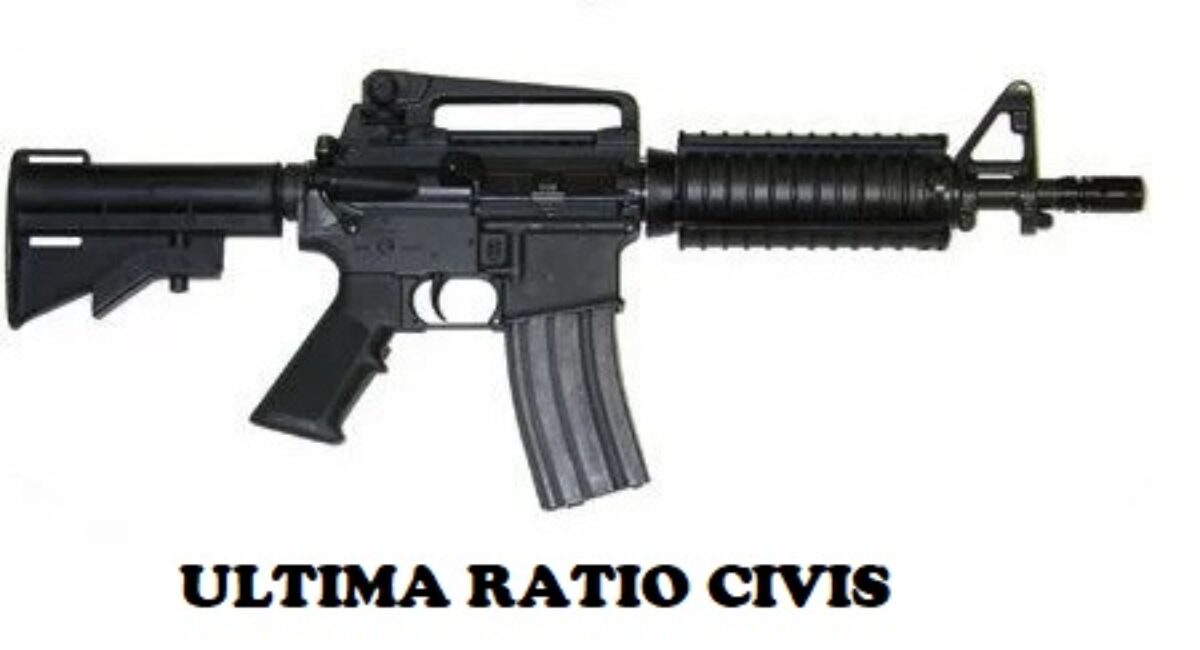
There’s a Difference Between Being Pro-2A and Anti-Gun Control

This morning, as I awoke, the House Rules Committee was debating the budget reconciliation bill. The One Big, Beautiful Bill, as it’s being called. Part of that debate was the inclusion of the Hearing Protection Act, which would remove suppressors – they’re safety devices, by the way – from the list of items regulated by the National Firearms Act.

It should have already been included, but Rep. David Kustoff of Tennessee reportedly offered up something that was just table scraps for gun rights supporters. It reduced the fee for an NFA tax stamp from $200 to nothing.

It’s not nothing, but it’s pretty darn close.

See, the problem here is that we’ve been looking at Republicans and their position on guns wrong for quite some time.

For a while, the big thing was where they stood on gun control. The National Rifle Association and other gun rights groups’ questionnaires typically revolved primarily around whether they’d oppose things like universal background checks, assault weapon bans, and things of that sort.

There were some questions about measures that would restore people’s Second Amendment rights from where they are now, but a lot of it was about opposing gun control, and not without reason. After all, we were largely playing defense in legislatures across this nation, with more success in some than in others.

In truly pro-gun states, we saw the advancement of gun rights, of course, but in most places, that was much harder. That included in Congress.

The problem with playing defense is that you find yourself with two different groups. Some are pro-gun while others are anti-gun control.

Anti-gun control lawmakers have their place. In a state like California, that can be a big difference, especially if enough of them get elected to office. They can stem the tide of anti-Second Amendment legislation.

These are the defensive players.

What we really need right now, though, are actual pro-gun legislators in Congress.

Those are the ones who would easily back the Hearing Protection Act without hesitation and would insist the SHORT Act – which removes short-barrelled rifles from the National Firearms Act list as well – be included, too. They’d not just oppose gun control, but support legislation like national constitutional carry or, at least, national reciprocity.

Pro-gun doesn’t mean opposing gun control. It means looking at our right to keep and bear arms as a sacred right gifted to all people by virtue of being free men and women. It’s a right that makes damn sure we remain free, too.

For generations, our gun rights have been under assault, but for the first time, we have a chance to correct at least some of those past wrongs.

What we need aren’t anti-gun control folks. Not right now. We need lawmakers to actually be pro-gun for a change. We need them to step up and do what they know is right. We need to get some of our rights back so that we can defend ourselves from tyranny, either a tyrannical government or from the tyranny of the thug.

I’m willing to accept that we can’t get everything back, but nothing but the removal of the cost of a tax stamp is a slap in our faces. That’s the act of Republicans who are anti-gun control more than pro-gun.

It’s time we start calling them what they are.

Make them defend it, if they can.

Now, the next question when this passes is whether or not they’ll still be treated as ‘firearms’, requiring a NICS check & 4473 when purchasing at a dealer (but not regulating individual manufacture for personal use) or not.


House passes ‘One Big Beautiful Bill,’ completely removes suppressors from NFA

In a historic vote early Thursday morning, May 22, the U.S. House of Representatives passed H.R.1, known as the “One Big Beautiful Bill Act,” effectively eliminating suppressors from the National Firearms Act (NFA) of 1934.

On May 14, the House Committee on Ways and Means completed a markup of the reconciliation bill, reducing the tax on suppressors from $200 to $0. However, even in that form, suppressors would still have been subject to other NFA regulations.

In response, Buckeye Firearms Association joined a coalition of organizations nationwide in signing an open letter to two House committees, urging Congress to eliminate unjust restrictions imposed by the NFA. The letter pushed for broader reforms, including the removal of firearm suppressors, short-barreled rifles, and short-barreled shotguns from the NFA’s regulatory framework.

After an intense 20-hour markup hearing in the Republican-controlled House Rules Committee late Wednesday night, the House this morning narrowly approved the bill in a 215-214 vote. The legislation now moves to the Senate, with Section 2 of the Hearing Protection Act securing the complete removal of suppressors from the NFA.

Dean Rieck, executive director of Buckeye Firearms Association, expressed enthusiasm about the vote.

“This is a great day for the Second Amendment,” Rieck said. “For too long, the government has treated the right to bear arms as a second class right. We thank the House for its effort and now urge the Senate to add back the language stripped from the bill concerning short-barreled rifles and short-barreled shotguns.”

With the bill advancing to the Senate, supporters urge lawmakers to keep up the momentum in protecting Second Amendment rights.

What’s Going on With HPA, SHORT Act As of Right Now

There’s a lot going on at the moment regarding the Hearing Protection Act and the SHORT Act. We all know that the House Ways and Means Committee essentially gutted those two measures and gave us scraps. We’ve talked a lot about what happened, and there’s no need to rehash it.

But the current status is something else.

On Tuesday, I spoke with Ben Sanderson, the deputy federal director of Gun Owners of America, about where things stand as of this moment for my personal YouTube channel.

During our chat, Sanderson suggested that the Rules Committee hearing could be delayed, rather than kicking off at one this morning.

Well, that didn’t seem to happen, as they’re still meeting at the time of me writing this. As a result, some of the information in there is a tad outdated–calling Rules Committee members now and asking them to do something in committee is probably not going to be useful, for example–but there’s a lot to understand.

If you’re confused, there’s a reason. This is kind of a confusing process, but it’s one that’s necessary and has the added benefit of being something that can’t be filibustered in the Senate.

However, both the SHORT Act and the Hearing Protection Act had to be worded carefully so they could be in the budgetary process. The Byrd Rule basically requires that anything tacked onto the budget have to involve revenue in some manner. That actually makes some sense, which is weird for Congress, so GOA worked to craft the language in both of these bills.

Sanderson told me that the $0 for tax stamps and nothing else came from Rep. David Kustoff of Tennessee, and there have been some rumblings of him facing a primary challenge because of it.

Honestly, that’s legit, and it’s something I’ve been advocating for a fair bit lately.

Now, with the Rules Committee meeting as I write this, it might not be useful to make phone calls to your congresscritters and make demands for actions in the rules committee–for those who are on it–but there’s still a lot of politics left no matter what happens today. Call your representatives and senators. Call them and make your voice heard, because even if nothing happens in the House, there’s still the Senate process, where both the HPA and SHORT Act can be included, then reconciled between the two chambers.

Sanderson noted that this isn’t remotely the most controversial element to the budget battle, which means there’s every opportunity to slide this in and get it to stay there.

All we need are some members of Congress, other than the small handful that have already signed onto these measures as they stood.

Call your representatives and pester them. Email them. Make yourself a burden. Make sure you expect them to vote for this and if not, you’ll back any primary challenger they have.

And then we need people to step up and challenge these lawmakers. Then we need to back them with time and treasure. If yours steps up and does the right thing, throw some money at challengers in other districts.

It’s not enough to be anti-gun control anymore. It’s time for them to be pro-gun.

Numerous Gun Rights Groups Unite in Open Letter Calling for NFA Reform

Republicans on the House Ways and Means Committee really screwed us.

The reduction of the $200 tax stamp for suppressors to nothing is, at best, a good start. However, it’s also not the biggest problem with suppressors, at least in my mind. A couple hundred bucks more for a product is a pain, sure, but the paperwork, the pleading with the crown for a scrap of your rights, and the permanent registration of the device are the bigger issues to me.

It’s why I’ve never gone down that particular road.

And we had a chance to address that.

Well, to be fair, we still do, but that’s not going to happen without a lot of pressure.

To that end, an open letter is circulating calling for NFA reform that we can all rally behind that has a butt-ton of state-level gun rights groups as signatories.

Open Letter to Reform the National Firearms Act

May 17, 2025

The Honorable Jodey C. Arrington
Chairman, House Committee on Budget, U.S. House of Representatives
1111 Longworth House Office Building
Washington, DC 20515-4319

The Honorable Virginia Foxx
Chairman, House Committee on Rules, U.S. House of Representatives
2462 Rayburn House Office Building
Washington, DC 20515-3305

Rep. Arrington, Rep. Foxx, members of the House committees on Budget and Rules:

As leaders of the undersigned organizations, we demand immediate inclusion of portions of the Hearing Protection Act (H.R. 404) and the Stop Harassing Owners of Rifles Today (SHORT) Act (H.R. 2395) in the forthcoming reconciliation bill. These critical pieces of legislation address longstanding, unjust restrictions imposed by the National Firearms Act (NFA) of 1934, which infringe upon the Second Amendment rights of law-abiding Americans. The failure to incorporate these bills into the reconciliation package would represent a profound missed opportunity to restore individual liberty, protect public health, and uphold constitutional guarantees.

The Hearing Protection Act (H.R. 404), introduced by Representative Ben Cline (R-VA-06), seeks to remove firearm suppressors from the NFA’s burdensome regulatory framework, replacing it with a streamlined purchase process for typical accessories. Suppressors, contrary to popular misconceptions, do not silence firearms but significantly reduce noise levels, mitigating the risk of permanent hearing loss for shooters and hunters. The American Academy of Otolaryngology–Head and Neck Surgery has endorsed suppressors as effective tools for preventing hearing damage, a public health concern affecting millions of Americans. The current NFA requirements — including a $200 tax stamp for both manufacture and transfer of the devices, extensive paperwork, and excessive waiting times — serve no meaningful public safety purpose while imposing undue financial and administrative burdens on responsible citizens. With over 4.8 million suppressors in civilian circulation, their widespread use underscores the need for reform.

Similarly, the SHORT Act (H.R. 2395) addresses the arbitrary NFA classification of short-barreled rifles (SBRs) and short-barreled shotguns (SBSs), which subjects them to the same onerous regulations as transferable machine guns and other highly restricted devices. This outdated framework, rooted in 1930s-era fears of organized crime, lacks relevance in the modern context, where SBRs and SBSs pose no greater threat than standard rifles or shotguns. The SHORT Act would delist these firearms from the NFA, eliminating unnecessary barriers to ownership and ensuring that law-abiding Americans are not penalized for exercising their constitutional rights.

Language compliant with the U.S. Senate “Byrd rule” (2 U.S.C. 644) is circulating the Second Amendment community and should be incorporated in the current budget reconciliation package. The urgency of including this language in the reconciliation package cannot be overstated. Recent reports indicate that the House Ways and Means Committee has delayed action on both H.R. 404 and H.R. 2395, potentially due to lobbying efforts that prioritize commercial interests over the public good. Such delays are unacceptable, particularly when public sentiment, as reflected in numerous grassroots calls to action, overwhelmingly supports NFA reform. The reconciliation process offers a unique opportunity to bypass Senate filibuster constraints, ensuring that these common-sense reforms reach the House floor and become law. Failure to seize this moment risks further entrenching an antiquated and unconstitutional regulatory regime.

Opponents of these reforms, such as Michael Bloomberg’s “Everytown for Gun Safety,” argue that suppressor deregulation poses public safety risks by making gunfire less detectable. This claim is false and ignores the reality that suppressors reduce, but do not eliminate, firearm noise. Moreover, homemade suppressors are readily accessible to those with criminal intent.

The public safety argument against SBR deregulation is equally baseless, as these firearms are functionally identical to their longer-barreled counterparts. These objections, often rooted in fearmongering rather than evidence, should not override the constitutional rights of millions of Americans.

The Second Amendment unequivocally protects the right to keep and bear arms, and the NFA’s restrictive provisions—originally enacted to combat gang violence nearly a century ago—have long outlived their utility. The Hearing Protection Act and the SHORT Act represent measured, practical steps toward aligning federal law with contemporary realities and constitutional principles. Their inclusion in the reconciliation bill is not merely a policy preference but a moral and legal imperative.

We, the signatories, therefore, demand that the House Committee on Rules and the committee on Budgets act decisively to ensure that the publicly available, broadly supported, modified language of H.R. 404 and H.R. 2395 are incorporated into the reconciliation package in their entirety, without dilution or compromise. The American people deserve legislation that respects their rights, promotes public health, and dismantles unnecessary bureaucratic obstacles. We strongly urge you to heed the calls of millions of gun owners and Second Amendment advocates who have made their voices clear. The time for action is now.

Respectfully,

F. Paul Valone
President, Grass Roots North Carolina
Exec. Director, Rights Watch International

Gary Marbut, President
Montana Shooting Sports Association

Philip Van Cleave, President
Virginia Citizens Defense League

Sean Caranna, Executive Director
Florida Carry, Inc.

Tom King, President
New York State Rifle & Pistol Association.

Rep. JR Hoell, President
New Hampshire Firearms Coalition, Inc.

Kevin Starrett, Director
Oregon Firearms Federation

Mike Duralia, President
South Carolina Carry

Kevin Patrick, Jr., Acting President
West Virginia Citizens Defense League

Matthew Andras, President
Coalition of New Jersey Firearm Owners

Mark W. Pennak, President
Maryland Shall Issue

Richard Pearson, Exec. Director
Illinois State RIFLE Association

Kimberly Morin, President
Women’s Defense League of NH

Klint Macro, President
Allegheny County Sportsmen’s League

Rich Kerlin, President
Beaver County Sportsmen’s Conservation League

Blaine Toy, President
Unified Sportsmen of Pennsylvania

Rob Pincus, Director
2nd Amendment Organization

Dianna Muller, President
Women for Gun Rights

J.R. Stoker Jr., President
Firearms Owners Against Crime Institute

Dr. Joe Hannon, VP
Gun Owners of New Hampshire

Dennis Fusaro, Member*
Legislative Policy Committee,
BOD National Rifle Association

Jon Richardson, Member*
BOD National Rifle Association

Bryan Strawser, Chair
Minnesota Gun Owners Caucus

David Adams, Exec. Director
Virginia Shooting Sports Association

Laura Whitcomb, President
Gun Owners of Maine.

Holly Sullivan, President
Connecticut Citizens Defense League

John C. Poole II, Exec. Director,
Texas State Rifle Association

Charles Hiltunen, President
Indiana State Rifle and Pistol Association

Rocky Marshall
Boerne, TX

Eric Davis, President
Gun Owners of Vermont

Linda Walker, President
Buckeye Firearms Association

Jeffrey Kaufman, MD, BoD
VT Federation of Sportsmen’s Clubs

Chris Bradley, President
VT Federation of Sportsmen’s Clubs

Huey Laugesen, Exec. Director
Colorado State Shooting Association

James D Jones, Secretary and Board Member BamaCarry
*(title for identification only)

Yes, this is long, but it’s worth every minute of it.

Normally, I wouldn’t include the signatories, but the plethora of gun rights groups represented here makes it imperative that I include them. For those whose organizations aren’t on this letter, who would like to be included, reach out to Rep. J. R. Hoell of New Hampshire at RepJRHoell@gmail.com  for inclusion.

Now, let’s understand what’s important here. These grassroots organizations represent a lot of voters. These aren’t people who joined the NRA when they were 16, got a life membership, and haven’t paid attention to gun rights since then. Or, to be sure, some other group that they joined, then promptly ignored. I’m not picking on the NRA here, but pointing out that some people join some national organization and figure that’s enough fighting for them. They’ve done their part.

These are the boots on the ground. These are the fighters in the various states.

And it’s pretty clear that these people want more than just a nullification of the tax stamp’s cost. The fact that we have to get a tax stamp at all is the major issue, and we want the Hearing Protection Act and the Stop Harassing Owners of Rifles Today Act, as they were written, as part of the budget process.

The anti-gunners have pulled this stunt repeatedly, putting various measures into the budget process because they know how difficult it is to vote against the budget for either side, and they get what they want through the back door. We can and should use this same process against them.

But we need lawmakers with a spine to step up and do what’s right for a change, and not just try to throw us scraps, and not even scraps from the king’s table, but the peasant’s.

That won’t happen unless we, the voters, pressure them. They need to be afraid that if they don’t put this language in the budget that they’ll be out of a job well before the general election.

Turn up the heat, and do it fast enough that they jump.

What the left doesn’t want you to know about the 2nd Amendment

Cultural myths have always held that the left is better at comedy than the right, at least according to the left.  But circular logic aside, the results of the past few years speak for themselves.  The left can’t meme, and it’s falling behind in comedic talent.  Case in point would be a comparison of the sheer genius of the folks of the Babylon Bee and the hapless, out-of-touch, and unfunny skits of Saturday Night Live.

The first video from the Babylon Bee is of a leftist (we’re using that term instead of the other “L” word) going back in time to try to “fix” the 2nd Amendment, applying many of the leftist tropes we’ve been endlessly subjected to over the past few decades, such as only covering muzzle-loading muskets and nothing else, especially scary-looking assault weapons.

In the video, the character portraying James Madison notes that an armed citizenry is the point of the Second Amendment in keeping the government in check.  At one point, he asks the Democrat who came back in time to alter the amendment a great question, one that should be asked of any leftist gun-grabbing ghoul:

“Do you trust your government?”

To which the leftist answers in the negative, and the natural response is:

“Then why would you want them to have much better guns than you?”

It’s a very entertaining 6 minutes that demolishes most of the myths of the gun-grabber ghouls, while making a strong case for our firearm freedoms and the commonsense human right of self-defense.

The second video proves our adage on the left and humor, but what is truly interesting is that this skit inadvertently also makes the case for the Second Amendment, making it look cool.  Naturally, in their little way, they tried to knock our firearm freedoms with an ending tagline, but it ends up coming up short on the message.  Their main, inadvertent point is that guns and gun-owners are cool instead of “scary.”  It’s more than amusing that Saturday Night Live has fallen so far as to have the opposite intended cultural effect.

We can only guess from the sign-off from the second video from the formerly funny Saturday Night Live that it was meant as a criticism of the commonsense human right of self-defense and the Second Amendment.  Unfortunately for them, they end up making firearm freedom cool and inadvertently boost that part of the Bill of Rights.  These videos are well worth sharing with those on the fence, as a way of easily dispatching some gun-grabber ghoul myths.

Guns are here to stay in US, that’s an opportunity not a threat

With yet another school shooting in the news in April, the familiar rhetoric has made a reappearance nationally.

On the one hand, President Donald Trump marked the occasion by bloviating about one short section of the Constitution while systematically flouting dozens of other sections. On the other, the usual gun-control forces are fundraising off the Florida State tragedy with yet another call for “commonsense” gun regulation.

We’ve been here before, and we’ll be here again, and we’re getting nowhere. It’s not where most Americans want to be with gun issues.

As a school board member in Second Amendment-loving Pennsylvania, I see every month urgent, complex challenges connected to firearms that get less attention than shootings, but they’re important, too.

We encounter everything from parents’ worries about the psychosocial impact of active shooter drills to how to deal with kids who bring toy guns to school (sometimes with blaze orange tips unlawfully removed). There are complicated finance and legal issues related to firearms. There are discussions of “hardening” buildings as targets. There are security armories to maintain. All in all, forecasting and policy-making around issues of gun-related safety and crime are inescapable in K-12 education. I don’t foresee that changing.

Why? Because guns aren’t going away. Four in 10 American adults live in a house with a gun, according to one recent Pew survey, and civilians own an estimated 380 million guns. We can’t hide from such sobering data.

Meanwhile, positive community-building gun experiences are being sidelined. Public support for shooting sports and legal hunting have seen worrying declines. Despite two very active popular private shooting ranges in our school district near Bethlehem, for instance, our school’s rifle team — a club that offered students of all ability levels a chance to learn about gun safety in a politically neutral environment — closed down years ago and sold off its rifles for lack of community support.

Any resolve to teach beneficial, sustainable relationships with guns for sport doesn’t seem to exist. It’s easier to slap a SIG Sauer weapons maker sticker on the back of a back of a big pickup than to spend time teaching a high school kid to safely clear a chamber, clean a barrel, use a scope or handle a loaded rifle. We’ve been discussing the process of resurrecting our school rifle team (using air rifles), and I’m hopeful, but we’ll be competing with the easy allure of “Call of Duty” and online cultures.

Young Americans aren’t getting the whole story when it comes to firearms and national history either, so they easily fall prey to steroid-fueled, hyper-masculine, action-movie narratives that grossly distort American identity.

Even before the founding of our republic, Puritans in the Americas needed to protect themselves. From the moment Myles Standish stepped ashore in present day Massachusetts, in 1620, the idea of America was anointed in gunpowder and the unholy chimes of matchlock musket fire. You think Pete Hegseth is a mad Christian neo-fascist militant? You wouldn’t like a hothead soldier of fortune like Standish, whose general rule was kill-first-make-peace-later. Our early settlers were fiercely fiercely protective of their homes, and for better and sometimes worse, this impulse remains part of the American DNA.

A theme of community safety is huge in this country’s gun history, too. As the the writer Charles E. Cobb once said about incomplete portrayals of the Black civil rights movement in the 1960s: “One important gap in the history … is the role of guns in the movement. I worked in the South, I lived with families in the South. There was never a family I stayed with that didn’t have a gun. I know from personal experience and the experiences of others, that guns kept people alive, kept communities safe.”

We’ve forgotten that complex, social heritage. Instead of treating guns either as evil instruments of psychopathy, or glorifying them as extensions of an incomplete masculinity, we need to respect their place in American communities, and in our nation, for what they are: Extremely dangerous, essential and often fascinating tools of sport and defense with the deepest of roots in our history and culture.

We can recognize the horror of mass shootings and do all we can to prevent them. There are many preventative actions we can take that don’t involve Second Amendment infringement. But at the level of civic policy and education, this also means working to demystify firearms and remembering their positive contributions to American kinship and community empowerment. By doing so, we help prevent gun pathologies from taking root and give law-abiding gun owners the right to protect themselves.

Guns aren’t going away. The Second Amendment certainly isn’t going away. It’s time to see that as an opportunity, not a threat.

This is a contributed opinion column. Bill Broun teaches writing at East Stroudsburg University[Pennsylvania]. He is a school director for Saucon Valley School District. [Hellerstown PA]

Gun Owners Kill Compromise Bill That Kept Suppressors on the NFA

The reconciliation bill that included lowering the tax stamp fee for suppressors but kept the device on the National Firearms Act of 1968 failed to pass the floor vote in the House of Representatives largely in part to Section 2 of the Hearing Protection Act (HPA) and the Stop Harassing Owners of Rifles Today (SHORT) Act being missing.

Reconciliation is a process that deals with taxes. Unlike normal bills requiring a supermajority in the Senate, a reconciliation bill only requires a majority vote. Republicans control both chambers of Congress; they can pass it even if every Democrat votes against it. Since the United States Supreme Court has already stated that the NFA is primarily a tax, it can be modified through the reconciliation process. Pressure from gun owners and activists on members of the House helped to crush the reconciliation bill.

The HPA would have removed suppressors from the NFA while still subjecting them to the Gun Control Act of 1968 (GCA) regulations. This change would mean no tax stamp to buy a suppressor, and gun owners would not need to register their devices with the Bureau of Alcohol, Tobacco, Firearms and Explosives (ATF), which many view as an infringement.

The SHORT Act would remove short-barreled rifles (SBR) and short-barreled shotguns (SBS) from the NFA. The NFA requires registration with the ATF if a rifle has a barrel less than 16 inches or a shotgun has a barrel less than 18 inches. This requirement was implemented during the debate over the NFA in 1934. The NFA looked to include pistols, so SBRs and SBSs were added to prevent people from using these “loopholes” to get around regulations. During the debate in 1934, the pistol regulation was removed, but the restrictions on rifles and shotguns remained. The SHORT Act would fix a nearly 100-year-old mistake.

During the House Ways and Means Committee markup of the bill, Republicans led by David Kustoff (R-TN) changed the language of the HPA to eliminate the $200 tax stamp fee but kept the suppressors on the NFA. Gun Owners were furious and felt betrayed by the Republican-led committee. Rep. Kustoff claimed he pushed what he did because of the Senate’s “Byrd Rule.”

The Byrd Rule states that only tax issues can be done through reconciliation. Speaking to people in the Senate, they do not believe that removing suppressors from the NFA would violate the Byrd Rule since SCOTUS has already determined the NFA to be tax law. They also point out that if the Senate decided it violated the Byrd Rule, it could be modified in the Senate. There was no need for the House to worry about the Byrd rule.

Because Friday’s vote failed to pass the bill through the House, the budget committee will reconvene on Sunday to hash out a bill that will most likely pass. Hopes are high due to the outpouring from the gun community that Section 2 of the HPA will be included. This change would mean that suppressors would be removed from the NFA. Those at AmmoLand News have spoken to in the House are confident that the HPA will be included in the new text. The SHORT Act also has a shot of being included, but that is far from certain.

If the bill is fixed on Sunday, a vote will happen early next week before it is headed to the Senate. This reconciliation package could be a significant step towards dismantling parts of the NFA.

Did Suppressor Company Work Against Removing Them from NFA?Suppressors are NFA items, and there’s really not a good reason why they should be on the list. Yeah, I know the anti-gun fearmongering talking points and all that, but let’s be real here. They’re against anything that we might possibly want. These are the same kind of people who gave us Prohibition, and we all know how well that worked out.And, honestly, the NFA is a holdover from the last time these morons had their way, so I don’t care what they have to say. We all know that suppressors are safety devices.

Unfortunately, House Republicans essentially gutted the effort to remove them from the NFA list and the best we’re looking at getting is the $200 tax stamp being dropped to zero.

But just on suppressors.

However, a rumor has been going around. The allegation is that a suppressor company is actively working to keep suppressors on the NFA list.

Jared Yanis over at Gun & Gadgets hit the high points in a video on Thursday.

Now, he doesn’t say anything definitive, only reporting what he’s hearing, as to whether Silencer Central is lobbying Congress to keep suppressors on the NFA list.

The argument makes some sense. Their business model is heavily influenced by the fact that they’re NFA items and thus tightly controlled. It’s entirely possible that they’ll lose a lot of market share if suppressors are largely deregulated.

Yanis also goes into the lobbying efforts made by Silencer Central that are strangely timed, considering all that’s gone on.

Over at Ammoland, John Crump reported on these allegations, naming the company specifically, including some mention of the lobbying efforts.

They responded to Crump, however, and said this:

Official Response from Silencer Central:

“Silencer Central is closely monitoring the ongoing congressional hearings surrounding the Hearing Protection Act (HPA). We have always been vocal supporters of the HPA, as well as the current proposed provision of a $0 tax stamp. Our priority has always been, and will continue to be, advocating for deregulation and 2nd amendment rights, while supporting any win we can get for our customers regarding their firearm and accessory ownership rights along the way. Regardless of the ever-changing regulatory landscape, we remain focused on delivering exceptional service and standing by the community we’re proud to be part of.” — Brandon Maddox, CEO, Silencer Central.

This statement marks the company’s first formal public response to questions about its lobbying strategy and its position on removing suppressors from the NFA.

Maddox’s statement is pretty definitive.

Crump also notes that Maddox has favored a different approach to the HPA, calling for what he described as a “crawl, walk, run” approach. However, that was also while Joe Biden was president, and his argument then was simply that Biden would never sign the HPA, which is fair.

It also doesn’t mean that because he favored that approach, then that he’d sabotage an effort to achieve more here and now when the odds are far better than they were then.

For what it’s worth, I reached out to Silencer Central on Thursday for comment–this was before I saw Crump’s story–and I haven’t heard back as of this writing. If I do, I intend to ask them follow-up questions about the lobbying efforts Yanis outlined in his video.

Now, I don’t know anyone mentioned in this post personally except for Yanis, whom I count as a friend. I can’t say anything about how trustworthy Maddox is because I don’t know him, so I’m going to err on the side of trust until or unless something new comes out.

If any company is working to undermine pro-gun legislation from within the firearm industry, we need to know who it is so they can get the Bud Light treatment, but we need more than rumors before we take that step.

New Oklahoma law changes how guns can be used to protect property: What ‘defensive display’ means

Oklahomans can now legally point a firearm or other weapon at someone if they are defending their home, private property or business under a new law signed by Gov. Kevin Stitt.

Existing state law allows people to point weapons in self defense, but House Bill 2818 expands the justified “defensive display of a firearm or other deadly weapon” to include defense of property.

The new law took effect immediately after Stitt signed it on Thursday, May 16.

During debate on the House floor, Democratic lawmakers questioned the law’s author, state Rep. Jay Steagall, on responsibilities of a gun owner and whether Oklahoma youths would interpret the law to allow flashing a weapon as an acceptable response to fear of confrontation.

“We don’t have any control over the way someone else perceives something. There’s not a way for me to legislate that,” Steagall said during a presentation in March. “But what we can do is provide a clear definition of what’s lawful and what’s not lawful when it comes to the display or the pointing of a firearm.”

What is considered ‘defensive display of a firearm’ under House Bill 2818

According to the new law, defensive display of a firearm includes the following:

    • Verbally informing another person that you possess a firearm or have one available – “I’ve got a gun”
    • Exposing or displaying the weapon in a manner where a reasonable person would understand that it’s meant to protect against unlawful force
    • Placing your hand on a firearm while it’s “in a pocket, purse, holster, sling scabbard, case or other means of containment or transport

This is the latest law to expand gun rights in Oklahoma, a state known for its permissive rules on the ownership, carrying and use of firearms. Another proposed law recently sent to the governor’s desk for his approval would allow elected municipal officials and judges with a valid firearm license to carry concealed guns in buildings leased or owned by their city, if a policy is approved by the city council.

In the United States, most states follow some version of the Castle Doctrine, which allows the use of deadly force in self defense. According to an analysis by FindLaw, however, state laws vary when it comes to which locations or specific situations allow someone to claim their use of force was justified.

The National Conference of State Legislatures notes that Oklahoma is one of 28 states where the person claiming self defense has no duty to attempt retreat before firing their weapon. It’s also one of just 10 states that allow that person to “stand their ground.”

In 2019, Stitt signed legislation on the “constitutional carry” of handguns. The measure loosened the state’s gun laws, allowing most adults to carry a loaded, concealed firearm without a permit.

Mrgunsngear

According to my contacts “on the hill” – Rep Andrew Clyde has been holding the line behind closed doors to ensure the Hearing Protection Act and SHORT Act are put back into the “big beautiful bill” which President Trump says he will sign.

This is a generational opportunity to get some of our 2nd Amendment rights restored. HOLD THE LINE 🇺🇸

“The House now has a historic opportunity to repeal the burdensome taxation, registration, & regulation of short-barreled firearms & suppressors under the National Firearms Act.

“The American People are watching. It is time to deliver.”


Well, that would be ‘tried to confiscate’ and it wouldn’t be pretty as I’m sure LOTS of people would go ‘Solzhenitsyn Style’. But then Justice Sotomayor never has been a ‘wise Latina’


Does Justice Sotomayor Really Want To Know What The Remedy Would Be If The Government Confiscated Everyone’s Guns?

Justice Sotomayor is pretty predictable. She walks into oral argument with a set of questions she wants to ask, and she will keep asking them, whether or not she gets the answer she wants. I imagine advocates get frustrated, but that is part of the game.

During the birthright citizenship cases, Justice Sotomayor asked the same line of questions several times–apparently she thought it was clever. To illustrate the limits of the government’s position concerning nationwide injunction, she would change the hypo: what would happen if the government sought to confiscate every gun in America; would every gunowner have to bring an individual law suit to seek relief?

Page 13: JUSTICE SOTOMAYOR: –so, when a new president orders that because there’s so much gun violence going on in the country and he comes in and he says, I have the right to take away the guns from everyone, then people –and he sends out the military to seize everyone’s guns –we and the courts have to sit back and wait until every named plaintiff gets –or every plaintiff whose gun is taken comes into court?

Page 41: JUSTICE SOTOMAYOR: If we’re afraid that this is or even have a thought that this is unlawful executive action, that it is Congress who decides citizenship, not the executive, if we believe, some of us were to believe that, why should we permit those countless others to be subject to what we think is an unlawful executive action, as unlawful as an executive taking the guns away from every citizen?

Page 44: JUSTICE SOTOMAYOR: –it got rejected repeatedly. We can go into the history of citizenship, but I still go back to my question. You claim that there is absolutely no constitutional way to stop, put this aside, to stop a president from an unconstitutional act, a clearly, indisputably unconstitutional act, taking every gun from every citizen, we couldn’t stop that.

Does Justice Sotomayor really want to know what the remedy would be if the government confiscated everyone’s gun? This remedy would not involve Rule 23. [fyi. ‘Rule 23’ is a rule in federal courts about class action suits, MF]

Nearly 250 years ago, King George III and General Gage tried to confiscate the firearms from the Americans. What happened next? Lexington and Concord, the Shot Heard Round the World. As best as I can recall, the patriots did not go to a Court of Chancery to seek an equitable remedy.

We have a similar story in Texas history. During the Texas Revolution, the Mexican Army demanded that the Texians in the City of Gonzales surrender their cannon. What did the Texians say? Come and Take It! The remedy here was not equitable; it was belligerent. The Texians did not reply with a canon of construction; they replied with a cannon of destruction. This was the Lexington of Texas. And the Battle of Gonzales led to the Battle of the Alamo, which led to Texas Independence. Sensing a pattern of what happens when the government tries to disarm the people?

I took this photo during my visit to the museum in Gonzales.

I’m reminded of Judge Kozinski’s opinion in Silviera v. Lockyer:

The prospect of tyranny may not grab the headlines the way vivid stories of gun crime routinely do. But few saw the Third Reich coming until it was too late. The Second Amendment is a doomsday provision, one designed for those exceptionally rare circumstances where all other rights have failed — where the government refuses to stand for reelection and silences those who protest; where courts have lost the courage to oppose, or can find no one to enforce their decrees. However improbable these contingencies may seem today, facing them unprepared is a mistake a free people get to make only once.

Fortunately, the Framers were wise enough to entrench the right of the people to keep and bear arms within our constitutional structure. The purpose and importance of that right was still fresh in their minds, and they spelled it out clearly so it would not be forgotten.

There is an important lesson to be learned here. Courts cannot solve all problems. Courts should not solve all problems. Courts will not solve all problems.

Sen. Schiff Picks Up ‘Ban-Them-All’ Torch for Gun Control

U.S. Sen. Adam Schiff (D-Calif.) replaced the late U.S. Sen. Dianne Feinstein (D-Calif.) and has picked up the mantle of her gun control legacy with one bill in particular. He reintroduced the legislation she often sponsored to reinstate the expired federal ban on so-called “assault weapons” as he hopes to once again prohibit law-abiding Americans from owning the most popular selling semiautomatic rifle in America – the Modern Sporting Rifle (MSR).

Sen. Schiff introduced S. 1531, the Assault Weapon Ban of 2025, and made the announcement through a video he posted to social media. Usurpingly, his claims about the previous federal ban are false. His video message immediately received a brutal Community Note, tagging the first-term senator’s message as “incorrect.” Companion legislation was also introduced in the House of Representatives by Congresswoman Lucy McBath (D-Ga.) as H.R. 3115, with the same title.

“The claim that the Bill 31 years ago held crimes and mass shootings at bay for 10 years is incorrect. It sunset after 10 years when Congress’s own research proved it had no effect on violent crime committed with the rifles it banned,” the note correctedABC News reporting was the source provided. In addition, Breitbart News tagged the video message in an article and reminded readers – or more appropriately, Sen. Schiff, that the Department of Justice’s National Institute of Justice (NIJ) reported that the ban could not be credited with any reduction in crime.

Continue reading “”

Supreme Court Second Amendment Update 

There are six more conferences where the justices of the United States Supreme Court will vote on petitions for a writ of certiorari before they go on their summer break at the end of June. Prior to reconvening on the first Monday in October, there will be a “long conference” toward the end of September where the justices dispose of the cert petitions that were not disposed of by the end of June, and those where a response (or waiver to respond) were filed during their summer break.

In years past, that long conference typically disposed of far more than 1,000 petitions, but the number of petitions filed each term has significantly declined in recent years. Still, if the past is prologue, the long conference is the conference in which the most petitions will be denied. Last term, 619 petitions that were briefed too late for the 2023-2024 term were disposed of, plus 406 docketed after July 1, 2024, for a total of 1025 petitions. That includes writs of mandamus/prohibition, motions for rehearing, etc.

There are a dozen Second Amendment cert petitions scheduled for this Thursday’s SCOTUS conference. Three are of note: The interlocutory appeal of the Rhode Island ban on magazines that hold more than ten rounds (Ocean State Tactical), the appeal of the final judgment challenging Maryland’s semiautomatic rifle ban (Snope), and the return of Edell Jackson, Petitioner v. United States No. 24-6517, in which the Eighth Circuit Court of Appeals held that individuals cannot challenge the Federal law that prohibits persons from possessing firearms who were convicted of felonies punishable by more than one year of confinement or persons convicted of state law misdemeanors punishable my more than two years of confinement (18 U.S.C. § 922(g)(1)).

Continue reading “”

Politicians……..


Missouri Lawmakers Adjourn Without Final Vote to Get Rid of This ‘Gun-Free Zone’

Concealed carry will remain off-limits on public transportation in Missouri for at least another year after Republican senators ended their legislation two days earlier than mandated on Wednesday. The early adjournment was the result of a rarely-used parliamentary move meant to cut off debate on two bills dealing with voter-approved referendums on abortion and paid sick leave.

It was the 5th year in a row the Senate was unable to make it to the 6 p.m. Friday constitutional deadline for the session to adjourn. Even the House decided to adjourn early, announcing that it would work on bills Thursday then head home for the year.

It marks the first time the House has not worked on the legislative session’s final day since a fixed adjournment date was set in 1952.

House Speaker Jon Patterson, a Lee’s Summit Republican, said despite the Wednesday meltdown, the Senate actually functioned much better than any year since he joined the legislature.

“With the Senate, you just have to keep your expectations in check,” he said. “But I’m actually very happy with the way things went. You can’t always end the way you want.”

After years of the Senate’s discord being caused by internal GOP squabbles, Republican leaders celebrated soon after the early adjournment Wednesday by touting party unity and a host of big-ticket accomplishments.

They pointed to legislation sent to the governor enacting state control of the St. Louis police, exempting capital gains from the income tax and pumping $50 million into a private school voucher program, among others.

“This session proved what’s possible when Republicans lead together,” said Senate President Pro Tem Cindy O’Laughlin, a Shelbina Republican.
… Republicans cut off debate using a procedural maneuver known as “calling the previous question,” or PQ.

Used regularly in the Missouri House, it is used rarely in the Senate because the chamber has a tradition of unlimited debate and negotiations over difficult issues. Wednesday was the first time since 2020 when a PQ was invoked and the first time since 2017 when it was used during a regular session.

In addition to HB 328 failing to receive a vote in the Senate before the chamber adjourned, the legislation known as the Second Amendment Preservation Act also ended up on the cutting room floor. That’s a little less surprising to me, given the opposition by law enforcement groups across the state and the fact that a previous version of SAPA had been ruled unconstitutional by a federal appeals court, but it’s incredibly frustrating that the bill that would have allowed lawful gun owners to legally carry a firearm on public transportation appears to be dead in the water for the rest of the year.

Gov. Mike Kehoe has said he’ll call lawmakers back into session to vote on a stadium funding plan for the Kansas City Chiefs and Royals, and some senators have also suggested a special session to address a $500 bill funding various construction and infrastructure projects across the state, but at this point there’s no indication that HB 328 would be brought up for a vote if and when lawmakers return to Jefferson City.

The bill repealing the prohibition on lawful carry in public transit passed the House on a 106-45 vote on April 10, but had yet to receive a vote in the Senate  Transportation, Infrastructure and Public Safety Committee despite a public hearing on the measure that was held on April 22. It’s possible that even if the Senate had stayed in session until Friday the measure wouldn’t have made it to the Senate floor for a final vote, but the parliamentary move deployed on Wednesday guaranteed that it wouldn’t get to Kehoe’s desk anytime soon.

It’s ridiculous that a Second Amendment-friendly state like Missouri still deprives lawful gun owners from being able to carry on buses and light rail in places like Kansas Cit and St. Louis, and there were high hopes that this year lawmakers would finally get rid of those “gun-free zones”. The Senate president can pat herself on the back if she wants for “proving what’s possible when Republicans lead together”, but from a Second Amendment perspective she and other Senate leaders don’t have anything to be proud of, especially when those Missourians who rely on public transportation to get around continue to be denied their ability to protect themselves throughout their daily routine.

VPC Releases Report Alleging Suppressors Are ‘Threat to Public Safety’

Only days after TheGunMag.com carried a report about how the Bureau of Alcohol, Tobacco, Firearms and Explosives (ATF) is issuing expensive firearm suppressors to its agents, the Violence Policy Center has released a study calling the devices a “public safety threat.”

In a statement announcing its report, titled Silencers: A Threat to Public Safety, the VPC says its “study” is a reaction to efforts by the firearms industry and “gun lobby” to have suppressors deregulated. The release acknowledges that the National Firearms Act (NFA) is a “restrictive federal law that also covers machine guns and short-barreled rifles,” to which it adds, “The NFA is overseen by the federal Bureau of Alcohol, Tobacco, Firearms and Explosives (ATF).”

In the release, VPC Executive Director Josh Sugarmann asserts, “Silencer de-regulation efforts are the latest salvo in the gun industry’s increasing militarization of the civilian marketplace in search of increased profits. Allowing these military-bred accessories to be generally available will make it easier for criminals to take innocent lives, threaten police, and hamper the ability of law enforcement to respond to mass shootings or sniper attacks.”

But in 2021, the U.S. Concealed Carry Association published an essay on silencers which included this: “Indeed, silencers are so rarely used in violent crimes that it is hard to find meaningful statistics on them. The ATF has internally used numbers suggesting that, despite the fact that there are more than 1 million silencers registered under the National Firearms Act, less than 0.003 percent of silencers are used in violent crimes. And only about 44 defendants per year are prosecuted for criminal use of silencers.”

The VPC news release declared, “The ‘benefits’ most commonly cited by silencer manufacturers, however, remain sound reduction and increased accuracy and rate of fire as the result of reduced recoil and improved stability of the weapon when firing.

“In a civilian context,” the VPC continues, “these ‘benefits’ could help enable mass shooters and other murderers to kill a greater number of victims more efficiently. At the same time, they can limit the ability of law enforcement to respond effectively.”

The VPC seems distressed that, “Data on the dramatic increase in civilian silencer ownership. In 2010 the number of legally registered silencers in the U.S. was 285,087. By 2024 this number had grown to 4,857,897—an increase of more than 1,600 percent. The dramatic increase seen in recent years has been fueled by silencer marketers and manufacturers overseeing the application process with ATF for purchasers and a shift by the agency in 2021 to allow application forms to be accepted online.”
In a December 2024 report from Real Clear Policy, writer Owen Miller noted, “The National Hearing Conservation Association (NHCA) wrote a letter in 2019 outlining their support for suppressors as a tool to help curb preventable hearing damage:

“Although firearm suppressors do not completely eliminate the risk of [noise-induced hearing loss] from firearm noise, the risk can be significantly reduced…Therefore, NHCA supports the use of firearm noise suppressors as a form of an engineering noise control to reduce hazardous firearm noise exposures.” 

“The Centers for Disease Control and Prevention (CDC) was commissioned in 2011 to assess the level of noise exposure for federal government agents at an outdoor shooting range,” Miller added. “The scientists assigned to the study concluded:

“…the only potentially effective noise control method to reduce students’ or instructors’ noise exposure from gunfire is through the use of noise suppressors that can be attached to the end of the gun barrel.”

Miller, vice president of the American Suppressor Association, finished off his remarks stating, “Suppressors are legally used by millions of hunters and shooting enthusiasts who rely on these safety devices for much needed hearing protection. Spreading misinformation or engaging in scare tactics in the wake of this high-profile crime will do nothing to address the issue of curbing violence in New York City or elsewhere else in America.”

Montana Gov. Gianforte Signs State-Wide Ban on Red Flag Laws
Montana Gov. Greg Gianforte (R) signed legislation Thursday banning red flag laws in cities and/or municipalities throughout the state.

The legislation is HB 809. The NRA-ILA noted HB 809 not only bans red flag laws but also prohibits cities and/or municipalities from “accepting any grants that would aid in the adoption or enforcement of [a red flag law].”

Gianforte posted to X after signing the bill:

Gianforte has been laser focused on protecting and enlarging Montana’s pro-2A climate.

On April 23, 2025, Breitbart News reported he responded to Colorado’s new semiautomatic ban by noting that it not only prevents the purchase of said firearms but the manufacture of them, too. He anticipated, as a result, that semiautomatic gun makers will flee Colorado and he urged them to make Montana their new home.

Gianforte said, “Colorado is ranked in the top 10 states with the biggest gun industries. So, to all gun manufacturers in Colorado, my question is simple: Do you want to move back to America? Montana is open for business.”

A press release issued with Gianforte’s statement point out Montana is a constitutional carry state which “[prohibits] the enforcement of any federal law, executive order, rule, or regulation that infringes upon ownership, possession, transfer, or use of any firearm, magazine, or firearm accessory.”