State Preemption Laws Hold Anti-Gunners In Check…For Now

Mentioned prominently in the second paragraph of a report in the Altoona, Pennsylvania Mirror about gun control in the Keystone State is the notation that 42 states have what is commonly known as a firearms preemption statute.

Such laws, which place sole authority for firearms regulations in the hands of state legislatures, are the most important roadblock to anti-gun local governments; blue cities in otherwise red or purple states. Possibly the best example of how local politicians dislike preemption laws is Seattle, Washington, where a string of liberal mayors including current Mayor Bruce Harrell, have lobbied the legislature to repeal the law. Not long after Harrell took office in early 2022, he complained that Washington was “one of a few” states with such statutes. He was immediately—and publicly—corrected by Alan Gottlieb, chairman of the Citizens Committee for the Right to Keep and Bear Arms.

“Harrell and other anti-gunners would have us roll back the calendar to a time when a literal state of confusion existed in Washington,” Gottlieb said at the time. “Before preemption was wisely adopted by the State Legislature, we had a checkerboard of often conflicting local gun regulations. State lawmakers properly took control of this mess and cleaned it up with a single set of regulations that apply equally from the Canada border to the Columbia River.”

The same situation applies to Pennsylvania, and every other state where preemption laws provide uniformity from one state border to the other.

Continue reading “”

“I ask sir, what is the militia?”

The Second Amendment of the Bill of Rights:

A well-regulated militia, being necessary to the security of a free State, the right of the people to keep and bear arms, shall not be infringed.1

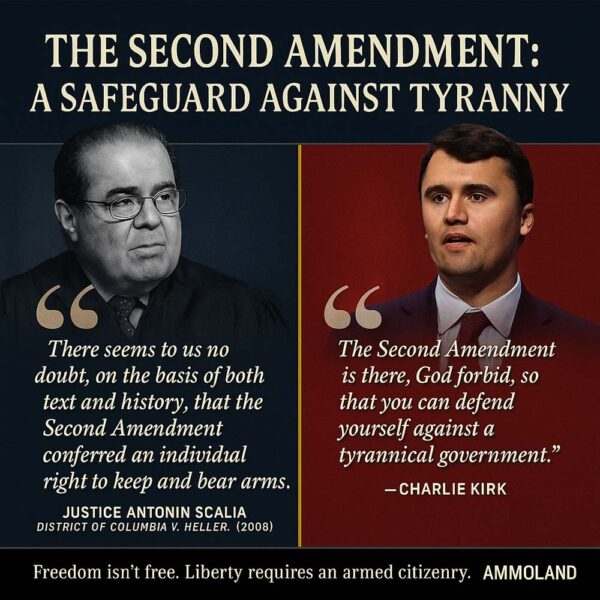
The individual has a natural right to self-defense to bear arms to meet force with force. This natural right is inherent, and it transcends civil law. It has long been understood by those familiar with Natural Law of this right to bear arms for self-defense and of the duty of the militia to secure their free and independent State. It was also clear to such individuals as to who the militia was, is, and will be. George Mason clarified this when he said,

I ask sir, what is the militia? It is the whole people…To disarm the people is the best and most effectual way to enslave them.2

To better understand this natural right and the meaning behind the Second Amendment, one must also understand the role of the militia. The following was published in The New-Hampshire Gazette and Historical Chronicle on July 5, 1771:

As no Nation or People can be secure from their Enemies and preserve their Independency without the Military Art, it must give Pleasure to every Friend to his County, and the British Nation, to see the present Revival of Military Discipline in this and the neighboring Colonies.

The only Way to have Peace, is to be always ready for War. If the Inhabitants of this Country should always have Virture and Wisdom enough to follow the noble Example of their illustrious Ancestors in training up every Man to the use of Arms, and keeping good Stores of Ammunition, they never need fear the united Force of all their Enemies.

According to the best Computation there are about half a Million of Men fit to bear arms in these Colonies; and the Number increasing so fast that it is supposed within twenty or thirty Years, British America will be able to raise a Million of Men fit to march into the Field of Battle!—If this vast Number should be properly trained to Arms, what Nation or Nations under the Sun would dare enter the List with America, or lift a Hand against her potent Sons!

As a well disciplined Militia is of such vast Importance to the Welfare of this Country, it is the indispensable Duty, and we hope it will be the constant Endeavour of every one to encourage and promote it. Military skill being a great Accomplishment for a Gentleman, as well as the Safeguard and Glory of a Nation, it is hoped that Gentlemen of Character and Fortune will read the Way in this useful Knowledge and Practice, and the lower Clases of People will be ambitions to follow their noble Example.

In this Way a Foundation may be laid for Peace and Tranquility in America to the End of Time. To make the Militia still more respectable, there should be a Major General and a Brigadier General in each Province—And as Musick adds greatly to the Beauty and Pleasure of Military Exercise, there should be other Instruments besides Drums, such as are in the Regular Regiments.

Standing Armies are a poor Defence against a Foreign Enemy, they are oftener the Destruction, then the Defence of a Nation. And it is a certain Evidence of a bad Government where a standing Army is kept up, either to support the Laws, or for a Defence against Enemies, for a wise Government will always make such Laws as are for the public Good, and good Laws want no Armies to support them.

A good Militia is the best Security against all Enemies, and the only Way for a Nation to become formidable and rise to Eminence and Glory.

ALEXANDER.3


1

The Avalon Project , “Constitution of the United States: Bill of Rights,” Yale.edu (Yale Law School: Lillian Goldman Law Library, 2020), https://avalon.law.yale.edu/18th_century/rights1.asp#2.

2

Congressional Record August 19, 1994-September 16, 1994Internet Archive, vol. 140 (Washington D.C.: Superintendent of Government Documents, 1994), 24095, https://archive.org/details/sim_congressional-record-proceedings-and-debates_august-19-1994-september-16-1994_140-redacted/page/24095/mode/1up?.

3

The New-Hampshire Gazette and Historical Chronicle, Chronicling America: Historic American Newspapers. Lib. Of Congress, July 5, 1771, https://chroniclingamerica.loc.gov/lccn/sn83025582/1771-07-05/ed-1/seq-3/.

Data Proves Conclusively That Those Who Carry Firearms Almost Never Commit Crimes.

When the landmark Bruen ruling was first published in June of 2022, politicians in the few remaining holdout states that didn’t issue concealed carry permits to regular citizens had a collective meltdown.

New York Governor Kathy Hochul called it “outrageous,” California Governor Gavin Newsom said it was a “radical decision,” and New Jersey Attorney General Matthew Platkin described it as “bad constitutional law and even worse for public safety.”

Gun control groups were also apoplectic. Giffords claimed the ruling would would “escalate gun violence,” “spur unlawful militia activity,” “embolden those inclined to vigilante justice,” “increase violence at protests,” and cause “more domestic violence and hate crimes.”

Antigun groups like Giffords, which now argue in court that Bruen allows all their favored gun control laws, thoroughly condemned the ruling when it was published.

Antigun politicians, acting with an urgency they don’t seem to have for real problems like rampant retail theft and homelessness, passed laws in five states that made concealed carry permits pointless by banning carry at almost every relevant public place. Those laws immediately faced lawsuits (including the one CRPA is working on challenging California’s law), and all are partially enjoined to varying degrees as the litigation proceeds.

Yet something funny happened after 2022. Instead of the proverbial “blood in the streets” that was predicted, the national homicide rate dropped. This happened everywhere; in the antigun states forced to issue carry permits for the first time, in pro-gun states like Ohio and Florida which went further and adopted “constitutional carry” (meaning no permit is required to carry a gun if you can legally own one), and even in individual cities like Philadelphia that began issuing permits more liberally as a result of the litigation.

Philadelphia’s homicides are falling sharply as the lockdown-era crimewave recedes. Source: https://www.phillypolice.com/crimestats

Miami even had its lowest year for homicides since it began keeping track of them in the 1940s. So why were the antigun politicians and their allies in the gun control industry so hilariously wrong? Why didn’t every argument turn into a shootout? Why didn’t our homicide rate spike?

In short: because Americans with concealed carry permits almost never commit crimes.

Continue reading “”

Well, we need to eliminate NFA-34, FFA-38, GCA-68 & 18 U.S. Code  Chapter 44, as well, or some other bunch of bureaucraps will simply start enforcing those laws & regulations.


As Trump Heads to White House Rep. Burlison Pushes Plan to Abolish ATF

With President-elect Donald Trump heading to the White House and Congress under Republican control, Rep. Eric Burlison (R) is pushing ahead with plans to abolish the Bureau of Alcohol, Tobacco, Firearms and Explosives, commonly known as the ATF.

FOX News quoted Burlison describing the ATF as “a disaster.”

He said, “For several decades they’ve been a disaster agency [which has] been violating the Second Amendment.”

Burlison wants a scenario in which states handle their gun law enforcement without federal agencies breathing down their necks.

He re-posted an X post from Ted Nugent on Friday:

The ATF issued numerous rules during the Biden/Harris administration, one of which criminalized owners of legally purchased AR-pistol stabilizer braces. Another one of the ATF’s rules declared that 80 percent complete firearm frames are firearms and therefore can only be acquired via background checks.

The ATF also issued a rule instituting, for all intents and purposes, universal background checks.

Lawsuits filed by Gun Owners of America, the Firearms Policy Coalition, and the Second Amendment Foundation, have rendered many of these and other ATF rules unenforceable or otherwise moot. Legal action on some of the rules continues and Rep. Burlison wants an America in which the lawsuits would not be necessary because the ATF would not exist.

Where Does Pam Bondi Stand on Gun Control?

Donald Trump’s second choice for Attorney General is likely to find a warmer reception in the Senate than Matt Gaetz did, but she could face some hostility from Second Amendment organizations over some of her previous positions on guns and gun control.

Pam Bondi served as Florida’s attorney general for eight years, and was in office when the legislature crafted its response to the 2018 shootings at Marjory Stoneman Douglas High School in Parkland.

“In a time of crisis, it’s about finding common ground, and that’s what Gov. Scott has done,” Bondi told Fox Business host Stuart Varney in March of that year, as the Florida legislature was in the midst of passing legislation that, among other things, raised the age to purchase a firearm from 18 to 21 and established a “red flag” law in the state.

During that same interview, Bondi praised Trump’s response to the Parkland shootings and expressed her hope that he could be a “mediator” with federal lawmakers.

“Hopefully Congress will follow Florida’s lead and what Gov. Scott has been doing here in Florida and all of us working so well together,” she told Varney as the interview concluded.

Even before Bondi tacitly embraced “red flag” laws and prohibiting young adults from purchasing firearms at retail, some 2A activists in Florida weren’t big fans of Bondi’s tenure as AG. Florida Carry’s general counsel Eric Friday expressed relief when current AG Ashley Moody took over the position in 2019.

“Ms. Bondi made numerous anti-gun decisions,” Friday said.

Bondi opposed a semiautomatic weapon ban in Connecticut after the Sandy Hook shooting and defended Florida’s controversial “stand your ground” law. But she also argued that stand your ground shouldn’t be used by police officers to defend their shootings.

In 2013, Bondi also defended the state’s law that prohibits people from openly carrying weapons, pitting her against Friday’s organization. Her handling of it prompted Hammer to reassure NRA members that Bondi was “a friend of our organizations.”

Bondi also defended the Legislature’s gun-control measures passed in the wake of the Parkland shooting, including a provision that outlawed anyone younger than 21 from buying a rifle or shotgun.

The NRA challenged the law and asked that a 19-year-old plaintiff be allowed to remain anonymous in the case so she could avoid potential harassment. After Bondi fought itHammer accused her of “bullying.”

Moody, it should be noted, has continued to defend the post-Parkland gun controls adopted by the Florida legislature and Scott. The NRA’s lawsuit challenging the age-based gun ban is currently pending in the Eleventh Circuit Court of Appeals, with oral arguments taking place last month.

Bondi is not an out-and-proud gun grabber, but she does come with some gun control baggage that’s likely to come up during her meet-and-greets with senators as well as her confirmation hearings. Would she, for instance, wholeheartedly defend the federal prohibition on handgun sales for adults younger than 21? Does she continue to believe that Congress should implement a federal gun violence restraining order like the one adopted in Florida six years ago? Would she side with the plaintiffs challenging semi-auto bans in Maryland, Illinois, New Jersey, California, and a handful of other states? And where does Bondi come down on the issue of restoring Second Amendment rights to those convicted of non-violent felony offenses?

So far none of the major 2A groups have commented on Bondi’s selection on social media, either in support or opposition to her nomination. Whether she’ll face any formal objections from Second Amendment organizations remains to be seen, and they may very well be holding off until they hear what Bondi herself has to say about the right to keep and bear arms as the confirmation process plays out.

Leftist Governors Retaliate Against Election Results by Threatening Second Amendment Rights of Citizens

The 2024 Presidential Election saw a large shift across the country, with Donald Trump winning all seven battlegrounds and receiving more votes in Democrat-controlled states than ever before, flipping many counties red in traditionally blue strongholds.

While this can be credited to the fact that President-Elect Trump connects more broadly with working-class citizens than do the self-proclaimed “elitists” on the left, much of the evolution is in response to the failures of the Democrats that have plagued Americans, especially over the past four years.

From inflation, border security, and migrant crime waves, to the woke administrative state being turned against political opponents and the handling of overseas conflicts, many Americans have been left hungry, exhausted, and desperate to return to a more prosperous time.

Despite the prevailing climate, and with a clear rejection of sanity and reason, it has become increasingly apparent that the extreme left in the United States refuses to learn from their lessons.

While this can be served up like low-hanging fruit to ridicule and despise, it can be used more efficiently and to benefit Americans as an opportunity, one that we pray Donald Trump’s second administration, including conservatives across the country, will seize, particularly when it comes to the Second Amendment.

Continue reading “”

Federal Appeals Court Upholds Most of Restrictive New York Concealed Carry Gun Law; Next Stop SCOTUS
Federal Second Circuit Court of Appeals upholds “good moral character” requirement of New York’s concealed carry gun law, setting up expected showdown at the U.S. Supreme Court

We have been following the twists and turns of litigation battles associated with New York’s most recent concealed carry gun law. This is important, not only because it affects the constitutional rights of millions of law-abiding New York State citizens, but also because this case could be a bellwether for the country, should the U.S. Supreme Court decide to review the case and provide further guidance on the gun rights of citizens nationwide.

You may recall that it all started, as we reported, when SCOTUS struck down New York’s previous concealed carry gun law, which required citizens to make a showing of “special need” when applying for a carry permit, as violative of the U.S. Constitution’s Second Amendment, in the seminal New York State Rifle & Pistol Association, Inc. v. Bruen case:

We…now hold, consistent with Heller and McDonald, that the Second and Fourteenth Amendments protect an individual’s right to carry a handgun for self-defense outside the home.

The parties nevertheless dispute whether New York’s licensing regime respects the constitutional right to carry handguns publicly for self-defense. In 43 States, the government issues licenses to carry based on objective criteria.

But in six States, including New York, the government further conditions issuance of a license to carry on a citizen’s showing of some additional special need. Because the State of New York issues public-carry licenses only when an applicant demonstrates a special need for self-defense, we conclude that the State’s licensing regime violates the Constitution.

So after Bruen, as the case is typically called, New York could not require citizens to show a special need to get a concealed carry permit. And boy was Kathy Hochul, the far-left governor of New York, pissed: NY Gov. Hochul Loses Her Mind Over SCOTUS Ruling Striking Down Conceal Carry Law.

So pissed, in fact, that she rapidly called a special session of the New York legislature, and immediately passed a new concealed carry gun law even more restrictive than the previous one: New York Democrats Undermine Supreme Court 2nd Amendment Ruling In New Legislation.

Continue reading “”

A Political Mandate in Support of Pro-Second Amendment Policy

When President-elect Trump takes office in January, his administration will inherit a powerful mandate to protect and expand Second Amendment rights. With unified control of Congress, this incoming administration has an unprecedented opportunity to enact meaningful regulatory and legislative changes that safeguards the constitutional rights of millions of Americans.

The message from voters in the November election could not be clearer. Americans across the country have voiced their support for safer communities and the fundamental right to self-defense. The new administration must deliver on its campaign promises to defend these essential liberties.

Americans from all walks of life – including various racial, ethnic, socioeconomic, and political backgrounds – are increasingly choosing to be their family’s first line of defense. The growing support for Second Amendment protections across the country, coupled with a unified Congress that supports pro-gun policies, creates a unique moment for lawmakers to work with the President-elect in advancing long-overdo measures such as national concealed carry reciprocity. The administration should also look to eliminate Biden-era regulatory changes, including reducing burdensome red tape on firearm ownership, as well as ensure that our fundamental rights continue to be upheld for future generations.

Importantly, during his campaign, President Trump affirmed that “your Second Amendment does not end at the state line” and pledged to sign national concealed carry reciprocity into law. This commitment to national concealed carry reciprocity deserves to be a cornerstone of the administration’s domestic agenda. While the Second Amendment protects our constitutional right to bear arms, the current landscape of varying state regulations have created a complex and often contradictory legal environment for law-abiding citizens. More than half of U.S. states have already embraced constitutional or permitless carry, yet citizens still face significant legal uncertainty, including the threat of arrest, when traveling across certain state lines.

The solution is straightforward: establish a national framework that allows law-abiding gun owners to exercise their constitutional rights consistently throughout the country. This would not only strengthen individual liberties but also enhance personal safety and bring much-needed clarity to the legal landscape surrounding self-defense in America today.

Beyond reciprocity, the new administration must act swiftly to roll back the numerous harmful executive orders from the Biden-Harris Administration that have limited the right to self-defense for the last four years. The previous administration’s initiatives, including controversial so-called “red flag” laws that threaten due process rights, must be carefully reviewed and reformed. Similarly, the regulatory overreach of agencies like the Bureau of Alcohol, Tobacco, Firearms and Explosives demands immediate attention. Overzealous regulations on firearms and the firearm industry ought to be reversed on Day One.

Similarly, the “White House Office of Gun Violence Prevention”, which has too often served as a political tool rather than a solution-oriented agency, should be dismantled or reorganized. Instead, resources must be redirected toward addressing the root causes of violence in our communities, with a particular focus on mental health support and evidence-based interventions that don’t infringe on constitutional rights. The new administration must instead focus on restoring the balance of self-defense rights—protecting citizens’ ability to self-protect while also ensuring that any regulations are rooted in the Constitution. This approach will help keep Americans’ right to bear arms protected.

The new administration’s ability to continue shaping the future of the judiciary, including appointing conservative judges who adhere to and respect our Constitution, further strengthens the future of Second Amendment rights in America. The Trump administration has the chance to ensure that Second Amendment freedoms remain a cornerstone of American democracy.

The USCCA’s For Saving Lives Action Fund, as one of the fastest-growing pro-Second Amendment organizations in the country, stands ready to support these crucial reforms while continuing to monitor state and local legislation that might threaten these fundamental rights. Our diverse membership, representing Americans from every corner of the country, demonstrates the broad support for responsible gun ownership and the right to self-defense.

This is more than just a political moment – it’s an opportunity to solidify the future of Second Amendment rights for generations to come. The incoming administration must seize this historic chance to demonstrate that protecting constitutional rights and ensuring public safety are not mutually exclusive goals. By implementing these reforms thoughtfully and decisively, we can create a safer America while preserving our essential liberties.

The American people have spoken, and their mandate is clear. The time has come for bold action to protect and strengthen Second Amendment rights. With a unified government and strong public support, there has never been a better moment to secure these fundamental freedoms for all Americans. Together, we can safeguard the rights of responsible gun owners and ensure that Americans remain empowered to protect themselves and their families.

Why There Can’t Be Two Sets of Rules on Guns

Even in some of the most anti-gun states, there are groups that get exceptions to many restrictions. Police officers are often exempt from many gun control laws. They can buy stuff that you and I might not be able to, simply because of their status as law enforcement officers. They also get to keep those guns after they leave the profession in most cases.

And while police officers do an important job and many are outstanding in what they do, there shouldn’t be a different set of rules for them.

Understand that I’m not anti-cop. My father retired as a local police officer, then went back into uniform to serve as the chief of police in a small town nearby. I grew up around law enforcement and so I know something that a lot of people on both sides might not want to hear. Cops are people.

Because they’re people, there are good and bad individuals who wear a badge.
This comes up because of this case out of Connecticut.

NEW LONDON, CT — A judge has ordered a police officer accused of assaulting his girlfriend to stay away from the woman and surrender any weapons he has, according to The Day of New London.

Julio Gil-Martinez, 29, of New London, was arrested Saturday on a warrant and charged with first-degree unlawful restraint, second-degree strangulation, second-degree threatening, third-degree assault, and interfering with an emergency call, New London police said in a news release.

The arrest came after a victim went to the Waterford Police Department to report the incident, which was determined to have happened at a home in New London, according to police.

Gil-Martinez is currently on administrative leave, but this sort of makes the point about police officers.

They should be the best among us, but the truth is that they’re not. Some of the best among us become law enforcement officers but that same profession is attractive to all kinds of people who probably shouldn’t wear a uniform of any kind beyond a prison jumpsuit.

Now, I’m not saying Gil-Martinez is guilty. That’s for a court to decide and if he is, he deserves to rot in a cell for a good long time. He’s really not the point here, though.

The point is that police officers aren’t a special class that’s above reproach. They’re people.

So why do so many gun control laws exempt them, particularly with regard to what they do while off the job?

I get that they may face certain threats because of their job that many others never will–they do make enemies, after all–but some of us make enemies just fine without a badge. I mean, I write political commentary. Do you think I haven’t been threatened? Sure. Does that mean political commentators should get an exemption as well?

The answer from your average anti-gunner would likely be that no, we shouldn’t.

So then why do the police? Don’t get me wrong, I have no issue with cops having guns. I have no problem with them having all the guns. I just don’t like the double standard.

Here’s a thought: If police need special privileges in order to protect themselves from their enemies, then why not just lift the restrictions so that police offers stop getting special treatment and others can then defend themselves?

Unfortunately, for anti-gunners, that’s not acceptable.

See, the issue isn’t guns. It’s just guns in the hands of people who aren’t drawing a government paycheck.

Best Self-Defense Tools? Um…I Don’t Know…How ‘Bout a Gun

Ok, so to start, I get that the article in question appeared in the New York Post, published in, of course New York City, where all things “guns” are strictly verboten, so a New Yorker is naturally going to get creative. But therein lies the problem: When trying to determine or write an article about the best self-defense tools available, there is clearly, one option that trumps all others. The others are nice, maybe even kinda cool. But none of them are a gun. A firearm in virtually any of its many designs and configurations is the best self-defense tool ever created by man and, some bumper sticker enthusiasts might argue, perfected by Samual Colt. In the game of rock, paper, scissors, if you added nuke, which would beat all the others combined, the gun plays that same role in a discussion of self-defense tools.

But, for shits and giggles, let’s play along for a minute.

So the Post article, “How to stay safe with some of the best self-defense tools on the market,” was a nice New York-safe (sort of, more on that in a minute) article by Emma Sutton-Williams. A quick look at Ms. Sutton-Williams’ bio reveals she is an ardent electric scooter rider, a proud dog mom to a designer breed of Mini Sheepadoodle (not sure what that really is though speculating it’s a super ineffective version of a tiny sheep dog mixed with some version of poodle and is likely infinitely cute and hypoallergenic) and is a Julliard-trained violinist (impressive). She is no doubt quite talented, rather smart, exceptionally cultured, fashionably attractive, a solid writer and likely has zero familiarity or knowledge of firearms.

So, she got creative and looked at the typical non-gun items that can be used to knock an attacker senseless or simply attack his (or her) senses. Here was the author’s premise:

“In a world where chaos has taken root, propelled by social media and broadcasted entertainment, we constantly feel its toll on our society. The atmosphere is charged with a fearful undertone, robbing us of tranquility, even joy, if we let it. The world has stopped listening to one another, causing a wake of public shaming, name-calling, and acts of violence.

“In an effort to make our readers feel as safe as possible, we researched the best self-defense tools and techniques to feel protected and empowered. Knowing how to shield yourself is crucial whether you’re walking alone at night or navigating crowded public spaces.”

The Post is doing a little what The Truth About Guns is doing. We want our readers to feel safer, too. We just take a more direct, reliable approach to promoting that safety.

Continue reading “”

ANTI-GUNNERS MORE INTERESTED IN PUBLIC DISARMAMENT THAN SAFETY—CCRKBA

BELLEVUE, WA – A recent report by ABC News that gun control groups are vowing to “double down” against incoming President Donald Trump if he pursues national concealed carry reciprocity only proves anti-gunners are more interested in citizen disarmament than in public safety, the Citizens Committee for the Right to Keep and Bear Arms said in response.

“National concealed carry reciprocity simply would mean American citizens would no longer leave their right of self-defense at a state border,” said CCRKBA Chairman Alan Gottlieb. “The gun prohibition lobby needs to come clean and admit they don’t care if law-abiding citizens can’t defend themselves while traveling. They’re not interested in public safety, only public disarmament.”

A national reciprocity bill passed the U.S. House in 2017, but was never brought up in the Senate, and Democrats have opposed the idea. Now, however, with Capitol Hill under Republican control, and Trump on record as vowing to sign legislation if it hits his desk, anti-gunners—including Everytown for Gun Safety and the Brady Campaign to Prevent Gun Violence—are promising a fight to keep people traveling from one state to another vulnerable to criminal attack.

“The gun ban crowd can couch their arguments any way they want,” Gottlieb observed, “but when you boil it down, what they really want is for good people to be vulnerable to violent crime. Anti-gunners argue that reciprocity will make it easier for criminals to cross state lines, but that doesn’t pass the smell test because criminals are already doing that.

“Any notion that legally-armed Americans are somehow a threat to public safety when they journey to another state is manufactured paranoia,” he said.

“And,” Gottlieb added, “when armed citizens go to other states, they must obey that state’s gun laws. The argument that states will see their own gun laws eroded by reciprocity is yet another myth invented by anti-gunners to dissuade people from supporting reciprocity. Each state’s laws would remain intact, and they know it.”

Don’t Think Guns Are Treated Differently? Think Again

There are some people who think guns get some kind of special dispensation within the law. This is popular with the “I wish women had the same rights as guns” crowd that can’t seem to shut up. It’s nonsense, of course, but some people really like to pretend otherwise. They like to pretend guns are treated differently than everything else.

But let’s be real. Guns are treated differently than other products. It’s just not the way they want you to think.

See, few other industries are facing threats of government regulation and intervention because of things that third parties do that are already prohibited by law, but  that’s what’s happening in the firearm industry.

After the video montage of criminal violence, Chairman Durbin continued his opening remarks.

“Glock switches, which are banned under federal law are cheap, often costing less than $20, and they’ve been increasingly common across our country,” the chairman said. “We must act. Gun manufacturers can and should do more to ensure their products cannot be converted into illegal machine guns.
If manufacturers fail to act, Congress should take up legislation to hold these companies liable for the foreseeable consequences of their actions.”

Of course, the White House coordinated with Everytown and The City of Chicago to sue Glock under this baseless legal theory; and is the subject of an ongoing congressional investigation.

Chairman Durbin gives away his authority here as he knows well lawful firearm manufacturers cannot and should not be held liable for the criminal actions of unaffiliated remote third parties. This is the cornerstone of American jurisprudence and codified in the bipartisan Protection of Lawful Commerce in Arms Act (PLCAA) that countless gun control activists wish to eliminate.

The chairman said it himself – these illegal firearm conversion devices like Glock switches are already illegal. Prosecutors need to get tough and hold criminals accountable for committing these horrible crimes.

Some argue that the PLCAA is more proof that guns are treated differently, but let’s understand what the PLCAA does and why it exists.

It was created to deal with a particularly insidious series of lawsuits aimed at trying to punish the firearm industry for what third parties did with firearms. There was no wrongdoing by the gun manufacturers, who complied with all federal regulations. It was just a way to try and bankrupt gun companies or force them to stop selling to the general public.

The PLCAA ended that.

Some argue this creates special protections for the industry, and it may, but only because they are needed. For example, the auto industry doesn’t get sued because of drunk drivers. If they did, we’d likely see similar protections put in place.

However, now the target is companies like Glock who find their firearms ending up in criminal hands and who are using devices that are illegal, that have been illegal since they were invented, and that cannot be lawfully purchased. Since most of them were made after 1986, the machine gun ban implemented that year means that no one can buy one even after jumping through all the NFA hoops.

The threat here is that Glock will face regulation if they don’t change their entire design to accommodate for someone doing something illegal.

No other industry would face such threats.

For example, no one has ever threatened the auto industry because the window glass is too easy for thieves to break or the cars are too easy to hotwire. No one sued door lock companies for failing to stop someone busting through the door.

But Glock is being threatened here.

The upside is that it’s an empty threat. The PLCAA does mean that lawsuits can’t really happen, but Congress can end those protections, so that’s not what makes it empty. What does is the fact that Durbin isn’t going to be calling any shots for the next two years at least. The incoming Congress doesn’t exactly look like one inclined to punish a popular firearm maker that provides most of the guns used by law enforcement over what criminals do with devices they add that aren’t even made by Glock in the first place

In the Seventh Circuit, Procedural Red Herrings Threaten the Second Amendment

The Seventh Circuit heard oral argument on November 12 in Viramontes v. County of CookIllinois, a challenge to Cook County’s ban on semiautomatic rifles like the AR-15, inaccurately labeled as assault weapons. These bans are flatly unconstitutional under Heller, which establishes that the law-abiding citizens of this Nation have a right to possess firearms that are in common use. Semiautomatic rifles undoubtedly are in common use – indeed, the AR-15 has been the best-selling rifle in the Nation for years. Unfortunately, the Seventh Circuit departed from Heller in a case called Bevis to hold that arms that are predominantly useful for military purposes can be banned. But even under that reasoning, semiautomatic rifles cannot be banned. They are common civilian firearms, not military firearms, because they lack the capacity for automatic and burst fire.

 The questioning at the Seventh Circuit, however, did not focus much on the merits of the case. Rather, the panel (consisting of Judges Sykes, Brennan, and St. Eve) took a surprise detour through a series of procedural objections put forward in Cook County’s briefs. (Take a listen here). Judges Sykes and St. Eve appeared to think that Viramontes’ challenge should fail because he didn’t put forward critical evidence about semiautomatic rifles in the district court. Viramontes’ lawyer challenged that notion, including by citing to specific pages in the record containing key pieces of evidence. I decided to dig deeper into the history of the case to see who has the better of the argument. The short answer is that Viramontes does. Indeed, he has built one of the most robust records I have seen by a plaintiff in a case challenging a semiautomatic rifle ban.

Before turning to the record, it is helpful to take a step back to see how we got to this point. When Viramontes filed his case, the constitutionality of a ban on semiautomatic rifles was controlled by two Seventh Circuit precedents, Wilson and Friedman. Viramontes did not initially seek to build a record in the district court because his sole path to victory was to have the Seventh Circuit or U.S. Supreme Court declare that Wilson and Friedman were wrongly decided.

Cook County, however, requested the opportunity to build a record, and the district court obliged. Then, while the case was proceeding in the district court, the U.S. Supreme Court decided Bruen, arguably wiping out Wilson and Friedman as precedent. It was in this context that the parties put forward their evidence and engaged in summary judgment briefing. It was not until summary judgment was fully briefed that the Seventh Circuit decided Bevis, and the parties addressed that decision in short filings.

Continue reading “”

The Illinois ‘assault weapon’ ban fails

The HellerMcDonald and Bruen decisions made clear the Second Amendment acknowledges– does not grant–an individual right to keep and bear arms, a right that does not end at one’s property line, and encompasses weapons—not just firearms–in common use for lawful purposes such as self-defense. Government may not erect arbitrary barriers to the exercise of the right, but because the Supreme Court hasn’t absolutely delineated what weapons in “common use” might be, blue states like Illinois remain determined to disarm Americans, the better to crush them when it’s time for the glorious revolution.


Graphic: X Screenshot

Among the most common contemporary targets of anti-liberty/gun cracktivists are “assault weapons” and “high capacity” magazines. That there is no such thing as an “assault weapon” deters them not. Neither does the fact magazine capacity restrictions produce no public safety benefit, and most contemporary handguns and rifles feature magazines of greater than their commonly imposed 10 round capacity. Cracktivists have hit on the most common and popular sporting rifle, the AR-15 family, which since the Vietnam War has featured a standard 30 round magazine, as a particular object of hate. Upholding the narrative, Illinois banned “assault weapons” and high-capacity magazines.

An ”assault weapon” is best understood as any scary looking gun cracktivists want to ban. True assault rifles are fully automatic military arms. AR-15s outwardly resemble the military M4 but are like all other semiautomatic arms: they fire one round for each function of the trigger.

Don’t anti-liberty/gun crackvisits know this? Of course they do, but they also know they have unlimited taxpayer funds for lawsuits which normally take years to wend their way to the Supreme Court and in the meantime, they get to deprive Americans of their rights and even jail and ruin some of their political enemies.

Fortunately, U.S. District Court Judge Stephen McGlynn has sided with the Constitution, and overturned the Illinois ban:

Continue reading “”

Analysis: How a Federal Judge Reinterpreted the ‘Military Arms’ Argument to Protect AR-15s

After a federal appeals court wrote AR-15s and the magazines that typically come with them out of the Second Amendment, a federal judge has written them back in.

Last November, a Seventh Circuit Court of Appeals panel declined to enjoin Illinois’ ban on so-called assault weapons and large capacity magazines after ruling that each was too akin to military hardware to be counted as “arms” protected by the Second Amendment. Yet just last week, a US District Court judge under the Seventh Circuit’s jurisdiction struck down the exact same ban as unconstitutional.

In fact, he did so by relying on the circuit’s own words.

When the Seventh Circuit panel upheld Illinois’ ban, it set a new standard to determine whether a proposed gun law implicates the plain text of the Second Amendment–a key component of the Supreme Court’s Bruen test.

“In order to show a likelihood of success on the merits, the plaintiffs in each of the cases before us thus have the burden of showing that the weapons addressed in the pertinent legislation are Arms that ordinary people would keep at home for purposes of self-defense, not weapons that are exclusively or predominantly useful in military service, or weapons that are not possessed for lawful purposes,” Judge Diane Wood wrote in Bevis v. Naperville.

Wood drew specific attention to the “military use” prong. Relying on dicta from the Supreme Court’s Heller decision assuring other courts that the ruling did not prohibit regulation of machineguns used by the military (specifically the M16), she posited that civilian AR-15s are nearly indistinguishable from M16s. She concluded, therefore, that they are also “predominantly useful in military service” and may be banned.

Judge Stephen McGlynn came to a different conclusion regarding the “military use” of AR-15s and similar rifles when reviewing the case. While following the analytical structure handed down by the Seventh Circuit, he conducted his own inquiry into what makes a weapon “predominantly useful in military service.” Where the Seventh Circuit panel hand-waved away rate-of-fire differences between AR-15s and military service rifles, McGlynn found cause for highlighting the distinction.

“The commercially available AR-15’s external similarity to the M16 rifle and M4 carbine belies its nature, as its lack of burst or fully automatic fire fundamentally renders it a different weapon,” he wrote.

He also argued that rifles acquired for the military are subject to unique standards of “military specificity and rigorous quality-insurance inspections,” whereas civilian-market AR-15s have no such standards. Ultimately, he concluded, these differences render the AR-15 outside the scope of the Seventh Circuit’s military use standard.

“The Court holds that ‘military use’ refers to weapons that are selected, procured, tested, and issued to military members for use in combat,” McGlynn wrote. “With this in mind, none of the weapons, magazines, or attachments prohibited by PICA can be called ‘military-grade’ since they were not issued to the military for use in combat.”

Furthermore, he noted that the Seventh Circuit previously recognized a “dual use” standard for categories of weapons that have both lawful civilian and military applications in Bevis and its pre-Bruen assault weapons ban rulings.

“Obviously, many weapons are ‘dual use’: private parties have a constitutionally protected right to ‘keep and bear’ them and the military provides them to its forces,” Judge Wood wrote. “In this sense, there is a thumb on the scale in favor of Second Amendment protection. When we refer to ‘military’ weapons here, we mean weapons that may be essentially reserved to the military.”

Though Judge Wood specifically had shotguns and semi-automatic handguns in mind, Judge McGlynn found that AR-15s and similar rifles could just as easily fit the bill.

“Even if arguendo there are no material differences between the M16/M4 and AR-15, so-called ‘dual use’ has clearly been established here,” he wrote. “Clearly, even though handguns are useful and are used in military service, they are clearly protected by the Second Amendment. However, as noted above, AR-15s are distinct from their military counterparts.”

Ultimately, Judge McGlynn’s analysis represents a response to an argument that has become increasingly common among federal appeals courts looking for rationales to uphold state assault weapon bans despite Bruen’s demanding standards. It could serve as a blueprint for gun-rights advocates as they continue challenging similar bans in courts that are primed to rule against their position.

At the same time, it may not be an argument that is necessary for very long. The Supreme Court has an opportunity to take up an assault weapon ban case very soon, one that many gun-rights advocates believe is their best opportunity yet to have the justices weigh in. Should they do so, Justice Clarence Thomas, a member of the likely majority in any hardware ban case, has already tipped his cap regarding his views on the Seventh Circuit’s “military use” analysis.

In a statement accompanying the High Court’s denial of cert after the Seventh Circuit upheld Illinois’ ban, Thomas accused the panel of “contorting” the justices’ past Second Amendment guidance to reach a “nonsensical” conclusion that the Second Amendment does not protect “militaristic” weapons like the AR-15.

“The Seventh Circuit’s contrived ‘non-militaristic’ limitation on the Arms protected by the Second Amendment seems unmoored from both text and history,” he wrote. “It is difficult to see how the Seventh Circuit could have concluded that the most widely owned semiautomatic rifles are not ‘Arms’ protected by the Second Amendment.”

It may not matter much to gun-rights advocates in the end whether they’ve found an analytical avenue through the Seventh Circuit’s novel reading of the Bruen test for hardware bans. However, the Court has not been eager to take up an “assault weapons” ban case to this point. So, these lower court battles may continue to take on an outsized importance.