House Oversight Committee Subpoenas White House, ATF Over Chicago’s Glock Lawsuit

House Oversight Committee chair James Comer (R-OH) has issued congressional subpoenas to White House Office of Gun Violence Prevention Director Stefanie Feldman and ATF Director Steve Dettelbach seeking information about any role the office and agency had in Chicago’s lawsuit against gunmaker Glock.

Comer initially requested Dettelbach and Feldman provide the committee with any pertinent communication between the White House/ATF and Glock back in June, but according to the congressman the Biden administration hasn’t turned over a single document. In fact, in his letter informing Feldman of the subpoena, Comer says Deputy Counsel to the President Rachel F. Cotton responded to the Oversight Committee in early July with a letter that “did not even reference the Committee’s request for documents.” Instead, Comer says Cotton “impugned the motives of the Committee,” stating “[t]he House Majority . . . [is] doing the gun lobby’s bidding by launching a baseless political attack on the Biden Administration under the guise of an ‘investigation.’”

If that were the case, it would be easy enough for the White House and ATF to disprove the claims of collusion by whistleblowers. So why is the White House stonewalling the inquiry into communications between the White House Office of Gun Violence Prevention, ATF, and Glock officials? As Comer reminded Dettelbach in his subpoena request:

The Committee has learned that on December 20, 2023, the White House Office of Gun Violence Prevention met privately with representatives from Glock, during which the Administration requested that Glock change their pistol designs so that it would be harder to illegally modify Glock pistols to shoot continuously with a single trigger pull.

On March 19, 2024, the City of Chicago filed suit in state court against Glock. Everytown Law, the litigation arm of Everytown for Gun Safety, is listed as counsel for the plaintiff. The day the suit was filed, John Feinblatt, President of Everytown for Gun Safety, posted on his X account “Today Everytown Law + the City of Chicago announced a historic lawsuit against Glock Inc. to hold them accountable for the unconscionable decision to continue selling its easily modified pistols even though it could fix the problem.”

Later in the post, Mr. Feinblatt said “[f]ederal Officials recently contacted Glock to discuss implementing new ways to modify Glock pistols to make it harder for Glock switches to be installed. Rather than help, Glock falsely insisted there is nothing they can do.”

Because the White House Office of Gun Violence Prevention’s meeting with Glock was private, Mr. Feinblatt appears to have had insider information regarding your office’s meeting with Glock, which raises questions about whether your office colluded with Everytown for Gun Safety to initiate their lawsuit against Glock.

Chicago is seeking a court-ordered ban on the sale of Glock pistols to city residents “and Illinois gun stores that serve the Chicago market”, while Joe Biden recently used an executive order to set up an Emerging Firearms Threats Task Force that’s supposed to issue a report and an interagency plan to deal with machine gun conversion devices, which are already illegal under federal law.

Retired ATF Deputy Assistant Director Pete Forcelli previously told Bearing Arms that the White House Office of Gun Violence Prevention had pushed Dettelbach to have the ATF reclassify Glocks as machine guns under the NFA, but Dettelbach has so far resisted the move. Chicago’s lawsuit, along with the task force established by Biden, seem designed to give the ATF another push towards reclassifying some of the most popular handguns on the market as machine guns after the November elections have taken place.

My guess is that the White House and ATF will stonewall Comer’s subpoena just as they ignored his initial request for information. But if Kamala Harris wins election next month, don’t be surprised if the candidate who says she’s not taking anyone’s guns away suddenly decides that its time to make the sale of Glocks (and perhaps all other striker-fired pistols as well) off-limits to the civilian market; essentially imposing a ban on the sale of commonly-owned semi-automatic handguns through ATF regulation.

NICS Background Checks for Gun Sales Up in September 2024

Last month saw a measurable bump in the number of background checks for likely gun sales compared to the same month in 2023.

The figure of 2,072,550 checks conducted through the Federal Bureau of Investigation’s National Instant Criminal Background Check System last month is a 1.8-percent increase from the FBI NICS figure of 2,035,410 in September 2023.

When adjusted by removing figures for gun permit checks and rechecks by states that use NICS for that purpose, the latest total stands at 1,156,223, according to the National Shooting Sports Foundation, the trade group for the U.S. gun industry. This number remains 1.3 percent higher than the September 2023 NSSF-adjusted NICS figure of 1,141,847.

Of note, last month continues the unbroken 62-month streak that NICS has logged over 1 million adjusted background checks in a single month.

Industry insiders see last month’s figures of over 1.1 million background checks for the sale of a firearm at retail as a strong indicator of a vibrant demand for lawful firearm ownership, especially speeding toward a presidential election.

“The Vice Presidential debate offered a substantive examination of why Americans – by the millions each month – continue to lawfully purchase firearms,” said Mark Oliva, NSSF’s director of public affairs. “Americans are concerned for their safety and the safety of their loved ones. They refused to be painted with the broad brush that gun control proponents use to paint them in the same patterns as criminals. The fact is, Americans face a stark difference in the two tickets when it comes to respecting their Constitutional rights to keep and bear arms. America is demonstrating, month after month, that lawful gun ownership matters.”

The true number of guns sold nationwide is likely far higher than the 1.1 million noted by NSSF. It should be noted that NICS numbers do not include private gun sales in most states or in cases where a carry permit is used as an alternative to the background check requirements of the 1994 Brady law, which allows the transfer of a firearm over the counter by a federal firearms license holder without first performing a NICS check. Further, it doesn’t capture personally made firearms.

Latest ‘Ghost Gun’ Claims Have Tons of Problems

Ages ago, I owned an AK-47 clone. I built it from a kit I purchased along with a less than 80 percent receiver I bought, then took it to a build party with some friends and got a great gun out of the deal as well as a fun day.

This was long before so-called ghost guns were the scourge of the world. No one had even heard the term and a few years later, when we did, we laughed at it and for good reason.

Now, though, the term is everywhere. What’s more, rules got put in place–without Congress, it should be noted–to supposedly stem the tide.

And it seems that we’re getting some mixed signals on the efficacy of those restrictions.

Continue reading “”

Second Amendment Roundup: Textualism and ATF’s Redefinition of “Firearm”
The statutory history of the Gun Control Act cuts in favor of the VanDerStok respondents.

This is my second installment preceding the upcoming October 8 argument in Garland v. VanDerStok, a challenge to the regulatory redefinition of the term “firearm” in the Gun Control Act.  By expanding the statutory definition, the Bureau of Alcohol, Tobacco, Firearms & Explosives (ATF) in its 2022 Final Rule purports to criminalize numerous innocent acts that Congress never made illegal.

Until the new rule, a kit with partially-machined raw material that can be fabricated into a firearm was not considered to have reached a stage that it is a “firearm.”  To prevent Americans from making their own firearms from such material, which has always been and remains lawful, the bugbear term “ghost guns” was recently coined.  In its VanDerStok brief, the government argues that “anyone with basic tools and rudimentary skills” can “assemble a fully functional firearm” from such kits “in as little as twenty minutes.”

As explained in my last post, that is refuted by none other than the former Acting Chief of ATF’s Firearm Technology Branch, Rick Vasquez, who reviewed and approved hundreds of classifications about whether certain items are “firearms.”  As he explained in his amicus brief, fabrication of a firearm from these kits is a complex process requiring skill and special tools beyond the capacity of the average person.

In this post I’ll trace the statutory history of the term “firearm” to gain insight into its meaning.  The Gun Control Act defines “firearm” as “(A) any weapon (including a starter gun) which will or is designed to or may readily be converted to expel a projectile by the action of an explosive; (B) the frame or receiver of any such weapon….”  18 U.S.C. § 921(a)(3).  An ATF regulation on the books from 1968 to 2022 defined a “frame or receiver” as “that part of a firearm which provides housing for the hammer, bolt or breechblock and firing mechanism,” i.e., the main part of a firearm to which the barrel and stock attach.

Continue reading “”

Second Amendment Roundup: VanDerStok Tests Limits of Yet Another ATF Rule
The Supreme Court is set to decide whether the agency may expand criminal liability under the Gun Control Act.

On October 8, the Supreme Court will hear oral argument in Garland v. VanDerStok, a challenge to the Final Rule of the Bureau of Alcohol, Tobacco, Firearms & Explosives (ATF) from 2022 redefining and drastically expanding the meaning of the terms “firearm” and “firearm frame or receiver.”  This is the first of several posts in which I’d like to highlight some of the enlightening amici curiae briefs that have been filed in support of the respondents who challenged the rule.

Continue reading “”

No Second Amendment, No First: God, Guns, and the Government


Today’s Left endlessly preaches the evils of “gun violence.” It is a message increasingly echoed from the nation’s pulpits, presented as common-sense decency and virtue. Calls for “radical non-violence” are routinely endowed with the imprimatur of religious doctrine.

But what if such teachings were misguided, even damaging? What if the potential of a citizenry to exercise force against violent criminals and tyrannical governments is not just compatible with church teaching, but flows from the very heart of Biblical faith and reason? What if the freedoms we treasure are intimately tied to the power to resist violent coercion?

This is the long-overdue case John Zmirak makes with stunning clarity and conviction in No Second Amendment, No First. A Yale-educated journalist and former college professor, Zmirak shows how the right of self-defense against authoritarian government was affirmed in both the Old and New Testaments, is implied in Natural Law, and has been part of Church tradition over the centuries.

Continue reading “”

Defensive Gun Use Statistics:
America’s Life-Saving Gun Incidents (2024)

The Second Amendment limits the government’s power over the people’s right to keep and bear arms for the defense of our nation. However, Americans uniquely have the right to defend our lives with the most effective tools available.

A widely disputed topic between gun advocates and anti-Second Amendment advocates is the number of defensive gun uses (DGUs) each year. Fortunately, we have data to better understand the effect armed civilians have on criminality.

The following section covers everything we know about defensive gun use in the U.S.

Report Highlights:

  • Reports consistently show that there are between 60,000 and 2,500,000 defensive gun uses per year.
  • There are an average of 1,820,000 defensive gun uses per year compared to 1,100,000 reported crimes.
  • Only 2.07 million civilians regularly carry a firearm for defense.
  • Civilians are 85% more likely to use a firearm for defense than to be murdered by one.
  • The average distance in a defensive gun use shooting is three yards.

Continue reading “”

Biden-Harris Admin. Releases ‘One Year Report’ on Gun Violence Prevention Office

The White House on Monday released a one-year progress report on the activities of the Biden-Harris administration’s highly-touted Office of Gun Violence Prevention (OGVP), and predictably the report claims, “Lives are being saved, but there is still so much more to do.”

“At the direction of President Biden and Vice President Harris, the White House Office of Gun Violence Prevention and the entire Biden-Harris Administration will continue to do the work of reducing gun violence and supporting survivors every day,” the report states.

The report may be read here.

Among the accomplishments listed are:

  • Expanding Gun Background Checks and Making Clear the Gun Show Loophole Does Not Exist
  • Enhancing Gun Background Checks for Individuals Under Age 21
  • Enforcing Gun Trafficking and Straw Purchasing Laws
  • Keeping Guns Out of the Hands of Abusive Dating Partners
  • Implementing State Red Flag Laws
  • Establishing the Extreme Risk Protection Order Resource Center
  • Identifying Stolen Guns
  • Investing in Youth Mental Health
  • Investing in Safer Communities

There does not appear to be anything specifically aimed at arresting and prosecuting criminals who commit the crimes, except for this: “The Department has now charged more than 600 defendants using BSCA’s new gun trafficking and straw purchasing laws. In November 2023, the U.S. Sentencing Commission finalized new sentencing guidelines that responded to the directive in BSCA (Bipartisan Safer Communities Act) to increase certain firearms penalties for straw purchasing, trafficking in firearms, and organized crime affiliation, and consider a decrease to account for straw purchasers with mitigating circumstances (e.g., any domestic violence survivor history).”

The report further notes the Biden-Harris administration has helped states and cities “establish and strengthen their own Offices of Violence Prevention.” This past May, the White House hosted a gathering of more than 80 leaders from city and local offices of violence prevention in over 50 cities, the report says.

There is also mention of the administration’s effort to assist state lawmakers in their effort to advance legislation to combat gun violence. This translates to pushing more gun control at the state level.

“At least 17 states have enacted new legislation, including a safe storage law in California, a gun dealer accountability law in Washington, a victims compensation law in Maryland, a ghost gun ban in Vermont, a background check expansion in Maine, and a permit to purchase law in Delaware,” the report states.

The report gives a strong indication of what Harris will do if she wins in November. Essentially the brakes will be off and the concern is that the effort, and maybe the authority, of the OGVP will expand.

Minnesota Update: Eighth Circuit Court Strikes Down Minnesota’s Firearm Carry Age Restrictions

The U.S. Eighth Circuit Court of Appeals issued a mandate on September 20, officially shutting down the Minnesota Attorney General’s efforts to preserve the state’s ban on firearm carry for individuals aged 18 to 20. The decision follows a legal challenge backed by the Minnesota Gun Owners Caucus, the Second Amendment Foundation (SAF), and the Firearms Policy Coalition (FPC).

The challenge was brought forward by plaintiffs Kristin Worth, Austin Dye, and Axel Anderson, who argued that Minnesota’s restrictions on carrying firearms for adults under 21 violated their Second Amendment rights. In April 2023, U.S. District Court Judge Katherine Menendez ruled in favor of the plaintiffs, but delayed an injunction against the law pending appeal.

In July, a three-judge panel from the Eighth Circuit had unanimously affirmed the lower court’s ruling. Circuit Court Judge William Benton, who wrote the opinion, noted that the language of the Second Amendment does not specify an age limit. He highlighted that while the Founders included age restrictions in other areas, such as running for political office, no such limits were placed on the right to bear arms.

“In other words, the Founders considered age and knew how to set age requirements but placed no such restrictions on rights, including those protected by the Second Amendment,” Benton wrote in the decision.

Following the panel’s ruling, Minnesota sought to have the case reheard, either by the same three-judge panel or by the full bench of the Eighth Circuit. The appeals court rejected both requests in an August 21 order, effectively setting the stage for the mandate that was issued on Friday.

With the mandate now in place, Minnesota must either revise its laws to comply with the court’s decision or appeal the case to the U.S. Supreme Court. The Minnesota Attorney General’s office has not yet commented on whether it plans to pursue further legal action.

Following the mandate, the FPC celebrated the decision on social media.

“This formalizes our victory, and the ban is now officially dead,” the FPC wrote in a post. “If it wishes to continue defending its tyranny, Minnesota must take its tears to SCOTUS.”

The ruling represents a significant win for gun rights advocates in Minnesota, marking the end of a long legal battle over age-based firearm restrictions. For now, the state’s law barring 18- to 20-year-olds from carrying firearms is effectively nullified, pending any potential appeal to the nation’s highest court.

You’d think they’d wait until after the election.
Two way to take this
1 They’re so confident Harris is going to win that they’re arrogant
2 Biden is -again- stabbing Harris in the back for getting dumped.


President Biden plans to sign new executive actions aimed at reducing gun violence
The White House will announce the new measures in the coming weeks, as officials mark the first anniversary of the creation of the Office of Gun Violence Prevention

The White House will soon announce new executive actions aimed at further reducing gun violence in America, Scripps News has learned, just as the one-year mark since the formation of the Office of Gun Violence Prevention approaches.

Senior administration officials have pointed to the creation of the first-of-its-kind office, led by Vice President Kamala Harris, as a landmark moment for President Joe Biden, for whom the issue of gun violence has been a decades-long focus.

“We know that people are still dying every day in this country due to gun violence,” Stefanie Feldman, director of OGVP, told Scripps News in an interview Friday. “Sometimes it makes national headlines. Sometimes it doesn’t. President Biden and Vice President Harris are committed to continuing their long legacy of leadership on this work.”

Feldman said the new executive actions will be announced “in the weeks ahead” but declined to elaborate on specifics, noting only that some pertain to the continued implementation of the Bipartisan Safer Communities Act while others are “wholly new.”

“[Biden and Harris] really asked us to address all angles of this issue, to address not only mass shootings but suicide by firearm, accidental shootings [and] community violence,” Feldman noted.

This week the White House also released a new report showcasing the work of the OGVP in its first year, organized by the four key responsibilities of the office, including implementing the Safer Communities Act, coordinating support for gun violence survivors, identifying possible executive actions to be taken and expanding partner coalitions with states and localities throughout the country.

Passed in 2022 on a bipartisan basis, the Safer Communities Act was the first gun control law approved by Congress in nearly three decades and included additional funding for mental health and red flag programs, expanded background checks for gun sales and cracked down on illegal trafficking efforts.

In 2024, the gun background check system helped block more than 4,600 gun sales to people convicted of misdemeanor crimes of domestic violence, according to the report. To date, the Department of Justice has charged more than 500 defendants with violating provisions under the law, and the expanded background check provision has kept guns out of the hands of nearly 900 young people who shouldn’t have them, federal officials said.

On the implementation front, Feldman argued that, though the entirety of the legislation is already in effect, “there’s a big difference between implementing something and really squeezing out all the possible benefits that you can.”

She pointed to some state laws that protect individual privacy as obstacles preventing law enforcement officials from adequately responding to background checks, and said her office was currently working with state legislators to push for changes that would lift such restrictions.

The office has also worked to coordinate with state and local partners, including suggesting legislative changes at the state level. At least 17 states have passed new gun-related legislation over the past year and three — Maryland, Pennsylvania and New Mexico — formed their own offices, the report noted.

As for supporting survivors of gun violence and coordinating with partner coalitions, the organizer of one such group praised the work of OGVP in an interview with Scripps News.

Tony Montalto, whose daughter Gina was killed in the 2018 school shooting in Parkland, Florida – the deadliest mass shooting at a high school in U.S. history – now serves as president of “Stand with Parkland,” a group advocating for gun and public safety reform. Montalto said his group met with the OGVP “two or three times” since the office was stood up a year ago.

RELATED STORY | Gun violence in the US: How will the candidates handle a top issue for voters?

“We’re very pleased at the pragmatic approach that they’re taking in terms of increasing the ability to prevent gun violence in our country,” Montalto said. “These officials came down and walked through the halls of the scene of the Parkland shooting with our families. The Vice President was there with officials from the Office of Gun Violence Prevention and they sat down and they spoke with all the families that were available that day, listening to what we can do, talking about policies, procedures and additional laws that will help make everyone in this country safer from the threat of gun violence.”

Data from the Gun Violence Archive indicates that the number of mass shootings this year has decreased by 20 percent compared to the same period last year, the White House report noted, and is on track to be at the lowest level since 2019. Violent crime overall was down significantly as well, something the White House has touted as historic.

“After the prior administration saw a historic increase in homicides, this administration has seen a historic decrease in homicides, and that has only accelerated this year,” Feldman said.

In an election year, the Harris campaign has frequently highlighted the issue of gun violence on the campaign trail, contrasting her administration’s approach with how former President Donald Trump has handled the issue.

“I’m in favor of the second amendment. And I’m in favor of assault weapons bans. Universal background checks, red flag laws. And these are just common sense,” Harris said during a campaign event on Thursday, echoing a sentiment she shared when announcing the creation of the OGVP a year ago.

RELATED STORY | Surgeon general declares gun violence a public health crisis in America

But, with about four months left in office, Biden administration officials are working to take advantage of the remaining time while preparing for the next administration.

“What any president does with the structure of the White House or the Office is up to them, but what we’re focused on is what we can do in the next four months,” Feldman said. “President Biden, Vice President Harris, have the next four months to do all they can to save lives, and that’s exactly what they’ve asked the office to carry out.”

Montalto said he hoped that the work of OGVP would continue regardless of who wins in November.

“We do hope that this office survives any change in the White House, and that whoever gets elected as our next president realizes the value of having a pragmatic and practical group working towards the prevention of gun violence for all U.S. citizens,” he said

Legal Showdown Looms Over Suppressor Bans & 2nd Amendment Rights: Carlin Anderson vs. Kwame Raoul

Editor’s Note: Judge Stephen McGlynn is currently presiding over several consolidated cases challenging Illinois’ “assault weapons” ban, including Harrel v. Raoul, Barnett v. Raoul, Langley v. Kelly, and Foster v. Raoul. These cases collectively question the constitutionality of the state’s restrictions on firearms and large-capacity magazines under the Second Amendment.

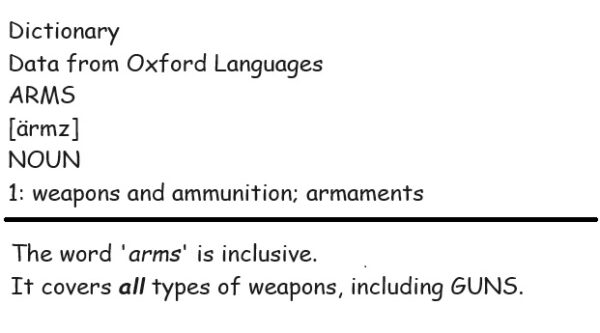
Additionally, Judge McGlynn is overseeing Carlin Anderson vs. Kwame Raoul, referenced below, which challenges Illinois’ ban on suppressors. The outcome of this case holds significant implications for gun rights advocates nationwide, particularly regarding the legal status of suppressors as protected “arms.”

The ongoing battle for Second Amendment rights took center stage in the courtroom once again in the 2nd Amendment challenge to Illinois’ assault weapons ban.  However, as that case proceeds, Mark Smith notes some of the takeaways that may impact the upcoming case of Carlin Anderson vs. Kwame Raoul.

At the heart of the 2nd case, Carlin Anderson vs. Kwame Raoul is the legal conflict of Illinois’ ban on suppressors—a critical piece of legislation that has ignited passionate debates about its constitutionality. The implications of this case extend far beyond state lines, with the potential to set a precedent in suppressor regulation across the country. U.S. District Court Judge Stephen McGlynn’s courtroom has become a pivotal battleground in determining whether these firearms accessories, often demonized by big Hollywood and anti-gun advocates, fall under the protection of the Second Amendment.

Continue reading “”

Credit Where Due: VP Harris Finally Pressed By Media on Illegally Obtained Firearms

It was quite surprising to hear it when it happened but Vice President Kamala Harris, the Democratic nominee for president, was fact checked in real time about the real drivers of criminal gun violence. She was tripped up on her answer because the journalist pressing her wasn’t buying the vice president’s tired talking points.

It happened during an interview of the vice president at the National Association of Black Journalists (NABJ) after one of the questioners asked Vice President Harris about her gun control platform.

For those needing any reminding, the Biden-Harris administration has been the most fervently anti-gun administration in history. Vice President Harris, as the administration’s “gun czar,” has infamously instituted a “whole-of-government” attack on the firearm and ammunition industry and the Second Amendment. She is colluding with gun control groups – who literally operate out of her office. As President Joe Biden’s “gun czar,” Harris has continually failed to bring criminals to account for their crimes.

Vice President Kamala Harris tries to claim to voters in Michigan, Pennsylvania, Wisconsin, Georgia and other close-polling states that she “isn’t taking anyone’s guns away from them” while in the same breath calling for a ban and confiscation of an entire class of lawfully made and legally purchased firearms – the most popular rifle in America. That’s just about the extent of her “plan” to reduce criminal gun violence. But finally, she received pushback for specifics that voters deserve to hear.

Please Answer the Question

Whenever Vice President Kamala Harris has been asked about criminals committing gun crimes, her response is predictably always the same. She calls for more gun control on law-abiding Americans, lists a kitchen sink full of anti-Second Amendment talking points and blames Congress for inaction. This is despite the fact that for the first two years of the Biden-Harris administration, Democrats controlled both chambers in Congress and The White House. She never mentions that not even all Democrats in the U.S. Senate supported a bill to reinstate, and expanded, a so-called “assault weapons” ban. That doesn’t stop the vice president from repeating those calls. But the interviewers at the NABJ wanted more specifics from her.

“In cities like Philadelphia, handguns are responsible for most homicides and violent crime,” NPR’s Tonya Mosely began. “How will you address the issue of the use of handguns because a push for an assault weapons ban only addresses, um, a significant but small part of the problem?”

The vice president began her answer by repeating the talking point that she and her running mate Minnesota Gov. Tim Walz were both gun owners. She claimed “we’re not trying to take anyone’s guns away from them. But we do need an assault weapons ban.” As she continued to filibuster her answer about how Modern Sporting Rifles (MSRs) need to be banned and universal background checks must be implemented, Mosely interrupted and pressed her further.

“Respectfully, we do understand that. But I’m asking specifically about handguns because many of those handguns aren’t purchased at places that run background checks. In many of those instances those handguns aren’t bought lawfully.”

The vice president was stumped. She had no response to the logical reasoning that the firearm industry continues to highlight when calls for gun control are made – that criminals do not follow the law. NSSF has reported on Department of Justice data that shows 90 percent of firearms used by criminals in the commission of their crime were obtained through illicit means and not at a firearm retailer. It’s also one of the main reasons why universal background checks won’t work. That and the fact that a national firearm registry is prohibited by law under the Gun Control Act of 1986 and the Brady Act of 1993.

Continue reading “”

Engineer testifies during 2nd Amendment challenge to Illinois assault weapons ban

An engineer who spent decades designing weapons for one of the world’s leading gun manufacturers testified Tuesday that the assault-style weapons now banned in Illinois are intended only for civilian use and cannot be easily converted into military-grade firearms.

James Ronkainen, a former engineer for the Remington Firearms, said the AR-style rifles and many other weapons that are now heavily restricted under the Protect Illinois Communities Act, are classified in the industry as “modern sporting rifles,” or MSRs, and he said ordinary users of such weapons cannot easily convert them into fully automatic weapons.

“I don’t think they can,” he said. Ronkainen testified during the second day of a bench trial before U.S. District Judge Stephen McGlynn in a case challenging the constitutionality of the assault weapons ban. In 2008, the U.S. Supreme Court ruled in District of Columbia v. Heller that the Second Amendment protects the right of individuals to keep and bear the type of arms that are commonly used for lawful purposes such as self-defense.

But it also said not all firearms are protected under the Constitution, including certain “dangerous and unusual” weapons. Ronkainen testified that the AR-style weapons restricted under the Illinois law are widely popular with consumers and that they are intended for legal purposes, including self-defense, hunting and target shooting.

But attorneys for the state have said they plan to argue the weapons covered by the law are commonly used in mass shootings, including the one at a Fourth of July parade in Highland Park in 2022 that left seven people dead and dozens more injured. That shooting prompted Illinois lawmakers to quickly pass PICA in January of 2023.

The attorneys for the state also said they will argue that the way gun manufacturers market and sell their products to consumers should not determine whether the weapon is protected under the Constitution. The trial is scheduled to continue through Friday, but attorneys in the case have suggested it could wrap up as early as Wednesday or Thursday.


Contradicting herself in the same sentence, how efficient


Kamala Harris: We’re Not Taking Anyone’s Guns, but We Must Ban AR-15s

Democrat presidential nominee Vice President Kamala Harris said she would not be taking away anyone’s guns then immediately pushed an AR-15 ban during a Tuesday question-and-answer with reporters at the National Association of Black Journalists.

Harris said, “I am a gun owner, and Tim Walz is a gun owner, and we’re not trying to take anyone’s guns away from them, but we do need an ‘assault weapons’ ban.”

It appears that such a ban — if it were actually a ban — would take AR-15- and AK-47-style rifles away from the law-abiding Americans who currently own them.

Banning AR-15s, AK-47s, and other firearms that Democrats describe as “assault weapons” has been part of Harris’s gun control agenda since she vied for the Democrat presidential nomination in 2019. Moreover, Harris made clear during the 2019 nominating cycle that she would enact such a ban via executive action if elecetd.

On April 22, 2019, Breitbart News reported Harris’s plan to give Congress 100 days to pass new gun controls if she won the White House. Should Congress fail to act, Harris made clear she would simply use executive orders to achieve the gun control she desires.

Then, on July 13, 2019, Harris again pledged to bypass Congress and enact executive gun control should she win the presidency.

Harris remarked, “Gun violence is the leading cause of death for young [b]lack men in America. We must stop this. When president, I will take executive action to ensure guns do not fall into the wrong hands.”

So…Harris wants a ban on certain types of guns, but she also claims she is “not trying to take anyone’s guns away from them.”

CCRKBA: TRUMP ASSASSINATION ATTEMPT PROVES GUN CONTROL DOESN’T WORK

BELLEVUE, WA – The arrest of a man in connection with an alleged assassination attempt against former President Donald Trump in Florida has elicited calls from several sources for more gun control, but the Citizens Committee for the Right to Keep and Bear Arms says the incident actually provides more evidence that gun control laws simply don’t work.

The suspect, identified as Ryan Wesley Routh, 58, has been charged with possession of a firearm by a convicted felon and possession of a firearm with an obliterated serial number. Various published reports say he has “an extensive criminal record” with more than 100 criminal counts filed against him when he lived in North Carolina, and he has a felony conviction for possession of stolen property. He is also known to have made political donations to Democrat campaigns.

“What this case shows is that someone with evil intentions will find a way to get his hands on a firearm,” said CCRKBA Chairman Alan Gottlieb. “Reports that the serial number of the rifle recovered by police had been filed off indicate the suspect knew what he was doing.

“We know from various reports this man appears to have violated several existing gun control laws,” he added.

“Just as important,” Gottlieb continued, “is that this case also reinforces the notion that our criminal justice system, rather than the country’s gun control laws, is what needs to be reformed. With this guy’s reported criminal history, he should not have had a firearm. But guess what? Gun laws have never stopped someone determined to commit mayhem.”

Gottlieb is pleased that Florida Gov. Ron DeSantis has promised an investigation by authorities in the Sunshine State, which could yield more valuable information about the suspect, and how he was able to get so close to the former president.

“This sort of thing should never happen even once,” Gottlieb observed. “But now it has happened to Donald Trump twice.

I can’t say whether or not this Miguel De La Torre is a Christian or not, as that is the purview of God. But, I can say that he’s stuck in the dark ages where the superstition that a thing, an inanimate object has moral agency and somehow has the power to exert influence over a human mind and is what we actually reject.  This mental malady supposedly died out during the renaissance, but apparently has lingered on in the minds of the ignorant or those with a covert political agenda.


Christian Website Writer Claims Guns Cause Sin of Shooting People

Guns don’t cause crime.

I think if most people are being honest, they’ll acknowledge this fact. It might not change their views on gun control, granted, as they’ll likely rationalize it as being really about disarming the criminals or something of that sort, but they’ll acknowledge that guns aren’t causing anything. They’ll just say it’s making the issue worse.

Anyone who tries to claim otherwise is probably someone who should reside in a padded room because it sounds like inanimate objects are talking to them or something.

Normally, though, I tend to not get that worked up by anyone making the claim that guns are the problem no matter how they frame it. I disagree and will often write about my disagreement, but it’s hard to be outraged at something you actively seek out every day.

I tell you that so you understand that when I say that this made me livid, you’ll understand how rare that is.

I won’t repeat the statistics showing that the number of mass shootings in the U.S. in one year exceeds the total of all countries combined for multiple years. Facts make no difference when combating the Second Amendment ideology.

We choose not to change because we confuse our savagery with civilization. We choose not to change because we reject Christianity and other love-based faith traditions.

A foundational principle of Christianity is to put the needs of others before the self. In the first letter to the Corinthians, the Apostle Paul writes, “Therefore, if what I eat causes my brother or sister to fall into sin, I will never eat meat again, so that I will not cause them to fall” (8:13, NIV).

The right to consume this gun culture is not only causing others to sin by killing the innocent but advancing the opposing message to life found in the gospel–death.

We reject Christianity and other “love-based faith traditions,” do we?

Well…let me just say that there are certain words I’m not allowed to use on this site. They’re the same words you can’t use on network TV, and for pretty much the same reasons.

Right about now, I want to use all of them.

I reject Christianity because I won’t give up my guns?

Then explain Luke 22:36:

Then He said to them, ‘But now, he who has a money belt is to take it along, and also his provision bag, and he who has no sword is to sell his coat and buy one”

That was Christ telling the Disciples to arm themselves.

I’ll admit not everyone shares my understanding of this passage, but that doesn’t negate its existence.

Further, let’s talk about his comments on Paul, followed by his claim, “The right to consume this gun culture is not only causing others to sin by killing the innocent,,,” for a moment.

Now, Paul is talking about a specific situation that, in my understanding, is hypothetical. If something I do causes others to sin, I should stop doing that thing. Yet the author claims guns are causing people to kill folks.

That’s ridiculous.

Guns are a tool, but the actions are still the willful acts of people. Guns cause nothing on their own because they’re incapable of causing anything on their own. All they could potentially cause is displacing air. As such, this claim that guns are sinful because they cause people to sin is asinine.

I don’t pretend to be the best Christian out there, but I’m genuinely troubled by the onslaught of anti-gun Christians running around trying to pretend they’re the true believers, ignoring anything to the contrary, and now seemingly claim that guns, by their very existence, make people kill.

They’re guns, not cursed objects capable of exerting a will all their own on the possessor.

Meanwhile, people like the writer are those who seek to pervert God’s word to fulfill their own earthly agenda. Talk about sinful.