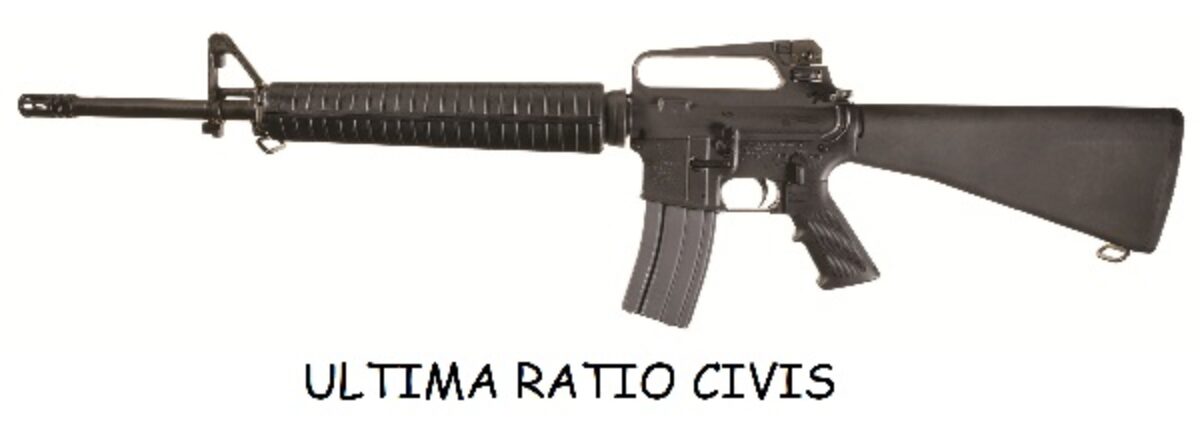
BELLEVUE, WA – The Second Amendment Foundation and its partners in the case of Miller v. Bonta, challenging California’s ban on so-called “assault weapons,” have filed a responding brief in the case, countering defense arguments and strategies already rejected by federal courts and the U.S. Supreme Court.
“Our reply takes the state to task for going directly against the instructions of the federal court,” said SAF founder and Executive Vice President Alan M. Gottlieb. “The state spent its entire 25-page brief trying to re-litigate the case, essentially arguing for ‘interest balancing’ by the court, which the Supreme Court nixed last year in its landmark Bruen ruling. The only logical conclusion is that the State of California is stalling, trying to delay the inevitable ruling that the ban on semiautomatic rifles is unconstitutional.”
SAF is joined by the San Diego County Gun Owners Political Action Committee, California Gun Rights Foundation, Firearms Policy Coalition and four private citizens, including James Miller, for whom the case is named. They are represented by attorneys George M. Lee at Seiler Epstein, LLP and John W. Dillon at the Dillon Law Group, APC. The case is now before the U.S. District Court for the Southern District of California.
Plaintiffs note in their response brief, “The State’s attempt to ignore this Court’s instructions and introduce last-minute further “expert testimony” offered in other cases on the ‘dangerous and unusual weapons’ question—which has already been settled by this Court—is also a naked appeal to interest balancing and is irrelevant to the question of historical analogues requested by this Court (and required under Bruen). At this point, Defendants are simply padding the record with old (and misplaced) arguments and extraneous declarations.”
“It seems clear to us the state is trying to revive arguments they cannot use because they have no historical evidence to support their gun ban,” Gottlieb observed. “The court shouldn’t tolerate such legal shenanigans, which ultimately attempt to reframe this case into a policy matter, which boils down to whether average citizens ‘need’ a semiautomatic firearm.
“The Supreme Court already settled this,” he continued. “It’s not up to the government to make that choice, it’s up to the American people, and their rights are not subject to public opinion polls or the whims of anti-gun politicians in Sacramento.”
Learning from one’s own misfortunes is smart, but it’s wiser to learn from—and avoid—the misfortunes of others. For American Second Amendment supporters, the Canadian experience provides a chilling and instructive lesson in what gun controllers really want: the end of civilian firearm ownership.
For many Americans, Canada is as familiar and relatable as neighboring states of the Union. Canada and the U.S. share a border, a common language, cultural touchstones and various commercial and sporting pursuits.
That last category includes a shared love of the outdoors, and especially of hunting and trapping. As with America, much of Canada’s expansive wilderness was settled by hardy hunters and trappers who braved the country’s wild frontiers in search of fortune and adventure. The gun is an inseparable part of both national stories.
But America and Canada also share a similar cultural divide when it comes to guns. Guns are a common and uncontroversial facet of life in both countries’ rural communities, where they are used not just to harvest wildlife but also to provide a safeguard against predators when police protection is scarce. The politics and culture of firearms in both countries’ cities are very different, however. Canadian and American urban elites—who get their meat from grocery stores and restaurants and who take routine police patrols for granted—consider firearms dangerous, unnecessary and counterproductive.
Nor are the elites on either side of the border willing to tolerate these differences. Rather, they blame firearms themselves, and not human agency or the social dynamics they themselves promote, for the criminal misuse of guns. They associate firearms with cultures they do not understand and—let’s be honest—consider to be inferior. Firearms are also linked in their minds with infamous crimes. And, having no other reference point for the gun’s place in society, they reflexively call for firearm bans in response to these events.
That’s the generous explanation. There are also politicians in both countries who use gun control as a tool to subjugate their political opponents, much as King George III did in the American colonies.
Despite the similarities, we can see very different outcomes in the two countries. Canadians have essentially lost the right of armed self-defense, and are frighteningly close to losing the freedom to possess firearms at all. America, meanwhile, has the highest per-capita gun-ownership rate in the world, with the right to keep and bear arms shielded—at least theoretically—from urban elites.
An article published last December in The Washington Post opined that Canada’s progressive Prime Minister Justin Trudeau has a “gun-free Canada within his reach.” It noted how Trudeau’s father, Pierre Elliott Trudeau, “was the first to begin the process of systematically banning entire categories of firearms,” with 1969 legislation that allowed the executive branch to declare certain firearms “prohibited.” A mass shooting in 1989 was then exploited to further clamp down on legal firearm ownership, prompting a needs-based licensing system that presumptively banned firearm acquisition for self-defense. Justin Trudeau capitalized on another mass killing in 2020 to accelerate the banning of “military-grade assault-style” long guns in Canada under existing law. He then promoted legislation in 2022 that would expand this bogus and misnamed category, coerce surrender of non-conforming guns and institute a “freeze” on handgun ownership. Trudeau later went even further, introducing amendments that would essentially grant the government control to ban what few hunting guns had remained legal.
Unlike Canada and the other commonwealth realms, however, the U.S. liberated itself from Britain’s monarchy in the Revolutionary War. This experience led the founding generation to enshrine the right to keep and bear arms in the nation’s organizing charter. Like Canada, the U.S. Congress passed major gun control in the 1960s. But this sparked renewed efforts by pro-gun Americans—led by the NRA—to promote responsible firearm ownership and to ensure the original understanding of the Second Amendment was expounded in scholarship and eventually preserved in judicial rulings.
Now, U.S. Supreme Court precedents protect the individual right to keep and bear firearms, in and outside of the home, for the core purpose of defense, and allow only such regulation as is consistent with the founding era’s legal history and traditions.
Yet, there are American politicians, like President Joe Biden himself, who see our neighbor to the North’s policies not as a warning, but as a roadmap. Only the dedicated and vigilant activism of informed gun owners, channeled through organizations like the NRA, stands in their way.
I had written about this in past years, but I thought I’d update it to reflect the El Paso incident from last week. According to the El Paso Police Department (see also CNN [Andy Rose]), a confrontation between two groups of teenagers at a mall “escalated into a physical fight” and then into a 16-year-old fatally shooting a member of the other group and seriously wounding another member, as well as injuring a member of his own group. Then,
As soon as the shooting ended, the 16-year-old suspect began to run and was pointing the gun towards the direction of bystanders, including 32-year-old Emanuel Duran, a Licensed to Carry Holder. As the suspect ran towards Duran and bystanders, Duran drew his handgun and shot the suspect.
At that time, one off-duty El Paso Police Officer arrived at the area of the shooting and together with Duran rendered aid to the 16-year old suspect and the others that were injured. Investigators found that there were at least two other legally armed citizens in the area of where the shooting took place, but were not involved.
Now in this case, the suspect didn’t seem to have planned a mass shooting; he seems to have had a beef with the other teenagers. On the other hand, he appears to have been pointing his gun towards the bystanders, so it’s hard to know what would have happened. And something similar could easily have happened with an intended mass shooting as well; for an incident like that from last year, see this WCHS-TV story:
Police said a woman who was lawfully carrying a pistol shot and killed a man who began shooting at a crowd of people Wednesday night in Charleston.
Dennis Butler was killed after allegedly shooting at dozens of people attending a graduation party Wednesday …. No injuries were reported from those at the party.
Investigators said Butler was warned about speeding in the area with children present before he left. He later returned with an AR-15-style firearm and began firing into the crowd before he was shot and killed.
“Instead of running from the threat, she engaged with the threat and saved several lives last night,” Charleston Police Department Chief of Detectives Tony Hazelett said.
According to WCHS-TV (Bob Aaron), Butler was a convicted felon, and was thus not legally allowed to own guns. In principle, perhaps he might still have been stopped by (say) a law requiring background checks, which would likely have stopped law-abiding sellers from selling him the gun; but it’s not clear whether someone with his criminal record would have much been stymied by that, as opposed to just buying a gun on the black market. Likewise, in El Paso, CNN reports that the gun used by the 16-year-old shooter was reported stolen.
I gathered some more examples from over the years here, and then followed up with data based on FBI reports of mass shootings in 2016 and 2017: legal civilian gun carriers tried to intervene in 6 out of 50 incidents, and apparently succeeded in 3 or 4 of them.
Bill filed in Illinois to ban "armor plates, body armor, and military helmets." All existing items would have to be declared to the state police, and current police, retired police, and private security guards would be exempt. https://t.co/QvsS2pV2mJpic.twitter.com/HBRncq8R7H
Everyone has an opinion. If you ask them, most people will give you their impression of armed defense. Is it trivially easy or is it impossibly hard? I’ve looked at armed defense for a decade and I think we often ask the wrong question about defending ourselves and our families with a firearm. One view is that armed defenders have to make split-second decisions after evaluating a number of complex legal and tactical factors. In contrast, many new gun owners want to concentrate on firearms handling skills so they can manipulate their gun with “fast hands”. I don’t think that is what most defenders really do.
I think almost anyone can learn armed defense if they are willing to take instruction and then practice what they were taught. This is what I’ve learned from firearms students and instructors.
The regularity of such tragedies, particularly in the wake of other mass shootings recorded this year, has catalyzed online debate over gun control.
According to one account shared on Twitter, a 10-year ban introduced on “assault weapons” in the U.S. in 1994 led to a substantial fall in the number of mass shooting deaths, only to rise significantly after it expired.
The Claim
A tweet posted by activist Mohamad Safa on February 15, 2023, which has been viewed more than 128,000 times, said: “Do you know that in 1994 Bill Clinton banned assault weapons and mass shooting deaths dropped by 43%, in 2004 the ban expire [sic] and mass shooting deaths shot up by 239%.”
The Facts
Comparisons between the U.S. and countries with stricter gun control laws are frequently used in the wake of events like the shooting at Michigan State.
Australia, as one example, claims to have seen a significant fall in the number of mass shootings after it experienced one such tragedy at Port Arthur, Tasmania, in 1996.
Analysis by Newsweekfound that the country experienced far fewer mass shootings since 1996—perhaps none at all, under some definitions.
Changes to U.S. law and restrictions on firearms have been incremental, but the country briefly saw a ban on what it called “assault weapons” between 1994 to 2004.
The bill’s effectiveness and scope were also questioned at the time. A 1999 National Institute of Justice paper on the impact of the ban noted that it still exempted prohibited weapons bought before, and how only small adjustments to a firearm, such as shortening its barrel by only a few millimeters, were “sufficient to transform a banned weapon into a legal substitute.”
The source of the claim on Twitter appears to be University of Massachusetts researcher Louis Klarevas, who found that compared with the 10-year period before the ban, the number of people dying from mass shootings fell by 43 percent, and increased 239 percent 10 years after.
However, as Klarevas told The WashingtonPost, he only assessed “high fatality” mass shootings and “did not have comprehensive data of mass shootings that resulted in less than 6 killed.”
The Post was also provided with analysis that suggested per capita incidence of gun deaths did dip during the period. However, this data did not assess assault weapons in particular and, as mentioned in the article, there are other issues with it too.
As Klaveras stated, he had only counted shootings where the number of deaths was six or more. The definition of a mass shooting is contentious but one metric regularly cited is any shooting where four or more victims had died.
Looking only at statistics involving six or more victims would, in theory, narrow the number of incidents recorded.
There are further disagreements about what counts as a mass shooting. While four or more is used frequently, the Gun Violence Archive (which is widely quoted in the media) defines it as “being that they have a minimum of four victims shot, either injured or killed.”
This type of analysis, again, could significantly alter the statistics quoted on Twitter if used.
Furthermore, the link between the dates and the number of deaths here is correlative. Qualitative and quantitative analysis would be needed to more confidently determine whether the assault weapon ban directly impacted the number of deaths in these circumstances.
As data by Statista shows, the number of mass shootings across the U.S. continued to increase after 2004, but we do not have sufficient evidence to attribute that increase to the lifting of the weapons ban alone.
Nonetheless, while the claim that there was a 43 percent drop and 239 percent rise in the 10 years before and after the ban is based on real expert analysis, that analysis used a less usual methodology, and inferences from it are not based on a thorough examination.
The poll—conducted between January 28 and 29 among a sample of 1,500 eligible U.S. voters—found 52 percent of respondents supported the imposition of a maximum age requirement for the purchase of firearms.
Among these, 20 percent of respondents thought the age limit should be set at 60, while 16 percent said that it should be set at 70.
The Ruling
Needs Context.
The figures cited on Twitter come from an analysis by one expert, quoted by The Washington Post, who looked at the number of mass shootings where six or more people died during 1994-2004 compared to the ten years before and after those dates.
Interpreting the results and whether it was related to the 1994-2004 assault weapons ban, however, is correlative.
Accounting for shootings where less than six people died could also alter these results. The definition of mass shootings remains contentious with some analysts counting both injuries and deaths of four or more people.
Judge Kozinski’s Full Dissent
KOZINSKI, Circuit Judge, dissenting from denial of rehearing en banc:
Judges know very well how to read the Constitution broadly when they are sympathetic to the right being asserted. We have held, without much ado, that “speech, or . . . the press” also means the Internet, see Reno v. ACLU, 521 U.S. 844 (1997), and that “persons, houses, papers, and effects” also means public telephone booths, see Katz v. United States, 389 U.S. 347 (1967). When a particular right comports especially well with our notions of good social policy, we build magnificent legal edifices on elliptical constitutional phrases—or even the white spaces between lines of constitutional text. See, e.g., Compassion in Dying v. Washington, 79 F.3d 790 (9th Cir. 1996) (en banc), rev’d sub nom. Washington v. Glucksberg, 521 U.S. 702 (1997). But, as the panel amply demonstrates, when we’re none too keen on a particular constitutional guarantee, we can be equally ingenious in burying language that is incontrovertibly there.
It is wrong to use some constitutional provisions as springboards for major social change while treating others like senile relatives to be cooped up in a nursing home until they quit annoying us. As guardians of the Constitution, we must be consistent in interpreting its provisions. If we adopt a jurisprudence sympathetic to individual rights, we must give broad compass to all constitutional provisions that protect individuals from tyranny. If we take a more statist approach, we must give all such provisions narrow scope. Expanding some to gargantuan proportions while discarding others like a crumpled gum wrapper is not faithfully applying the Constitution; it’s using our power as federal judges to constitutionalize our personal preferences.
The able judges of the panel majority are usually very sympathetic to individual rights, but they have succumbed to the temptation to pick and choose. Had they brought the same generous approach to the Second Amendment that they routinely bring to the First, Fourth and selected portions of the Fifth, they would have had no trouble finding an individual right to bear arms. Indeed, to conclude otherwise, they had to ignore binding precedent. United States v. Miller, 307 U.S. 174 (1939), did not hold that the defendants lacked standing to raise a Second Amendment defense, even though the government argued the collective rights theory in its brief. See Kleinfeld Dissent at 6011-12; see also Brannon P. Denning & Glenn H. Reynolds, Telling Miller’s Tale: A Reply to David Yassky, 65 Law & Contemp. Probs. 113, 117-18 (2002). The Supreme Court reached the Second Amendment claim and rejected it on the merits after finding no evidence that Miller’s weapon—a sawed-off shotgun—was reasonably susceptible to militia use. See Miller, 307 U.S. at 178. We are bound not only by the outcome of Miller but also by its rationale. If Miller’s claim was dead on arrival because it was raised by a person rather than a state, why would the Court have bothered discussing whether a sawed-off shotgun was suitable for militia use? The panel majority not only ignores Miller’s test; it renders most of the opinion wholly superfluous. As an inferior court, we may not tell the Supreme Court it was out to lunch when it last visited a constitutional provision.
The majority falls prey to the delusion—popular in some circles—that ordinary people are too careless and stupid to own guns, and we would be far better off leaving all weapons in the hands of professionals on the government payroll. But the simple truth—born of experience—is that tyranny thrives best where government need not fear the wrath of an armed people. Our own sorry history bears this out: Disarmament was the tool of choice for subjugating both slaves and free blacks in the South. In Florida, patrols searched blacks’ homes for weapons, confiscated those found and punished their owners without judicial process. See Robert J. Cottrol & Raymond T. Diamond, The Second Amendment: Toward an Afro-Americanist Reconsideration, 80 Geo. L.J. 309, 338 (1991). In the North, by contrast, blacks exercised their right to bear arms to defend against racial mob violence. Id. at 341-42. As Chief Justice Taney well appreciated, the institution of slavery required a class of people who lacked the means to resist. See Dred Scott v. Sandford, 60 U.S. (19 How.) 393, 417 (1857) (finding black citizenship unthinkable because it would give blacks the right to “keep and carry arms wherever they went”). A revolt by Nat Turner and a few dozen other armed blacks could be put down without much difficulty; one by four million armed blacks would have meant big trouble.
All too many of the other great tragedies of history—Stalin’s atrocities, the killing fields of Cambodia, the Holocaust, to name but a few—were perpetrated by armed troops against unarmed populations. Many could well have been avoided or mitigated, had the perpetrators known their intended victims were equipped with a rifle and twenty bullets apiece, as the Militia Act required here. See Kleinfeld Dissent at 5997-99. If a few hundred Jewish fighters in the Warsaw Ghetto could hold off the Wehrmacht for almost a month with only a handful of weapons, six million Jews armed with rifles could not so easily have been herded into cattle cars.
My excellent colleagues have forgotten these bitter lessons of history. The prospect of tyranny may not grab the headlines the way vivid stories of gun crime routinely do. But few saw the Third Reich coming until it was too late. The Second Amendment is a doomsday provision, one designed for those exceptionally rare circumstances where all other rights have failed—where the government refuses to stand for reelection and silences those who protest; where courts have lost the courage to oppose, or can find no one to enforce their decrees. However improbable these contingencies may seem today, facing them unprepared is a mistake a free people get to make only once.
Fortunately, the Framers were wise enough to entrench the right of the people to keep and bear arms within our constitutional structure. The purpose and importance of that right was still fresh in their minds, and they spelled it out clearly so it would not be forgotten. Despite the panel’s mighty struggle to erase these words, they remain, and the people themselves can read what they say plainly enough:
A well regulated Militia, being necessary to the security of a free State, the right of the people to keep and bear Arms, shall not be infringed.
The sheer ponderousness of the panel’s opinion—the mountain of verbiage it must deploy to explain away these fourteen short words of constitutional text—refutes its thesis far more convincingly than anything I might say. The panel’s labored effort to smother the Second Amendment by sheer body weight has all the grace of a sumo wrestler trying to kill a rattlesnake by sitting on it—and is just as likely to succeed.
BLUF
The “collective right” myth was killed in 2008. It was never really alive. Like a zombie in the movies, it keeps rearing its ugly head in ill-informed arguments about the Second Amendment.
U.S.A. –-(AmmoLand.com)-— The myth of the Second Amendment as a “collective right” and not an individual right, was born in an obscure Kansas Supreme Court case. It was in 1905, as progressive ideology was becoming ascendant in the United States.
Dave Hardy notes, the myth of the Second Amendment as a “collective right” was born with the case of City of Salina v. Blaksley, on November 11, 1905.
What happened there was that the court held that the Kansas guarantee of a right to arms did not cover his actions, because it related only to bearing arms in a militia-type function. This 1905 case was the entire starting point of “collective rights” theory.
The “collective rights” theory did not gain traction for decades. In 1931, the Michigan Supreme Court rejected it in People v Brown:
When the bulwark of state defense was the militia, privately armed, there may have been good reason for the historical and military test of the right to bear arms. But in this state the militia, although legally existent and composed of all able-bodied male citizens…is practically extinct and has been superseded by the National Guard and reserve organizations… The historical test would render the constitutional provision lifeless.
The protection of the Constitution is not limited to militiamen nor military purposes, in terms, but extends to “every person” to bear arms for the “defense of himself” as well as of the state.
Then in 1939, the Miller case was set up by Heartsill Ragon. Ragon was an anti-Second Amendment ideologue and a President Franklin Delano Roosevelt (FDR) ally appointed from Congress to the federal judgeship. The case went to the Supreme Court without opposing counsel or briefs. The Supreme Court refused to rule on whether a sawed-off shotgun (having not been presented with any evidence to the contrary) was an arm protected by the Second Amendment. The Supreme Court decision stated all men capable of carrying arms were protected by the Second Amendment. No opposing views were presented to the court. From Miller:
The signification attributed to the term Militia appears from the debates in the Convention, the history and legislation of Colonies and States, and the writings of approved commentators. These show plainly enough that the Militia comprised all males physically capable of acting in concert for the common defense.
The Miller decision was muddy, but the context was clear. Individuals were protected by the Second Amendment.
But progressive judges started to ignore and misrepresent the Miller decision as showing the Second Amendment only applied to state militias. In 1942, during the height of World War II, two circuit court decisions added to the flimsy foundation of the “collective right” myth.
In United States v Tot, the Third Circuit held the Second Amendment did not apply to criminals, a finding which can be consistent with an individual rights interpretation. The judge, in one-paragraph dicta, pushed the myth the Second Amendment was a “collective right,” incorrectly citing Miller, and a short historical discussion of the English revolution from 1688-1689, found in Aymette (an anomalous Tennessee case from 1840), and a collection of modern writers. The historical analysis was very weak.
In the First Circuit, in Cases v United States, the three progressive judges went so far as to claim Miller did not apply to military weapons because it was what they wanted to find. From Cases:
Another objection to the rule of the Miller case as a full and general statement is that according to it Congress would be prevented by the Second Amendment from regulating the possession or use by private persons not present or prospective members of any military unit, of distinctly military arms, such as machine guns, trench mortars, anti-tank or anti-aircraft guns, even though under the circumstances surrounding such possession or use it would be inconceivable that a private person could have any legitimate reason for having such a weapon. It seems to us unlikely that the framers of the Amendment intended any such result.
In 1965, Progressive AG, Nicholas Katzenbach, in the Progressive Johnson administration, claimed the “collective right” myth was correct, without evidence. In 1968, President Johnson pushed through the infamous Gun Control Act of the same year. After 1968, a flurry of circuit court decisions adopted the “collective right” myth, citing Tot, or Cases, or a cursory reference to Miller. The “collective right” myth was now fully formed.
The full-fledged “collective right” myth was in active use and fully formed in the courts after 1968.
It was not adopted at the Supreme Court but was pushed hard in the anti-gun MSM Media.
In the 1970s, the “collective right” myth started being exposed by academics. The myth was so thoroughly debunked in the literature the fact the Second Amendment protected individual rights was referred to as the Standard Model.
In the Heller decision published on June 26, 2008, the Supreme Court clearly and precisely points out the “collective rights” myth is false, and shows the reality. The Progressive judges on the Supreme Court generally admitted the rights protected were individual rights, but argued they should be limited by the prefactory clause. From billofrights.com:
Finally, the Court reasoned that the right to own weapons for self-defense was an “inherent” (in-born) right of all people. “It has always been widely understood that the Second Amendment, like the First and Fourth Amendments, codified a pre-existing right. The very text of the Second Amendment implicitly recognizes the pre-existence of the right and declares only that it ‘shall not be infringed.’”
Four of the nine Supreme Court Justices dissented. (They disagreed with the Court’s ruling.) Some of the dissenters agreed that the Second Amendment protected an individual right. However, they argued that the scope of that individual right was limited by the amendment’s prefatory clause. One dissenter agreed that the Second Amendment protected an individual right, but argued that the District law was a reasonable restriction.
This was the death of the myth of the “collective right”. It never was reasonable to believe a pre-existing “right of the people” would refer only to a right of the states to form militias.
The Heller decision killed any logical claim about the “collective rights” myth. It had been created out of very thin, stone soup.
WASHINGTON—U.S. Senator Chris Murphy (D-Conn.) led 47 senators, including Senate Majority Leader Chuck Schumer (D-N.Y.), and U.S. Senators Dick Durbin (D-Ill.) and Richard Blumenthal (D-Conn.) on Thursday in reintroducing the Background Check Expansion Act to expand federal background checks to all gun sales. Although more than 90 percent of Americans support comprehensive background checks, under current federal law, unlicensed or private sellers are not required to conduct a background check prior to transferring a firearm. Research indicates that as many as a quarter of all gun sales in the United States may occur without a background check. U.S. Representatives Mike Thompson (D-Calif.) and Brian Fitzpatrick (R-Pa.) introduced the companion legislation in the U.S. House of Representatives.
The Background Check Expansion Act will require background checks for the sale or transfer of all firearms. This requirement extends to all unlicensed sellers, whether they do business online, at gun shows, or out of their home. Exceptions to the Background Check Expansion Act include transfers between law enforcement officers, temporarily loaning firearms for hunting and sporting events, providing firearms as gifts to immediate family members, transferring a firearm as part of an inheritance, or temporarily transferring a firearm for immediate self-defense.
The North Carolina Senate voted 29-19 to pass Senate Bill 41, a bill that recognizes law-abiding citizens’ right to self-defense while attending a church with a school attached and, also, repeals the redundant permit-to-purchase system. The House passed, House Bill 49, a similar pro-self-defense bill to Senate Bill 41, by a vote of 77-43. Garnishing bipartisan support in the House for the self-defense bill indicates a potential override of any veto by Governor Roy Cooper, who vetoed similar legislation in 2021 and 2020.
NRA-ILA thanks the Senate leadership of Senator Danny Britt, Senator Jim Perry, Senator Warren Daniel, Senator Phil Berger, and others for fighting to protect the rights of North Carolina’s law-abiding citizens. Also, on the House side, NRA-ILA thanks Speaker Tim Moore and Representative Jeff McNeely for their tireless efforts to advance Second Amendment freedom in the Tar Heel State.
Senate Bill 41 enables law-abiding citizens who hold a concealed handgun permit to carry a handgun to defend themselves and their loved ones when attending religious worship taking place on private property that is both a school and a place of worship, if it does not prohibit firearms. This empowers private property owners to set their own security policy, rather than the state imposing a one-size-fits-all solution. In 2019, an armed citizen in Texas defended his church against an individual. This worshiper, Jack Wilson, was able to take action because of similar NRA-backed legislation in Texas
The permit-to-purchase system was created before modern, computerized background checks existed. The federal NICS checks that licensed firearms dealers conduct are often completed in minutes. Repealing the permit-to-purchase a firearm ensures that law-abiding citizens can exercise their Second Amendment rights without this unnecessary obstacle and fee that is also a burden on law-enforcement resources.
Oregon – The Oregon Court of Appeals [lead by Judge James Egan, Chief Judge at Oregon Court of Appeal] has struck down the Second Amendment Sanctuary Ordinance in Columbia County, an ordinance Oregon Firearms Federation has been defending with Gun Owners of America.
In his vicious attack, Judge Egan equated ordinances protecting the Second Amendment with white supremacists and anti-semites.
In the opening page of his opinion, Egan attacks the ordinance and the people who argued for it saying :
“In other words, Intervenors came before this court and referenced UN mandates, which as explained below is a well documented trope meant to invoke white supremacist, antisemitic fear of a takeover of our country by outsiders and minorities who are manipulated by an elite class of supervillians.
On occasion, however, individual members of the court must call out illegitimate quasi-legal arguments and theories for what they are-viz., antisemitic and racist tropes.”
On page 6 of his screed, he titles one section: “The Antisemitic and Racist Origins of the Ordinance.”
He claims that constitutional sheriffs “embrace racist and white nationalist ideologies.”
West Virginia: "Today, the House Judiciary Committee voted to pass Senate Bill 10, the Campus Self-Defense Act, to ensure that law-abiding adults are not stripped of their right to self-defense when they cross an arbitrary boundary onto a college campus." https://t.co/D4I4Fx4sPU
RALEIGH, N.C. (AP) — North Carolina House Republicans and some Democrats passed a previously vetoed gun bill Wednesday that opponents warn could endanger children and teachers.
The House voted 77-43 to approve the measure, which would let people with concealed weapons permits carry openly or under clothing while attending religious services at locations where private or charter schools also meet.
Six Democrats joined all Republicans in voting for it, indicating a potential override of any veto by Democratic Gov. Roy Cooper, who blocked an identical bill in 2021.
Republican lawmakers and several clergy members testified this week that the houses of worship in question do not have an equal opportunity to protect congregants, compared with churches that do not house schools and are not affected by blanket prohibitions.
Supporters said gun-free religious sites could be easy targets for violent attacks, citing recent incidents of shooters targeting congregations.
Rep. Jeff McNeely, an Iredell County Republican and the bill’s primary sponsor, said the proposal would fix a loophole preventing some churchgoers from exercising their Second Amendment rights.
“They should be able to protect their selves like all other parishioners do at other churches who do not have schools on their grounds,” he said.
Under the bill, guns would not be permitted on campus during school hours or when students are present for extracurricular activities. Houses of worship could opt out by posting signs banning guns from the property.
Democratic opponents of the measure said gun owners might not understand those restrictions or could accidentally leave their weapons on campus.
“What I don’t want to see happen is a lawful gun owner leaving their gun in the classroom on a Sunday after church and that gun being found by a student on a Monday,” Rep. Terry Brown Jr., a Mecklenburg County Democrat, said during floor debate.
Another previously vetoed House bill that could receive a floor vote this week would eliminate a longstanding requirement that handgun buyers first obtain a permit from their county sheriff.
Also Wednesday, a House judiciary committee advanced a bipartisan proposal that would launch a two-year education campaign on safe firearms storage and also distribute free gun locks. It now heads to the Rules Committee.
In the Senate, three identical companion bills were combined Tuesday into a single piece of legislation that is expected to reach the floor this week. It is unclear whether the Senate will take up the stand-alone bill passed by the House or move forward with its combined proposal.
BLUF
Until gun-control activists and Democrat politicians are willing to get tough on violent criminals that use firearms I’ll be waiting, along with millions of law-abiding Americans, for that conversation that Representative Slotkin promises. And I’ll be praying this nightmare will stop.
An almost unthinkable tragedy unfolded on the campus of Michigan State University last night. Shots rang out on campus as a 43-year old man (Bearing Arms is not naming the alleged perpetrator), believed to have no affiliation with the university, walked onto campus and as of the publishing of this article, killed 3 students and wounded 5. We make no apology for our prayers for these victims and their families. For them, a nightmare has just begun. As they awaken from that nightmare, they will want to know what happened and why.
The investigation is underway, the killer left a note near his lifeless body, a victim of his own cowardice, he took his life moments after the massacre.
As if an off-camera director of this nightmare yelled “action!”, gun control activists and Democrat politicians have already come out for calls to stop these campus attacks. Last night, before much was known about the attack, the assailant or the victims, perennial grifter Shannon Watts was already doing a fundraising dance on the memories of the victims. Her tweet tirade included this call for more gun control and an appeal to text her organization to join with them and joining them means acquiescing to their never-ending fundraising pleas.
Democratic Congresswoman Elissa Slotkin was justifiably angry. In a press conference with members of law enforcement and Michigan Governor Whitmer she said, “I am filled with rage.” She continued, “you either care about protecting kids, or you don’t…Please don’t tell me you care about the safety of children if you are not willing to have a conversation about keeping them safe in a place that should be a sanctuary.”
Unfortunately, it’s Democrats who refuse to engage in conversation, preferring it would seem to pass unconstitutional gun control measures, in defiance of recent rulings by the U.S. Supreme Court, and despite mounting evidence that the gun control measures they back, would have little to no impact on these attacks or in reducing overall gun violence. Why won’t they have an impact? Because they target law-abiding Americans, not the criminals responsible for most gun crimes.
We’ve all seen signs announcing a particular place is a “gun-free zone.” While these signs are supposed to reduce gun violence by informing would-be shooters that their firearms aren’t welcome on the site, the reality is that they are instead beacons alerting criminals to soft targets.
And it looks like the New York Times may have finally figured that out. After a murder took place in Times Square on Thursday night, the paper openly questioned why posted signs banning guns from the area didn’t stop the violence. “The shooting was the first since the creation of the expansive, signposted zone, the police said in a statement, and it immediately renewed questions about whether such a designation can truly protect the area,” the so-called paper of record reported.
“People feel emboldened to carry guns on the street,” said Tom Harris, a retired New York City police inspector and the president of the Times Square Alliance, told the Times. “A gun-free zone is not going to stop a criminal from carrying a gun.”
I have to admit I’m shocked that the New York Times acknowledged this. While I’d like to give them credit for that, the fact is the inefficacy of gun-free zones is something conservative media has been pointing out for years.
In fact, Marjory Stoneman Douglas High School, the Pulse nightclub, Sandy Hook Elementary School, and Virginia Tech University were all targeted by mass shooters despite being gun-free zones — and that’s barely scratching the surface. According to a 2018 study by the Crime Prevention Research Center (CPRC), a whopping 97.8% of mass shootings over a 68-year period occurred in “gun-free zones.”
So, while it’s great that the New York Times finally has acknowledged that gun-free zones are useless, this epiphany is decades too late.
One bill would allow guns in parked cars on school property. Another wants to expand access to a firearm while on a boat. And one proposal would increase the area in which a person can reasonably discharge their gun in self-defense.
Four years after Oklahoma’s Republican Legislature approved “permitless carry,” removing any training or licensing requirements to handle a firearm, lawmakers have filed more than 100 bills to expand gun access even further.
With a history of being the first to pass some pro-firearm laws, including the nation’s first ban on “red flag” laws in 2020, Oklahoma’s Legislature often provides a glimpse of what gun-related policies will be a focus for gun rights groups across the nation.
“Right now, the big focus is on pushing back on federal government overreach or getting ahead of it, which I think you will see a lot more of.”
House Bill 1002 would allow county sheriffs to arrest federal employees who enforce laws that are “counter” to the Second Amendment, while House Bill 2643 would make Oklahoma-made firearms exempt from federal gun laws.
Those bills have not yet been scheduled for a committee hearing, but they would likely face legal challenges if passed into law.
Last week, the House Judiciary Subcommittee killed the remaining anti-Second Amendment bills. Despite efforts from the anti-gun majority in the Senate to restrict your rights, no gun control bills have advanced. The following bills were voted down by the Subcommittee:
Senate Bill 918 bans selling or carrying many firearms and magazines that law-abiding citizens commonly own for legitimate purposes, such as self-defense, competition, and recreation, with no exemption for carry permit holders.
Senate Bill 1139 requires anyone with firearms in the same residence as a minor under 18 years of age, to store them unloaded in locked containers, and store ammunition in separate locked containers. Loaded firearms may only be stored in “biometric storage device[s].” There is an exemption for firearms carried on or about the person.
Senate Bill 1181 essentially ends the centuries-old practice of manufacturing firearms for personal use by restricting certain unregulated components commonly used by hobbyists to make their own firearms, far beyond what federal law requires.
Senate Bill 1382 bans many commonly-owned firearms and magazines. Owners of banned firearms and magazines that are at least 21 years of age may continue to keep them, but they cannot sell them. Also, SB 1382 discriminates against young adults aged 18-20 by prohibiting them from purchasing many types of commonly-owned firearms.