

Nebraska senator confident permitless carry bill will pass

One wouldn’t picture Nebraska as being anti-gun. Then again, it’s not really. It’s just not as pro-gun as some might imagine.

That’s because, like many places, a couple of urban areas have a lot more say in matters than they should. Just enough to block permitless carry from passing last year, as a matter of fact.

Well, the lawmaker behind that bill is back with it again, only this time, he thinks it will pass.

he new legislative session is just weeks away, and one state lawmaker believes that some controversial bills have a good chance at passing.

Sen. Tom Brewer said that includes his gun rights bill, which would bring permitless concealed carry to Nebraska.

The proposal fell just two votes short of the 33 needed to overcome a filibuster last legislative session.

Brewer said in a column last week that November’s election made the Nebraska Legislature slightly more conservative, so there are finally enough votes to advance several priorities.

After the last session, Brewer told Channel 8 in June that this bill would be his top priority going into the next session.

“The very first bill that I will drop in the next session will be constitutional carry,” he said. “What the decision today has done has helped us to better shine a light on why it’s important, and to take away some of the concerns folks had about legalities.”

Constitutional carry, permitless carry, they both amount to the same thing. They mean that law-abiding citizens don’t have to ask for government permission to carry a firearm.

And they should pass it.

Critics will claim that constitutional carry will benefit bad guys. Some have started trying to frame it as “criminal carry.” What they miss is that the bad guys are already carrying guns. It’s only the law-abiding being hamstrung by permit requirements, which in Nebraska includes mandatory training for a carry permit.

That creates still more delays, all while the bad guys are just ignoring the law.

So permitless carry doesn’t empower anyone but the law-abiding.

It’s my sincere hope that Nebraska passes his measure. No one should have to take a particular class in order to exercise a constitutionally protected right, and the Second Amendment is about the right to keep and bear arms.

Permitless carry is just a step in the right direction, to be sure.

But do they have the votes? That remains to be seen. I’m not as familiar with the politics of the state as I’d like to be before speculating on it, but falling just a couple of votes shy last year is a promising sign this year. If they can get those two votes, then permitless carry is a done deal in the state and the people of Nebraska will no longer be required to jump through hoops just to get a carry permit.

Especially since there’s little evidence that training requirements yield any actual benefits except to make anti-gunners feel better.

Then again, screw poor people who want to defend themselves, right?

Oregon judge signals more trouble ahead for Measure 114

Oregon’s ban on “large capacity” magazines and the state’s “permit-to-purchase” scheme remain on hold for now after a hearing in rural Harney County on Tuesday, with the judge who originally granted a restraining order against the anti-gun ballot measure telling both sides in a court challenge to the new restrictions that he’ll issue a formal ruling on a request for an injunction by this Friday.

Harney County Circuit Judge Robert S. Raschio did say during the hearing, however, that the permit-to-purchase portion of Measure 114 will not take effect, at least until the state can prove that the system is fully operational and won’t result in residents being unable to exercise their right to acquire a firearm for self-defense.

“Any complete bar on the ability to secure a firearm would be unconstitutional even under strict scrutiny,” said Harney County Judge Robert Raschio on Tuesday morning.

The order was also the precursor to several hours of oral arguments and witness testimonies about whether the judge should place a preliminary injunction against ballot Measure 114’s ban on high-capacity magazines. While Judge Raschio made no formal decision on that proposed injunction Tuesday, he said he would issue an opinion no later than Friday, Dec. 16 at noon.

Altogether, Tuesday’s court hearing marked an eventful day for gun advocates in Oregon, many of whom tuned-in to the district court’s live feed to witness the marathon hearing about why the judge should or should not issue a preliminary injunction against Oregon’s ballot Measure 114.…

It was a different story for the issue of magazine capacity, however, discussion of which occupied another six hours in court Tuesday.

Plaintiffs largely argued that by capping magazines to 10 rounds and including restrictions on the use of extenders and removable baseplates, the state has essentially made it impossible to purchase legal firearms in Oregon from gun manufacturers. To prove a point, attorney Tony Aiello called upon firearm dealer Ben Callaway as an expert witness, who said online vendors like MidwayUSA or Zanders Sporting Goods no longer ship firearms to Oregon if they can be modified to hold more than 10 rounds.

Yet, the real challenge for the groups was to prove that guns with a 10-round capacity or more were commonly used for self-defense in 1859, a requirement made by Oregon Supreme Court’s protection of the right to bear arms. But while expert witnesses from both sides of the injunction agreed that multi-shot firearms existed around that time, there was disagreement as to whether these weapons were of common use.

The availability of multi-shot firearms in 1859 shouldn’t be the determining factor in whether or not they’re protected by the Second Amendment. As the Supreme Court noted in the Caetano case, arms that are in common use today but weren’t around at the time of the Founding are still protected by the text of the Second Amendment.

The Court has held that “the Second Amendment extends, prima facie, to all instruments that constitute bearable arms, even those that were not in existence at the time of the founding,” District of Columbia v. Heller, 554 U. S. 570, 582 (2008) , and that this “ Second Amendment right is fully applicable to the States,” McDonald v. Chicago, 561 U. S. 742, 750 (2010) . In this case, the Supreme Judicial Court of Massachusetts upheld a Massachusetts law prohibiting the possession of stun guns after examining “whether a stun gun is the type of weapon contemplated by Congress in 1789 as being protected by the Second Amendment.” 470 Mass. 774, 777, 26 N. E. 3d 688, 691 (2015).

The court offered three explanations to support its holding that the Second Amendment does not extend to stun guns. First, the court explained that stun guns are not protected because they “were not in common use at the time of the Second Amendment’s enactment.” Id., at 781, 26 N. E. 3d, at 693. This is inconsistent with Heller’s clear statement that the Second Amendment “extends . . . to . . . arms . . . that were not in existence at the time of the founding.” 554 U. S., at 582.

The court next asked whether stun guns are “dangerous per se at common law and unusual,” 470 Mass., at 781, 26 N. E. 3d, at 694, in an attempt to apply one “important limitation on the right to keep and carry arms,” Heller, 554 U. S., at 627; see ibid. (referring to “the historical tradition of prohibiting the carrying of ‘dangerous and unusual weapons’ ”). In so doing, the court concluded that stun guns are “unusual” because they are “a thoroughly modern invention.” 470 Mass., at 781, 26 N. E. 3d, at 693–694. By equating “unusual” with “in common use at the time of the Second Amendment’s enactment,” the court’s second explanation is the same as the first; it is inconsistent with Heller for the same reason.

Finally, the court used “a contemporary lens” and found “nothing in the record to suggest that [stun guns] are readily adaptable to use in the military.” 470 Mass., at 781, 26 N. E. 3d, at 694. But Heller rejected the proposition “that only those weapons useful in warfare are protected.” 554 U. S., at 624–625.

For these three reasons, the explanation the Massachusetts court offered for upholding the law contradicts this Court’s precedent.

What the court should actually be looking for are statutes in place at the time of Oregon’s founding that are historical analogues to the ammunition capacity restriction the state wants to put in place today, and I don’t think anything like that exists. I’m not aware of any state law or even a local ordinance in the state that barred the carrying or possession of revolvers or other multi-shot firearms at the time the state constitution was approved, and given that these types of bans are modern inventions of the anti-gun lobby, I suspect that finding a 19th century analogue is going to be difficult… at least without stretching the bounds of credulity as U.S. District Judge Karen Immergut did when she upheld the magazine ban in a federal lawsuit filed by the Oregon Firearms Federation and several county sheriffs.

With Rashcio pledging to deliver his ruling on the request for an injunction against Measure 114 by noon Pacific time on Friday, we won’t have too long to wait before we learn whether the magazine ban can take effect, though if Raschio does impose an injunction the state will appeal once again to the state Supreme Court. That body has already declined to overturn Raschio’s initial restraining order against Measure 114, however, and if Raschio keeps the status quo in place while the constitutionality of Measure 114 is being litigated there’s a very good chance the state’s highest court will do the same.

Observations:
generalized estimating equation estimates
Translation (even with the statistical word salad definition) it still comes to: There’s actually no way to figure this out, so I’ll make my SWAG look good on paper

John Lott (more guns/less crime) was right, but they couldn’t let that be confirmed, so they kept torturing the statistics hoping for something different, but the best they could come up with was that gun sales don’t have any effect on crime rates.

Legal Firearm Sales at State Level and Rates of Violent Crime, Property Crime, and Homicides

Journal of Surgical Research, Volume 281, January 2023, Pages 143-154

Abstract

Introduction

The effects of firearm sales and legislation on crime and violence are intensely debated, with multiple studies yielding differing results. We hypothesized that increased lawful firearm sales would not be associated with the rates of crime and homicide when studied using a robust statistical method.

Methods

National and state rates of crime and homicide during 1999-2015 were obtained from the United States Department of Justice and the Centers for Disease Control and Prevention. National Instant Criminal Background Check System background checks were used as a surrogate for lawful firearm sales. A general multiple linear regression model using log event rates was used to assess the effect of firearm sales on crime and homicide rates. Additional modeling was then performed on a state basis using an autoregressive correlation structure with generalized estimating equation estimates for standard errors to adjust for the interdependence of variables year to year within a particular state.

Results

Nationally, all crime rates except the Centers for Disease Control and Prevention–designated firearm homicides decreased as firearm sales increased over the study period. Using a naive national model, increases in firearm sales were associated with significant decreases in multiple crime categories. However, a more robust analysis using generalized estimating equation estimates on state-level data demonstrated increases in firearms sales were not associated with changes in any crime variables examined.

Conclusions

Robust analysis does not identify an association between increased lawful firearm sales and rates of crime or homicide.

Based on this, it is unclear if efforts to limit lawful firearm sales would have any effect on rates of crime, homicide, or injuries from violence committed with firearms.

Continue reading “”

I’ve always said that if demoncraps didn’t have double standards, they wouldn’t have any standards at all.


Democrats’ double standard on constitutional amendments

Ballot measures to impose new gun control laws? Democrats love ’em, even when the courts question their constitutionality. But when Republicans turn to voter referendums and constitutional amendments to strengthen the Second Amendment, as they’re doing in Montana, Democrats declare an “existential crisis” is at hand.

Thanks to the midterm elections, Republicans in the state now enjoy a supermajority in both legislative chambers as well as the governor’s office. That gives them the numbers (on paper, anyway) to start the ball rolling on amending the state’s constitution, and several lawmakers are already looking at one area they say is in desperate need of reform: the unfettered power given to the state’s Board of Regents in establishing rules and policies governing public colleges and universities in Montana.

Continue reading “”

“Plain Text”
When the Second Amendment’s plain text covers conduct, it is presumptively protected

STEPHEN HALBROOK

The Supreme Court’s decision invalidating New York’s law giving discretion to officials to deny licenses to carry handguns for insufficient “need” held that “when the Second Amendment’s plain text covers an individual’s conduct, the Constitution presumptively protects that conduct.” A restriction may be found valid only if the government demonstrates that it “is consistent with this Nation’s historical tradition of firearm regulation.” New York State Rifle & Pistol Association, Inc. v. Bruen (2022).

Fortunately, the plain text analysis is not difficult because the Supreme Court has already defined the key terms of the guarantee that “the right of the people to keep and bear arms, shall not be infringed.” Here are some of those definitions:

  • “The people” facially means “all Americans.” District of Columbia v. Heller (2008).
  • “Arms” facially means “all instruments that constitute bearable arms.”
  • “Keep Arms” facially means “have weapons.” Heller.
  • “Shall not be infringed” facially means that the right conferred by the Second Amendment is an “unqualified command.” Bruen.

The Supreme Court has long held that the constitutional text also encompasses necessarily-included matters that are required for the exercise of a right and thus includes rights “implicit in enumerated guarantees.” Richmond Newspapers v. Virginia (1980).

The right to keep and bear arms thus presupposes the right to acquire a firearm, to obtain ammunition, to train, and to make a firearm operable. See Luis v. United States (2016) (Thomas, J., concurring in judgment); see also Heller (government cannot require firearms to be made inoperable).

Accordingly, lower courts are not free to interpret the terms of the Second Amendment de novo or to insist on a wooden literalism that would empty the Second Amendment of practical meaning.

Since Bruen, some courts have inappropriately considered subjects that are properly part of the historical analysis as part of the textual analysis. They have also taken a narrow view of the text that does not include related acts necessary to the exercise of the right. Three examples include reasoning that: 1) “the people” does not include Americans generally, but only law-abiding, responsible people; 2) to “keep arms” does not include the making and acquisition of arms; and 3) “arms” do not include magazines.

First: “the people.” Heller started textually “with a strong presumption that the Second Amendment right is exercised individually and belongs to all Americans.” Any limitations on the scope of this right for certain Americans must come from history, and the government bears the burden.

Continue reading “”

I called it ‘America’s Rifle’ years ago.

America’s Rifle
The AR-15 is protected by the Second Amendment.

Stephen Halbrok

Thanks to Eugene for inviting me to post about some of the developments in the wake of the Supreme Court’s decision in New York State Rifle & Pistol Association v. BruenBruen held that New York’s limitation of the issuance of permits to carry a handgun to those who officials decide have a special need violates the Second Amendment, which protects from infringement “the right of the people to … bear arms.” The government may not limit that right to a privileged class.

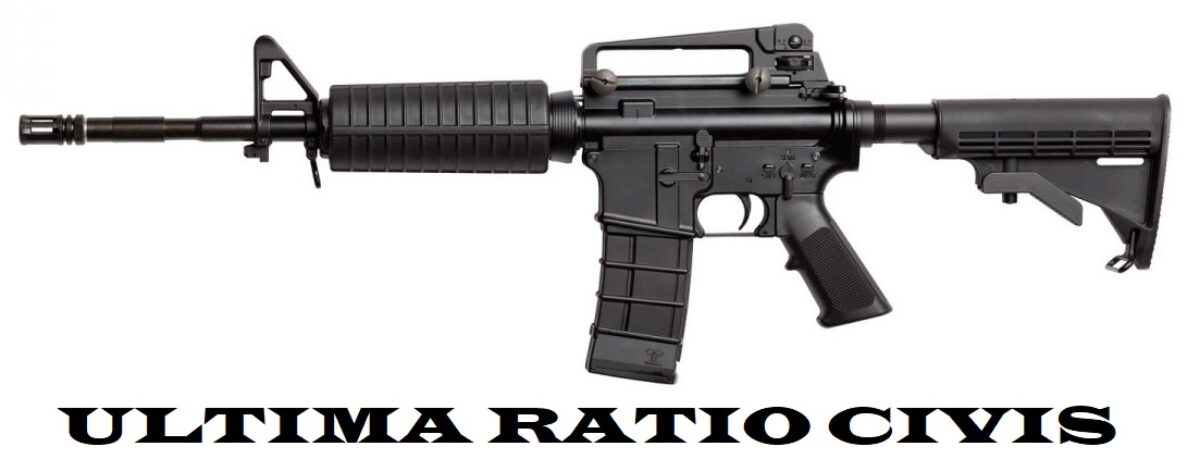
One of the hot-button issues that is being relitigated after Bruen is whether banning semiautomatic rifles such as the AR-15 violates the Second Amendment. I argue that it does in my new book America’s Rifle: The Case for the AR-15. It covers text and precedent, English and colonial history, the Founding, and how the constitutional right to arms kept pace with the development of firearms. The expired federal ban of 1994 was a true aberration from a Congress that has almost never actually banned a type of firearm.

In most of the 20th century, the antigun movement focused on banning handguns. Rifles and shotguns were said to be good, pistols and revolvers bad. The Colt AR-15 Sporter rifle hit the civilian market in 1964, the same year that Colt made its first deliveries of the M-16 to the Air Force. The AR-15 is semiautomatic, requiring a separate function of the trigger for each shot, while the M-16 is automatic, meaning it fires continuously as long as the trigger is pulled back. Despite that basic difference, they looked similar on the outside, causing the Violence Policy Center see the potential for confusion in the public. The idea of labeling the AR-15 and like rifles “assault weapons” and banning them was born.

In 1989, California became the first state to ban “assault weapons,” which it defined to include a list of makes and models such as the AR-15. We challenged that law in Fresno Rifle & Pistol Club v. Van de Kamp (1992), but the Ninth Circuit held that the Second Amendment doesn’t apply to the states. The Supreme Court has since ruled that it does, in McDonald v. Chicago (2010).

In District of Columbia v. Heller (2008), the Supreme Court held that, as a textual matter, “the Second Amendment extends, prima facie, to all instruments that constitute bearable arms.” Turning to history, the Supreme Court determined that historical limitations on carrying “dangerous and unusual weapons” provided a bound on the scope of the right. Thus, while dangerous and unusual weapons can be banned, “arms in common use at the time for lawful purposes like self-defense” cannot.

The common-use test was plain, so when the District banned “assault weapons” (aka semiauto rifles), we mounted a challenge . The D.C. Circuit, in Heller v. D.C. (2011) (“Heller II“), conceded that the banned rifles “are indeed in ‘common use,'” but balanced the right away under intermediate scrutiny. Then-Judge Brett Kavanaugh dissented on the basis that semiautomatic rifles have been in lawful use for over a century and pass Heller‘s common-use test.

With intermediate scrutiny to the rescue, other circuits copied Heller II and upheld the bans in several states. Those decisions create a distorted image, since most states don’t have bans, and so other circuits have not opined on the issue.

And now comes Bruen, collapsing the house of cards. Conduct within the “plain text” of the Second Amendment is presumptively protected, and a restriction may be valid only if the government shows it to be “consistent with this Nation’s historical tradition.” Text-history is in, means-ends scrutiny is out. And the history (or analogues thereof) that matters is 1791 and the initial decades that followed, as long as consistent with the text and early history.

Under the Heller test, as elaborated upon by Bruen, AR-15s and similar semiautomatic firearms may not be prohibited. Indeed, Heller and Bruen together establish the test for any ban on firearms, and that test makes clear that all firearms in common use for lawful purposes are protected and cannot be banned.

AR-15s and other similar firearms come within the “plain text,” because they are bearable arms. Heller and Bruen both establish that the Second Amendment extends presumptively to all bearable arms. Second, banning such firearms is not consistent with this Nation’s history. Indeed, the Supreme Court established that such a ban is inconsistent with this Nation’s history nearly thirty years ago by holding that AR-15 rifles “traditionally have been widely accepted as lawful possessions,” Staples v. U.S. (1994).

What is more, the historical boundaries of protected arms have already been established in Heller and Bruen. Those cases make clear that the only arms that are not protected are “dangerous and unusual weapons,” which necessarily entails that citizens have a right to possess and use arms that are “in common use today.” For this reason, historical analogues have no place here; the Supreme Court has done the historical analysis and set forth the “common use” test.

Can the government possibly show that AR-15 rifles are dangerous and unusual? Not at all, as they are among the most popular firearms in the Nation. Recent data indicates that Americans own at least 24 million AR-15s and similar rifles, that they constitute 20% of all firearms sold in recent years, and that they are used for lawful purposes such as self-defense, training, and hunting. It follows that Americans have a Second Amendment right to own and use them.

And readers do not simply need to take my word for it. This is supported by the analyses of three Supreme Court justices—Justice Thomas (the author of Bruen) in his dissent from denial of cert in Friedman v. Highland Park (2015), Justice Kavanaugh in his dissent in Heller II, and Justice Alito in his concurrence in Caetano v. Massachusetts (2016).

When the Supreme Court decided Bruen, it issued a GVR (grant cert., vacate, and remand) to the Fourth Circuit’s decision in Bianchi v. Frosh, for further consideration in light of Bruen. That’s a polite way of saying get it right next time. That case summarily affirmed that circuit’s prior decision in Kolbe v. Hogan (4th Cir. 2017) (en banc), which upheld Maryland’s “assault weapon” ban. As the first post-Bruen circuit to reconsider such a ban, the oral argument on December 6 is worth listening to. Some takeaways from the argument:

Kolbe rejected the common-use test and held that AR-15s are not protected because they are “most useful in military service.” (Never mind that no military in the world issues mere semiautomatics.) That was the wrong test.

Maryland also rewrites the “common use” test to say instead that the only arms protected are those in “common use for self-defense.” That is not the test. Heller tells us that arms commonly used for lawful purposes—not just self-defense—are protected under the Second Amendment. Maryland does not concede that the AR-15 is in common use and seeks a remand for further “discovery.” Seriously? Bruen was decided as a matter of law based on the pleadings and rejected any need for a remand for further factual development.

Maryland argues that AR-15s are not in common use for self-defense because shots are rarely fired. But Heller required no showing of how often handguns are actually fired in self-defense to prove common use, which means possession for that purpose.

As a fallback, Maryland wants to show that at least some of the rifles in the list are not in common use and that the law is severable. Plaintiffs respond that they are all of the same general type and that no further facts need to be developed.

Heller was fiercely resisted by the lower courts. Keep your fingers crossed for what the Fourth Circuit ultimately rules.

Tomorrow, I will address how Bruen‘s “plain text” concept is being treated by the lower courts.

Who In the US Is Objectively Racist? The Left. As the Data Show Definitively.

Joe Biden and the Democrats keep gunning for your guns. Research like this is a major part of their argument. What it shows–definitively–is that it isn’t guns. It’s a particular social pathology enabled by a social psychosis that reached epidemic proportions in 2020. The data are irrefutable.

One graphic tells the tale:

The increase in gun homicides documented in the Emory University study is attributable almost exclusively to one factor: a nearly 60 percent increase in homicide fatalities among black men. Not over a period of many years–but in a little over one year.

And what year was that? 2020. And what happened in 2020? The death of George Floyd, and the subsequent revelation that black lives especially matter.

Yes, but not in the way intended. Not by a long shot. That death and revelation brought in its train myriad consequences. Defund the police. The war on cash bail and the release of numerous criminals. The demoralization of police, who were instructed explicitly and implicitly that arresting black male offenders was a career risk, and the subsequent surrender of the streets to the thugs. And on and on. (The release of many from jail because of COVID didn’t help either.)

This is as close to a natural experiment as can exist in social science. An exogenous shock–the death of one man–leads to a tectonic shift in law enforcement, especially with regards to a particular demographic. The result?: a hyperbolic increase in homicide rates in that demographic. (I note that the previous uptick observable in the chart in 2014 corresponds to the proto-Floyd event, the death of Michael Brown in Ferguson, MO, which was the catalyst for Black Lives Matter.)

This is as close to a definitive proof of causation as is possible in observational social science.

This is not complicated. We sowed. We reaped. There is no other plausible explanation for the data.

It is sickly ironic–and mainly sick–that so many black lives have been sacrificed on the altar of Black Lives Matter.

But it gave an opportunity for Nancy Pelosi and the like to demonstrate their superiority over us plebs by taking a knee wearing kente cloth, so it was all for the best, right?

The whole ugly spectacle makes me literally nauseous. (And yes, I literally know what it means to say “literally.”) Hell is not hot enough to torture properly all those preening better-thans who have cost more black lives in a couple of years than the KKK did in its entire, horrid, sordid history (which dates to 1866).

But you are the problem you see. You and your icky guns.

No, the real problem is the social psychosis that is modern American leftism, which obsesses over race, and in the name of helping one race is directly responsible for the deaths of thousands of that race.

So tell me: who are objectively the racists here? (See Orwell on “objectively pro-Fascist” if you don’t catch my point.)

If this does not make you incandescent with anger, some serious self-reflection is definitely in order. Unless you are a leftist, in which case that is something of which you are constitutionally incapable.

Always of interest are the gun laws of New Mexico, and possible effects on the Shootists Holiday

Gun safety bills could spark debate at Roundhouse amid rise in firearm deaths

SANTA FE – Over the last three years, New Mexico lawmakers have passed bills expanding background check requirements for firearm purchases and allowing guns to be seized from individuals deemed to pose a threat to themselves or others.

Now, with the reelection of Gov. Michelle Lujan Grisham, more gun safety proposals are expected to be brought forward during the 60-day session that starts next month, amid a recent spike in New Mexico firearm-related deaths and after several high-profile school shootings around the nation.

The measures likely to be considered include raising the minimum age for purchasing certain assault rifles from 18 to 21, making the failure to safely store firearms out of children’s reach a crime and creating a new office of gun violence prevention within the state Department of Health.

Continue reading “”

Just to clarify.
This requirement isn’t for concealed carry. It’s to simply BUY a firearm.
I think this monstrosity isn’t going to make it through the court system, but it does illuminate just how mindless a lot of people are, which isn’t a new thing, as the Framers recognized the malady even back then when they demanded a Bill of Rights.


Measure 114’s live fire training component leaves trainers in limbo

While Oregon’s new voter-approved gun control measure is getting worked out in the courts, there remains uncertainty among local gun shops and firearms instructors in Central Oregon.

Sharon Preston, owner of Ladies of Lead in Redmond — and an instructor who specializes in self-defense training for women — says there are a lot of questions that still have not been answered about the implementation of Measure 114.

Preston says business has been through the roof. But she says she’s had to stop firearm sales, not knowing what is next with the measure. But she says selling guns is only part of what she does.

“Selling guns is a very small portion of my business. I do it as an added value to my clients, so it’s educational based gun sales. But my main focus is always going to be in training,” said Preston.
She’s been forced to find alternatives as 114 is in limbo.

“I’ve heard too many stories in this store from women, locally. The brutality and violence they have been through, survived through. They want a tool that will allow them to live their lives large again, and they’re not going to be able to get on. That’s why I’m switching to crossbows, pepper ball guns, tasers, knives,” Preston said.

Preston’s biggest concern with the measure lies in the required live fire training — meant to prove shooting proficiency. As of now, she says no guidelines have been spelled out as to how the state will facilitate the training courses. And no one knows who will be authorized by the state to lead those courses.

And there are other unanswered questions.

“They don’t know how many rounds we have to shoot, at what distance we have to shoot, at what target we have to shoot. They don’t know what firearm we can use. So there’s so many questions out there,” said Preston.

The next hearing on Measure 114 will be held Tuesday at Circuit Court in Harney County. Those who support the measure will be able to argue against the temporary hold set in place by Judge Robert Raschio.

Key House Republican says gun rights bills will be on 2023 to-do list

Key backers of the gun rights amendment Iowa voters have just added to Iowa’s Constitution say they’ll introduce a series of gun-related proposals in the 2023 Iowa Legislature. House Republican Leader Matt Windschitl of Missouri Valley has been involved in gun-related issues since he was elected to the House in 2006.

“There are multiple different things we’ve been trying to get done to restore freedoms in Iowa and we’ve not been able to get across the finish line on some of those things,” Windschitl said this afternoon. “I’m not at a point right now where I’m going to discuss publicly what all of those items are, but you can expect us, after this victory, and restore freedoms to Iowans that never should have been taken away.”

Windschitl and others gathered in the statehouse this  afternoon for a ceremony to mark passage of the amendment.

“Iowans now have the best protections for their fundamental right to keep and bear arms of any state in the nation,” Windschitl said.

The amendment got a majority of votes in 97 of Iowa’s 99 counties.

“Iowans have made their voice loud and clear,” Windschitl said. “Our liberties we prize and our rights we will maintain.”

That last sentence is the state motto, adopted in 1847, the year after Iowa was recognized as a state. Secretary of State Paul Pate said the gun rights amendment was added to the state constitution on December 1st when statewide election results were certified.

“On November 8, Iowans voted overwhelmingly to amend the Constitution, enshrining in it the right to bear arms,” Pate said. “In fact, 65% of Iowans supported the adoption. Congratulations to all of you for your hard work and the efforts to secure its passage.”

Richard Rogers of the Iowa Firearms Coalition lobbied for the amendment as well as recent state laws on the use of weapons and gun permits.

“However, each and every improvement in the law was subject to being reversed, or worse, by the next or any future legislature,” Rogers said during the ceremony. “Now, with the ratification of this freedom amendment, as we call it, such a course will be much more difficult.”

This is the 49th amendment added to Iowa’s Constitution. It goes beyond the wording of the Second Amendment to the U.S. Constitution and says Iowa courts must evaluate any lawsuits challenging Iowa gun laws by the toughest legal standard.

Oregon high court won’t let voter gun control measure begin

PORTLAND, Ore. (AP) — Oregon’s tough, voter-approved gun control law remains temporarily blocked after the Oregon Supreme Court declined to overturn an earlier decision preventing the measure from taking effect Thursday.

Chief Justice Martha Walters late Wednesday denied the emergency motion to intervene, filed earlier in the day by state Attorney General Ellen Rosenbaum.

The measure includes a ban on the sale and transfer of high-capacity magazines. It also requires permits, criminal background checks, fingerprinting and hands-on training courses for new gun buyers.

Harney County Judge Robert Raschio blocked it Tuesday, just hours after a federal judge ruled in favor of the law. The Oregon Department of Justice argued in an urgent filing that Raschio got it wrong.

“Magazine capacity restrictions and permitting requirements have a proven track record: they save lives!” Attorney General Ellen Rosenblum said in a statement. “We are confident the Oregon Constitution — like the Second Amendment of the U.S. constitution — allows these reasonable regulations.”

Several lawsuits have challenged the measure, which voters narrowly approved last month. The measure’s fate is being carefully watched as one of the first new gun restrictions after the U.S. Supreme Court in June struck down a New York law limiting the carrying of guns outside the home.

The Oregon measure bans the sale, transfer or import of magazines over 10 rounds unless they are owned by law enforcement or a military member or were owned before the measure’s passage. Those who already possess high-capacity magazines can have them only in their homes or use them at firing ranges, in shooting competitions, or for hunting, as allowed by state law after the measure takes effect.

It would also close a federal loophole that allows gun transfers to proceed if background checks cannot be completed quickly.

U.S. District Judge Karin Immergut delivered an initial victory Tuesday to the measure’s proponents, ruling that the ban on the sale and transfer of high-capacity magazines could take effect Thursday. She also granted a 30-day delay before the law’s permit-to-purchase mandate takes effect, but she did not quash it entirely, as gun rights advocates had wanted.

Hours later, the Harney County judge put the law on hold. In that case, Gun Owners of America Inc., the Gun Owners Foundation and several individual owners alleged that the measure violates Oregon’s constitution and sought to have it blocked while that question was decided.

Gun sales and requests for background checks soared in the weeks since the election because of fears the new law would prevent or significantly delay the purchase of new firearms under the permitting system.

Gun rights groups, sheriffs and gun store owners have sued, saying the law violates Americans’ right to bear arms. All those lawsuits were filed in federal courts except for the one in Harney County, a gun rights group said late Tuesday.

A hearing on the Harney County judge’s order is set for Tuesday.

“We are, of course, deeply troubled by the ruling that came out of the Federal Court today. We are also grateful for the opposing ruling from the Harney County Judge this afternoon,” the Oregon Firearms Federation wrote. “But no matter what, there is a long way to go.”

The Supreme Court decision on the New York law signaled a shift in how the nation’s high court will evaluate Second Amendment infringement claims, with the conservative majority finding that judges should no longer consider whether a law serves public interests like enhancing public safety, and instead weigh only whether the law is “consistent with the Second Amendment’s text and historical understanding.”

To the Editor:

In the Wednesday, November 30, 2022 Brunswick Times-Gazette, page 4; Delegate Clinton Jenkins stated that “we must…pass good, safe policy regarding guns here in Virginia.” As Delegate Jenkins well knows, it is already illegal to murder a human; it is already illegal to possess firearms in the “Gun Free Zones” existing in schools, courts, some government buildings, etc.

Exactly what “good, safe policy regarding guns here in Virginia” would Delegate Jenkins suggest? I will guess that his intention is to create infringements on the lawful exercise of the Second Amendment by honest law-abiding citizens. Why would I guess that? Mr. Jenkins tips his hand with his use of good sounding, though unenlightening words, such as “good, safe policy”.

These words, like the near ubiquitous code-words “common-sense gun legislation”, serve only to lower the suspicion of the electorate to be on guard for unconstitutional infringements on Second Amendment rights of citizens. One of the most widely implemented “common-sense gun legislation” laws was the creation of “Gun-Free Zones” which, inadvertently (I hope), created large pools of unarmed “fish in a barrel” for deranged shooters.

As a Democrat, Delegate Jenkins likely never saw an unconstitutional infringement on the Second Amendment that he didn’t like and wouldn’t support. Additionally, Mr. Jenkins is likely unaware that gun control in the United States began with the attempt to save lives (of the terrorists in the KKK, at that), by disarming newly freed slaves so that they could not defend themselves against the night riders who came to rape, beat, burn, and lynch their black neighbors.

Sir Winston Churchill once said, “However beautiful the strategy, you should occasionally look at the results.”

Perhaps Mr. Jenkins should research the efficacy of “Gun Free Zones”, which have had the practical effect of turning schools and government buildings into “Enhanced Victim Zones”; places where shooters are guaranteed greatly increased numbers of victims due to the implementation of these foolish policies. In the twenty-first century, gun control has the exact same effect that it did when it was first foisted upon innocent black citizens in the nineteenth century: it precludes intended victims from any meaningful defense against known evil intent on doing as much harm as possible in the shortest amount of time available without suffering meaningful retaliation.

Peter Agostnelli

Alberta, Virginia

BLUF
Universal NICS law will give the Left another chance at creating a list of gun owners. Another chance? Yes, as they’ve already tried it before and almost got away with it. Stephen Halbrook, attorney and firearms policy author, was involved in the NRA’s attempt to prevent Janet Reno, the AG for President Clinton, from retaining the personal data of firearms purchasers who underwent the NICS background check. Halbrook’s article, The Truth About NICS tells the story of government officials who flagrantly broke the original NICS law, which did not permit the creation of a list of gun purchasers to suit their own purposes.

Halbrook concludes, “law-abiding gun owners must stay vigilant so the tool isn’t corrupted by anti-gun actors in the future…Gun registration means gun confiscation.”

A Funny Thing Happened On The Way To Universal Gun Backgrounds Checks

USA – -(AmmoLand.com)- Everyone agrees that it is important to stop killing sprees from happening in schools or gay bars, or supermarkets.

The National Instant Check System (NICS) was supposed to stop such killers when it was implemented in 1998. Unfortunately, we are no closer to a peaceful society. After nearly thirty years, NICS is still not working as promised, despite “preventing” over 3.5 million firearms gun transactions since its inception. Few of the blocked sales turn out to be criminals; most rejections are false due to errors in the FBI data.

NICS may serve as “the fundamental cornerstone of our nation’s gun violence prevention laws,” but its proponents propose expanding NICS to create a “Universal” NICS that would eliminate supposed “loopholes.” American gun owners know this is a foolish dream. So-called loopholes will always exist for mentally disturbed people and criminals. Stricter laws cannot eliminate these loopholes because the problems aren’t legal but human. Nobody knows how to predict which mentally disturbed person will run amok in the future. Too many criminals have access to guns because their criminal records have not been entered into the NICS database. And there are many other ways of obtaining weapons without going through a NICS check.

Universal National Instant Check System (UNICS).

The proponents of Universal NICS typically avoid mentioning these problems, and American gun owners are not fooled by the so-called Universal National Instant Check System (UNICS). A NEW UNICS law could potentially, via the law, create a list of gun owners for the federal government, which would be the start of registration and confiscation. That frightens savvy gun owners and cancels any likelihood of cooperation with them for such laws.

If the flaws of UNICS are so obvious, what can we make of surveys that indicate most Americans support UNICS? The American Academy of Pediatrics, in 2022, stated that 88% of Americans, including 85% of gun owners, “favor universal background checks on sales of all weapons.

Such survey claims should not be taken at face value. Surveys are complex, and too much can go wrong. In the right hands, they can be indicative of public opinion, but pollsters often make mistakes, and they can also use surveys deliberately to manipulate public opinion.

Continue reading “”

Observation O’ The Day

While magazines in general are necessary to the use of firearms for self-defense, Plaintiffs have not shown, at this stage, that magazines specifically capable of accepting more than ten rounds of ammunition are necessary to the use of firearms for self-defense.

Oh look, we’re making up our own test now to allow a gun law. “Necessary” is not the test dictated in Bruen.


Oregon 114 get the brakes applied

GUN CONTROL YELLS FOR MORE WHILE MORE AMERICANS KEEP SAYING NO

Historic numbers of law-abiding Americans joined the gun-owning community for the first time in recent years, including large numbers of women and minorities. National gun control groups at the same time continue to shout for stricter gun control laws.

As Americans take up their rights, shun those calls and personally navigate the process to legally buy a firearm, one thing’s becoming clearer. They reject stricter gun control.

Continue reading “”

Who Wants to Tell California AG Bonta that Access to ‘Weapons of War’ as a Check Against Tyranny is a Core Tenet of the Second Amendment?

I spent much of the last week assisting my brilliant colleagues in preparing their supplemental brief in Duncan v. Bonta. This is the magazine-capacity case that kicked off the now-famous “freedom week” in California in 2019. Our win in district court was affirmed on appeal by a 3-judge panel, but then was reversed by the Ninth Circuit sitting en banc.

Thankfully, the Supreme Court acted on our appeal by vacating the en banc decision and remanding the case for further proceedings in light of Bruen.

Back in the district court, the Attorney General Rob Bonta submitted an overlong brief making all sorts of inane arguments, which our brief responds to quite well. However, one throwaway line from the Attorney General bugged me immensely . . .

In neither Heller nor Bruen did the Court find that the Second Amendment’s protections were grounded in the need to bear arms for militia service…or as a “check against tyranny”. In fact, Bruen repeatedly confirms that self-defense (and not militia or military service) is the “central component” of the right protected by the Second Amendment.

Personal self-defense is certainly a critical aspect of the Second Amendment, but both the founders as well as the generations immediately after them considered one other purpose paramount: a final defense against a tyrannical government that attempts to overthrow our constitutional order.

This idea, once accepted as common knowledge, has become controversial. It has been derided by modern day gun control advocates as the “insurrectionist theory” of the Second Amendment that was invented by the NRA in the 1970s.[1]

Yet it certainly wasn’t invented by the NRA, nor is it some tinfoil hat theory. It instead goes to the very core of what the Second Amendment was intended for, as the historical record is indisputable on this point.

Embarrassing as it may be to admit for some polite society academics of today, the Bill of Rights was written by people who just finished violently overthrowing their former government. Based on that experience, they were obviously very fearful of the new government they were forming becoming tyrannical, and so they included the Second Amendment, in part, as a failsafe.

You don’t need to take my word for it – the Founders said so themselves. James Madison tried to assuage fears of a tyrannical federal army running roughshod over the people in one of his many Federalist Papers:

Continue reading “”