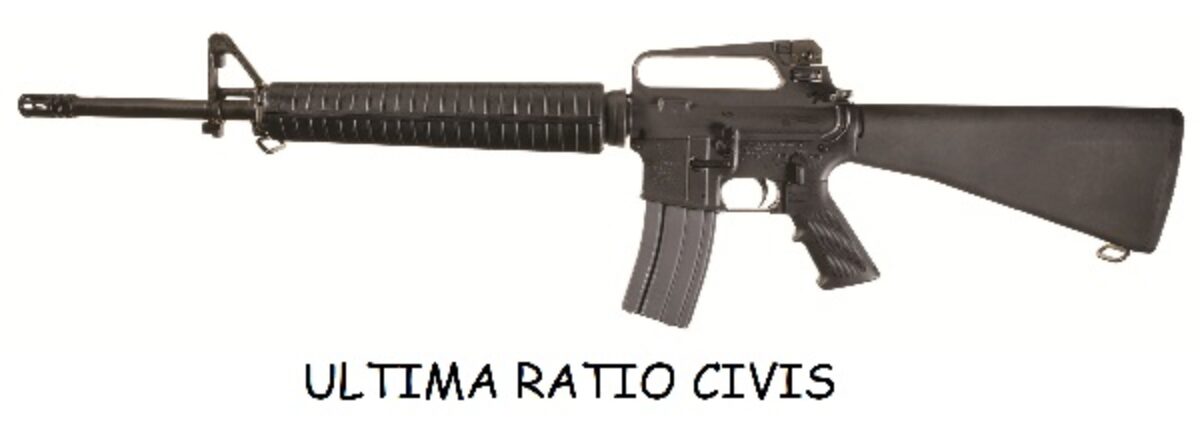
Vox Misses the Plot Entirely on SCOTUS Decision In Smith & Wesson v. Mexico

I don’t expect a lot from Vox. I’d like to, but that’s because I’m annoyingly optimistic about things in general. I say “annoyingly” because it annoys me how optimistic I am much of the time, in part because so many people let me down.

Take Vox, for example. Please. Seriously, please.No takers? Not surprising.

Anyway, Vox…

It’s unsurprising that they wrote a piece on the Mexican lawsuit against Smith & Wesson. It’s not surprising they’re displeased by the result. It’s also unsurprising that they were idiotic in their writing about it.

But Kagan’s opinion concludes that the mere fact that US gun companies likely knew that some of their guns were being resold in the illegal market, much less that some of their guns are designed to appeal to Mexicans, is not enough to overcome PLCAA. As Kagan explains, this conclusion largely flows from the Court’s fairly recent decision in Twitter v. Taamneh (2023).

Twitter concerned an attack by the terrorist group ISIS that killed 39 people at a nightclub in Istanbul, including a man with American relatives. Those relatives sued several social media companies in US court, claiming that the companies aided and abetted the Istanbul attack by allowing ISIS to post content which promotes ISIS’s ideology and that attempts to recruit people to the terrorist organization’s cause.

But Twitter warned against a legal regime where “ordinary merchants could become liable for any misuse of their goods and services, no matter how attenuated their relationship with the wrongdoer.” As a general rule, someone who provides a good or service to all comers is not legally responsible if a bad actor uses their product for a wicked purpose. If Ford sells a truck to a man who intentionally uses it to run over and kill his wife, Ford normally will not be responsible for this homicide.

And so Kagan concludes that it’s not enough for Mexico to show that gunmakers could have taken additional steps to prevent their products from winding up in the hands of drug cartels. Instead, “the merchant becomes liable only if, beyond providing the good on the open market, he takes steps to ‘promote’ the resulting crime and ‘make it his own.’”

Of course, one thing that distinguishes Smith & Wesson from Twitter is that social media platforms are not weapons whose entire purpose is to injure people. If PLCAA did not exist, Mexico might have argued that the gun companies’ decision to make and sell an inherently dangerous product should make them liable for the consequences of selling such a product.

The author does acknowledge that the PLCAA does exist, but that’s kind of beside the point.

See, the Twitter decision is still applicable, if for no other reason than the fact that the product is still sold for lawful purposes. That’s not even touching on the nonsense claim that “weapons…entire purpose is to injure people.” Hunting rifles are intended to kill animals, for example, and many people really don’t expect to ever shoot a person, but buy guns because they love the act of shooting. It’s something of a martial art in and of itself.

But getting back to the Twitter decision, the point is that a company that creates a product that’s intended for lawful use cannot be held liable because someone does something unlawful with it.

Even without the PLCAA’s existence, Mexico could try to make the claim, but the Twitter decision still stands. Its legal reasoning is still a thing. The idea that you could or should hold a company responsible for making products designed for lawful purposes that later get misused by other parties is asinine.

It was always asinine.

I wasn’t always a pro-gun guy. I liked guns as a much younger man, but I was pretty liberal in my beliefs back then. Even at the time, I thought the idea of holding gun companies responsible for what third parties did with the firearms they made was ridiculous. Nothing has changed on that front in the last 40 years or so.

Not that anyone who is writing on gun-related issues at Vox has a damn clue on any of that. They’re too absorbed in their “guns are bad” thinking to ever comprehend how mentally deficient their animosity toward firearms actually is.

Well, at least we’re finally getting a firm idea of exactly where a majority of this court stands on the 2nd amendment’s restriction on goobermint powers when it comes to those nasty icky guns.


US Supreme Court rebuffs challenge to Washington, DC’s high-capacity gun magazine ban

WASHINGTON (Reuters) -The U.S. Supreme Court declined on Friday to hear a challenge to the legality of a restriction imposed by Washington, D.C., on large-capacity ammunition magazines in a case that gives the justices a chance to further expand gun rights.

The justices turned away the challengers’ appeal of a lower court’s ruling that upheld the Democratic-governed city’s ban on virtually all ammunition-feeding devices holding more than 10 rounds. The lower court rejected arguments that the measure violates the U.S. Constitution’s Second Amendment right to “keep and bear arms.”

The four men who challenged the law had asked the Supreme Court to consider whether the Second Amendment allows a categorical ban on arms that are commonly used throughout the United States for generally lawful purposes such as self-defense. The challengers all hold concealed-carry pistol licenses for the District of Columbia and regularly carry a pistol there.

The Supreme Court has dramatically expanded the Second Amendment in recent decades, including in a landmark 2008 ruling that struck down a strict gun control law in Washington and declared that individuals have a right to own guns for such lawful purposes as self-defense in the home.

In 2022, powered by its 6-3 conservative majority, the court made it harder to defend gun restrictions under the Second Amendment, requiring that such limits be “consistent with the nation’s historical tradition of firearm regulation.”

The District of Columbia’s government makes it illegal to possess or sell any ammunition-feeding device that holds more than 10 rounds, with only a narrow exception. The city’s lawyers in court papers wrote that it has restricted the capacity of gun magazines “in some form for close to a century.”

Washington-based U.S. District Judge Rudolph Contreras in 2023 ruled in favor of the city, finding that large-capacity magazines are not “typically possessed for self-defense,” citing evidence showing that around two shots on average are fired in self-defense situations. The judge also found the city was likely to prevail in the case because it had demonstrated that its law is consistent with firearms regulation grounded in the “historical tradition” of the United States.

The U.S. Court of Appeals for the District of Columbia Circuit in a 2-1 decision upheld the judge’s ruling in October 2024, prompting the challengers to appeal to the Supreme Court.

The Supreme Court on June 2 declined to hear a similar challenge to Rhode Island’s ban on large-capacity magazines, as well as a challenge to a ban in Maryland on powerful semiautomatic rifles such as AR-15s, after lower courts upheld these restrictions.

The court on March 26 upheld a federal regulation targeting largely untraceable “ghost guns.” In two rulings last year, it upheld a federal law that makes it a crime for people under domestic violence restraining orders to have guns but rejected a federal rule banning “bump stocks” – devices that enable semiautomatic weapons to fire rapidly like machine guns.

Friday’s action by the court was unexpected. The court had planned to release it on Monday along with its other regularly scheduled orders, but a software glitch on Friday prematurely sent email notifications concerning the court’s decision in the case.

“As a result, the court is issuing that order list now,” said court spokesperson Patricia McCabe.

It is not the first time the court has inadvertently disclosed action in sensitive cases. Last year, an apparent draft of a ruling in a case involving emergency abortion access in Idaho was briefly uploaded to the court’s website before being taken down. That disclosure represented an embarrassment for the top U.S. judicial body, coming two years after the draft of a blockbuster ruling rolling back abortion rights was leaked.

 “The New York Times just ran a 1,400-word story to explain what cross necklaces are.”

The New York Times just wrote a 1,400-word article about a hip new symbol that everyone seems to be wearing these days:


This is literally The New York Times right now:


Across TikTok, young Christian women have been sharing the meaning behind their own cross necklaces, saying they help cultivate a sense of belonging and connection with others.

Sage Mills, a student at the University of Oklahoma who has posted videos about her cross necklace, said that seeing women in government like Ms. Leavitt and Ms. Bondi wear their own ‘makes me feel good. It makes me feel like God is the important thing for people that are governing our world.’

I guess these gals are all radical Christian nationalists!

In recent months, pastors with Christian nationalist beliefs have been invited to the White House numerous times.

UH OH!


The Times has the history lesson for anyone confused by this strange symbol.

The cross, a symbol most associated with the crucifixion of Jesus Christ, first emerged during the Roman Empire when it was an instrument of mass torture, said Robert Covolo, a theologian and associate pastor at Christ Church Sierra Madre near Los Angeles.

By the 4th century, Mr. Covolo said that Christians had begun to use the cross as an emblem of their religion. Not long after, the cross became a focal point for daily jewelry. Cross jewelry dating as far back as the 5th century is prevalent in the collection of the Victoria and Albert Museum in London.

Think about it: A 1,500 word article … in what used to be the most prominent newspaper in the world … explaining the cross to an American audience.


For real! Look at how they describe women in the Trump admin like strange creatures:

Cross necklaces have, in a way, become the jewelry of choice most associated with President Trump’s second administration.

Ms. Bondi owns several cross necklaces but most often appears at official events in a diamond-set version purchased at Mavilo, a jewelry store in Tampa, Fla.

Ms. Leavitt, the White House press secretary, has frequently worn a large cross pendant at press briefings. But Ms. Leavitt is not the first press secretary to wear a cross: Kayleigh McEnany, a press secretary during Mr. Trump’s first term, also wore one.

In an email, Ms. Leavitt, 27, called the cross necklace ‘the perfect accessory to any outfit,’ adding that she wears the cross ‘because it serves as a reminder of the strength that can only be found through faith.’

These conservative women … who can understand their strange ways??


What a time to be alive!

This time, it’s not in a dissent, but as dicta in the actual decision.


Kagan Echoes Sotomayor and Accepts That AR-15s Are ‘In Common Use’

Last year, in the case of Garland v. Cargill, Justice Sotomayor wrote a dissent that included the following description of the AR-15:

Within a matter of minutes, using several hundred rounds of ammunition, the shooter killed 58 people and wounded over 500. He did so by affixing bump stocks to commonly available, semiautomatic rifles.

At the time, I noted that this was an odd concession to make, given a) that Sotomayor is reflexively hostile to Second Amendment challenges, and b) that one of the most important challenges the Court is likely to hear in the coming years will revolve around precisely that claim:

. . . those who wish to ban the AR-15 have taken to claiming that the rifle is not, in fact, “in common use,” and that, as a result, it is not protected under the Second Amendment. Remarkably, Justice Sotomayor just pulled the rug from underneath that argument — and, to make matters worse, did so in an official Supreme Court opinion on the subject of firearms law. [. . .] Sotomayor even uses the word “common”! Not “everyday” or “universal” or “normal” or “usual,” but common — the very word that was used in Heller.

This morning, in her majority opinion in Smith and Wesson Brands, Inc v. Estados Unidos Mexicanos, Justice Kagan did pretty much the same thing:

Finally, Mexico’s allegations about the manufacturers’ “design and marketing decisions” add nothing of consequence. Brief for Respondent 23. As noted above, Mexico here focuses on the manufacturers’ production of “military style” assault weapons, among which it includes AR–15 rifles, AK–47 rifles, and .50 caliber sniper rifles.

See supra, at 6; App. to Pet. for Cert. 121a. But those products are both widely legal and bought by many ordinary consumers. (The AR–15 is the most popular rifle in the country. See T. Gross, How the AR–15 Became the Bestselling Rifle in the U. S., NPR (Apr. 20, 2023.)

The manufacturers cannot be charged with assisting in criminal acts just because Mexican cartel members like those guns too. The same is true of firearms with Spanish-language names or graphics alluding to Mexican history. See supra, at 6. Those guns may be “coveted by the cartels,” as Mexico alleges; but they also may appeal, as the manufacturers rejoin, to “millions of law-abiding Hispanic Americans.”

Note the language here. “Widely legal and bought by many ordinary consumers.” “The AR–15 is the most popular rifle in the country.” “They also may appeal, as the manufacturers rejoin, to ‘millions of law-abiding Hispanic Americans.’”

Under Heller, all firearms that are “in common use” are presumptively protected. At some point — and relatively soon — we are going to get a case in which the plaintiffs contend that the ban on AR-15s in their state is illegal under Heller. I have no doubt that, when that happens, Kagan and Sotomayor will find some convoluted reason to uphold the ban, but, having twice conceded such a key claim, that reason will need to be much, much more radical than it would otherwise have been.

June 6: A walk across a beach in Normandy

Today your job is straightforward. First, you must load 40 to 50 pounds on your back. Then you need to climb down a net rope that is banging on the steel side of a ship and jump into a steel rectangle of a boat bobbing on the surface of the ocean below you. Others are already inside the boat shouting at you to hurry up.

Once in the boat, you stand with dozens of others as the boat is driven towards distant beaches and cliffs through a hot hailstorm of bullets and explosions. Boats moving nearby are from time to time hit with a high explosive shell and disintegrate in a red rain of bullets and body parts. Then there’s the smell of men near you fouling themselves as the fear bites into their necks and they hunch lower into the boat. That smell mingles with the smell of burnt gunpowder and seaweed.

In front of you, over the steel helmets of other men, you can see the flat surface of the bow’s landing ramp still held in place against the sea. Soon you are within range of the machineguns that line the cliffs above the beach ahead. The metallic sound of their bullets clangs and whines off the front of the ramp.

Then the coxswain shouts and the klaxon sounds. You feel the keel of the LVCP grind against the rocks and sand of Normandy as the large shells from the boats in the armada behind you whuffle and moan overhead. Then the explosions all around and above you increase in intensity and the bullets from the machineguns in the cliffs ahead and above rattle and hum along the steel plates of the boat and the men crouch lower. Then somehow you all strain forward as, at last, the ramp drops down and you see the beach. The men surge forward and you step with them. Then you are out in the chill waters of the channel wading in towards sand already doused with death, past bodies bobbing in the surf staining the waters crimson.

You are finally on the beach. It’s worse on the beach.

The bullets keep probing along the sand, digging holes, looking for your body, finding others that drop down like sacks of meat with their lines cut. You run forward because there’s nothing but ocean at your back and more men dying and… somehow… you reach a small sliver of shelter at the base of the cliffs. There are others there, confused and cowering and not at all ready to go back out into the storm of steel that keeps pouring down. And then someone, somewhere nearby, tells you all to press forward, to go on, to somehow get off that beach and onto the high ground behind it, and because you don’t know what else to do, you rise up and you move forward, beginning, one foot after another, to take back the continent of Europe.

If you are lucky, very lucky, on that day and the days after, you will walk all the way to Germany and the war will be over and you will go home to a town somewhere on the great land sea of the Midwest and you won’t talk much about this day or any that came after it, ever.

They’ll ask you, throughout long decades after, “What did you do in the war?” You’ll think of this day and you’ll never think of a good answer. That’s because you know just how lucky you were.

If you were not lucky on that day you lie under a white cross on a large well kept lawn not far from the beach you landed on.

Somewhere above you, among the living, weak princes and fat bureaucrats and rank traitors mumble platitudes and empty praises about actions they never knew and men they cannot hope to emulate.

You hear their prattle, dim and far away outside the brass doors that seal the caverns of your long sleep. You want them to go, to leave you and your brothers in arms to your brown study of eternity.

“Fifty years? Seventy-five? A century? Seems long to the living but it’s only an inch of time. Leave us and go back to your petty lives. We march on and you, you weaklings primping and parading above us, will never know how we died or how we lived.

“If we hear you at all now, your mewling only makes us ask among ourselves, ‘Died for what?’

“Princes and bureaucrats, parasites and traitors, be silent. Be gone. We are now and forever one with the sea and the sky and the wind. We marched through the steel rain. We march on.”

June 6, 2025

1944 – During World War II, 155,000 Allied troops begin the invasion of France with landings on Normandy beaches along with airborne parachute and glider assaults further inland.


This was a no-brainer. But why it even got past the District Court level before getting thrown out is the problem.


SMITH & WESSON BRANDS, INC., ET AL. v. ESTADOS UNIDOS MEXICANOS

Here, the Government of Mexico sued seven American gun manufacturers, alleging that the companies aided and abetted unlawful gun sales that routed firearms to Mexican drug cartels. The basic theory of its suit is that the defendants failed to exercise “reasonable care” to prevent trafficking of their guns into Mexico…..

Held: Because Mexico’s complaint does not plausibly allege that the defendant gun manufacturers aided and abetted gun dealers’ unlawful
sales of firearms to Mexican traffickers, PLCAA bars the lawsuit.

By the way, just in case it needs repeating;
The Second Amendment isn’t about hunting.


BLUF
Like many in rural Berkshire County, guns are a part of his life and he has opinions about firearms: He looks down on hunters that use big automatic weapons — “Those guns are for law enforcement,” he said — and he’s not a big fan of handguns, either. He owns four guns: a 12-gauge, a .22 rifle, and two muzzleloaders.”

‘Everybody on our street owns a weapon’: An 800-resident Mass. town has the state’s highest rate of licenses to carry
There are towns that voted Democratic last fall where not only are guns a part of a way of life, but they are also ubiquitous.

PERU, Mass. — By at least one metric, here is the gun capital of Massachusetts, a hamlet that shares its name with a South American nation and is home to about 800 residents nestled in the hill country of the Berkshires, just under three hours from downtown Boston.

The center of town consists of a few nondescript buildings along Route 143. There is a tiny library and an unremarkable-looking town office building that sometimes is unlocked even when no one is there. As in many New England communities, there is a church painted white, and a patch of grass memorializing the town’s war dead. There are no gas stations, convenience stores, restaurants, or bars. There is a single blinking traffic light in Peru’s 26-miles-square.

But there are guns. Many guns. According to a Globe analysis, Peru has the highest per capita rate of licenses to carry in Massachusetts. Nearby Savoy, with a population of about 645 people, according to the 2020 census, is No. 2. (The Globe did not count communities with a population of less than 500 in its review.)

“Everybody on our street owns a weapon,” said Dave Drosehn, a 65-year-old retired machine tender and Peru resident.

The politics around firearms and gun control remain bitterly divisive, both nationally and locally, but even inblue Massachusetts, which has one of the most strict gun-control lawsin the nation, there are towns that voted Democratic last fall where not only are guns a part of a way of life, but they are also ubiquitous.

Places where rural culture and gun culture are inextricably linked. Places, residents say, that people in Boston just don’t understand.

To find them, all you have to do is head west.

Inside Ozzie’s Steak and Eggs, a greasy spoon in Hinsdale, a town over from Peru, Drosehn was about to tuck into a turkey wrap on a recent day. He has hunted all his life, he said. There is a camaraderie in the sport, particularly hunting deer.

Like many in rural Berkshire County, guns are a part of his life and he has opinions about firearms: He looks down on hunters that use big automatic weapons — “Those guns are for law enforcement,” he said — and he’s not a big fan of handguns, either.He owns four guns: a 12-gauge, a .22 rifle, and two muzzleloaders.

Indeed, hunting is the oft-cited explanation for the gun ownership rate in this part of the state, and perhaps the most obvious.
Continue reading “”

It’s Not Fascism When We Do It

Hakeem Jeffries is threatening ICE agents.

“Every single ICE agent who’s engaged in this aggressive overreach and are trying to hide their identities from the American people will be unsuccessful in doing that,” House Minority Leader Hakeem Jeffries (D-N.Y.) said at a press conference Tuesday.

“This is America. This is not the Soviet Union. We’re not behind the Iron Curtain. This is not the 1930s. And every single one of them, no matter what it takes, no matter how long it takes, will, of course, be identified.”


And this would appear to be illegal.

18 U.S. Code § 119 – Protection of individuals performing certain official duties

In General.—Whoever knowingly makes restricted personal information about a covered person, or a member of the immediate family of that covered person, publicly available—

(1) with the intent to threaten, intimidate, or incite the commission of a crime of violence against that covered person, or a member of the immediate family of that covered person; or

(2) with the intent and knowledge that the restricted personal information will be used to threaten, intimidate, or facilitate the commission of a crime of violence against that covered person, or a member of the immediate family of that covered person,

(2) the term “covered person” means—

a State or local officer or employee whose restricted personal information is made publicly available because of the participation in, or assistance provided to, a Federal criminal investigation by that officer or employee;

ICE agents are covered against these threats that Jeffries made, and I hope Pam Bondi, the US Attorney General, is paying attention. There are those who have lost confidence in Bondi, but right now, she is the best hope conservatives have if we want to see justice applied evenly.

Continue reading “”

Tiananmen Square Anniversary: Chinese-American Warns U.S. to Protect Gun Rights

Today is the anniversary of Chinese Communist Party (CCP) troops storming Tiananmen Square to massacre the freedom protesters who had gathered there. A survivor of the CCP’s tyranny who now lives in the U.S. has a message for Americans this anniversary: Don’t give up your guns.

Lily Tang Williams is an American citizen now, an entrepreneur who is running for Congress in New Hampshire. But the self-described “Survivor of Mao’s Cultural Revolution” remembers all too well the nightmare of Communist rule in China, and on the anniversary of the Tiananmen Square massacre, she emphasized how vitally important the right to keep and bear arms is in preventing such massacres by dictatorial regimes.

Williams took to X to commemorate the anniversary and reaffirm the United States’ Second Amendment. She included a screenshot of her previous post, which warned that the “champion of all the mass killings in this world is always a tyrannical government.”


Her previous post referred to the slaughter by the CCP troops of thousands of students at Tiananmen Square, and expressed regret that the students in 1989 did not have guns like the ones she is able to own now in America. “I am a Chinese immigrant and an American citizen by choice. I once was a slave before and I will never be one again,” Williams wrote.

The U.S. State Department and Secretary Marco Rubio put out a statement, too, honoring the “bravery” of the Chinese freedom protesters and explaining:

In the spring of 1989, tens of thousands of students gathered in Beijing’s largest public square to mourn the passing of a Chinese Communist Party (CCP) leader who tried to steer China toward a more open and democratic system. Their actions inspired a national movement.

Hundreds of thousands of ordinary people in the capital and throughout China took to the streets for weeks to exercise their freedoms of expression and peaceful assembly by advocating for democracy, human rights, and an end to rampant corruption.

The CCP responded with a brutal crackdown, sending the People’s Liberation Army (PLA) to open fire in an attempt to extinguish the pro-democracy sentiments of unarmed civilians gathered on Beijing’s streets and in Tiananmen Square.

The fact that the civilians were unarmed is precisely what Williams was warning about in her statements.

On her website, Williams says, “I grew up under Mao’s cultural revolution in China and fled communism for the freedom of the United States. Now, I fear the country I love is becoming the country I left.” It is a fear that many of us have experienced in recent years as we witnessed the attacks on our rights by the Biden administration, and now the increasing dictatorial activism of the judiciary. But one way to deter government tyranny is to exercise our Second Amendment right to keep and bear arms, to be ready always to stand up for ourselves and our liberties, as the Founding Fathers were.

Georgia Supreme Court Upholds Carry Ban For Young Adults Under 21 Years Of Age

We’ve reported a number of times in recent years about the battle for Second Amendment rights for 18-, 19- and 20-year-old Americans. It seems anti-gun advocates think all the other enumerated rights in the U.S. Constitution are fine for young adults, just not the right to keep and bear arms.

In the latest court action concerning that particular subset of American adults, the Georgia Supreme Court on May 28 ruled that the state’s law banning possession or carry of firearms by adults under 21 does not violate the state’s constitution.

In the case,  20-year-old Thomas Stephens, along with gun-rights advocacy group Georgia 2nd Amendment, sued the state to overturn the law after a probate court denied him a weapons carry license. Stephens had argued the court should overturn its rulings in past cases related to the statute, “holding that the Georgia right to keep and bear arms is subject only to a ‘reasonable exercise of police power’ test.”

The court ruling stated: “In sum, Stephens has not offered a compelling argument that the original public meaning of Paragraph VIII is meaningfully different from the construction developed through our Court’s consistent precedent addressing the language of that provision over more than a century. Because he has not established that our precedent construing this language is clearly wrong, we decline his invitation to reconsider it. And because his only argument that the statute he has challenged violates Paragraph VIII requires that we reconsider that precedent, his constitutional challenge to the statute fails.”

Incidentally, the statute in question does have some exemptions, including those under 21 who have received military training or who possess or carry handguns on their property, in their vehicle or place of  business, or for hunting, fishing or sport shooting with a license.

Of course, both laws do violate the Second Amendment, as numerous gun-rights groups have been trying to prove in court over the past several years. However, the results have been mixed.

In January 2024, a three-judge panel of the United States Court of Appeals for the 3rd Circuit, based in Philadelphia, ruled the state’s ban on adults 18-20 from carrying a handgun during an emergency to be unconstitutional under the new standards prescribed by the 2022 Supreme Court ruling in Bruen.

“We understand that a reasonable debate can be had over allowing young adults to be armed, but the issue before us is a narrow one,” U.S. Circuit Court Judge Kent A. Jordan wrote in the majority opinion. “Our question is whether the (state police) commissioner has borne his burden of proving that evidence of founding-era regulations supports Pennsylvania’s restriction on 18-to-20-year-olds’ Second Amendment rights, and the answer to that is no.”

The Second Amendment Foundation (SAF) recently filed its tenth such suit, this one challenging Connecticut’s ban on adults under 21 purchasing, owning or carrying handguns.

Lombardo vetoes bill banning under 21s from owning certain guns

CARSON CITY, Nev. (KOLO) – Nevada Governor Joe Lombardo has vetoed a bill that would have prevented people under the age of 21 from owning semiautomatic shotguns and rifles.

The law would have stipulated that any person found in possession of such guns despite being under 21 would be guilty of a gross misdemeanor for a first offense.

For any second or second or subsequent offense, the offender would have been guilty of a category B felony.

Assembly Bill 245 was sponsored by Assembly Floor Leader Sandra Jauregui, who released this statement following the veto of the bill:

“It is disheartening that Governor Lombard chose to put politics above public safety by vetoing AB245. Raising the minimum age to purchase assault weapons is a straightforward, commonsense step to protect our communities and save lives. Time and again, we’ve seen the tragic consequences when individuals obtain assault-style weapons as soon as they turn 18. Despite today’s veto, my priority will continue to be putting forth policies that help end gun violence.”

Lombardo did not give a reason for the veto of the bill.