
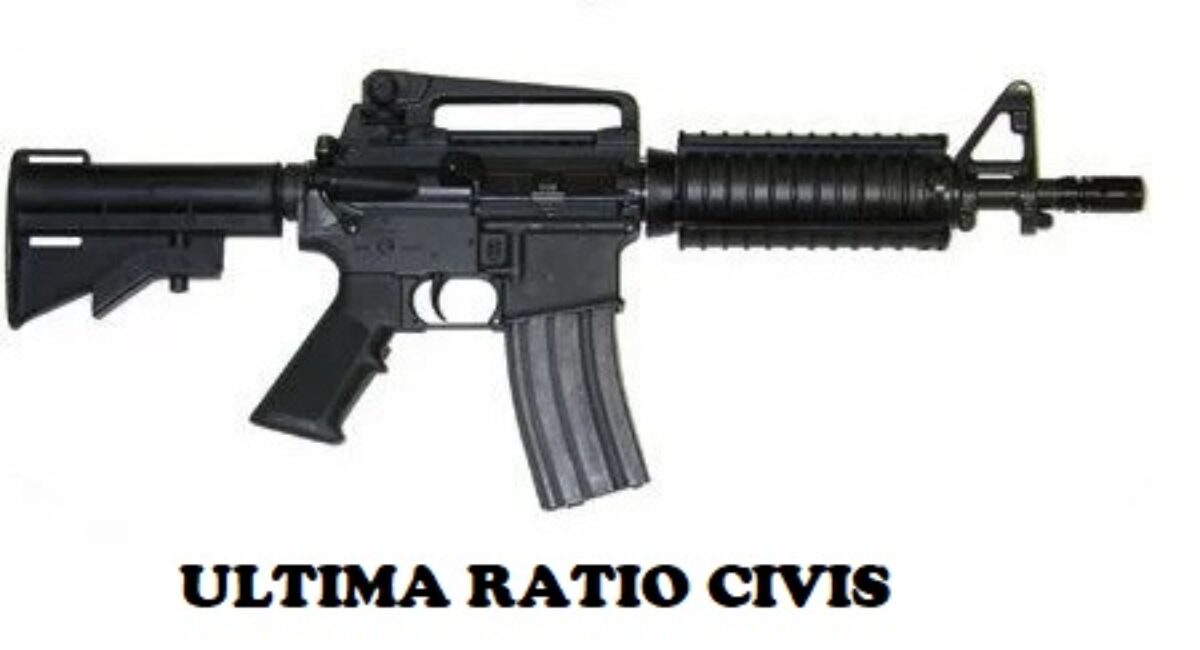
“I’m tired of being considered some kind of criminal or dangerous throwback for no other reason than that I value, exercise, and defend my rights under the first ten Amendments to the United States Constitution.”
— L. Neil Smith
May 19, 2025
39 years ago, Congress passed and POTUS Reagan signed into law, and immediate effect, the ‘Firearms Owners Protection Act’, that among some good things, also banned further production of ‘transferable’ automatic firearms for civilian possession.

ATF is dying a slow death.
Even those on the inside know it to be true. pic.twitter.com/xdi5hfFFtn
— Firearms Policy Coalition (@gunpolicy) May 18, 2025
If it’s that advanced, it means he likely was suffering from it YEARS ago Maybe even before 2020!
And his physical exams (PSA) lab work should have indicated it.
So…. what else is new about covering up for SloJoe?
Joe Biden diagnosed with ‘aggressive form’ of prostate cancer with metastasis to the bone
Former President Joe Biden’s office confirmed on Sunday that he was diagnosed with an “aggressive form” of prostate cancer.
“Last week, President Joe Biden was seen for a new finding of a prostate nodule after experiencing increasing urinary symptoms,” Biden’s team shared in a statement. “On Friday, he was diagnosed with prostate cancer, characterized by a Gleason score of 9 (Grade Group 5) with metastasis to the bone.”
“While this represents a more aggressive form of the disease, the cancer appears to be hormone-sensitive which allows for effective management. The President and his family are reviewing treatment options with his physicians,” the statement said.
Guns are here to stay in US, that’s an opportunity not a threat
With yet another school shooting in the news in April, the familiar rhetoric has made a reappearance nationally.
On the one hand, President Donald Trump marked the occasion by bloviating about one short section of the Constitution while systematically flouting dozens of other sections. On the other, the usual gun-control forces are fundraising off the Florida State tragedy with yet another call for “commonsense” gun regulation.
We’ve been here before, and we’ll be here again, and we’re getting nowhere. It’s not where most Americans want to be with gun issues.
As a school board member in Second Amendment-loving Pennsylvania, I see every month urgent, complex challenges connected to firearms that get less attention than shootings, but they’re important, too.
We encounter everything from parents’ worries about the psychosocial impact of active shooter drills to how to deal with kids who bring toy guns to school (sometimes with blaze orange tips unlawfully removed). There are complicated finance and legal issues related to firearms. There are discussions of “hardening” buildings as targets. There are security armories to maintain. All in all, forecasting and policy-making around issues of gun-related safety and crime are inescapable in K-12 education. I don’t foresee that changing.
Why? Because guns aren’t going away. Four in 10 American adults live in a house with a gun, according to one recent Pew survey, and civilians own an estimated 380 million guns. We can’t hide from such sobering data.
Meanwhile, positive community-building gun experiences are being sidelined. Public support for shooting sports and legal hunting have seen worrying declines. Despite two very active popular private shooting ranges in our school district near Bethlehem, for instance, our school’s rifle team — a club that offered students of all ability levels a chance to learn about gun safety in a politically neutral environment — closed down years ago and sold off its rifles for lack of community support.
Any resolve to teach beneficial, sustainable relationships with guns for sport doesn’t seem to exist. It’s easier to slap a SIG Sauer weapons maker sticker on the back of a back of a big pickup than to spend time teaching a high school kid to safely clear a chamber, clean a barrel, use a scope or handle a loaded rifle. We’ve been discussing the process of resurrecting our school rifle team (using air rifles), and I’m hopeful, but we’ll be competing with the easy allure of “Call of Duty” and online cultures.
Young Americans aren’t getting the whole story when it comes to firearms and national history either, so they easily fall prey to steroid-fueled, hyper-masculine, action-movie narratives that grossly distort American identity.
Even before the founding of our republic, Puritans in the Americas needed to protect themselves. From the moment Myles Standish stepped ashore in present day Massachusetts, in 1620, the idea of America was anointed in gunpowder and the unholy chimes of matchlock musket fire. You think Pete Hegseth is a mad Christian neo-fascist militant? You wouldn’t like a hothead soldier of fortune like Standish, whose general rule was kill-first-make-peace-later. Our early settlers were fiercely fiercely protective of their homes, and for better and sometimes worse, this impulse remains part of the American DNA.
A theme of community safety is huge in this country’s gun history, too. As the the writer Charles E. Cobb once said about incomplete portrayals of the Black civil rights movement in the 1960s: “One important gap in the history … is the role of guns in the movement. I worked in the South, I lived with families in the South. There was never a family I stayed with that didn’t have a gun. I know from personal experience and the experiences of others, that guns kept people alive, kept communities safe.”
We’ve forgotten that complex, social heritage. Instead of treating guns either as evil instruments of psychopathy, or glorifying them as extensions of an incomplete masculinity, we need to respect their place in American communities, and in our nation, for what they are: Extremely dangerous, essential and often fascinating tools of sport and defense with the deepest of roots in our history and culture.
We can recognize the horror of mass shootings and do all we can to prevent them. There are many preventative actions we can take that don’t involve Second Amendment infringement. But at the level of civic policy and education, this also means working to demystify firearms and remembering their positive contributions to American kinship and community empowerment. By doing so, we help prevent gun pathologies from taking root and give law-abiding gun owners the right to protect themselves.
Guns aren’t going away. The Second Amendment certainly isn’t going away. It’s time to see that as an opportunity, not a threat.
This is a contributed opinion column. Bill Broun teaches writing at East Stroudsburg University[Pennsylvania]. He is a school director for Saucon Valley School District. [Hellerstown PA]
Gun Owners Kill Compromise Bill That Kept Suppressors on the NFA
The reconciliation bill that included lowering the tax stamp fee for suppressors but kept the device on the National Firearms Act of 1968 failed to pass the floor vote in the House of Representatives largely in part to Section 2 of the Hearing Protection Act (HPA) and the Stop Harassing Owners of Rifles Today (SHORT) Act being missing.
Reconciliation is a process that deals with taxes. Unlike normal bills requiring a supermajority in the Senate, a reconciliation bill only requires a majority vote. Republicans control both chambers of Congress; they can pass it even if every Democrat votes against it. Since the United States Supreme Court has already stated that the NFA is primarily a tax, it can be modified through the reconciliation process. Pressure from gun owners and activists on members of the House helped to crush the reconciliation bill.
The HPA would have removed suppressors from the NFA while still subjecting them to the Gun Control Act of 1968 (GCA) regulations. This change would mean no tax stamp to buy a suppressor, and gun owners would not need to register their devices with the Bureau of Alcohol, Tobacco, Firearms and Explosives (ATF), which many view as an infringement.
The SHORT Act would remove short-barreled rifles (SBR) and short-barreled shotguns (SBS) from the NFA. The NFA requires registration with the ATF if a rifle has a barrel less than 16 inches or a shotgun has a barrel less than 18 inches. This requirement was implemented during the debate over the NFA in 1934. The NFA looked to include pistols, so SBRs and SBSs were added to prevent people from using these “loopholes” to get around regulations. During the debate in 1934, the pistol regulation was removed, but the restrictions on rifles and shotguns remained. The SHORT Act would fix a nearly 100-year-old mistake.
During the House Ways and Means Committee markup of the bill, Republicans led by David Kustoff (R-TN) changed the language of the HPA to eliminate the $200 tax stamp fee but kept the suppressors on the NFA. Gun Owners were furious and felt betrayed by the Republican-led committee. Rep. Kustoff claimed he pushed what he did because of the Senate’s “Byrd Rule.”
The Byrd Rule states that only tax issues can be done through reconciliation. Speaking to people in the Senate, they do not believe that removing suppressors from the NFA would violate the Byrd Rule since SCOTUS has already determined the NFA to be tax law. They also point out that if the Senate decided it violated the Byrd Rule, it could be modified in the Senate. There was no need for the House to worry about the Byrd rule.
Because Friday’s vote failed to pass the bill through the House, the budget committee will reconvene on Sunday to hash out a bill that will most likely pass. Hopes are high due to the outpouring from the gun community that Section 2 of the HPA will be included. This change would mean that suppressors would be removed from the NFA. Those at AmmoLand News have spoken to in the House are confident that the HPA will be included in the new text. The SHORT Act also has a shot of being included, but that is far from certain.
If the bill is fixed on Sunday, a vote will happen early next week before it is headed to the Senate. This reconciliation package could be a significant step towards dismantling parts of the NFA.
Chimps have better parenting than some parents today. Crazy.
— Global Statistics (@Globalstats11) May 17, 2025


After fighting a bloody revolution against a tyrannical king and the most powerful army in the world, our founding fathers set about creating the Supreme Law of the Land. They were most concerned about free speech and the National Guard’s right to hunt ducks with muskets.
–Walter Flegalmansenson
May 18, 2025
Who was running the country?
The-basic-answer is people
Who were not elected to the position
and thus
Illegally exercised executive powers
ALEX BERENSON: Why we need to humiliate Joe Biden
It may seem cruel, but we must prevent similarly addled men from clinging to power
Joseph Robinette Biden, Jr. was even more demented than we knew.
Last night, excerpts leaked from Biden’s October 2023 interview with Robert Hur, the federal prosecutor who investigated him for possessing classified documents.
They are awful. They show a man in severe cognitive decline. Biden couldn’t recall even basic facts, like when elections are held. Yes, Joe Biden — who had lusted for the presidency his entire life — thought Donald Trump had won in November 2017, not 2016. It wasn’t a verbal slip. He didn’t know. An aide had to correct him.
Even that summary doesn’t capture Biden’s struggles.
What he says is bad. How he says it is worse. His voice is weak and whispery. He goes silent for stretches, loses his train of thought, offers oddly emotional asides about his son Beau — though he could not remember when Beau died. He seems not to remember being vice president; he speaks of being a senator and then jumps to running for president.
In the end, the classified documents investigation went nowhere. (Like the similar case involving Donald Trump, it shouldn’t have). But along the way, Hur — a well-respected prosecutor who had been the U.S. Attorney for Maryland in Trump’s first term — discovered something far more important: proof of Biden’s incapacity.
The Hur interview is so crucial because Biden and his handlers went to such lengths to protect Biden from press or public scrutiny even before the 2020 election.
Biden used teleprompters for his speeches, of course. His press conferences were rare and closely scripted. He had been told what questions would be asked in advance. Biden’s few unscripted, live interactions visible to the public generally came when he left the White House to walk to Marine One. He would occasionally stumble over to the “gaggle” of reporters yelling questions at him and speak for a few seconds.
Hur’s interview with Biden was likely the only time during Biden’s entire presidency when he faced lengthy questioning he could not control. It shows why Biden and his handlers tried so hard to avoid similar situations.
Hur wrote in his report on the investigation last year that Biden was “a sympathetic, well-meaning, elderly man with a poor memory.” The audio suggests that description was kind.
You wouldn’t trust the guy in this interview to drive to the grocery store.
Biden had the nuclear codes.
Still worse, Hur interviewed Biden in 2023. If Biden and the people around him had had their way, he would have been president through January 2029. The interview suggests he’ll be nearly vegetative by then — if he lives that long.
When the Justice Department released Hur’s report on his investigation in February 2024, the legacy media immediately downplayed its importance and attacked Hur’s motives.
… the legacy media is only the second-most important villain here. It was Biden and the people around him, most notably his wife Jill and son Hunter, who insisted that he was fit to serve, and would continue to be until he was 86.
“In what is supposedly a legal document, these inclusions certainly looked gratuitous—to say the least,” the New Yorker wrote in an article about Biden’s “righteous fury” over the report.
Two days later, the Washington Post would claim in a headline Hur had a “five-hour face-off” with Biden and write:
“Hur’s description of Biden’s demeanor as that of a “well-meaning, elderly man with a poor memory” would infuriate Biden’s aides, who saw it as sharply at odds with what occurred as the president sat for voluntary questioning.”
Sharply at odds, huh?
I have written before about the media’s dereliction of duty in covering Biden’s decline, both before and after the Hur report, which continued until his disastrous June 27 debate in Atlanta made covering for him impossible. And I will come back to the media’s failure. Hur’s report made clear that Biden’s cognitive impairment was severe and the White House was covering it up. That scheme should have been the story of the 2024 campaign from the moment the report became public.
This is not 20/20 hindsight on my part. On Feb. 9, 2024, the day the report came out, I wrote that it actually might be WORSE for Biden than an actual indictment.
Most of the media looked the other way, even as Biden’s flubs and lapses visibly worsened in the spring of 2024 despite the protective cocoon around him. But the legacy media is only the second-most important villain here.
It was Biden and the people around him, most notably his wife Jill and son Hunter, who insisted that he was fit to serve, and would continue to be until he was 86. Both Jill and Hunt had their reasons. Jill’s lust for the trappings of power would be almost comic in its nakedness if it weren’t so dangerous; Hunter has champagne taste and a beer budget (or, more accurately in his case, cocaine taste and a meth budget).
But, of course, all of them, including Biden, knew the truth. If they hadn’t, they wouldn’t have gone to such great lengths to hide it.
Imagine if Biden had won. Imagine if he had somehow found his way through his debates with Trump and then gone back to the presidential cocoon. Imagine if the media had insisted through Election Day that the videos showing his decline were merely “cheap fakes” – as it did throughout the spring. We’d be approaching a Constitutional crisis. Our system is not parliamentary; it has no way to replace an unfit President quickly or easily. And in running for a second term when he did not have to, Biden showed that he would not give up power unless he was forced to do so.
Robert Hur spoke truth to power. He’s a hero.
Biden and the people around him lied about his basic ability to function as he tried to convince American voters to give him the world’s most important job for four more years. He shouldn’t be forgiven. His misdeeds belong in the first line in his obituary.
We need to remember what he did, even if he can’t.
Unfortunately, House Republicans essentially gutted the effort to remove them from the NFA list and the best we’re looking at getting is the $200 tax stamp being dropped to zero.
But just on suppressors.
However, a rumor has been going around. The allegation is that a suppressor company is actively working to keep suppressors on the NFA list.
Jared Yanis over at Gun & Gadgets hit the high points in a video on Thursday.
Now, he doesn’t say anything definitive, only reporting what he’s hearing, as to whether Silencer Central is lobbying Congress to keep suppressors on the NFA list.
The argument makes some sense. Their business model is heavily influenced by the fact that they’re NFA items and thus tightly controlled. It’s entirely possible that they’ll lose a lot of market share if suppressors are largely deregulated.
Yanis also goes into the lobbying efforts made by Silencer Central that are strangely timed, considering all that’s gone on.
Over at Ammoland, John Crump reported on these allegations, naming the company specifically, including some mention of the lobbying efforts.
They responded to Crump, however, and said this:
Official Response from Silencer Central:
“Silencer Central is closely monitoring the ongoing congressional hearings surrounding the Hearing Protection Act (HPA). We have always been vocal supporters of the HPA, as well as the current proposed provision of a $0 tax stamp. Our priority has always been, and will continue to be, advocating for deregulation and 2nd amendment rights, while supporting any win we can get for our customers regarding their firearm and accessory ownership rights along the way. Regardless of the ever-changing regulatory landscape, we remain focused on delivering exceptional service and standing by the community we’re proud to be part of.” — Brandon Maddox, CEO, Silencer Central.
This statement marks the company’s first formal public response to questions about its lobbying strategy and its position on removing suppressors from the NFA.
Maddox’s statement is pretty definitive.
Crump also notes that Maddox has favored a different approach to the HPA, calling for what he described as a “crawl, walk, run” approach. However, that was also while Joe Biden was president, and his argument then was simply that Biden would never sign the HPA, which is fair.
It also doesn’t mean that because he favored that approach, then that he’d sabotage an effort to achieve more here and now when the odds are far better than they were then.
For what it’s worth, I reached out to Silencer Central on Thursday for comment–this was before I saw Crump’s story–and I haven’t heard back as of this writing. If I do, I intend to ask them follow-up questions about the lobbying efforts Yanis outlined in his video.
Now, I don’t know anyone mentioned in this post personally except for Yanis, whom I count as a friend. I can’t say anything about how trustworthy Maddox is because I don’t know him, so I’m going to err on the side of trust until or unless something new comes out.
If any company is working to undermine pro-gun legislation from within the firearm industry, we need to know who it is so they can get the Bud Light treatment, but we need more than rumors before we take that step.
oday, in accordance with President Trump’s Executive Order Protecting Second Amendment Rights, as well as the Attorney General’s Second Amendment Enforcement Task Force, the Department of Justice announced the settlement of litigation between the federal government and Rare Breed Triggers.
“This Department of Justice believes that the 2nd Amendment is not a second-class right,” said Attorney General Pamela Bondi. “And we are glad to end a needless cycle of litigation with a settlement that will enhance public safety.”
In June 2024, in Cargill v. Garland, the Supreme Court held that the Bureau of Alcohol, Tobacco, Firearms and Explosives (ATF) exceeded its statutory authority by issuing a rule classifying a bump stock as a “machinegun.” In July 2024, the Northern District of Texas applied Cargill v. Garland to a device called a “forced-reset trigger” (FRT) and concluded that FRTs also cannot be classified as a “machinegun.”
The Department’s agreement with Rare Breed Triggers avoids the need for continued appeals in United States v. Rare Breed Triggers and continued litigation in other, related cases concerning the same issue. The settlement includes agreed-upon conditions that significantly advance public safety with respect to FRTs, including that Rare Breed will not develop or design FRTs for use in any pistol and will enforce its patents to prevent infringement that could threaten public safety. Rare Breed also agrees to promote the safe and responsible use of its products.
The cases that will be resolved under the settlement agreement are:
- NAGR v. Garland, 23-cv-830-O (N.D. Tex.), on appeal 24-10707 (5th Cir.).
- United States v. Rare Breed Triggers LLC, No. 23-cv-369 (E.D.N.Y), on appeal 23-7276 (2d Cir.).
- United States v. Miscellaneous Firearms and Related Parts and Equipment Listed in Exhibit A, 23-cv-17 (D. Utah).
Only in Brazil

The one pervading evil of democracy is the tyranny of the majority.
– Lord Acton
May 17, 2025
36 years ago D Company, 2nd Battalion, 10 Infantry Regiment graduated Basic Combat Training Class 2-89
New Oklahoma law changes how guns can be used to protect property: What ‘defensive display’ means
Oklahomans can now legally point a firearm or other weapon at someone if they are defending their home, private property or business under a new law signed by Gov. Kevin Stitt.
Existing state law allows people to point weapons in self defense, but House Bill 2818 expands the justified “defensive display of a firearm or other deadly weapon” to include defense of property.
The new law took effect immediately after Stitt signed it on Thursday, May 16.
During debate on the House floor, Democratic lawmakers questioned the law’s author, state Rep. Jay Steagall, on responsibilities of a gun owner and whether Oklahoma youths would interpret the law to allow flashing a weapon as an acceptable response to fear of confrontation.
“We don’t have any control over the way someone else perceives something. There’s not a way for me to legislate that,” Steagall said during a presentation in March. “But what we can do is provide a clear definition of what’s lawful and what’s not lawful when it comes to the display or the pointing of a firearm.”
What is considered ‘defensive display of a firearm’ under House Bill 2818
According to the new law, defensive display of a firearm includes the following:
-
- Verbally informing another person that you possess a firearm or have one available – “I’ve got a gun”
- Exposing or displaying the weapon in a manner where a reasonable person would understand that it’s meant to protect against unlawful force
- Placing your hand on a firearm while it’s “in a pocket, purse, holster, sling scabbard, case or other means of containment or transport
This is the latest law to expand gun rights in Oklahoma, a state known for its permissive rules on the ownership, carrying and use of firearms. Another proposed law recently sent to the governor’s desk for his approval would allow elected municipal officials and judges with a valid firearm license to carry concealed guns in buildings leased or owned by their city, if a policy is approved by the city council.
In the United States, most states follow some version of the Castle Doctrine, which allows the use of deadly force in self defense. According to an analysis by FindLaw, however, state laws vary when it comes to which locations or specific situations allow someone to claim their use of force was justified.
The National Conference of State Legislatures notes that Oklahoma is one of 28 states where the person claiming self defense has no duty to attempt retreat before firing their weapon. It’s also one of just 10 states that allow that person to “stand their ground.”
In 2019, Stitt signed legislation on the “constitutional carry” of handguns. The measure loosened the state’s gun laws, allowing most adults to carry a loaded, concealed firearm without a permit.
