

I believe that every individual is naturally entitled to do as he pleases with himself and the fruits of his labor, so far as it in no way interferes with any other men’s rights.
— Abraham Lincoln
May 16, 2025
Sen. Schiff Picks Up ‘Ban-Them-All’ Torch for Gun Control
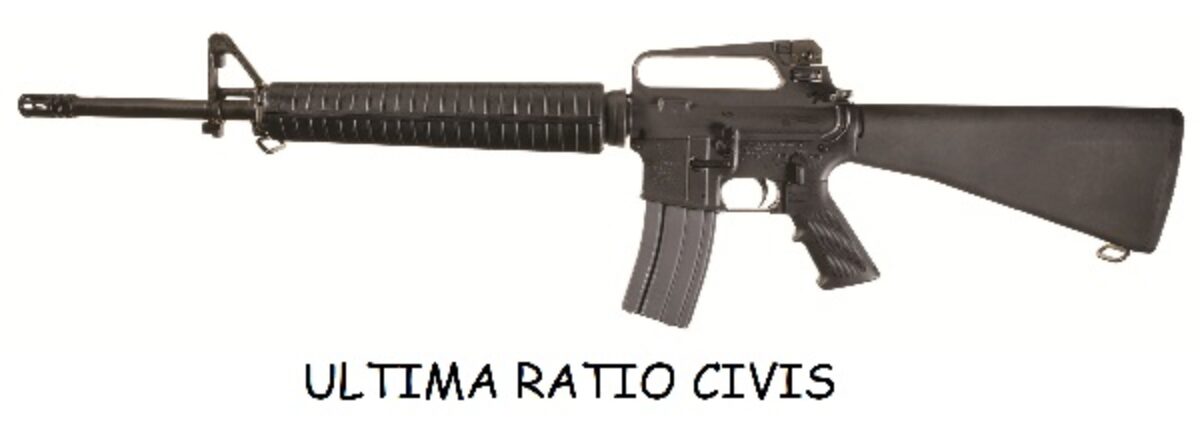
U.S. Sen. Adam Schiff (D-Calif.) replaced the late U.S. Sen. Dianne Feinstein (D-Calif.) and has picked up the mantle of her gun control legacy with one bill in particular. He reintroduced the legislation she often sponsored to reinstate the expired federal ban on so-called “assault weapons” as he hopes to once again prohibit law-abiding Americans from owning the most popular selling semiautomatic rifle in America – the Modern Sporting Rifle (MSR).
Sen. Schiff introduced S. 1531, the Assault Weapon Ban of 2025, and made the announcement through a video he posted to social media. Usurpingly, his claims about the previous federal ban are false. His video message immediately received a brutal Community Note, tagging the first-term senator’s message as “incorrect.” Companion legislation was also introduced in the House of Representatives by Congresswoman Lucy McBath (D-Ga.) as H.R. 3115, with the same title.
The time to act is now.
I’m introducing the Assault Weapons Ban Act of 2025. pic.twitter.com/TZu7GTCjvF
— Adam Schiff (@SenAdamSchiff) April 30, 2025
“The claim that the Bill 31 years ago held crimes and mass shootings at bay for 10 years is incorrect. It sunset after 10 years when Congress’s own research proved it had no effect on violent crime committed with the rifles it banned,” the note corrected. ABC News reporting was the source provided. In addition, Breitbart News tagged the video message in an article and reminded readers – or more appropriately, Sen. Schiff, that the Department of Justice’s National Institute of Justice (NIJ) reported that the ban could not be credited with any reduction in crime.
Bipartisan Bill Expanding Gun Carry for Cops Passes House
Current and former police officers may soon be able to carry firearms into more areas across the country.
On Wednesday, the House of Representatives passed reform of the Law Enforcement Officer Safety Act (LEOSA) by a vote of 229 to 193. 14 Democrats crossed over to join 215 Republicans in passing HR 2243. It expands where officers who’ve kept up with training requirements can carry firearms to include private property open to the public, school zones, federal parks, and certain federal facilities open to the general public–such as the post office or Veterans Affairs facilities.
“I’m pleased today the House passed my bipartisan LEOSA Reform Act, which offers real solutions to address threats such as terrorism and mass shootings by ensuring that our retired and off-duty law enforcement officers can exercise their right to concealed carry – no matter where they live or visit,” Rep. Don Bacon (R., Texas), a co-sponser of the bill, said in a statement. “These measured changes will make existing law stronger and more workable for those who seek its benefits while maintaining the rigorous standards that currently apply.”
“Many of our retired law enforcement officers are ready to continue serving our community but are unable to due to current law,” Rep. Henry Cuellar (D., Texas), another co-sponsor, said. “This bipartisan legislation will fix the issues that our nation’s off-duty officers and retired cops face while concealed carrying.”
HR 2243 represents one of the few gun-related bills that has a chance of making it through the Senate and into law. It shows how potent law-enforcement interests remain on Capitol Hill, with Congress willing to carve out numerous special exceptions to federal, state, and local gun laws for current and former cops.
Still, the Senate version introduced by Republican Senator John Kennedy of Louisiana has only gained a handful of co-sponsors to date. All of them are Republicans. An identical bill from the last Congress never gained Democratic co-sponsors and didn’t make it out of the Judiciary Committee.
But the sizeable support House Democrats gave to the bill, even if the majority of the party still voted against it, suggests it could garner a similar level of support in the Senate if it makes it up for a vote this time around.
Supreme Court Second Amendment Update
There are six more conferences where the justices of the United States Supreme Court will vote on petitions for a writ of certiorari before they go on their summer break at the end of June. Prior to reconvening on the first Monday in October, there will be a “long conference” toward the end of September where the justices dispose of the cert petitions that were not disposed of by the end of June, and those where a response (or waiver to respond) were filed during their summer break.
In years past, that long conference typically disposed of far more than 1,000 petitions, but the number of petitions filed each term has significantly declined in recent years. Still, if the past is prologue, the long conference is the conference in which the most petitions will be denied. Last term, 619 petitions that were briefed too late for the 2023-2024 term were disposed of, plus 406 docketed after July 1, 2024, for a total of 1025 petitions. That includes writs of mandamus/prohibition, motions for rehearing, etc.
There are a dozen Second Amendment cert petitions scheduled for this Thursday’s SCOTUS conference. Three are of note: The interlocutory appeal of the Rhode Island ban on magazines that hold more than ten rounds (Ocean State Tactical), the appeal of the final judgment challenging Maryland’s semiautomatic rifle ban (Snope), and the return of Edell Jackson, Petitioner v. United States No. 24-6517, in which the Eighth Circuit Court of Appeals held that individuals cannot challenge the Federal law that prohibits persons from possessing firearms who were convicted of felonies punishable by more than one year of confinement or persons convicted of state law misdemeanors punishable my more than two years of confinement (18 U.S.C. § 922(g)(1)).

Politicians……..
Missouri Lawmakers Adjourn Without Final Vote to Get Rid of This ‘Gun-Free Zone’
Concealed carry will remain off-limits on public transportation in Missouri for at least another year after Republican senators ended their legislation two days earlier than mandated on Wednesday. The early adjournment was the result of a rarely-used parliamentary move meant to cut off debate on two bills dealing with voter-approved referendums on abortion and paid sick leave.
It was the 5th year in a row the Senate was unable to make it to the 6 p.m. Friday constitutional deadline for the session to adjourn. Even the House decided to adjourn early, announcing that it would work on bills Thursday then head home for the year.
It marks the first time the House has not worked on the legislative session’s final day since a fixed adjournment date was set in 1952.
House Speaker Jon Patterson, a Lee’s Summit Republican, said despite the Wednesday meltdown, the Senate actually functioned much better than any year since he joined the legislature.
“With the Senate, you just have to keep your expectations in check,” he said. “But I’m actually very happy with the way things went. You can’t always end the way you want.”
After years of the Senate’s discord being caused by internal GOP squabbles, Republican leaders celebrated soon after the early adjournment Wednesday by touting party unity and a host of big-ticket accomplishments.
They pointed to legislation sent to the governor enacting state control of the St. Louis police, exempting capital gains from the income tax and pumping $50 million into a private school voucher program, among others.
“This session proved what’s possible when Republicans lead together,” said Senate President Pro Tem Cindy O’Laughlin, a Shelbina Republican.
… Republicans cut off debate using a procedural maneuver known as “calling the previous question,” or PQ.Used regularly in the Missouri House, it is used rarely in the Senate because the chamber has a tradition of unlimited debate and negotiations over difficult issues. Wednesday was the first time since 2020 when a PQ was invoked and the first time since 2017 when it was used during a regular session.
In addition to HB 328 failing to receive a vote in the Senate before the chamber adjourned, the legislation known as the Second Amendment Preservation Act also ended up on the cutting room floor. That’s a little less surprising to me, given the opposition by law enforcement groups across the state and the fact that a previous version of SAPA had been ruled unconstitutional by a federal appeals court, but it’s incredibly frustrating that the bill that would have allowed lawful gun owners to legally carry a firearm on public transportation appears to be dead in the water for the rest of the year.
Gov. Mike Kehoe has said he’ll call lawmakers back into session to vote on a stadium funding plan for the Kansas City Chiefs and Royals, and some senators have also suggested a special session to address a $500 bill funding various construction and infrastructure projects across the state, but at this point there’s no indication that HB 328 would be brought up for a vote if and when lawmakers return to Jefferson City.
The bill repealing the prohibition on lawful carry in public transit passed the House on a 106-45 vote on April 10, but had yet to receive a vote in the Senate Transportation, Infrastructure and Public Safety Committee despite a public hearing on the measure that was held on April 22. It’s possible that even if the Senate had stayed in session until Friday the measure wouldn’t have made it to the Senate floor for a final vote, but the parliamentary move deployed on Wednesday guaranteed that it wouldn’t get to Kehoe’s desk anytime soon.
It’s ridiculous that a Second Amendment-friendly state like Missouri still deprives lawful gun owners from being able to carry on buses and light rail in places like Kansas Cit and St. Louis, and there were high hopes that this year lawmakers would finally get rid of those “gun-free zones”. The Senate president can pat herself on the back if she wants for “proving what’s possible when Republicans lead together”, but from a Second Amendment perspective she and other Senate leaders don’t have anything to be proud of, especially when those Missourians who rely on public transportation to get around continue to be denied their ability to protect themselves throughout their daily routine.
2A Groups Urge Congress to Pass Full Hearing Protection Act
While a move to zero out the $200 tax on suppressors has initial approval on Capitol Hill, Second Amendment advocates stress there is still a lot of work to be done.
Following a marathon overnight markup battle from Tuesday night into Wednesday morning, the nearly 400-page reconciliation package approved in a party-line vote by the House Ways and Means Committee included a section that dropped the long-standing $200 tax on suppressors to $0.
The bill now goes to the House Budget Committee for further consideration before heading to the House floor. That, argue NFA reformers, allows another chance to drop the regulation that would remain even if the tax remained zeroed out.
“Now, we call on the full House to do the right thing by inserting Section 2 of the Hearing Protection Act to permanently remove suppressors from the unconstitutional NFA tax scheme,” stressed Knox Williams, president and executive director of the American Suppressor Association. “We have every confidence House leadership will deliver on decades-long promises to stand up for the Second Amendment rights of all Americans.”
Even the NRA, which for years resisted suppressor deregulation in the past, is calling on its members to reach out to the Congressional switchboard.
“Before final passage of this important legislation, the U.S. House has the opportunity to improve this provision to fully remove suppressors from the NFA,” said the group in a statement. “This provision, along with any other provision in the bill, could be altered or removed at any time before final passage of the bill.”
Advocates point out that the registration mechanism and red tape – not the tax – that come with NFA regulation are the most onerous parts of the current strict controls on the sound moderating devices. Leaving the process intact retains an artificial barrier to acquiring a suppressor, has a negligible impact on crime as ersatz, illegally made suppressors are easy to produce, and a bait-and-switch of simply dropping the tax can easily be undone by future reconciliation bills.
Colion Noir had a good take on the issue in the below piece of video advocacy.
“They’re not doing this because it’s better for us. They’re doing it because it keeps control in their hands. This isn’t about safety, it never was. This is about setting precedent because if they remove suppressors from the NFA today, tomorrow, we’ll ask, ‘why are SBRs still there,’ then after that, ‘why is the NFA even a thing at all.’
That’s what terrifies them. Not the hardware. The idea that we might reclaim authority over our own rights. And I don’t care who’s in office. Republicans, Democrats, bureaucrats with pin collections and zero range time, if you’re in government, the last thing you want to give up is power– and I know it.
That’s why they’ll toss you a $0 fee like a bone and act like they did you a favor because they think you’ll settle for scraps instead of demanding the whole meal.”
As for where Guns.com stands:

🚨 HOLY CRAP… Liberal Justice Kentaji Brown Jackson declares she wants nationwide injunctions because if not, the executive would no longer have to 'move quickly' to reclaim its Article 2 powers… pic.twitter.com/Q8P5ATRjRN
She is basically saying here that she wants the lower…
— Eric Daugherty (@EricLDaugh) May 15, 2025
CBS News warns that if we don’t stop burning ancient carbon, 25% of Florida will soon be underwater.
Oh wait, silly me, this was broadcast 43 years ago. pic.twitter.com/XtITXQAKAt
— Chris Martz (@ChrisMartzWX) May 13, 2025

Judicial immunity applies to conduct inside the courtroom as she oversees a case. She allegedly helped an illegal alien escape capture by ICE. That conduct does not fall within the scope of judging anymore than drunk driving does not fall within the scope of judging. No immunity.
— Mark W. Smith/#2A Scholar (@fourboxesdiner) May 15, 2025

“Banning weapons is the most white privilege idea ever. Rich liberals scoffing at the idea that a person might need to defend their own life is a tower so ivory you can’t look at it in direct sunlight. It’s the personal safety equivalent of “just have the maid do it.”
– Caleb Howe
May 15, 2025
Try “well known but – poorly – covered up, before the 2020 election”
Yes, Our President Was Senile for a Long Stretch.
On the menu today: Before we dive into the latest detailed anecdotes of President Joe Biden’s undeniable senility in his final year in office, we ought to look back at the on-the-money prediction of these all-too-late tell-all books from back in 2022. I knew this was coming and there’s an extremely good chance you knew this was coming, too. Democrats can’t wait to move on; it’s humiliating to learn Biden couldn’t function in the evenings, his staff told Democratic donors that Kamala Harris was incompetent and unelectable, and that Tim Walz was terrified of debating JD Vance. But how do you learn from a mistake if you refuse to ever admit them?
Everyone Recognizes George Clooney . . . Except Biden
The Morning Jolt, June 20, 2022:
I think the single most predictable “bombshell” of the coming years is that sometime in 2025, someone like Bob Woodward or Robert Costa will publish a book with a title like “Perpetual Crisis: Inside the Biden White House,” and we will “learn” something like:
The president’s official health report said he was in fine shape for his age. But behind the scenes, Jill Biden, Ron Klain, and Susan Rice were deeply concerned the president’s health was rapidly declining, and that he would soon be unable to perform his duties.
His speech was becoming less and less coherent, his thinking more erratic, his mood shifts more intense, and he angrily lashed out at routine advice or recommendations. He insisted he had not been told things he had been briefed on and that his wrong statements were correct. He repeatedly insisted the U.S. had committed to protecting Taiwan, when no treaty required it.
When asked about this, Biden insisted no policy had changed. At almost every public appearance, no matter how much he had been instructed to stick to the teleprompter’s prepared remarks, Biden would go off script and add some comment or outburst — like “for God’s sake, this man cannot remain in power!” — that undermined his message and created new foreign-policy headaches.
But the first lady, Klain, and Rice all concurred that Biden’s problems could be hidden from the public, at least for now, and that Vice President Harris taking over was unthinkable — both because it would be too traumatic for the country and because they had little faith in Harris’s ability to defeat Trump or DeSantis in 2024.
Either man entering the Oval Office in January would put nothing less than all of American democracy at risk. For the good of the country, Biden had to stay in place, and his cognitive decline hidden — much as FDR’s disability, JFK’s back pain, and Woodrow Wilson’s stroke had been hidden before.
Biden’s public appearances grew less and less frequent, and he virtually stopped doing sit-down interviews. Late at night, Klain and Rice would get together, satisfied they had kept the ship sailing for another day. All the while, the public had no idea that Biden was in such rough shape.
Though it will be treated like a bombshell revelation, the fact is we all have eyes and ears and can see and hear Biden.
I just wish the lottery numbers were so easy to predict.
Enjoy these days of Joe Biden getting knocked around like a piñata, because after Jake Tapper and Alex Thompson have sold all the books they can, the story of the coverup of Joe Biden’s failing physical and mental health is going to disappear like the subject of a David Copperfield prime-time special. It’s just too embarrassing, too harmful to the Democrats’ priorities now, too much of a benefit to Donald Trump and Republicans. Senate Minority Leader Chuck Schumer yesterday, on CNN:
Trump admin reverses Biden’s gas stove ban, take aim at climate-inspired start-stop car tech
The Trump administration has slashed regulations concerning standards over the width of shower heads, bans on a swath of gas stoves, as well as other regulations for standards ruling over other household appliances that were imposed by the Department of Energy. This also comes as EPA head Lee Zeldin is taking aim at start-stop technology in cars, or the system that automatically turns off a car when it is stopped at a light to save gas.
According to the Washington Free Beacon, the Energy Department took sweeping actions on Monday to slash dozens of regulations for household appliances from dishwashers to dryers that were issued under former President Joe Biden. The regulations included restricted sales on certain types of gas stoves, faucets, shower heads, and microwaves.
“It should not be the government’s place to decide what kind of appliances you or your restaurants or your businesses can buy,” Energy Secretary Chris Wright commented about the regulations. “Everybody wants clean air and wants to lower their energy costs and run their factories good as they can. The big hand of government doesn’t actually help that process at all.”
“We will look for every way we can to protect freedom of the American worker and pursue President Trump’s agenda, get rid of the nonsense, bring back common sense, make life more affordable, and opportunities greater,” Wright added.
So, basically China’s version of our Nitro Zeus.
What really does interest me is whether or not they had an actual ‘Nitro’ (Direct Action – do not ask) part of that.
US Officials Find ‘Rogue’ Communication Devices in Chinese Power Inverters
Remember “Volt Typhoon?” That was the name given to a group of Chinese hackers who were identified last year by Microsoft. Volt Typhoon was a state sponsored effort to gain access to US infrastructure including communications and utilities. At the time, FBI Director Christopher Wray said this about the effort.
“The fact is, the PRC’s targeting of our critical infrastructure is both broad and unrelenting,” he said. And, he added, the immense size—and expanding nature—of the CCP’s hacking program isn’t just aimed at stealing American intellectual property. “It’s using that mass, those numbers, to give itself the ability to physically wreak havoc on our critical infrastructure at a time of its choosing,” he said.
Here we are just over a year later and US officials are now expressing concern about another element of our energy infrastructure: solar power inverters. Solar panels generate DC power but the electrical grid runs on AC power. A solar inverter converts the DC power into AC power compatible with the grid. Many of these power inverters are made in China and now officials are finding evidence that some of them have “rogue” communications devices built in to them.
While inverters are built to allow remote access for updates and maintenance, the utility companies that use them typically install firewalls to prevent direct communication back to China.
However, rogue communication devices not listed in product documents have been found in some Chinese solar power inverters by U.S experts who strip down equipment hooked up to grids to check for security issues, the two people said….
The rogue components provide additional, undocumented communication channels that could allow firewalls to be circumvented remotely, with potentially catastrophic consequences, the two people said…
Using the rogue communication devices to skirt firewalls and switch off inverters remotely, or change their settings, could destabilise power grids, damage energy infrastructure, and trigger widespread blackouts, experts said.
“That effectively means there is a built-in way to physically destroy the grid,” one of the people said.
So, how this might work is the US finds itself in a conflict with China. Say, for instance, China invades Taiwan and the US attempts to stop them. Suddenly, power grids around the country start misbehaving or fail completely. This is clearly the kind of attack on domestic infrastructure that Volt Typhoon was aimed at as well.
The unnamed US officials don’t name and names but we have a pretty clear idea which Chinese companies could be involved just based market share.
Huawei is the world’s largest supplier of inverters, accounting for 29% of shipments globally in 2022, followed by Chinese peers Sungrow and Ginlong Solis, according to consultancy Wood Mackenzie…
While Huawei decided to leave the U.S. inverter market in 2019 – the year its 5G telecoms equipment was banned – it remains a dominant supplier elsewhere.
Though discovered in the US, the presence of unregistered equipment has raised alarm in Europe.
The European Solar Manufacturing Council (ESMC), the body which represents the interests of some Europe-based PV companies, said that: “With over 200GW of Europe’s solar capacity relying on these inverters—equivalent to more than 200 nuclear power plants—the security risk is systemic.”…
Last week, PV Tech spoke to a leading European inverter manufacturer at the Intersolar Europe trade show in Munich, who said that the risk of cyberattacks to cut power supply from solar inverters was “real”, and that “it’s very clear inverter companies could switch off the grid if they want to.”
All Chinese companies are legal required to cooperate with CCP intelligence services, giving them anything they ask. So it’s not really a shock that this would happen. China has shown for years that it will attempt to exploit every opportunity to spy, steal our technology and gain control of our networks. At this point we really should just assume this is happening everywhere, all the time.
Of course, politicians (I’m pointing a finger at both the Texas House and Senate) can’t simply pass the same bill in both houses of their legislature.
It’s like they’ve never heard of email, text messages, or the telephone where they can coordinate things.
Texas House Lawmakers Pass Self-Defense, Pro-Second Amendment Measures
Texas House members have passed legislation that would strengthen Second Amendment rights and expand protections for individuals who lawfully exercise self-defense.
House Bill 170, filed by State Rep. Ryan Guillen (R–Rio Grande City), would prohibit civil actions against an individual who threatens or administers force or deadly force if a grand jury does not indict them, or if charges are dismissed or the person is acquitted.
In addition, if the person pursuing the civil action is found to be prohibited from seeking it, Guillen’s proposal would require them to pay court costs and the defendant’s attorney fees.
The measure is similar, but not identical, to Senate Bill 1730 by State Sen. Bob Hall (R–Edgewood), which senators passed 26-3-2 on Monday afternoon.
Like Guillen’s measure, Hall’s would extend civil immunity protections to those who exercised self-defense and never faced grand jury charges. However, unlike Hall’s measure, Guillen’s proposal would extend immunity to those who merely “threaten” the use of force.
“This strengthens the Texas castle doctrine by extending civil immunity to individuals who lawfully threaten to use force or deadly force in self-defense, without requiring the force to actually be used,” said Guillen.
HB 170 finally passed in a 118-20-3 vote by representatives on Tuesday.
Another proposal, HB 2458 by State Rep. Wes Virdell (R–Brady), would provide a defense to prosecution for aggravated assault when an individual threatens death or serious bodily injury by displaying a deadly weapon if they:
- Successfully demonstrate that their threat constituted legally justified self-defense.
- Reasonably believed that using the deadly weapon was immediately necessary to protect themselves from aggravated assault.
The legal term “defense to prosecution” is a type of total affirmative defense. These defenses, even if the prosecution proves the elements of the crime, present additional facts that could otherwise negate the defendant’s liability.
“This is just saying that if you have to unholster your weapon while you’re acting in self-defense, then it’s a defense to prosecution,” explained Virdell.
Lawmakers passed HB 2458 in a 119-18-2 vote.
Two proposals dealing with citizens’ gun rights were also approved by representatives on Tuesday, but they faced more pushback from Democrats than those related to self-defense, with both votes splitting largely along party lines.
HB 3053, filed by Virdell, would ban local municipalities from adopting or enforcing firearm buyback programs—government initiatives intended to remove guns from circulation by purchasing the firearms.
State Rep. Gene Wu (D–Houston) pushed back on the proposal, arguing that cities should be able to decide for themselves if they want a buyback program.
While Virdell contended that cities often ignore their citizens in passing the programs, Wu argued that the buyback program in Houston was widely supported by residents.
“I have been to multiple gun buyback programs in my districts that were overwhelmingly popular—that people lined up around the block for hours and hours and hours to trade in their weapons,” said Wu.
Virdell noted that most firearms bought through the programs are not destroyed entirely, with the government auctioning off parts of the weapons to private contractors who then resell them back to the public.
“At millions of dollars per city that’s doing this, and the estimate by The Trace over the time period this has been going on is over a billion dollars right now,” said Virdell.
The measure passed 85-56-2.
HB 1794, filed by State Rep. Carl Tepper (R–Lubbock), would permit those with a license to carry (LTC) to bear concealed handguns at certain polling locations, unless carrying at the location is otherwise prohibited by state law.
Primary or secondary schools are examples of polling locations at which Tepper’s proposal would not apply.
“I would also like to add here that private property owners get to keep their own policies,” said Tepper. “So, if the grocery store doesn’t allow handguns, the polling place will also not be allowed to have handguns.”
Tepper’s measure passed 83-50-2.
All four of the measures will now be sent to senators, who have increasingly limited time to read over and consider the hundreds of measures that representatives have stacked up for them.
We already have that in Missouri
Texas Senators Approve Measure Strengthening Right to Self-Defense
While Texas is already a castle doctrine state, individuals whom a grand jury declines to prosecute may still face civil action after exercising self-defense.
Texas senators have approved a measure strengthening the state’s protections for justified use of force or deadly force in self-defense situations.
Senate Bill 1730, filed by State Sen. Bob Hall (R–Edgewood), passed 26-3-2 on Monday.
The measure would prevent a claimant from recovering civil damages for personal injury or death if a grand jury has declined to pursue, thrown out, or acquitted the defendant of criminal charges.
In addition, if the claimant is found to be prohibited from seeking civil action, the proposal would require them to pay court costs and the defendant’s attorney fees.
Hall explained when laying out the measure before lawmakers that Texas is a castle doctrine state, meaning individuals are permitted to use force or deadly force in order to defend themselves on their own property.
“However, under current Texas law, individuals may file civil lawsuits seeking damages for personal injury or death resulting from the use of force or deadly force, even in cases where the defendants’ actions have been deemed lawful in a criminal proceeding,” claimed Hall.
The senator further argued that the current system creates “a substantial financial and emotional burden” for defendants who are faced with lawsuits after having already been cleared of criminal charges.
State Sen. Sarah Eckhardt (D–Austin) pointed out that the standards for civil and criminal actions are different, with criminal action requiring proof “beyond a reasonable doubt” and civil action having lesser standards.
Hall said that, although he is not an attorney and could not speak on Eckhardt’s comments directly, the intent of his measure is to “protect someone who has acted lawfully in their home … from an arduous civil case.”