A huge blast on Saturday in Iran’s southern port of Shahid Rajaee has killed at least four people. According to The Guardian, the explosion wounded more than 500, with an official suggesting the fire was caused by the explosion of chemical containers.

“If the smoke is a funny color, always run to take cover.”

Q: What steps should you take when this happens?
A: Large and rapid

I had never heard of ‘LapuLapu Day’ before, but it turns out we all here have a sort of connection to the festival.

Lapulapu or Lapu-Lapu, was a Datu (chief) of Mactan, a Philippine island. Lapulapu is known for the Battle of Mactan in 1521, where he and his men defeated Spanish forces led by Portuguese explorer Ferdinand Magellan on his voyage of circumnavigation. Magellan’s death in that battle delayed the Spanish occupation of the islands until the expedition of Miguel López de Legazpi reached the islands in 1565.

What happens when a city fails to block access to streets to a street festival?


9 people killed when a vehicle plows into a Filipino street festival crowd in Vancouver

VANCOUVER, British Columbia (AP) — A man drove a vehicle into a crowd at a Filipino heritage festival in the Canadian city of Vancouver, killing at least nine people and injuring an unknown number of others, police said Sunday.

The vehicle entered the street at 8:14 p.m. on Saturday and struck people attending the Lapu Lapu Day festival, the Vancouver Police Department said in a social media post.

Several other people were injured, but the exact number of casualties wasn’t immediately available.

A 30-year-old Vancouver man was arrested at the scene and the department’s Major Crime Section is overseeing the investigation, police said.

“At this time, we are confident that this incident was not an act of terrorism,” the police department posted early Sunday.

Interim Vancouver Police Chief Steve Rai told a news conference that the man was arrested after initially being apprehended by bystanders.

MOMof DataRepublican

So Susan Rice and her cronies are complaining because she was terminated from her DoD advisory board.

Let’s remember that she was the one that was trotted out onto all the talk shows after our country lost precious citizens during Hillary’s Benghazi debacle. She claimed it was all caused by a video.

Then during the ill-fated withdrawal from Afghanistan she was working on domestic policy, but she unapologetically defended the Biden administration’s decision to withdraw even though we left billions of dollars of equipment in our enemies’ hands and lost precious service people.

Now she is calling for Hegseth to resign over a text. The hypocrisy of Democrats remains astounding!

Arkansas Moves to Bolster Gun Rights with New Constitutional Amendment—Here’s What It Means for You

LITTLE ROCK, AR — Arkansas has taken a major step toward expanding protections for gun owners, with lawmakers approving a constitutional amendment that strengthens the right to keep and bear arms across the state. Senate Joint Resolution 11 (SJR11), led by Sen. Justin Payton and Rep. Wade Duffield, has passed both legislative chambers and was officially approved by the Governor on April 22, 2025.

The next step? Voters will decide its fate in the upcoming November 2026 general election.

What SJR11 Actually Does

SJR11 is a proposed amendment to the Arkansas Constitution that aims to make the state’s gun rights language more clear, specific, and robust. While Arkansas already recognizes the right to bear arms, this amendment expands that protection by:

  • Clarifying lawful uses of firearms beyond “common defense” to also include lawful hunting, recreational use, and any other lawful purpose.
  • Specifically protecting ammunition, firearm accessories, and firearm components, ensuring they are part of the right to keep and bear arms.
  • Declaring gun rights as a “natural, fundamental, and individual right” that “shall not be infringed.”

If adopted by the public, this language would be written directly into Article 2, Section 5 of the Arkansas Constitution, becoming law effective January 1, 2027.

Why This Matters for Gun Owners

This amendment doesn’t create a new right—it reinforces and strengthens existing Second Amendment protections by making them harder to regulate or reinterpret at the state level. By clearly defining what’s protected—including ammo and accessories—it helps prevent future legislation from attempting to ban or restrict common tools used by law-abiding gun owners.

Additionally, by defining these rights as “fundamental” and “individual,” the amendment could potentially elevate the level of judicial scrutiny applied to any gun control measures challenged in court.

What’s Next?

The amendment now heads to the Arkansas ballot in November 2026, where voters will have the final say. If a majority of voters approve it, the amendment becomes part of the state constitution. Public education efforts and campaigning—both in support and opposition—are expected to ramp up as the election nears.

For now, Arkansas gun owners can view this as a significant win, with overwhelming legislative support (including dozens of co-sponsors across both chambers) and a clear path forward to enshrining more explicit Second Amendment protections in the state’s highest legal document.

This move highlights a growing trend in states seeking to proactively reinforce firearm rights at the state level, ensuring that courts and future lawmakers cannot easily dilute what many view as a core individual liberty.

Morrisey signs three pro-Second Amendment measures into law

BERKELEY SPRINGS–Gov. Patrick Morrisey, on Friday, signed three bills into law to protect the Second Amendment rights of West Virginians.

Joined by state legislators and local supporters at Cacapon Resort State Park, Morrisey spoke to the freedoms sought and earned by West Virginians.

“We have an amazing state motto: ‘Mountaineers are always free,’” Morrisey said. “We should think about that every single day.”

He went on to say that those freedoms are given by God, not the government.

“It’s our job as legislators to safeguard those liberties at all costs,” he said.

In a move to enhance the state’s strong support of the Second Amendment and to battle against individuals on the far left who have and will continue to attempt to take away those gun rights, he signed House Bill 2067, House Bill 3342 and Senate Bill 270 into law.

“The far left has tried to take away our Second Amendment rights. We’ve learned about their schemes,” Morrisey said. “My goal is to stay one step ahead of the radical gun-grabbers and government elites,” he continued as he stepped forward to sign three bills that he said protect the rights of West Virginians.

HB 2067 ensures that firearm companies are not unfairly held liable for the actions of those who use their products.

“The far left has pushed to sue gun manufacturers for the actions of criminals,” Morrisey said. “That’s just wrong.”

HB 3342 prohibits banks that contract with the state from discriminating against a firearm entity or firearm trade association. Morrisey said that in West Virginia, big financial institutions will not be allowed to de-bank companies in the firearms business or the trade associations.

Finally, SB 270 prohibits the government from suspending gun rights during declared emergencies or disaster responses. While West Virginia did not face the issue during the pandemic, Morrisey said that it was only because practices were put in place at the time.

Continue reading “”

BLUF
In rebuttal, Francisco effectively summarized the core of the case: The PLCAA is “not just about protecting the manufacturers, the distributors and the retailers, but it’s about protecting the right of every American to exercise their right under the Second Amendment to possess and bear firearms. That right is meaningless if there are no manufacturers, retailers and distributors that provide them in the first place.”

What Supreme Court Justices Had to Say About Mexico’s Attempt to Demolish Our Second Amendment

Mexico has extinguished its constitutional arms right and now seeks to extinguish America’s,” stated the NRA’s amicus brief in the U.S. Supreme Court case Smith & Wesson v. Estados Unidos Mexicanos. The oral argument took place on March 4, and the Court’s decision is expected by the end of June. Based on the Justices’ questions during oral argument, there is reason for cautious optimism that the Court will enforce the federal statute that prohibits abusive lawsuits designed to destroy American firearms businesses.

The roots of the current Mexico case go back to 1998, when the gun-ban group Handgun Control, Inc., orchestrated meritless lawsuits by big-city mayors to attempt to bankrupt American firearms companies through the sheer cost of litigation. Handgun Control, Inc., later changed its name twice, and now calls itself Brady United.

In response, two-thirds of the states enacted legislation to forbid such abusive suits. Then in 2005, a bipartisan Congress passed and President George W. Bush (R) signed a federal statute called the Protection of Lawful Commerce in Arms Act (PLCAA) to stop the frivolous suits. Given the new law, most judges promptly dismissed the abusive suits.

Yet two decades later, the Mexican government is in American courts attempting to accomplish what the previous lawsuits did not, namely bankrupting the American firearms industry—and thereby making the exercise of Second Amendment rights impossible.

The allegations in the Mexico case are updated versions of the same bogus allegations from the earlier suits: American firearms businesses that obey all of the many laws about firearms commerce should be held financially liable for criminal gun misuse. Mexico wants $10 billion from American firearms businesses, plus court-ordered, drastic restrictions on the firearms industry.

Continue reading “”

‘Law-Abiding’™ – *cough*
Rightful liberty is unobstructed action according to our will within limits drawn around us by the equal rights of others. I do not add ‘within the limits of the law’ because law is often but the tyrant’s will, and always so when it violates the rights of the individual.
– Thomas Jefferson

The Constitutional Rights of Law-Abiding Gun Owners

By Rep. Adrian Smith (NEB-3)

The right to keep and bear arms is fundamental to the American experiment in self-governance. From its founding, our nation has recognized how a free people must not be deprived of means of protection and self-defense. In 1791, the Founders enshrined the Second Amendment in the Bill of Rights, declaring the right to bear arms “shall not be infringed.”

I have always strongly supported the Second Amendment because I recognize it speaks to the heart of our country. This right is more than a safeguard for sportsmen, hunters, and firearms collectors. Law-abiding Nebraskans and other Americans across our land own and utilize guns in order to deter crime and protect or defend themselves, their families, livestock, crops, and homes.

Congress has a responsibility to uphold the Second Amendment and apply its constitutional authority to our nation’s laws. For this reason, I am again a cosponsor of the Constitutional Concealed Carry Reciprocity Act. This bill would provide legal clarity for carrying concealed firearms when crossing state lines. In 2023, Nebraska passed constitutional carry legislation enabling individuals over 21 years old to carry concealed firearms without a permit, and many other states already practice reciprocity. In 2024, with my support, the House passed a version of this bill. However, it was not taken up by the Senate before the end of the 118th Congress.

I am also an original cosponsor of the Reining In Federal Licensing Enforcement (RIFLE) Act. Under the Biden administration, the Bureau of Alcohol, Tobacco, Firearms and Explosives’ (ATF’s) zero tolerance policy of revoking licenses from dealers threatened the livelihood of Federal Firearm Licensees (FFLs) such as small and mid-sized gun stores for making minor clerical errors and typos on paperwork required by federal law.

I am encouraged to see how after President Trump took office, ATF’s zero tolerance policy was repealed administratively. Yet, the consequences of this overbearing policy have been serious. In 2024, the ATF recorded its third straight year of increased FFL license revocations and the greatest number of revocations in 20 years. The RIFLE Act would reinstate licenses suspended, revoked, or denied under Biden’s zero tolerance policy and enact permanent avenues for FFLs to appeal before the ATF moves to revoke a license.

Furthermore, I am a cosponsor of the No Retaining Every Gun in a System That Restricts Your (REGISTRY) Rights Act. Currently, FFLs which go out of business must provide all firearm transaction records to the ATF, which maintains these records in the Out-of-Business Records Imaging System (OBRIS) database. This bill would safeguard the privacy of American gun owners by requiring the ATF to destroy existing firearm transaction records and requiring FFLs to destroy existing transaction records should they go out of business.

Without privacy protections like the ones provided by this bill, creating such record keeping requirements leads down a path toward a mandatory gun registry, threatening law-abiding citizens with excessive scrutiny. The constitutional rights of law-abiding gun owners must be respected. Standing the test of time, the Second Amendment has proven the wisdom of the Founders. Its critics are misguided, and I will never stop defending American liberties from abuses by the ATF or encroachment by overreaching restrictions.

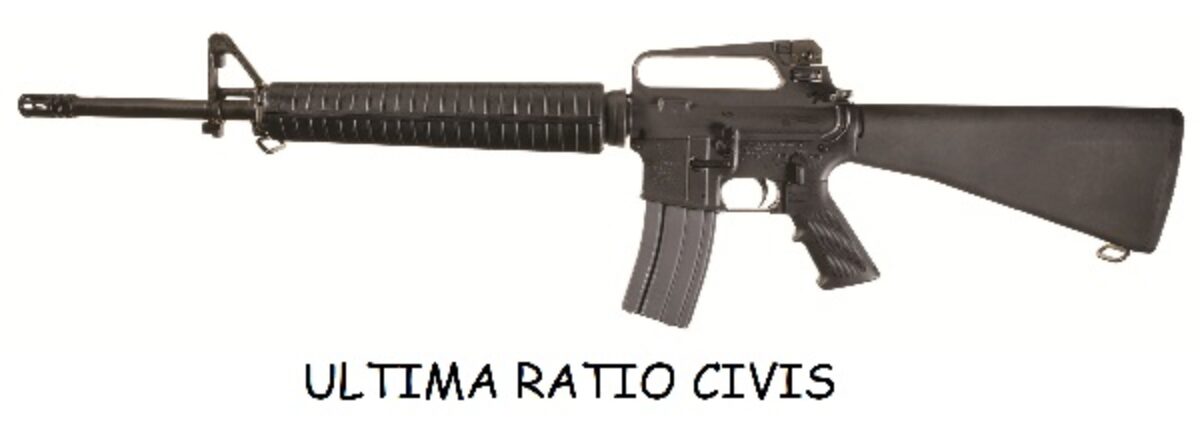
The right to keep and bear arms is fundamental to the American experiment in self-governance. From its founding, our nation has recognized how a free people must not be deprived of means of protection and self-defense. In 1791, the Founders enshrined the Second Amendment in the Bill of Rights, declaring the right to bear arms “shall not be infringed.”

I have always strongly supported the Second Amendment because I recognize it speaks to the heart of our country. This right is more than a safeguard for sportsmen, hunters, and firearms collectors. Law-abiding Nebraskans and other Americans across our land own and utilize guns in order to deter crime and protect or defend themselves, their families, livestock, crops, and homes.

Congress has a responsibility to uphold the Second Amendment and apply its constitutional authority to our nation’s laws. For this reason, I am again a cosponsor of the Constitutional Concealed Carry Reciprocity Act. This bill would provide legal clarity for carrying concealed firearms when crossing state lines. In 2023, Nebraska passed constitutional carry legislation enabling individuals over 21 years old to carry concealed firearms without a permit, and many other states already practice reciprocity. In 2024, with my support, the House passed a version of this bill. However, it was not taken up by the Senate before the end of the 118th Congress.

I am also an original cosponsor of the Reining In Federal Licensing Enforcement (RIFLE) Act. Under the Biden administration, the Bureau of Alcohol, Tobacco, Firearms and Explosives’ (ATF’s) zero tolerance policy of revoking licenses from dealers threatened the livelihood of Federal Firearm Licensees (FFLs) such as small and mid-sized gun stores for making minor clerical errors and typos on paperwork required by federal law.

I am encouraged to see how after President Trump took office, ATF’s zero tolerance policy was repealed administratively. Yet, the consequences of this overbearing policy have been serious. In 2024, the ATF recorded its third straight year of increased FFL license revocations and the greatest number of revocations in 20 years. The RIFLE Act would reinstate licenses suspended, revoked, or denied under Biden’s zero tolerance policy and enact permanent avenues for FFLs to appeal before the ATF moves to revoke a license.

Furthermore, I am a cosponsor of the No Retaining Every Gun in a System That Restricts Your (REGISTRY) Rights Act. Currently, FFLs which go out of business must provide all firearm transaction records to the ATF, which maintains these records in the Out-of-Business Records Imaging System (OBRIS) database. This bill would safeguard the privacy of American gun owners by requiring the ATF to destroy existing firearm transaction records and requiring FFLs to destroy existing transaction records should they go out of business.

Without privacy protections like the ones provided by this bill, creating such record keeping requirements leads down a path toward a mandatory gun registry, threatening law-abiding citizens with excessive scrutiny. The constitutional rights of law-abiding gun owners must be respected. Standing the test of time, the Second Amendment has proven the wisdom of the Founders. Its critics are misguided, and I will never stop defending American liberties from abuses by the ATF or encroachment by overreaching restrictions.
No why do I not trust this to be really happening?

ATF Changes Policy On NICS “Pre-Crime” Monitoring

The Bureau of Alcohol, Tobacco, Firearms and Explosives (ATF) has changed its policy on monitoring the Federal Bureau of Investigation’s National Instant Criminal Background Check System (NICS).

AmmoLand News first reported the ATF using a NICS monitoring system in 2021 after learning about the system through an inside source. The ATF would use NICS to monitor Americans buying guns. Data in NICS is supposed to be deleted within 24 hours, but the ATF requested that all data be saved for 30, 60, 90, or 180 days. The targets being monitored were not being charged with any crime. The ATF was tracking people who they felt “might” commit a crime in the future or associated with the “wrong” people.

The monitoring outraged many in the gun community who felt that the ATF and FBI were creating a “pre-crime” program. Gun Owners of America (GOA) filed a Freedom of Information Act (FOIA) request to show the use of the system. It turned out that the system was in widespread use and not only for those who “might” commit a federal crime. The ATF was monitoring people who might break California state law by purchasing a long gun that wasn’t legal within the Golden State.

The new policy should prevent some of those violations. Any new monitoring must be approved by the ATF Special Agents in Charge (SACs) and the Deputy Assistant Director (DAD). This change prevents rogue agents from using the system for their own needs. Also, the system may now only be utilized in cases involving suspected violations of federal firearm statutes. This new policy prevents ATF agents from monitoring suspects for states such as California.

The memo reads: “Effective immediately, Special Agents in Charge (SACs) approval and Deputy Assistant Director (DAD) concurrence is now mandatory for all NICS alerts. NICS alerts may only be utilized in cases involving suspected violations of federal firearm statutes. See 28 C.F.R. Part 25. This investigative technique should not be utilized to primarily investigate state firearm laws. A formal memo for approval will be utilized which will require the following information: Field Management Staff (FMS) will also monitor all requests.”

The FMS will notify the SAC and requester of upcoming expirations. This monitoring of expiration dates ensures that the flags are removed at the end of the monitoring. Sources tell AmmoLand News that there have been times when a flag is not removed and left in place. This oversight wasn’t done in malice; it was due to procedures not being followed. The new policy should change that.

The memo reads: “FMS will monitor all NICS flags and notify the SAC and requestor of upcoming expirations. Renewal of the NICS alert requires SAC concurrence and DAD approval. This process will also be documented in a formal memo and processed through FMS. Instructions regarding the maintenance and purging of NICS alert information will be provided by FMS. Any current NICS alert may only be renewed utilizing this process.”

A flag can be renewed, but only for six months. After that time period has expired, any extensions must be approved by the ATF Deputy Director and the Chief Legal Counsel. The idea is to prevent the abuse of the problematic NICS monitoring system. New ATF Deputy Chief Robert Cekada signed the letter.


About John Crump

Tennessee Bill Would Strengthen Protection For Firearm Industry In The Volunteer State

A measure that is on the move in the Tennessee Legislature would significantly strengthen legal protections for those in the firearm industry in The Volunteer State.

SB1360 has passed both chambers with overwhelming majorities and is headed for Gov. Bill Lee’s desk for his signature.

Of course, the federal Protection of Lawful Commerce in Arms Act, passed in 2005, was designed to protect gunmakers and sellers from frivolous lawsuits targeting their legally made, lawfully sold products. But many states have also passed state protections, also, to further bolster that protection.

Tennessee passed its version of the PLCAA back in 2023. The new bill further fortifies that law by expanding legal protections to include private sellers, suppressor manufacturers and magazine producers; prohibiting Tennessee courts from recognizing or enforcing out-of-state or foreign court judgments that conflict with Tennessee’s pro-Second Amendment public policy; and penalizing bad-faith litigation by imposing triple damages on out-of-state plaintiffs and their attorneys who attempt to enforce hostile judgments in Tennessee courts.

The measure states: “In a qualified civil liability action brought against a dealer, manufacturer, or seller of a qualified product, the complaint must allege that the dealer, manufacturer, or seller of the qualified product directly caused the damages alleged. The burden of proof is on the plaintiff to demonstrate by clear and convincing evidence that the civil liability action is not barred by this section. If a court determines a civil liability action is barred by this section, then the court shall dismiss the civil liability action with prejudice for failure to state a claim upon which relief can be granted.”

Continue reading “”

‘Gone Off The Rails’: Colorado Dems Stir Up Hornet’s Nest After Passing One Of America’s Most Extreme Anti-Gun Laws.

Colorado Republicans are pushing back against Democratic Gov. Jared Polis for signing one of the most extreme anti-gun laws in the country this month, accusing him of turning a constitutional right into a privilege bought with permits and fees.

The law, SB25-003, bans the sale, transfer and manufacture of most semiautomatic firearms unless prospective gun owners obey a range of new requirements, including training mandates, tests and sheriff-issued eligibility cards. Republicans, like state Rep. Ty Winter, say it’s a deliberate effort to choke off lawful gun ownership through bureaucracy and paperwork — a view increasingly shared by Second Amendment organizations now mobilizing to fight the law in court.

“This bill is putting a paywall in front of a God-given, unalienable right — and that’s the right to self-defense and the right to keep a free nation,” Winter, assistant minority leader in the Colorado House, told the Daily Caller News Foundation. “Gun rights aren’t a red or blue issue. Gun rights are an American issue. We forget what the Constitution is for — it’s not to go hunting. It’s not to go target shooting. It’s to keep a nation free. It’s to keep a government in check. And I think that’s the first thing our colleagues across the aisle don’t realize.”

Continue reading “”