
How are our writers supposed to compete with real news like this? https://t.co/oGGm27Mk3v
— The Babylon Bee (@TheBabylonBee) October 31, 2024
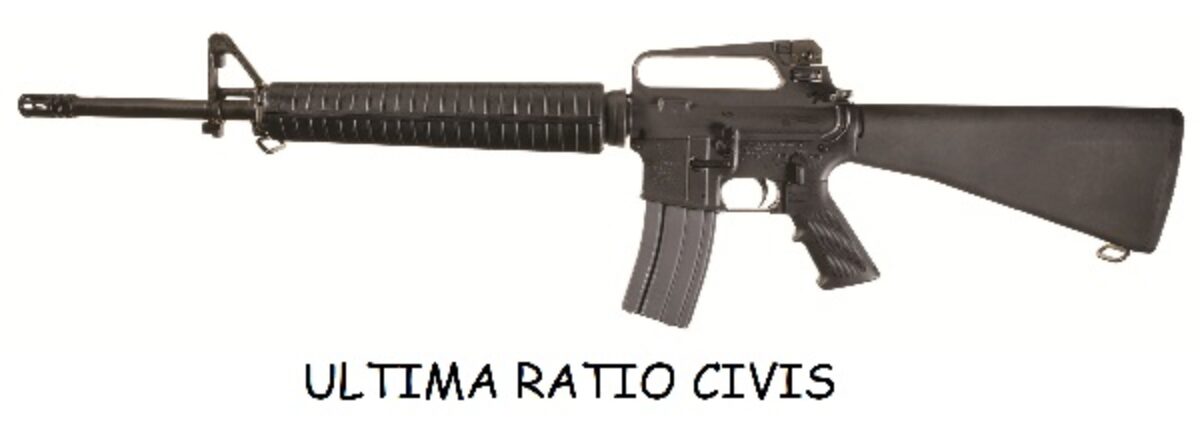
How are our writers supposed to compete with real news like this? https://t.co/oGGm27Mk3v
— The Babylon Bee (@TheBabylonBee) October 31, 2024
.@joerogan pointed out that addressing the root causes of horrific mass murders doesn’t fit the Democrats’ gun control agenda.
This is why anti-gunners refuse to talk about alternative causes or solutions. https://t.co/kEcWQgliKy pic.twitter.com/OrIQ8diOYi
— Gun Owners of America (@GunOwners) October 31, 2024
They want control and regulation to shut down anyone that disagrees with them
— Valentina Gomez (@ValentinaForUSA) October 31, 2024
Mother, son stabbed to death during home invasion; younger son shoots suspect in California
TULARE, Calif. — A home invasion ended in a tragic loss for a family already in mourning in California.
Surveillance video from last Thursday morning allegedly shows a burglar trying to break into a home on Berkeley Way in Tulare, California.
It appears he sees the camera then turns and moves on another home nearby.
That’s where police said Fabian Gamez, 30, tried to enter through the backyard, when he was confronted by the owner, Melissa Quinn, 58.
Gamez attacked Quinn with a knife, then her son Raymond Garza,38, tried to intervene and Gamez began stabbing him, detectives said.
The mother and her eldest son both died from their injuries.
“Losing them, not just one but both at the same time, is a huge hit to the family. They were our protectors and if anything happened they were the first to defend their family members,” said Michael Garza, who is Melissa’s second son and Raymond’s younger brother.
He says their youngest sibling heard the commotion, came out and shot the intruder.
He was able to keep the suspect from getting away until police arrived.
There were more than six people in the home, including Melissa’s father she cared for and Raymond’s children, ages 7, 9 and 19.
The two youngest kids also lost their mother in 2019 and are now coping with the trauma of another tragedy. “They are scared, what my nephew had to see his dad dying on the floor after being viciously stabbed by the intruder,” said Michael.
ABC Fresno affiliate KFSN found Gamez has a history of run-ins with police.
Detectives believe he’d been canvassing the area Wednesday night.
“Detectives now believe that he may have been burglarizing in the area,” explains Sgt. Rosa Moreno, with the Tulare Police Department.
Gamez pleaded not guilty Tuesday to two counts of first degree murder and one count of residential burglary with special circumstances.
The victims’ loved ones say they will continue to fight for justice as they honor the mother and son.
“They were the limelight of any event they’d show up. Their personalities were always glowing,” said Michael.
The family now left with only memories and heartbreak.
Melissa leaves behind six grandkids and two sons.
Raymond leaves behind his three young children. He was their only living parent.
The family has set up a GoFundMe page to help with funeral expenses.
Gamez will be back in court next month.

October 31, 2024
Federal Appeals Court Upholds DC Magazine Ban
Gun owners in the nation’s capital will continue to face ammunition magazine capacity limits, a federal appeals court ruled Tuesday.
A divided three-judge panel for the DC Circuit Court of Appeals affirmed a lower court decision upholding DC’s ban on the possession and sale of what it called “extra-large capacity magazines” (ELCMs). The panel ruled the city’s ten-round limit for magazines fit within the nation’s historical tradition of regulating “particularly dangerous weapons” and those “capable of unprecedented lethality,” even though there weren’t similar bans when the Second Amendment was ratified.
“Because ELCMs implicate unprecedented societal concerns and dramatic technological changes, the lack of a ‘precise match’ does not preclude finding at this preliminary juncture an historical tradition ‘analogous enough to pass constitutional muster,’” the majority wrote in an unsigned opinion in Hanson v. District of Columbia. “Therefore, we hold Hanson is not sufficiently likely to succeed on the merits of his claim to warrant the entry of a preliminary injunction against enforcement of the magazine cap.”
The ruling deals a significant blow to gun-rights advocates in their decades-long quest to undo DC’s restrictive gun laws. It comes as appeals courts across the country have routinely upheld similar bans in recent years despite the Supreme Court raising the bar modern gun laws have to clear to pass muster in 2022’s New York State Rifle and Pistol Association v. Bruen.
Hunter kills charging grizzly bear in self-defense near Mule Meadows
CARIBOU-TARGHEE NATIONAL FOREST, Idaho – A hunter faced a life-threatening encounter with a sow grizzly bear on October 26 while elk hunting north of Kilgore, near Mule Meadows.
The hunter was walking through thick timber when a grizzly unexpectedly emerged and ran directly at him. The hunter used his hunting rifle to shoot the bear. It did not make contact with the hunter.
The hunter immediately reported the incident to the Clark County Sheriff’s Office. Forest Service Law Enforcement and the Idaho Department of Fish and Game responded.
After an investigation, officials say the hunter acted in self-defense during the surprise encounter with the bear.
Grizzly bears, protected under state and federal law, are common in the Greater Yellowstone area and parts of northern Idaho. They occasionally venture as far south as the Grangeville and Salmon areas in central Idaho.
The Idaho Department of Fish and Game emphasizes the importance of safety when hunting in grizzly territory. They advise hunters to carry bear spray, hunt with companions, and communicate plans with each other.
Hunters should be vigilant for grizzly bear signs, such as fresh tracks. They should also retrieve meat quickly and hang meat, food, and garbage at least 200 yards from camp and 10 feet off the ground. To avoid startling a bear, they should make noise, especially near creeks and thick vegetation, as most attacks occur when a bear is surprised at close range.
Hawkins: Self-Defense Is the ‘Central Component’ of the Second Amendment
The Second Amendment references a militia, “the security of a free State,” and two specific rights–the right to possess arms and the right to carry them–and all of this is bound together by a general, overarching right to self-defense.
To put it simply, the Second Amendment is multi-faceted.
It is multi-faceted in the following ways: It makes clear the importance of the people being able to come together in militia, noting that such a militia must be “well regulated.” In other words, that militia must be well ordered. It warns that “the security of a free state” rests on the reality and performance of such a militia and then points specifically to the people’s right to “keep” arms and to “bear” arms, that is, the right to possess arms and to carry them.
Despite the numerous and different aspects of the Second Amendment, it remains simple to understand because all the aspects of it are held together by a central component, and that component is self-defense.
In the majority opinion for McDonald v. Chicago (2010), United States Supreme Court justice Samuel Alito wrote, “Self-defense is a basic right, recognized by many legal systems from ancient times to the present day, and in Heller, we held that individual self-defense is ‘the central component’ of the Second Amendment right.”
I like to present it this way when speaking to groups and organizations around the country: “Self-defense is the hinge on which the door of the Second Amendment swings.”
What does this mean for the American people? It means that while the Second Amendment protects guns, it protects other tools that can be used for self-defense as well. The “central component” of the Second Amendment is not a 9mm pistol or a .357 Magnum revolver, but the right to defend one’s own life and liberty with whatever tools are in common use for such defense in each period of America’s existence.
For example, the Massachusetts Supreme Court recently struck down that state’s ban on switchblades and issued an opinion which said, in part, “While both Heller and Bruen involved handguns, Second Amendment protections subsume more than just firearms.”
Your life is your most valuable possession, and the Founding Fathers put the Second Amendment in place to protect your right to defend that life. The vast majority of Americans believe a firearm is the best way to protect their lives, and the Second Amendment has them covered. A number of other Americans believe a knife or other tool is the best means for protecting their lives, and the Second Amendment has them covered as well.
FPC Files New Lawsuit Challenging Texas Gun Carry Bans
FORT WORTH, TX (October 29, 2024) – Today, Firearms Policy Coalition (FPC) announced that it has filed a new Second Amendment lawsuit challenging laws prohibiting individuals from carrying firearms at certain locations in the State of Texas. The complaint for Ziegenfuss v. McCraw can be viewed at firearmspolicy.org/ziegenfuss.
Through the case, Plaintiffs seek to end enforcement of Texas laws that restrict firearm carry in three locations: (1) in any business where alcohol comprises 51% or more of sales (even if the individual is not consuming alcohol), (2) racetracks, and (3) sporting events. These locations “are not so-called ‘sensitive places’ where Texas can disarm people such as Plaintiffs; indeed, the challenged locations cannot be analogized to the very few—and very different—locations where bearing arms was prohibited under constitutionally relevant American history (at and around the time of the Founding),” Plaintiffs say in their Complaint.
“FPC already struck down Texas’s ban on firearm carry for adults under the age of 21. We now set our sights on ending enforcement of these locational bans so that all peaceable adults may carry firearms in public places without fear of criminal prosecution. This case is one of dozens we are litigating to help us achieve our strategic objectives and eliminate unconstitutional and immoral carry restrictions throughout the United States,” explained FPC President Brandon Combs. ……………
Completely baffled by everyones collective intentional ignorance on this. He has a studio with massive amounts of expensive equipment and staff. Everyone, *everyone*, comes to him. He's the biggest podcaster in the world. She needs him, not the other way around. https://t.co/SAyXr6zVVU
— John Ekdahl (@JohnEkdahl) October 30, 2024
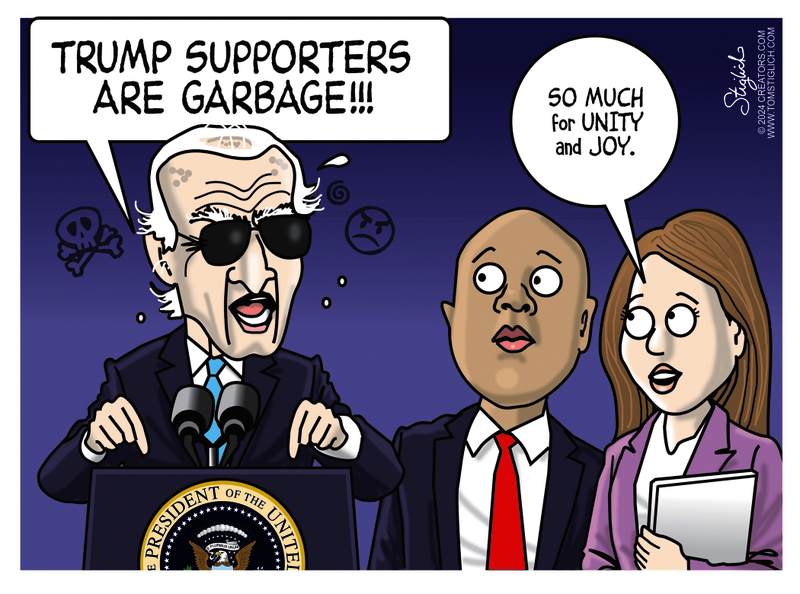

October 30, 2024
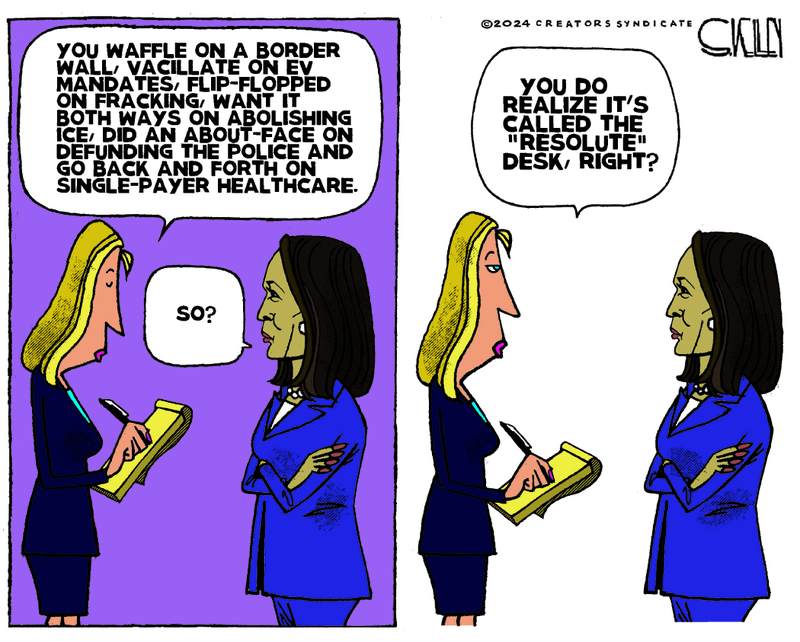
Them things weight around a half TON. Granted, he isn’t lifting the whole thing, but wheeee.
Trooper “who doesn’t miss leg day” able to lift haybale off the road pic.twitter.com/zBQHcXroGw
— Dudes Posting Their W’s (@DudespostingWs) October 29, 2024
Giffords’ New York Hypocrisy Shows Their Disdain for Voters
National gun control activists are having a hard time keeping their messaging to the American people straight ahead of the Nov. 5 election. Giffords Courage to Fight Gun Violence is only the latest example and the breathless hyperbole and hypocrisy coming out of their press releases and campaign emails makes it abundantly clear. They are hypocrites.
The presidential election is razor thin as early voting has started across the country and the campaigns are making their closing pitches to undecided voters. Former President Donald Trump made his Second Amendment pitch clear, telling voters in a social media post his stance.
“Gun owners must register to Vote, TODAY, if you want to save your guns. Our Second Amendment is under Siege by the Democrats. They want to confiscate your guns. BE SMART. VOTE!!!,” the former president messaged.
On the flip side of the coin is Vice President Kamala Harris. She supported gun confiscation before she didn’t, including handgun bans in San Francisco and using unconstitutional executive overreach to confiscate Modern Sporting Rifles (MSRs) before walking that back as well. Now, she admits she owns a handgun that is largely off limits to law-abiding Californians given that state’s strict gun control. But as always, it’s “Gun control for thee, not for me.”
Not to be left out of the hypocritical fun, Giffords has jumped in.
Giffords can’t keep track any more if crime is down or up and whether Americans are allowed to be concerned about their safety. Just one month ago, they joined the chorus in repeating President Joe Biden’s claims that violent crime in America had been greatly reduced because of his gun control agenda.
“President Biden is right: ‘If you’re trying to talk about reducing crime and violence in America, you need to talk about guns in America.’ [President Biden] has taken historic action to keep guns from falling in the wrong hands. Thanks to his leadership, violent crime is down,” the gun control group posted on social media.
As the saying goes – garbage in, garbage out. It turns out gun control groups and the Biden-Harris administration were crowing loudly about data that was severely flawed.
Gun Made Launches The Largest Online Search Engine For Guns and Ammunition
Gun Made just launched the largest online search engine for firearms and ammunition, connecting consumers to more than 4,000 gun stores across the United States. The coolest thing about this search engine is it provides gun buyers with real-time inventory so they can not only check the price, but see if a nearby brick-and-mortar store has the gun in stock. Gun Made tracks over 500 million items so consumers can locate in-stock products on shelves anywhere in the country, including right in their own backyard with a simple ZIP code search for local inventories.
Gun Made also plans to expand the search engine’s capabilities by the end of the year to include firarms parts and accessories as well. The sheer volume of tracking necessary to bring this information to your computer, tablet, or phone browser is remarkable, however, Gun Made has faced the challenge head-on, making it the first website in the firearms industry to provide this capability.
