


April 28, 2024
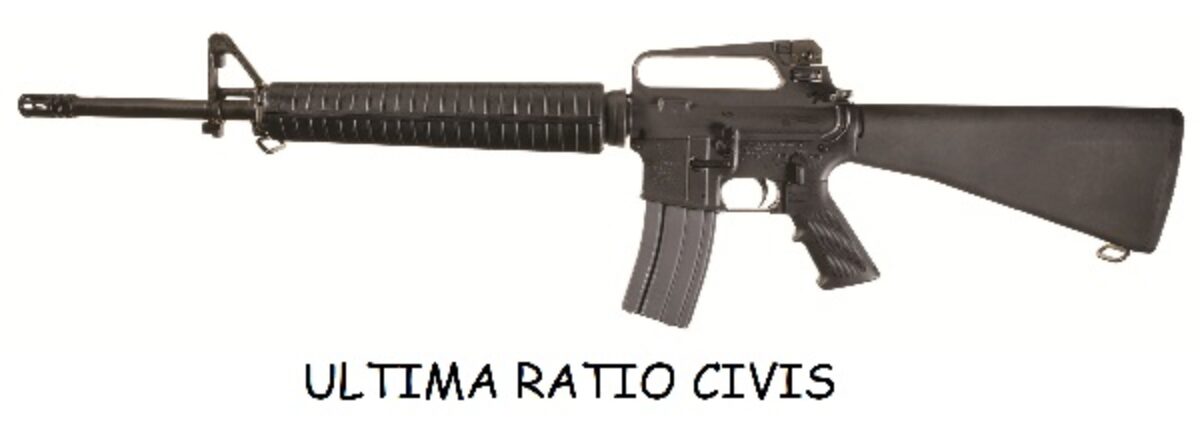
Guys, if there is one single lesson you can take from all of these arguments about mass killers it is this. What stops mass killers is a violent response. Period.
That response can either be immediate, from somebody who is already present, or it can come later from somebody who has to travel to the scene. But the longer it takes for that violent response, the longer the killer has to work unimpeded, the higher the body count.
That’s it. That’s the equation.
When these quislings and cowards try to claim the moral high ground by keeping good people disarmed, do not give them a ******* inch. We tried their way. It ends in more bodies. **** them. No more. Fight or get out of the way.
April 27, 2024
Analysis: Where Will SCOTUS Come Down on ‘Ghost Guns’?
The Supreme Court is set to consider a challenge to the ATF’s unfinished frames and receivers rule, and there are some clues as to how they might rule.
On Monday, the Court agreed to take up Vanderstok v. Garland. The case centers on whether the ATF overstepped its authority by significantly expanding its interpretation of what constitutes a “firearm” under federal law. The outcome will determine the viability of selling unfinished parts, such as “80 percent” AR-15 lowers, without a federal gun dealing license. It will likely have a major impact on the homemade gun market that commonly uses those precursor parts.
The Court’s decision to grant cert is the result of a government appeal against the ruling of a three-judge panel on the Fifth Circuit Court of Appeals. The lower court sided with gun-rights plaintiffs and found the rule was likely “unlawful.”
Taking up a case that went in favor of the gun-rights litigants could be a sign that the Court wants to reverse that lower court decision. In fact, the Court’s tendency to take up cases where it wants to overturn the lower court is one of the main reasons to think it will go in favor of the NRA in the group’s First Amendment case. But that’s probably not what’s going on in this case.
Unlike challenges to state laws or state law enforcement, this case deals with the enforcement of federal law. The federal government requested the Court take it up. It requires the Court to settle an issue to avoid incongruity in how federal law is enforced nationwide.
If the Court didn’t take up this case, it would leave the ATF’s rule in place everywhere but the Fifth Circuit. SCOTUS prioritizes settling these sorts of questions, and it’s a reason to think that granting the case doesn’t say much about why it took it up beyond that.
What does say something about where the justices might come down is the record they’ve already established in this case.
The Supreme Court has already intervened here twice. Both times, it sided with the government. Both times, it blocked lower court injunctions against the ATF’s rule.
That might suggest that the justices will side with them on the merits, but that’s probably not the right read of what happened.
Tennessee governor plans to sign bill that would let teachers carry guns in schools
Lee alluded to the pushback from Democrats, saying, “There are folks across the state who disagree on the way forward.”
Tennessee Gov. Bill Lee said Thursday that he planned to sign a bill state legislators sent to his desk this week that would allow school staff members to carry concealed handguns on school grounds.
“What’s important to me is that we give districts tools and the option to use a tool that will keep their children safe in their schools,” Lee said at a news conference Thursday after he shared his plans to sign the legislation.
Under state law, Lee, a Republican, has the option to sign the bill, veto it or allow it to become law without his signature.
The Republican-controlled state House passed the measure Tuesday largely along party lines roughly a year after a shooter opened fire and killed six people at The Covenant School in Nashville. The state Senate, which is also controlled by the GOP, passed the measure this month.
Lee on Thursday highlighted the legislation’s requirements that faculty and staff members wishing to carry concealed handguns on school grounds complete a minimum of 40 hours of approved training specific to school policing every year. They also must obtain written authorization from law enforcement, he noted.
“There are folks across the state who disagree on the way forward,” Lee said Thursday, adding that he thought the legislation would allow school districts the opportunity to decide “at the local level what is best for the schools and the children in that district.”
But the measure drew criticism from Democrats like state Rep. Bo Mitchell, who referred to the Covenant shooting in remarks on the House floor.
“This is what we’re going to do. This is our reaction to teachers and children being murdered in a school. Our reaction is to throw more guns at it. What’s wrong with us?” Mitchell said.
Tennessee isn’t the only state to have approved legislation allowing teachers to carry guns. At least 26 states have laws permitting teachers or other school employees to possess guns on school grounds, with some exceptions, according to the Giffords Law Center, a gun violence prevention group.
NSSF PRAISES GEORGIA GOV. BRIAN KEMP FOR SIGNING SECOND AMENDMENT PRIVACY ACT
WASHINGTON, D.C. — NSSF®, The Firearm Industry Trade Association, praises Georgia Gov. Brian Kemp for signing into law HB 1018, the Second Amendment Privacy Act. This NSSF-supported law protects the privacy and sensitive financial information of people purchasing firearms and ammunition in The Peach State. With Georgia, there are now 14 states with laws that protect the Second Amendment financial privacy of their citizens.
The law prohibits financial institutions from requiring the use of a firearm code, also known as a Merchant Category Code (MCC), from being assigned to firearm and ammunition purchases at retail when using a credit card. The law also forbids discriminating against a firearm retailer as a result of the assigned or non-assignment of a firearm code and disclosing the protected financial information. Additionally, the law prohibits keeping or causing to be kept any list, record or registry of private firearm ownership.
“Governor Brian Kemp’s signature on the Second Amendment Privacy Act is yet another example of his firm commitment to protecting the Second Amendment rights of all Georgians. Citizens in Georgia won’t worry that ‘woke’ Wall Street banks, credit card companies and payment processors will collude with government entities to spy on their private finances to illegally place them on gun control watchlists,” said Lawrence G. Keane, NSSF Senior Vice President & General Counsel. “NSSF is grateful House Speaker Jon Burns, Lieutenant Governor Burt Jones, Representative Jason Ridley and state Senator Carden Summers for bringing this crucial legislation to become law. No American should fear being placed on a government watchlist simply for exercising their Constitutionally-protected rights to keep and bear arms.”
NSSF worked closely with Georgia legislators to protect private and legal firearm and ammunition purchases from political exploitation. The Second Amendment Privacy Act is designed to protect the privacy of lawful and private firearm and ammunition purchases from being abused for political purposes by corporate financial service providers and unlawful government search and seizure of legal and private financial transactions.
The U.S. Treasury’s Financial Crimes Enforcement Network (FinCEN) admitted to U.S. Sen. Tim Scott (R-S.C.) in a letter that it violated the Fourth Amendment rights of law-abiding citizens that protect against illegal search and seizure when it collected the credit card purchase history from banks and credit card companies of individuals who purchased firearms and ammunition in the days surrounding Jan. 6, 2020. Treasury’s FinCEN had no cause, and sought the information without a warrant, to place these law-abiding citizens on a government watchlist only because they exercised their Second Amendment rights to lawfully purchase firearms and ammunition.
The idea of a firearm-retailer specific MCC was borne from antigun New York Times’ columnist Andrew Ross Sorkin and Amalgamated Bank, which has been called “The Left’s Private Banker” and bankrolls the Democratic National Committee and several antigun politicians. Amalgamated Bank lobbied the Swiss-based International Organization for Standardization (ISO) for the code’s creation. NSSF has called on Congress to investigate Amalgamated Bank’s role in manipulating the ISO standard setting process.
Sorkin admitted creating a firearm-retailer specific MCC would be a first step to creating a national firearm registry, which is forbidden by federal law.
Georgia joins a growing list of states that are standing against the invasion of financial privacy when exercising Second Amendment rights, including Tennessee, Iowa, Kentucky, Wyoming, Indiana, Utah, Florida, Idaho, Mississippi, Montana, North Dakota, Texas and West Virginia. These states passed laws protecting citizens’ Second Amendment privacy. Other states are considering similar legislation. U.S. Sen. Bill Hagerty (R-Tenn.) introduced S. 4075, the NSSF-supported Protecting Privacy in Purchases Act in the Senate. U.S. Rep. Elise Stefanik (R-N.Y.) introduced H.R. 7450, with the same title in the U.S. House of Representatives. California’s Gov. Gavin Newsom signed a law requiring the use of a firearm-retailer specific MCC and Colorado passed similar legislation that is awaiting Gov. Jared Polis’ consideration.
Would-be victims in two separate crimes fight back, shoot suspects
Police say they’re seeing spike in cases like this
SAN ANTONIO – Would-be victims of two separate crimes Thursday morning reacted in a way that one San Antonio police sergeant said he has been seeing more often lately.
In both cases, police say those victims used a gun to stop a crime, shooting and wounding the suspects.
“It does seem there is a spike in these types of activities,” said Sgt. Andrew Valle, as he investigated the second shooting of the morning.
In that case, Valle said a man who lives in an apartment in the 8700 block of Marbach told officers he used a gun to stop an intruder.
The man said the stranger tried to force his way into his home after 7:30 a.m.
“And he told that person, ‘What are you doing? You don’t live here.’ That person said, ‘No, I do,” Valle said, explaining the scenario.
Valle said the man who was shot was taken to a hospital for treatment of a non-life-threatening gunshot wound in his stomach.
The shooting happened just a few hours after a homeowner in the 400 block of General Kruger shot two men who he said were stealing from him.
According to police, the homeowner noticed the two suspects on his surveillance cameras after 5 a.m. and then confronted them.
He told officers this was the second time the suspects had come to his home to steal roofing materials in his driveway.
A police report later said the two suspects, 32- and 34-years-old, were arrested on theft charges.
It also said investigators had determined the homeowner was justified in shooting them and would not face charges.
Both cases are just the latest incidents in which people used this type of force to avoid being victims of crime.

April 26, 2024
When they tell you what they think of you, believe them:
Exactly! Sometimes businesses and churches need to be burned and innocent people need to be murdered to prove we won't put up with police brutality.
— The Liberal Schitz (@LipschitzLib) April 24, 2024
A Warning to America: 25 Ways the US is Being Destroyed | Explained in Under 2 Minutes pic.twitter.com/qwmBO8DmMt
— Western Lensman (@WesternLensman) April 22, 2024
April 25, 2024
Federal Judge Says Pennsylvania is Violating 2A Rights of Young Adults
While you have to be 21 years old to obtain a concealed carry license in Pennsylvania, adults under the age of 21 still have the ability to open carry at least on paper. But for several years that’s been an impossibility thanks to a quirk in state law that bars open carry during a state of emergency. Believe it or not, Pennsylvania has operated continuously under various declared states of emergencies since 2018, so the only option for those who want to carry a firearm is to acquire a concealed carry license; an impossibility for 18-,19-, and 20-year-olds.
The Second Amendment Foundation and the Firearms Policy Coalition, along with several young adults, challenged the status quo in federal court, and won their case at the district court level. The state of Pennsylvania appealed to the Third Circuit seeking a re-hearing, but the appellate court turned away their request last month. Now U.S. District Judge William S. Stickman, a Trump appointee, has enjoined the challenged statutes from being enforced.
In his order, Stickman not only informed the state that it can no longer prosecute young adults for openly carrying, even during a declared state of emergency, but local jurisdictions must begin accepting and processing concealed carry applications from adults under the age of 21; a resounding win for the 2A groups and gun owners throughout the state.
“Judge Stickman’s injunction has conferred the same Second Amendment rights upon 18-20-year-olds that those over 21 have had,” said Adam Kraut, SAF’s Executive Director. “Now 18-20-year-olds in Pennsylvania may apply for License to Carry Firearms and the state’s draconian transportation laws have been enjoined from enforcement. This is a victory for Second Amendment rights in PA.”
This victory comes on the heels of a decision last month by the Third U.S. Circuit Court of Appeals to deny a petition by the state for a rehearing in the case. The court had ruled that young adults could carry firearms openly during states of emergency, and now Judge Stickman has expanded that to include their ability to apply for carry licenses.
“This is a major win for gun rights in the Keystone State,” said SAF founder and Executive Vice President Alan M. Gottlieb. “We’re encouraged the courts are finally looking at this issue in terms of the constitutional rights of young adults.”
Absolutely, and that goes for the Third Circuit too, not just Judge Stickman’s excellent decision in favor of the plaintiffs. I’ve actually been pleasantly surprised to see some of the decisions that have come out of the appellate court since Bruen. In addition to denying the state a rehearing in Lara v. Evanchik, the appeals court also ruled in Range v. Garland that Bryan Range should not have been permanently disqualified from possessing a firearm simply because he pled guilty to a crime punishable by more than a year in prison several decades ago.
The DOJ has appealed Range’s case to the Supreme Court, but it remains to be seen whether Pennsylvania AG Michelle Henry will ask the nine justices to overturn the edict Stickman issued today. It’s a stinker of an issue, given the lack of a national tradition preventing young adults from accessing their Second Amendment rights, and at this point, the gun control lobby may want to keep this case away from SCOTUS rather than risk a nationwide precedent allowing young adults in all 50 states to keep and bear arms.
We saw that same strategy deployed against the right to carry when Illinois’s ban was struck down by the Seventh Circuit in 2012. Instead of appealing to the Supreme Court, Illinois Democrats instead chose to craft a “shall issue” carry bill; not because they suddenly saw the light, but because anti-gun activists convinced them to take one for the team instead of giving the Court the opportunity to definitely state that we the people have the right to bear arms as well as keep them. It took a full decade for the Court to finally get ahold of a carry case, but in the 2022 Bruen decision gun control activists saw their worst fears confirmed when a 6-3 majority ruled New York’s “may issue” laws unconstitutional.
We’re now arguing over the scope of the right to carry, but the gun control groups still have a vested interest in stalling SCOTUS from hearing cases where the law in question is so clearly contrary to the “history, text, and tradition” test laid out in Bruen. I wouldn’t be surprised at all to see Henry quietly stop defending the under-21 carry ban, but sooner or later this issue will get to the High Court… and I’m confident that once again anti-gun activists are going to be bitterly disappointed by what the majority has to say.
Move over “End of quote, repeat the line”, we have a new player.
— Burt Macklin (@BurtMaclin_FBI) April 24, 2024
Judge Cites Second Amendment While Dismissing Gun Charge Against Former School Superintendent
A former Kentucky school superintendent who was charged with possessing a firearm on public school property had his case thrown out by a judge this week, who said prosecutors hadn’t been able to show a national tradition of prohibiting firearms on all property owned by a school district.
John Gunn, the former school superintendent in McCreary County, had just resigned his position in February, 2023 when he went to the board of education office around 6 a.m. to gather his personal belongings from his office. Gunn was allegedly wearing a .45 caliber pistol when he showed up at the building, but he left because his access card had been deactivated and he couldn’t get inside. When he returned during normal business hours he no longer had his gun with him, but he was still arrested by a school resource officer when he tried once more to collect his things.
Gunn’s attorney, David S. Hoskins, argued that the law was an unconstitutional infringement on Gunn’s right to bear arms under the Second Amendment.
Hoskins cited a 2022 case in which the U.S. Supreme Court set out a new standard for deciding the legality of gun restrictions, commonly called the Bruen case.
The high court said that gun laws must be assessed on whether they are consistent with the nation’s historical tradition of firearm regulation.
Hoskins argued there was no historical analogue regarding regulating carrying guns on school property — as opposed to schools themselves — and as a result Kentucky’s prohibition on carrying guns as it was applied to Gunn was unconstitutional.
The prosecutor, Commonwealth’s Attorney Ronnie Bowling, argued in response that the Supreme Court decision would still allow barring possession of guns in sensitive places such as schools.
Gunn’s act of carrying a gun at the school-board office “is not a traditional, historical recognized right” at the time the Second Amendment was ratified, Bowling said.
Bowling got it backward. Unless he could show a longstanding, national tradition of treating school administrative offices as “sensitive places”, Gunn presumably had the right to have his firearm with him that morning, and Judge Dan Ballou cited the Supreme Court’s “history, text, and tradition” test in dismissing the felony charge against the former superintendent.
Ballou ruled the prosecution had not shown “that the Nation’s historical tradition of regulating the possession of firearms extends to an individual carrying a firearm on property not utilized as a school, during a time when neither students nor school employees were present, and with no other alleged criminal acts being committed, regardless of the ownership of the property at issue.”
Honestly, this case never should have been filed to begin with. There were never any allegations that Gunn intended to do harm to anyone in the building. In fact, he went to the board of education building early in the morning so he could collect his things and be gone before anyone else had shown up for work. This was simply about possessing a firearm, and I can’t help but wonder if there was any underlying animosity from the school board that led to his arrest, when the easiest thing would have been to drop the matter once he’d cleared out his office.
Hopefully the Commonwealth Attorney will take the loss and let this be the end of Gunn’s ordeal instead of appealing Ballou’s ruling and continuing on with the prosecution. The judge made the right call in dismissing the case on Second Amendment grounds, and the interests of the public aren’t going to be served by trying to turn Gunn into a felon for merely possessing a gun outside of the school board’s building early one morning.