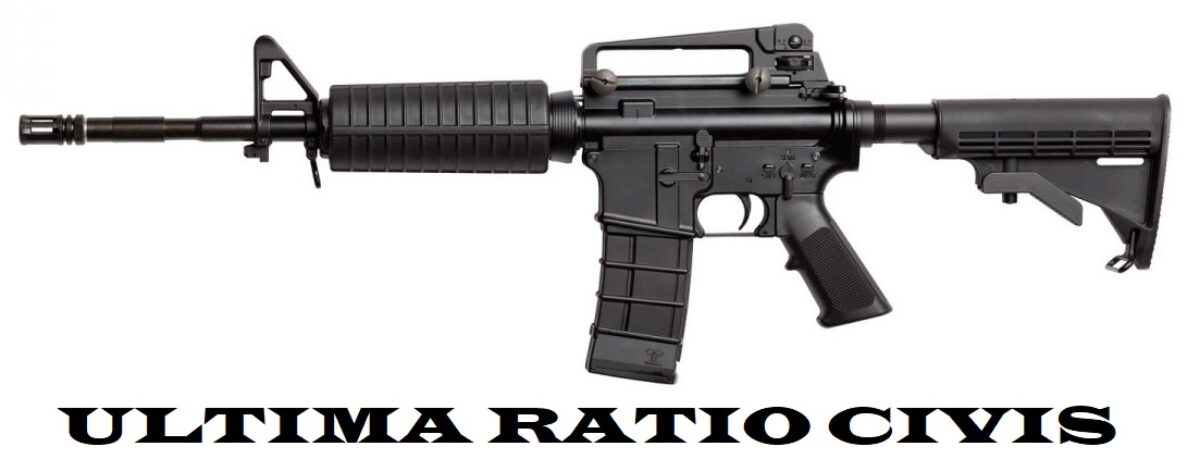
Concealment merely hides you. Cover stops bullets.


Discover Cover: Having something between you and the bad guy that can stop incoming rounds is vital in a gunfight.

When folks begin to develop their personal-defense plans, I think one important subject that is often overlooked is the use of cover. For our purposes, cover is anything that will stop a bullet. In addition to the obvious safety value, moving yourself to cover can also disrupt the criminal’s attack plan and cause them to lose some of the advantage they might have had.

And, the good news is that cover is all around us, wherever we might be: Trees, cars, brick walls, that large neighborhood mailbox; the list is huge. Then there are all of the available cover opportunities waiting to be found in the average home: bookcases, large appliances, heavy furniture, even that mattress and heavy box-spring on the bed. It is an excellent exercise to identify all of the good cover nearby during one’s regular daily routine, whatever that might be.

A good dry-practice exercise (with an assuredly unloaded gun) would be to move through your home and actually make use of that cover as if dealing with an actual attack. In the home, on the outside property and at work, there is really no excuse for not taking the time to identify available cover as merely just a defensive exercise.

In Col. Jeff Cooper’s awareness color code, we talk about Condition Orange: the potential threat. For whatever reason this situation is not currently a threat, but it certainly could become one. Our first thought should be to just get away from this potentially bad situation. But, that might not be possible or practical. While keeping an eye on the situation, this is an excellent time to identify the closest cover or areas of cover and decide which one to use if things go bad.

The biggest mistake is to wait until an attack occurs to try to decide what to do. At that point, there are too many other things that require our immediate attention. We might overlook the best cover or exit.

Another thing to keep in mind is that all cover is not equal. Actually, it is your attacker’s choice of firearms that is the problem. Some things that will stop pistol bullets won’t stop bullets from a rifle. And even among handguns, we know that a .44 Mag. will get through things that will stop a 9 mm hollowpoint. That is one of the reasons we look for several cover options instead of just one.

Interior sheetrock walls may offer concealment, but they provide poor cover. The same can be said of most modern automobile bodies, with the exception of the car’s engine. If you have to take cover behind a vehicle, it is very advisable to do so at the front end. And, for goodness sake, don’t then peek up over the hood; crooks will be expecting that move. Instead, get low, on your knees if you have to, and peer around the front of the vehicle, eyes level with the headlights or even the bumper.

I know a highway patrolman who engaged an armed felon as they chased each other around a vehicle. The patrolman went prone and, looking under a car, could see the crook’s feet. His .357 Mag. round went through both of the outlaw’s ankles, effectively stopping the fight.

It is often a good idea for the armed citizen to disengage and get away from the fight if possible. The use of cover allows them to consider and identify an exit while dealing with the attack. However, we never want to turn our back on the attacker while making an exit. Besides the potential for injury, we might also lose track of their location.

We can practice using cover during dry-practice sessions in our home or around it. On the live-fire shooting range, we might set up objects that simulate cover. A barricade post, a wooden cabinet or some such object can give us the opportunity in order to practice our pistol presentation and then quick movement to this simulated cover if your range allows. And we can also practice our live fire from kneeling or prone while using that cover.

Another excellent practice situation would be to find a facility that has an outdoor range with vehicles to use as cover to practice (Gunsite Academy, for instance).  We can practice quickly exiting and taking cover (where the RSOs will permit it). And, again, get live-fire practice on targets from prone or kneeling from behind the vehicle’s engine compartment. Just keep in mind that all safety rules apply, all the time. We are not out there to look cool, but rather to be safe and learn something.

Identifying and using cover should be an integral part of any personal-defense plan. Such a practice is an great idea to keep an eye out for whatever cover is available wherever you happen to be. In a lot of our defensive-shooting classes, we teach students to incorporate movement into the pistol presentation—some call it getting off the “X”—and going to the closest cover is the best use of that movement.

Homeowner fatally shoots armed intruder in Kanawha County; investigation underway

Law enforcement were on Lick Branch Road in Kanawha County for most of Friday after they said a man fatally shot an armed intruder on his property.

“It is very scary,” said Mindy Nichols who near where the shooting happened. “You’re out here in the country. People are kind and then this happens. I don’t know. It just kind of startles you.”

It was just after 12:30 p.m. when police said the homeowner arrived to his property where he was met with the armed suspect who did not live there inside of his home.

“That individual came to the door and met the homeowner at the doorway and the individual had several weapons on him,” said Sgt. Joshua Lester with the Kanawha County Sheriffs Department. “A fight ensued between the two and the homeowner pulled a firearm and fatally shot the intruder that was in his home.”

Police said the homeowner was working on his property, which is not his primary residence when he was met with an intruder on the porch who was armed with a baseball bat and a knife. Police said the struggle moved from the porch down into the yard, where the homeowner pulled a gun and shot the other man.

“We’ll have to kind of retrace all the steps. They’ll have to find where the firearm was fired,” Lester said. “They’ll have to find all of the discharge from that and any evidence that pertains to that, the weapons that were involved. They’ll look at that. They’ll look at the placements of where that evidence fell versus injuries to the victim as well as the suspect.”

These Sarah Brady types must be educated to understand that because we have an armed citizenry, a dictatorship has not happened in America. These anti-gun fools are more dangerous to liberty than street criminals or foreign spies.
– Theodore Haas, Dachau Survivor

America Must Never Apologize for Dropping the Bombs on Japan.

This week marks the 80th anniversary of President Harry Truman’s fateful decision to drop atomic bombs on the Japanese cities of Hiroshima and Nagasaki (respectively, Aug. 6 and 9, 1945). To date, those two bombings represent the only instances in which nuclear weapons have been deployed in war. At least 150,000 Japanese perished — a majority of them civilians. But the bombings were successful in achieving their intended effect: Japan announced its formal surrender to the Allies six days after the second bombing, thus finally bringing the bloodiest conflict in human history to an end.

For decades, ethical opposition to Truman’s decision has mostly come from left-wing critics. That seems to be changing. Last year, Tucker Carlson claimed that nuclear weapons were created by “demonic” forces and asserted that the United States was “evil” for dropping the bomb on Japan. Director of National Intelligence Tulsi Gabbard also posted a highly peculiar video in June that, while falling short of apologizing for the bombs, did pointedly warn of “warmongers” who are bringing the world to the brink of “nuclear holocaust.”

This is misguided. Looking back eight decades later, Truman’s decision deserves not condemnation but a tragic and grudging gratitude. It was the right decision, and America must never apologize for Hiroshima and Nagasaki.

Critics often portray Truman’s decision as an act of monstrous brutality — a flex of raw military might by a sadistic and trigger-happy superpower. But such characterizations, drenched in presentist moral narcissism, do a grave disservice to the reality on the ground and the countless lives Truman undoubtedly saved. They are also a grave disservice to the memory of all those killed by the Japanese at Pearl Harbor on Dec. 7, 1941. Carlson and his fellow ultra-pacifists should visit Pearl Harbor and stand over the sunken USS Arizona, the final resting place of more than 900 sailors and marines. One can still see and smell the oil leaking from the ships, all these decades later; it is an extraordinary experience.

Shocking sensory intakes aside, the sober reality is that the bombings of Hiroshima and Nagasaki, no matter how morbid and macabre, were strategically and morally correct.

When Truman authorized the use of the atomic bombs, he faced a truly appalling alternative: a full-scale land invasion of Japan. Operation Downfall, the planned invasion of the Japanese home islands, had projected American and Japanese casualties potentially reaching as high as a million lives each. The Imperial Japanese, steeped in a kamikaze warrior ethos, had proven time and again — at Iwo Jima, Okinawa and elsewhere — that they would fight to the last man, woman and child. Schoolchildren were being trained to attack American troops with sharpened bamboo sticks. Fighting to the death was not mere speculation; it was core Imperial Japanese doctrine.

The under-discussed truth is that Imperial Japan was just as ruthless and barbaric as its Nazi German wartime ally. And the atomic bombs — absolutely horrific though they were — finally shocked Japan into surrender. They punctured Japan’s carefully curated myth of divine invincibility and left Tokyo’s bellicose leadership with no doubt that continued resistance could only mean utter annihilation.

More than 100,000 Americans had already been killed in the Pacific theater, and those who had survived were overjoyed by Truman’s decision: They knew they would live and return home to their wives and children.

Truman’s decision also affirmed a deeper American nationalistic sentiment: that from an American perspective, the safety and security of American lives must necessarily be prioritized over foreign lives. Truman did not see any moral virtue in sacrificing our soldiers on the altar of an abstract globalism or a relativistic humanitarianism. His first obligation as commander in chief was to protect American lives by securing a final, unconditional end to the war. In this, he succeeded — resoundingly.

Critics often claim Japan was already on the brink of surrender. They point to back-channel diplomacy and note the Soviet declaration of war the day prior to the bombing of Nagasaki. But Truman didn’t have the benefit of postwar memoirs or archival research. He had bloodied maps, hundreds of thousands of dead soldiers, grieving families, and military intelligence suggesting the Japanese military would never accept unconditional surrender without a shock so great it shattered their will to fight.

This, too, reflects a clarity that modern Western leaders often lack: the resolve to act decisively, to bear the weight of terrible decisions in pursuit of peace and justice. Truman’s choice was not only militarily sound but morally defensible. The bombings were not, as many armchair critics have argued over the decades, a cheap form of ethical utilitarianism; Truman’s decision to bomb was simply reflective of how real war-and-peace decisions must be made in the heat of the moment, when the stakes are the highest.

It is fashionable now to question the morality of Truman’s decision from the safety of the present. But it is an act of historical myopia to pretend that the atomic bombings were gratuitous or overly callous. They were not. They were the tragic price of a brutal victory and the necessary cost of hard-fought peace.

War, we know, is hell. Indeed, that is a very good reason to avoid starting wars in the first place. But once upon a time, Western societies understood that once a horrific war has been initiated, there can be no substitute for absolute victory. That lesson has long been forgotten. It is past time to learn it once again.

More good advice from fellow shootist Sheriff Wilson


Taking Care Of Your Guns
Your life may depend on it, so take good care of it.

As a young man I spent a lot of time around older shooters and old lawmen trying to learn as much as I could. One of the things that most of them had in common was how well they took care of their guns. Many of them were shooting guns from the pre-WWII era, but those guns were still in very good shape. When they shot them, they cleaned them and generally wiped them off at night with an oily rag. They generally understood how their guns worked and could replace worn parts when that became necessary.

The armed citizen doesn’t need to be a firearm expert, but they do need to know how their choice of a defensive firearm works. It is also important to know what type of failures are common to a specific type of firearm, how to spot them and what to do about it.

Many semi-automatic pistols should have their mainspring replaced on a regular basis; some gunsmiths advise that every 1,000 rounds would be a good interval. One should also learn how to check the extractor and ejector for excessive wear. Semi-automatic pistol shooters quickly learn to spot the malfunctions that are caused by a faulty or worn magazine. And for goodness sakes, a bad magazine belongs in the trashcan, not among your practice gear.

Revolver shooters need to make sure that each chamber in the cylinder lines up properly with the barrel; spitting lead is a good indication that this is not the case. In some revolvers the ejector rod can come loose and tie up the gun; preventing that is an easy fix if one knows what to look for. Some revolvers have an external screw on the front of the grip frame that puts tension on the mainspring and keeps it in place; this should be snug and tight to prevent misfires.

I think that we often fail to realize the wear and tear that guns can receive from the mini-explosions that we call shooting. Gun parts wear just a little bit every time we pull the trigger. If an armed citizen will take the time to visit with a good gunsmith, they can quickly learn wear-related and other problems that might occur in their particular firearm. Then regular cleaning sessions and just taking the time of give the gun a good once over can often catch the problem before a misfire or failure to fire occurs. Simply put, you may have to bet your life on it, so it is a good idea to make sure that gun is in good working order.


DeLay is already well known for his very pro-RKBA views


Sheriffs Arnott, DeLay join alliance of Missouri sheriffs

On Friday, July 11, a group of more than 20 Missouri sheriffs formed the Missouri Sheriffs Constitutional Firearms Alliance (MSCFA), “a statewide effort dedicated to safeguarding the constitutional right of law‑abiding citizens to keep and bear arms.” Among them were Jim Arnott, sheriff of Greene County, and Brad DeLay, sheriff of Lawrence County.
DeLay said that he joined the group because he agreed with their goal of protecting the Second Amendment.

“I joined because I am supporting Missouri sheriffs and others who want to have a voice in our legislature and other places when it comes to defending our Constitution,” he said.

Arnott said the MSCFA would promote law and order across the state while also defending the rights of private citizens to bear arms.
“This is an alliance of sheriffs from across the state that have committed to defending Second Amendment rights,” he said.

“The alliance provides a unified voice for Sheriffs passionate about protecting the Second Amendment. We will advocate for firearm protections for law-abiding citizens, legislation that holds criminals accountable, that demands transparency in criminal sentences, and promote firearm safety.”

Arnott said that the group would work with those who share their vision to achieve their aims.

“This alliance anticipates success through active engagement with legislators, law enforcement leaders, and community organizers who have the same goals,” he said. “We have a membership drive right now with membership as low as $25, which includes a subscription to the Missouri Sheriffs Association Magazine. The magazine provides regular updates on key issues affecting public safety, firearms legislation, and law enforcement efforts across the state.”

The group, Arnott said, would continue to grow in succeeding years.
“The MSCFA announcement is the beginning,” he said. “The alliance will grow, and so will our influence to protect the Second Amendment. We are excited to make a difference with our unified voice.”

While the MSCFA was started by Missouri sheriffs, anyone can join the organization. For more information, go online to  www.missourisheriffsconstitutionalfirearmsalliance.com.

The Debates in the Several State Conventions on the Adoption of the Federal Constitution is a five-volume collection compiled by Jonathan Elliot in the mid-19th century.

The people are not to be disarmed of their weapons. They are left in full possession of them.
— Zachariah Johnson, 3 Elliot, Debates at 646