Marshall University Prof: Cops and Vets Earn Their Second Amendment Rights Through Months of Training

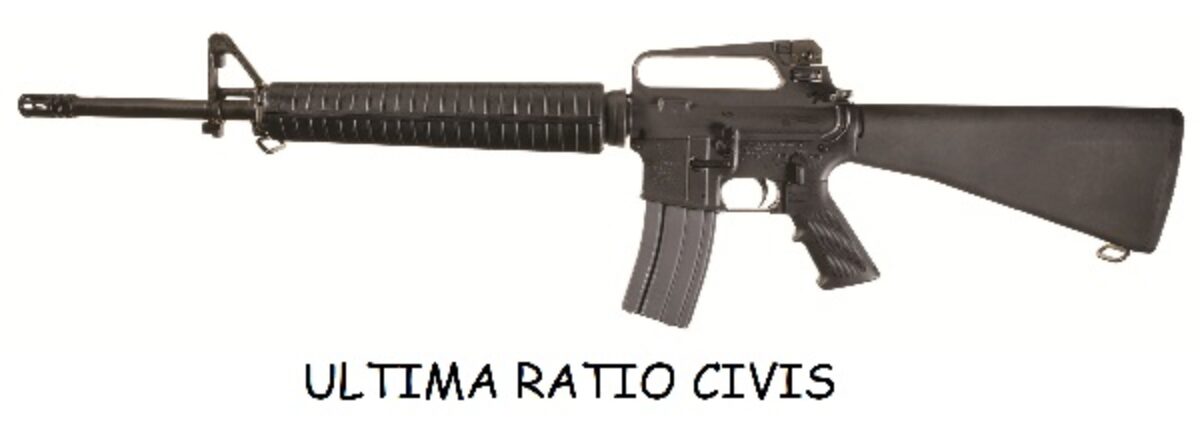
So nice when they provide such clear photography for future positive ID 

The presidents of West Virginia University and Marshall University penned a joint letter to legislators opposing the bill in late January.

“We believe that our boards of governors are best suited to decide whether guns should be permitted on campus,” the letter reads. “We therefore do not support statewide campus carry.”

The presidents of West Virginia State University, Concord University and Shepherd University wrote a separate letter saying they strongly support the Second Amendment but “have serious reservations about the significant public safety challenges” that the bill would present.

“Introducing firearms into this already challenging environment could have unintended consequences,” the letter says, referencing increased suicide rates and concern that the presence of firearms could stifle the free exchange of ideas.

West Virginia Public Broadcasting reported that at a public hearing last week, 40 people spoke and nearly everyone opposed the bill.

Marshall University professor Chris White said the bill doesn’t have enough safety measures in place. Formerly a Marine Corps infantryman, he referenced months of training that military and police officers go through “to earn that Second Amendment right and carry those weapons in public.”

“None of those safety controls will be imposed on our students or anybody else who comes on to campus,” White said, according to WVPB.

Arizona Wants to Use Public Schools to Demystify and Destigmatize Guns

The Arizona House of Representatives is working hard to secure gun rights for the citizens of the Grand Canyon State. It has so far passed a slew of bills that include legalizing gun silencers and allowing parents to carry firearms on school campuses. Another bill that is raising eyebrows is HB 2332, which will require middle and high schools to offer training on how to properly handle a firearm. According to Arizona’s local NPR, parents would still be able to opt out. But even with this provision, groups like Moms Demand Action and Civic Engagement Beyond Voting are speaking out against the measure.

PHOENIX – Arizona’s House of Representatives is continuing to advance a bill requiring public middle and high schools in Arizona to offer training on the proper handling of firearms.

Rep. Selina Bliss, R-Prescott, who sponsored HB 2332, said she wants children to learn proper firearms handling from experts to stop accidental deaths, and denied that the bill was about training children to use firearms.

Continue reading “”

Of continuing interest to Shootists

New Mexico: Significant Action Expected on Gun Control Bills in Santa Fe on Monday!

The New Mexico House of Representatives could vote as early as Monday on HB 100 by Rep. Andrea Romero (D-Santa Fe), legislation imposing a mandatory 14-day waiting period on all firearm purchases. Contrary to the author’s claims, this legislation will not “enhance” the existing FBI background check process in any way; it will only delay your ability to exercise your Second Amendment right to defend yourself, your family and your property. Criminals do not adhere to a “cooling off” period. Please contact your State Representative and urge him or her to OPPOSE HB 100.

On Monday, February 27, the Senate Judiciary Committee will meet at 1:30pm (or after the Senate floor ends), in Room 321 of the Roundhouse to consider two anti-gun bills: SB 171 by Sen. Bill Soules (D-Las Cruces), legislation that attempts to supersede federal law and make it a FELONY to manufacture, sell, transfer, or acquire a firearm sound suppressor and other National Firearms Act items, as well as certain semi-automatic pistols, and House Bill 9 by Rep. Pamela Herndon (D-ABQ), a bill that creates back-door storage requirements by imposing criminal penalties on gun owners if a third-party minor accesses and displays, brandishes or injures someone with their firearm. Please make plans to attend the committee hearing in-person or via zoom to show your opposition to Senate Bill 171 and House Bill 9.

For public participation and to register for Zoom, send email to SJC.Zoom@nmlegis.gov. Include bill number, proponent or opponent, and if you will be attending in person or via zoom.

To attend meeting via Zoom click the following link: https://us02web.zoom.us/j/81502543362.
Meeting ID: 815 0254 3362
Zoom Call: 1-253-205-0468

Refer to www.nmlegis.gov “What’s Happening” for the Senate Judiciary Committee Procedures

Contact members of the Senate Judiciary Committee and urge them to OPPOSE SB 171 and HB 9. 

Also on Monday, February 27, the House Government, Elections & Indian Affairs Committee will meet at 8:30am, in Room 305, to consider SB 44 by Sen. Peter Wirth (D-Santa Fe), a measure banning the carrying of firearms within 100ft of any polling locations on Election Day or during early voting, even by concealed handgun licensees. These new “gun-free” zones apply not only to voters, but also to customers or patrons of shopping centers and stores that serve as polling locations. Please make plans to attend the committee hearing in-person or via zoom to show your opposition to Senate Bill 44.

You are invited to a Zoom webinar.

When: Feb 27, 2023 08:30 AM Mountain Time (US and Canada)
Topic: House Government, Elections, & Indian Affairs
Please click the link below to join the webinar: https://us02web.zoom.us/j/81850374006
One tap mobile : US: +12532050468,,81850374006# or +12532158782,,81850374006# Webinar ID: 818 5037 4006

Contact members of the House Government, Election & Indian Affairs Committee.

New proposed bill introduces gun training for some Illinois politicians

CHAMPAIGN, Ill. (WCCU) — Two Illinois state senators recently reintroduced a state bill that would require some Illinois politicians to undergo gun safety training.

State Senator Neil Anderson, (R) IL 47th, reintroduced Senate Bill 2106, and State Senator Andrew Chesney, (R) IL 45th, has since co-sponsored the bill.

The bill would mandate any member of the General Assembly who wants to introduce a bill “pertaining to a firearm” to complete firearm training requirements under the Firearm Concealed Carry Act, range safety officer training, and a basic knowledge test of firearms.

Chesney says that their goal with this bill is to have those from a different perspective understand what they are trying to regulate.

“What we’ve seen when it involves second amendment regulations is that those that are proposing this don’t normally have the training to regulate it,” said Chesney. “So you start to see things that in our view are unconstitutional and maybe out of step with perhaps how the majority of people feel on the particular topic.”

Anderson said he actually introduced this bill four years ago, but re-submitted it recently as he’s seen a lot of gun misinformation.

“My ask with this legislation is that if you’re going to introduce a piece of anti-gun legislation, you should at least have the equivalent of a conceal carry permit to show that you have some knowledge of firearms,” explained Anderson.

Although Anderson doesn’t suspect this bill will pass, he hopes its introduction will bring “more common sense” to the firearm conversation.

February 25

1791 –  Congress charters the First Bank of the United States for a term of twenty years.

1799 – Congress passes the Federal Timber Purchasers Act, giving the government authority to purchase wood and land to provide resources for the navy.

1836 – Samuel Colt is granted a U.S. patent for his revolver firearm.

1837 – Thomas Davenport is granted a U.S. patent of his electric printing press.

1843 – Royal Navy Captain Lord George Paulet takes it on his own authority to occupy the Kingdom of Hawaii in the name of Great Britain.

1862 – Congress passes the Legal Tender Act, which President Lincoln signs into law the next day and forms the Bureau of Engraving and Printing to print newly issued U.S. paper currency, the United States Note, nicknamed the ‘Greenback’.

1870 – Hiram Rhodes Revels, a Republican from Mississippi, is sworn into the United States Senate, becoming the first African American ever to sit in Congress.

1901 – The US Steel Corporation is organized under the chairmanship of J. P. Morgan, Sr.

1932 – Adolf Hitler obtains German citizenship when he is appointed a Brunswick state official by Dietrich Klagges, a fellow Nazi. As a result, Hitler is able to run for Reichspräsident in the 1932 election.

1933 – CV-4 USS Ranger, the first purpose built aircraft carrier to be commissioned by the US Navy, is launched from Newport News Shipbuilding & Drydock Co, at Newport News, Virginia, sponsored by Mrs. Lou Henry Hoover, wife of the President.

1951 – The first Pan American Games are officially opened in Buenos Aires by Argentine President Juan Perón.

1982 – Those who shall remain nameless are eternally grateful that the final episode of The Lawrence Welk Show airs.

1991 – At a meeting in Budapest, the membership decides to disband the Warsaw Pact.
In Dhahran, Saudi Arabia an Iraqi SCUD missile hits a building used as barracks for U.S. forces, killing 27 servicemembers and wounding another 98.


Debunking the gun-banners’ false constitutional-carry claims
Gov. DeSantis will likely sign the bill long before its July 1 effective date.

Nearly every anti-gun group in the country has descended upon Tallahassee to try to stop Florida from becoming the 26th state to allow residents and visitors to carry concealed firearms without a permission slip from the government.

It’s an important mission for the gun-ban industry, because once Gov. Ron DeSantis signs the bill — and he will — a majority of states will allow unlicensed or permitless carry. For pro-gun advocates, this would be a significant victory in the war to restore our Second Amendment rights, and the other team will do anything they can to prevent that from happening.

It’s important to point out that neither Florida’s HB 543 nor its companion bill, SB 150, are traditional constitutional-carry bills, since neither bill legalizes the open carry of arms. True constitutional carry allows gun owners to decide for themselves whether to carry arms openly or concealed. Despite Republican super-majorities in both the House and the Senate, and a governor who’s promised to sign “constitutional carry” legislation, open carry was not included in either bill. We still have not been told why, at least not officially.

In what has been called “smart bundling,” SB 150 also includes numerous school-safety provisions, such as expanding Florida’s School Guardian program, adding funds for hardening schools, providing additional money for gun-sniffing dogs, clarifying zero-tolerance policies and ensuring every law enforcement agency has an active-shooter policy. So, a vote against the bill can be seen as a vote against school safety.

Regardless of what the bill is called or its other offerings, the very thought of restoring more gun rights — especially in Florida — has brought the gun-banners out in droves. We’ve seen members of Everytown, Demanding Moms, Demanding Students, Giffords, Brady and Florida’s extremely anti-gun League of Women Voters all shuffle to the mic. Their testimony before House and Senate committees has been interesting, desperate and at times, comical. If the gun banners sent their A-team to Tallahassee and this is the best they can do, freedom will most certainly prevail.

It’s clear the gun-banners’ moves are well organized and orchestrated. Too many of their objections seemingly come from the same playbook. Keep in mind anti-gunners have phones, Skype and Zoom, too. They’re sharing information and ideas. Florida has become their latest battle template. They are throwing a lot of crap against the wall. That which sticks likely will be used in the next state they attempt to victimize.

Here are some of the lowlights of their testimony.

Continue reading “”

It may be to his sorrow, but I considered there was never any common ground with commies.

To My Sorrow, There Can Be No Common Ground With the Left

I am a preterist. But with that in mind, these words from 2 Timothy ring truer than ever:

But mark this: There will be terrible times in the last days. People will be lovers of themselves, lovers of money, boastful, proud, abusive, disobedient to their parents, ungrateful, unholy, without love, unforgiving, slanderous, without self-control, brutal, not lovers of the good, treacherous, rash, conceited, lovers of pleasure rather than lovers of God— having a form of godliness but denying its power. Have nothing to do with such people.

Having been raised a liberal who became a conservative, I have long been an advocate of dialogue. Of finding the middle way. Of reaching a consensus. Knowing both sides of the aisle as I do, I had thought that there might be some point at which our two sides might find common ground or a way of living with one another.

I will now finally admit that is simply not a possibility. I take no joy in that, but there comes a time when one must admit that compromise is impossible, and that to search for it involves capitulation with alleged human beings who have blinded themselves to all but the basest of pursuits and desires. There comes a time at which hope ends, and one realizes that we can no longer live with one another.

It is a sad realization, but one that is based on a harsh, unforgiving reality. Long had I hoped that cooler heads might prevail, that we could see eye to eye on something. But whether it is because of the internet, our feckless leaders, or the inherent sinfulness of mankind, we must admit that the breach between the insanity of the Left and the rest of the world is simply too large and wide to bridge. It would take an act of God to bring about reconciliation.

And for better or worse, He has chosen to leave us to our own devices. The Old Testament prophets warned that those who sought their will above all else would reap the whirlwind. And the people in power have done just that. How long they evade the chaos that they have seeded will be up to the Almighty.

Continue reading “”

How red states are set to permanently undermine gun control

When Missouri passed it’s sanctuary law, the measure basically said that federal gun control laws were invalid. They just didn’t exist within the state’s borders.

Other states started trying to follow suit.

I got a fair bit of heat because I actually said I thought that was probably a bad idea. It wasn’t that I dislike Missouri’s law, only that I didn’t think it would stand up to legal challenge from the federal government. I wanted to see what the courts said so other laws could be better crafted.

In Ohio, though, it seems they are taking an approach that I personally feel is far wiser. And they’re not the only ones treading that same path.

The bill mirrors a law passed in Missouri in 2021 that restricts the enforcement of federal laws which violate the state’s view of the Second Amendment, according to the Dispatch. The Department of Justice (DOJ) sued Missouri after the law was passed, saying the state could not “simply declare federal laws invalid,” according to a DOJ press release.

Loychik believes that HB 51 is even stronger than Missouri’s law, according to the Dispatch. “There have been changes that have been made. This bill is a lot stronger,” he said, noting that the bill will not violate the Supremacy Clause.

“House Bill 51 does not challenge that,” Loychik said. “It simply states that the state of Ohio will not help the federal government agencies enforce their gun-control agenda by commandeering our local enforcement.”

Earlier in February, Republican Montana Gov. Greg Gianforte sent a letter to U.S. Attorney General Merrick Garland, saying that Montana would not enforce the Bureau of Alcohol, Tobacco, Firearms and Explosives’ (ATF) final rule for pistol braces.

The letter follows HB 258, passed by the Montana Legislature in 2021, a law that blocks peace officers, state employees or employees of a political subdivision “from enforcing, assisting in the enforce of, or otherwise cooperating in the enforcement of a federal ban on firearms, magazines, or ammunition,” according to the legislation.

See, I like the Missouri law. I want it to stand up in court. I just don’t believe it will.

However, agencies like the ATF depend on local law enforcement for assistance. Without them, they can’t really do all that much in our local communities.

By laying down the law and saying that local and state law enforcement will not help enforce unconstitutional gun control laws, they’re accomplishing the same thing as the Missouri law from a far more defensible legal position, in my layman’s opinion.

After all, the feds can’t just appropriate local law enforcement for their own purposes. They can’t swoop in and just demand the county sheriff dedicate X number of deputies toward their own investigations and arrests. They need those agencies to cooperate.

These efforts basically say that’s not going to happen.

In impact, there’s not a whole lot of difference between what they’re doing in Ohio and what Montana has already done. Yet the latter will likely survive legal challenges while the former isn’t as likely to.

I could be wrong, of course, and I’d love to be. I’d love it if Missouri’s sanctuary law was upheld by the Supreme Court and numerous other states decided to follow suit.

But I don’t think I am and I think most of you probably agree that I’m not, no matter how much we hope I am.

Ohio and Montana though? I think they’re on the right road.


Attorney general announces legal action to remove Gardner from office

ST. LOUIS — Missouri Attorney General Andrew Bailey announced legal action to remove St. Louis Circuit Attorney Kim Gardner from office Thursday amid mounting political backlash over her office’s handling of cases.

Bailey confirmed during a 12:15 p.m. press conference that he initiated legal proceedings to remove Gardner after she didn’t respond to his demands for her to resign by noon Thursday. A petition of quo warranto was filed at 12:01 p.m. and was pending with the 22nd Judicial Circuit Court, he said.

New Hampshire: House Defeats Three Anti-Gun Bills

Earlier today, the New Hampshire House held the last of several floor votes on three anti-gun bills. Thanks to the strong support of NRA members and Second Amendment supporters, the bills were defeated and will not move forward this session.  NRA-ILA would like to thank all of those Representatives who defended the Second Amendment for law-abiding citizens in the Granite State.

House Resolution 8 urged Congress to pass an “assault weapons ban.” While no specifics were outlined in the resolution, gun grabbers continue to advocate for bans on standard equipment for commonly-owned firearms that many Americans and Granite Staters legally and effectively use for an entire range of legitimate purposes, such as self-defense or competition.

House Bill 158 banned “ammunition designed and intended to penetrate armor plating or ballistic vests.” This legislation is duplicative and unneeded. Federal law already prohibits the manufacture, importation, sale, or delivery of “armor-piercing” ammunition with very few exceptions.

House Bill 191 allowed state agencies to destroy voluntarily surrendered firearms, rather than requiring them to sell these firearms at public auction or to keep them for their own use.

Again, thank you to NRA Members and Second Amendment supporters who contacted their State Representatives in strong opposition to these anti-gun bills.

Proposed Kentucky version of SAPA

Bill would make Ky. a ‘Second Amendment sanctuary’

FRANKFORT, Ky. (WTVQ) — A bill that easily passed the Kentucky House Wednesday would make the state a “Second Amendment sanctuary.”

House Bill 153 would ensure Kentucky couldn’t use tax dollars or law enforcement to enforce a federal gun ban on ammunition, magazines, accessories or certain types of guns, according to sponsor Rep. Josh Bray (R-Mount Vernon).

“Kentuckians should decide firearm policy through their elected representatives, not through some bureaucrat in Washington D.C. who is changing the interpretation of an existing federal guideline,” Bray said.

Democrats, like Rep. Lisa Willner (D-Louisville), shared concerns with the bill.

“The people in District 35 worry every day about too little law enforcement of already existing laws,” she said. “This law that would increase access to guns would reduce enforcement. It moves us exactly in the wrong direction on both counts.”

The bill passed with a 78-19 vote. It now heads to the Senate.

To read the bill in its entirety, click here.

February 24

1582 – With the papal bull Inter gravissimas, Pope Gregory XIII announces the Gregorian calendar.

1803 – In Marbury v. Madison, the Supreme Court of the United States officially establishes the principle of judicial review.

1831 – Under terms of The Treaty of Dancing Rabbit Creek, the first removal treaty in accordance with the Indian Removal Act, the Choctaws in Mississippi cede land east of the river in exchange for payment and land in the West.

1863 – Arizona is organized as a Territory.

1868 – Andrew Johnson becomes the first President to be impeached by the  House of Representatives.

1917 – The U.S. ambassador to the United Kingdom, Walter Hines Page, is given a copy of the Zimmermann Telegram, in which Germany pledges to ensure the return of New Mexico, Texas, and Arizona to Mexico, if Mexico declares war on the United States.

1920 – The NAZI (National Socialist German Workers’ Party –Nationalsozialistische Deutsche Arbeiterpartei – NSDAP) party is founded by Adolf Hitler in the Hofbräuhaus beer hall in Munich, Germany

1942 – A false alarm, late in the day of attacking Japanese bombers leads to an anti aircraft barrage over the city of Los Angeles that lasts into the early hours of February 25.

1944 – The 5307th Composite Unit ” Merrill’s Marauders” begin their 1,000-mile journey through Japanese occupied Burma to attack an airfield at Myitkyina.

1984 – Opening fire from the 2nd floor room of a house across the street from the 49th Street Elementary School in Los Angeles, Tyrone Mitchell kills 1 student and wounds 13 more, with one dying 18 days later, before killing himself after a police swat team enters the house.

1989 – United Airlines Flight 811, a Boeing 747, bound for New Zealand  from Honolulu, rips open during flight, blowing 9 passengers out of the business-class section before returning to Honolulu and landing without further incident

1991 – Having diverted a large percentage of their troops to defend against a threatened amphibious attack on their positions in Kuwait, Iraqi forces are caught off guard as Coalition ground forces cross the Saudi Arabian border and enter Iraq, beginning the ground phase of Operation Desert Storm

1996 – 2 civilian airplanes operated by the Miami based group Brothers to the Rescue, are shot down in international waters by the Cuban Air Force killing all 2 crew aboard each plane.

2015 – A Metrolink train derails in Oxnard, California following a collision with a truck, leaving more than 30 injured.

2022 – Days after recognizing the Ukrainian provinces of Donetsk and Luhansk as independent states, Russian president Vladimir Putin orders a full scale invasion of Ukraine.

Who Are the Real Extremists?
America’s vast lawful gun culture is the norm today, as it has long been, not the infringement inherent in gun-control activists’ dystopian worldview.

In December of 2022, Gov. Ron DeSantis (R) confirmed that the state of Florida will soon improve the concealed-carry permitting system it has had in place since 1987 by adopting constitutional carry as well. In so doing, Florida would become the 26th state to get out of the way of the peoples’ right to “bear arms.” If this happens, in just a few decades, the United States will have gone from having one state with a permitless carry system in place (Vermont) to having a majority of states with permitless carry systems in place.

To those who follow this area of the law, the news that Florida is moving to add itself to the constitutional-carry list should be entirely unsurprising. Historically, Florida has often been a trailblazer in pursuit of the restoration of the Second Amendment, but, in this case, it has fallen behind the times. Indeed, to take a look at a map of constitutional-carry states is to notice that Florida is effectively surrounded. In the last few years, Alabama, Arkansas, Georgia, Indiana, Iowa, Kansas, Kentucky, Mississippi, Missouri, Ohio, Oklahoma, Tennessee, Texas and West Virginia and have all made the switch, and they were preceded by so many other states that it is now possible to drive from Georgia to Arizona (via Montana) without ever leaving a state that hasn’t eliminated its permitting requirement.

But here’s a peculiar thing: If, for whatever reason, you were to have followed Florida’s wholly unexceptional plan solely via the mainstream press, you’d have a hard time learning any of this. Instead, you’d “know” all sorts of other things—things that, on closer inspection, turn out to be flatly false. Specifically, you’d end up thinking that Florida’s decision represented a dramatic departure from the norm. You’d end up thinking that Florida’s governor—and its legislature—were full of wild-eyed extremists. You’d end up thinking that states that abolish their permitting requirement become more dangerous as a result. Hell, if you availed yourself of the more-hysterical coverage, you might even end up worried that there were bound to be shootouts in the streets as a result of this change.

Don’t take my word for it; try it yourself. Pick up your phone, type the words “Florida constitutional carry” into Google and peruse the news articles that come up. Note the language that is used as a matter of routine: “extreme,” “dangerous,” “unsafe,” “radical.” Count the number of times that the uninformed opinion of the author is laundered through the phrase “experts say.” Observe the non-sequiturs and the lies; in particular, note the pretense that constitutional carry means that criminals are able to carry firearms with impunity, or that all regulations have been abolished. Consider how many times you are informed, as an aside, that the Second Amendment has been misinterpreted, or that it was never supposed to apply to individuals in the first instance. It’s remarkable.

It’s typical, too. Increasingly, stories about gun laws in America resemble dispatches from an alternate universe—one in which the Second Amendment does not mean what it says; in which the advent of “shall-issue” concealed carry never happened; in which permitless carry remains a fringe and untested idea; in which the massive increase in the number of concealed carriers coincided with an increase, rather than a precipitous drop, in crime; in which gun ownership remains the preserve of a handful of white men; and in which states such as Texas and Georgia, rather than states such as California and New York, are the outliers.

Contrast the manner in which the press habitually treats the gun laws of, say, Illinois or New Jersey, to how they treat the gun laws of, say, Arizona or Maine. If one were to take these various descriptions at face value, one would be forgiven for concluding that Illinois and New Jersey were “normal,” while Arizona and Maine represented outliers. But that is entirely false. Continue reading “”

IMPD says domestic incident led to deadly shooting of attempted home intruder

INDIANAPOLIS – A man is dead after police said he was shot trying to force his way into an apartment on Indy’s northeast side.

Just after 1 a.m., police were called to the Bayview Club apartments near 75th and Shadeland and found Cavin Pogue Jr. shot. The 31-year-old died after being taken to the hospital.

Police confirm the shooting appears to be domestic related.

Man shot while charging at IMPD officer with knife gets less than 3 years in prison
Because investigators claim Pogue was acting as a home intruder, his death, while still a homicide, does not appear to be criminal.

“People are allowed to use deadly force to protect themselves and their homes against intruders,” said attorney Mario Massillamany.

Attorney Mario Massillamany said Indiana lawmakers have given people a lot of freedom to defend their homes.

“Our legislature values that your home is your castle and you have a lot more protections than if you’re on the street,” said Massillamany. “You do not have a duty to retreat. You are allowed to feel safe in your own home.”

The death Tuesday morning is just the latest in a series of non-criminal homicides to start 2023.

Ten of the first 36 homicides this year have been deemed accidental, self-defense or cleared without charges.

That’s a dramatic increase over the last two years on the same date, when there was only one non-criminal homicide in 2021 and three in 2022.

I was lucky this phobia wasn’t around when I was in school, because I spent a lot of my time in high school art class sketching guns.

Banning My Son From Doodling A Gun Is Not A Solution To School Shootings

The only thing more predictable than boys being fascinated with weapons is them eventually sketching one in class. But that’s not allowed anymore.

What is it that makes a little boy — practically straight out of the womb — take an interest in weapons and emulate gun-toting, swash-buckling heroes? Even doctors aren’t sure. As one pediatrician told me about my then 16-month-old son who turned every stick into a sword, “We don’t know why. They just do it.”

If you’ve raised a little boy, you know what I’m talking about. And the only thing more predictable than them being fascinated with weapons is them eventually doodling one in class. An alien with a laser gun. An elf with a sword. Rambo with a machine gun.

When they do, they’ll encounter a host of school polices banning images of weapons, ostensibly to prevent school shootings and other violence. Some make exceptions for historical context (such as a Revolutionary War soldier with a bayonet).

Others don’t. Who can forget the infamous Pop-Tart gun of 2016? The 7-year-old was suspended.

If your child is lucky, he’ll be told to put the drawing away. If he’s unlucky, he’ll be sent to the principal’s office and then to the school counselor, where he may even be given a suicide assessment.

No Drawings with Guns Allowed

My first encounter with this type of policy was when my youngest boy came home from a Fairfax County, Virginia, elementary school with his shirt inside out. On the front was an image of a Lego Ewok holding — eek! — a tiny axe.

I recently encountered this policy again with my 10-year-old son. He had gotten in trouble for drawing a police officer holding a gun. A police officer.

Author's son's drawing.
Author’s son’s drawing.

In an email, my son’s teacher said she explained to him that drawing weapons in class is not allowed and encouraged him to “stick to dragons and landscapes.”

Continue reading “”

West Virginia Governor Announces Support for Newly Passed Campus Carry Bill: ‘I’ll Sign It’

The Mountain State will soon be the latest to allow those with permits to carry concealed guns on college campuses.

On Tuesday, the West Virginia House of Delegates put the finishing touches on Senate Bill 10. By Wednesday, Governor Jim Justice (R.) announced his intention to sign it into law once it reaches his desk.

“I know it’s controversial, but from my standpoint, here’s where I stand: I stand rock solid with our Second Amendment,” Justice said during a press conference Wednesday. “When this bill comes to me, it won’t be with me but just a matter of seconds because I’ll sign it.”

Once signed, the bill will make West Virginia one of twelve states to allow gun carry in most areas of campus without an option for school officials to implement gun bans. It arrives at a time of heightened scrutiny over gun carry after the Supreme Court’s June decision in New York State Rifle and Pistol Association v. Bruen recognized a constitutional right to carry a gun in public for self-defense. Many blue states have rushed to pass laws cracking down on public gun carry in response to the ruling. Meanwhile, red states have continued to expand where civilians can carry in public and sought to eliminate permitting requirements.

Governor Justice cited frequent mass shootings across the country committed by “bad, bad, bad actors” that occur on “soft targets” as his reasoning for supporting the bill.

“God forbid, but it may very well be that we’ve got somebody on that campus that has a firearm and something bad starts to happen, and they save a bunch of lives,” he said.

Armed bystanders have intervened to stop or prevent mass shootings on numerous occasions throughout the country. Elisjsha Dicken returned fire against a shooter in July 2022 ending an attack on an Indiana mall food court. Similarly, a legally-armed bystander shot a gunman at an El Paso, Texas mall earlier this month.

He also pointed to long-standing campus carry laws in states like Texas that have been on the books “for years and years” to show that the policy can be implemented safely.

The bill would not prevent schools from instituting any and all restrictions on campus carry. But school officials would be limited to baring guns in buildings and other parts of campus with comprehensive security measures, such as metal detectors. Those provisions, however, were not enough to win over opponents of the bill. Some pointed to the recent mass shooting at Michigan State, where an adult not affiliated with the school shot and killed three students on campus, to argue against the bill.

Marshall University student E.T. Bowen said college students already feel “terrified on campus,” and adding more guns would exacerbate that.

“This bill is like throwing kerosene on the wildfire, and it is appalling that we even need to say that while there’s still blood on the ground at Michigan State,” Bowen said.

The bill’s supporters also pointed to prior mass shootings on college campuses. Delegate Mike Honaker (R.) was a state trooper who responded to the 2007 Virginia Tech shooting. He said the prospect of something like that happening again compelled him to give students a chance to defend themselves.

“Please hear me: Years ago, I sat on the foot of my bed with Windex and paper towels and I washed the blood of almost 30 kids off of my shoes because of an active shooter on a college campus,” he said, according to the Associated Press. “I fear that if I do not support this legislation, and it happens again, washing their blood off my shoes will not compare to trying to wash the blood off of my hands.”

The bill ultimately passed overwhelmingly on an 84-14 vote. Once signed, it will take effect on July 1, 2024.

West Virginia lawmakers overwhelmingly approve NRA-backed campus carry bill, send to governor for signing

West Virginia lawmakers passed an NRA-backed bill that will allow concealed carry permit holders to carry their firearms on the campuses of state colleges and universities.

“The National Rifle Association applauds the West Virginia Legislature’s passage of NRA-backed campus carry,” NRA West Virginia State Director Art Thomm told Fox News Digital on Tuesday.

“There is no reason why any adult who is deemed mature enough to defend his or her country at war should not be entrusted to defend themselves and others on campus. And there is no reason an adult who is allowed to carry in other parts of the state can’t be trusted when on campus,” he added.

The bill passed in the West Virginia House of Delegates on Tuesday 84-13.

If signed into law by Republican Gov. Jim Justice, West Virginia will become the 12th state in the U.S. with such legislation, alongside states like Arkansas, Georgia and Kansas. West Virginia is currently one of 20 other states that have no laws on the books preventing concealed carry holders from carrying on college campuses.

Supporters of the bill include Republican Delegate Mike Honaker, a former Virginia State Police officer who responded to the tragic Virginia Tech campus shooting in 2007 that left 32 people dead.

“I know we have to be careful about this issue,” he said. “But there’s no way that I, as someone who has lived through this and seen it with my own eyes, could forbid another free law-abiding American citizen from carrying a firearm and retaining the ability and the capacity to defend yourself or others, God forbid they ever be put in a position to do it,” he said last week as the bill advanced in state House.

Votes on the bill come just days after a shooting at Michigan State University on Feb. 13, when three students were killed and five others were injured. Critics of the bill cited the shooting in their argument against the legislation, with some college students in West Virginia attending a public hearing last week to voice their concerns.

Marshall University student E.T. Bowen said this month that some students are “terrified on campus as it is,” CBS News reported.

“We don’t need more guns to exacerbate that. This bill is like throwing kerosene on the wildfire, and it is appalling that we even need to say that while there’s still blood on the ground at Michigan State,” Bowen argued.

Thomm told Fox News Digital, however, that criminals break laws no matter if there is a gun-free zone or other rules prohibiting firearms.

“Criminals break laws regardless of boundaries or gun free zones. Law-abiding people don’t. NRA-backed campus carry has been passed in many states, and we look forward to Gov. Justice signing this life-saving legislation into law,” Thomm said.