
Smith & Wesson Rolls Out the New Aluminum-Framed M&P9 M2.0

The performance that began with our polymer construction is now forging forward. The lightweight and rigid metal frame of the Smith & Wesson M&P9 M2.0 Metal provides an extraordinary foundation for higher performance. Built on the M&P platform, it is compatible with all M2.0 magazines, slides holsters and palmswells.

  • Optimal 18-degree grip angle for natural point of aim
  • Four interchangeable palmswell grip inserts for optimal hand fit and trigger reach – S, M, ML, L
  • Textured polymer front strap
  • Wide slide stop
  • Reversible magazine release
  • Slide cut for optics
  • M2.0 flat face trigger for consistent finger placement that allows for more accurate and repeatable shooting
  • Picatinny-style rail
  • Forward slide serrations
  • Low barrel bore axis makes the M&P pistol comfortable to shoot, reducing muzzle rise and allowing for faster aim recovery
  • Enhanced sear for lighter, crisper trigger let-off
  • Accurate 1 in 10 ̋ twist barrel
  • M&P’s patented take-down lever and sear deactivation systems allow for disassembly without pulling the trigger
  • Accepts any 17 round M2.0™ magazine
  • Comes with two 17-round magazines
  • Fits standard M&P9 holster
 13194
 M&P®9 M2.0™ METAL
 9mm Luger
 17+1
 Yes
 Two-Tone
 No Thumb Safety
 7.4
 Steel White Dot
 Steel White 2-Dot
 Striker Fire
 Interchangeable Palmswell Inserts (4)
 Stainless Steel with Armornite® Finish
 Stainless Steel
 T6 Aluminum
 Tungsten Gray Cerakote®
 Tungsten Gray Cerakote®
 1:10˝ RH
 4.25″ (10.8 cm)
 30.0 oz.

The new White House press secretary was selected by her checking off more minority boxes than the rest. Black, Female (apparently someone in goobermint does know how to define ‘woman’) and Homosexual. She’s an utter moron as well, but I bet a low IQ wasn’t on the list….then again.
When she finally gets fed up enough with the BS she has to dish out, the next press secretary will likely have to be a transvestite man as well.

Jean-Pierre insists ‘MAGA Republicans’ are the ‘definition of fascism,’ doesn’t know the definition of fascism

White House press secretary Karine Jean-Pierre defended President Joe Biden’s use of the word “fascism” to describe “MAGA Republicans,” insisting that the president’s opponents are the very definition of the word.

“I was very clear when laying out and defining what MAGA Republicans have done,” Jean-Pierre told reporters. “You look at the definition of fascism, and you think about what they’re doing in attacking our democracy, what they’re doing in taking away our freedoms, wanting to take away our rights, our voting rights, I mean, that is what that is. It is very clear and that’s why [Biden] made that powerful speech.”

On “The News & Why It Matters” Monday, BlazeTV host Sara Gonzales and guests took a look at the actual definition of fascism and concluded that the press secretary has clearly not been doing her homework.

“I just want to just to set the record straight here, give some perspective,” said Sara. “The definition of fascism is: a system of government marked by centralization of authority under a dictator, an economy subject to stringent governmental controls, violent suppression of the opposition, and typically a policy of belligerent nationalism and racism.”

“I can’t think of anything that describes the left any better,” she added.

“Look at what they’re doing just in the simple fact of labeling people who are, quote, Trump supporters or anybody with a conservative value system or political philosophy. The labeling thing, that’s step one,” said BlazeTV’s Chad Prather.

“Identifying, labeling, then they categorize you. They put you in the box. They shove you away until they need to deal with you,” he continued. “You know, we all do that to some degree, but most of us, we just ignore that person. That’s not what their plan is. … They have nefarious purposes for what they’re doing with these labels … and ‘MAGA,’ ‘Trump,’ ‘conservative,’ ‘small government,’ all the buzzwords are all going to mean ‘fascism’ very soon.”

A reality check on electric school buses.

A recent Denver Post article describes how the Aurora school district added 7 electric school buses to its existing fleet of 151 total.  Sadly the article focused mainly on the politics.  Gov. Polis got in his talking points, the Republican quoted got in his, fun was had, and we all moved on with our day.  Disappointing.  For my taste, sound bites from politicians, particularly those of practiced and savvy career politicians like Polis, hide lots of detail which are important for us to know if we’re to be able to assess the decisions of those we elect.  Without details, without numbers, we’re left with the imprecision of language (fertile ground indeed for politicians).

The best way to summarize the difference between electric and internal combustion buses is that electric likely costs more upfront and less later, while internal combustion is cheaper to buy and likely more to operate.  I’m being careful to qualify my statements here because we don’t have a good handle on costs yet (also “internal combustion” is a large category with different fuels/engines to consider).  Looking into the matter has also convinced me that what you include–and what you don’t–when calculating makes a big difference.  Diesel buses are the standard choice across the country with electrics making steps into the market. Orders for electric buses are going up quickly, but are only about 1% of current rolling stock.

Running the numbers

Analyses of bus costs (electric vs. internal combustion) abound, making it tough to decide whose numbers to rely on, but I chose to analyze those of California’s electric utility (PGE).  Their estimator compares diesel to electric school buses, and should also remove any doubt that I’m trying to shade things; PGE is a big proponent of electric.

From the PGE site, we learn that diesel buses are about $90K to buy and cost about $1.11 per mile to run, including maintenance and fuel.  Electric buses cost $350K (the Post article has them at $375K) and cost about $0.20 per mile, including maintenance and fuel.  Clearly it’s cheaper to buy diesel and to run electric.  The $260K cost differential between the two, however, effectively means that any district wanting to take advantage of lower operating costs is going to need help.  Enter both the federal and Colorado state government to buy down the cost of the electric buses with big subsidies. Colorado and the feds pay 80% of the bus cost, and the district makes up the other 20%.

All the same, there are some things missing from PGE’s estimates.  There is more capital investment to electrics than just their higher purchase price.  Diesel is a known quantity.  Shops have mechanics, tools, and knowledge about how to maintain them.  Electric?  Not so much.  So add in the costs to train your mechanics and buy specialized tools.  Oh, you’ll also need to install chargers.  I couldn’t find numbers on the increase in costs for tools and training, but PGE was helpful enough to give estimates on the chargers and maintenance:  $13,750 per and $1,100 per year respectively.

I’m tempted to continue (increased sales tax costs and hidden costs like out of service time), but I think you get the point.

Continuing with the finances, the last thing to consider is the time it will take us taxpayers to realize the savings on electric school buses.  If you figure an average of 16,000 miles per year (the high end estimate on yearly mileage for a bus), and include only the costs laid out here, the payback on electric is about 20 years.  That number was startling to me because 20 years was the top end, best-case-scenario I could find for the life of the bus batteries.  In other words, right as we’d start to realize the savings, the bus would stop working.

Continue reading “”

Massive Oops by the Civilian Marksmanship Program

U.S.A. –-(AmmoLand.com)- For a few hours Friday, the leadership of the Civilian Marksmanship Program, or CMP, appeared to have lost their minds. It’s either that or the storied nonprofit – which can trace its lineage back to 1903 when Teddy Roosevelt created the National Board for the Promotion of Rifle Practice – had been taken over by anti-gun Californians.

At around 11 a.m., the CMP sent the following email to its thousands of subscribers and customers:

“Due to a new Bill in California, CMP cannot send out email communications to our subscribers without having your full address and birthday in our email database. Please click on the ‘Update Profile’ link in the footer of this email to update your contact details. CMP will continue to send out emails to only those subscribers that have completed their profile. We will also post updates on our Facebook page and our website,” the email said.

As you can imagine, the mere suggestion that their names, dates of birth, addresses and other personal information could end up in the inboxes of anti-gun bureaucrats in California did not sit well with CMP’s customer base.

The reaction was swift, especially on CMP’s Facebook page.

One subscriber speculated that someone at CMP may have been confused by a bill making its way through the California legislature, AB2273, which would require websites to verify the age of every user before allowing them access. However, the bill has not yet been signed into law.

CMP’s subscribers had a legitimate reason to be concerned about the security of their personal information since just two months earlier, California’s Attorney General accidentally and on purpose leaked the data of thousands of CCW permittees living in the Golden State.

Who’s to say if he got similar information from folks in other states he wouldn’t accidentally and on purpose leak that too?

Never mind

A few hours after the first email was sent, Mark Johnson, CMP’s Director of Civilian Marksmanship, sent another message, which retracts the first:

“CMP made a mistake. We do not need our customer phone numbers, addresses or dates of birth. My sincere apologies, Mark Johnson, DCM,” the email states.

Johnson offered no explanation or statement about the incident, other than acknowledging that CMP had made a mistake.

Johnson did not immediately return calls or emails seeking his comments for this story.

Takeaways

The CMP is a good organization. Through its stores, scholarships, clinics and matches, it accomplishes its mission of teaching riflery – especially to our youth – while promoting safety and target practice.

However, what separates a good organization from a great one is how its leadership comport themselves during a crisis, and for a few hours Friday, the CMP was hip-deep in a crisis of its own making.

Johnson and/or the CMP board need to let us know exactly what happened and what steps they’re taking to make sure it never, ever happens again.

They also need to tell their customers what they plan to do with any personal information they received after the first email was sent.

This is a time for the CMP to become fully transparent. It’s the right thing to do. It’s what Teddy would expect.

The Deep Concealment Gun: Possibly Your Most Important Personal Weapon

The Deep Concealment Gun: Possibly Your Most Important Personal Weapon

We preach carrying as much gun as possible, but for people who live in the real world in which professional and social obligations do not lend well to dressing around a full-size gun, a deep concealment pistol is needed. When out and about in casual clothing, I carry a double-stack 9mm pistol, but when I need to dress formally for certain social obligations, I usually carry a small revolver. However, this is not the only circumstances in which I use the small gun; when exercising in gym shorts, when working outside in the yard, and when simply lounging around the home, the small gun is either in the waistband or in a pocket. I suspect that many concealed carriers out there are similar in this regard; the small gun gets carried often.

With this in mind, I would submit that for many concealed carriers, the deep concealment option, which is often considered secondary, is likely the most important defensive weapon due to the amount of time it is actually used. Many concealed carriers may feel that they wear their “full-size” gun most of the time, but in fact, they don’t. If one is honest in their self-assessment, they will likely realize that the small gun is getting carried for the occasions that require something small, but likely, far more often than just that.

Is there anything wrong with carrying a small gun more often? The argument to carry “as much gun as you can” is well-intentioned and well-reasoned. With the increase in criminal activity involving multiple aggressors and with the increase in mass killer events, carrying a capable fighting pistol makes good sense. A larger handgun with more ammunition capacity is typically more shootable, and more capacity is a good thing. However, most would agree that a small pocket pistol or small-frame revolver that gets carried all the time is far more valuable than a more capable gun that is carried only part-time. It is human nature to go with the easier solution, so small guns get carried a lot. Thus, for most, it is the most important gun.

Staying Consistent with Deep Concealment

Know the Limitations
Unfortunately, the majority of concealed carriers that use a small gun rarely practice with it. Even if the small gun gets carried ninety percent of the time, the big gun that only gets carried occasionally tends to get all the training time. Again, human nature, big guns are easier to shoot. However, if you are carrying your deep concealment gun most of the time, then it warrants significant training effort.

The first benefit gained through training with your small gun is understanding the limitations. How much do you give up in performance compared to your full-size carry gun? Three constructive elements will emerge from knowing this: first, you will understand the limits of your range, accuracy, and speed with the small gun. Second, you will better determine how often you should be carrying the small gun compared to the more capable pistol. Third, you may well realize that much of the limitation can be overcome through more practice with the limited platform.

Determine the Role of the Small Gun
If you utilize a small revolver or a pocket pistol chambered in 380ACP or the like, then you should acknowledge that you are, indeed, giving up significant capability compared to carrying a full-size or compact autoloader. The new breed of micro guns that are chambered in 9mm, yet have a substantial capacity of ten plus rounds may be a solution that can be carried anywhere, and these guns, indeed, greatly close the gap between service pistols and pocket-sized guns. If one of these tiny but higher-capacity guns works for carrying all of the time, in all circumstances, I would propose not losing sleep over it. Simply maximize your training with it.

But, If you must use something that is even smaller for deep concealment like the aforementioned small revolver or tiny pocket auto, then having an honest assessment of when you can carry more is warranted. Again, if you only carry such a diminutive option, but you carry it all the time, you are ahead of the curve compared to the general public. However, there is probably a great deal of time when you can carry more. While carrying any gun is far better than carrying no gun, I am always inclined to suggest carrying “as much gun as you can” in light of the current state of the world.

When out in public during times that you can be dressed casually, which is probably quite often, there is no reason not to carry a larger, more capable gun. With modern holster options, most people can conceal compact, or even full-size, pistols under an untucked or open-front shirt. Consider the escalation in active killer events, the prevalence of multiple assailants in armed robbery, or the increase in gang activity; an auto loader with duty capacity is in order.

Still, we return to the reality that determines the course of most concealed carriers’ choices, and even for those committed to carrying enough gun, there are many circumstances that limit this choice. The small, deep concealment pistol is likely the one that will get carried most often when combining the need to accommodate non-permissive environment carry, gym or jogging carry, and home carry. Therefore, do not neglect training with your deep concealment gun, which might be your most important defensive tool.

More women bought guns nationwide. These Charlotte experts are training them.

Gun safety posters lined the walls inside the classroom of the Charlotte Gun Club on a recent Saturday morning as two women took their seats behind a long table.

From the gun-shaped hook holding the set of bathroom keys to the stacks of gun magazines, the set-up was about what anyone would expect.

But with LaToya Workman teaching, bras and tight thigh bands made into holsters litter a table. And, she brought a bright green purse specifically made for conceal carry. Facing the two women who signed up for training — one a mother whose youngest child was just 7-weeks-old, the other a single woman wanting a gun for protection — Workman explained how to load, aim and fire a gun.

The two students listened closely as she laid out the basic rules. One of the most important, she said: “Don’t point your gun at anything you aren’t willing to destroy.”

Workman owns Woman with a Weapon, a company designed to encourage more women to get gun permits in North Carolina and to provide training and safety classes.

While Black women are one of the fastest growing demographics of firearm owners in the country, there is still a lack of representation in the gun world, Workman says.

Gun sales reached an all time high in 2020 nationally, especially among women and the Black community, according to the National Shooting Sports Foundation. In North Carolina, the number of people who requested conceal carry permits hit a record high for the state in 2020. Locally, there was a similar trend — and notably a surge in interest among Black women, with nearly 15,000 permit applications, according to Mecklenburg County data on pistol purchasing and conceal carry permits. Since then, the trend has slowed considerably.

WOMEN IN GUN INDUSTRY

When she first moved to Charlotte almost five years ago to be closer to her aunt, Workman was single and wanted to have a gun for personal protection but she wasn’t quite sure where to start.

Growing up, she remembers, her grandmother owned a gun for protection and to shoot snakes at her Arizona home but her exposure to gun ownership stopped there.

In Charlotte, she decided to take one-on-one firearm training before applying for a concealed carry license. At her first class, her instructor was an older man who focused on Workman’s gender: She says he tried to tell her how to dress, the challenges a woman might face using a gun, and that she would need to cut her long, manicured nails.

“I wanted to pursue training from a female and … I was not able to find one in the area,” Workman said.

She decided to become an instructor in 2020 to help encourage other women. It’s part-time and a bit of a hobby for Workman. During the day she works in cybersecurity risk management.

“It takes a lot of courage for women to actually come to class and overcome their fears,” Workman said. “The more you’re able to learn about a subject, the less intimidating it is. At least that’s how it was for me. … I’ve seen that same progress in other women as well.”

Fellow instructor Kisha Kincaid says representation makes a difference.

The owner of Armed and Empowered based in Charlotte, Kincaid used to sell self defense items to women, including pepper spray and stun guns. But, her real interest was with firearms and she enjoyed shooting. Starting from a young age she learned from family members by shooting at cans.

Kisha Kincaid shows her gun for the camera at a gun range in Concord, NC Wednesday August 17, 2022. Makayla Holder mholder@charlotteobserver.com

Often, when Kincaid would set up her booth at gun shows and other locations, women would come up to purchase something and tell her they were really interested in learning how to shoot.

“But they were intimidated by the process, or they had a fear around it, and then there was a lack of women representation in that field,” Kincaid said.

So, Kincaid decided to fill what she describes as a need in her community by becoming a firearm instructor in 2013. Her day job is in tech in the banking industry.

Kincaid said the biggest barrier women face when becoming responsible gun owners is fear and intimidation, and not knowing where to start. She said the number one reason women purchase guns is for personal protection and empowerment. The second most common is if there is already a gun in the house and they want to learn how to use it.

Kisha Kincaid discusses aiming techniques with her student, Taylor Smith, at a gun range in Concord, NC Wednesday August 17, 2022. Makayla Holder mholder@charlotteobserver.com

The recent increase of guns purchased by Black women is partially because of a heightened recognition that they’ll need to defend themselves, says LaShonda Hopkins. Hopkins lives in Fayetteville and is a veteran. Her company LaBleu Tactical Training, also aims to make shooting more accessible.

“… If you look at the statistics, we are also the ones that are being kidnapped, and human trafficked in high numbers and no one’s checking for (us). When we go missing, we’re just gone,” Hopkins said.

She says many women assume their spouse or significant other will protect them.

“But that’s just not reality,” Hopkins said. “… The whole idea of just depending on a man to do that, I feel like we’re so far past that now and women got to step out of their comfort zone, and go ahead and pick up a gun as well and just get properly trained.”

“Gun loving” doctor thinks he’s found a “safer Second Amendment”

Dr. Michael Rose calls himself a proud gun owner, but the Baltimore physician is also a big fan of gun control. In a new article in the Annals of Internal Medicine, Rose recounts fond memories of growing up in North Dakota, including getting his first gun (a Ruger 10/22) for his 12th birthday. Other guns followed, including a “hand me down” 12-gauge shotgun and a Remington 700 deer rifle that he (or rather his parents) bought with money that he’d saved.

Rose’s supposed love of guns isn’t stopping him from calling for a number of restrictions on the right to keep and bear arms, however. In fact, in his mind there’s “we can craft a safer Second Amendment” by “embracing the public health principle of harm reduction”… a strategy that, frankly, sounds a lot like the standard talking points from the gun control lobby.

There are several popular policy proposals—all grounded in harm reduction—that would allow lawmakers to build a safer Second Amendment. To reduce the risk for mass killings, we can reinstate the national ban on assault weapons and high-capacity magazines; subject assault weapons in circulation to the enhanced restrictions faced by machine guns; and outlaw gun carrying in high-occupancy locations, such as malls, public transit, schools, and event venues.

To curb homicides and suicides, we can implement universal background checks (including checks on guns gifted within families like mine); improved safety training; red flag laws allowing removal of guns from high-risk households; and laws preventing sales to violent criminals, domestic assailants, and people with severe mental illness (9). These policies have previously held up in court, will save lives, and enjoy broad support from gun owners (178).

The extremist minority of gun owners are sure to raise their voices in opposition to any safety measures, but responsible gun owners can kindly remind them that they are the outliers, not us. We know that passing sensible laws won’t endanger our factory-fresh .22s, hand-me-down shotguns, and trusty deer rifles. But they will reduce the unacceptable violence happening every day.

Keep in mind that Rose works in Baltimore, Maryland; a place where the vast majority of the restrictions he calls for are already in place. Maryland has “universal background checks,” a ban on so-called assault weapons, a “red flag” law, and (until recently) a “may issue” concealed carry permitting system that blocked almost every resident from exercising their right to carry.

If these laws worked to reduce harm, then, we’d expect that Baltimore would be a relatively safe city, right? Instead, it’s headed for a seventh straight year of more than 300 homicides.

Continue reading “”

IT ALWAYS GOES BACK TO MARX, SOMEHOW…

Leftists will get impatient or roll their eyes when they hear someone like Jordan Peterson describe postmodernist “critical theory,” critical race theory, or any aspect of identity politics (especially the phenomenon of “gender fluidity”) as “cultural Marxism.”  And yet. . .

Michael Anton drew my attention to a passage in the transcript of Leo Strauss’s seminar on Marx that he taught at the University of Chicago in 1960 (emphasis added):

Partly basing himself on Adam Smith, Marx makes this suggestion: the inequality of capacities which is empirically undeniable is the effect rather than the cause of the division of labor. So the inequality of capacities, in other words, is a social product, not a natural datum. Great inequality of capacities is certainly the effect of the division of labor. The division of labor in its turn leads rather to the impoverishment of the activities of the individual. 

All this would seem to lead to the conclusion that with the abolition of the division of labor, eventually there will be equality of capacities. But does not the inequality have natural roots? 

Yet what is the historical process except the conquest of nature, and therefore also to some extent of human nature? But to what extent is the historical process a conquest of human nature and therefore a conquest also of natural inequality? Marx is unable to give a principle here, and that is a revenge for his contempt about the question of the essence of man; because if the essence of man remains so wholly indeterminate, how can you then have any principle here?

Comment: this preceding paragraph expresses exactly the premises behind Kamala Harris’s seemingly incoherent recent statement that demonstrates the Marxist roots of her thought: “So equity, as a concept, says: Recognize that everyone has the same capacity, but in order for them to have equal opportunity to reach that capacity, we must pay attention to this issue of equity if we are to expect and allow people to compete on equal footing.”

To continue with Strauss:

Let us read the clearest passage of Marx on the natural root of the division of labor: “With the development of property the division of labor develops. The division of labor was originally nothing except the division of labor in the sexual act.Period.

In other words—that is of course an absolutely fantastic assertion, because if you want to be realistic you would have to say that this division of labor is not limited to the sexual act; it has to do with procreation as a whole. You know that men do not become pregnant but women do. 

But this wholly unreasonable limitation to the sexual act instead of taking the whole, procreation, is characteristic of the whole procedure.

 Now if you think this through, what is the conclusion? If the division of labor is rooted ultimately in the bisexuality of man—that is the primary form—and the division of labor is to be overcome, let’s get rid of the bisexuality. Yet don’t laugh. I mean, it is silly but it is a very serious problem, and there is of course—and you know, I’m not speaking of Mr. or Mrs. Jorgensen* in particular [laughter], but I’m concerned with the—people have given some thought throughout the ages to the question of producing human beings in test tubes. You know, the homunculus problem.

Well, that is a practically absurd suggestion; that is clear. But we are concerned now—what is the principle which allows us to say that is absurd and not merely some vague knowledge of what we can do and cannot do?

* NB, from the footnotes: “Christine Jorgenson underwent sex-reassignment surgery in 1951. Jorgenson, previously known as George William Jorgenson, Jr., became a celebrity after a front-page story in the (New York) Daily News in December 1952 told her story (“Ex-GI Becomes Blonde Beauty”).

On other words, Strauss more than 60 years ago anticipates one way in which the wholesale madness of Marxism would go retail in our time, and why sooner or later it had to express itself through direct hostility toward the essentially differences between men and women.

BLUF

Which brings us back to the Constitution, now as shredded and torn and lying on the floor of the Senate, as Caesar on the Ides of March. The easiest and most direct way to restore our American Republic (not “our democracy”) is to restore the Constitution in all of its salient particulars, including the restoration of the Ninth and Tenth amendments……

What’s in our future? Civil War? Partition? Amicable divorce? In the meantime, let me leave you with this, from my debut novel, the controversial Exchange Alley, written after my return from Moscow in 1991 and published in 1997 but set in the period just before the end of the Soviet Union:

There is an unmistakable odor about socialist countries that pervades every public place. It is a strong animal smell, composed in equal parts of sweat and unwashed clothes, Russian cigarettes, cheap perfume, piss, disinfectant, and leaded gasoline; in the heyday of Communism, every socialist country smelled the same. But in the mother church of Marxism-Leninism, the reek was stronger, sharper, more pervasive. It was the ur-stench of the Soviet system, the stink of a dying animal and with each passing year it got stronger and more difficult for foreigners, even fellow travelers in the west, to ignore.

Smell that here at home now? I thought you might.

What’s the Constitution Among Friends?

Thus spake the great George Washington Plunkitt, of Tammany Hall fame, and it makes a fitting epitaph for the noble experiment in self-government that is, or was, the United States of America. Last week, we discussed the now-explicit anti-constitutionalism and anti-Americanism of the modern Left, and their desire to see it on the ash heap of history, now that it’s served its purpose (like John Hurt in Alien) as their incubator and victim. From at least the time of Woodrow Wilson, the Democrats have despised the Constitution—which they think let them down in the battle over slavery—and have sought to kill it by the death of a thousand cuts, some of which have been delivered by the Supreme Court, some by legislation, and some by sheer inanition.

It’s time now to begin going into detail about what can be done and what can’t. The good news is, there are solutions, or rather, one simple one. The bad news is, it will never be implemented, because the century-long browbeating of the American public via the political establishment and their handmaidens in the news media makes that effectively impossible.

Continue reading “”

Electric cars only? Howzabout

New York Senator Pushes Bill Mandating Speed Limiters for All Cars.

Per capita roadway fatalities have seen dramatic increases over the last two years and the National Highway Transportation Safety Administration (NHTSA) has suggested that 2022 might actually end up being the deadliest year it has ever recorded in regard to the total body count. So there are a lot of people in politics that have concerned themselves with getting those numbers down. Unfortunately, the solutions are often to leverage more of the technology that data is starting to show might have gotten us into this predicament in the first place.

Manhattan State Senator Brad Hoylman (D-NY) introduced just such a bill on August 12th, one that would effectively require all new vehicles to incorporate some form of speed-limiting technology by 2024 and direct the Department of Motor Vehicles to establish new rules for all transportation over 3,000 pounds. Considering that even teensy hatchbacks like the Mini Cooper already clock in dangerously close to that threshold, such a law would impact just about everything with four wheels that’s bigger than a Mazda MX-5 or Nissan Kicks.

The bill ( S9528) stipulates that modern vehicles provide “direct visibility of pedestrians, cyclists and other vulnerable road users from the drivers [sic] position.” This is being done in an effort to curb pedestrian fatalities that have been on the rise in most major cities. But there’s a lack of clarity in terms of how that would be implemented. Studies have shown that full-sized, flat-faced pickups and SUVs often have a blind spot just ahead of the front bumper – meaning they’d either have to be redesigned or implement some kind of camera system that would display the area to the driver. But the same could be said of the zones directly beside and behind almost every vehicle, presumably requiring an array of cameras and screens.

Vehicles sold in New York State would also need to have the latest advanced driving aids – things like lane keeping, automatic emergency braking, and blind spot monitoring – to pass muster after 2024. That’s in addition to the speed-limiting technologies that are at the forefront of the bill. New York City has actually been piloting an “Intelligent Speed Assistance” (ISA) program that uses a vehicle’s GPS and software capable of reading road signs to electronically limit its speed based on its present location. It sounds like a novel concept but it’s actually not. The European Union is actually requiring all new vehicles to have some form of ISA after July 2024.

However, Hoylman’s proposals have some strong headwinds to confront. Americans generally don’t like anything that curtails their freedoms and New York doesn’t actually have any formal jurisdiction over what everyone else drives. However, Hoylman has suggested that NY could become a trendsetter similar to how Californian legislation has fundamentally influenced national emission laws. Hell, it wasn’t more than a few years ago when select automakers were lining up to proclaim that they would be shunning federal standards set by the Trump administration in favor of whatever limits the California Air Resources Board (CARB) said would be permissible.

“We think that, if New York goes first, we could push the marketplace and have an effect across the country,” he told Streetsblog in an interview, adding that the present “patchwork” where only some cars have the latest technology was unacceptable.

But adding such systems could add thousands to the base price of many automobiles during a period where vehicles have already grown prohibitively expensive. Your author is also unconvinced this will move the needle on pedestrian fatalities when there’s mounting evidence that a lot of the technology that’s in modern cars actually encourages distracted driving. That, combined with the fact that cars have been getting heavier, certainly hasn’t given foot traffic the edge at intersections. Meanwhile, I have my own theory that accident rates frequently seem to track with economic strife in a manner that mimics crime rates. Substance abuse is also way up in the United States and has undoubtedly played a factor in the elevated fatalities witnessed since 2020.

Blindly regulating more tech in cars could end up being counterproductive if those systems rely on a distracting interface or consumers decide it’s just too invasive to live with – which it probably will be. A lot of these urban initiatives designed to fundamentally change how we travel have backfired already, frankly. Senator Hoylman even seemed conscious that NYC had failed with Vision Zero – an earlier safety program brimming with buzz terms like sustainability, equity, mobility, and stakeholders – that lowered the citywide speed limit while adding more bike lanes, traffic cameras, and automated tolls.

“The impetus of the bill is the failure of the promise of Vision Zero,” Hoylman said, adding that NYC endured 273 traffic deaths last year. That represents a noteworthy increase since Vision Zero was introduced in 2014, despite reduced fatalities being the program’s main goal.

Hoylman’s staff said that they are presently seeking an Assembly sponsor for the bill and would be holding hearings on it when the legislature comes back into session in January.

WHAT FIREARM RETAILERS AND RANGES CAN DO FOR SUICIDE PREVENTION MONTH THIS SEPTEMBER

Participating can help save a life!

The majority of firearm-related deaths annually are suicides, not homicides or accidents. Understanding this, the firearm industry can play a role in reducing the rate of suicide by helping to educate employees and firearm owners and their families about mental health, suicide prevention and how to recognize and respond when a person is going through a difficult time.

We all have mental health just as we all have physical health; both need to be cared for. Delivering this and other messages to gun owners is where we all come in. Industry and NSSF serve as trusted messengers to overcome barriers when providing education to gun owners—education developed in collaboration with our partners, the American Foundation for Suicide Prevention and the U.S. Dept. of Veterans Affairs.

Firearm retailers and shooting ranges can help deliver this education during Suicide Prevention Month (September) and also year-round by engaging in one or more of these strategies:

  • USE the AFSP-NSSF Suicide Prevention Toolkit materials at your business. The toolkit is free to order and contains a poster, counter cards, window clings, a brochure for customers and a postvention brochure providing guidance in case your business experiences a suicide.
  • EDUCATE your staff about warning signs, risk factors and intervention techniques by having them watch the SHOT University e-learning module, developed by NSSF and AFSP.
  • PROMOTE discounts and sales of secure firearm storage devices. Storage devices put “time and space” between a person with suicidal thoughts and a method of self-harm.
  • PROMOTE training courses on responsible firearm use and ownership.
  • HOST an AFSP “Talk Saves Lives” presentation at your business or help sponsor one in your community. Talk Saves Lives provides an overview of how individuals can help prevent suicide. NSSF contributed to the content of Talk Saves Lives to ensure it’s respectful of gun owners. Your state’s AFSP chapter can arrange a presentation.
  • HOST a QPR (Question, Persuade, Refer) course at your business or help sponsor one in your community. QPR provides training to individuals so they can help a person in crisis; it can save lives.
  • RUN the VA’s “Space Between Time and Trigger” video ads on your website or social media page. The ads come in 15-, 30- and 60-second versions. The videos can be accessed at Keepitsecure.net.
  • MAKE customers aware of the FirearmLifePlan.org. The website, which NSSF advised on, offers tools to help people think about the disposition of firearms later in life and protects families from the burden of making difficult decisions without guidance.
  • PARTNER with local law enforcement to promote NSSF’s Project ChildSafe program in your community to remind gun owners to securely store firearms when not in use and educate children about gun safety.
  • PROMOTE NSSF’s Parents Guide to Understanding Youth Mental Health and Preventing Unauthorized Access to Firearms—a response to rising youth suicide rates and firearm misuse.

Learn more about these resources and programs by clicking the URL in their descriptions above or reach out to NSSF at membership@nssf.org for assistance.

5 Things You Might Not Know About the Bill to Ban “Assault Weapons”

The arguably unconstitutional ban on so-called “assault weapons” recently passed by the U.S. House of Representatives is a lot worse than most people are aware. That’s because the measure is nearly 14,000 words long, and most of it is based on sheer ignorance, so digging through the entire document to see what is hidden inside is actually disheartening.

Here’s a brief look at five things in H.R. 1808 that you might not have been aware were included in the legislation.

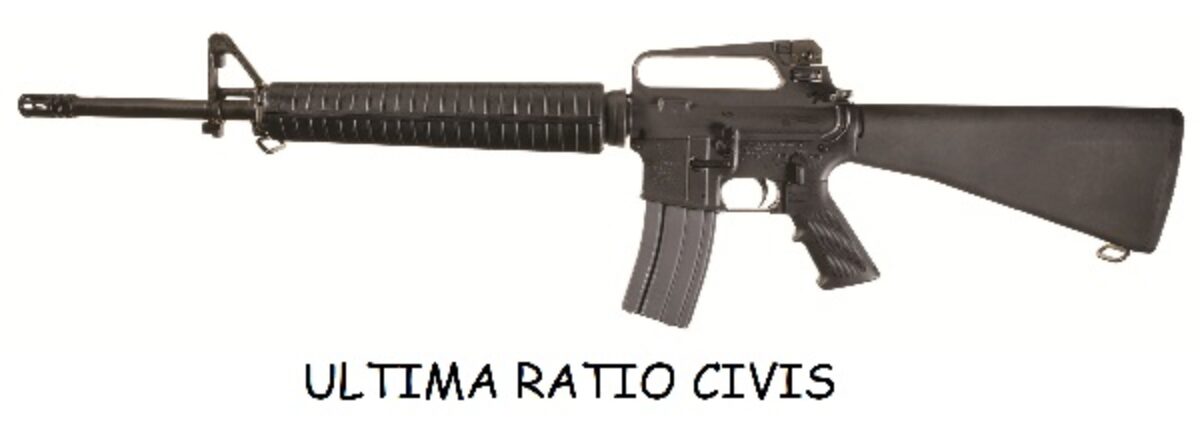
The criteria used for banning rifles are ignorant and nonsensical. The measure purports to ban “military-style” weapons, although all of the guns banned by the bill fire only one round with a single pull of the trigger like all semi-automatics. Our military, as well as most militaries of the rest of the world, equip their soldiers with rifles capable of fully-automatic fire. And the alleged “military” features that can cause your gun to be banned include the capacity to accept a detachable magazine, along with one of the following: a pistol grip (certainly not uniquely military), a forward grip (doesn’t make it any more “deadly”), an adjustable stock (why is it bad to be able to make your gun fit you correctly?), a grenade launcher (which is actually an NFA item, subject to strict controls, as are any explosive grenades one may want to use with the launcher), a barrel shroud or a threaded barrel (so much for hearing protection).

The measure also bans many firearms by name, not just criteria. It bans all AK-type rifles and lists 28 specific models by name. It also covers “AR types,” and went on to list dozens of different rifles by name or manufacturer that would be banned. When you consider several entries that include all of a company’s semi-automatic rifles, like “Smith & Wesson M&P 15 Rifles” and “Stag Arms AR Rifles,” the list grows to literally hundreds. Also banned by the measure are a long list of semi-automatic rifles that are not ARs, including the Beretta CX4 Storm, Ruger Mini-14 and more than 60 other models. Lastly, it bans all AK and AR pistols.

The legislation bans many pistols and shotguns, too. It bans “any semiautomatic pistol that has an ammunition feeding device that is not a fixed ammunition feeding device” and has one of the following: A threaded barrel, a second pistol grip, a barrel shroud, the capacity to accept a detachable ammunition feeding device at some location outside of the pistol grip, a semi-automatic version of an automatic firearm, a manufactured weight of 50 ounces or more when unloaded, or a buffer tube, stabilizing brace or similar component that protrudes horizontally behind the pistol grip, and is designed or redesigned to allow or facilitate a firearm to be fired from the shoulder. It also bans any semi-automatic shotgun that “has the capacity to accept a detachable ammunition feeding device or a fixed ammunition feeding device that has the capacity to accept more than 5 rounds,” along with any one of the following: a folding, telescoping or detachable stock, a pistol grip or bird’s head grip, a forward grip or a grenade launcher. It even bans any shotgun with a revolving cylinder; a type of shotgun that is fairly rare, and even more rarely, if ever, used to commit violent crime.

The legislation also bans common, standard-capacity magazines. It specifically bans what it calls “large capacity ammunition feeding devices,” and defines the term as “a magazine, belt, drum, feed strip, or similar device, including any such device joined or coupled with another in any manner, that has an overall capacity of, or that can be readily restored, changed, or converted to accept, more than 15 rounds of ammunition.” This important portion of the measure has been largely unreported by those in the so-called “mainstream” media.

The authors of the bill knew that much of it is unconstitutional—especially since more than 24 million AR-15-type rifles are owned by American citizens—but pushed the measure through anyway. Proof of that prior knowledge can be found in one section toward the end of the bill that features this clumsy disclaimer: “If any provision of this Act, an amendment made by this Act, or the application of such provision or amendment to any person or circumstance is held to be unconstitutional, the remainder of the Act, the amendments made by this Act, and the application of such provision or amendment to any person or circumstance shall not be affected thereby.”

Of course, the measure also contains a lot of other egregious provisions that would likely shock most law-abiding gun owners. You can read it for yourself here.

Ruger Launches LC Carbine in 5.7

IDEAL FOR THE RANGE, BACKPACKING, SMALL GAME, OR ANYWHERE A VERSATILE AND RELIABLE CARBINE IS APPRECIATED.

  • Weighing under 6 lbs., the lightweight and compact Ruger® LC Carbine™ utilizes the same steel magazines and familiar ergonomic controls as the Ruger-5.7™ pistol.
  • Unique bolt-over-barrel design with the magazine in the grip allows for excellent balance and pointability.
  •  Folding stock and collapsible sights are ideal for compact storage (on models so equipped).
  • The reversible folding stock, with adjustable length of pull, is compatible with both AR-pattern and Picatinny rail-mounted aftermarket accessory stocks (on models so equipped).
  • Features a 16.25″ fluted, nitride-treated steel barrel for strength, accuracy, and longevity.
  • 1/2″-28 TPI threaded barrel with thread protector allows for the attachment of popular muzzle accessories including muzzle brakes, flash hiders and caliber-appropriate suppressors (on models so equipped).
  • Impressive ergonomics with ambidextrous manual safety, reversible charging handle, ergonomic bolt release and extended magazine release latch.
  • Utilizes Ruger’s safe, reliable and proven Secure Action™ fire-control system that combines a protected internal hammer with a bladed-safety trigger. The trigger has a short, smooth pull, clean break and positive reset.
  • CNC-milled handguard that is Type III hard-coat anodized aluminum for maximum durability, with M-LOK® accessory attachment slots. Multiple QD sling sockets allow for maximum versatility.
  • Ruger® Rapid Deploy folding sights are adjustable for windage and elevation and the full length Picatinny rail allows for optic mounting.
  • Safety features include: 1911-style ambidextrous manual safety; an integrated trigger safety; lightweight firing pin; neutrally balanced sear with significant engagement and strong spring tension; and hammer catch to help prevent the hammer from contacting the firing pin unless the trigger is pulled.
  • Also includes: one Ruger-5.7™ steel pistol magazine, ambidextrous magazine button, M-LOK® QD sling socket and hex wrenches for disassembly.

Features listed above are available on all standard models, but may not appear on Distributor Exclusive models. See individual spec sheets for model specific features.