Pew: Only Half of Americans Think Colleges Have Positive Effect on Society

I’m surprised it’s that high.

A new poll from Pew Research revealed that only half of Americans believe that colleges and universities have a positive effect on society. Now, a George Mason University professor has some theories as to why higher education has become so unpopular with Americans.

According to a column published this week by the Daily Signal, Americans have an increasingly negative attitude towards colleges and universities. The column, which was penned by George Mason University Professor Walter E. Williams, makes the case that Americans are turning on higher education.

Williams highlighted a poll by the Pew Research Center that revealed that only half of Americans believe that higher education has a positive effect on society.

It’s not perfectly clear why so many Americans distrust academia. The rising cost of attending college has become a regular concern for Americans around the country. However, Williams has some theories as to why the poll results were so unfavorable for colleges and universities.

Williams cited a study published by the National Association of Scholars that studied the political activity over 12,000 professors. The study revealed that only 22 of the professors included in the study donated to Republican candidates for office.

Langbert and Stevens conducted the new study of the political affiliation of 12,372 professors in the two leading private colleges and two leading public colleges in 31 states.

For party registration, they found a Democratic to Republican (D:R) ratio of 8.5:1, which varied by rank of institution and region.

For donations to political candidates (using the Federal Election Commission database), they found a D:R ratio of 95:1, with only 22 Republican donors, compared with 2,081 Democratic donors.

Williams cited other crises in higher education as reasons for the poll results such as universities failing to disclose millions of dollars in funding from foreign governments.

Gov. Andy Beshear signs bill requiring school resource officers to carry guns

Despite calls from civil rights groups to veto the legislation, Gov. Andy Beshear on Friday signed a bill requiring school police to carry guns.

All Kentucky schools are now required to have at least one armed police officer under state law, effective immediately.

While understanding opposition to the measure, Beshear said at a press conference Friday he could not allow officers to not have the weapons they may need in confronting a school shooting.

“I simply cannot ask a school resource officer to stop an armed gunman entering a school without them having the ability to not only achieve this mission, but also to protect themselves,” Beshear said. “We must be able to stop the worst of the worst.”

Signing Senate Bill 8 is best for the state as a whole, he continued.

Moving forward, Beshear said his administration will work on training officers to “start addressing the reason some kids might not feel safe because of a police officer.”

Beshear’s decision comes after the bill passed the Senate and House with large bipartisan margins, making a veto almost guaranteed to be overridden.

Flint Man Shot by Home Owner for Attempting to Gain Entry while Armed with a Knife

FLINT, MI – On February 11th, 2020, Flint Police responded to the area of 1000 block of Garden for a shooting. On scene, the occupants of a home reported that a man, armed with a knife, was attempting to gain entry into their house.

One of the occupants shot the man then held him until police arrived.

During the same time frame, another report was received that a man had just robbed a teacher at knife point at a nearby elementary school. The school had just dismissed students and there were no children present at the time of the reported robbery.

The description of this armed man matched that of the one who was taken into custody on Garden.

The suspect, Jacob Sword, 30-years-old, was transported to a local hospital and treated for his non- life threatening injury.

Jacob Adam Sword has been charged and arraigned in this case for Armed Robbery, Home Invasion 1st Degree & Assaulting Police.

Judge temporarily halts transfer of coronavirus patients to quarantine facility in California city.

A city in California won a battle against the state Friday, at least temporarily, when a judge halted the transfer of people diagnosed with the coronavirus to its community for a quarantine site.

Costa Mesa, California, filed a legal action after it learned federal officials planned to use its Fairview Development Center to house and quarantine several patients who tested positive for the COVID-19 virus.

The city said it was given little notice, and without input, about the plan.

“We have received no information regarding how the facility will be prepared, what precautions will be taken to protect those in the facility as well as those who live nearby, and other important planning measures,” Costa Mesa Mayor Katrina Foley said in a statement.

Judge Josephine Staton, according to the city, issued the temporary restraining order late Friday night. An expedited hearing is expected to be held Monday afternoon.


One key indicator will tell us when the coronavirus outbreak is winding down — but we’re not seeing it yet.

It has been more than seven weeks since the coronavirus outbreak started in Wuhan, China. Since then, at least 2,250 people have died and more than 76,000 have gotten sick.

The virus’ continued spread prompts an obvious question: When will this end?

recent study from the Chinese Center for Disease Control found that illnesses in China may have peaked on February 1, when the largest number of patients started showing symptoms. That could be a sign that the outbreak is already tapering off, but the researchers also warned that it could rebound once Chinese residents return to school and work.

“The data from China continue to show a decline in new confirmed cases,” Tedros Adhanom Ghebreyesus, the director-general of the World Health Organization, said at a press conference on Thursday. “We’re encouraged by this trend, but this is no time for complacency.”

Lauren Ancel Meyers, an epidemiologist at the University of Texas at Austin, told Business Insider that one important figure can tell us when the outbreak has run its course. It’s the average number of people that a single patient is expected to infect. Epidemiologists call it the “basic reproduction number,” and it indicates how contagious a virus is.

When the outbreak is winding down, Meyers said, the basic reproduction will be below one.

“That means, on average, every person is infecting fewer than one other person and then the outbreak should burn out,” she said.

That’s not the case yet. A recent study of nearly 140 hospitalized patients in Wuhan estimated that the basic reproduction number for the coronavirus is 2.2, meaning that patients have been spreading the virus to more than two other people, on average. A study in the Journal of Travel Medicine estimated that the reproduction number was slightly higher: around 3.3.

Homeowner believed to have shot, killed intruder in Spencer Co.

Well, if there was a intruder in my home that I had shot and killed, I’d believe it too. Geez, what dunderheads they hire to write news copy.

SPENCER COUNTY, Ky. (WAVE) – Kentucky State Police are investigating a fatal shooting in Taylorsville in Spencer County.

KSP Trooper Stuart Jackson confirmed to WAVE 3 News that just before 1:30 p.m. Thursday, KSP Post 12 was called in reference to a disturbance at a home on the 4800 block of Plum Creek Road.

Trooper Jackson said when investigators with KSP Post 12 and the Spencer County Sheriff’s Office arrived on the scene, they found a man dead in the home. The initial investigation shows the man entered the home and was confronted by the homeowner, who shot and killed him.

Their names have not been released.

No charges have been filed.

The suspected intruder’s body was brought to the State Medical Examiner’s Office in Louisville for an autopsy.


Gun stores, firearm instructors notice number of women buying guns on the rise

BIRMINGHAM, Ala. (WBMA) – New numbers show more women have a gun at home and local gun stores and teachers of firearm classes say they notice the difference.

That study shows, since 2017, the number of women buying guns has been on the rise. Some site social media, but others say now is the time women are taking things into their own hands when it comes to safety.

Boys move over because lately, more girls just wanna have guns!

Mark Whitlock Jr. will tell you. He’s the vice president of Mark’s Outdoor Sports in Vestavia.

Coronavirus up to 20 times more likely than Sars to bind to human cells, study suggests

That means ‘more contagious’.

  • New strain appears to be more readily transmitted from human to human than Sars, Texas researchers find
  • Further studies needed to explore human host cells’ role in spread between people, the report says

The deadly new coronavirus is up to 20 times more likely to bind to human cell receptors and cause infection than severe acute respiratory syndrome (Sars), a new study by researchers at the University of Texas at Austin has found.

The novel coronavirus and Sars share the same functional host-cell receptor, called angiotensin-converting enzyme 2 (ACE2).

The report, published on the website bioRxiv on Saturday, said the new coronavirus had around 10 to 20-fold higher affinity – the degree to which a substance tends to combine with another – for human ACE2 compared with Sars.

But the researchers added that further studies were needed to explore the human host-cell receptor’s role in helping the new virus to spread from person to person.

“Compared with SARS-CoV, 2019-nCoV appears to be more readily transmitted from human to human,” the report of the study said. “The high affinity of 2019-nCoV S for human ACE2 may contribute to the apparent ease with which 2019-nCoV can spread from human to human.”

The disease caused by the new coronavirus, which the World Health Organisation (WHO) has named Covid-19, has killed more than 1,800 people and infected over 70,000 worldwide.

The number of Covid-19 deaths is more than double the global figure of 813 attributed by the WHO to the Sars epidemic of 2002-03.

The new study found that although the novel coronavirus’ receptor-binding domain (RBD) had a relatively similar structure to that of Sars, it did not have appreciable binding to three published Sars RBD-specific monoclonal antibodies (mAbs), which are copies of one type of antibody used to neutralise pathogens.

The researchers said this suggested antibody cross-reactivity – the extent to which different antigens appear similar to the immune system – may be limited between the two virus RBDs, meaning Sars-directed mAbs will not necessarily work against the new virus.

Instead, they identified the spike protein of coronaviruses, which is essential to gain entry into host cells during the infection process, as the most important target for vaccines, therapeutic antibodies and diagnostics.

“Due to the indispensable function of the [spike] protein it represents a vulnerable target for antibody-mediated neutralisation,” the report said. “Knowing the atomic-level structure of the spike will support precision vaccine design and discovery of antivirals, facilitating medical countermeasure development.”

The WHO has declared the outbreak a global public health emergency, making it the sixth incident to date to warrant that designation.

There are currently no specific treatments for the novel coronavirus but the WHO director general Tedros Adhanom Ghebreyesus said last week that the first vaccine may be available in 18 months.

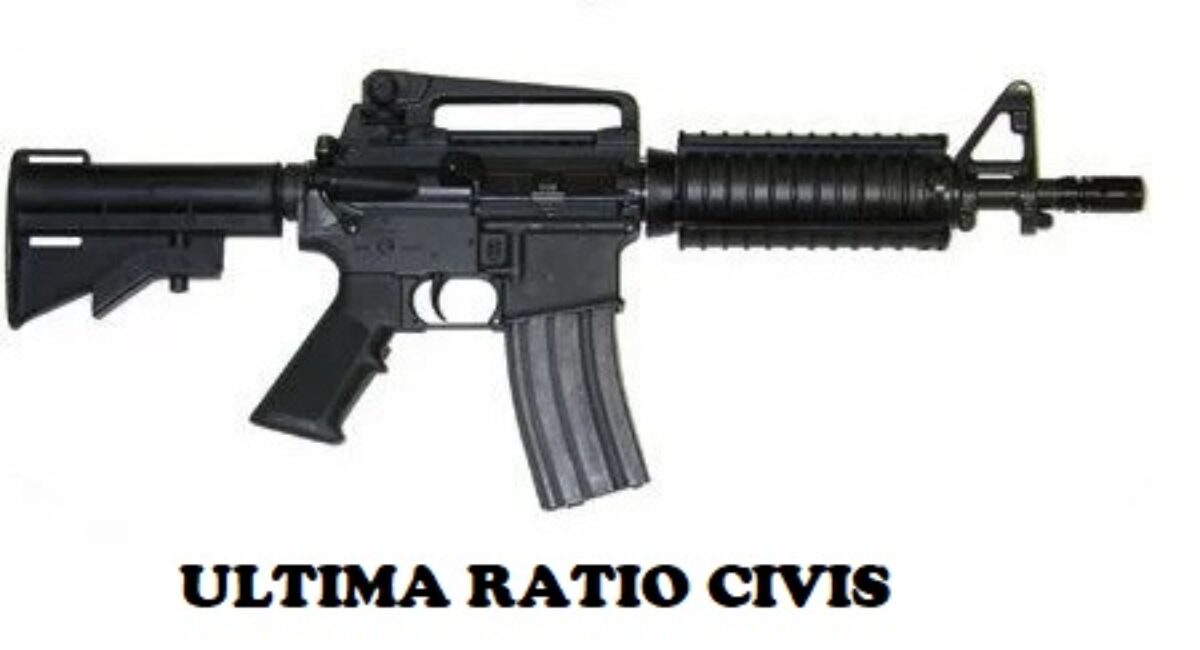
Violent Crime Rate Continues to Drop as AR-15 Ownership Rises

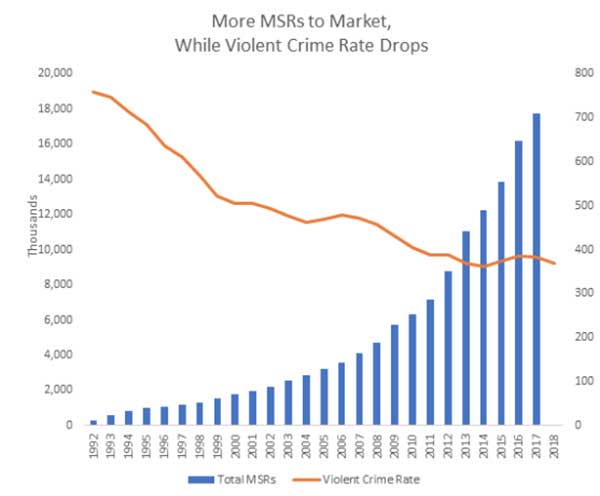
Despite some claims to the contrary, the United States is in a solid decline in the violent crime rate over the last couple of years. According to some preliminary data sourced from the Federal Bureau of Investigation, violent crime rates have dropped in the first half of 2019 when compared to the first half of 2018. This is a trend that has continued with consistency since 2017.

Despite ongoing pressure being put on gun owners by various anti-gun organizations, the rate of ownership has continued to rise. In particular, the amount of “sporting rifle” ownership has continued to grow rapidly. Some would have you think that an increase of sporting rifle ownership would lead to higher violent crime rates, however, data shows this is simply not the case.


Violent Crime Rate Continues to Drop as AR-15 Ownership Rises

Violent Crime Rate Continues to Drop as AR-15 Ownership Rises


When looked at through an objective lens, firearms manufacturers and owners are some of the most scrutinized and tested in regards to following the laws and regulations of the land. Both the firearms and ammunition industries have to work with and ultimately cooperate with not only federal agencies but local law enforcement agencies as well to maintain compliance standards.

Violent Crime Rate Continues to Drop as AR-15 Ownership Rises

Violent Crime Rate Continues to Drop as AR-15 Ownership Rises

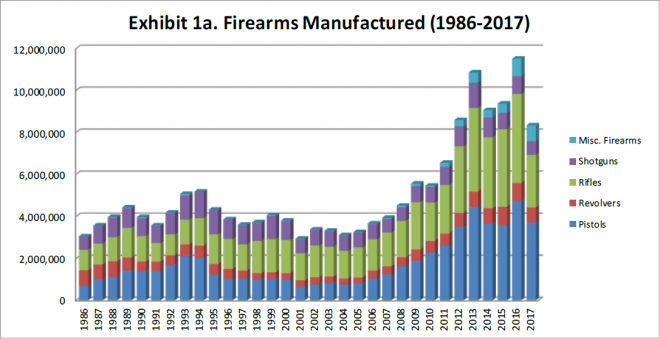
On that note, as a whole, firearms commerce in the United States has continued to increase since 2013 according to the  Bureau of Alcohol Tobacco Firearms and Explosives. Firearms in the American market are more prevalent than ever despite the declining violent crime rate.

As shown by the above graph, beginning in 2008 and continuing through 2013 there was a sharp rise in the manufacturing of all firearms as a whole. Of significant note, Pistols and Rifles accounted for the majority of the firearms made, which would include AR-15’s or “sporting rifles”. What’s even more interesting is the drastic record-breaking 11,497,441 firearms manufactured in 2016.

To further back up the notion that an increase in firearms would not be responsible for an increase in violent crime, John Hopkins University just concluded a study that shows that there is no evidence to suggest that “Assault Weapon” bans would reduce mass shooting events.


Dallas Security Guard Fatally Shoots Man Who Allegedly Assaulted, Pointed Gun At Him

DALLAS (CBSDFW.COM) – A 26-year-old man was shot and killed Tuesday evening after he allegedly assaulted a security guard and pointed a gun at him at an apartment complex in Dallas, police said.

Police said the incident happened at around 8:30 p.m. in the parking lot of an apartment complex in the 5300 block of Monmouth Lane.

According to police, the man, Jamal Patterson, became upset after he was told by a security guard, 62-year-old Richard Farris, that he couldn’t work on his vehicle in the parking lot.

Police were told by Farris and other witnesses that Patterson punched the 62-year-old multiple times and then went into his apartment to grab a handgun.

According to police, Patterson went back out with the gun and pointed it at Farris. This was when Farris fired his own weapon multiple times, police said.

Patterson was pronounced dead at the scene.

Police said Farris was interviewed by officers at police headquarters and was released. The case is expected to be referred to the Dallas County Grand Jury.

 States That Defend Us—Where Do Our Military Volunteers Call Home?

There’s no end to fun surveys that purport to measure patriotism among the states, with military enlistments often part of the criteria.

However, using enlistment rates to gauge the regional willingness to volunteer for the armed forces betrays a common misunderstanding of the way the U.S. military operates. What matters is accessions to the military, not enlistments. Accession is a term used when a civilian joins the military, having passed mental, physical, educational and legal standards, and swears an oath to “support and defend the Constitution of the United States.” Enlisted personnel—in other words, not commissioned officers—enlist for a term. When that term is up, they can leave the military or choose to reenlist. Thus, states with a large active duty presence will also then see many enlistments……….

Contrary to popular myth, members of the U.S. Armed Forces are mostly drawn from the middle class, with the lowest income quintile being slightly underrepresented, and the highest quartile being even less represented, with about 17% of enlisted personnel coming from the top 20% of neighborhoods by income. Further, 92% of accessions to active duty have a high school diploma, compared to 90% of adults age 25 and older.

But as representative of the nation as our armed forces are, there are stark regional differences in the makeup of our military, with the South contributing more than its fair share of personnel and the Northeast largely lagging behind, with a few exceptions.

Reviewing a 2016 report from the Office of the Undersecretary of Defense for Personnel and Readiness titled “The Population Representation in the Military Services” shows that California (17,729), Texas (16,139) and Florida (11,552) had the largest number of people enlist in the military. But these three states are the three most-populous states. Further, new recruits are mostly 18-to-24 years old with about 0.5% of them volunteering and being accepted for active duty each year.

Looking at each state’s share recruits by the number of 18-to-24-year-olds in the state determines how well or how poorly a state is doing compared to its recruitable population. By that measure, the top five states in 2016 were: Hawaii, South Carolina, Georgia, Virginia and Florida. The five places with the smallest share of recruits were: Washington D.C., North Dakota, Massachusetts, Rhode Island and New York.

Wisconsin Church Self-Defense Bill Hearing

On February 20th, the Senate Committee on Insurance, Financial Services, Government Oversight and Courts will hear Senate Bill 822 to improve the ability of law-abiding citizens to defend themselves and their loved ones in churches.

Senate Bill 822 affirms that law-abiding adults with a license to carry firearms for self-defense may do so in places of worship unless the property is specifically posted to prohibit carry. This ensures that such decisions involving security are left up to individual places of worship rather than the government mandating a one-size-fits-all solution. So-called “gun-free zones” simply disarm law-abiding citizens and leave them defenseless against criminals who ignore arbitrary boundaries.

Columbia (Missouri) Man Faces 20 Years for Terrorist Plot in Support of ISIS

A 20-year sentence and lifetime supervision will deter Robert Lorenzo Hester, Jr. and others like him from from the “clarion call” of the Islamic State, federal prosecutors wrote in a memorandum seeking the maximum penalty for a Columbia man who pleaded guilty to aiding terrorists.

In opposition to the long sentence, defense attorneys for the 28-year-old who plotted to attack transportation services in Kansas City and other acts over the course of several months argue mental health issues combined with a mockery of his race and intellect by fellow soldiers led him to extremists ideologies.

Hester pleaded guilty in September before U.S. District Judge Greg Kays and will be sentenced March 4 in Kansas City. Discharged from the U.S. Army shortly after basic training in 2013, Hester over the next several years turned to Islamic extremism, eventually preparing to wage war against the United States.

Couple shoots 3, kills 2 after attempted home invasion

“Two outta three ain’t bad.”

AUSTIN (KXAN) — Police say people living in a northeast Austin apartment shot three people breaking into their home, killing two of them. A man and woman died Tuesday night in the attempted home invasion.

The third person who was shot, a man, was treated for non life-threatening injuries.

Police say the shooting took place inside a unit at the Creekside on Parmer Lane apartment complex at 10:30 p.m. Police say people inside the unit fired the shots but did not say who they were, how many people fired a gun, or how many shots were fired.

“They were running around everywhere, ambulances and everything,” said Witness Tyler Watts. “With their assault riffles running, they were huge.”

Police had the majority of the complex blocked off with crime scene tape.

Tyler Watts was just moving into his new Creekside apartment when the shooting happened. He thought a spot farther from where he used to live at Lamar and Rundberg two years ago would be safer.​​​

The boxes are still piled up in his new unit. ​He recently moved away from violence in California.​​


Scientists announce ‘breakthrough’ atomic map of coronavirus

Washington (AFP) – US scientists announced Wednesday they had created the first 3D atomic scale map of the part of the novel coronavirus that attaches to and infects human cells, a critical step toward developing vaccines and treatments.

It came as the death toll from the COVID-19 virus jumped past 2,000, almost all of them in mainland China where 74,185 cases of infection have been confirmed since it first emerged in late December.

The team from the University of Texas at Austin and the National Institutes of Health (NIH) first studied the genetic code of the virus made publicly available by Chinese researchers, and used it to develop a stabilized sample of a key part called the spike protein.

They then imaged the spike protein using cutting-edge technology known as cryogenic electron microscopy, publishing their findings in the journal Science.

“The spike is really the antigen that we want to introduce into humans to prime their immune response to make antibodies against this, so that when they then see the actual virus, their immune systems are ready and loaded to attack,” UT Austin scientist Jason McLellan, who led the research, told AFP.

He added that he and his colleagues had already spent many years studying other members of the coronavirus family including SARS and MERS, which helped them develop the engineering methods required to keep the spike protein stable.

Their engineered spike protein is itself being tested as a potential vaccine by the NIH.

The team is sending the map of its molecular structure out to collaborators around the world so they can improve it by making it provoke a greater immune response.

The model can also help scientists develop new proteins to bind to different parts of the spike and prevent it from functioning, to treat those already infected. These are known as antivirals.

“This is a beautifully clear structure of one of the most important coronavirus proteins — a real breakthrough in terms of understanding how this coronavirus finds and enters cells,” said virologist Benjamin Neuman at the Texas A&M University-Texarkana, who was not involved in the work.

“The structure shows that although the spike is made of the three identical proteins, one flexes out above the rest, effectively giving the virus a longer reach,” he added.

A useful aspect of the structure for vaccine development is that it maps out the size and location of chains of sugar molecules the virus uses in part to avoid being detected by the human immune system, added Neuman.

Cryogenic electron microscopy uses beams of electrons to examine the atomic structures of biomolecules that are frozen to help preserve them.

Three scientists credited with developing the technology were awarded the 2017 Nobel prize in chemistry.

No Evidence ‘Assault Weapon’ Bans Reduce Mass Shootings

A study released by the Johns Hopkins Bloomberg School of Public Health declares there is no evidence “assault weapon” bans lead to a lower “incidence of fatal mass shootings.”

Expanded Background Checks Don’t Lower Mass Shooting Rate

A study by the Johns Hopkins Bloomberg School of Public Health found expanding background checks does nothing to lower the mass shooting rate.


Researchers did claim licensing requirements like those in Connecticut help reduce the number of mass shootings, but their study omitted the 2012 Sandy Hook Elementary School in which 26 were killed at the school and another victim was killed in a private home.

In other words, a study which claims licensing reduces instances of mass shootings omitted one of the most often cited mass shootings in U.S. history, even though that shooting occurred in a licensing state.

Moreover, John Hopkins’ criteria for licensing laws allowed them to bypass Illinois which, in turn, allowed them to sidestep the never ending gun crime of Chicago.

But the study was clear there is no evidence tying “assault weapons” to a lower incidence of mass shootings.


Johns Hopkins Study:

Firearm Purchaser Licensing Laws Linked to Fewer Fatal Mass Shootings
BANS ON LARGE-CAPACITY MAGAZINES WERE ALSO ASSOCIATED WITH FEWER FATAL MASS SHOOTINGS AND FATALITIES
Firearm purchaser licensing laws that require an in-person application or fingerprinting are associated with an estimated 56 percent fewer fatal mass shootings in states that have them, according to a new study by researchers at the Johns Hopkins Bloomberg School of Public Health.

The study analyzed fatal mass shootings in 45 states between 1984 and 2017 and the association between the rates of those shootings and the presence of various firearm laws.

The study was published in a February 2020 special issue on mass violence in the U.S. in the journal Criminology & Public Policy.

The researchers also found evidence that laws banning large-capacity magazines, defined as those that hold more than 10 rounds of ammunition, were associated with significant reductions in the rate of fatal mass shootings with four or more fatalities and the number killed in those shootings. >>>>The size and precision of the estimated effects of LCM bans varied across many statistical analyses presented in study.<<<<

(in other words, our evidence depends on our point of view because the numbers really don’t add up)

“After each horrible mass shooting, there are always policy debates on how they can be prevented,” says lead author Daniel Webster, ScD, MPH, director of the Johns Hopkins Center for Gun Policy and Research and Bloomberg Professor of American Health in Violence Prevention. “One side often calls for expanding background checks to private purchasers, and the other usually calls for fewer restrictions on civilian gun carrying. Our findings indicate that neither of those prescriptions are associated with lower rates of fatal mass shootings. What does appear to work to reduce mass shootings are licensing laws and laws banning large-capacity magazines.”

(But later on down the page they admit that magazine laws have to be ‘controlled for’  – in other words numerically skewed to fit a preconceived idea – …so the above is a lie, right??)

In their analyses, researchers identified 604 mass shootings involving four or more victim fatalities; a total of 2,976 victims were killed in these incidents. Approximately 28 percent (842) of victim fatalities were from domestic-related shootings, 61 percent (2,057) were from non-domestic related shootings, and it was unclear among the remaining 11 percent (77) of victims whether the shooting was domestic-related. Most mass shootings had four to six victim fatalities.

As for licensing, federal law requires licensed firearm dealers—but not private sellers—to initiate a background check before the purchase of a gun. Firearm purchaser licensing laws require even more: a direct application to a law enforcement agency that conducts background checks, often aided by fingerprint-based identity verification of the applicant. Under such laws, a license or permit to purchase is needed for sales by private individuals as well as licensed firearm dealers. Nine states—Connecticut, Hawaii, Illinois, Iowa, Maryland, Massachusetts, New Jersey, New York, North Carolina—and the District of Columbia currently have some form of firearm purchaser or owner licensing laws.

Previous research shows that firearm purchaser licensing laws are associated with reductions in rates of firearm homicides and suicides.

(Did they conveniently forget Chicago?) 

For the study, the researchers analyzed data from the Federal Bureau of Investigation’s Supplementary Homicide Reports, a database of homicide records voluntarily reported to the FBI by local law enforcement agencies, from 1984 to 2017. Data for Florida, Kansas, Kentucky, Nebraska, and Montana were excluded due to significant gaps in reporting.

(What are these ‘significant gaps’? Is it that the stats from these states don’t jibe with the anticipated outcome…hmm?)

The Supplementary Homicide Reports collects information on the number of victims, weapon(s) used, circumstances or motive, and the relationship between the offender and the first victim. Shootings connected to gang or illegal drug-related activities were excluded from the analyses.

Due to voluntary reporting policies, the FBI’s database did not include several high-profile mass shootings, including the 2012 Newtown, Connecticut, school shooting, 2012 Aurora, Colorado, movie theater shooting, and the 2017 Sutherland Springs, Texas, church shooting. The researchers addressed these gaps by using data from Stanford University’s Stanford Mass Shootings in America database and the Gun Violence Archive to identify 33 additional fatal mass shootings.

In their study, the researchers made a comprehensive list of all the mass shootings between 1984 and 2017 and categorized the events based on whether the shooter had a domestic relationship (family or intimate partner) to one of the victims. The researchers’ analyses estimated the independent association between annual rates of fatal mass shootings in states and the presence of various state and federal gun laws, while controlling for differences in demographics, social and economic conditions, alcohol consumption, deaths from drug overdoses, and national trends in fatal mass shootings.

Types of firearm laws examined in the study included regulation of civilian concealed carry; extensions of background check requirements at the point of sale for private transfers; prohibitions for non-felony violence, including restraining orders for domestic violence; assault weapon bans; and large-capacity magazine bans.

The study also examined purchaser licensing laws that required in-person application to a law enforcement agency or other fingerprint-based identification of applicants, regardless of whether the sale was by a licensed gun dealer or a private seller. Seven states—Connecticut, Hawaii, Iowa, Maryland, Massachusetts, New Jersey, New York—and the District of Columbia currently meet that criteria and were analyzed in the study. Three additional states—Missouri, Michigan, and Nebraska—were also included in the analyses based on their purchaser licensing laws; during the study period, these states repealed all or part of their licensing requirements.

The study did not find significant associations between the incidence of fatal mass shootings and concealed carry laws, comprehensive background check laws without licensing requirements, or firearm prohibitions for violent misdemeanor convictions and domestic violence restraining orders. Although researchers did not find a clear association between firearm restrictions for domestic abusers and reduced fatal mass shootings, other research has shown these laws do reduce intimate partner homicides.

In addition, the study did not find an independent association between assault weapon bans and the incidence of fatal mass shootings after controlling for the effects of bans on large-capacity magazines.

“Evidence Concerning the Regulation of Firearms Design, Sale, and Carrying on Fatal Mass Shootings in the United States” was written by Daniel W. Webster, Alexander McCourt, Cassandra K. Crifasi, Marisa D. Booty, and Elizabeth A. Stuart.

The study was supported by The Joyce Foundation and Dr. Webster’s professorship funded by the Bloomberg American Health Initiative.

(The Joyce Foundation…That right there is the tip off. TJF is and always has been one of the more rabid anti-gun/anti-self defense entities in the U.S. Just another scrap piece of proselytizing from the controllers.)

Women With Firearms: 23 Truths You Should Know

  1. You can never have too much ammo. It’s amazing how quickly one or two people can shoot through 100 rounds or more in a single target practice.
  2. If you’re smart, your firearms will be common calibers. It will be easier to find ammo and easier to get replacement parts.
  3. If you’re even smarter, you’ll own firearms that are of popular makes and models. It will be easier to find a gunsmith capable of making repairs and handling customized requests.
  4. Unless you’re at the range every day, it’s hard to get too much practice. If the range masters know you by name, that’s a good sign that you’re getting enough practice!
  5. It’s a mistake to limit your practice to shooting at a piece of paper under optimal conditions. Take classes that will challenge your shooting skills in high-pressure scenarios. Until the adrenaline is really pumping and your brain feels scrambled, you’ll never know how you’ll respond in a life or death situation. (Note: The first time I was firing a gun under pressure, I got so rattled that I was using my non-dominant eye.  I was fortunate that any shots hit my target!)
  6. shotgun should be at or near the top of your list when it comes to firearms for home defense. Your choices are the 12 gauge, 20 gauge and the 410. Once you’ve made your decision, get to the range and practice, practice, practice. When it comes to stopping power, a shotgun can’t be beat. According to the study, 50 percent of women with firearms have at least one shotgun and 56 percent have a semiautomatic pistol.
  7. Don’t fall into the trap of buying the smallest gun at the store. Believe it or not, a larger gun will be more comfortable and will shoot more accurately. Read my reviews of the Sig Sauer MosquitoWalther P22 and Ruger Mark III.
  8. Learn how to clean your own gun. Learn how to completely dismantle it (field strip), clean each part, and put it back together.
  9. Your safety is your responsibility. Not your husband’s, nor the police, nor your kids.
  10. A gun isn’t the end-all when it comes to personal or home security. Think in terms of layers: Situational awareness, home security systems, a watchdog, cacti or rose bushes along the back fence. It all adds up to more peace of mind and less dependence on any one strategy.
  11. If a gun isn’t possible or desirable in your circumstances, come up with Plan B. One of my friends keeps a baseball bat near the front seat of her minivan. Another always has the most powerful pepper spray on the market in her purse, and yet another keeps an 18″ length of steel rebar wedged between the driver’s seat of her car and the middle console. Whatever your choice, always be aware of the location of your weapon, practice using it, and be comfortable with the thought that one day you may have to use it.
  12. Don’t listen to celebrities and politicians who go on hysterical anti-gun rants. Remember, they can afford armed bodyguards and state-of-the-art home security systems. (Interesting that it’s okay if their bodyguards are armed but they don’t think law-abiding citizens should be able to own and carry guns.) I am my kids’ armed bodyguard.
  13. Practice rapid firing when you’re at the range. If your life, or that of your children’s, is ever on the line, and your only choice is to draw your gun, your best tactic will be multiple, rapid shots at the bad guy(s).
  14. Don’t assume you will only ever have to deal with a single bad guy. Just like roaches, bad guys stick together. You may very well be confronted with several all at once. Keep that in mind.
  15. There’s a reason why experts prefer to keep their sidearms concealed. Open carry is okay if you’re trying to impress people, but it also makes you a target. According to the study by the National Shooting Sports Foundation, more than 42 percent of women with guns have a concealed carry permit.
  16. Your life should never depend on a gun you’re afraid to shoot. If the recoil is too powerful, if the trigger pull is too heavy, if firing it hurts your hand, do not plan on using that gun as a defensive weapon. Sell it. Give it away, but whatever you do, have a gun you are comfortable with and actually enjoy shooting. If that life or death moment should ever come, there cannot be even a moment’s hesitation due to fear of using your gun.
  17. If you choose to carry your handgun concealed, practice drawing it from its holster or from its concealed location. And then practice another hundred times.
  18. It’s a really good idea to keep an extra loaded magazine in your purse, the glove compartment, wherever it will be safe and easily accessible.
  19. You just might be able to easily handle a larger caliber of handgun than you think at first. Don’t underestimate your ability.
  20. Nothing beats not being in the wrong place at the wrong time.
  21. Be willing to back down in a confrontation or willing to run or call for help. Your goal is to survive, not show off to the world your awesome marksmanship skills.
  22. Every gun-nut has his/her own opinion about the best make, model, caliber, shooting stance, etc. Be willing to listen but keep in mind that they are just opinions.
  23. Don’t get overly cocky just because you have a firearm in the house, your purse, or have a certificate from your shooting range for completing an advanced course. Law enforcement officers miss their target in a shooting confrontation about 70% of the time. Think about that.


I can’t remember if I posted this drill too.

Federal Air Marshal Qualification: Test Your CCW Skills

Armed citizens with concealed-carry permits who want to evaluate or increase their skill levels often focus on one of the various law-enforcement-qualification courses as a guide. All can be valid skill checks as far as shooting goes, but one drawback for civilians is that many such courses involve the use of an exposed duty holster and include targets at ranges out to 25 yards (or more), neither of which is something the overwhelming majority of self-defense scenarios for us regular folks will entail.

One notable exception is the Tactical Pistol Course (TPC). Commonly called the “old Air Marshal (FAM) course,” it was created for Federal Air Marshals in 1992. In cooperation with the Office of Civilian Airline Security, it was developed by a private instructor in the Fort Bragg, NC, area who routinely taught skills to certain units based at that facility. It eventually became the qualification course for all Federal Air Marshals. Those who passed it received their flying orders. Those who failed went back for more training. It was not an easy course. In fact, when senior officers from the Joint Special Operations Command attended and reviewed the course in 1998, their opinion was that those passing the TPC were among the top one-percent of pistol shooters in the world.

The TPC qualification course demands speed, accuracy and advanced gun-handling at close range. That’s obviously an important skill for an Air Marshal, who may have to engage an armed terrorist in the crowded confines of an aircraft cabin or a bustling airport-passenger terminal. Speed is critical, and errant rounds could be catastrophic. It also must be accomplished from concealment, since Air Marshals wear civilian clothing to blend in with passengers.

The situations confronting Air Marshals are actually quite similar to those an armed citizen might experience in an assault (or active shooter situation) in a crowded mall, restaurant, theater or other public venue. Speed can be critical, and errant rounds are ultimately the responsibility of the concealed carrier firing them. That makes the “old TPC Air Marshal qualification course” an excellent training regimen for civilian carriers.

The course consists of seven individual stages, which have to be shot “cold”—no warm up shots before the course—just like in a real-world defensive scenario. Each stage stresses an important close-range, defensive-handgun skill set, and each can be practiced individually. The course is geared toward semi-automatic handguns carried by Air Marshals, but five of the seven stages are equally applicable to five- or six-shot, compact revolvers. All stages are fired at 7 yards, and the full course requires only 30 rounds. The target used is listed as the FBI-QIT-97, which is a bottle-shaped silhouette with an inner-scoring zone. Five of the seven stages use a single target, while one stage uses two and one uses three.

The targets are scored as follows: Hits in the inner bottle count five points. Hits outside the inner bottle, but within the outer bottle count two points. A target miss is zero points. The maximum score is 150 (30 rounds in the inner bottle), and a passing score is 135×150. If the FBI-QIT-97 target is not available, the standard silhouette target used by the United States Practical Shooting Association (USPSA) and available at many gun clubs could be used. The scoring will not be the same, but any shooter who only lets a half-dozen rounds wander into the C-Zone can consider themselves close enough.

(l.) Unlike other qualification courses, the TPC course is shot at 7 yards, which might seem rather close at first, but speed and adrenaline ramp up the difficulty factor quite a bit. (r.) Since shooting quickly is of such vital importance for qualifying in this course, having a shot timer and a partner to run it are critical to properly evaluate your success (or to document areas to be improved upon).


At 7 yards this is not a difficult accuracy level to achieve, and even casual shooters could make it, given enough time. But, the TPC course doesn’t allow that luxury. Each of the seven stages has a par time requirement, and regardless of the target score, if the par time is not made, the applicant fails. That immediate pass/fail aspect adds a severe level of stress, adding to the usefulness of the course for self-defense training.

These par times are not generous. They require a focused and competent effort on the shooter’s part. Bobbles, indecision and poor skills won’t create a positive outcome. Such requirements are about as “real-world” as you can get when training on a square range, and they are the main reason the TPC qualification course is considered to be one of the toughest law enforcement qualification courses.

You’ll need a competition-type electronic timer to properly record the par times. Due to the rapid fire and movement needed on two of the stages, some indoor ranges will not allow patrons to shoot those stages. For those who have access to an outdoor range and timer, here is what every Air Marshal had to achieve. And, those same skill sets will benefit any civilian concealed carrier.

Stage 1
From a concealed holster, face a single target at 7 yards. At the start signal, draw and fire one round. Carefully holster and repeat for a total of two single-round strings. The combined time for both strings cannot exceed 3.3 seconds—an average of 1.65 seconds per string.

Those are tight times when drawing from concealment. They are certainly achievable, but not all shooters will be able to make them. For those that don’t, the logical question could be “why?” The answer might involve a re-consideration of the carry position with one’s normal wardrobe, or, possibly, the gun itself, especially the grips. In fact, when I was training up for my first run through the FAM course, I chose to use my everyday carry pistol, a Smith & Wesson M&P9c with the factory 12-round, finger-tip-extension-equipped magazine. My normal EDC carry (in rural Florida) is a strong-side OWB pancake holster under a loose-fitting knit-shirt, with a spare magazine concealed on the weak side. I had used that rig to classify as a Master in the International Defensive Pistol Association (IDPA) Back-Up Gun (BUG) division, so I figured I was good-to-go.

I was wrong. I was failing Stage 1 in practice. I could make the times, but the abbreviated grip did not provide a positive hold for an accurate shot when attempting it at high speed from the holster. I was missing the bottle.

The compact M&P9c accepts the full-size, 17-round magazines of the parent gun. I tried one of those. The extra magazine length gave me a positive hold and didn’t slow the times. I then discovered the larger magazine was no more difficult to conceal than the short one, not to mention the fact that it gave me an extra five rounds. That changed my EDC setup. It was an important lesson learned from Stage 1, which is one of the most-common stages that shooters fail.

Stage 2
From a low ready, face the same single target and, at the start signal, deliver two rounds (as a controlled pair). Repeat this once (two pairs; a total of four rounds). The combined time for both strings cannot exceed 2.7 seconds—an average of 1.35 seconds per string.

This is actually one of the easier stages, at least it is if the shooter knows how to lock their wrists to present the proper sight picture, recover from recoil and quickly find their sights. Shooters may need to re-evaluate the type and color of their sights if they prove hard to find. If the sights are not readily visible, bullet placement can be problematic. Poorly fitting grips can also contribute to inaccurate round placement. “Point shooting” only goes so far, and the FAM course will quickly point out its limitations.

Stage 3
From low ready, fire six rounds into the single target in one rapid and continuous string. This is done once, and the par time is 3 seconds for the six rounds fired.

This stage stresses sight acquisition and recoil control. It is also applicable to revolvers, and the 3-second par time is realistic. Those with five-shot guns will obviously be restricted to only five rounds, but five accurately fired rounds at 7 yards from a lightweight snubby in 3 seconds is certainly excellent shooting.

Stage 4
With a fully loaded handgun, face a single target at 7 yards from low ready. Fire one round, reload, then fire one more. Repeat for two strings and four rounds total. The par time for the four rounds is 6.5 seconds—an average of 3.25 seconds per run.

This stage stresses what is commonly known as a “speed reload.” Dump the partially expended magazine from the gun and quickly get a full one in. It’s a valuable skill if a shooter expends rounds in a protracted event and is unsure of how many remain in the gun, though stopping most criminal assaults will likely not require you to reload. Topping off quickly is an excellent idea, especially for subcompact semi-automatics with their reduced capacities. Given the quick par time, this is not applicable to revolvers (unless your name is Jerry Miculek).

If your range allows, the various stages should be shot from concealment.


Stage 5

From low ready, fire one round each at two targets spaced 3 yards apart. Repeat this once for a total of four rounds in two strings. The combined par time for both strings cannot exceed 3.3 seconds—an average of 1.65 seconds per string.


Stage 6

Three targets are placed 3 yards apart. The shooter starts from the holster under a concealment garment, facing up range with their back to the targets. At the start signal, turn, draw and place one round into each target. Repeat this for a total of six rounds. The shooter will be required to turn to their right for one string and to their left for the other. The total par time for both strings cannot exceed 7 seconds—an average of 3.5 seconds per string.


Stage 7

Load one round into the chamber, leaving the empty magazine in the gun. From a standing low ready, fire one round. The slide locks back. Drop to one knee, reload and fire one more round. Repeat for two, two-round strings. The total time cannot exceed 8 seconds—a 4-second average per string.

This stage simulates a protracted engagement where the gun is shot empty and stresses a quick reload while altering your target profile. It’s a valuable skill for those carrying compact, low-capacity semi-automatics, but it is not particularly well-suited for those who carry revolvers, even larger-frame models with six-round cylinders.

If the TPC/FAM sounds tough, it is. In fact, it is tough enough that when the Federal Air Marshal Service expanded rapidly after the terrorist attacks of Sept. 11, many of the new applicants could not pass it. The qualification course was then changed to a more-standard, FBI-type PPC course. However, many veteran Air Marshals continued to shoot the TPC for practice. They wanted to maintain that top-one-percent status. Any civilian concealed-carrier who can pass the TPC can consider themselves to be in that class.