
6 June 1944, United Kingdom

Soldiers, Sailors and Airmen of the Allied Expeditionary Forces:

You are about to embark upon the Great Crusade, toward which we have striven these many months. The eyes of the world are upon you. The hopes and prayers of liberty-loving people everywhere march with you. In company with our brave Allies and brothers-in-arms on other Fronts you will bring about the destruction of the German war machine, the elimination of Nazi tyranny over oppressed peoples of Europe, and security for ourselves in a free world.

Your task will not be an easy one. Your enemy is well trained, well equipped and battle-hardened. He will fight savagely.

But this is the year 1944. Much has happened since the Nazi triumphs of 1940-41. The United Nations have inflicted upon the Germans great defeats, in open battle, man-to-man. Our air offensive has seriously reduced their strength in the air and their capacity to wage war on the ground. Our Home Fronts have given us an overwhelming superiority in weapons and munitions of war, and placed at our disposal great reserves of trained fighting men. The tide has turned. The free men of the world are marching together to victory.

I have full confidence in your courage, devotion to duty, and skill in battle. We will accept nothing less than full victory.

Good Luck! And let us all beseech the blessing of Almighty God upon this great and noble undertaking.

Bud Anderson, last surviving World War II triple ace pilot, dies at 102

The last surviving World War II triple ace pilot died at age 102 this week, more than 75 years after serving in the U.S. Air Force and flying missions over Europe, the Washington Post reported.

Brigadier General Clarence E. Anderson, better known as “Bud,” died peacefully in his sleep on May 17, his family said in a statement on his website.

“We were blessed to have him as our father,” the statement read. “Dad lived an amazing life and was loved by many.”

Anderson is survived by his two children, four grandchildren and five great grandchildren. His wife, Eleanor, died in 2015.

Anderson, who was born in California and learned to fly at 19, served two combat tours during World War II, according to his website. He escorted heavy bombers over Europe from November 1943 to January 1945, flying 116 combat missions and destroying over a dozen enemy aircraft in aerial combat as part of the 357th Fighter Group, nicknamed the “Yoxford Boys.” He was the highest scoring ace in his squadron, according to his website.

bud-anderson.jpg
Bud Anderson.CEBUDANDERSON.COM.

Anderson’s other military service included serving as the commander of a squadron in post-war Korea and as the commander of the 355th Tactical Fighter Wing during combat in Southeast Asia.

During his military service, Anderson earned 25 medals, including two Legion of Merits, 16 Air Medals and “many campaign and service ribbons,” according to his website. He has also been recognized as a fighter ace, or a pilot who has destroyed five or more enemy aircraft in aerial combat, three times over.

When not overseas, Anderson was a fighter test pilot and served multiple roles, including as the deputy director of flight test operations at Wright-Patterson Air Force Base in Ohio. In total, Anderson logged over 7,500 flying hours in more than 130 types of aircraft.

Duxford Air Show
World War II fighter pilot Bud Anderson stands alongside a P-51C Mustang, Princess Elizabeth, at the Imperial War Museum Duxford, in Cambridgeshire.CHRIS RADBURN/PA IMAGES VIA GETTY IMAGES

Anderson retired from the Air Force in 1972, and joined the McDonnell Aircraft Company and spent 12 years serving as the manager of a test facility at Edwards Air Force Base in in California. He retired fully in 1984, published an autobiography in 1990, and quit flying at 90 years old but continued to lecture on the topic and consult on computer flying games, according to his website.

Anderson was inducted into the National Aviation Hall of Fame in 2008 and the International Air & Space Hall of Fame at the San Diego Air & Space Museum in 2013, according to his website. He received the Congressional Gold Medal in 2015. In December 2022, he was given an honorary promotion to Brigadier General at the Aerospace Museum of California.

While submarines were highly effective in the Pacific, submarine duty was very dangerous.


Legendary U.S. World War II submarine located 3,000 feet underwater off the Philippines

The final resting place of an iconic U.S. Navy submarine that was sunk 80 years ago during World War II was located 3,000 feet below the ocean’s surface, the Naval History and Heritage Command said Thursday.

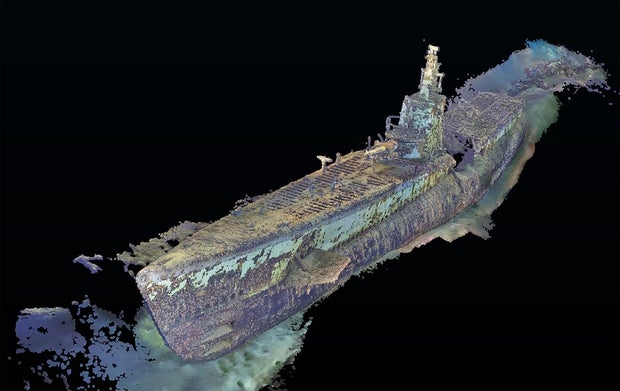
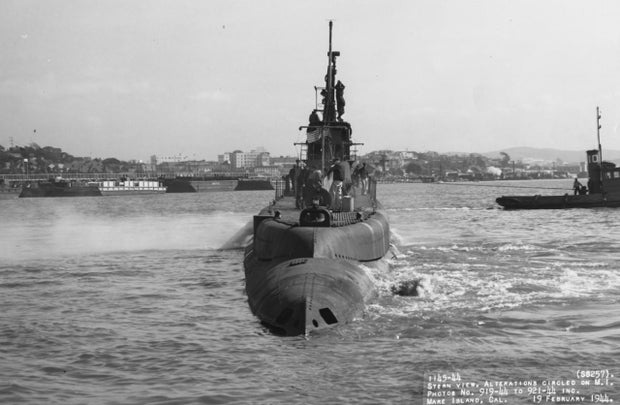
The USS Harder – which earned the nickname “Hit ’em HARDER” – was found off the Philippine island of Luzon, sitting upright and “relatively intact” except for damage behind its conning tower from a Japanese depth charge, the command said. The sub was discovered using data collected by Tim Taylor, CEO of the Lost 52 Project, which works to locate the 52 submarines sunk during World War II.

uss-harder-1716497945678.jpg
4D photogrammetry model of USS Harder (SS 257) wreck site by The Lost 52 Project. The Lost 52 Project scanned the entire boat and stitched all the images together in a multi-dimensional model used to study and explore the site. TIM TAYLOR AND THE LOST 52 PROJECT.

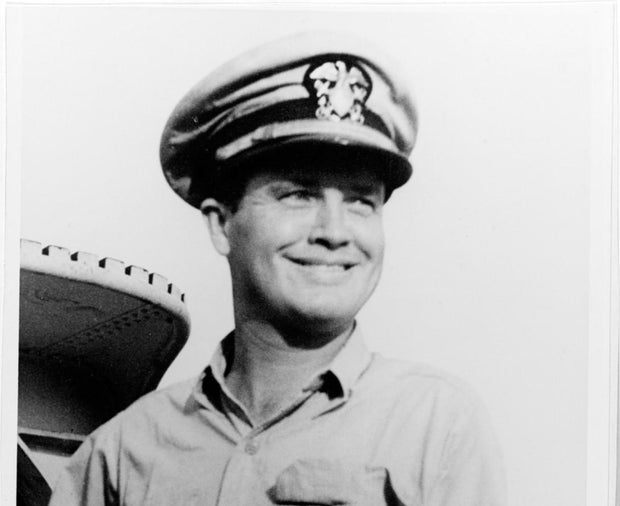
The USS Harder, led by famed Cmdr. Samuel D. Dealey, earned a legendary reputation during its fifth patrol when it sunk three destroyers and heavily damaged two others in just four days, forcing a Japanese fleet to leave the area ahead of schedule, the command said. That early departure forced the Japanese commander to delay his carrier force in the Philippine Sea, which ultimately led to Japan being defeated in the ensuing battle.

But Harder’s fortunes changed in late August 1944. Early on Aug. 22, Harder and USS Haddo destroyed three escort ships off the coast of Bataan. Joined by USS Hake later that night, the three vessels headed for Caiman Point, Luzon, before Haddo left to replenish its torpedo stockpile. Before dawn on Aug. 24, Hake sighted an enemy escort ship and patrol boat and plunged deep into the ocean to escape.

Japanese records later revealed Harder fired three times at the Japanese escort ship, but it evaded the torpedoes and began a series of depth charge attacks, sinking Harder and killing all 79 crewmembers.

harder-photo-1716497988210.jpg
USS Harder (SS 257)NAVAL HISTORY AND HERITAGE COMMAND

The “excellent state of preservation of the site” and the quality of the data collected by Lost 52 allowed the Navy’s History and Heritage Command to confirm the wreck was indeed Harder.

“Harder was lost in the course of victory. We must not forget that victory has a price, as does freedom,” said NHHC Director Samuel J. Cox, U.S. Navy rear admiral (retired). “We are grateful that Lost 52 has given us the opportunity to once again honor the valor of the crew of the ‘Hit ’em HARDER’ submarine that sank the most Japanese warships – in particularly audacious attacks – under her legendary skipper, Cmdr. Sam Dealey.”

Harder received the Presidential Unit Citation for her first five patrols and six battle stars for World War II service, and Cmdr. Dealey was posthumously awarded the Medal of Honor. During his career, Dealey also received a Navy Cross, two Gold Stars, and the Distinguished Service Cross.

dealey-1716498024023.jpg
Commander Samuel D. DealeyNAVAL HISTORY AND HERITAGE COMMAND

Taylor, the Lost 52 Project CEO, previously located other submarines lost during World War II, including the USS GraybackUSS Stickleback, and USS Grunion. Taylor received a Distinguished Public Service Award from the Navy in 2021 for his work.

The Naval History and Heritage Command said the SS Harder wreck “represents the final resting place of sailors that gave their life in defense of the nation and should be respected by all parties as a war grave.”

Other famed warships have been found in the waters off the Phillipines. In 2015, U.S. billionaire Paul Allen located the wreck of the Musashi, one of the two largest Japanese warships ever built, in the Philippines’ Sibuyan Sea.

Last September, deep-sea explorers captured images of three shipwrecks from World War II’s Battle of Midway, including the first up-close photos of a Japanese aircraft carrier since it sank during the historic battle in 1942.

Skynet smiles……


CHINA SHOWS OFF ROBOT DOGS ARMED WITH MACHINE GUNS

The Chinese military recently showed off numerous robot dogs outfitted with machine guns on their backs during the country’s biggest-ever drill alongside Cambodian troops, as Agence France-Presse reports.

The terrifying gun-toting robodogs were part of a massive 15-day military exercise called “Golden Dragon” in a remote training center in central Cambodia and off the country’s coast.

During the drill, journalists watched as staff took the robodogs for a walk — but reportedly never fired the machine guns strapped to their backs.

It’s a dystopian vision of what the future of warfare could look like. Experts have long warned that the use of armed drones or “killer robots,” particularly autonomous ones, is an ethical minefield that should be internationally banned from the battlefield.

But that hasn’t stopped military forces and even local enforcement in the US from investing in the tech while arguing that their use could save human lives.

Follow the Leader

It’s not the first time we’ve come across quadrupedal gun-toting robots. Last year, the Pentagon announced that the US Army is considering arming remote-controlled robot dogs with state-of-the-art rifles as part of its plan to “explore the realm of the possible” in the future of combat.

A US-based military contractor called Ghost Robotics has already showed off such a robot dog, outfitted with a long-distance rifle.

Continue reading “”

In a case of classic irony, the ship named after the President who warned about the Military Industrial Complex, gets stuck on deployment because the aforesaid MIC supposed to produce naval surface combatant ships is TARFU.


In Red Sea, US Navy paying the price of shipbuilding failures
The Littoral Combat Ship was designed with the current crisis in mind, instead it turned into a boondoggle. Here’s why.

The United States Navy recently extended the deployment of the aircraft carrier USS Dwight D. Eisenhower while it patrols the shipping lanes of the Red Sea and Gulf of Aden protecting commercial shipping from Houthi rebel attacks. The Eisenhower left its homeport at Norfolk on October 14, more than 200 days ago.

The Ike’s sailors aren’t the only ones being forced to spend more time away from home. Many of the carrier’s escort vessels have also seen their deployments extended.

The Navy is struggling to meet some of its operational requirements in part because it simply doesn’t have all the ships it expected. The current threat to navigation in the Red Sea is precisely the scenario for which the Navy invested so much time and resources building the Littoral Combat Ships. The LCS program was sold to the American people as a “networked, agile, stealthy surface combatant capable of defeating anti-access and asymmetric threats in the littorals.”

The Houthi rebels launching missiles and drones from shore and hijacking commercial shipping in the confined waters of the Red Sea meets the textbook definition of an asymmetric threat in a littoral region. Yet the “little crappy ships,” as they have come to be known, are nowhere to be seen inside the Red Sea. Rather, the Navy has to keep a carrier strike group composed of Ticonderoga-class guided missile cruisers and Arleigh Burke-class destroyers on station longer than anticipated in an attempt to keep an important maritime choke point open.

The Littoral Combat Ship is one of two major shipbuilding failures from the past 20 years. The other is the Zumwalt-class destroyer. Both programs began in earnest in the years after 9/11 and almost immediately ran into trouble. The Zumwalt program saw massive cost growth which forced Navy leaders to slash the planned fleet size from the originally planned 32 to 7 and finally to the three which were actually built. These three ships cost nearly $8 billion each while failing to deliver promised combat capabilities.

The Littoral Combat Ship program cost $28 billion to build a fleet of 35 ships. According to the Government Accountability Office, the Navy expects to pay more than $60 billion to operate the fleet for its expected 25-year lifespan. Like the Zumwalt, the LCS program’s combat functionality is far less than expected. The ships were designed to be modular with crews swapping out mission systems in port for different missions. Engineers could never get the mission modules to work properly, so the scheme was abandoned.

The LCS program does excel in spectacular breakdowns. The USS Milwaukee famously broke down shortly after it had been commissioned and had to be towed into a Virginia port while its crew attempted to sail the ship to its intended San Diego home for the first time. Other ships suffered from saltwater corrosion, cracked hulls, and broken-down water jets. The Freedom-class variant LCS had trouble with the combining gear linking its diesel engine with the ship’s turbines. The problems grew so bad that Navy leaders essentially threw up their hands and began retiring ships decades before they should have smelled mothballs. The Navy decommissioned the USS Sioux City after a single deployment and less than five years after the ship entered service.

Navy leaders are now scrambling to develop the Constellation-class frigate to fill the capability gap that should have been filled by the Littoral Combat Ship. They decided upon a safer acquisition strategy with the new program by selecting the European multipurpose frigate, a proven design already in service with the French and Italian navies, rather than starting at the drawing board. The Navy awarded Fincantieri Marinette Marine the detail design and construction award for the first ship in April 2020.

Of course, the Navy isn’t simply purchasing a fully developed ship. Engineers began with the existing design and have spent the past several years “maturing” it. Like many such endeavors, changes to one shipboard system necessitated modifications to others and the entire process spiraled. Navy leaders had expected to have the first ship to be delivered in 2026, but they recently announced that because of design problems, supply chain issues, and a shortage of skilled workers will delay the first ship by an additional three years.

The U.S. Navy’s last successful comparable surface shipbuilding program was the Oliver Hazard Perry-class frigate. The final ship of that class, the USS Ingraham, was commissioned in 1989.

Herein lies the danger inherent with unrealistic acquisition programs. When service leaders convince themselves that a radical design will work before the concept is actually demonstrated in the real world, they commit themselves, potentially for decades, to a program that may fail. By spending so much time and money on the Littoral Combat Ship program, the U.S. Navy squandered 40 years of shipbuilding time. That is an enormous lost opportunity cost and now our hard-pressed sailors enduring extended deployments are paying the price.

Service leaders, the civilians leading them, and members of Congress need to remember this case the next time a defense contractor presents them with a bunch of slick conceptual drawings and then fills their ears with promises of transformative capabilities they can deliver at rock-bottom prices. As the homesick sailors aboard the Ike understand well now, if it sounds too good to be true, it definitely is.

Supreme Court rules in favor of veteran who sued over GI Bill limits

The Supreme Court on Tuesday ruled in favor of a veteran who unsuccessfully tried to use both his Post-9/11 GI Bill and Montgomery GI Bill benefits, saying that Veterans Affairs officials erred in limiting his education support.

The 7-2 decision could have far-reaching impact on student veterans who use up their VA benefits but still wish to continue degree programs. Lawyers for the plaintiff have estimated as many as 1.7 million veterans nationwide could benefit from the ruling, but federal officials have estimated the number to be less than 30,000 individuals.

The case has been closely watched by veterans advocates for nearly nine years because of its potential ramifications. VA pays out more than $8 billion in education payments annually, and the Supreme Court ruling could boost that figure even higher.

The legal fight centered on Jim Rudisill, a 43-year-old Army veteran who was wounded in a roadside bomb attack in Iraq in 2005. Rudisill used all of his Post-9/11 GI Bill benefits shortly thereafter, but later wanted to tap into his unused Montgomery GI Bill benefits to attend Yale Divinity School as part of the process to become an Army chaplain.

When VA officials denied that move, Rudisill sued, claiming they were unfairly limiting his options. Writing for the majority, Justice Ketanji Brown Jackson called the government’s denial “nonsensical” and reversed lower court rulings supporting VA’s position.

Continue reading “”

Today is Camerone Day, the anniversary of the Battle of Camerone.

On this day in 1863, 3 officers and 62 men of the French Foreign Legion exemplified stoic determination in the face of overwhelming odds.

The Legionnaires under Captain Jean Danjou, retreating in good order from Palo Verde as a diversion, made a stand in an hacienda in the Mexican town of Camarón de Tejeda and were surrounded by as many as 2000 Mexican troops.

When called on to surrender, by Colonel Francisco de Paula Milán, the Mexican commander, Captain Danjou replied, “We have munitions. We will not surrender.”

In the ensuing battle, nearly all of the Legionnaires, including Captain Danjou, were killed. When the last 5 unwounded men ran out of ammunition, under the command of Lieutenant Maudet, they loaded their last round, fixed bayonets, and charged the enemy.

Inevitably, they were surrounded and captured.  The last remaining NCO, Corporal Maine, insisted that the wounded be treated, the survivors be sent with their arms back to France, and that the body of Captain Danjou be escorted for a proper military burial. Colonel Milan reportedly said; “Que podré negar a cierto hombres? No, estos no son hombres, son demonios.What can I refuse to such men? No, these are not men, they are devils.

The Foreign Legion celebrates this day as an annual holiday where, on parade, the wooden prosthetic hand of Captain Danjou is carried as a high honor.

In a nutshell, the military is going to have real problems trying to pull this off.


Might Turn Out That POTATUS’ Gonzo Gaza Pier Plan Was a Blessing in Disguise.

No, no, no – I haven’t lost my cotton-pickin’ mind. Hear me out on this one.

Let’s recap what the plan was for those in the backseats.

POTATUS used the time he spent shrieking during what was billed as a “State of the Union” to drop the little bombshell that he was directing United States assets – read that as our military – to build a “floating pier” off of Gaza for humanitarian relief. That declaration was immediately followed by a blatant lie about “no US boots” would be “on the ground” as part of this evolution. Anyone with half a brain hearing this – which, in fairness, automatically excludes POTATUS – knew it was an impossibility to build such a thing WITHOUT “boots on the ground.”

US forces will build a temporary dock on the Gaza shoreline to allow delivery of humanitarian aid on a large scale, Joe Biden announced in his State of the Union speech, amid warnings of a widespread famine among the territory’s 2.3 million Palestinians.

…“Tonight, I’m directing the US military to lead an emergency mission to establish a temporary pier in the Mediterranean on the Gaza coast that can receive large ships carrying food, water, medicine and temporary shelters,” the president said.

He promised “no US boots will be on the ground”, and said: “This temporary pier would enable a massive increase in the amount of humanitarian assistance getting into Gaza every day.”

Those same rational types also realized that it would put any American personnel on or offshore directly in harm’s way, like rubber ducks in a carnival tub for the taking.

That was my main problem with potentially yet another administration-orchestrated snafu where only our military paid the price for their supreme incompetence and indifference to risk. I will admit to voicing boisterous and vociferous objections at every opportunity.

Continue reading “”

Yeah, this’s sure going to help things………..

Marines Ditch 100-Year-Old Marksmanship Standards.

The United States Marine Corps announced earlier this month it is changing the shooting standards to which it has adhered for more than a century. The new system will reflect accuracy as well as the speed at which a Marine delivers hits on target.

Re-evaluation of the century-old marksmanship qualification standards began in 2018, when a combat lethality study found an unexpected loss in proficiency in engagements at unknown distances, or when the Marine or target were on the move. The Marine Corps is investing $34 million to better train its troops with the new system, phasing out an approach that required delivering 30 rounds at established distance in two minutes. The old scoring system didn’t differentiate between lethal shots and those that may not stop an aggressor or readily identify distances problematic for a particular shooter.

“This is about increasing lethality,” Col. Gregory Jones, commander of the Weapons Training Battalion—part of Training Command at Marine Corps Base Quantico in Virginia—told Stars and Stripes. “This is not your granddad’s rifle range.”

Marines are required to annually prequalify and qualify with their rifles. If a prequalification score met standards, it could be accepted for both in the past. Now it must be at the expert level, not just at marksman or sharpshooter performance, to do so.

In addition, the Marine Corps has begun allowing entry-level shooters to support rifles with their magazines. The change reflects improvements in magazine design and strength as well as widespread success using the approach in civilian competitions.

“The rifle range in 1907, it’s not bad or good. It’s what we had when we had … a 1903 Springfield [rifle], which was an 1890s technology,” Jones explained to Stars and Stripes. “Now we have an M-16A4. The test is not as true a measure of lethality as it was when we had older, outdated technology.”

When I was assigned to my first duty station at Fort Lewis, the 9th Infantry Division had just drawn the – then new, now obsolete for the past 15 years  – M16A2 rifle. We all thought we had achieved Nirvana, and when we qualified the percentage of those who qualified Expert, yours truly among them, astonished the command echelons.
We shall soon see what hath been wrought.


The Army Has Finally Fielded Its Next Generation Squad Weapons

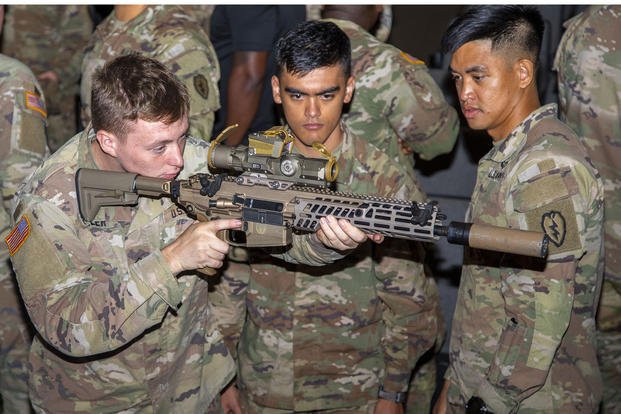
U.S. Army soldiers assigned to the 2nd Infantry Brigade Combat Team, 25th Infantry Division, observe a Next-Generation Squad Weapon (NGSW) machine gun with fire control during a Program Executive Office Soldier Operational Kit demonstration at Schofield Barracks, Hawaii.

The Army has officially fielded its brand-new Next Generation Squad Weapon rifles to its first unit, bringing an end to the service’s decades-long effort to replace its M4 and M16 family of military firearms.

Army Futures Command announced Thursday that soldiers from 1st Battalion, 506th Infantry Regiment, 101st Airborne Division, at Fort Campbell, Kentucky, accepted delivery of the XM7 Next Generation Rifle and XM250 Next Generation Automatic Rifle ahead of training in April.

Produced by firearm maker Sig Sauer, the XM7 is intended to replace the M4 carbine in close combat formations, while the XM250 will replace the M249 Squad Automatic Weapon, or SAW. Both new rifles are chambered in 6.8 mm to provide improved range and lethality against enemy body armor.

The Next Generation Squad Weapon series also includes the XM157 Fire Control smart scope, built by Vortex Optics, which integrates advanced technologies such as a laser range finder, ballistic calculator and digital display overlay into a next-generation rifle optic.

The fielding “is a culmination of a comprehensive and rigorous process of design, testing and feedback, all of which were led by soldiers,” Col. Jason Bohannon, manager of soldier lethality for the Program Executive Office Soldier project, said in a statement. “As a result, the Army is delivering on its promise to deliver to soldiers the highest-quality, most-capable small-caliber weapons and ammunition.”The XM7 rifle

The XM7 rifle. (U.S. Army photo)

Continue reading “”

Medal of Honor Day 2024

Medal of Honor Day, held annually on March 25, provides an opportunity for Medal of Honor Recipients and the public alike to pause and reflect on the importance of service and sacrifice.

National Medal of Honor Day was first observed on March 25, 1991, when Congress declared it as a day to “foster public appreciation and recognition of Medal of Honor Recipients.” The selected date has an important place in Medal of Honor history, as March 25, 1863, was the date of the first Medal of Honor presentation.

On that day, Private Jacob Parrott became the first Recipient of the Medal of Honor. Parrott’s was one of six Medals of Honor presented that day to the Andrews Raiders, a group who showed the values of courage, commitment, sacrifice, integrity, commitment and patriotism which are still important to Recipients of the Medal of Honor today.

This is not about Delta Force, but another of the Special Mission Units of the National Mission Force with the cover name (among others) the ‘Intelligence Support Activity’, called, when colors were assigned to task forces; Task Force Orange….


The Unit: My Life Fighting Terrorists as One of America’s Most Secret Military Operatives
by Adam Gamal, Kelly Kennedy, et al.

The first and only book to ever be written by a member of America’s most secret military unit―an explosive and unlikely story of immigration, service, and sacrifice.

Inside our military is a team of operators whose work is so secretive that the name of the unit itself is classified. Highly-trained in warfare, self-defense, infiltration, and deep surveillance, “the Unit,” as the Department of Defense has asked us to refer to it, has been responsible for preventing dozens of terrorist attacks in the Western world. Never before has a member of this unit shared their story—until now.

From Adam Gamal, one of the only Muslim Arab Americans to serve inside “the Unit,” comes an incisive firsthand account of our nation’s most secretive military group. When Adam arrived in the United States at the age of twenty, he spoke no English, and at 5’1” and 112 pounds, he was far from what you might expect of a soldier. But compelled into service by a debt he felt he owed to his new country, he rose through the ranks of the military to become one of its most elite and skilled operators.

With humor and humility, Adam shares stories of life-threatening injuries, of the camaraderie and capabilities of his team, and of the incredible missions―but also of the growth he experienced as he learned to understand his own moderate faith.

Enthralling and eye-opening, The Unit is at once a gripping account of the fight against terror, an urgent examination of the need for diversity, and an inside look at how America fights its battles abroad in the modern age of terrorism.


You say floating dock, I say sitting duck

My expertise in life is rather limited.

In fact, the only things I’m really well versed in are dental care, raising a family, and pouring a beer just so into a frozen mug resulting in a perfect, frothy one-inch head.

That being said, you’ve got to be out of your freakin’ mind to consider building a floating dock into Gaza for the purpose of delivering humanitarian aid.

Of course, our practically petrified puppet in the White House is out of his freakin’ mind as his senile dementia proceeds apace.

But my point is, if you build it — the floating dock, not a practically petrified puppet — a certain number of Americans are going to die.

And they’ll die in the service of a population that hates America and Israel in equal measure, and whose Hamas brethren would like nothing better than to do to U.S. soldiers what they just did to more than a thousand innocent Jews.

Even if we created a temporary military base, complete with an airfield, on the land side of the dock, some Americans would still die (see Kabul Airport, bombing and U.S. Cole, bombing). I mean, they don’t call Hamas ‘terrorists’ for nothing.

But as that well-meaning, elderly man with a bad memory yelled out during his State of the Union harangue, there will be no American boots on the ground!

The poor souls tapped to serve this mission will be the very definition of sitting ducks. And their Navy and Air Force protectors will be, as Sleepy Joe’s puppet master might say, leading from behind. They will get involved only after missiles, RPGs, drones, and God knows what else, rain down death and destruction upon our servicemen and servicewomen.

Can you imagine Hamas dragging American corpses around the Strip for the edification of their Gazan supporters? Or Hamas sending out videos of female American soldiers being gang-raped, tortured, and killed?

I can.

And after this past October 7, most sentient beings — which precludes the dried-up turnip in the White House — also can.

How best to relieve the suffering of the Gazan civilians, I don’t know. But this cockamamie floating dock idea, created simply to assuage Muslim voters in Michigan, is just about the stupidest and most dangerous idea I’ve ever heard.

If implemented, it’s bound to end in U.S. blood and tears. That, sadly, I do know

U.S. Prepares to Take a Long Walk Off Biden’s Short Gaza Pier.

“Embrace the suck” became the NCO’s unofficial motto during the Iraq War and Operation Enduring Freedom as a reminder to enlisted men and women that just because a job was unpleasant, didn’t mean they didn’t have to do it. As our men and women speed towards the Eastern Mediterranean on Presidentish Joe Biden’s hamfisted mission to provide aid and comfort to Hamas, they’ll have to learn to “embrace the stupid.”

How it is stupid? Let us count the ways…

The first and most obvious is that any food or other aid will not go to any starving Arab residents of Gaza. It will go to Hamas. That is how siege warfare has always worked and will always work. If the White House doesn’t know this ancient truth, the Pentagon surely does. Nevertheless, this country will deliver supplies to terrorists.

I can’t think about that too long without wanting to pour myself a coffee mug full of bourbon, so let’s move on to the next bit of stupid we must embrace.

U.S. Central Command announced that, on Saturday, “U.S. Army Vessel (USAV) General Frank S. Besson (LSV-1) from the 7th Transportation Brigade (Expeditionary), 3rd Expeditionary Sustainment Command, XVIII Airborne Corps, departed Joint Base Langley-Eustis en route to the Eastern Mediterranean less than 36 hours after President Biden announced the U.S. would provide humanitarian assistance to Gaza by sea. Besson, a logistics support vessel, is carrying the first equipment to establish a temporary pier to deliver vital humanitarian supplies.”

While that all sounds very impressive on TwitterX, CENTCOM left out one tiny detail: it will take the Besson about 60 days to arrive in the Eastern Med and begin assembling the pier.

That’s two months, for those keeping score at home, and by that time I wouldn’t be surprised if Israel were finishing up operations at Rafah in the south of Gaza.

Also, if you’re a member of Israeli’s war cabinet, you’re looking at likely sites for Biden’s stupid pier, and seriously considering ordering the IDF to take and hold them in the next few weeks. The Gaza coast is only 20 miles long, and the IDF already controls nearly half of it. Taking troops away from the main fighting in the cities to protect the coast will prolong the war — but Biden’s stupid pier will do that anyway.

“What happens if the IDF controls the entire coast by the time we get there?” doesn’t seem to be a question anyone at the White House bothered to ask, even as vital as it is.

Then there are all the practical things that can go wrong with three different armed groups with different goals and methods, all operating in close proximity. The best we can hope is the worst predictions don’t come true.

So maybe Biden’s Operation WTF (or whatever they’re calling it) promises to be a ginormous clusterfark from top to bottom, but hey, at least the White House will have protected its left flank against accusations of supporting Israeli genocide, right?

Wrong.

The White House will quickly learn that there’s no appeasing the cultural Marxists who hate the Jews and call Israel a colonial-settler state.

On second thought, I take that last part back. The White House already knows there’s no appeasing the party’s hardcore lefties. But they’re making an obscenely stupid attempt, regardless, because they lack the imagination and guts to do something intelligent.

And so when faced with doing nothing or doing the stupid thing, these people will pick the stupid thing every time.

New VA Funding Bill Includes Provision To Protect Veterans’ Second Amendment Rights

Congress’ funding deal unveiled Sunday night overturns a longstanding “discriminatory” policy that Republican opponents said could restrict veterans’ Second Amendment rights.

The provision included in the Military Construction, Veterans Affairs, and Related Agencies Appropriations Act for fiscal year 2024 bans the Department of Veterans’ Affairs (VA) from submitting veterans’ names to the FBI’s National Instant Criminal Background Check without a judge’s consent. House Republicans argue without the provision, veterans who need help with their finances but do not pose a threat could be stripped of their Second Amendment rights to own firearms.

“For far too long, the men and women who have fought for all American’s constitutional rights were wrongfully treated differently when it came to their own rights,” Republican Rep. Mike Bost of Illinois, the chairman of the House Veterans Affairs Committee who championed the provision, said in a statement. “No veteran should lose their constitutional right to bear arms simply because they need help managing their finances, and if they are a danger to themselves or others, a judge should make that decision – not a VA bureaucrat.”

Under existing policy and a law that goes back to 1993, veterans who demonstrate an inability to manage their finances or benefits on their own are automatically reported to the NICS list without their informed consent, according to Bost. The veteran would be banned from purchasing firearms even without any judgment in a court of law that the person could be a harm to themselves or others.

Legislation to end the “discriminatory” practice is “long overdue,” he added.

Democratic lawmakers opposed the move on the grounds it increases hurdles federal workers must clear to report potential threats, according to Military Times.

Continue reading “”

BLACK HILLS PICKS UP $30 MILLION NAVY/MARINE CORPS AMMO CONTRACT

South Dakota-based Black Hills last week beat out five other ammunition makers to deliver 9mm ammo to the Navy and Marine Corps.

The $30,885,083 firm-fixed-price, indefinite-delivery/indefinite-quantity contract covers the procurement, manufacturing, testing, inspection, and packaging of 9mm barrier blind cartridges to the Navy and Marine Corps. These will be for use in the services’ front-line 9mm pistols including the Beretta M9 and SIG Sauer M17 and M18.

The rounds were chosen for “combat purposes to provide enhanced terminal effects,” as described by the contracting agency, the Naval Surface Warfare Center, Corona Division, in Norco, California. NSWC Corona first listed the contract opportunity last June and had six competitive bids submitted.

Although it is not disclosed what loads were submitted for testing, Black Hills introduced its Honey Badger Line of self-defense ammo in 2015, which used a monolithic copper solid projectile to consistently penetrate barriers. In its 100-grain +P version, the Black Hills Honeybadger 9mm archives 1,250 FPS velocity out of a 4.4-inch test barrel and generates 347 foot-pounds of energy. The company also makes a 125-grain Subsonic Honeybadger.


The Black Hills 125-grain 9mm Subsonic Honeybadger
The Black Hills 125-grain 9mm Subsonic Honeybadger. (Graphic: Black Hills)

Compare this to the standard M1152 load developed by Winchester which was selected in 2016 as the ammunition supplier for the U.S. Army Modular Handgun System program. Using a 115-grain flat nose full metal jacketed bullet, the 9x19mm Luger round has a distinctive shape. With a brass case and military primer, it has an advertised velocity of 1,320 FPS at the muzzle which translates to 445 foot-pounds of energy. Downrange these shifts to 1,301/432 at 5 yards and 132/387 at 25 yards, according to the tables provided by the company.

The work on the Navy’s new barrier blind cartridge will be performed at Black Hills’ Rapid City plant and is expected to be completed by February 2029.

Today, back in 1945.

Raising the 1st flag over Mt Suribachi

Raising the 2nd flag.

File:Raising the Flag on Iwo Jima, larger - edit1.jpg

Lowering the 1st flag as the 2nd is raised.

February 23 marks the day the United States Marines raised America’s flag over Mount Suribachi in Japan during the Battle of Iwo Jima almost 80 years ago.

The moment has been immortalized in a famous photograph taken by Associated Press photographer Joe Rosenthal.

Take a look back at the history of the iconic photo, the lesser known first flag and the battle of Iwo Jima.

Battle of Iwo Jima

GettyImages-107707386.jpg

American soldiers fighting against the Japanese in Iwo Jima on March 1945. (Photo by Keystone-France/Gamma-Keystone via Getty Images)

The Battle of Iwo Jima began after American forces invaded the island on Feb. 19, 1945.

The battle lasted for five weeks and was considered one of the bloodiest military campaigns of World War II and in the history of the Marine Corps, according to The National WWII Museum.

It was estimated that almost 7,000 Marines lost their lives and all but roughly 200 of the 21,000 Japanese forces were killed, according to History.com. 

Following the capture of Iwo Jima, the longest and largest battle in the Pacific took place during the invasion of Okinawa, Japan.

Twenty-seven Medals of Honor were awarded to service members for their actions at Iwo Jima – the most in the history of the U.S., according to The National WWII Museum.

Flag raising on Iwo Jima

On Feb. 23, 1945, U.S. forces took Mount Suribachi and were photographed raising the American flag at the summit.

The iconic photo won Rosenthal, the photographer, a Pulitzer Prize.

GettyImages-514969234.jpg

Joe Rosenthal, a veteran AP cameraman, who took the famous picture of the flag raising at Iwo Jima, holding camera. (Bettmann via Getty Images)

That photo shows the second flag that was erected on the mountain. A photo of the first flag that was raised shows a completely different angle and a completely different flag.

As several Marines raised the first flag on Mount Suribachi, Marine Staff Sgt. Louis Lowrey from Leatherneck Magazine captured a photo. However, after that first flag was raised, Japanese forces began to shoot and Lowrey ended up dropping his camera while ducking for cover, according to Military.com. 

As Lowrey descended the mountain to get new gear, AP photographer Rosenthal was ascending the mountain.

In response to seeing Japanese forces’ reaction to the flag being erected on the mountain, Marine Corps Lt. Col. Chandler Johnson ordered for a new and larger American flag to be raised, according to the Marines website.

This new flag raising was the moment Rosenthal captured and became one of the most famous photos in American history.

Who raised the Iwo Jima flags?

The service members who raised the first flag on Mount Suribachi were: 1st Lt. Harold G. Schrier, Plt. Sgt. Ernest I. Thomas, Jr., Sgt. Henry O. Hansen, Cpl. Charles W. Lindberg, Pharmacist Mate 2nd Class John H. Bradley and Pvt. Philip L. Ward, according to the Marine Corps website. 

Following Iwo Jima, Schrier fought in the Korean War and was promoted to Major in 1951. He would retire from the Marines as a lieutenant colonel, according to the Military Hall of Honor website. He died in 1971 in Florida.

Lindberg said that many did not believe him when he said he helped raise one of the two flags in Iwo Jima, according to a New York Times report. 

Lindberg spent his final years raising awareness about the first flag-raising and spoke at veterans groups and schools, The Times said.

He died in June of 2007.

Bradley, who was originally misidentified in the photo of the second (more famous) flag raising, passed away in 1994 and his son, James Bradley, later wrote a book titled “Flags of Our Fathers” in 2000. The book’s storyline centered around the flag-raising in Iwo Jima and the famous photograph that came from it.  A movie adaptation of the book directed by Clint Eastwood was released in 2006, according to IMDB.

Controversy surrounded the book after it was found that some of the Marines, including Bradley, in the second flag-raising photograph were misidentified.

The Marine Corps formally recognized the misidentification and in 2016, a corrected list of names for both the first flag-raising and second were released.

Ward was one of the Marines not identified as one of the original men who helped raise the first flag on Mount Suribachi and was part of the amended list of Marines released in 2016.

Ward was posthumously recognized for his part in the battle as he died on Dec. 28, 2005, according to We Are the Mighty.

Thomas and Hansen died in battle.

Those who were responsible for the second flag-raising were: Pfc. Harold Keller, Pfc. Harold Schultz, Cpl. Harlon Block, Pfc. Franklin Sousley, Sgt. Michael Strank and Pfc. Ira Hayes.

In 2019, the Marine Corps, in collaboration with the Federal Bureau of Investigation and historian Brent Westmeyer, revealed that Keller was misidentified as Cop. Rene Gagnon in the famous photograph of the second flag-raising.

Keller survived the war and went back home to Iowa where he lived with his wife Ruby and three children until he died of a heart attack in 1979, according to the Des Moines Register. 

Hayes, who was a member of the Pima Indian Tribe, was dubbed a war hero by President Dwight D. Eisenhower when he returned to the U.S.

Hayes struggled with PTSD and survivor’s guilt, according to the Museum of Native American History. He died at the age of 32 near his home in Sacaton, Arizona.

Schultz returned to the U.S. and worked for the Postal Service until his retirement in 1981, according to We Are The Mighty.

He seldomly spoke of his time in the war and only revealed any details to his stepdaughter, Dezreen Macdowell. She would go on to be interviewed by Time Magazine and lauded her stepfather as a war hero.

Schultz died on May 16, 1955.

Block, Strank and Sousley were killed in action in Iwo Jima.

Iwo Jima warriors should never be forgotten

February 19, 1944.

Of the 82 Medals of Honor awarded to Marines in WW2, 22 of them were awarded for this one battle. Another 4 were awarded to Navy Hospital Corpsmen (medics) attached to the Marine Corps. This was the first battle where the defending Japanese inflicted more casualties than they suffered although more Japanese died than U.S. 6,821 killed and 19,217 wounded.