
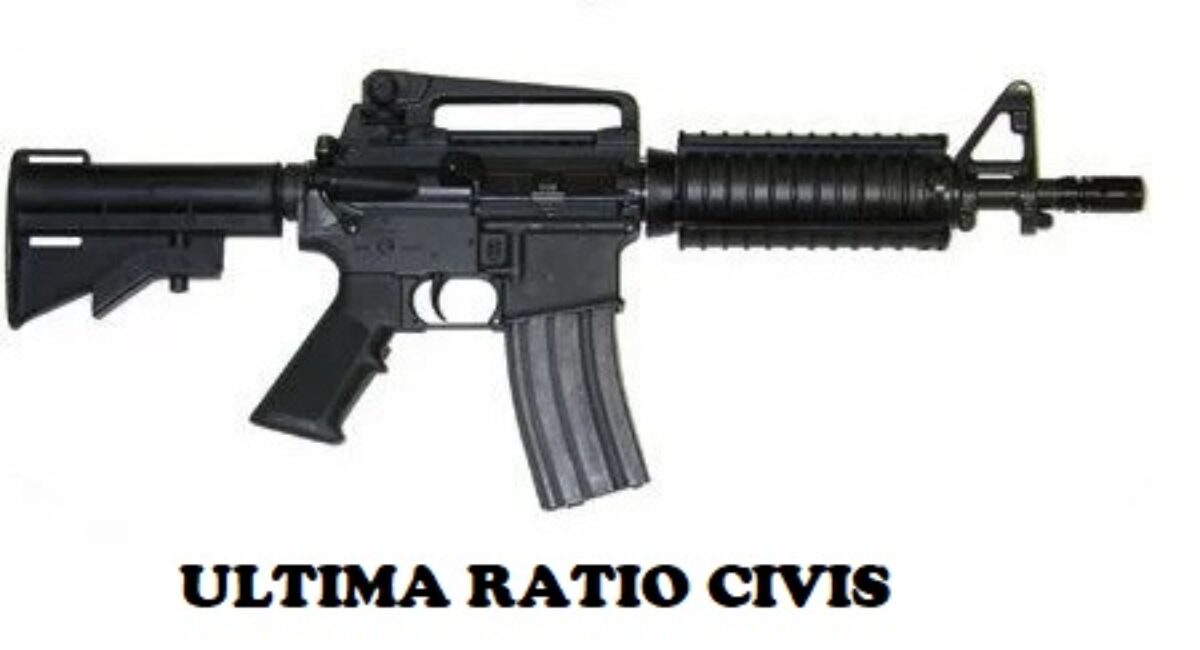
Petro Opposes Right to Carry Guns in Colombia
Colombia’s President Gustavo Petro spoke yesterday during a Cabinet meeting about the ongoing debate over the right to carry guns among civilians. Petro repeated what he has previously stated on other occasions, expressing his support for keeping weapons solely in the hands of public security forces and not in civilian possession.
This is a recurring debate during election periods in Colombia, a country where violence is cyclical and the notion of self-defense resurfaces in political campaigns. While the conservative opposition makes legal gun ownership one of its key banners, the ruling party maintains that the state should monopolize the use of force, arguing that arming the population only fuels the cycle of violence.
Petro calls for a gun-free civilian population
During a Cabinet meeting held Yesterday, Tuesday, Aug. 19, Petro weighed in on the debate over the right to carry guns in Colombia. The President stressed the need to move toward a country where civilians are unarmed. In his remarks, he pointed out that Colombia must remain consistent with the principle that weapons should be monopolized by the state and not by private citizens.
“Since I was mayor of Bogota, I have supported zero guns for civilians. I believe we should be consistent with that principle: weapons must be exclusively in the hands of the public forces,” he said.
The president explained that Colombia’s history demonstrates the dangers of allowing weapons to proliferate in society. “In Colombia, an armed people can turn into a total massacre; our history does not allow it, we kill each other too easily. Therefore, our strategy has been, constitutionally speaking, to keep the monopoly on weapons in the hands of the state.”
The effects of firearms in Colombia have only produced violence
President Petro warned about the consequences of the legal arms trade in the country, which he said have led to violence and crime.
“However, there is a poorly designed mixture, a Frankenstein, that includes convivires [self-defense groups that became the seed of paramilitarism in the 1990s], old and new, a bad invention that led to paramilitarism and genocide. Private security companies, which we’ve seen escorting mafia bosses, exporting mercenaries, with weapons supposedly legalized but many of which cannot be traced — in other words, an escape route toward criminality,” he explained.
Gustavo Petro reaffirmed that his policy has always been zero guns for civilians and proposed that the country move even further in that direction. “I know there is a business in legal arms, but in a country like ours, if we want to further reduce violence, … the most consistent approach is to ensure there are no guns among civilians,” he argued.
The president added: “We have denied permits to carry weapons in public spaces, but we need to go further. Yes, it hurts a business at Indumil [the state-owned company responsible for manufacturing and selling arms and ammunition], but more profitable businesses can be created,” he emphasized.
With these statements, the president reiterated that public safety depends on reducing the circulation of firearms among private citizens and advancing measures to strengthen state control over them, as a strategy to curb violence and enhance human security in Colombia.

Weapons in Colombian history: The unfinished debate
Since the dawn of the Republic, the carrying of weapons in Colombia has been a recurring and contentious issue. In the 19th century, after independence, civil wars and clashes between liberals and conservatives turned the rifle and the machete into everyday symbols of political power.
For much of the 20th century, especially during the period known as La Violencia (1948–1958), civilian gun ownership was widespread and tied to partisan disputes, fueling a cycle of killings and revenge.
With the 1991 Constitution and subsequent reforms, the Colombian state sought to progressively restrict the legal carrying of firearms, reserving their use for the Armed Forces and limiting civilian permits to exceptional cases.
Even so, thousands of citizens continued to obtain special licenses, justified by personal security concerns in a country marked by drug trafficking, paramilitarism, and guerrilla warfare.
Today, the debate resurfaces in times of elections and political polarization. While some sectors argue that broader access to weapons would strengthen individual defense against crime, others — such as the government — contend that the proliferation of privately held arms only increases the risks of violence. The dilemma remains unresolved after two centuries of history.