

When Worship Is Attacked, Churches Must Be Prepared to Restore Order
Jordan Howe
Your Church Needs a Response Plan to Ensure Orderly Worship
On January 18, a violent group of “protestors” covertly entered Cities Church in Minnesota and caused a massive disruption of their worship service.
In the days since the event, many Christians have responded in different ways. Some have boasted about the strength and firepower of their congregants (“I’d like to see them try that in my church!”). Others have chosen to emphasize the need for gospel ministry while avoiding any talk about church security (“We just preach the gospel!”).
As both a deacon at my church and a current law enforcement officer for the last decade, I both think about these issues and live them out. That’s why I started Kingdom Defense Training, a ministry designed to train and assist local churches to think more biblically about safety and security. Unfortunately, I would argue that both approaches above overlook the ministerial aspect of church security and fail to recognize that a church must also protect itself physically, civilly, and spiritually.
Why You Need Security to Ensure Orderly Worship
The attack on the Cities Church demonstrates that, for churches to maintain orderly worship as they are commanded, security is not optional—it’s a necessity.
And what happened to Cities Church was not just an act of spiritual “persecution for righteousness sake” in a biblical sense. It was an intentional disruption of the physical gathering of Christian worship. Several of the “protestors” claimed to be Christians, and their goal in being at the church was not persecute Christians, but to make a political statement about ICE, immigration enforcement, deportations, race relationships, and white privilege by attacking and invading what many believe to be a safe place.
The angry mob wanted to show Christians everywhere that nowhere is secure and that no matter where you are, they can find you and force their will upon you. Their goal was to attack the church because it was not ideologically aligned with their cause. Neutrality is not an option; you either bend the knee to the progressive agenda or you’re the enemy.
The church, in general, cannot condone the actions of illegal immigrants and should speak out against lawlessness. Remaining silent in the public square is no longer an option. Cities Church was not a political church; it does not have an “online” following or presence, and it was attacked simply because it was a church.
Further evidence indicates that the disruption’s intentional goal was both to cause chaos and to intimidate. They wanted to terrorize the children, they wanted to cause fear, they wanted to inflict pain.
Church leaders cannot stand idly by and allow such chaos to ensue. Especially when that chaos occurs during a worship service. Decent and orderly worship is a mark of a healthy church. Such intentional disruptions cannot be allowed in worship, and church leaders cannot ignore what occurred and simply leave it to the experts. They need to thoughtfully respond and lead their church to think rightly.
The church’s sanctuary is a holy place, and worship should maintain a sacred preeminence in our lives. For this reason, Christians, especially those tasked with shepherding, should look to address these disruptions immediately. A gentle and lowly approach to an invasion simply will not work. God has spoken in his word, and the church should respond accordingly.
Answering the question of how the church should respond to disruptions seems difficult, but, as with most things, Scripture offers a clear guide. In 1 Corinthians 14:33, Paul states, “For God is not a God of confusion but of peace.” Later in verse 40 of the same chapter, Paul commands the Corinthian church to do all things “decently and in order”. Such disruptions cause chaos and prevent the church from fulfilling its mission.
As such, churches should seek to prevent service disruptions for two reasons. First, major disruptions interrupt the ordinary means of grace. When chaos consumes a church, it cannot preach the word, participate in the ordinances, or engage in worship. This results in the church relying on other means to present the gospel to its members.
Not only does failing to address a disruption interrupt the ordinary means of grace, but, second, it also violates the regulative principle. As seen above, orderly worship is prescribed and commanded in scripture. Failing to address the chaos or reestablish order puts the church and those causing the disruption in violation of this principle and the clear commands of scripture.
Lastly, the church needs to love the invaders by stopping them. How unloving is it to watch men and women desecrate a church service and not try to stop them? To love their congregation, the general public, and these rioters, the church must stop this chaos. This raises the question: how should a church respond to disruptions?
Saying that a church should strive for orderly worship is easy. Ensuring your church has the right foundation and plan to respond to chaos is harder. Establishing a safety team and assigning them to maintain order during the worship service is the first step. If you are not sure how to establish a safety team or what a safety team is, you can read my advice on how to do so here.
To assist your church with moving past the “Okay, we have a security team” stage and preparing to deal with an actual incident, this article will lay out the confessional standard for using a safety team to prevent chaos in the church and then provide practical steps the team can take to establish, maintain, and restore order in worship. And it all starts with a “response plan.”
Preparing a Response Plan
Chapter 1, paragraph 6 of the London Baptist Confession of Faith provides churches with guidance on how to respond to these matters. It says “that there are some circumstances concerning the worship of God, and government of the church, common to human actions and societies, which are to be ordered by the light of nature and Christian prudence.”
The “light of nature” and ‘Christian prudence” teach us that the church has the right to use normal societal practices in the defense of its church. This, accompanied by the regulative principle, reveals that every church should (especially those holding to a reformed confession of faith), at a minimum, have a plan to resist evil, mitigate chaos, and restore order to their worship services.
Now that the theology for creating a team and tasking them with maintaining order is established, let’s get practical. You need a plan to restore order should your church be disrupted. That plan is best implemented by a safety or security team. This team should be filled with men who understand the cause and are willing to do what is necessary to restore order. Once you have the team, you develop the response plan; that is, what exactly you are going to do when the moment comes.
Simply saying that the church should prepare for disruptions is easier said than done. For this reason, I want to lay out a three-part response plan that can be used in multiple scenarios and demonstrate how, when applied correctly, it protects the church. These three phases are 1) the pre-contact phase; 2) the contact phase; and 3) the post-contact phase.
Pre-contact Phase
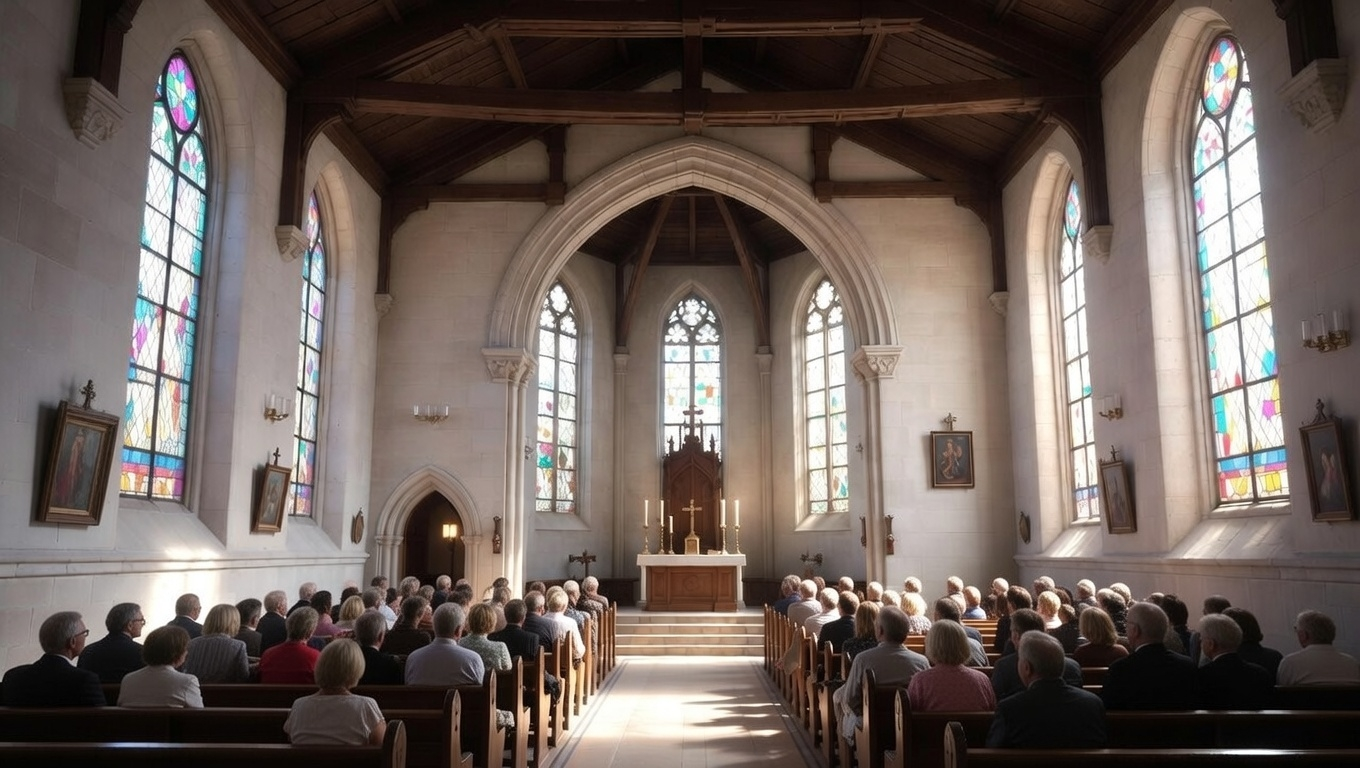
This first phase is often forgotten about because it is not as cool as simply choosing a group of men to stand guard for your church. Though it is not as cool, it is the most important aspect of this phase. Understanding that evil exists and that the world hates the church is vital to understanding how and why safety and security plans need to be established. Too many Christians are looking at the incident in Minnesota and asking how and why. The truth is, this has been the natural trajectory for some time, and that it has not happened until recently is only due to God’s mercy.
In addition to biblical teaching, the pre-contact phase is when a safety team is anchored. It begins to integrate itself into the life of the church. On Sunday morning, the team is seen working with the greeters, assisting the parking lot team, and serving the congregation in various ways. This level of participation is seen by not only the congregants but also by visitors. It says we are not oblivious to the world around us. It shows the wolves that you are ready for them.
In this phase, the church’s greeting plan is especially important. Members of the church (and from the safety team) should be stationed outside. This allows your team to see who is coming and going. Since your team includes both members and non-hired security, they should have a good idea of who is a member or regular attender and who is not. A large group of visitors should stand out. The same goes for vehicles that don’t belong, bumper stickers that are inconsistent with the teachings of the church, and guests who seem be the opposite of what is expected.
Additionally, this lets guests know you see them. It shows that you are aware of what is going on before they enter the building. Here, it is important to arrange your church to have only one main entrance that funnels guests through a designated group of people ready to assist members and guests. Besides greeting new people with a friendly smile, this team is full of information gatherers. They shake hands, ask questions, and look into the guest’s eyes. Simply being a welcoming church makes you a safer church.
Think of this like “operationalized customer service.” By the time a guest enters the sanctuary, they have been greeted by multiple greeters, a member of the safety team, a pastor, and are passed on to an usher who leads them to their seat (sit them where you want them, especially if you are concerned about their motives).
During this time, the safety team has gathered an amazing amount of data. Did the guest maintain eye contact when spoken to? Did they bring a Bible and other church-specific items? Were they sweating, nervous, or resistant? Did they smell of alcohol, or appear under the influence? Do they appear to be armed (look for bulges on the waistline, clips in pockets, unnecessary bags)? All of these questions should be answered by the time the subject enters the sanctuary.
During this time, your team and congregants who serve are first and foremost looking to assist guests attending worship. Secondarily (and simultaneously), you are looking for indicators of nefarious activity. If the alerts are not enough to ask the individuals to leave, a contingency plan is needed. Have your ushers stay near a potential threat, seated near an exit, and away from the children. Ask men, especially safety team members, deacons, and elders, to sit by them. If you have a camera system, orient it towards them. Take notice of what they do while singing, praying, and reading scripture. The chances are they are not worshiping as others do.
These cues act as a stimulus to alert you to a potentially bigger issue. By establishing protocols early and cultivating a culture of welcoming guests, your church can be better aware of potential dangers before they arise.
You want to be active, not reactive. When a wolf comes to your church, they should feel uncomfortable. They should know you are watching them, that you are “on to” them. Lord willing, this will both discourage a threat from taking any actual action and prick their conscience, so they can be convicted by the proclamation of the truth.
As such, the wolf will likely leave and try another congregation, or they will shed their disguise and let themselves be known.
Contact Phase
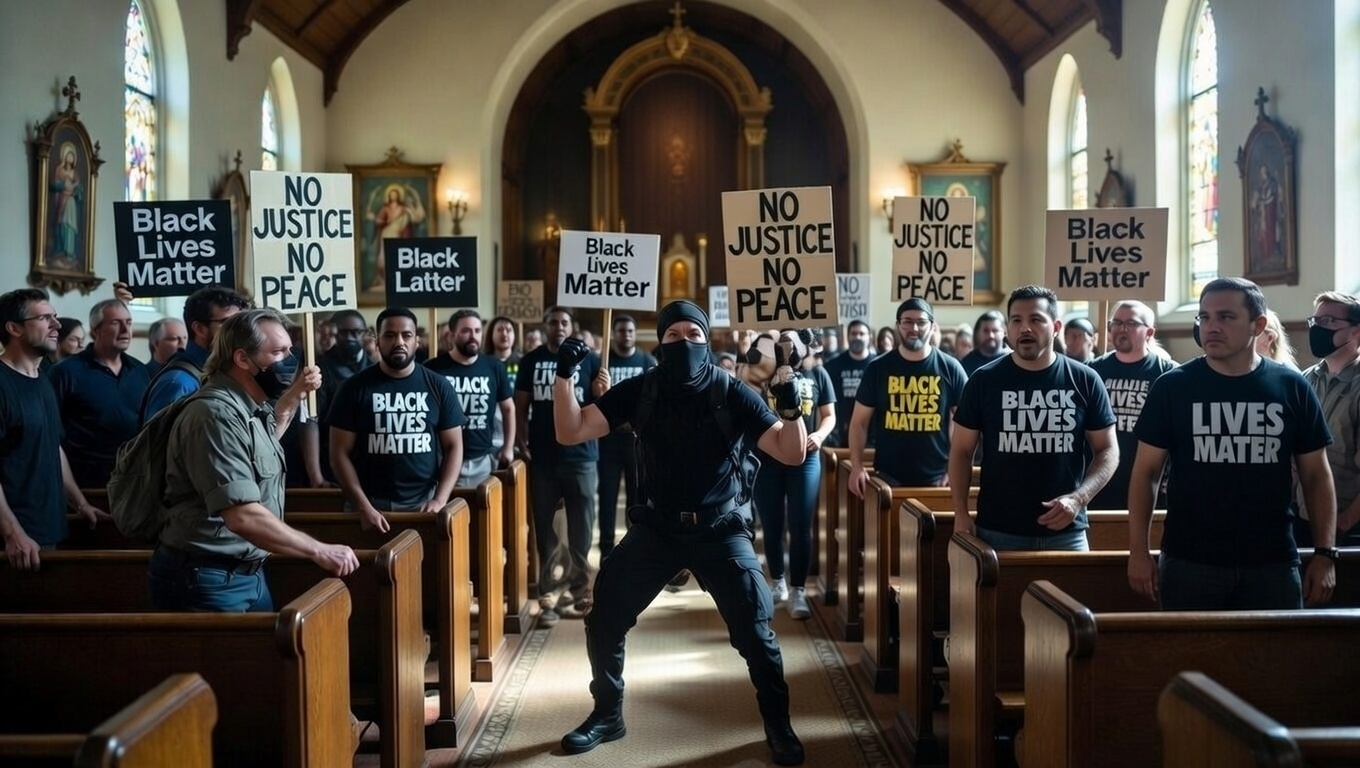
When training individuals and safety teams, I prefer teaching concepts over techniques. This is because concepts can be applied to fluid situations, whereas techniques are usually useful only in specific ones. Think about it this way: What is better, learning to use a wrench or purchasing a spanner wrench? In this case, one specialty tool is not worth much, but a wrench and the knowledge of how to use it are vital.
The guiding principle my team uses is “S.I. E.,” or Separate, Isolate, and Evacuate. No matter the incident, this is our go-to response. Everyone on the team knows what to do, even if leadership is not there yet. We immediately begin separating those involved from those uninvolved. Isolating the problem so it can be addressed (this is especially important when counseling is needed) and evacuating either the problem or the congregants.
- Separation: The safety team will attempt to separate the church body from the incident or the incident from the church body. If an event were to take place inside the building, as the situation dictates, the safety team’s goal would be to move the event out of the area or move church members away from the event. Separate the danger from those who could be harmed or who are not involved.
- Isolation: Once separation occurs, the goal is to isolate the event. Isolation limits the number of people in the area and the public’s knowledge of the event, giving those dealing with the event space to work or counsel safely. If needed, this step can be skipped if it is determined that isolating the individuals involved in the incident is more dangerous than evacuating them. This step can also be combined with separation, as isolation can help you separate the event from the church body.
- Evacuation: Evacuation is the final stage. Evacuation can involve a single entity, multiple entities, or a partial or full evacuation of the building. Though it is the safety team’s goal, this does not have to be immediate. For instance, evacuation can simply be dismissing the church at its normal time, in a normal way, while the event is isolated in a church office or empty room. Evacuation can also have multiple steps. For example, evacuating the church, then evacuating the people who might be causing the problem. Evacuation is the ultimate and final separation of all parties involved, including the church.
While the safety team responds to the incident, the rest of the church needs to trust and follow their direction. The church’s role in the contact phase is to report what they see to the team and to listen to the direction of church leadership and the safety team. Whenever an incident occurs, it is important that the church and safety work together for the safety of the congregation. This cannot happen if the team is an independent entity that has separated itself from the church’s regular operations. When viewed and operated as a ministry, the safety team is given the support needed to protect the flock during the contact phase.
How does this apply to a disruption? Assuming that the church did everything right during the pre-contact phase, they can now respond to the threat. Remember that up until now, no one knew for sure that there was a threat on campus. While several things may have triggered your fear response, nothing done or said warranted a response.
However, things have now changed. At the first chant or disruptive action, the safety team and church leadership should respond. The protesters must be met as close to the seats they were in. The team cannot give up any ground. At this point, the team and the men in the congregation should create physical barriers between the rioters and the congregants. This barrier can be formed at the front of the church. Consider placing 3-4 men at the front of each main aisle (this changes based on the size of the church).
While the safety team is mobilizing, the preacher or a pastor should begin reading a pre-written card (I recommend laminating it and placing it in the pulpit). This card should give clear commands to the disruptors to cease their actions and return to their seats. As the disruption continues, the commands should escalate to telling them to leave and instructing them that Law Enforcement is being called. This step is vital to presenting a clear message and will help the church in the aftermath. It is likely that any disruption will be followed by civil litigation, and this step can help prevent that. Consider seeking legal advice on what this card should say.
Once this barrier is established, it is time apply S.I.E. in a smaller square. While this barrier is a form of separation, the team must go further. As the adage goes, the squeaky wheel gets the grease. At this point, the team needs to focus on the loudest and most disruptive individuals and remove them from the scene. The goal is to isolate them from their piers and evacuate them from the church. Meanwhile, the barrier continues to gain ground. By simply taking a united half-step forward, the church can quickly clear a lot of space. This also establishes a “safe zone” behind the line for the congregants to gather.
As the barrier continues to move forward, the safety team begins removing the loudest individuals from the church. This is commonly referred to as an encirclement. Your team members or a selected group of men should surround the loudest agitator. These men should be staggered, with the first guy facing the subject and the second guy watching the crowd. This pattern continues until the circle is complete. At this moment, clear commands are given for the protestor to stop and leave the premises. If they fail, the circle as a whole can move toward the exit, or a removal team (2-3 guys) can enter the circle and go hands-on (this should be your highest trained guys).
Once these individuals are outside, they should be barred from re-entry by locked, secured doors. Additionally, they can be left alone, though you want to keep an eye on them; it is pointless to engage with them. Keep your focus on the ongoing disruption inside and continue the process until the whole group is evacuated. Hopefully, at this point, the other disruptors begin to leave, though this is not always the case. Law Enforcement should also arrive at this point and assist in removing those who remain.
This response may seem slow, but remember the goal here is to establish order and protect the church civilly, physically, and spiritually. You do not want a brawl between your congregation and the rioters, especially in a city or state that condones disruptions. While there is a time and place for physical force, it should not be the default, as it only exacerbates the situation’s chaos.
Post-Contact Phase
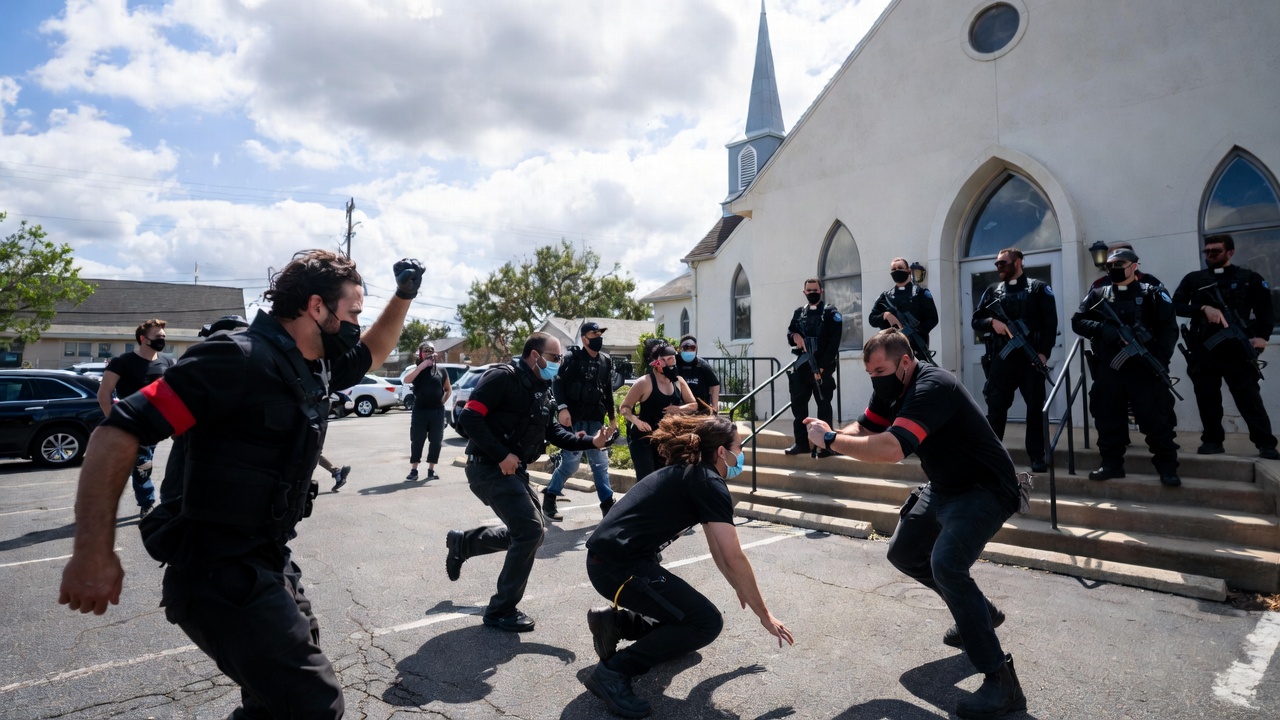
The post-contact phase ends once the disruption is over and the S.I.E. method is complete. At this time, the congregation, its leadership, and the safety team must debrief the incident, review it, and address any discrepancies that may have occurred.
Pastors must also establish ways to counsel and shepherd members of their flock who are hurting. Safety is a ministry of the church, and it seeks to defend the kingdom against physical, spiritual, and civil attacks.
Conclusion
Disruptions like the one at City’s Church should not be the norm. No matter how wicked the world gets, churches should be safe havens for Christians to worship.
But the hard truth is that the days uninterrrupted peace for Christians in America are gone. The days of neutrality are gone. The culture hates the church and everything she represents. At present, the church is alone in fighting the culture. The Left has decided that dialogue is no longer enough, and churches are no longer off-limits.
The violence will continue, and pastors must protect their flocks; they must call out evil, grab their staffs, and fight the wolves.