

The Elephant in Gladwell’s Room
Forthcoming book on gun violence by Malcolm Gladwell
A book club member tipped me off to a forthcoming book on gun violence by Malcolm Gladwell, The American Way of Killing (h/t JP). The book drops September 29, 2026. I think it deserves our attention and it is a likely Fall 2026 Light Over Heat Virtual Book Club selection.
Here’s why I’m genuinely interested: Gladwell has a rare ability to shape how millions of Americans think about complex social issues. Love or hate his counterintuitive approach, his work moves conversations in ways academic publications rarely do. A Gladwell book on gun violence may define how a broad public audience understands the issue for years to come.
I’m particularly hopeful because the book builds on his Revisionist History podcast episodes about guns, which I found genuinely curious about the issue’s complexities. Those episodes didn’t rely on easy answers or inflammatory rhetoric. They asked interesting questions and looked in unexpected places for answers. That approach, applied to a book-length treatment, could be valuable.
According to the online press release,
In The American Way of Killing (out September 29, 2026) Malcolm Gladwell, author of New York Times bestsellers including Talking to Strangers and host of the award-winning podcast Revisionist History, gets to the heart of America’s gun violence crisis: Where did America’s violence problem come from? And, why has it proven so difficult to address?
This promises to be classic Gladwell and, as such, could be genuinely important work.
Of course, as a scholar whose research focuses on gun culture rather than gun violence, I’m curious to see how Gladwell bridges these often-separate conversations. Of course, some questions remain about how this conversation will unfold.
There are some red flag warnings here — we are talking about discussions of American gun violence, after all. I certainly can’t criticize a book I haven’t read, but here the framing of the book raises a couple of questions for me.
First, the epidemic/endemic distinction.
I don’t particularly like the rhetoric of “epidemic” that Pushkin Industries’ PR uses to promote the book. If they mean it’s “bad” or “too much,” fine. I agree. But suggesting it is “epidemic” unnecessarily inflames the issue, fostering misunderstanding and division.
I’m not an epidemiologist, but a basic understanding of diseases suggests that epidemics are about dramatic change in, and especially acceleration of, a problem. Think COVID-19 or a measles outbreak. This certainly does not apply to gun violence in the United States generally, particularly since 2021, when the overall rate of non-fatal shootings and gun deaths has been decreasing.
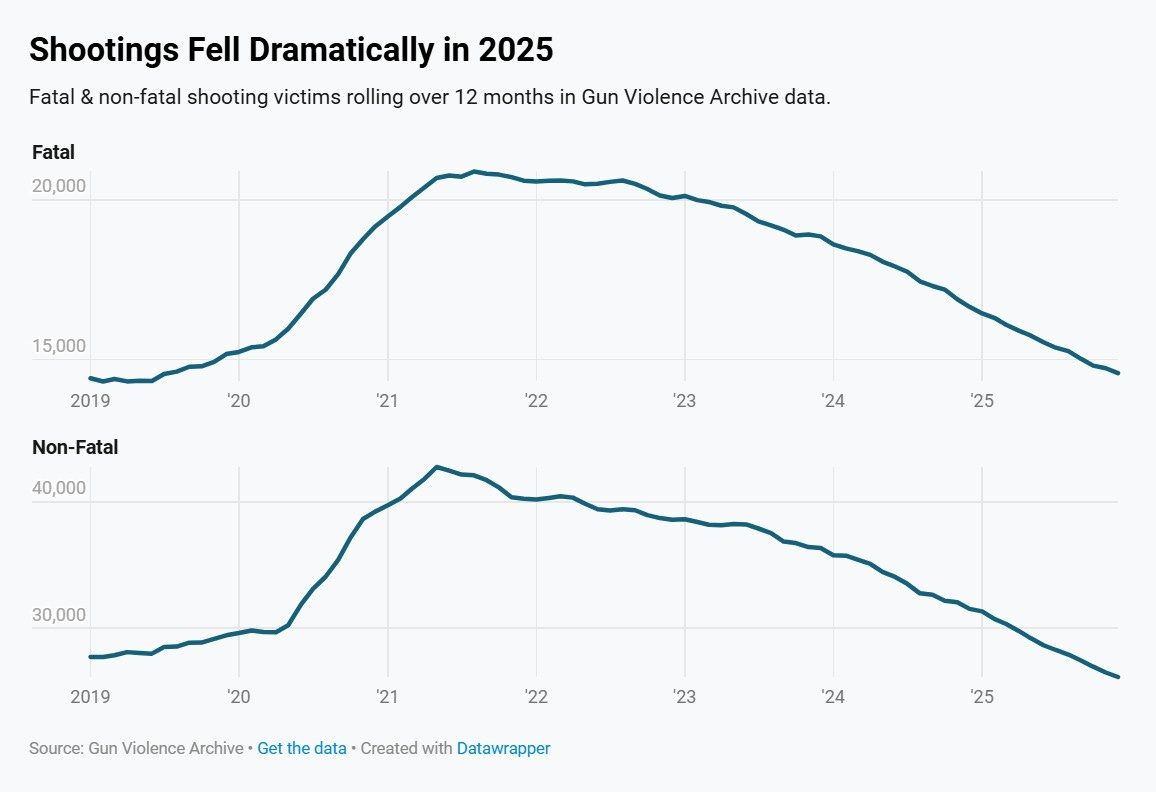
Rather than “epidemic,” I’ve argued that gun violence in America is better understood as “endemic.” It is consistently present but concentrated in particular regions, demographic groups, and behaviors. It’s a health disparity, not a spreading contagion.
As I wrote in “Understanding and Misunderstanding American Gun Culture and Violence,”
Rather than using the emotionally charged language of “epidemic,” it is more accurate and helpful to view gun violence in America as “endemic.” This means the problem “is consistently present but limited to a particular region.” If we add limited to particular demographic groups and behaviors to this definition, we can begin to understand how gun violence – like the violence that “has been ubiquitous in human history” – is socially organized and unequally distributed. It is a health disparity.
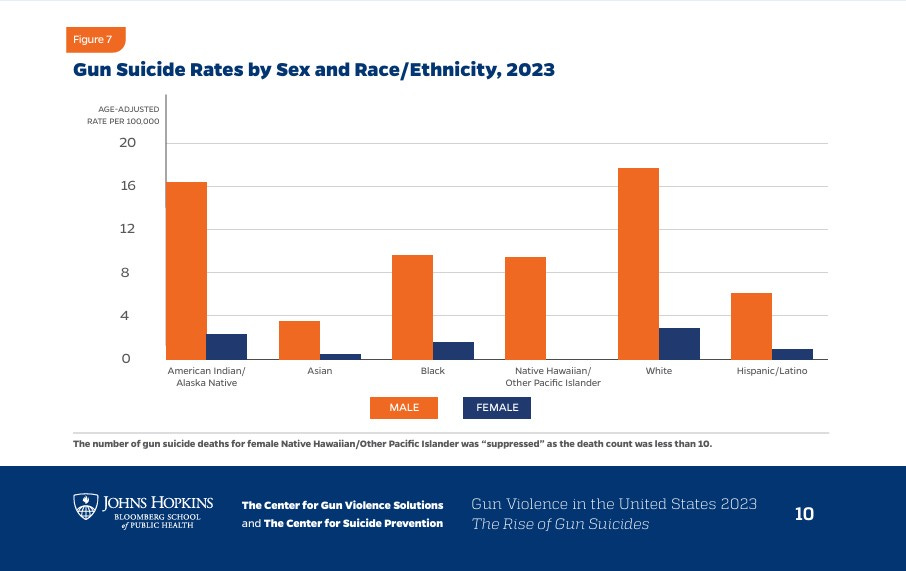
This isn’t just semantic. The framing shapes what interventions seem appropriate and how we understand the problem’s nature. Andrew Papachristos has documented the social networks of high-risk individuals where gun violence concentrates. Criminologists study “micro-geographic places”: particular street segments in particular neighborhoods, often called “hot spots.” Even suicide affects certain demographic groups dramatically more than others. According to the Johns Hopkins Center for Gun Violence Solutions, white men over 70 years of age have dramatically higher suicide rates.
I’m curious whether Gladwell will engage with this endemic nature of gun violence in his analysis, the marketing language notwithstanding.
Second, the blind men and the elephant.
There was one other section of the press release that I found particularly notable:
“In the famous parable of the blind men and the elephant,” Gladwell explains, “each man touches a different part of the animal and draws a different conclusion. One touches the trunk and decides the elephant is like a snake, one touches the animal’s leg and concludes that the elephant is a tree, one touches the tusk and concludes the elephant is like a spear — and on and on. I feel that this is the American problem: the source of the conflict and misunderstanding that marks so much of the ongoing argument over what to do about the country’s crime problem.”
I appreciate this framing. I’ve used the same parable myself in Gun Curious, though with a different emphasis. I argued that gun scholars don’t examine different parts of the elephant; they relentlessly focus on only one part (gun violence) while largely ignoring the broader gun culture that shapes how Americans relate to firearms.
The question I’ll be asking: How many different parts of the gun culture elephant will Gladwell actually examine? Will his “unexpected places” approach include serious engagement with the gun culture and the perspectives of the tens of millions of gun owners in America today?
Based on the press release alone, I can’t tell.
This matters because Gladwell’s enormous reach means his framing will shape public understanding. If the book examines gun violence without seriously engaging gun culture, it risks reinforcing the very fragmentation his blind men parable warns against.
Looking Forward
Despite these concerns, I remain genuinely excited for the release of this book. Gladwell at his best asks questions that shift how we see familiar problems. Applied to gun violence — a topic we still need to understand better — his approach could be genuinely illuminating.
What questions will you be bringing to The American Way of Killing?