
Criminal cases coming in the new term – and why the court could and should do more
As many SCOTUSblog readers are likely aware, there are some blockbuster criminal law cases set for the Supreme Court’s upcoming term. Bans on AR-15 and similar semi-automatic rifles. Whether juries in criminal cases must always be 12 persons. Whether seizing a plane for the unlawful transport of a six-pack of beer is an unconstitutional “excessive fine.”
In fact, 11 of the 25 cases already granted for review are, by my calculation, criminal law and related (what I call the court’s “CLAR” cases). They won’t all be headline-grabbers, but 40% of the court’s docket is a very healthy chunk. And the court will surely grant some more after its Sept. 28 “long conference.” I provide more details on the already granted cases below. But first:
The court can and should take more criminal cases
Before discussing the merits of the current 11 CLAR cert grants, I want to point out that the court could do much more. Last month the Congressional Research Service put out a 68-page report on “Circuit Splits from 2025.” That little-reported document details almost 100 cases in which lower courts have disagreed (just in 2025?) on significant federal points of law. The Supreme Court has statutory jurisdiction to address such lower court “splits,” whether from federal or state courts. The Supreme Court’s Rules 10(a) and (b) expressly note that lower court “splits” on federal questions – that is, cases from different courts that disagree on some important point of federal statutory or constitutional law – are a reason for the court to grant review. Granting Supreme Court review on lower court splits makes sense, as national uniformity on federal issues is a major, and one of the oldest, reasons for having (as Article III of the Constitution begins) “one supreme Court.” What’s more, I have to believe that the CRS report did not come out of the blue but was prepared with the knowledge of (and perhaps even encouragement from?) folks in the solicitor general’s office.
By far, the largest category of unresolved such “circuit splits” listed by CRS is criminal law and procedure, with 28 cases – three times larger than the next category, civil procedure. The report provides case citations for all 28 of these (at least one from every circuit except the U.S. Court of Appeals for the 5th Circuit). Just a few examples of important questions that need settling: Is embezzlement a continuing offense that extends the statute of limitations? Is car-jacking a violent felony when the state statute also reaches extortion? Is criminal forfeiture limited to property a defendant has actually acquired (here a cert petition may be pending)? What intent is required for a civil rights violation on a county road?
To make an oft-repeated point, the Supreme Court used to decide as many as 150 cases per term. But during the 2025-26 term the justices heard argument after full briefing in only 58. According to a Federalist Society report that has often been repeated, in 2012 Chief Justice John Roberts said that the court could hear “100 cases without any stress or strain, but the cases just aren’t there,” and he “emphasized that circuit splits are far and away the most important consideration.” The capacity of the justices to handle more cases is not an issue – more grants of review to provide national uniformity in criminal cases ought to be a priority.
Criminal-law-and-related cases already set for the 2026-27 term
The court has issued argument calendars for the last three months of 2026. As detailed below, there are two CLAR cases set for argument in the October sitting and three for the November sitting. The blockbuster AR-15 and criminal forfeiture cases will not be heard until Dec. 1 and 2. The case where I expect the court will rule, non-textually but universally, that serious criminal case juries must always have 12 and not six jurors is still unscheduled and so will not be argued until 2027.
Below are my relatively brief descriptions and observations on the CLAR cases set for argument so far in the coming term. The hyperlink for each takes you to the SCOTUSblog page for the case, where you can then find links to all the filings and other information about it. I address the three “biggest” cases first, and then the other eight in order of their scheduled oral arguments. Keep in mind that more criminal cases are likely to be granted after Sept. 28.
Semiautomatic rifles, 12-person juries, and excessive fines
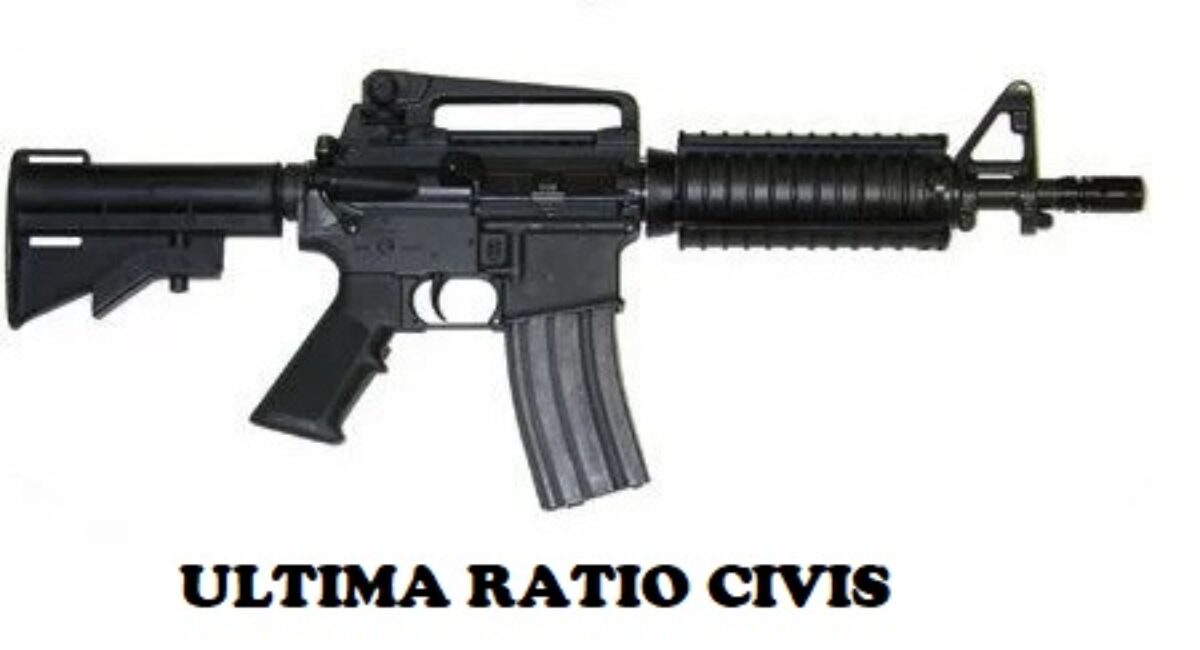
- Viramontes v. Cook County (Dec. 2, consolidated with Grant v. Higgins): Like another nine states, Connecticut and Cook County, Illinois, have laws that ban possession of what they call “assault weapons.” The term is defined to include semi-automatic rifles like the AR-15 (and the Second Amendment Foundation petitioners do not challenge fully “automatic or burst fire” weapon bans). The question whether legislatures may ban semi-automatic weapons has been brewing for years, and last term Justice Brett Kavanaugh wrote that the court would “soon” address it. The solicitor general has now asked to join the oral argument over whether such “categorical” bans are consistent with the Second Amendment. The case will attract huge media attention and the one hour scheduled for oral argument is likely to go much longer.
Because these consolidated cases will attract much attention from other columnists, I won’t go into much detail. The U.S. Courts of Appeal for the 7th and 2nd Circuits both denied the firearm owners’ challenges, finding procedural flaws in each case. But the question – narrow, in the sense that even if the court reverses, a remand for specific application will be necessary – remains: Does the Second Amendment allow bans at all on semiautomatic rifles? I will add only the following textualist thought, about a small-but-radical change between the language of District of Columbia v. Heller and now.
The 2008 Heller decision, which changed precedent to find a Second Amendment right to own handguns for self-defense, was decided 5-4. To me (and others) it is clear that Justice Antonin Scalia had to include various qualifiers in his opinion, or he would have lost one or two of his five votes and Heller would have come out differently. Part III of the opinion was clearly added to capture, or keep, the narrow but earth-shattering majority, and ought to be viewed as the binding judgement of the court. Specifically, in addition to listing various “longstanding prohibitions on the possession of firearms” left undisturbed, part III said “we also recognize another important limitation on the right to keep and carry arms. … the sorts of weapons protected were those ‘in common use at the time’” (quoting United States v.Miller, a 1939 precedent upholding bans on machine guns). I add emphasis on “at the time,” because the Viramontes briefing all but ignores what the court said was this “important limitation.”
As the solicitor general’s brief notes, “the AR-15 rifle was developed in 1956,” and the first semiautomatic rifle of any kind was sold in 1903. Thus, while they may be the “most commonly owned rifle[] in America” today (albeit by less than 10% of all Americans), semi-automatic rifles were undisputedly not in common use “at the time” the Second Amendment was adopted in 1791. Indeed, as the SG’s brief also explains, it is the modern technological developments in the AR-15 that makes it popular today. (This is also why they are commonly used in mass-shootings.) Rather, the solicitor general’s Viramontes brief subtly changes the language, saying (on page 21) that the proper Second Amendment test is whether AR-15s “are in common use” today (again, my emphasis). This radically departs from the doctrinal limits that were essential to cementing the Heller result. In his 2025 dissent from denial of certiorari, Kavanaugh (joined by Justice Samuel Alito) adopted this same semantic transfiguration of Heller (changing “were” to “are”) – an error (or strategy) presaged in Kavanaugh’s 2011 Circuit judge dissent when Heller was remanded in 2011. Many folks will be listening on Dec. 2 to see whether a majority of justices will agree that Heller did not actually mean what it appeared to say.
- Kian v. Florida (unscheduled): Unlike Viramontes, Kian will be, I think, easy for the court, even if non-textual. So easy, it appears to me, that the parties and the court have agreed that an appendix presenting the underlying record is unnecessary. Whether the Sixth Amendment’s right to a “jury” trial for all criminal prosecutions requires a 12, rather than six, person jury, has been pushed by Justice Neil Gorsuch for years: in his view, when the framers wrote “jury” they understood this to mean it consisted of 12 members. Amicus professor Akhil Amar agrees, saying that “[a] proper criminal jury means twelve good persons, nothing less. In 1791 and 1868, the number twelve was implicit in the word ‘jury’.”
To rule for Kian, the court will have to overturn a divided 1970 precedent (Williams v. Florida) that upheld Florida’s six-person jury practice, over Justice Thurgood Marshall’s dissent that a jury of 12 is required. Williams reviewed the Sixth Amendment’s history and concluded that “precisely 12” was an “accidental feature” of juries at the time. But decades earlier, the court had seemed to hold that 12 persons are required. Then Gorsuch’s opinion in 2020’s Ramos v. Louisiana overruled a similar jury trial precedent allowing non-unanimous criminal conviction verdicts. As Alito suggested in his Ramos dissent, that decision seems to lead directly to a similar implied rule: that a criminal trial “jury” means, constitutionally if also implicitly, 12 persons. The case for overruling Williams has been around for years, and I think it will pose little difficulty for a majority in Kian.
Former Solicitor General Seth Waxman (confession: also my former law-practice colleague) will argue for Kian, and it should be lively whenever it occurs. A more difficult question – whether Kian should be applied retroactively as a “new rule” to challenge former six-person-jury convictions – may be discussed and even decided, but it’s unnecessary to resolve the question presented here.
- Jouppi v. Alaska (Dec. 1): One of my frequent, if nonsensical, classroom bon mots is that “facts make the law, not the other way around.” The soundbite facts of Jouppi are that Jouppi’s plane was taken by the state as a criminal forfeiture for illegally transporting a six-pack of beer. As my friends on Advisory Opinions note in their fun discussion of the case, there are other facts that might reduce one’s sympathy (such as nine gallons of beer in the back of the plane and that Jouppi’s passenger ran a bar in the area), but still this case looks like a “libertarian’s dream[].” And although Gorsuch has resisted the libertarian label, he seems to become a dispositive “wild card court” justice for the “little guy” when the government looks like a bully.
All this suggests a ruling for Jouppi – but the question presented is more general: whether the Eighth Amendment’s no “excessive fines” provision should be applied “purely in the abstract” or by reference to a defendant’s specific wrongdoing. This distinction grows out of a 5-4 decision, 1998’s United States v. Bajakajian, which found a $357,144 fine for a currency reporting failure to be unconstitutionally excessive. Justice Clarence Thomas wrote that a fine is constitutionally excessive if “grossly disproportional to the gravity of a defendant’s offense.” His language there appears to have left room for argument now: did the justices mean the defendant’s offense specifically, or the gravity of that type of offense in general?
There is a serious split here, among state as well as federal courts, and last term’s excessive fines case (Pung v. Isabella County) did not address it. Oral argument will likely be full of hypotheticals as to how any resulting constitutional test might be applied, even if the justices end up putting aside, perhaps with a grin or two, the forfeiture of Jouppi’s $95,000 plane for transporting a six-pack of beer as excessive under any test.
All that said, forfeiture of instrumentalities of crime, things used to facilitate the crime itself, has long been a feature of criminal law. And deciding on the scope of forfeiture is generally thought of as more a legislative than a judicial task. The framers of the Constitution put only “excessive,” not all, forfeitures out of bounds, and left little guidance for precise application of the concept. Because Jouppi will provide significant guidance for thousands of criminal forfeiture actions, which not incidentally bring in billions of dollars for all levels of government, it will be one of the most significant criminal law decisions in the coming term.
Another seven criminal-law-and-related cases next term
Space considerations and the attention span of even knowledgeable readers for this sort of thing counsels shorter descriptions here. The descriptions are my own, not necessarily the court’s. Argument dates and the criminal law topic are bolded. One case is set for argument in October, five in November, and one is still not scheduled.
- Beaird v. United States (Oct. 13): Is there a more nuanced way to describe the deferential standard for official commentary published by the U.S. Sentencing Commission to explain the federal Sentencing Guidelines? Must federal courts follow the Commentary even if it conflicts with an unambiguous Guideline ? The solicitor general ended up supporting a ruling for the defendant here, so Anthony J. Dick, a former clerk to Alito, has been appointed to defend the 5th Circuit’s prior rulings on the question whether the strict deferential standard for Commentary announced by a 9-0 1993 decision (Stinson v. United States) is still correct. When it granted cert in this case, the court wrote its own short question for the parties to address. But its brevity – is Stinson still correct? – is deceptively simple.
- Maxwell v. Dinis (Nov. 2): Is a claim that a prisoner is entitled to release to a halfway house cognizable in a federal habeas corpus action? This case is a rare pro se prisoner petition granted for review. Once a response to the petition was requested by the court, a high-powered law firm arranged to represent him (Masha Hansford, who has previously argued nine cases as an assistant to the solicitor general). Another former clerk to Alito, Brian W. Barnes, has been appointed to defend the 5th Circuit’s ruling that release to a halfway house is not a release from custody subject to habeas relief, because the solicitor general said that position is “inconsistent” with prior Supreme Court cases.
- Younge v. Fulton County (Nov. 2): This is a civil procedure case involving the firing of a supervising prosecutor in a county district attorney’s office. May a civil defendant assert an affirmative defense well past the civil procedure Rule 16 deadline to support a summary judgement motion? Unlike other circuits, the U.S. Court of Appeals for the 11th Circuit has said yes if the plaintiff is not “prejudiced” by it.
- Guerrero v. Johnson (Nov. 4): This is a state death penalty case involving a claim of “intellectual disability,” a topic which has recently engaged the court. Here, a threshold issue is presented: is a “new rule” of constitutional law available for retroactive application in a habeas petition, if it could have been raised in a prior petition even though it was viewed as meritless at that time? The new-rule-doctrine is complicated; the question is what does a rule that was “presently unavailable” mean, as used in the habeas statute that governs state criminal convictions. The 5th Circuit ruled that it means “previously unavailable” (with a dissent from Judge James Ho to a 9-7 denial of rehearing en banc). The U.S. solicitor general has agreed in an amicus brief that the 5th Circuit’s interpretation is “unsound” – we’ll see if the SG asks to also participate at oral argument, since the habeas statute applicable to federal convictions has the same “previously unavailable” language.
- Nielsen v. Watanabe (Nov. 9): The real question here is will the court overrule Bivens v. Six Unknown Federal Narcotics Agents, a 6-3 decision issued in June 1971? Bivens was perhaps the last hurrah of the liberal Warren court – four months later both Justices Lewis F. Powell and William H. Rehnquist were confirmed to replace famed liberal Hugo Black and moderate John Marshall Harlan II. Bivens allowed a private cause of action for damages under the Fourth Amendment against federal agents who violate constitutional rights. That idea was extended in 1980 to Eighth Amendment claims for deliberate indifference to a prisoner’s medical issues, in Carlson v. Green. This case (Nielsen) involves a similar, but of course not identical, Eighth Amendment claim, and the U.S. Court of Appeals for the 9th Circuit – traditionally a red flag for conservative critics – upheld Nielsen’s claim (despite 10 en banc dissenters).
Bivens has been criticized, but also applauded, since the day it was decided. The court has rejected similar constitutional damages claims consistently since Carlson, and in 2022 Gorsuch called Bivens a “misstep” that the court should step away from.
Francis Nielsen is a federal prison paramedic who allegedly told an injured prisoner to “stop being a cry baby” and failed to treat his injury, leading instead to two months of solitary confinement without medical treatment for what turned out to be severe injuries. The 9th Circuit ruled that Watanabe’s claim against Nielsen and others could go forward on a Bivens/Carlson theory. Nielsen, who is represented by former Assistant to the Solicitor General Jeffrey A. Lamken, argues directly that Bivens should be overruled. As amicus, the solicitor general has asked to participate in oral argument, and suggests that the court might want to wait for a case decided under the Fourth Amendment like Bivens to consider overruling it.
On Nov. 9, Bivens will likely be vigorously defended by the three liberal justices. A legal regime in which a person who is intentionally injured by a federal agent’s violation of a constitutional right and has no remedy for damages is undoubtedly in tension with the famous Marbury v. Madison idea that every violation of a right deserves a remedy. But the anti-Bivens handwriting seems to be starkly on the wall.
Two cases presenting statutory “plain language” as well as circuit splits that the solicitor general agreed the court should resolve
- Wassily v. Blanch (Nov. 30): This is another important immigration case, after five others decided by the court this past year. Are persons who were once “granted asylum” but whose asylum status was later terminated for serious criminal convictions, categorically ineligible for adjustment to lawful permanent resident status? The statute says that “any alien granted asylum” may apply for such status, but the solicitor general argues that the 2nd Circuit was correct to rule that the statute is intended to apply only to persons who are presently in asylum status.
- Montoya Palacios v. Liggins (not yet scheduled): Can a successful habeas corpus action used to challenge immigration detention be eligible for an award of attorneys’ fees and costs under the Equal Justice Act? Habeas actions are filed as civil, not criminal, cases, and the statute says that “any civil action” other than those “sounding in tort” can qualify. But the solicitor general argues that habeas actions have been viewed differently than other civil actions in the past, and it’s true that Schlanger v. Seamans, decided in 1971, said that habeas cases are “not automatically subject to all the rules governing ordinary civil actions.” At the same time, that decision referred to “rules,” not “statutes.” Merits briefing has been extended into December so further analysis awaits.