



For, in principle, there is no difference between a law prohibiting the wearing of concealed arms, and a law forbidding the wearing such as are exposed; and if the former be unconstitutional, the latter must be so likewise. But it should not be forgotten, that it is not only a part of the right that is secured by the constitution; it is the right entire and complete, as it existed at the adoption of the constitution; and if any portion of that right be impaired, immaterial how small the part may be, and immaterial the order of time at which it be done, it is equally forbidden by the constitution.
[Bliss vs. Commonwealth, 12 Ky. (2 Litt.) 90, at 92, and 93, 13 Am. Dec. 251 (1822)]
April 11, 2025
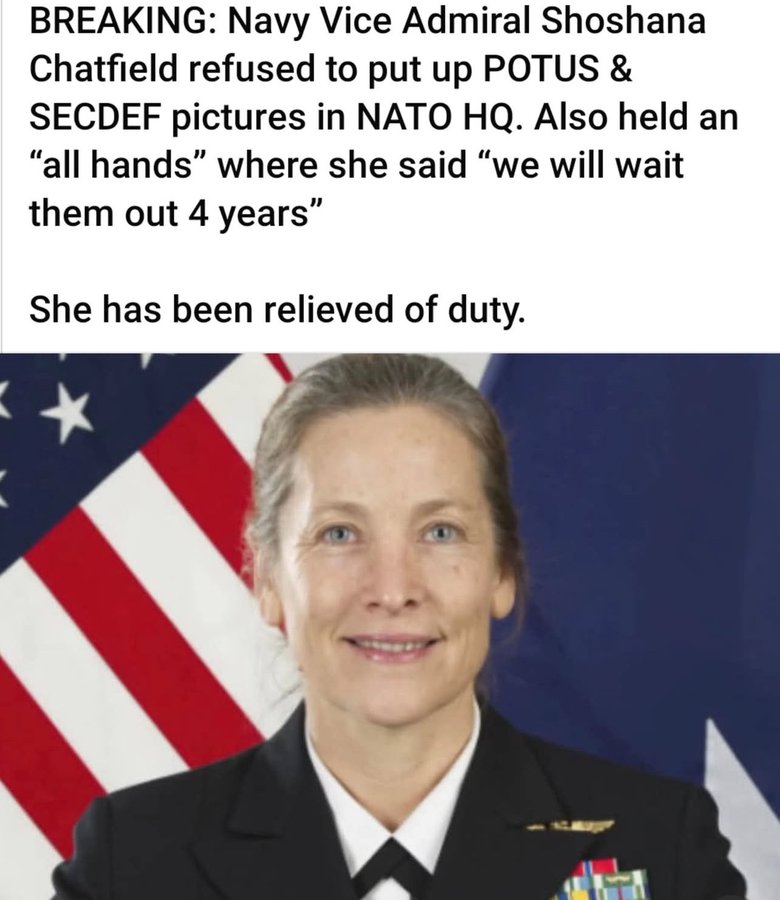
Colonel Female Fredo must be relieved immediately.
It is intolerable for her to take a political position at all, much less one in opposition to that of her commander in chief.
cc @PeteHegseth @SeanParnellUSA @CynicalPublius @RobManess @JimHansonDC https://t.co/D8OXUeKf7N
— Kurt Schlichter (@KurtSchlichter) April 10, 2025
Supreme Court Should Resolve Proximate Cause in S&W v. Mexico
Illinois court shows need to lay the issue to rest.
As I posted here, the March 4 oral argument in Smith & Wesson Brands v. Estados Unidos Mexicanos appeared to go well for S&W and not well for Mexico. Mexico’s lawsuit seeks to hold America’s federally-licensed firearm industry responsible for the cartel violence that plagues Mexico. The Protection of Lawful Commerce in Arms Act (PLCAA) prohibits lawsuits against the gun industry for crimes committed by third parties.
PLCAA does allow an action in which [1] a manufacturer or seller “knowingly violated a State or Federal statute applicable to the sale or marketing of the product, and [2] the violation was a proximate cause of the harm for which relief is sought.” It was suggested in oral argument that Mexico’s aiding and abetting theory did not meet element [1], rendering it unnecessary to resolve [2]. Yet leaving the latter, the proximate-cause issue, in limbo will result in continuing legal uncertainty and ongoing attacks on the industry facilitated by courts that are allowing the most extreme theories of proximate cause in which remoteness is disregarded.
The latest example is the denial by Judge Jorge L. Ortiz of the motion to dismiss in Kelly Roberts v. Smith and Wesson Brands, Circuit Court 19th Judicial District, Lake County, Ill. (April 1, 2025). In 2022, Robert Crimo III murdered seven people and injured dozens more with an S&W rifle in Highland Park, Illinois. He has pleaded guilty and faces life in prison. His father pleaded guilty to reckless conduct for helping his son obtain the rifle while knowing of his mental health issues.
The lawsuit against manufacturer S&W, the distributor, and the retailer that sold the rifle is exactly the kind of case PLCAA was enacted to prevent. The Roberts plaintiffs alleged that S&W advertisements intentionally promote militaristic misuse of firearms, especially among young people. (Of course they don’t.) S&W responded that “the claimed harm is the aggregate result of numerous intervening (including criminal) acts by third parties not under Smith & Wesson’s control,” and that “Plaintiffs fail to allege, as they must, that they even saw the Smith & Wesson advertisements they complain of, let alone that they were deceived by them.”
Ohio enacts new law impacting purchasing guns
COLUMBUS, Ohio (WSYX) — A new law which took effect Wednesday in Ohio is poised to significantly impact gun owners’ rights.
Senate Bill 58, signed into law by Governor Mike DeWine in January, is being hailed by gun advocates as a victory for Second Amendment supporters.
Eric Delbert, owner of LEPD Firearms and Range, expressed relief over the new legislation.
“Giving people the ability to have that Second Amendment and purchase firearms comes with a lot,” Delbert said. “Taking this out of the mix is really a headache we were concerned about for the last couple of years now knowing that going forward that’s something we don’t have to worry about.”
The law introduces two major changes: it prevents financial institutions from tracking transactions made at gun stores and prohibits the requirement of firearm liability insurance for gun owners.
Just to make it clear, ever since 1570 when the Regent of Scotland, James Stewart Earl of Moray, was assassinated by a man using a rifle, those in political power have been scared to death of the idea that the mere lowly peasantry could possess the very thing to simply take care of a government they saw as not ruling in their best interest, and one decide to do just that.
This Supreme Court Is Woefully Weak On The Second Amendment
When firearms are involved, originalism is ignored and basic principles of statutory interpretation are overlooked.
The Supreme Court just issued a decision allowing the Bureau of Alcohol, Tobacco, Firearms and Explosives (ATF) to rewrite the nation’s gun laws. It appears that the seven justices have contracted a bad case of “Gun Derangement Syndrome,” or GDS — a serious infection that afflicts many on the federal bench.
The symptoms are this: when firearms are involved, the judicial rulebook goes out the window. Originalism is ignored, basic principles of statutory interpretation overlooked, and new rules of law invented. What’s left is nothing that passes for reasoned decision-making; it’s the implementation of judges’ personal policy predilections.
Until recently, the Supreme Court seemed immune to this illness. After nearly all federal circuits mused that the Second Amendment did not so much as protect an individual right to bear arms, District of Columbia v. Heller set the record straight. And after lower courts devised “judge-empowering interest-balancing tests” to circumvent Heller, The New York State Bar Association v. Bruen course-corrected.
But recently, cracks have begun to show. Chief Justice John Roberts’ opinion in United States v. Rahimi, for example, arguably waters down Bruen’s rigorous requirement that governments must justify firearms laws with historical analogues — directing courts merely to follow the “principles that underpin the Nation’s regulatory tradition,” whatever that means. So wishy-washy was the Rahimi opinion that Justice Neil Gorsuch wrote a concurrence to remind everyone that Bruen is still good law.
🔥 "Maybe the Democrats should quit wasting so much time in our public schools, indoctrinating our children, and instead teach them real-life skills such as reading, civics, and how to get an ID."
WATCH: pic.twitter.com/tD7Srsxrom
— Rep. Mary Miller (@RepMaryMiller) April 10, 2025
Did she think she was unshushable, or what?

Once you realize that none of them [liberals] understand what they are discussing, it all makes sense. You are debating 1st graders about astrophysics. They have no understanding of any topic.
-Kirk Freeman
April 10, 2025
In recent decades, the US government has been doing its best to find a way to limit the ability of its people to bear arms. And, in turn, the people respond vehemently that their Constitution guarantees them the right to bear arms.
Regardless of which side of the argument any particular American is on, I’ve almost never met one who knows what caused this right to be written in the Constitution.
Countless Americans believe that they have the right to bear arms, so that they can protect themselves and their homes from burglars or other miscreants. Others, particularly those who live in rural areas, believe in the right to go hunting if they wish.
Whilst both of these concerns are reasonable, they’re not by any means the reason why the founding fathers were so adamant that the right to bear arms is critical.
The Bill of Rights, including the Second Amendment, was passed by the US Congress in 1791, some eighteen months after the ratification of the Constitution in 1790. The reason why it was considered essential by the framers leads directly back to the Gunpowder Incident in 1776.
In 1774, in Boston, a meeting of the First Continental Congress took place to discuss the introduction of the Intolerable Acts by Britain, including the seizure by the British of gunpowder that was stored in Charlestown. In addition, Lord Dartmouth, Secretary of State for the Colonies, prohibited the importation of further supplies of gunpowder.
In Boston, this generated discussion, but no action. But in Williamsburg, then the capitol of Virginia, the reaction was quite different. There, the colonists, in early 1776, began to form armed militias. Governor Dunmore (the ruling British representative in the colony) decided to repeat the Boston seizure in Virginia. Just down the street from the Governor’s mansion, in the House of Burgesses, Patrick Henry had just delivered an impassioned speech in which he proclaimed, “Give me liberty or give me death.”
Around the corner from the Governor’s mansion was the Magazine (pictured above), where gunpowder and armaments were stored by the Crown for the protection of the colony from Indian attacks or other disturbances.
Governor Dunmore ordered that the gunpowder be removed from the Magazine to limit the colonists’ ability to resist official diktat. As it was being removed to a British ship anchored in the James River, a few colonists discovered the fact and alerted others.
The city council demanded its return, stating that it was the property of the colony and not the Crown. Patrick Henry led the Hanover County Militia – about 150 men – to Williamsburg to reclaim the gunpowder.
A wealthy (and loyalist) plantation owner paid £330 for the powder, to calm Henry, who was then charged with extortion by Lord Dunmore. Dunmore’s popularity quickly waned. He left Williamsburg and attempted to continue his rule from a British ship, offshore.
Virginia’s government was taken over by a Committee of Safety and Henry became the now-independent state’s first governor in July, three months after the seizure.
The Gunpowder incident not only led directly to the creation of the Second Amendment. It led directly to the independence and liberty of the American people.
Think that over for a moment, with regard to the present times.
Now, as I’m British, it would be fair (though possibly incorrect) to suggest that I cannot be trusted to comment on the independence of the American colonies from Britain.
So, let’s ask the American founding fathers for their views. Although very few Americans can actually name them, there were seven, and they all had something to say about what they learned from the Gunpowder Incident.
George Washington – “A free people ought not only to be armed, but disciplined…” — First Annual Address, to Congress, 8th January, 1790
John Adams – “To suppose arms in the hands of citizens, to be used at individual discretion, except in private self-defense, or by partial orders of towns, counties or districts of a state, is to demolish every constitution, and lay the laws prostrate, so that liberty can be enjoyed by no man; it is a dissolution of the government.” – Stated during the drafting of the Second Amendment, 1780.
Thomas Jefferson – “No free man shall ever be debarred the use of arms.” – Virginia Constitution, Draft 1, 1776
“The Constitution of most of our states (and of the United States) assert that all power is inherent in the people; that they may exercise it by themselves; that it is their right and duty to be at all times armed.” – Letter from Jefferson to John Cartwright, 5th June, 1824.
James Madison – “The right of the people to keep and bear arms shall not be infringed. A well regulated militia, composed of the body of the people, trained to arms, is the best and most natural defense of a free country.” – Annals of Congress 434, 8th June, 1789.
Benjamin Franklin – “They that can give up essential liberty to obtain a little temporary safety deserve neither liberty nor safety.” – Historical Review of Pennsylvania, 1759
Alexander Hamilton – “[I]f circumstances should at any time oblige the government to form an army of any magnitude that army can never be formidable to the liberties of the people while there is a large body of citizens, little, if at all, inferior to them in discipline and the use of arms, who stand ready to defend their own rights and those of their fellow-citizens.” – Federalist #28, 10th January, 1788.
John Jay – “Government that wants away citizens right to bear arms is unworthy of trust.” – Date unknown
And a final one from Thomas Jefferson, from a letter to James Madison in 1787:
“What country can preserve its liberties if their rulers are not warned from time to time that their people preserve the spirit of resistance. Let them take arms.”
But perhaps the most succinct quote from that time is from George Mason, stating in the Debates on the Adoption of the Federal Constitution, 14th June, 1788,
“To disarm the people… [i]s the most effectual way to enslave them.”
These are indeed words to be remembered. Just as all governments will do their utmost to prevent their citizens from being armed, so too should those citizens do their utmost to be armed.
Editor’s Note: Unfortunately, most people have no idea what really happens when a government goes out of control, let alone how to prepare…


DoD Courts Service Members Wrongfully Discharged for Not Getting the COVID Jab.
The Pentagon has begun sending letters of apology to thousands of service members who were discharged from military service for refusing to take the COVID-19 vaccine. The Pentagon is also trying to assist these service members if they wish to return to active duty.
“They never should have had to leave military service, and the department is committed to assisting them in their return,” Tim Hill, the Defense Department’s acting deputy undersecretary of personnel and readiness, told reporters. He added that President Trump and Defense Secretary Pete Hegseth are “eager to welcome back those who are impacted” by the Pentagon’s 2021 vaccine mandate.
In August 2021, then-Secretary of Defense Lloyd Austin ordered the vaccine mandate, claiming it was critical in keeping service members ready to fight. It was so critical that the Pentagon dropped the rule in January 2023.
Almost 9,000 service members refused vaccination and were dismissed from the armed forces. The effort to get them to reenlist includes telephone calls, emails, website information, and social media posts.
Donald Trump issued an executive order on January 27, reinstating service members discharged under the Pentagon’s COVID vaccine mandate.
“In spite of the scientific evidence, the Biden Administration discharged healthy service members—many of whom had natural immunity and dedicated their entire lives to serving our country—for refusing the COVID vaccine,” a fact sheet released with the executive order said. “Government redress of these wrongful dismissals is overdue.”
Service members who involuntarily separated would be granted the opportunity to receive back pay for the time they otherwise would’ve been in the military, Hill said. It would include base pay, allowance for housing and subsistence and potentially medical benefits. The back pay calculation would also factor in other forms of compensation a service member received while out of service, including salary and health care.
These benefits would only apply to service members who seek to return under the new Trump administration guidelines and would not retroactively apply to those who had returned after the 2023 rescission, a number Hill estimated at under 80 service members.
“It’s also something we can seek to address but there is not currently a mechanism,” he said.
The enlistment period would be either two or four years, and there are other administrative hurdles that an applicant would have to get over in order to rejoin.
There’s also a question of back pay and the fact that most of the service members lost considerable pay because they didn’t get promotions and pay raises.
“How can the department make them whole so that they would stand financially in the same position they would’ve stood in had they never been discharged?” asked Hill.
Returning service members would also be assessed for medical retention standards — a test to determine whether someone who’s already been serving in the military is fit to continue — rather than traditional accession standards, which encompass a much higher level of scrutiny used to determine whether an individual prior to military experience is fit to join the military.
The Army has reenlisted more than 23 soldiers who were discharged for refusing the vaccine as of Monday, the AP reported. None of the other services had completed reenlistments yet, but all are reaching out to former troops.
According to Army spokesman Christopher Surridge, about 400 soldiers have inquired so far about the reenlistment program, the AP reported. Of those, about 100 are in the application process. The Army did not have estimates on how much it has given the soldiers in total back pay.
There’s a lot to sort out, and given the Biden administration’s reluctance to reach out to discharged service members, it’s not surprising that less than 700 service members have expressed any interest in reenlisting.
Rutgers study reveals assassination culture.
Among Americans identifying themselves as left-of-center:
48.6% say that murdering Elon Musk is justified.
55.2% say that murdering President Trump is justified.https://t.co/k5UORBLY0y pic.twitter.com/REETGOnNfZ
— J Michael Waller (@JMichaelWaller) April 8, 2025
I haven’t wanted to be so grim and say it out loud, but the results of this survey raises another separate reason I’ve been hoping Snope, the Maryland “assault weapons” ban case the Supreme Court is thinking about taking, is a per curiam decision despite the long odds of that happening.
If SCOTUS grants cert, I deeply fear unhinged anti-gunners will commit mass shootings to try and sway the Court in the months between a grant and a ruling.
This isn’t a farfetched fear. We’ve already had at least two high profile mass shooters say in their manifestos they were motivated in part by wanting to advance gun control.
In an environment where some of the left seems to be embracing political violence, committing terrible crimes to influence a Court ruling wouldn’t be all that surprising. Better to decide Snope instantly on a per curiam and deny them that motivation. And it should be decided per curiam anyway, given Heller should have settled any hardware issues as to commonly used arms.
What do you call a basement full of Leftist?
A whine cellar.
Gun Dropped Off in Chicago ‘Buyback’ Turns Up at Crime Scene
Gun “buyback” programs are absolutely worthless when it comes to improving public safety, but they remain popular among politicians who want to say they’re doing “something” about crime in their communities.
In Chicago, however, a compensated confiscation program hosted by longtime anti-gun activist Father Michael Pfleger and run by the Chicago PD appears to have actually enabled a crime after a gun that was turned in turned up in the hands of a teenager.
On a typically brisk day in December 2023, a throng of people gathered in the basement of St. Sabina Church in Auburn Gresham to hand over hundreds of guns.
The scene was similar to dozens of other gun buyback events held at the Catholic parish, where more than 5,100 guns have been exchanged for gift cards over the past 19 years, more than any other location in the city.
That day was marked by excitement, confusion and ultimately chaos after one cop inventorying the weapons at a police station noticed something unusual. A Glock handgun that cops had been admiring was missing.
A tag identifying the gun had been slipped onto another one, and an envelope for that gun was soon found in the trash. In an office full of cops assigned to inventory the guns and keep them secure, someone had walked off with the Glock.
Police say they found the stolen gun nearly a year later after chasing down a 16-year-old boy. He had allegedly been pulling on car door handles in South Shore, about 5 miles from the church.
The boy’s mother was stunned when she learned the gun had been handed to police at a buyback.
“This is a lot to take in right now,” she told reporters. “How did it go from being turned in to police to a kid getting it?”
That question hasn’t been answered.
According to the Chicago Sun-Times, an internal investigation led to a one-day suspension for a police sergeant who supervised the “buyback”, but nobody else has been disciplined for allowing the gun to disappear. And according to the paper, this isn’t the first time this has happened.