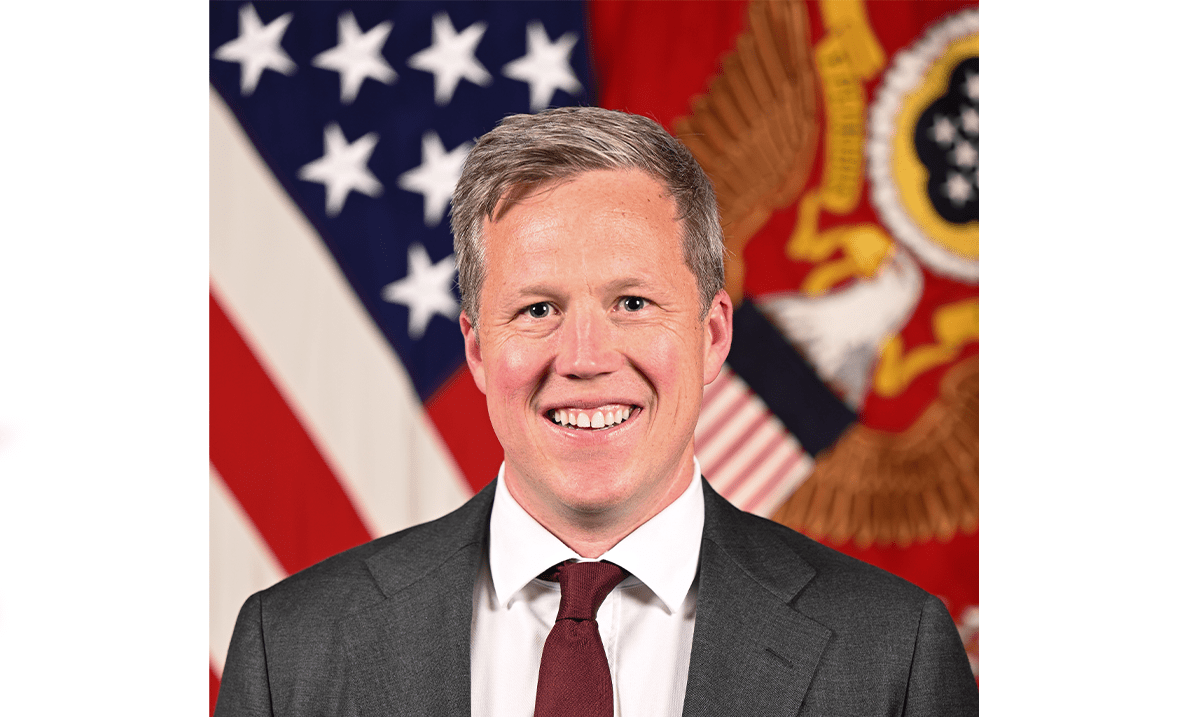
Bombshell Report Exposes Biden’s Massive Chinese Spy Cover-Up

The Biden administration has been caught red-handed prioritizing Beijing’s feelings over American national security. In a shocking revelation, we now know that Biden officials engaged in secret discussions with Chinese counterparts about their spy balloon before bothering to inform the American public that our sovereignty had been violated.

According to a report from Fox News Digital, Internal State Department documents reveal that on Feb. 1, 2023, while a Chinese surveillance balloon was floating across our nation collecting intelligence, Biden officials were more concerned about how exposing this breach would affect our “relationship” with China. Seriously?

That’s right — instead of immediately shooting down this obvious threat to national security, then-Secretary of State Antony Blinken and his team were busy playing diplomatic footsie with Beijing. According to Trump administration officials familiar with the documents, Blinken fretted that public disclosure would have “profound implications for our relationship” with China.

Think about this. The Biden administration knew about this threat on Jan. 28 yet waited until Feb. 2 to inform the American people. That’s five days of silence while a hostile foreign power’s surveillance equipment drifted across our country — a threat we wouldn’t have known about had it not been for civilians who discovered it. It was only afterward that the Biden Pentagon issued its statement. It likely wouldn’t have said anything at all if it could have gotten away with it.

Continue reading “”

Colorado Republicans Urge Polis To Veto Gun Control

Colorado’s Republican congressional delegation is urging Governor Jared Polis to veto recent legislation that forces residents who wish to exercise their Second Amendment rights to submit to a training program and an illegal gun owner registry. Senate Bill 003 was introduced to ban the sale of all semi-automatic magazine-fed firearms. Those plans changed quickly when it became apparent that Polis was uncomfortable with such a sweeping ban. More accurately, the governor was worried about recall petitions and voter backlash as experienced during the state’s 2013 gun control debacle.

A spokeswoman for the governor tried to absolve him of responsibility and appeal to Constitutionally-minded Americans by pointing out that the bill’s revision wouldn’t include any bans on firearms, carving a path by which residents may continue to exercise their rights so long as they participate in the licensing and registry scam. Polis’ office also put Republicans on notice, presenting SB 003 as veiled negotiation leverage to prevent Medicaid cuts and provide support for his opposition to President Trump’s sweeping tariffs.

“We appreciate hearing from members of Congress, and this goes both ways… For example, the governor strongly requests that they don’t make devastating cuts to Medicaid that will throw Coloradans off of health care and raise costs for everyone, and that they stop the president’s tariff tax hike – one of the largest in history — which is raising costs on Coloradans and businesses across the state,” said the governor’s press secretary, Shelby Wieman.

I hope people can see the forest through the bureaucratic trees here. Governor Polis’ office ultimately telling Americans that he is willing to spend their tax dollars to compromise their civil rights so that he can then use the suppression of those rights as a bargaining chip to get something else he wants, which will, of course, also come at an expense to the taxpayer. Furthermore, offering consolation prizes like unlawful licensing and registry scams in the place of an illegal ban is about as smarmy and villainous as it gets. Tell me you’re a criminal scumbag without telling me you’re a criminal scumbag.

Efforts urging Polis to, at least, pretend to be American, were organized by Representative Jeff Crank, and signed by fellow Republicans Lauren Boebert, Gabe Evans, and Jeff Hurd in a letter pointing out to the governor that the changes made to the bill do not make it any more appealing or any less of an infringement on the right to bear arms.

“Colorado has a proud history of safeguarding its citizens’ constitutional right to bear arms. Yet, for the past decade, the Colorado State Legislature has relentlessly pursued ever-increasing restrictions on responsible gun owners. If you fail to take a firm stance against these radical attempts to undermine our rights, you will only serve to empower criminals at the expense of law-abiding citizens,” the letter reads.

The letter also clarifies that SB 003 is inconsistent with United States Supreme Court rulings in Heller and Bruen, which protect firearms in common use and set guidelines for historical analysis as a basis for regulation and restriction.

Continue reading “”

Homeowner Shoots Intruder During Early Morning Break-In in Jackson; Suspect in Critical Condition

Jackson, Mich. (WKHM) — A man is in critical condition after being shot during an attempted break-in at a home in Jackson early Monday morning.

Police say the 40-year-old homeowner called 911 around 5:45 a.m. to report a break-in at his home on N. Gorham Street. A 47-year-old man had broken a basement window and was heading upstairs when the homeowner confronted him and fired one shot, hitting the man in the neck.

Officers arrived to find the suspect on the basement stairs. He was rushed to Henry Ford Hospital where he remains in critical condition.

According to the police, the man admitted to breaking in, claiming he thought the home was vacant. He is homeless, authorities said.

The homeowner was interviewed by the police, but no charges have been filed at this time. The investigation is still ongoing.

While Judge Kozinski had a personally problematic career on the bench, he was a pro-RKBA jurist, holding his own alongside Justice Thomas in his jurisprudence. It may be hoped that some of this judicial view has rubbed off onto the Secretary

Judge Kozinski’s dissent in Silveira v. Lockyer:

Judges know very well how to read the Constitution broadly when they are sympathetic to the right being asserted. We have held, without much ado, that “speech, or . . . the press” also means the Internet, and that “persons, houses, papers, and effects” also means public telephone booths.

When a particular right comports especially well with our notions of good social policy, we build magnificent legal edifices on elliptical constitutional phrases–or even the white spaces between lines of constitutional text.

But, as the panel amply demonstrates, when we’re none too keen on a particular constitutional guarantee, we can be equally ingenious in burying language that is incontrovertibly there.

It is wrong to use some constitutional provisions as spring-boards for major social change while treating others like senile relatives to be cooped up in a nursing home until they quit annoying us.

As guardians of the Constitution, we must be consistent in interpreting its provisions. If we adopt a jurisprudence sympathetic to individual rights, we must give broad compass to all constitutional provisions that protect individuals from tyranny.

If we take a more statist approach, we must give all such provisions narrow scope. Expanding some to gargantuan proportions while discarding others like a crumpled gum wrapper is not faithfully applying the Constitution; it’s using our power as federal judges to constitutionalize our personal preferences.

The able judges of the panel majority are usually very sympathetic to individual rights, but they have succumbed to the temptation to pick and choose. Had they brought the same generous approach to the Second Amendment that they routinely bring to the First, Fourth and selected portions of the Fifth, they would have had no trouble finding an individual right to bear arms.

Indeed, to conclude otherwise, they had to ignore binding precedent. United States v. Miller (1939) did not hold that the defendants lacked standing to raise a Second Amendment defense, even though the government argued the collective rights theory in its brief.

The Supreme Court reached the Second Amendment claim and rejected it on the merits after finding no evidence that Miller’s weapon–a sawed-off shotgun–was reasonably susceptible to militia use. We are bound not only by the outcome of Miller but also by its rationale.

If Miller’s claim was dead on arrival because it was raised by a person rather than a state, why would the Court have bothered discussing whether a sawed-off shotgun was suitable for militia use? The panel majority not only ignores Miller’s test; it renders most of the opinion wholly superfluous. As an inferior court, we may not tell the Supreme Court it was out to lunch when it last visited a constitutional provision.

The majority falls prey to the delusion–popular in some circles–that ordinary people are too careless and stupid to own guns, and we would be far better off leaving all weapons in the hands of professionals on the government payroll.

But the simple truth–born of experience–is that tyranny thrives best where government need not fear the wrath of an armed people.

Our own sorry history bears this out: Disarmament was the tool of choice for subjugating both slaves and free blacks in the South. In Florida, patrols searched blacks’ homes for weapons, confiscated those found and punished their owners without judicial process. In the North, by contrast, blacks exercised their right to bear arms to defend against racial mob violence.

As Chief Justice Taney well appreciated, the institution of slavery required a class of people who lacked the means to resist. See Dred Scott v. Sandford, (1857) (finding black citizenship unthinkable because it would give blacks the right to “keep and carry arms wherever they went”). A revolt by Nat Turner and a few dozen other armed blacks could be put down without much difficulty; one by four million armed blacks would have meant big trouble.

All too many of the other great tragedies of history–Stalin’s atrocities, the killing fields of Cambodia, the Holocaust, to name but a few–were perpetrated by armed troops against unarmed populations.

Many could well have been avoided or mitigated, had the perpetrators known their intended victims were equipped with a rifle and twenty bullets apiece, as the Militia Act required here.

If a few hundred Jewish fighters in the Warsaw Ghetto could hold off the Wehrmacht for almost a month with only a handful of weapons, six million Jews armed with rifles could not so easily have been herded into cattle cars.

My excellent colleagues have forgotten these bitter lessons of history. The prospect of tyranny may not grab the headlines the way vivid stories of gun crime routinely do. But few saw the Third Reich coming until it was too late.

The Second Amendment is a doomsday provision, one designed for those exceptionally rare circumstances where all other rights have failed–where the government refuses to stand for reelection and silences those who protest; where courts have lost the courage to oppose, or can find no one to enforce their decrees. However improbable these contingencies may seem today, facing them unprepared is a mistake a free people get to make only once.

Fortunately, the Framers were wise enough to entrench the right of the people to keep and bear arms within our constitutional structure. The purpose and importance of that right was still fresh in their minds, and they spelled it out clearly so it would not be forgotten. Despite the panel’s mighty struggle to erase these words, they remain, and the people themselves can read what they say plainly enough:

A well regulated Militia, being necessary to the security of a free State, the right of the people to keep and bear Arms, shall not be infringed.

The sheer ponderousness of the panel’s opinion–the mountain of verbiage it must deploy to explain away these fourteen short words of constitutional text–refutes its thesis far more convincingly than anything I might say.

The panel’s labored effort to smother the Second Amendment by sheer body weight has all the grace of a sumo wrestler trying to kill a rattlesnake by sitting on it–and is just as likely to succeed.

 

From Bearing Arms :

Driscoll is an Army veteran and Yale Law School graduate who previously interned with former Ninth Circuit Judge Alex Kozinski, who was one of the most libertarian members of the liberal-dominated appellate court.


NSSF Congratulates New ATF Acting Director Daniel Driscoll

WASHINGTON, D.C. — NSSF®, The Firearm Industry Trade Association, congratulates Acting Director of the Bureau of Alcohol, Tobacco, Firearms and Explosives (ATF) Daniel P. Driscoll, whom President Donald Trump appointed to the position today. In addition to serving as Secretary of the Army, Acting Director Driscoll will oversee the bureau that regulates the lawful firearm industry in the United States.

“President Trump’s decision to appoint Acting Director Driscoll is indicative of his resolve to bring reform to the ATF and protect the Second Amendment rights of law-abiding citizens and the industry that makes it possible to exercise those rights,” said Lawrence G. Keane, NSSF Senior Vice President and General Counsel.

“NSSF is deeply appreciative of FBI Director Kash Patel’s service to lead the ATF as Acting Director for nearly two months in his interim role and the recognition, along with U.S. Attorney General Pam Bondi, that the ATF was weaponized by the previous administration to carry out a radical gun control agenda.

The firearm industry is confident that President Trump’s appointment of Acting Director Driscoll to lead the ATF will return the bureau to its proper role as a law enforcement agency laser focused on combatting violent crime and illegal firearms trafficking, and to act as a non-partisan regulator of the firearm industry.”

NSSF is confident Acting Director Driscoll will view members of the firearm industry, including licensed retailers, as ATF’s partners on the front lines of keeping firearms out of the wrong hands, combatting illegal firearms trafficking and preventing violent crime involving the misuse of firearms.

So what do we know about U.S. Army Secretary Daniel Driscol regarding the 2nd Amendment?


FBI Director Kash Patel replaced as acting ATF boss, Army Secretary steps in
Patel was replaced at ATF by Army Secretary Daniel Driscoll, seven people familiar with the matter told Reuters.

WASHINGTON − FBI Director Kash Patel was removed as the Acting Director of the Bureau of Alcohol, Tobacco, Firearms and Explosives and replaced by U.S. Army Secretary Daniel Driscoll, seven people familiar with the matter said on Wednesday.

Driscoll will continue to serve as Army Secretary while he also oversees the ATF, an arm of the U.S. Justice Department, said three of the sources, who were granted anonymity to discuss personnel matters that were not yet public.

Patel was sworn in as ATF’s acting director in late February, just a few days after he was also sworn in as FBI Director.

A Justice Department official confirmed the change.

It was not immediately clear when Patel was removed from the role. As of Wednesday afternoon, Patel’s photo and title of acting director was still listed on the ATF’s website.

The abrupt change in leadership comes at a time when senior Justice Department officials are weighing whether to merge ATF with the Drug Enforcement Administration as part of an effort to cut costs.

The Idiocy of Trying to Ban Possession of 3D Printer Files

I’m part of the last generation to grow up without the internet. That didn’t really happen until the 1990s, and much of the popularity that followed was well after my high school years. Yes, I’m old.

I was still young enough to embrace this new technology. I remember the early days when it was difficult to find stuff on the internet, especially with the terrible search engines we had available, but then stuff changed. We had Google make it easier to find whatever you were looking for–it sucks now, for the record–and then we got social media where it was easy to connect to folks and build relationships.

So I understand the internet and how it works about as well as anyone who doesn’t get into the technical aspects in and of themselves probably can.

Which is why the push from some anti-gun states to prohibit the files for 3D printers that allow people to make their own firearms and accessories is absolutely idiotic.

Proving that some folks aren’t sure how the internet works, several states are striving to make it harder to make firearms and firearm components privately.

In recent news from California, New Jersey, and New York, blue state prosecutors and lawmakers are making an extra effort to curb the availability of digital gun plans and devices that can help legally produce home-built guns, which are allowed under federal law.

In New Jersey, the Democrat-controlled state Assembly passed A4975 last month in a 50-26 roll call along party lines. The bill makes it a crime to possess digital instructions to manufacture guns and gun components, including receivers or magazines. Under the proposal, a person who is not licensed or registered to manufacture firearms but possesses any digital firearm instructions is guilty of a fourth-degree felony, which is punishable by up to 18 months in jail and a fine of up to $10,000.

Meanwhile, in New York, Manhattan’s Democrat District Attorney Alvin Bragg has penned a letter to Creality, a Chinese 3D printer maker – one of the largest in the world – to urge the company to do more to block its machines from having the capability to make gun components. Further, Bragg wants Creality to police its cloud community for such CAD files.

That first sentence, though, says it all.

Let’s assume, for the sake of argument, that the Constitution doesn’t apply for a moment. In such a case, you can make anything you want illegal. You can prohibit anything at all.

What you can’t do, though, is stop people who don’t respect the law.

Now, here in the real world where there is a Constitution and the right to keep and bear arms is supposed to be protected by the Second Amendment, there are major problems with such laws beyond the fact that they don’t work, especially since making your own gun has been legal since well before the founding of this nation. I think one would be hard-pressed to find a law from the time of the founding that would serve as an analog.

So there’s that.

But we also have to acknowledge just how ridiculous the law is with regard to preventing criminals from doing anything. I mean, this is the era of the internet. People can find whatever they want.

Even sites that try to prohibit people from IP addresses in those states–which may impact people living just across state lines or others who have IP addresses that may not accurately pinpoint their homes–will run into an issue because VPNs can be set to make it appear you live in a completely different state.

You can’t stop the signal.

Yeah, the law will allow prosecution of people who happen to have these files, but so what? How are they going to enforce it unless they’re tipped off that someone has these files? They’re not. How will they most likely get tipped off that someone has them? They’re using them to print gun parts and likely selling them.

By then, they’ve already broken the state laws against printing the guns in the first place, so the damage is done.

Yes, this is idiotic.

But then again, considering which states are looking at this, nothing at all should be shocking about the idiocy.

Never forget, even for an instant, that the one and only reason anyone has for taking your gun away is to make you weaker than he is, so he can do something to you that you wouldn’t let him do if you were equipped to prevent it. This goes for burglars, muggers, and rapists, and even more so for policemen, bureaucrats, and politicians.
-Alexander Hope

Are SIG P320 Discharges Really About the Gun… or Just Overloaded Duty Rigs?

Another day, another headline dragging the SIG P320 through the mud. This time, it’s the Washington State Criminal Justice Training Commission banning the P320 from its academy due to concerns over accidental discharges. Recruits who were issued the striker-fired SIG are now being handed loaner guns for firearms training.

Unless you’ve been living under a rock—or purposefully tuned out the noise—you’ve probably seen the P320 lawsuits, user complaints, and media blitzes. Considering the P320 is the U.S. military’s standard sidearm and one of the top-selling pistols in the country, controversy was inevitable.

But is it really about the gun? Or are we ignoring something bigger?

Holster Mishap or Firearm Flaw?

Seattle’s KING-5 News recently covered an incident involving a sheriff’s deputy responding to a call involving an emotionally disturbed individual. During the takedown, a round discharged from the deputy’s holstered P320. No injuries, fortunately.

But here’s where it gets weird: the agency claimed the discharge was caused by a loose handcuff arm getting into the trigger guard while still holstered.

You read that right.

The holster in question was fitted for a weapon-mounted light, which inherently adds bulk and leaves a wider opening. That extra room between the gun and the holster mouth? It’s an invitation. Whether it’s a cuff arm, zipper pull, drawstring, or even a suspect’s finger during a scuffle, you’ve now got a clear path to the trigger.

We’re not looking at a design defect. We’re looking at a setup fail.

Continue reading “”