U.S. Government Appeals Pistol Brace Decision to 5th Circuit

After nearly three months of silence, the U.S. Government has now appealed the June 13, 2024, pistol brace decision to the U.S Court of Appeals for the Fifth Circuit.

The appeal was announced on August 12, 2024. The case is Mock v. Garland, and it was brought by the Firearms Policy Coalition.

The ATF pistol brace rule targets stabilizer braces attached to AR pistols, claiming the braces turn AR pistols into short barrel rifles (SBRs). And since SBRs are regulated under the National Firearms Act (1934), the ATF issued its rule on AR-pistol braces to stop what it saw as a way around SBR regulations.

Breitbart News reported that U.S. District Judge Matthew J. Kacsmaryk issued a preliminary injunction against the AR pistol brace rule on November 8, 2023.

Kacsmaryk observed that the “court is not insensitive to the ATF’s concerns over gun industry gamesmanship and attempts to circumvent the rules on SBRs.” But he followed that acknowledgement by quoting Bruen (2022), noting that the government may not justify the passage and/or existence of a regulation by “simply [positing] that the regulation promotes an important interest.”

In a decision dated June 13, 2024, U.S. District Judge Reed O’Connor vacated the ATF’s AR pistol brace rule, saying it violated the Administrative Procedure Act (APA).

The U.S. Government has now appealed the pistol brace decision to the Fifth Circuit.

Breitbart News pointed out the Fifth Circuit decided against another ATF rule–a ban on bump stocks–on January 6, 2023. The court did so in light of the ATF’s arbitrary recategorization of bump stocks as “machine guns.”

Maryland, AR-15s and the Fourth Circuit

Should you be so unfortunate as to live in Maryland, and more unfortunate as to own an AR-15, you’re a criminal, as the Fourth Circuit Court recently affirmed. This despite the Supreme Court’s Heller, McDonald and Bruen decisions having made clear the Second Amendment acknowledges the individual right to self-defense in one’s home and elsewhere, and common and usual weapons are presumptively constitutional. Unfortunately none of those decisions specifically mention the AR-15, the most popular—common and usual–rifle of its type in America. This opened the gun ban door a crack, which the 4th Circuit majority used to push the door wide open:

We have described the AR-15’s capacities in abundant detail to demonstrate just how far outside the animating purposes of the Second Amendment this weapon lies. While we know that the AR-15 thrives in combat, mass murder, and overpowering police, appellants have failed to demonstrate that the weapon is suitable for self-defense. This is likely because such a showing would be difficult to make. Indeed, many of the weapon’s combat-functional features make it ill-suited for the vast majority of self-defense situations in which civilians find themselves.

It would be hard to imagine a more deceptive and less informed recitation of legal mush. The majority decision goes on to claim the “heightened firepower” of the AR-15 is a terrible risk of overpenetration, and the 30-round magazine, standard since the Vietnam era, is also useful for mass murder, because self-defense shootings commonly only involve a few shots. The majority would also have us believe the AR-15 is particularly useless for home defense. They conclude their specious arguments with this:

In sum, the AR-15—with its military origination, combat-functional features, and extraordinary lethality—has “the same basic characteristics, functionality, capabilities, and potential for injury as the M-16.” And its all too frequent use in terrorism, mass killing, and police murder shows that the AR-15 offers firepower ill-suited and disproportionate to fulfilling the Second Amendment’s purpose of armed self-defense. Therefore, just like the M16, the AR-15 is “most useful in military service” and “may be banned” consistent with the Second Amendment.

Where to begin? The AR-15 has been on the civilian market since the 1960s, and while Armalite—“Armalite Rifle,” not “Assault Rifle” certainly wanted military contracts, only the Air Force initially adopted the rifle for base defense. The Army eventually adopted it, and after decades of development, the select-fire M4, not available to civilians, is the current issued rifle.

Both the M4 and AR-15, the M4’s semiautomatic only, look-alike cousin, fire the .223/5.56 NATO cartridge, which is of only intermediate power, and has long been known as an unreliable penetrator and man stopper. The Military is currently developing a higher-powered cartridge, and rifle.

Is the AR-15 a “common and usual” arm?  Best estimates place more than 23 million in citizen’s hands. However, Americans have purchased more than a million guns a month for 60 straight months, so that figure is surely low.

“Firepower” is a military concept inappropriately applied to individual arms. The majority’s argument is emotion-laden and obviously taken directly from the writings of anti-liberty/gun cracktivists, while the dissent is well-reasoned, relying on the law, the Founder’s intent and accurate history.

Obviously, the AR-15 is not “most useful in military service,” which is why the automatic-fire capable M4 is the issue military rifle. Gun banners hope to be able to ban any class of firearms, in this case, a semiautomatic rifle of intermediate power. That precedent, if upheld, would allow the banning of all semiautomatic firearms, which, like the AR-15, are useful for self-defense.

They also hope to ban “large capacity” magazines for the same reasons by using the same tactics. While it’s true most armed encounters involve relatively few rounds fired, attacks by multiple armed thugs are becoming more common, in and out of the home. In such encounters, a 30-round magazine can be the difference between life and death.

Certainly, we carry handguns because it’s difficult to carry long guns of any type as we go about our daily business, but because handguns are more convenient does not make rifles unconstitutional. Anyone knowingly entering an armed encounter with less than a rifle is looking to die. The police are increasingly abandoning shotguns and adopting AR-15s for patrol carry. Are the police now the military? Should citizens be less well armed, less able to defend themselves?

The 4th Circuit has now clearly established a split among the lower courts, which will allow the Supreme Court to grant cert and further define the limitations of the state in banning popular, common and usual guns. In our uncertain times, a decision in line with their Heller, McDonald and Bruen jurisprudence would be welcome, and conducive to the preservation of our representative republic.


Man shoots, kills attempted robber in North Austin: APD

An attempted robbery ended in a deadly shooting in North Austin, Austin police said.

Austin police said on Wednesday, July 24, around 10:30 p.m., officers responded to a robbery at the Taste of Home Handmade Dumpling Restaurant, at 10901 N Lamar Blvd. The caller said someone tried to rob him with a knife, and he shot the attempted robber.

The investigation showed Hao Lin, 51, left the restaurant when he saw 57-year-old Chup Prum on a bike. Prum pulled out a knife and approached Hao Lin. Hao Lin then pulled out a gun and shot Prum, police said.

After being shot, Prum rode off on his bike, and went home. He later went to a local hospital and died from his injuries four days later.

No charges are being filed at this time, police said.

I have a solution. Not that I didn’t already know it, but when I visited friends in Fort Yukon Alaska, they had the solution for ‘invading wildlife’ as well. Large Caliber Rifles.


How invasion of enormous wild beasts has left shocked residents in idyllic Wyoming mountain towns fearing for their lives: ‘I do a lot of praying.’

Residents of idyllic mountain towns have been left looking over their shoulder after the population of grizzly bears soared.

Since being put on the Endangered Species List in 1975 when there were just 700 of them patrolling the lower 48 states, grizzlies have made a comeback.

Places including towns, farms and ranches across the Northern Rockies where they hadn’t been seen in more than a century are reporting sightings.

Biologists say they believe the population has now climbed to at least 2,000, and the bears now regularly roam outside Glacier and Yellowstone National Park.

Cecil and Bridget Gallagher, who live in Clark, Wyoming, just outside Cody, harvest sweet corn on their farm, which they say now provides them with an adrenaline rush.  Since being put on the Endangered Species List in 1975 when there were just 700 of them patrolling the lower 48 states, grizzlies have made a comeback. The animals started showing up near their ranch around a decade ago, causing them to put up an electric face.

Since then, the bears have managed to come into the cornfields, with four being trapped by state game managers last year.

With harvest looming, the Gallaghers say they fear for themselves and their kids walking through the fields as they try to generate enough noise to ward off bears.

Bridget told the outlet: ‘I do a lot of praying. We start picking sweet corn next week. Saw our first set of bear tracks around the field a couple days ago. Luck’s job begins again.’

Continue reading “”

Federal Appellate Court Rules in Favor of Takings Lawsuit Against the CDC’s Covid-Era Eviction Moratorium.

The 2-1 decision overrules a trial court decision that went the other way, and could set an important property rights precedent.

On Wednesday, in Darby Development Co. v. United States, the US Court of Appeals for the Federal Circuit (which reviews takings claims against the federal government ruled that a takings lawsuit against the 2020-21 federal eviction moratorium can proceed. In so doing, it overruled a trial court decision by the Court of Claims, which I criticized here. The decision could well end up setting an important takings precedent.

In September 2020, during the Covid pandemic, the Trump Administration Centers for Disease Control (CDC) imposed a nationwide eviction moratorium, claiming that it would reduce the spread of the disease. The Biden Administration extended the moratorium multiple times.

In August 2021, the eviction moratorium was invalidated by the Supreme Court because the CDC lacked proper statutory authority to institute it. But, in the meantime, numerous landlords suffered financial losses, because they could not evict tenants who weren’t paying rent.

Some of the property owners filed a lawsuit arguing that the eviction moratorium violated the Takings Clause of the Fifth Amendment, which requires the government to pay “just compensation” whenever it takes private property. As I explained at the time, their position was backed by the Supreme Court’s 2021 ruling in Cedar Point Nursery v. Hassid, which held that even temporary physical occupations of property qualify as “per se” (automatic) takings requiring compensation.

In May 2022, the US Court of Claims dismissed the takings lawsuit against the CDC moratorium on the perverse ground that there was no taking because the CDC’s eviction moratorium was never properly “authorized.” In other words, the government could escape takings liability because its actions were illegal! The recent Federal Circuit decision reversed that ruling.

Continue reading “”

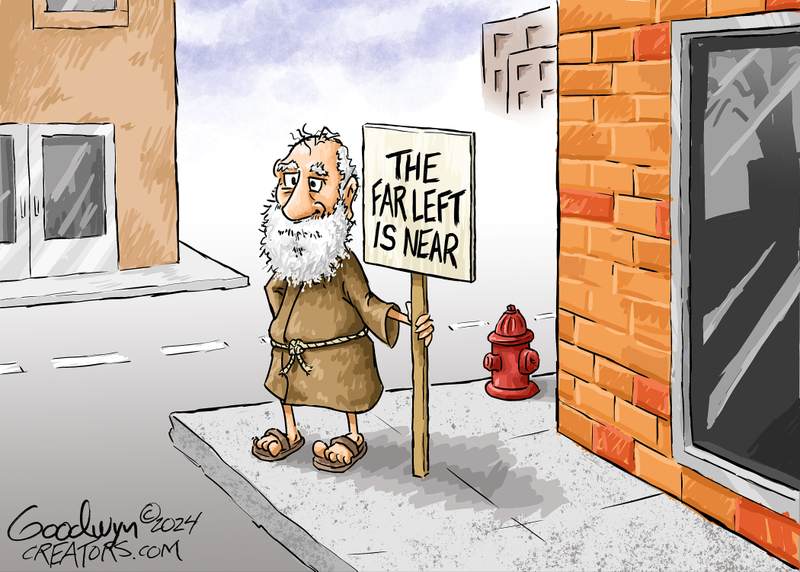
The rise of academic hate.
Faculty have gone from professors to extremists

Nicholas Giordano is a professor of Political Science, the host of The P.A.S. Report Podcast, and a fellow at Campus Reform’s Higher Education Fellowship. With 2 decades of teaching experience and over a decade of experience in the emergency management/homeland security arena, Professor Giordano is regularly called on to speak about issues related to government, politics, and international relations.


There are far too many radical professors who dominate academia, peddle hate, and dehumanize those who dissent from their narrow-minded ideological views. For instance, Rutgers University has placed professor Tracy Budd under internal review for a post where she hoped the failed assassination attempt on former President Trump would “inspire others.” Since Campus Reform’s inception in 2009, we have spotlighted the escalating extremism infecting our college campuses.

While many college professors still cherish the institutional values of education – robust debate, free speech, and intellectual curiosity – unfortunately there are too many professors who have become even more extreme and unhinged. Not only does their rhetoric reflect poorly on our institutions and my profession, but the impact of their radicalism is undeniable and dangerous. How dangerous? Consider how five members of the student council at a West Bank university, which has direct ties to several American colleges and universities, were recently arrested for planning a significant terror attack.

How long will it be before the same extremism fosters a terror attack within the United States as radical professors indoctrinate students with their hateful ideology? From the October 7th Hamas terror attacks, which resulted in the grisly death of nearly 1,200 innocent men, women, children, and babies, to the assassination attempt on former President and current presidential candidate Donald Trump to attacks on voices like the Leadership Institute’s Riley Gaines who was attacked by a student mob at San Francisco State University.

They have become so brazen that they don’t bother to conceal their extremism. What does it say about our institutions that some professors feel emboldened to openly promote hate, anti-Americanism, antisemitism, and even violence? For example, Columbia University professor Joseph Massad called the October 7th attacks “awesome” and a “stunning victory of the Palestinian resistance.” Professor Russell Rickford of Cornell University called the Hamas terror attacks “exhilarating.” Vanderbilt University’s Ayesha Khan stated that Hamas deserves “to resist their oppressors by any means necessary.” Professor Mike Tosca referred to Jews as “pigs,” and “excrement” that should “rot in hell.” Another Columbia University professor advised students to avoid mainstream media outlets because “it is owned by Jews.”

With regard to the Trump assassination attempt, the ideological zealots couldn’t control themselves. Berklee College professor Marty Walsh proclaimed, “Too bad the shooter missed. Maybe this will spawn copycat shooters.” Professor Martha Galindo from Ocean County College was also upset that the shooter missed. Morgan State University professor Stacy Patton likened Trump to Hitler in an opinion editorial and claimed that ‘Black people’ wish the assassin killed Trump because they are “wishing for the death of evil.” Some in academia, including Uju Anya from Carnegie Mellon University, suggested that the attempt on President Trump’s life was staged.

Regardless of political views, the fact that some in academia display support for terrorist organizations, express disappointment that the assassination attempt failed, and openly call for copycat attacks and genocide is deeply troubling. Their hateful rhetoric goes against the basic principles of decency and respect that should govern any academic environment.

With educators like these, is it any surprise that students support a terrorist organization like Hamas. Given the state of our education system, it shouldn’t shock people that 30% of Gen Z’ers believe that Osama bin Laden’s ideas were a force for good. Is it any wonder why some students chant ‘death to America’ and openly celebrate the attempted killing of a former President.

It is clear that these extremists have become a dangerous influence on our youth. As a professor, it demeans our profession, and it’s why so many Americans have lost faith in our higher education institutions.

These extremists stigmatize the quality professors who remain committed to genuine education and the responsibilities placed on us as educators. They undermine the integrity of our educational institutions by molding an anti-American mindset. The consequences of their radicalism should be painfully evident to anyone who has been paying attention to the increasing political polarization and social division within our country.