Weapons of War: What They Are and Why We Need Them
The new gun control buzzwords being used today by the left are getting more and more creative. They have to keep coming up with new jargon and slogans to keep up their fear-mongering campaign about how guns are bad and why we must ban them. Today, however, we will discuss one such term that is both ridiculous and true at the same time: “weapons of war.”
The phrase is a relatively new one being used by the left, in fact, it’s the new favorite of high-profile Democrats like President Joe Biden and Vice President Kamala Harris. They both tweet about them quite frequently in their attempts to gaslight the owners of sensible firearms, but more importantly, they use them to gin up fear from people who are already ignorant of what these guns are. Their fear-mongering campaign is quite effective too.
So what exactly are weapons of war, and why are they so scary? Why do they pose such a threat to society that we must ban them entirely? Depending on who you talk to, weapons of war can mean a lot of things, but the most infuriating part of that is the Democrats can’t define them because they know it will destroy their narrative. A weapon of war is just that, a weapon that is used in war; it’s pretty simple. But the argument gets convoluted from there because that definition applies to most of all firearms past and present. Again I ask, what is a weapon of war?
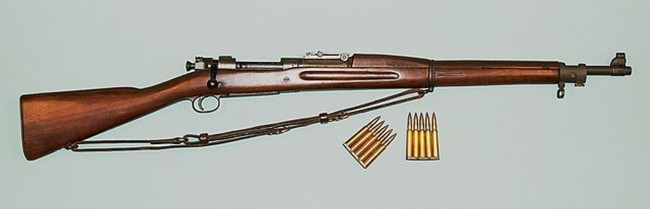
Here’s one bona fide weapon of war, an M1903 Springfield rifle. The rifle was the general issue rifle to all U.S. Soldiers and Marines during World War I and II, with total service in U.S. military usage until 1970. It is a five-round magazine-fed, bolt action rifle that is chambered in the 30-06 caliber cartridge. It isn’t a semiautomatic rifle; it doesn’t have a detachable magazine, doesn’t have a pistol grip or a flash hider on the muzzle. But it is most assuredly a weapon of war that American forces have used in at least three separate conflicts. The rifle is legal to own, with no restrictions, and is used by countless Americans for hunting, recreational shooting, and even long-range competitive shooting matches. But they won’t mention that because then it wouldn’t be scary enough.
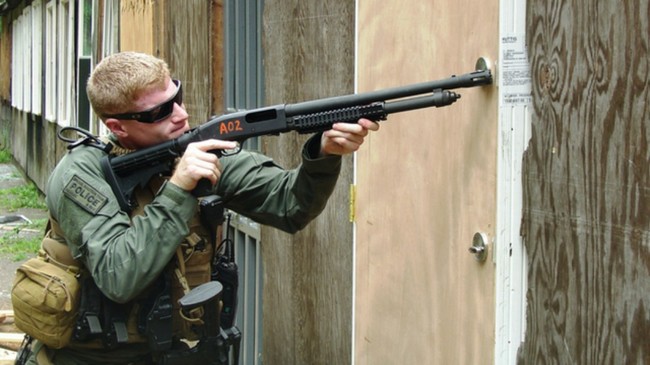
Another example of a gun used in war is the Mossberg M500A2 12 Gauge shotgun. This weapon is used by the Marines, Army, and other branches of the military for a wide range of missions. It is a pump-action shotgun that holds between six and nine rounds depending on the configuration. Even with a pistol grip attachment on the stock or forend of the firearm, it does not make it fire any faster or make it any more deadly than it already is. The one modification that this shotgun can have is what is known as a choke, which is inserted into the muzzle and can either reduce or increase the spread of the pellets when they exit the muzzle. Once again, this shotgun, and many like it, is used by millions of Americans for home defense, property protection, hunting, recreational shooting, and more. But again, the Democrats and gun control advocates cannot use that as an example of a weapon of war because it just isn’t scary enough.
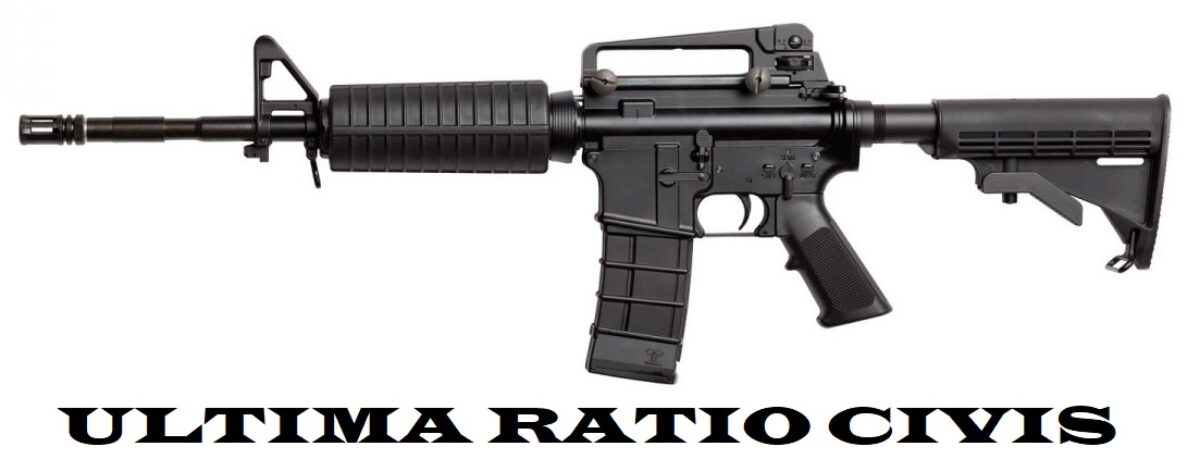
The weapons of war the Democrats want to ban are like the one I am using in the featured image of this story. It is an LWRC M6 SPR (Special Purpose Rifle), chambered in 5.56mm, and is a lightweight, air-cooled, gas-operated, magazine-fed, shoulder-fired semiautomatic rifle with a maximum effective range of approximately 800 yards. The round it fires is also about the same size as a .22 caliber bullet, one of the smallest sizes of bullets on the market. It can only be fired as fast as I can pull the trigger. It does not create a massive hole in one’s body when shot, and it most certainly does not blow organs out of the body either.