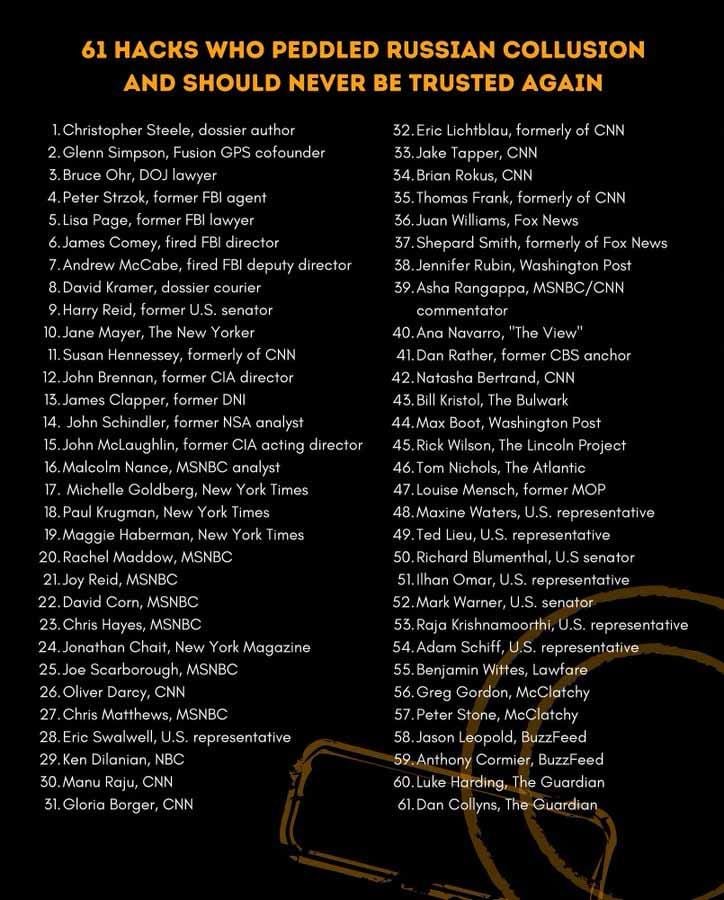
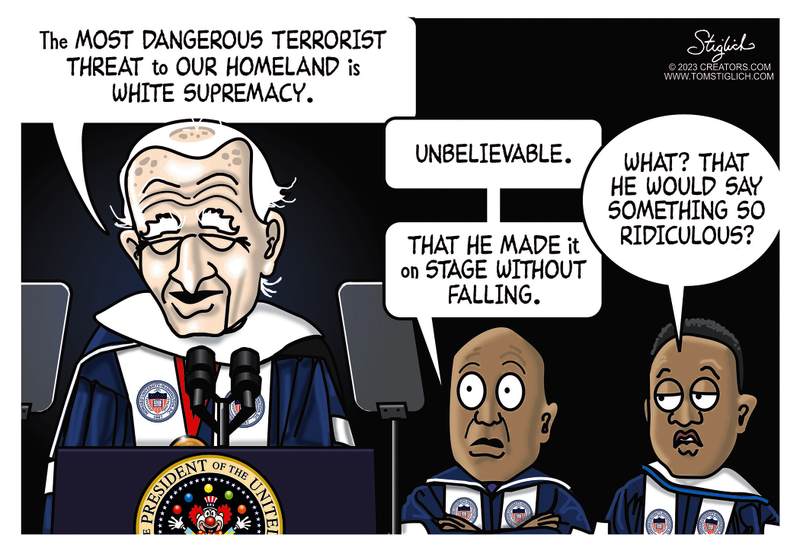
The epitaph for the ruling class:
“Trading credibility and potential for spiteful self-indulgence.”

Vulgar Displays of Power.

I thought little of Michel Foucault when first assigned some readings my freshman year at Brown. We were clearly supposed to revere him, but his bio was terribly unappealing—especially the alleged child abuse—plus his obsessions with surveillance and punishment felt far from the whip-smart problem solvers I was bound to join.

Foucault and co. seemed like cultishly kinky sociopaths, a Rocky Horror Picture Show for tortured intellectuals, while I was focused on smarter social services for the people. Yet over the years I’ve become ever more grateful for early exposure to the pervy Frenchman and whole expanse of critical theorists, who proved stunningly prophetic about these modern times.

Most immediately for introduction to the panopticon, a centuries-old scheme for constant observation of the guilty—or at least making them feel watched, ostensibly for their own good. What once was reviled as Orwellian nightmare is now embraced by much of the establishment.

More fundamentally, for orientation to the central conceit of theory: that reality lies downstream from language, and social conditions are but constructs imposed by power that the right redefinitions might resolve. Some of the philosophical work is actually pretty interesting, but as bastardized into politics and policy becomes a cheap excuse for magical thinking.

It isn’t merely that the experts have brilliant plans for enlightened global technocracy, but that it is the very acts of objection and criticism that create the possibility of failure. The ideal is the default of things, any deviation due to naysayers and troublemakers, so silencing opposition equals solving the problem. Dirty tricks become moral imperatives; with just a little more money and militancy, we’re about to reach the promised land.

Not that abstruse points of theory come up much in polite company, but that the convenient assumptions have come to dominate the intellectual atmosphere. With our beautiful future just one last horde of assholes away, what means aren’t justified for beating the enemy?

During the Obama years professional progressives could afford a certain smug magnanimity, confident that demographic change had bequeathed permanent lock on power. It was smarter to nudge the great unwashed toward what was decided than boil the frog too quickly.

So the populist reaction of 2016 struck many as profound betrayal: perpetrators had to be punished, examples made, and push brought to shove. What began as institutional resistance amid the Trump interregnum has become actively vengeful governance under the Biden regime—a policy agenda nonsensical as to most of its official objectives but coldly strategic as retribution against structural opposition, not just punishing saboteurs but putting subjects in their place.

Whether wrecking American energy to wreak far worse environmental damage elsewhere, printing enough funny money to substantially devalue the dollar, insisting on demonstrably harmful Covid mandates, or ushering in millions and millions of unvetted migrants, it amounts to a sort of shock treatment to corral and humiliate an unruly electorate that has been found wanting.

Yet the crass opportunism only guarantees greater backlash and further delegitimizes the actual progressive project, or whatever’s left of it. Generations of hard work and good faith have been squandered in just a few short years, trading credibility and potential for spiteful self-indulgence.

Perhaps electoral apocalypse over several cycles might chasten the powers that be, but I doubt it. Beyond all the money and inertia, too much of the establishment truly believes enough coercion can make their fantasies come true, with all manner of carrots and sticks to force others into line.

Nonetheless, stubborn reality burbles on beneath even the best-funded manipulation. The Emerging Democratic Majority might’ve really materialized had Dem apparatchiks any discipline to appear to give the slightest shit about what most voters think. But with society supposedly determined by fungible narratives from up top, the peasantry’s ignorant superstitions are irrelevant.

So while a swerve back toward representative government remains theoretically possible, all institutional trendlines point to ever more extreme enforcement of the day’s dominant ideology. The future of democracy thus teeters on a knife’s edge between true popular sentiment and whatever the global bureaucracy decrees—an increasingly technological contest of idiosyncratic humanity versus its elites’ machinations.

Stop Me If You’ve Heard This One Before

It is a fitting coincidence that the announcement of Greta Thunberg’s honorary doctorate in theology came the same week as a new report from the U.N.’s Intergovernmental Panel on Climate Change (IPCC) warns that the world has less than a decade to stop “catastrophic climate change” by halting the use of fossil fuels.

You can be forgiven for having a sense of déjà vu all over again, since we have been getting “less than a decade to stop climate change” warnings for more than 30 years. Only someone who has assimilated climate catastrophism as a fanatical religion could fail to be embarrassed by this record of hysteria and goal-post shifting, which makes St. Greta of Thunberg’s theology degree ironically fitting.

Yet the new IPCC report is not a report at all. It is merely a 36-page “Summary for Policy Makers” (SPM in the climate trade) ahead of a new “synthesis report” that will merely repackage the last complete three-volume IPCC climate change assessment from 2021. The new synthesis report, which will likely run a thousand pages or more, is “coming soon,” according to the IPCC’s website.

In other words, the new “synthesis report” is not new at all, but is produced to keep climate agitation at a full boil. The SPM is released ahead of main report to generate headlines, which will then be repeated, Groundhog Day-style, when the full report is released later. The new SPM did the trick: the New York Times‘s chief stenographer for the climate cult, Brad Plumer, produced a breathless story that can be written now by ChatGPT, declaring that “Earth is likely to cross a critical threshold for global warming within the next decade.” This whole well-worn exercise is the climate cult equivalent of a perpetual motion machine.

Continue reading “”


Trump Grand Jury Session Abruptly Canceled.

On Wednesday morning, Trump wrote in a post on Truth Social that Bragg was having problems with the grand jury. “The Rogue prosecutor, who is having a hard time with the Grand Jury, especially after the powerful testimony against him by Felon Cohen’s highly respected former lawyer, is attempting to build a case that has NEVER BEEN BROUGHT BEFORE AND ACTUALLY, CAN’T BE BROUGHT,” he claimed. “If he spent this time, effort, and money on fighting VIOLENT CRIME, which is destroying NYC, our once beautiful and safe Manhattan, which has become an absolute HELLHOLE, would be a much better place to live!”

Trump was clearly on to something. The Wednesday session of the grand jury has been canceled, according to a report from Business Insider.

Two law enforcement officers have informed Insider that the grand jury in the Trump case has been instructed not to report for duty on Wednesday — the day previous reports suggested there would be a possible indictment vote against former President Donald Trump. Although there is no confirmed schedule beyond Wednesday, one of the sources, speaking anonymously, indicated that it is doubtful the grand jury will convene at all this week. The grand jury typically meets on Mondays, Wednesdays, and Thursdays, and Fox News reports that the grand jury is on standby for Thursday.

Former Michael Cohen legal advisor Robert Costello, a surprise witness this week, was touted by Trump as having conclusive and irrefutable evidence to exonerate him. Amongst other testimony damaging to Manhattan District Attorney Alvin Bragg’s efforts to nab Trump, it was revealed that Bragg, who is already the target of a House GOP investigation for abuse of power, may have concealed exculpatory evidence from the grand jury.

This latest development raises new doubts as to whether the indictment will happen at all, especially in light of a previous report that sources close to the investigation believe it is possible that Bragg may end up not indicting Trump at all, and that Trump’s team has not been formally notified of an imminent indictment.

It’s not clear why Bragg, who has been presenting “evidence” against Trump since mid-January, suddenly halted the grand jury from convening. This has led to speculation that recent developments may have further weakened his already fragile case, and may even result in the failure of any potential indictment.

On Monday, constitutional scholar Jonathan Turley called Bragg’s case against Trump “legally pathetic,” and observed Bragg is “struggling to twist state laws to effectively prosecute a federal case long ago rejected by the Justice Department against Trump over his payment of ‘hush money’ to former stripper Stormy Daniels.”

Bragg’s case against Trump may be falling apart, thanks to the efforts of alternative media calling out his abuse of power and partisan motives.

Anti-gunners need to face reality on gun manufacturer

The firearm community consists of two primary groups: The gun owners and the gun manufacturers and sellers. The firearm industry provides the goods and services we all need in order to enjoy our Second Amendment rights.
Going after gun owners is, typically, a losing strategy for anti-gunners. It doesn’t take much to show that gun owners are law-abiding folks and that if we were all dangerous, with over 400 million guns in private hands, violent crime would be much worse.
So, they’ve long gone after gun stores, but they haven’t exactly left gun manufacturers alone.
In fact, a recent op-ed tries to blame them for a whole lot.
We often talk about where and how weapons are purchased — but rarely where and how they are manufactured. These realities challenge the conventional way we talk about guns in terms of a “culture war” between red and blue states.
For example, the blue states of Massachusetts and Connecticut have some of the strictest regulations on firearms carrying and possession. But they are also major sites of gun manufacturing in this country. The weapons used in the 2018 Parkland shooting, for example, were manufactured by Smith and Wesson, a gun manufacturer based in Massachusetts.
The deeper and bigger point is that the U.S. is the world’s principal supplier of weapons.
The U.S. weapons industry makes both heavy weapons like military aircraft, bombs, and missiles, and small arms like rifles and handguns. As of 2021, over 40 percent of the world’s exported arms came from the United States — many of them manufactured in deep blue states.
Blue states with strict gun laws often suffer gun violence when weapons are trafficked in from red states with looser gun laws. Similarly, many countries surrounding the U.S. with high rates of gun violence, like Mexico, obtain guns both legally and illegally from this country.
With no system to effectively control and track who ends up with those guns, these weapons are often obtained by military units or police that have committed human rights abuses or who work with criminal groups.
In other words, literally every sin ever committed with a gun rests on the gun manufacturers’ heads.
However, I’m going to clue the writers–there are two of them, so they’re clearly twice as ignorant–on a few facts about how gun distribution works in this country.
First, let’s talk about domestic gun sales.
The gun manufacturer builds a given firearm and then sells it. It’s true that, in theory, anyone can buy that gun and have it shipped to pretty much any city in the nation…to a point.
The weapon needs to first be legal in that state, for one thing. An AR-15 that’s legal in Georgia isn’t legal in Massachusetts, so local laws need to be obeyed.
Second, that gun must go to someone with the proper licensing. Since most people don’t have an FFL, they are generally shipped to a gun store, which then conducts all the required background checks and whatnot. As such, the gun manufacturer can ship it out trusting that everything required will be done.
Yet after it leaves the store, they have absolutely no control over what happens. That customer could have the gun stolen or he could just hand it off to someone else. They have no say.
Then the writers talk about atrocities abroad as if companies like Colt are to blame.
Except, those companies can’t just export guns because someone cut them a check. Due to federal law, weapons exports must be approved by the State Department. Again, Colt can’t ship a bunch of M-4s somewhere just because they want to. They need government approval to do so lawfully.
Once they’re sent, the gun manufacturers are, once again, powerless to do anything about what happens with those weapons.
See, our intrepid authors are convinced that these gun makers are the scum of the Earth, but they can’t seem to grok that they’re ruled by numerous regulations other industries simply don’t have to deal with. They couldn’t be the merchants of death they’re painted as even if they wanted.
Frankly, these two should be embarrassed by what they wrote and the publication that printed it should be embarrassed as well. What we have here is a screed dictated by ignorance with a few links thrown it to make it look like they did their research.
They should actually try doing some next time.

Biden Wants To Emulate California’s (Failed) Gun Laws

By John R. Lott Jr. for RealClearPolitics

President Biden traveled to Monterey Park, California, the site of a mass public shooting that left 11 dead in January, to announce new executive actions on gun control. He touts the proposals as necessary “to reduce gun violence and make our communities safer.” But California already has all the gun control laws that Biden put forward, and yet it has a higher per capita rate of mass public shootings than the rest of the country.

Measures already in place include background checks on all transfers of firearms, “red flag” gun confiscation laws, and an assault weapon ban. Even if Biden’s ideal background check law had been in effect and perfectly enforced, it wouldn’t have stopped one mass public shooting this century.

Biden exaggerated the support for his background check proposals. The surveys he cites compress long, complicated proposals into one-sentence summaries. But when people are told that these laws would turn someone into a felon just for temporarily lending a handgun to a woman who is being threatened by a stalker, survey respondents answer that they oppose the regulation. 

One proposal would force people who sell or transfer only a few guns to obtain a federal firearms license. But even licensed dealers face an uphill regulatory battle. Biden’s zero-tolerance (zero tolerance for what?) policy drives licensed dealers out of business. The end effect is to stop gun sales.

But Biden has another goal. Despite federal law explicitly forbidding a national gun registry, the President has begun putting together a national database on gun ownership. By the beginning of last year, there were almost a billion entries.

Forcing gun transfers to go through licensed dealers will help create a more complete registry. And that’s about all it will do, since gun licensing and registration doesn’t solve any crime. The bottom line is to drive up the price of guns for law-abiding citizens and therefore stop gun sales altogether. In other countries, and even in parts of the United States, registration is consistently used to eventually take away people’s guns, and given Biden’s constant call to ban all semi-automatic weapons, which make up about 85% of all guns sold in the U.S., that is a real concern here.

Biden wants to “improve public awareness and increase” use of red flag laws (Extreme Risk Protection Orders). But this diverts focus from better laws already on the books in all 50 states. Involuntary commitment laws provide for evaluations by mental health experts, an emergency court hearing, and a lawyer. These laws give judges more options, such as mandatory outpatient mental health care, driver’s license suspensions, or taking away their guns.

By contrast, red flag laws only take away a person’s guns. If a person is truly suicidal – almost all the red flag cases involve concerns over suicide – there are so many other methods that are just as likely to be successful (hanging oneself, walking in front of a train, jumping from a height). Simply taking away someone’s legally owned guns isn’t a serious solution.

Gun control advocates claim that California’s 1990 assault weapon ban is responsible for its 55% drop in firearm mortality from 1993 to 2017. But California’s murder rate peaked in 1993 at 13.1 per 100,000 people, rising from 10.9 in 1989, the year before the state enacted its assault weapons ban. So why did the murder rate fall by 10%  in 1994 and not in 1990, and continue falling by 53% by 2000? California’s tough three-strikes criminal punishment law started on March 7, 1994.

Biden says we need national gun control laws to protect states like California, but that ignores the fact that the guns used in California’s mass public shootings were from California. Indeed, the firearms in all but two mass public shootings over the last 25 years were from the state where the attack occurred.

Gun control measures aren’t just ineffective against mass public shootings – they actually encourage attacks. The shootings keep occurring in places where people can’t have concealed handguns. In Los Angeles County, where two mass public shootings occurred in January, there is only one permit for every 5,660 adults. In San Mateo County, where another attack occurred, there is one permit per 24,630 adults. By comparison, there is one permit holder for every nine people in the 43 right-to-carry states.

Concealed handgun permit holders make a difference in those 43 states. Indeed, people legally carrying guns stopped at least 37 mass public shootings since 2020. And when Americans are allowed to legally carry concealed handguns, they stop about half of the active shooting attacks in the U.S.

Mass public shooters purposefully pick targets where they know their victims cannot protect themselves. The perpetrator of a mass shooting in Buffalo, N.Y., last year wrote in his manifesto: “Areas where CCW [carrying a concealed weapon] are outlawed or prohibited may be good areas of attack ... Areas with strict gun laws are also great places of attack. Other mass murderers have made similar statements.

These killers may be crazy, but most aren’t stupid. Yet, states like California, New York, and New Jersey are moving to create more gun-free zones, where mass murderers won’t have to worry about victims protecting themselves.

Unfortunately, the gun control Biden pushes won’t stop mass public shootings and will only make problems worse. Gun control failures are used to call for more gun control laws. The solutions that would actually work aren’t being discussed.

Wyoming Governor Gordon restores gun rights to non-violent felons

WYOMING — On March 17, Governor Gordon signed a bill giving back gun rights to non-violent felons five years after they complete their sentencing.

SF0120 allows “any person who has previously pleaded guilty to or been convicted of committing or attempting to commit a felony that is not a violent felony and has not been pardoned or has not had the person’s rights restored” to possess a firearm five years after completing their sentence, probation or parole.

According to the bill, violent felony includes murder, manslaughter, kidnapping, sexual assault, robbery, strangulation of a household member, aircraft hijacking, aggravated burglary, aggravated assault and arson.

The bill also restores voting rights to those convicted of non-violent felonies. The law will go into effect on July 1.

Wyoming is one of the top two states dependent on the gun industry, along with Idaho, and has no laws preventing the open-carrying of firearms .

The History of Bans on Types of Arms Before 1900

Before 1900, was there a legal history in America of prohibiting particular types of arms? Yes, but it is very short. The far more common policy for controversial arms, such as Bowie knives or handguns, was forbidding concealed carry, limiting sales to minors, or imposing extra punishment for use in a crime.

My coauthor Joseph Greenlee and I explain it all in our 165 page article, The History of Bans on Types of Arms Before 1900, recently submitted to law reviews. Here is the abstract:

This Article examines all American state, territorial, and colonial laws that prohibited possession or sale of any type of arm. Also covered are English laws before 1776, and the Dutch and Swedish colonies in America.

Among the arms studied are handguns, repeating guns, Bowie knives, daggers, slungshots, blackjacks, brass knuckles, and cannons.

The U.S. Supreme Court’s decision in New York State Rifle and Pistol Association v. Bruen directs lower courts to review modern gun control laws in part by analogy to historic laws before 1900. This Article provides the resources to do so, and offers its own analysis.

Besides describing prohibitory laws, the Article details other types of regulation, such as forbidding concealed carry, forbidding all carry, restricting sales to minors, licensing dealers, or taxing possession. It is the first comprehensive study of historic American laws about knives, swords, and blunt weapons.

It is also the first comprehensive study of the types of arms for which colonies and states required ownership by militiamen, by some men not in the militia, and by some women.

The arms regulation laws and cases of the 19th century are examined in the context of the century’s tremendous advances in firearms. The century that began with the single-shot muzzle-loading musket ended with modern semiautomatic handguns and magazines.

Synthesizing Supreme Court doctrine with historic statutes and cases, the Article concludes that prohibitions on semiautomatic rifles and magazines lack foundation in American legal history. In contrast, other regulations, such as restricting the purchase of certain arms by minors, have a stronger historic basis.

Continue reading “”

March 22

1508 – Ferdinand II of Aragon commissions Amerigo Vespucci as chief navigator of the Spanish Empire.

1621 – The Pilgrims of Plymouth Colony sign a peace treaty with Massasoit of the Wampanoags.

1622 – Algonquian Indians kill 347 English settlers around Jamestown, Virginia, a third of the colony’s population, during the Second Anglo-Powhatan War.

1630 – The Massachusetts Bay Colony outlaws the possession of cards, dice, and gaming tables.

1638 – Anne Hutchinson is expelled from Massachusetts Bay Colony for religious dissent at odds with the established Puritan clergy.

1713 – The Tuscarora War comes to an end with the fall of Fort Neoheroka, effectively opening up the interior of North Carolina to European colonization.

1765 – The British Parliament passes the Stamp Act that introduces a tax to be levied directly on its American colonies.

1794 – The Slave Trade Act of 1794 bans the export of slaves from the United States, and prohibits American citizens from outfitting a ship for the purpose of importing slaves

1871 – In North Carolina, William Woods Holden becomes the first governor of a U.S. state to be removed from office by impeachment.

1895 –  Brothers Auguste and Louis Lumière demonstrate motion picture technology for the Société pour L’Encouragement à l’Industrie, in Paris.

1933 – Nazi Germany opens its first concentration camp, at Dachau, Germany, near Munich. Today, it is maintained as a museum and example of Nazi tyranny.

1960 – Working at Bell Telephone Laboratories, Murray Hill, New Jersey, Arthur Leonard Schawlow and Charles Hard Townes receive the first patent for a laser.

1972 – In the case of Eisenstadt v. Baird, the Supreme Court decides that unmarried persons have the right to possess contraceptives.

1978 – Karl Wallenda of The Flying Wallendas dies after falling off a tight-rope suspended between two hotels in San Juan, Puerto Rico.

1988 – Congress votes to override President Reagan’s veto of the Civil Rights Restoration Act of 1987.

1992 – USAir Flight 405, a Fokker- F28, crashes shortly after takeoff from New York City’s LaGuardia Airport, killing 24 of the 69 passengers and crew aboard.

1993 – Intel Corporation ships the first Pentium chips to market.

1997 – Tara Lipinski, aged 14 years and 9 months, becomes the youngest women’s World Figure Skating Champion.

2004 – Ahmed Yassin, co-founder and leader of the Palestinian Sunni Islamist terrorist group Hamas, 2 bodyguards, and 9 bystanders are killed in the Gaza Strip when hit by Israeli Air Force Hellfire missiles.

2006 – 3 Christian Peacemaker Team (CPT) hostages are freed by British forces in Baghdad after 118 days of captivity and the murder of their colleague from the U.S., Tom Fox.

2019 – The Special Counsel investigation on the 2016 United States presidential election concludes when Robert Mueller submits his report to the United States Attorney General.

2021 – At a King Soopers supermarket in Boulder, Colorado, Syrian born, and naturalized citizen, Ahmad Al Aliwi Al-Issa kills 10 people and wounds another before being shot,  wounded and captured by  police. Found mentally incompetent, he has not stood trial to date and is being held at a state hospital in Pueblo.

Cert. Petition on the First Amendment and Coercive Government Threats in NRA v. Vullo.

William Brewer, Sarah Rogers & Noah Peters of Brewer Attorneys & Counselors and I filed a petition earlier this month asking the Supreme Court to review the Second Circuit decision in NRA v. Vullo; I think many of our readers will find it interesting (my apologies for the delay in passing it along).

I generally tend to agree with the NRA’s ideological views, to a considerable extent, but I would have been glad to be engaged to argue a similar case on behalf of groups I disagreed with as well; it’s a pretty important First Amendment question that can affect groups with all sorts of views. (Note that the ACLU filed an amicus brief on NRA’s side in the District Court.) Here’s our Introduction:

The Second Circuit’s opinion below gives state officials free rein to financially blacklist their political opponents—from gun-rights groups, to abortion-rights groups, to environmentalist groups, and beyond. It lets state officials “threaten[ ] regulated institutions with costly investigations, increased regulatory scrutiny and penalties should they fail to discontinue their arrangements with” a controversial speaker, on the ground that disfavored political speech poses a regulable “reputational risk.”

It also permits selective investigations and penalties targeting business arrangements with disfavored speakers, even where the regulator premises its hostility explicitly on an entity’s political speech and treats leniently, or exempts, identical transactions with customers who lack controversial views. In sum, it lets government officials, acting with undisguised political animus, transmute “general backlash” against controversial advocacy into a justification for crackdowns on advocates (and firms who serve them), eviscerating free speech rights.

Reaching this result, the Second Circuit disregards basic pleading standards and undermines fundamental First Amendment freedoms. It also departs from this Court’s precedent in Bantam Books, Inc. v. Sullivan and from the Seventh Circuit’s precedent in Backpage.com, LLC v. Dart.

This case arises from a series of actions—including press releases, official regulatory guidance, and contemporaneous investigations and penalties—issued by or on behalf of New York’s powerful Department of Financial Services (“DFS”) against financial institutions doing business with the NRA. Among other things, the Complaint states that Superintendent Maria Vullo: (1) warned regulated institutions that doing business with Second Amendment advocacy groups posed “reputational risk” of concern to DFS; (2) secretly offered leniency to insurers for unrelated infractions if they dropped the NRA; and (3) extracted highly-publicized and over-reaching consent orders, and multi-million dollar penalties, from firms that formerly served the NRA. Citing private telephone calls, internal insurer documents, and statements by an anonymous banking executive to industry press, the Complaint alleges that numerous financial institutions perceived Vullo’s actions as threatening and, therefore, ceased business arrangements with the NRA or refused new ones.

Continue reading “”

More Caught Illegally Crossing Southern Border in 1 Year of Biden Than Entire Trump Presidency.

“Our top priority is to keep terrorists and their weapons from entering the United States.” So says the website of U.S. Customs and Border Protection.

The same webpage that makes this declaration includes a table that provides some relevant data for the fiscal years from 2017 to 2023. It lists how many individuals on the Terrorist Screening Dataset (commonly known as the “terrorist watchlist”) were encountered by the Border Patrol as they were trying to illegally sneak into the United States between the ports of entry on our southern border.

The Terrorist Screening Dataset, says the webpage, “originated as the consolidated terrorist watchlist to house information on known or suspected terrorists (KSTs) but has evolved over the last decade to include additional individuals who represent a potential threat to the United States, including known affiliates of watchlisted individuals.”

In fiscal year 2017, when Donald Trump was inaugurated as president, the Border Patrol encountered just two individuals on the terrorist watchlist trying to sneak across the southern border between the ports of entry. In fiscal year 2018, it encountered six. In fiscal year 2019, it encountered none; and, in fiscal year 2020, it encountered three.

In fiscal year 2021, the year President Joe Biden was inaugurated, there was a substantial shift in the trend. That year, the number of individuals on the terrorist watchlist that the Border Patrol encountered trying to sneak across the southern border increased fivefold to 15.

Then, in fiscal year 2022, it climbed to 98. So far in fiscal year 2023, which isn’t even half over yet, the Border Patrol has encountered 69 individuals on the terrorist watchlist trying to sneak across our southern border between the ports of entry.

How many on the terrorist watchlist have actually succeeded in illegally crossing our southern border into the United States? There is no way to know.

What we do know is that it only took 19 foreign terrorists who had made their way into the United States to hijack four domestic flights on Sept. 11, 2001.

While the Border Patrol managed to catch 98 on the terrorist watchlist trying to illegally cross our southern border between the ports of entry last year, is it possible there were 19 the Border Patrol did not catch?

There has also been a massive upward trend in the number of aliens the Border Patrol has “apprehended” or “encountered” as they tried to illegally cross the U.S.-Mexico border between the ports of entry.

Continue reading “”

You will be made to conform……….

California Hospital Refuses Transplant Surgery for Unvaccinated Woman With End-Stage Kidney Disease.

SAN DIEGO, Calif.—Even on a good day, Linda Garinger of Ramona, California, thinks about dying.

Since she went on kidney dialysis two years ago, she’s had a heart attack and a cardiac episode associated with her thrice-weekly treatments.

Her energy is low as her other vital organs slowly fail. Her blood pressure is out of control—hovering at around 200 systolic over “100-something”diastolic whenever she undergoes dialysis.

Garinger feels it’s only a matter of time before her next heart attack, which could prove fatal unless she gets a new kidney.

“The dialysis is very stressful on me. My vision is going. My hair is falling out. I’ve got skin cancer,” said Garinger, 68. “They said it’s from the dialysis not filtering out all the bad stuff.

“My biggest fear is I’ll have a heart attack during dialysis. I’m just going downhill right now.”

Continue reading “”

Great news for 3D printing of guns.

By cracking a metal 3D-printing conundrum, researchers propel the technology toward widespread application

By cracking a metal 3D-printing conundrum, researchers propel the technology toward widespread application

Researchers have not yet gotten the additive manufacturing (or 3D printing) of metals down to a science completely. Gaps in our understanding of what happens within metal during the process have made results inconsistent. But a new breakthrough could grant an unprecedented level of mastery over metal 3D printing.

Continue reading “”

Poll claims younger Republicans support gun control

There is a serious effort to try and paint gun control as having broad support. The idea here is to make it appear as if pro-gun lawmakers are out of touch with the public in hopes that they’ll bow to pressure and pass restrictions.

Remember that everyone loves a legislator who holds firm to their principles right up until those principles are something the individual voter disagrees with. Then they should totally change and that’s not a violation of principles at all.

Funny, that.

Anyway, with this effort, there tend to be a ton of polls saying gun control has all this support. Kind of like this one that argues Gen Z, Millennial Republicans support it.

Despite widespread overall support for gun control and majority belief in gun rights among Republicans, 59% of Americans report that they’ve engaged in no political activities in the past 30 days in support or opposition to gun access. However, younger generations may be the catalyst for change regarding policy on guns.

The opinions of young Republicans, in particular, differ from those of their older counterparts. Gen Z and Millennial Republicans — adults born in 1982 or more recently — are more likely than older Republicans to believe that gun laws should be more restrictive (39% vs. 22%). Support for more restrictive gun laws has continued to trend upwards among young Republicans – to 47% in February 2023 from 41% in August 2022 – while members of the older generation of Republicans are more likely to believe gun laws are sufficient as they are today. Similarly, 32% of young Republicans think the Constitution protects access to guns only for militias – more than double the share of older Republicans (13%) who think so.

Except that’s only part of the story.

Yes, 39 percent favor gun control but another 39 percent think the laws are just fine and another 22 percent think the current laws are too restrictive.

Conversely, there is 32 percent of Gen Z and Millennial Democrats who think gun laws are either good where they are or too restrictive.

But it’s funny how that’s not the story here, only that 39 percent of younger Republican voters want more gun control. It’s almost as if they’re trying to push a particular narrative and somehow pressure GOP lawmakers into passing some particular bit of legislation.

Nah, I’m sure it’s just a coincidence that they framed it that way and pretty much glossed over the fact that 32 percent of Democrats don’t want more gun control.

And the poll doesn’t get into specifics, either, with regard to those younger Republicans. Arguably, support for a red flag law and literally nothing else constitutes wanting more restrictions than the status quo, but is well short of “ban ’em all.” That doesn’t show up on polls like this.

Then there’s the question of just how significant that support is–another subject they didn’t get into, I should note.

There are people who have some vague notions of supporting a given policy but aren’t supportive enough to actually do much of anything about it. They might think a gun control law is a good idea, but they won’t base who they vote for on it.

Republicans, regardless of their age, aren’t about to jump ship and vote Democrat just because of gun control. That doesn’t show up in polls, either.

March 21

630 – Emperor Heraclius of Byzantium returns the True Cross relic to Jerusalem from Constantinople.

1788 –  Le Grand incendie de La Nouvelle Orléans – The Great New Orleans Fire, destroys 856 of the 1,100 structures in the city (now the French Quarter) in less than 5 hours.

1871 – Journalist Henry Morton Stanley begins his trek across Africa to find the missionary and explorer, Dr. David Livingstone.

1925 – The Butler Act prohibits the teaching of human evolution in Tennessee.

1928 – As he held a commission in the U.S. Army Air Corps Reserve, Charles Lindbergh is awarded the Medal of Honor for the first solo trans-Atlantic flight the previous year.

1963 – Alcatraz Federal Penitentiary in California closes.

1965 – NASA launches Ranger 9, the last unmanned lunar space probe.

1970 – The first Earth Day proclamation is issued by Joseph Alioto, Mayor of San Francisco.

1980 – President Carter announces a U.S. boycott of the 1980 Summer Olympics in Moscow to protest the Soviet–Afghan War.

1989 – Transbrasil Flight 801, a Boeing 707, crashes near São Paulo/Guarulhos International Airport, killing the 3 crew aboard and 22 more people on the ground.

1999 – Bertrand Piccard and Brian Jones become the first to circumnavigate the Earth in a hot air balloon.

2006 – The social media site Twitter is founded.